
Seeing the patterns of musical learning and English language learning

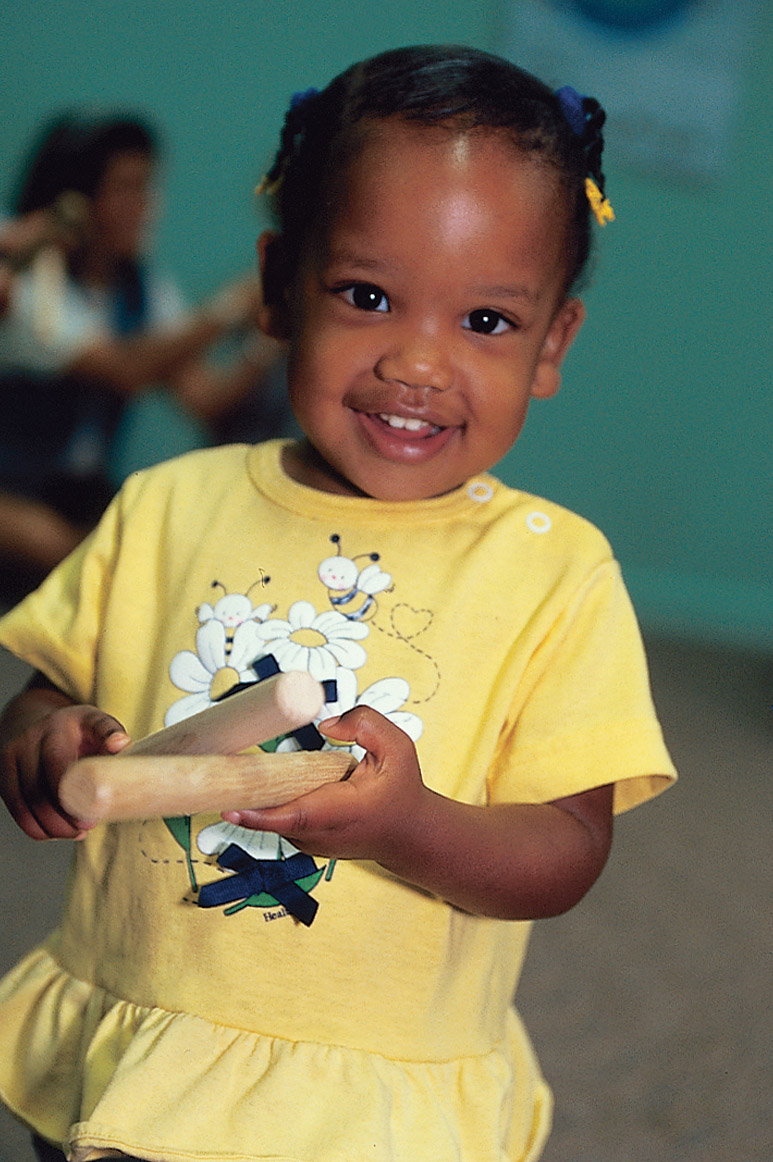
toddler girl playing the sticksWhat do music, patterns, and language learning have in common? Well, more than you might think. When English language learners play along to the rhythms in English songs for kids or clap their hands to the beat of nursery rhymes, they are practicing active listening and pattern recognition.

Now, new research published in the Psychological Science journal suggests that learning a second language can be predicted by the ability to recognize patterns.

Second language learning and pattern recognition

In the study, the researchers recruited American students to learn Hebrew. During the two semesters, they tested the students’ Hebrew understanding and measured their ability to recognize visual patterns. The data showed a strong link between pattern recognition and language learning. Students who did better recognizing patterns

also spoke more Hebrew at the end of the two semesters.

“It’s surprising that a short 15-minute test involving the perception of visual shapes could predict to such a large extent which of the students who came to study Hebrew would finish the year with a better grasp of the language,” explained lead researcher Ram Frost in a press release.

Using the patterns of musical learning to teach ELL students

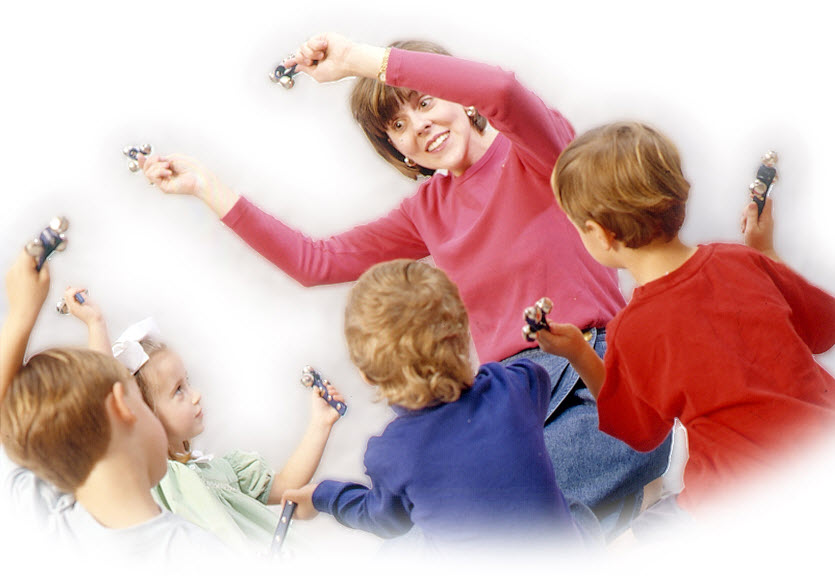
ABC English & Me - Teaching English to Children through MusicIn our ESL curriculum, ABC English & Me, we lead young children to experience patterns through movement, listening to English songs for kids, and playing instruments. When we jump, jump, jump, stop during a song or ta, ta, ta, rest with instruments, ESL students learn rhythm patterns (quarter note, quarter note, quarter note, rest), a basic musical concept. Rhythm patterns are combinations of long and short sounds and silences. In musical learning, a child’s whole body involvement with patterning lays a foundation for English language learning.

Learn more about using the patterns found in musical learning to teach young English Language Learners with ABC English & Me!
 

Support early language development with a healthy screen time “diet”

(Source: Grow & Sing Studios)

Although we just celebrated a holiday devoted to giving candy to children, we all understand that fruits and vegetables are essential to a healthy diet. A child filled with strawberries, carrots, and yogurt behaves radically different than a child filled with candy corn, chocolate, and a juice box. You don’t need to be a teacher of an early childhood curriculum to understand that!
In addition to a healthy nutritional diet, children also need a healthy “screen time diet.” Today’s children are considered digital natives, but too much of a good thing can be, well, too much. And, of course, not all television shows, movies, and mobile apps for kids are created equal—some are more candy than carrots for the brain. However, in a world filled with smart phones and tablets, and with televisions found everywhere from the home to the car to the local family-friendly restaurant, it can be challenging.

A healthy “media diet” matters

A group of pediatricians recently published the results of their study, Modifying Media Content for Preschool Children,” that showed that increasing a child’s exposure to screen time that teaches positive social behavior can strengthen a child’s social skills. In the study, the pediatricians recruited 565 parents of preschool-aged children ages 3 to 5 years. Without decreasing or increasing the amount of screen time, the participants simply changed what their children watched. After six months and again after 12 months, the parents reported increased social competence and behavior in their children. In addition, the preschoolers showed significantly less aggression and better social skills when compared to the control group.

Try “feeding” your children these mobile apps for kids

Finding the best mobile apps for kids can be tough. Unlike the grocery store where healthy foods come with labels like “organic,” “100% whole grains,” or “120% of vitamin C,” apps that support a healthy “media diet” such as early language development, phonemic awareness, or even musical learning aren’t as clearly identified. As creators of early childhood curriculum and with thousands of educators around the world, the Kindermusik community can help.
RreadingRainbowKindermusik_MusicIslandPromo_Exp111513An earlier blog post identified 6 websites and mobile apps for kids that support early literacy development, including the Reading Rainbow app. This trusted app for kids includes eBooks for families to read together and video field trips to expand a child’s world from the comfort of a parent’s lap! Plus, Kindermusik will be partnering with Reading Rainbow to bring a “Musical Island” to the app and we’d love your help naming the island! The new Kindermusik Island will contain a limited selection of eBooks from the Kindermusik library and some additional videos that Reading Rainbow and Kindermusik will produce together around musical topics.
Help us name the new Kindermusik/Reading Rainbow Music Island!
Enter your suggestion by clicking this link. If your name is chosen you will win a $100 Amazon Gift Card, a free 6-month subscription to the Reading Rainbow app AND a Kindermusik prize package! Enter to Win now – Friday, November 15, 2013.
Kindermusik@Home - Online Learning Games for KidsOf course, we want to mention Kindermusik@Home as part of a healthy media diet. Available through enrollment in Kindermusik, Kindermusik@Home provides parenting resources, musical learning games for kids, eBooks, and developmental insights behind the activities. Kindermusik@Home helps children learn both online and encourages families to take the learning offline through engaging activities. Try one of these Kindermusik@Home activities today!

To learn more about enrolling in a Kindermusik class and receiving access to Kindermusik@Home, contact a local educator via our Class Locator.


Early language development: It’s all in the rhythm and beat!

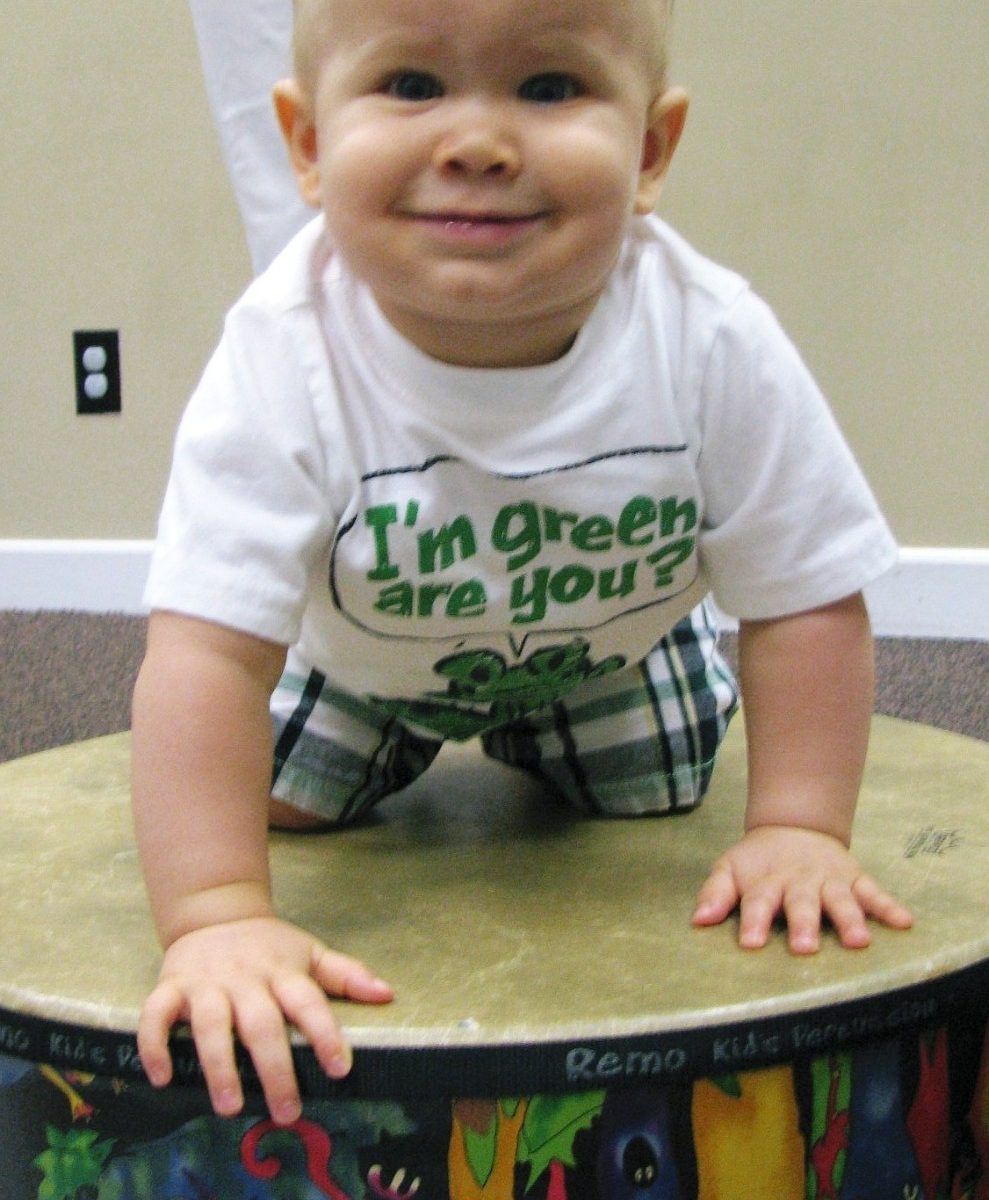
baby playing drum

baby playing drumMusical learning and early language development go together like a newborn and a swaddle or a toddler and the words, “I do.” Young children rely almost exclusively on what they hear in order to acquire language. Scientists now know that our brain processes music similarly to how we process language.
In early language and literacy development, young children need to understand that words—like music—are made up of discrete sounds. In early language development, this is called phonemic awareness. Later children use that knowledge of sounds to build words and read. Research shows that children with strong phonemic awareness are more successful learning to read than others.

Ability to move to a steady beat linked to language skills

Under the leadership of Dr. Nina Kraus, a new research study published in The Journal of Neuroscience found that teenagers with more musical training experienced enhanced neural responses to speech sounds when compared to others.
“We know that moving to a steady beat is a fundamental skill not only for music performance but one that has been linked to language skills,” said Nina Kraus, of the Auditory Neuroscience Laboratory at Northwestern University in Illinois in an article for the BBC, “Moving to the rhythm can help language skills.”
In the study, participants were asked to tap their fingers along to a beat while their accuracy was measured. Their brainwaves were also measured to observe how the brain responded to the sound.
“It turns out that kids who are poor readers have a lot of difficulty doing this motor task and following the beat. In both speech and music, rhythm provides a temporal map with signposts to the most likely locations of meaningful input,” Dr. Kraus told BBC News.

Musical learning and language development in Kindermusik

Kindermusik provides many opportunities for children to discriminate similarities and differences in sound. So, while children gain musical skills participating in our early childhood curriculum, they also make gains in phonological awareness and early language and literacy development. For example, when parents lift their children high “up, up in the sky” or “twirl around like a leaf” while singing the songs in class, children learn the word and understand the concept. Or when we recite nursery rhymes together or tap out the beat to a song, children hear the music of language. Children’s brains make a connection based on what they experience (being lifted high or twirling around) and hear (“up” or “twirl”). Later, children will discover those words correspond to marks on a page which eventually leads to letter recognition and reading.

Kindermusik is the world’s leader in early childhood curriculum development and musical learning. Find a class near you and experience the many benefits of music on a young child’s development.


November Song Sweepstakes

Share your child’s favorite Kindermusik song this November for your chance to win a $50 Kindermusik Prize Package!

Kindermusik November Song Sweepstakes

Tell us your child’s favorite song from their Kindermusik album this November for your chance to win!


To Enter Contest:

Simply fill out the form on our November

Song Sweepstakes page.


All entries will be entered into our Grand Prize Drawing at the end of the year to win an iPad.

Good luck to all!


Move for fun, move to learn!

It’s always great to have some physical activities for kids that you can pull out of your pocket, so to speak, and enjoy together.  And in our opinion, one of the best activities is combining music and movement!
Experts tell us that movement is key to learning.  That’s why movement is so foundational to our Kindermusik classes.  But movement, especially with music, can also be the key to your sanity, especially on a cold, rainy, stuck-in-the-house day.  To help you out with a little fresh inspiration, here are a few of our favorite Kindermusik movement activities for kids:
little girl dancingFinger plays and toe wiggles – These are the smallest of all movements, but they can be lots of fun!  Think “Eency Weency Spider” or “This Little Piggy.”
Free dance – Just turn on some music and dance to your heart’s content.  Hint: Have a playlist of several songs to prolong the enjoyment.
Moving with a prop – Grab a scarf and bounce, twirl, or swish to the music.  You can also try it with a stuffed animal too.
Rocking – Rocking can be more calming or more active, depending your mood and the kind of music you choose.
Choreographed movement – Preschoolers and big kids can really get their creative juices flowing if they get to decide what steps go with what parts of the song.  Forward-and-back, side-to-side, ’round and around, zig-zagging, and more!

Try A Free Kindermusik ClassKindermusik is the world’s leader in music and movement classes for young children.  Come sing, sway, dance, and play with us at a free preview class today!

Written by Theresa Case, whose Kindermusik program at Piano Central Studios in beautiful Upstate South Carolina is proudly among the top 1% in the world.

Musical Learning Inspiration for your Little One

Kindermusik@Home

We’ve all had them… one of THOSE days when we’re at our wit’s end and fresh out of ideas for something – anything! – to cheer up an unhappy baby or to engage a very busy little toddler.  Or maybe it’s a really good day, and we just want to take advantage of the perfect opportunity for a little extra learning through music.
Kindermusik@HomeIf you are a Kindermusik parent, look no further than your Kindermusik @Home Materials that not only complement our newest curricula, but also give you instant access to music, activities, and e-books – all carefully designed with you and your little one in mind.
And no, we’re not suggesting that you turn over your device or tablet to your small child; but rather, we’re encouraging you that some of the best activities for kids and some of the most delightful music on the planet is right there at your fingertips!
We invite you to take a quick (and free!) peek at just what we’re talking about…

From Cuddle & Bounce, our new Baby Music Class for 0s and 1s

4 Non-Laundry Uses for a Laundry Basket4 (Non-Laundry) Uses for a Laundry Basket – Who knew?!
Crinkly, Furry, Bumpy, Strange – Learning by exploring textures of every day objects

From Sing & Play, our new Toddler Music Class for 1s and 2s

Lets Make a Dog HousePlay Ideas: Fill and Empty – Sure to keep your child occupied for hours!
Let’s Make a Doghouse – So much fun to do and then to enjoy

The secret is out…

These incredible resources that we call Kindermusik @Home Materials are really for the parents, just one of the ways that Kindermusik truly helps make great parenting just a little bit easier and a whole lot more musical.

Want to learn more about Kindermusik classes and Kindermusik @Home?  Try a FREE class on us!

 
Kindermusik International knows and respects that each family gets to decide what’s best for them when it comes to the issue of screen time or the use of technology and young children.  In creating our new digital tools and parenting resources, Kindermusik has read about and researched this topic thoroughly.  We have aligned our stance with that of the highly respected NAEYC and the Fred Rogers Center for Early Learning, recognizing that children can benefit from a responsible and age-appropriate use of technology in combination with hands-on experiences and in partnership with an actively involved caregiver.  We are proud to bring these high-quality educational materials to your family in hopes we can truly embody the very best of both worlds- a responsible introduction to technology AND lots of hands-on, movement-rich, in-your-lap, down-on-the-floor learning.

Why teaching English to children at a young age matters

(Source: Momsteam.com)

The age at which we begin teaching English as a second language (or any second language for that matter!) to a child makes a difference. Research already indicates that children who learn how to speak a second language at a very young age are more likely to sound like a native speaker. Now, a new joint study by the Montreal Neurological Institute and Oxford University shows that the brains of adults who learn more than one language at an early age look different when compared to the brains of adults who learned another language as older children.

Learning a second language is mind altering (really!)

By comparing MRI scans of bilingual and monolingual participants, the researchers found similar patterns of brain development if an adult learned one or two languages from infancy. For adults who learned a second language later in childhood, researchers found that the left inferior frontal cortex became thicker and the right inferior frontal cortex became thinner. Learning a second language later in life actually changes the brain! These areas of the brain are responsible for certain cognitive functions such as thought, language, consciousness, and memory.
“The later in childhood that the second language is acquired, the greater are the changes in the inferior frontal cortex,” said the lead author of the research study, Dr. Denise Klein, in a press release. “Our results provide structural evidence that age of acquisition is crucial in laying down the structure for language learning.”
The researchers compare acquiring a second language later in childhood to acquiring complex motor skills such as juggling. They predict that these brain changes in older ELL students might help researchers understand why learning a second language later in life can prove to be more difficult.

ABC English & Me - Teaching English to Children through MusicRead more about the cognitive benefits of an elementary ESL curriculum on young ELL students, and how our ESL curriculum, which uses English songs for kids, music and movement, and Total Physical Response, puts it into practice.

FOL Fridays – Explore and Discover

The preschool-aged child always seems to be curious, ready to find out more or explore and discover. And they have a big imagination to go along with it!  These are some of the great delights of enjoying all kinds of activities with 3 year olds and 4 year olds, but especially the kinds of playful, creative, learning-oriented music activities we do in our Kindermusik classes for this age group.
boy rolling on Gertie ballFor example, asking your child to broaden his or her understanding and experience of moving a ball in a way other than bouncing or throwing it opens up new play possibilities. Through repeated exploration experiences, the child can develop the concept that every object has unlimited possibilities for exploration. Becoming aware that an object can be used in many ways allows the child to problem solve – trying new things, making errors and learning from the total process. The child can then transfer this explorer attitude to other activities. This is true ownership of learning and becomes a lifetime tool.
Tips for parents (and fun for kids!): Kindermusik teachers love GERTIE balls for all kinds of ball play, even for toddlers.  Gertie balls are easy to grasp and are safer for indoor play than regular balls.
Shared by Theresa Case, whose Kindermusik program at Piano Central Studios in Greenville, SC, is proudly among the top 1% of Kindermusik programs worldwide.

Listening to Music Makes You Smarter

If listening to music while you study makes you smarter, then there must be a powerful link between music and its effects on the brain.

And what better time to get started listening to music than at the very youngest ages, during those critical early years when the brain is developing the most rapidly.
Music Education And TherapyThat supposition is why Kindermusik places such an emphasis on exposing children to a rich, varied musical listening environment from birth.  And it’s precisely why the Music Album you receive with each new music theme is so invaluable.  Kindermusik makes it EASY for you to give your child many happy, enjoyable moments of listening to music of all genres.
As this article suggests, choosing the right kind of music matters – music with variety, complexity, range, and depth is most stimulating and beneficial.  That’s exactly what you’ll find in your child’s Kindermusik music library.  In fact, many Kindermusik parents secretly confess that they enjoy their child’s Kindermusik as much as their children do!
Here are a few tips for helping your child enjoy the benefits of music listening… and do your part to help him or her become a little smarter too:

  • Download your Home Album to your phone or MP3 device so that you can take your music with you wherever you go.
  • Create playlists of different kinds of Kindermusik songs – lullabies, dances, play-alongs, dances, quiet listening, etc.
  • Burn a CD for the car or CD player if you have one.
  • Make music listening a part of your every day routines – play music in the car, during play time at home, before naps, at bath time, and before bedtime.

Benefits Of Music for ChildrenAre you looking to enhance your child’s learning and development through early childhood education in music?  Look no further than Kindermusik, the world’s leader in music and movement classes for young children.

Try a free Kindermusik class today and learn more about how music makes your child smarter, more well-rounded, and prepared for life… not to mention that they’ll LOVE the bonding and memories you’ll create together in Kindermusik!

Shared by Theresa Case, whose Kindermusik program at Piano Central Studios in Greenville, SC, is proudly among the top 1% of Kindermusik programs worldwide.

3 benefits of music on early math skills

Music and Movement at Kindermusik

Music and Movement at KindermusikIn early childhood education, the benefits of music include boosts to skills as varied as vocabulary development, gross-motor skills, empathy, phonemic awareness, active listening, and even early math development. Music and movement activities for three year olds (or toddlers or four,- five-, and older!) look like fun and games, but behind all the laughter and smiles is learning.
Consider these examples of the many benefits of music on children.

3 benefits of music on early math development

  1. Spatial awareness. Children who participate in music classes show stronger spatial temporal reasoning skills than those without music instruction.
  2. Counting by rote. Young children learn to count by rote—a memorizing process using routine and repetition. Learning to count by rote helps children develop foundational skills for math, including number vocabulary, memory, patterning, and sequence. Through music and movement activities, children encounter many opportunities to practice counting in a fun, engaging way. In an early childhood education classroom, musical learning examples include counting to three and jumping up during a circle dance or reciting the numbers as children receive (or put away) instruments, or tapping on a drum the beats.
  3. Pattern recognition. The beats, rhythms, and melodies of music lead children to experience patterns through movement, listening, and playing instruments. Listening to music and then matching the steady beat through clapping or instrument play helps children recognize and translate a simple pattern.

Early childhood curriculum uses music to teach early math and language and literacy skills

ABC Music & Me - Early Literacy and Language CurriculumThe National Council of Teachers of Mathematics (NCTM) advocates for math learning in contexts that simultaneously supports other types of thinking and problem solving, such as music. Research continues to show the benefits of music on mathematics achievement.
Our early childhood curriculum, ABC Music & Me, uses music and movement to teach children early math skills, such as counting by rote, spatial awareness, and pattern recognition. Whether used as a preschool or daycare curriculum or even an after school curriculum, ABC Music & Me can also boost literacy and language skills, self-control, sharing, turn-taking, and other school readiness skills.

For more information about using ABC Music & Me as a preschool or daycare curriculum, email us at info@abcmusicandme.com.