
Yes! Music education unlocks the door to success (and more!)

A recent article in the New York Times asked the question: Is music the key to success? Of course, at Kindermusik, we would answer a resounding: Yes! We wouldn’t be alone in that exclamation either.
Music - happy familiesThe body of music education research continues to grow concerning how musical learning can increase social-emotional abilities, math skills, language development, inhibitory control, collaboration, empathy, creativity, cultural understanding, and so much more. Studies show music can decrease pain during medical procedures, lower blood pressure, and lift our overall spirits.

Getting personal about the benefits of music

However, the music education research only tells part of the story. Music is personal as much as it is social. Take the case of United States Congresswoman Gabby Giffords. A bullet to her brain left her in critical condition and unable to speak. However, through music therapy, she is learning how to speak again.

In the above television interview,  Dr. Oliver Sacks, Professor of Neurology and Psychiatry at Columbia University sums up the benefits of music on language by explaining: “Nothing activates the brain so extensively as music to it to have been possible to create new language areas in the right hemisphere.”
The New York Times article provides more personal stories from individuals who credit the benefits of music to their success in other areas:

  • The television broadcaster Paula Zahn (cello) and the NBC chief White House correspondent Chuck Todd (French horn) both attended college on music scholarships.
  • Larry Page, a co-founder of Google, played saxophone in high school.
  • Steven Spielberg is a clarinetist and son of a pianist.
  • Condoleezza Rice trained to be a concert pianist.
  • Alan Greenspan, former chairman of the US Federal Reserve, was a professional clarinet and saxophone player.
  • The former World Bank president James D. Wolfensohn has played cello at Carnegie Hall.

(Source: WorldBank.org James Wolfensohn performs with Bank/IMF Choral Group at Christmas Concert, 2004)

Music provides balance, explains Mr. Wolfensohn in the New York Times article, who began cello lessons as an adult. “You aren’t trying to win any races or be the leader of this or the leader of that. You’re enjoying it because of the satisfaction and joy you get out of music, which is totally unrelated to your professional status.”
So, again, we answer the question, “Is music the key to success?” with a resounding, Yes…and so much more!
Come experience for yourself how music education can unlock the doors of success for your child. Find a local Kindermusik and try a free class!

4 reasons why music therapists love Kindermusik

why_music_quotes13American writer Sarah Dessen is not a Kindermusik teacher nor does she specialize in early childhood special education. However, she seems to understand how music can reach individuals of all

abilities. She wrote: “Music is the great uniter, an incredible force, something that people who differ on everything and anything else can have in common.”

In Kindermusik, we say it this way: “Everyone speaks music.” In the classroom, Kindermusik educators celebrate the individuality and contributions of each child. It’s no wonder music therapists love recommending Kindermusik and teaching Kindermusik. With our similar child-centered philosophies, music therapists are discovering Kindermusik offers opportunities for both their practice and their clients.

4 reasons why music therapists love using Kindermusik as part of a special education curriculum

  1. The Kindermusik curriculum naturally integrates typically developing children and children with special needs into one welcoming and loving environment.
  2. Kindermusik classes support the work done in individual music therapy sessions. Music therapists and families appreciate how Kindermusik takes many of the concepts children with special needs work on in occupational therapy, physical therapy, and speech and puts it into a group learning environment.
  3. Music therapists understand firsthand the benefits of music on children, including cognitive stimulation, self-expression, self-awareness, and increased motor movements.
  4. Music therapists can use their music therapy skills to reach more children and to expand their income potential.

Teaching children as a Kindermusik educator

“Being able to integrate typically developing children and special needs kids was just a dream come true,” explains Julie Wade, music therapist and Kindermusik educator. “The Kindermusik curriculum enables you to do just that in a positive therapeutic environment.”

Listen to what else Julie loves about being both a music therapist and Kindermusik educator. Plus, hear from her students, too!


Learn more about becoming a Kindermusik educator!


Improving Socialization and Communication for Children with Autism

Sep. 11, 2013 — In a new study looking at toddlers and preschoolers with autism, researchers found that children with better motor skills were more adept at socializing and communicating.

This was the exciting headline in Science Daily just recently, giving fresh insight for those in early childhood special education.  Researchers have now identified a clear link between autism and motor skill deficits.  Expert Megan MacDonald specifically recommends taking the approach of early intervention by teaching motor skills.
“Even at this early age [14 to 49 months], we are already seeing motor skills mapping on to their social and communicative skills,” MacDonald said. “Motor skills are embedded in everything we do, and for too long they have been studied separately from social and communication skills in children with autism.”
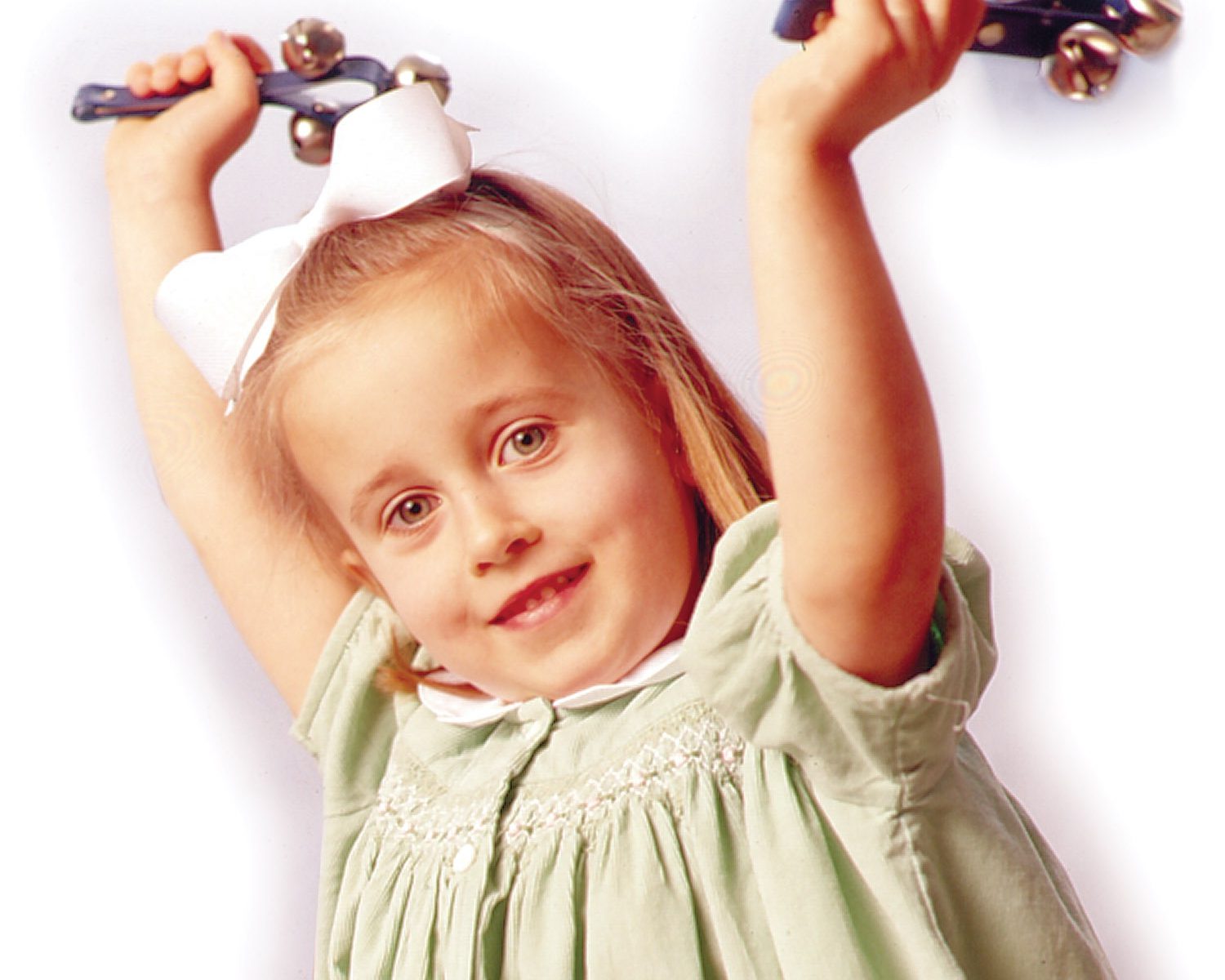
Kindermusik girl with hoopAs the world’s leader in music learning for young children, Kindermusik International has long been an advocate of the strong correlation between movement and learning.  “You have to move to learn!”, our educators are fond of saying, as they encourage the parents and children not only to move, but to explore moving in different and creative ways.
“Movement is a universal, full-time, personal, childhood occupation, and its importance in children’s early learning experiences cannot be overemphasized…”  (from  Moving and Learning for the Young Child by William J. Stinson, Ed.)
The Kindermusik curricula reflect and embrace the different developmental stages of children, with appropriate motor skills explored, practiced, and enjoyed accordingly.  Kindermusik believes strongly in the powerful combination of music and movement that is important for all children, but is especially potent for those with special needs – including autism.  The benefits of music on children, especially during the early years, are immeasurable.
Read the full article from Science Daily here.

Improve your child’s motor skills and inspire them with a love of music with Kindermusik.  Try a free class today!

Written by Theresa Case, whose Kindermusik program at Piano Central Studios in Greenville, SC, is proudly among the top 1% of Kindermusik programs worldwide.

Introducing two new Kindermusik classes: a baby music class and a toddler music class

Have you meet the newest members of the Kindermusik family? We are talking about our two newest Kindermusik classes: Cuddle & Bounce and Sing & Play. Babies and toddlers grow and learn at an amazing

pace. Seemingly one minute your child needs to be swaddled up snuggly and the next minute your little one wobbles (or runs!) around the room. In our Kindermusik baby music classes and toddler music classes, we use music and movement to nurture and guide all the learning that takes place during these years.

New baby music class: Cuddle & Bounce

Cuddle & Bounce logoBabies grow by leaps and bounds their first year—or more accurately by grasps and scoots. In our new baby music class, Cuddle & Bounce, we nurture a baby’s development through music and movement activities that also support a parent’s role as a child’s first and best teacher. Monthly lessons might focus on language and vocal development, brain development, fine- and gross-motor skills, social-emotional development, and musical development. Enrollment includes access to Kindermusik@Home, where parents and caregivers can download the music from class, gain developmental insights behind the activities, find practical tips to support your baby’s development, and more.

New toddler music class: Sing & Play

Sing & Play logoYour child will love playing, moving, and singing in this high-energy toddler music class. Sing & Play includes activities for toddlers with a special emphasis on movement and vocal development—two major areas of growth for toddlers. Monthly lessons include instrument play, dance, exploration time, musical concepts, together time, and expert advice offering insight behind these activities for toddlers. Plus, enrollment includes access to Kindermusik@Home, where parents and caregivers can download the music from class, read a monthly eBook during storytime at home, go on virtual field trips, discover new ideas for activities for toddlers, and more!

Cuddle & Bounce / Sing & PlayCome experience for yourself our two new Kindermusik classes! Classes also available for older children and families. Contact a local educator and try a free class!


Help us name our new Reading Rainbow music island and WIN!

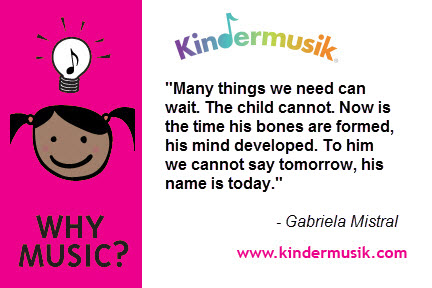
why_music_quotes16Author and winner of the Nobel Prize in Literature Gabriela Mistral wrote: “Many things we need can wait. The child cannot. Now is the time his bones are formed, his mind developed. To him we cannot say tomorrow, his name is today.”
Children need both music and reading at a young age. The research clearly shows how both can impact the the trajectory of a child’s life. It’s one of the reasons Kindermusik is partnering with Reading Rainbow, the beloved leader in early literacy and education. Together we are bringing a “Musical Island” to the RRKidz iPad app. And we need you to help name the island! See below for details.

Within this educational app for kids are different ‘islands,’ each of which has its own theme. Within each island are a few short educational videos (many pulled from the Reading Rainbow archives) and a selection of the best children’s books, in eBook format. We need the help of Kindermusik families in the United States to name the new Kindermusik “Musical Island.”

Reading Rainbow + Kindermusik Island Naming Sweepstakes

Reading Rainbow sweepstakesThe new Kindermusik Island will contain a limited selection of eBooks from the Kindermusik library and some additional videos that Reading Rainbow and Kindermusik will produce together around musical topics (similar to many of our video field trips in Kindermusik@Home).
Help us name the new Kindermusik/Reading Rainbow Music Island! Enter your suggestion by clicking on this link. If your name is chosen you will win a $100 Amazon Gift Card, a free 6-month subscription to Reading Rainbow AND a Kindermusik prize package!
(Mobile Users click here.)

Accepting entries October 9-October 31, 2013. Enter today!

FOL Fridays: Modeling

Children learn best by doing.  Through modeling, a child has many opportunities to imitate steady beat and experiment with steady-beat playing.  Practicing these emerging music skills within the context of meaningful and playful activities gives a child a rich and unparalleled learning experience.
Ideas for parents:  Music is such a tremendous vehicle for learning of all kinds, but to enhance and inspire your child’s developing music skills, make it a goal to surround your child with music at home – during play, as he settles for nap, at bath time, and before bed.  Whether you’re singing to him or you just keep the iPod or radio playing, your child will benefit tremendously and will likely be inspired to pick up and play along.  Listening and responding to music exposes your child to the many wonderful benefits of music and a musical environment.

– Contributed by Theresa Case, whose Greenville, SC program, Kindermusik at Piano Central Studios, is proudly among the top 1% of Kindermusik programs worldwide.

Kindermusik "plays" in Italy at Il Chiostro dei Bambini

Il Chiostro dei Bambini logoIl Chiostro dei Bambini was a three-day event that took place at The Diocesan Museum in the San’Eustorgio district, one of the most antique and monumental complexes of Milan, Italy. An exhibition dedicated to children and their families

was set up in the larger square courtyard of this museum built from joined units of the basilica and Dominican convent.

On invitation, over 40 stands of the best Kindergartens, language schools, programs, dance, art and sport associations were present along with Kindermusik! This event gave parents and their children the possibility to take part in numerous, games, workshops, performances and other extra-curricular activities, including activities for toddlers and other children.

Il Chiostro dei Bambini childrenA preview of baby and toddler music classes and more!

Along with meeting many like-minded people, who dedicate their lives to improve children’s education, the best part of the event for us was that many children were able to enjoy the magic of Kindermusik in this unique setting with mom and dad. During baby music classes or our other Kindermusik classes, it is always heartwarming to see the surprise on a mother’s face when her 7 month old baby interacts with an egg shaker or when a five year old responds to all the directions given in another language even though it is their first time meeting you. (Kindermusik in Italy is music, movement…and English!)

It was also an occasion for experienced and new educators from different parts of Italy to gather. Meghan Shanaphy, from Milan, was our star performer as she led two groups of over 30 children and their parents in an ABC English & Me Trip to the Farm!

As we were packing up the stand at the end of the three days, the Kindermusik purple balloons took off into the sky and we renewed our wish: “May the magic of Kindermusik reach all the children of this world.”

To experience the magic of Kindermusik with your child, find an educator near you and see why families all around the world love our baby and toddler music classes as well as our classes for older children, too.

The Parent Test

“My child is so unique and special! I want to be the best parent that I can possibly be for my child.” As parents, isn’t this our heart’s desire?

We search to find just the right activities and experiences that will benefit our children and help them grow to their fullest potential, such as baby development classes or toddler music classes. We check reviews, ask friends, and spend countless hours to find and decide on just the right toys, foods, books, music, play, clothes, activities for toddlers, and the list goes on… Everything that touches the lives of our children must pass THE ultimate test – the PARENT TEST!

This unwritten Parent Test is full of many questions and concerns that automatically become an ingrained part of our thought process. Many times these questions are so automatic that they become almost instinctive. If you took the time to write it down, your Parent Test may look a little like this:

  • I want my child’s LANGUAGE skills to develop. Does this help my child develop a love for books and reading?
  • I know early learning is important for my child’s COGNITIVE development. Is this helping my child learn something new in an age-appropriate and enjoyable way?
  • Healthy EMOTIONAL development is key to growing into a confident and secure individual. Does this help strengthen the parent-child bond and help my child feel good about himself?
  • My child needs an opportunity to develop PHYSICALLY. How can I help my child actively explore skills like running, jumping, galloping, and skipping?
  • My child and I both need a SOCIAL outlet. Is there a place where we both can benefit from a positive group experience that also teaches my child social skills like sharing, playing cooperatively, and making friends?
  • I recognize the importance of MUSIC for my child’s total development. Does this teach and inspire my child to be more musical, to be prepared for music lessons in the future, and ultimately, to have instilled a lifelong love for and enjoyment of music?

For over 30 years, Kindermusik has passed the Parent Test with flying colors, time and time again. That’s because the powerful combination of the Kindermusik classroom experience and our Home Materials empower parents to instill a lifelong love of music and learning and capitalize on all of the rich benefits of music for children during that critical window of early learning.

It’s also because our research and experience has shown time and time again that music and movement are the best vehicles for helping a child reach his or her fullest potential in every developmental category – language, cognitive, emotional, physical, social, and music.

Kindermusik - Where Music and Learning PlaySimply stated, there is no better way to enhance your child’s early development and learning or to inspire their natural love of music than Kindermusik.

We invite you to experience the magic of Kindermusik for yourself. Try a free

class today!

Edited and revised by Theresa Case, whose Kindermusik program at Piano Central Studios in Greenville, SC, is proudly among the top 1% of Kindermusik programs worldwide.

5 reasons why family involvement in education matters to ELL students

Parental Involvement Supports Early Literacy Developement

Parental Involvement Supports Early Literacy DevelopementParent is another word for teacher—regardless of what any thesaurus says! (It’s also another word for nurse, doctor, chef, driver…) So, of course, parent involvement in early childhood matters. Studies continue to highlight the importance of family involvement in education, especially in regards to early language and literacy development. After all, we’ve said it before: a parent is a child’s first and best teacher.
However, unlike professional teachers, most parents do not have formal training in early childhood education or teaching English to children. Thankfully, parents do not need formal education in order to support their children learning English as a second language (or as a first!). They do need 20 minutes a day, English language books, and a comfortable place to read together. Here’s why:

5 reasons why parent involvement in education through reading makes a difference to English Language Learners

  1. Reading together promotes language and literacy development in both languages.
  2. Reading to children increases their vocabulary acquisition.
  3. Parents who read to their children improve their child’s chances of success in school-based literacy programs, including an ESL curriculum.
  4. Children’s reading achievement, vocabulary, and comprehension skills improve when their parents read to them. Plus, parents who are also learning English as a second language gain practice, too!
  5. Children develop a positive awareness of the structure of stories, the language of stories, the nature of reading behavior, and the sounds of the language.

ESL activities for children to do at home

ABC English & Me - Teaching English to Children through MusicDuring our ESL curriculum development, we intentionally created content for families to use together at home to support the classroom learning and parental involvement in early childhood education. ABC English & Me includes thematic 30-minute lessons for classroom teachers to use with English language learners between the ages of 2 and 6 years old. Children learn English vocabulary and expression in a musical environment that also connects the classroom learning with the learning at home through Kindermusik@Home. These monthly online home materials include ESL activities for children, a new English language eBook each month, English songs for kids, and more.

Get more information on teaching English to childrenaround the world with Kindermusik and ABC English & Me.

5 ideas to involve the whole family in being green

(Source: Washington Trails Association)

Sustainability for kids can start with a seed—literally and figuratively. We put together five ways to involve the whole family in protecting the environment for kids. From planting a garden to planting the knowledge about the importance of sustainability, we think you and your family will enjoy “going green!”

5 ideas for family involvement in education that will have you seeing green

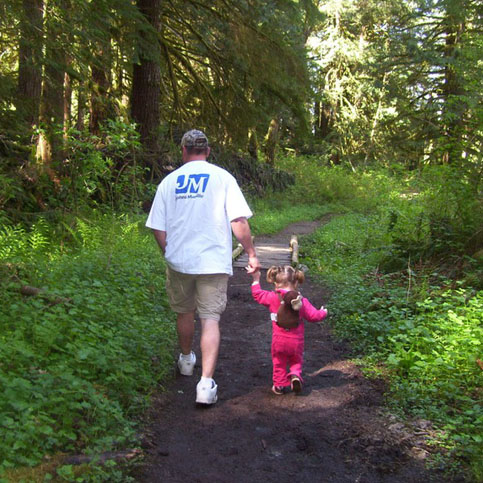
  1. Take a hike. Parental involvement in early childhood education looks different in various settings from preschool to home to the grocery store. To a child, every setting—and every moment—can be a teachable one. Going on a hike together can be the ideal place to investigate a local ecosystem, look for signs of the changing season, and gain an overall appreciation of the world outdoors. Plus, by bringing an extra garbage bag and gloves to pick up trash along the way, it’s also an easy way to work in recycling activities for kids.
  2. Go green for the holidays. Make the holidays fun while also supporting a green environment for kids.  Use LED lights for decorative lighting. Compost pumpkin remains and recycle Christmas trees instead of throwing them away. Buy from local farmers for your holiday feasts. Decrease your carbon footprint and purchase holiday gifts from local merchants and artisans.
  3. Plant a garden. You don’t need an acre of land to teach your children that food doesn’t grow at the grocery store. All you need is sunlight, water, and dirt. A windowsill is the perfect spot to grow herbs. A back deck or patio can grow beautiful tomatoes. Save the apple seeds from your child’s snack and plant them in a small container. Your child can watch a little apple tree grow!
  4. Read all about it! Combine your child’s love of reading with these 20 children’s books that show the importance of sustainability for kids.
  5. Recycle together. Recycling activities for kids can be fun and support family involvement in education at the same time. Recycling that cereal box? Give your children the “job” of checking all items for “Labels for Education” or “Box Tops.” Many preschools and elementary schools collect them as part of their fundraising efforts.

At Kindermusik, we believe in the power of music to unlock a child’s fullest potential while also supporting family involvement in education. In addition, we believe that protecting the environment for kids and being mindful about the way we conduct business is part of the process.

You can read more about how our passion for supporting sustainability for kids impacts our business decisions.