
 When young children are consistently engaged by music in an age-appropriate, socially accepting environment, they benefit at so many levels. Learning through music literally lights up every area of a child’s brain and teaches little ones to love learning. So, in our music education classes for babies, big kids, toddlers, preschoolers, and families when we recite a nursery rhyme, participate in a circle dance or movement activity, play a vocal game, and explore instruments, children develop skills in early literacy and language, spatial-temporal and reasoning skills, physical development, and creativity.
4 Cool Music Facts
1. Making music together connects brains.
Researchers in Germany conducted a study with trained guitarists in which they attached electrodes to their heads while they played a duet. During the study, they found that the brain waves coordinated between the two guitarists while they played the duet together. This also applies to choral groups, orchestras, small ensembles, and yes, even music education classes for kids.
2. Singing (and dancing) the Hokey Pokey helps children learn to read, walk around the room, and understand geometry.
When young children explore the directions up and down during a fingerplay or put their left hands in and take their left hands out, they gain a greater understanding of spatial awareness. Spatial awareness is the ability to be mindful of where you are in space and to see two or more objects in relation to each other and to yourself. This eventually helps young children to safely navigate around a room, tell the difference between letters and group them together on a page to recognize words, and understand geometry.
3. Music and movement experiences in a group teach children how to be a good friend.
Actively participating in a music class class for babies, toddlers, big kids or families, impacts all seven areas of social-emotional development, including confidence, curiosity, intentionality, self-control, relatedness, capacity to communicate, cooperativeness. All key skills needed to be a good friend.
4. Steady beat gives children the ability to walk effortlessly, speak expressively, and even regulate repeated motions such as riding a bicycle, brushing teeth, or dribbling a ball.
Through music, children experience and respond to steady beat during lap bounces, instrument play, and by dancing. While children move to the beat with their bodies instinctively, learning to control those movements, and to follow—or create—is an essential component of a child’s early development.
Need more? Join a Kindermusik class near you! We’ve been making music together with families all around the world for 40 years, and we’d love to sing, dance, and refine those critical skills with you.
Contributed by Lisa Camino Rowell, a freelance writer and former Kindermusik parent, who loves seeing the long-term impact of Kindermusik classes on her children.

 For Babies: (From Cuddle & Bounce, “Bluebird, Bluebird”—Crinkly, Furry, Bumpy, Strange
 You know that feeling, when you’ve spent a great day at the beach and you just wish you could bottle it and bring it home with you…?

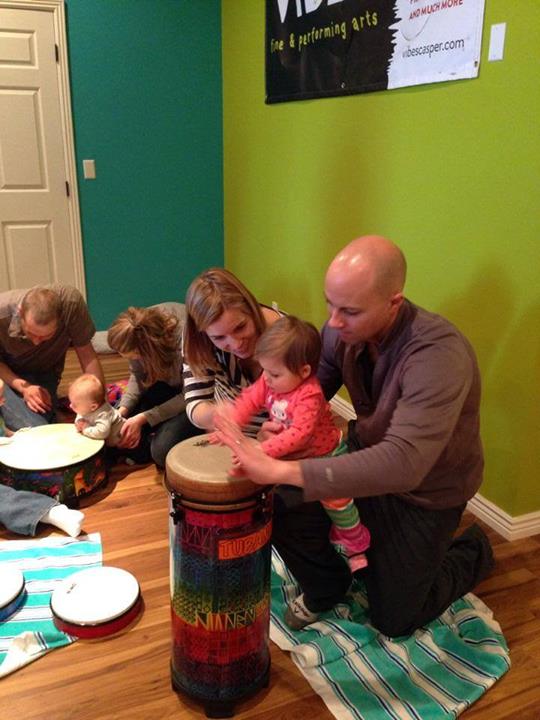
 music to make connections between people of all ages and all backgrounds.
 Of course, music makes those big life occasions all the more memorable. What is a wedding without music to walk down the aisle or a graduation without a little “Pomp and Circumstance”? But, music also celebrates those everyday (and just as important!) moments.
 Casper, Wyoming, may be known as “cowboy country” but thanks to Amy Munsell—with the support of her husband, Lukas—it’s also now Kindermusik country. We know that the sense of community she and her Kindermusik families create is making a profound difference in the lives of children in Casper.

 young children from Kindermusik@Home, using their hands as shapes, tools, and mementos.
 That’s why we found it fascinating that
 Young children love to search for hidden or missing items. Following the English language directions in the video, and then finding (and saying hello to!) the frogs, fish, and ducks, provides young ELL students much-needed feelings of mastery and success in English.
![KindermusikPresents_ABCMusicAndMe_AGlobalEarlyChildhoodCurriculum[1]](https://media2.kindermusik.com/website/sites/2/2014/05/KindermusikPresents_ABCMusicAndMe_AGlobalEarlyChildhoodCurriculum1.png)

 From “Home Sweet Home
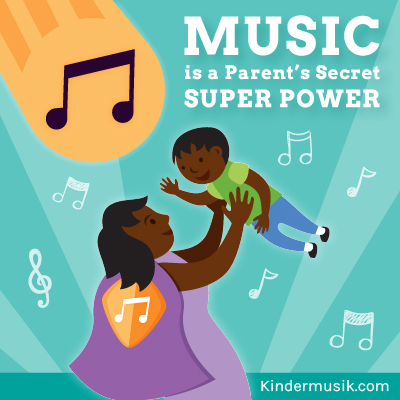
 Parents of young children need special superpowers. Forget about leaping tall buildings in a single bound or even flying, parents really need the ability to turn invisible in order to check on a sleeping baby, the power to fully function on only 3 hours of interrupted sleep, and the capacity to do the laundry faster than a speeding bullet! Who knew someone so little could go through so many clothes!?
