5 musical learning activities that teach school readiness skills

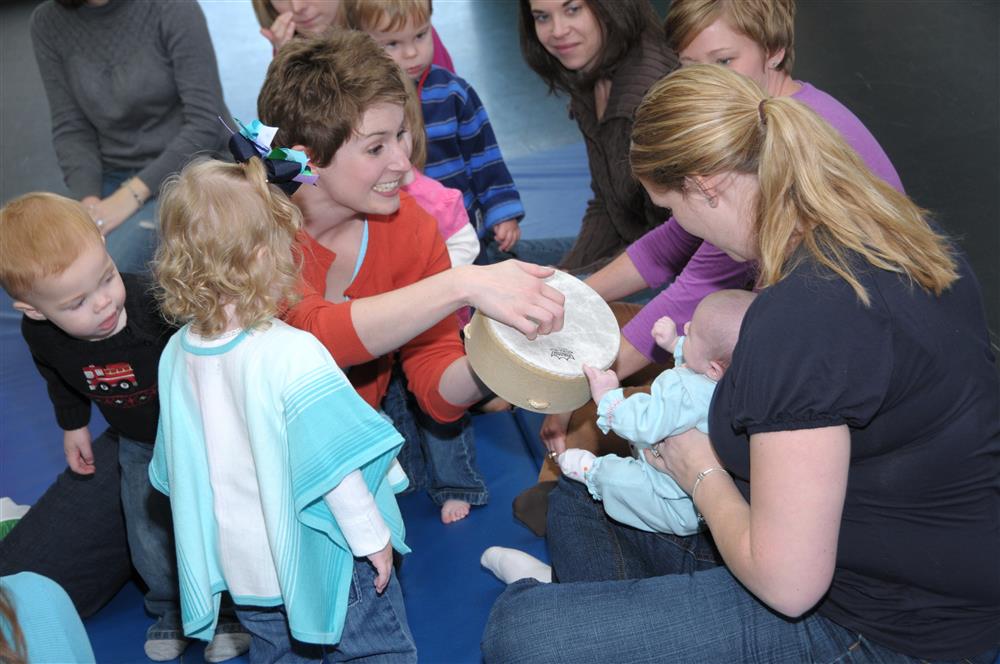
Music class drumDid you know that the benefits of music include preparing a child for school? When intentionally used as part of a pre-K curriculum or preschool curriculum, musical learning can positively impact the cognitive development in children and help children of all abilities be ready to learn at any age. Here are just five ways to use music when teaching children enrolled in a preschool or pre-K curriculum.

5 musical learning activities that support cognitive development in children

  1. Circle dances teach cooperation. Ringing around the rosey gives children more than a pocketful of posies. Choreographed movements require children to cooperate, move in synch with a group, and listen to and follow oral instructions.
  2. Identifying the specific sounds (or timbre) of different instruments teaches children auditory discrimination. The same sound discrimination used in recognizing the difference between the musical note “C” played on a clarinet verses the same note played on a piano by sound—not sight—helps children hear the minute differences between letter sounds or phonemes, which supports early literacy and language development.
  3. Moving to the tempo of the music teaches children to be active listeners. When children respond to the changing tempo of a song—from fast to slow—or when children move slowly when they hear the music change from staccato to legato, they are using their body movements to practice active listening skills.
  4. “Stop and Go” activities with music builds self-regulation skills. Children need to learn to tell their bodies what to do, when to stop, when to go, and when to move on to another activity. When playing a musical learning game of “Freeze Dance,” children learn and practice self-regulation skills by responding to the musical cues.
  5. Finger plays, such as “Itsy-Bitsy Spider,” help children learn to coordinate hand, finger, and wrist movements that support fine motor control and precision. Those fine motor skills will help children hold a pencil correctly, use scissors, and even tie their own shoes.

Pre-K curriculum uses musical learning

Early Literacy gains with ABC Music & Me
Our school partners and students benefit from ABC Music & Me – see the research-proven results!

In our preschool curriculum, ABC Music & Me, teaching children includes singing, dancing, and instrument exploration. Throughout all the musical learning, teachers are laying the groundwork for school readiness. Plus, our preschool curriculum includes proven results, in spatial-temporal reasoning, self-control, and even a 32 percent gain in early literacy.

For more information about bringing our pre-k curriculum, preschool curriculum, or Head Start curriculum to your school, email us at info@abcmusicandme.com.

Kindermusik in the News! Announcing Cuddle & Bounce and Sing & Play

MusicAndMovement_ClassesForBabies_KindermusikWithUtaThis week, Kindermusik International announced our newest curricula for babies and young toddlers through a press release, which continues to be shared through parenting and education websites, newsletters, and social media channels.

Consider sharing with your local community and press!


New Music and Movement Classes from Kindermusik Engage Babies and Toddlers

Cuddle & Bounce and Sing & Play offer opportunities for young children to bond with parents while learning musical concepts and furthering brain development

GREENSBORO, NC – December 3, 2013Music and movement classes can spark learning in young children, and when done in conjunction with a parent, can help build bonds between parent and child. Parents seeking early development opportunities for children as young as newborns should check out two new classes offered by Kindermusik International. The classes Cuddle & Bounce, for children from birth to one year of age, and Sing & Play, for children from one to two years of age, use music and movement to nurture and guide learning. Parents can sign-up to try a free class by visiting Kindermusik.com.


During weekly classes, parents and children engage in a mix of activities such as instrument exploration, dancing, singing, the learning of musical concepts like steady beat, tempo, and more. A licensed Kindermusik educator shares the developmental benefits behind the activities, and provides access to Kindermusik@Home online parenting resources including music and stories from class, tips for parents on how to communicate with their babies, and specific ideas on how to incorporate music and movement activities into the families’ daily routines and rituals. These classes for babies and toddlers are just the beginning of the Kindermusik journey, as their program extends through age seven.


Cuddle & Bounce celebrates the thrilling journey of a baby’s first year of life, focusing on:


  • Language and Vocal Development – Babies’ early language skills are nurtured as they imitate sounds, engage in lots of give-and-take conversations, and add to communicative abilities through sign language.
  • Brain Development – Through every movement, a baby’s brain synapses and the connections between neurons are created and strengthened.
  • Large and Small Motor Skills – Movement through music activities support stretching, kicking, rolling, crawling, sitting and standing independently will enhance large motor skills; playful activities such as reaching for or grasping objects will aid small motor skills.
  • Social-Emotional Development – Through lots of cuddling, playing, humming, and dancing, Kindermusik activities help build and strengthen parents’ relationship with children. Side-by-side play and group dance activities with other parents and children provide the important benefits of safe and early interactions with the wider social world.
  • Musical Development – Together, parents and babies will explore simple, baby-safe percussion instruments. Throughout hundreds of different Kindermusik music and movement activities, babies receive an early introduction to the songs, sounds, rhythms, and tempos of music from around the world.


The Sing & Play curriculum includes:


  • Movement & Physical Development Walking, jumping, marching, dancing, bouncing, and wiggling is fun, and strengthens young muscles and bones, improves balance, and helps new walkers be aware of what their bodies can do.
  • Exploration Time – A child’s natural curiosity is stimulated in an inviting environment full of specially designed instruments, textures, sounds, movements, interesting objects, and baby-safe props.
  • Language Development – By exploring new words and imitating sounds, young toddlers gain vocabulary and communication skills.
  • Instrument play and Musical concepts – Age-appropriate experiences with child-safe instruments enhance a sense of rhythm and steady beat, develop a keen awareness of the distinguishing qualities of sound, and encourage spontaneity and creativity. Even the littlest musicians and their parents benefit from early exposure to basic music fundamentals like loud and quiet, musical form, tempo, timbre, steady beat, and more.


"Cuddle & Bounce and Sing & Play classes give parents new opportunities to engage in safe, fun, and developmentally appropriate music-and-movement experiences with their very young babies and toddlers," said Debby Pool, vice president of product development for Kindermusik International. “We are excited to add these two new curricula to our offerings, and we are confident that these classes will give babies and new walkers a great early start in many critical domains of development and learning.”


To take advantage of these early childhood music programs, which later feed into Kindermusik International’s curricula for children through age seven, visit Kindermusik.com to find a class near you and try a class for free.


About Kindermusik International

Kindermusik International is the world’s leading provider of music, movement and literacy programs for young children, enjoyed by 2 million plus families in more than 70 countries. For more than 30 years, Kindermusik has helped children and their families discover how music can enrich their lives and lay the foundation for a lifetime love of learning. Kindermusik offers developmentally-specific educational programs for children ages newborn to seven. Kindermusik curriculum is taught by the best educators in the best schools and studios world-wide. Visit Kindermusik.com to find out more about Kindermusik’s music classes for kids and early childhood curriculum.


Connect with Kindermusik:

Facebook: Facebook.com/Kindermusik

Google+: Plus.Google.com/+Kindermusik

Pinterest: Pinterest.com/Kindermusik

Twitter: @Kindermusik

YouTube: Youtube.com/KindermusikRocks


Contacts:

Shellie Foriska

Kindermusik International

720-206-6293

sforiska@kindermusik.com


Lauren Burke

KEH Communications

410-975-9638

Lauren@kehcomm.com


###

12 Reasons to Give the Gift of Music

Is there a special baby, toddler, preschooler, or big kid on your Christmas list this year?  Maybe you’re a little stumped about what to give because of course, you want something meaningful, something enjoyable, and yes, even something they’ll love for a long time to come.  Something that even their adults would be thrilled about.  We’re happy to say that we have the perfect solution…

Kindermusik prepares your child for schoolGive the gift of music – Kindermusik, that is!

Here are our top 12 reasons why:

  1. You’ll save on wrapping paper and shipping costs.
  2. It’s one of the easiest gifts you can make.
  3. Kindermusik is movement, music, play, dancing, story time, and more – all rolled up in one great experience.
  4. Early childhood music classes enhance a child’s development in every area.
  5. Music makes kids smarter – the research proves it!
  6. Music classes, especially Kindermusik, inspire lots of together time and bonding.
  7. Young children need a social outlet too, just like their adults!
  8. Kindermusik is a place where children of all ages, all temperaments, and all learning styles can flourish.
  9. You’ll give that special little person in your life something to look forward to each week in class.
  10. The Kindermusik Home Materials will give parent and child something to do and enjoy at home in between classes.
  11. We promise, no re-gifting.  They’ll LOVE it!
  12. It’s a lasting, memorable gift that will put a song in their hearts and a smile on their faces.

For children ages newborn to 7 years, there’s no better musical gift you can give than Kindermusik.  Find your local Kindermusik educator today and get one more thing checked off your gift list!
P.S.  While you’re at it, check out some of our fabulous new baby music classes, including Cuddle & Bounce for newborns and 1s and Sing & Play for 1s and 2s.

Early childhood teachers give kids the gift of gab

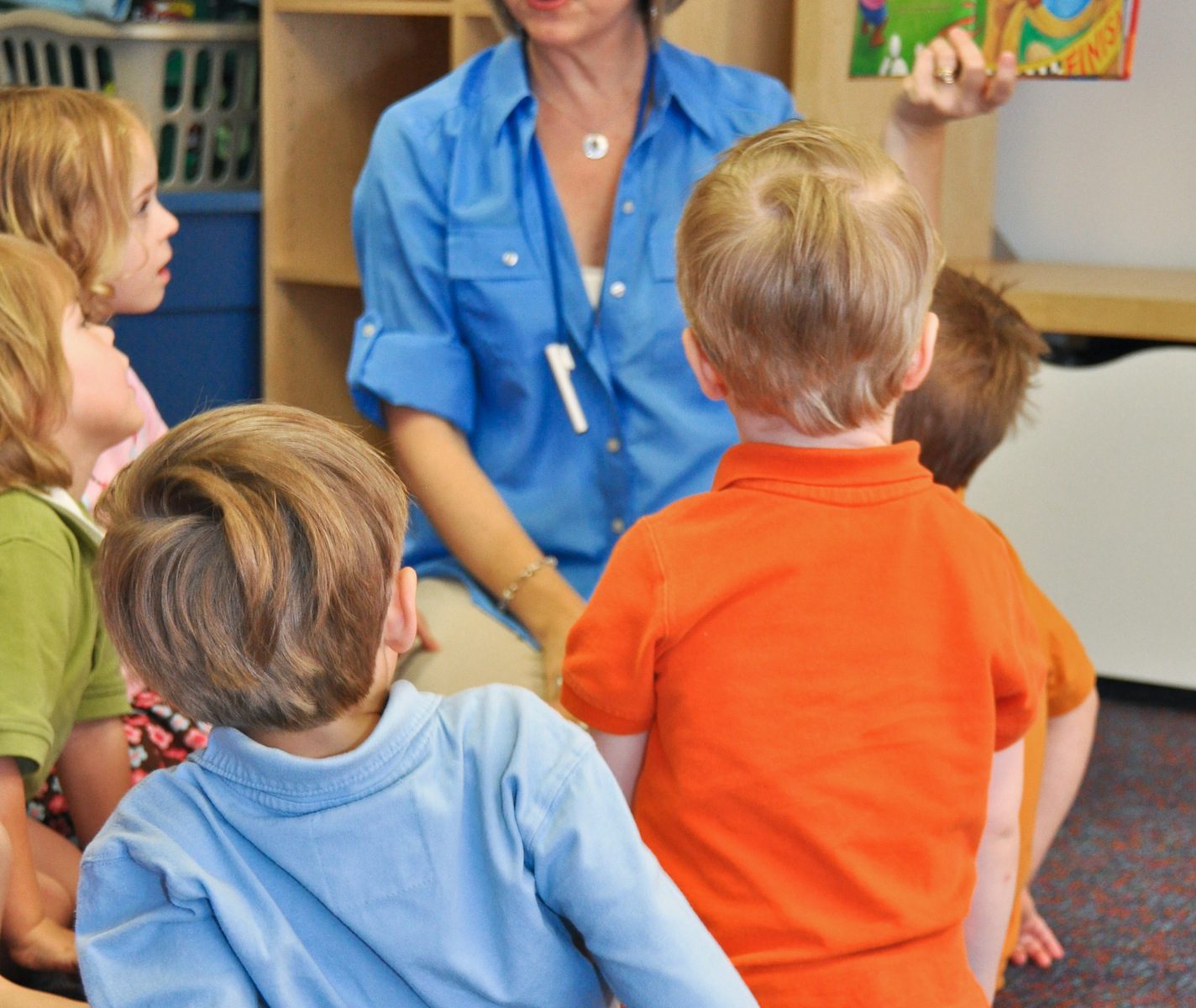
teacher reading to preschoolersYes. You read the title correctly. Early childhood teachers give kids the gift of gab. Research proves it! A team of researchers at UNC’s Frank Porter Graham Child Development Institute recently published a compilation of studies that shows how early childhood educators positively impact the language development and communication abilities of infants and toddlers.
“When teachers ask children questions, respond to their vocalizations, and engage in other positive talk, children learn and use more words,” explained Kathleen Gallagher, co-investigator, in a press release.

Along with Nicole Gardner-Neblett, Gallagher created a resource with educational activities for kids that teachers can use to best impact language development. The free eBook, More than Baby Talk, includes 10 specific ways teachers of daycare curriculum can promote the early language development of infants and toddlers. Research-based ideas include engaging in conversations with children, reading books multiple times, using props, and (drum roll, please!) participating in early childhood music activities.

Using early childhood music to support language development

As creators of early childhood curriculum that uses music as the vehicle for early language and literacy development, we know that early childhood music classes are tied to improvements in young children’s early language development, increased vocabulary acquisition, and a greater phonological awareness. In fact, children who participated in our early childhood curriculum, ABC Music & Me, for just 30 minutes a week experienced a 32 percent literacy gain! We could go on and on about the benefits of music on a child’s brain development, social and emotional development, physical abilities, creativity, and more!

From the classroom teacher to the teacher at home

Of course, early childhood educators aren’t the only, well, early childhood educators. A parent is a child’s first and best teacher, especially during

the early years. These same strategies can work at home, too.

“We think parents could use these same practices with their young children,” said Gardner-Neblett in a press release. “By using these strategies at home, parents can provide children with the rich language exposure and opportunities they need to enhance their language and communication, helping them to achieve in preschool and beyond.”

At Kindermusik, we support a parent’s pivotal role as a teacher. It’s one of the reasons enrollment in our programs always includes materials and resources, including the music from class, that families can use together at home—or on the go.

Early Literacy Curriculum with Research-Proven Results

For more information about bringing our childcare curriculum, daycare curriculum, or early childhood curriculum to your school, email us at info@abcmusicandme.com. Oh, and by the way, our early childhood curriculum intentionally uses all 10 of the practices recommended!

December Giveaway!

Kindermusik - Where Music and Learning Play

Share your favorite Kindermusik memory from outside of class for your chance to win a Kindermusik Prize Package – and a new iPad!

Kindermusik - Where Music and Learning PlayAt Kindermusik, we believe parents are their child’s best teacher – so we provide fun ways to extend the learning outside of class through music, stories, activities, crafts, video field trips, and so much more.
This December, we invite you to share your favorite Kindermusik memory from outside of class for your chance to win a Kindermusik prize package – and entry into our December Grand Prize drawing to win an iPad!

To Enter:  Simply fill out the form on our December Giveaway page.

We encourage family involvement in education and would love for you to share your favorite memory of your child singing along to a Kindermusik song, reading a favorite Kindermusik story, or playing along with one of their favorite Kindermusik@Home activities.
For ideas, check out this Kindermusik kid singing one of his favorite Kindermusik songs,
Elephants Have Wrinkles. How cute!!!

FOL Fridays – Stop… and GO!

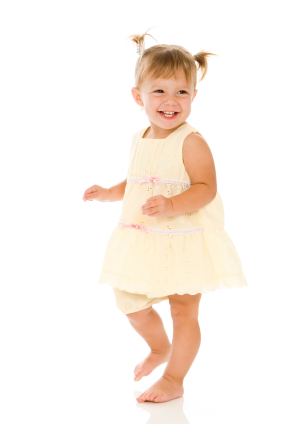
Smiling Dancing Toddler GirlOne aspect of self-control is inhibitory control, or the ability to stop oneself and wait. Toddlers love stop-and-go games because they allow them to practice control over their physical bodies and to revel in their mastery of this control. Inhibitory control is important in social interactions where taking turns is involved, and as such is an important skill for success in school.
In fact, studies suggest that “children who learn that they have the capacity and opportunity to exert control over their actions early in life may be more likely to learn to accept responsibility for their actions as they mature.”
(Fostering Children’s Social Competence: The Teacher’s Role by Lilian G. Katz and Diane E. McClellan)
Tips for parents: Teach your child the ASL for “stop” as seen HERE. Giving your child something to do (i.e., making the sign for “stop”) helps them be able to stop more immediately, plus it’s a fun thing for kids to learn. It is also a good non-verbal communication tool for you to have handy when there’s a need for your child to stop. You can also play a simple stop-and-go game by singing and moving, stopping at the end of the song with the ASL “stop” sign, and going again with as many more verses as you can stand!

Shared by Theresa Case, whose Kindermusik program at Piano Central Studios in Greenville, SC, is proudly among the top 1% of Kindermusik programs worldwide.

5 fun things for kids to do that teach sustainability

(Source: makingmulticulturalmusic.wordpress.com/)

This time of year we all seem to be on the lookout for family activities and fun things for kids to do. After all, with the holiday season upon us who doesn’t need ideas for activities for 2 year olds, 3 year olds, or the whole family? Let’s be honest, though. It probably never hurts to have a few extra ideas for fun things for kids to do—at any time of the year.
So, we pulled together a few ideas from Pinterest that we thought the rest of the Kindermusik community would enjoy. These family activities are not only fun but they also include the added benefit of teaching sustainability for kids. Go ahead and pin this post and consider it like that extra change of clothes for your children you always keep in the car—you might need them today or next week—but you know you will need them!

5 family activities that support the environment for kids

  1. 14 world instruments that can be made from recycled materials.  Looking for something to do with that roasting pan? Try transforming it into a gong.  Instead of taking that old cardboard box or milk container to the recycle bin, let your child use it for a drum or a shaker.
  2. Go on a nature scavenger hunt. Playing outside and noticing the world around us teaches young children about the importance of caring for our planet. Try this nature scavenger hunt with the whole family. The pictures make it easy even for non-readers to join in on the fun.
  3. Make a Ball Maze from recycled materials  Paper towel and toiler paper tubs can work for this fun activity for kids. To extend the activity, you can even encourage your children to decorate the tubes with paint or crayons.
  4. Turn artwork into, well, artwork. Put on music from Kindermusik class, give your children white paper and crayons, and encourage them to draw what they hear. Then, use this blogger’s idea to turn their artwork into something new.
  5. Read about the earth. Sometimes a trip to the library can be just the adventure a baby, toddler, or preschooler needs. While there, grab a few of these books about the earth and snuggle up to read together.

Did you like these ideas for fun things for kids to do? Then try: 5 ideas to involve the whole family in being green. It feels good to be prepared with creative family activities and take care of the environment for kids at the same time!


How Kindermusik Passes the Parent Test

mom and baby enjoying KindermusikIn a recent post, we highlighted some of the components of “The Parent Test,” that mostly unwritten list of criteria against which parents evaluate the worth and value of many of the activities, toys, and experiences we choose for our children.  We made a pretty bold claim that Kindermusik is one of the best and most reliable answers to ALL of the questions that we identified on The Parent Test.  Here’s why we so enthusiastically and confidently make that claim…
Kindermusik has a proven track record.
We are the original music and movement program.  Over the last 30+ years, Kindermusik International has been relentless in its pursuit to be on the cutting edge of early childhood education through the vehicle of music and movement, continually incorporating the latest and best research, training licensed educators, and publishing exceptional Home Materials, now available digitally.
Kindermusik parents say so.
“I’ve learned how to be a better parent and teacher to my children.  With Kindermusik, there’s a reason for everything we do in class – everything is a building block.  The best part is we are told how it all fits together.” – Jill C., Kindermusik mom.
In fact, when surveyed, 99% of parents who responded said that they would recommend the Kindermusik program to other parents.
Kindermusik activities benefit your child in every way.
Your child’s development is completely integrated.  However, the areas of growth or development of your child can be divided into these major categories:  Language, Cognitive, Emotional, Physical, Social, and Musical.  Here are just some of the ways that the Kindermusik experience enhances each of these areas:
Language: Through songs, chants, and stories, Kindermusik encourages early communication, speech, labeling, rhyming, and emergent literacy – all of which contribute to your child’s language development.
 
Cognitive: Kindermusik inspires your child’s learning, problem-solving, memory, ability to follow directions, think creatively, and sequence.
 
Emotional: Kindermusik gives your child a safe place to express feelings, build relationships with you and with others, learn appropriate behaviors, be secure, and form healthy emotional attachments.
 
Physical: From birth on, your growing child needs to be enabled to move and to develop skills like body awareness, balance, coordination, and spatial awareness.  The combination of music and movement in our Kindermusik classes are perfect for your child’s physical development.
 
Social: Because Kindermusik is a group class experience, your child will learn the value of play and friendship as he or she practices the life skills of turn-taking, sharing, and interacting with others.  You’ll make some great friends along the way yourself too!
 
Musical: Music and movement are the core of the Kindermusik experience.  Your child’s love and understanding of music is developed right from the very start through singing, playing instruments, and listening as we introduce the fundamental musical concepts of patterns, rhythm, and melody.
 

FamilyMusicClassesForKids_KindermusikInternational_BannerCome experience Kindermusik for yourself and see first-hand how Kindermusik passes the Parent Test at a FREE preview class.


FOL Fridays: Listening

Ear-worm

toddler smilingFocused listening activities are part of every Kindermusik class. Why is the skill of listening so important? Being able to focus on, listen carefully to, and distinguish sounds is an important skill in school, work, team play, and even friendship-building. Becoming a focused and

discriminating listener will help your child become a better, happier, more well-rounded learner.

IDEA: Plan a toy hunt! Hide a couple of toys, then instead of saying “You’re getting warmer” or “You’re getting cooler,” use your voice or an instrument. High sounds can mean the seeker is getting closer, while low sounds can indicate the seeker is getting farther away. Then it’s your turn—let your child hide the toys and guide you, the seeker, with high and low sounds.

Compiled by Theresa Case, M.Ed., who has an award-winning Kindermusik program at Piano Central Studios in beautiful Upstate South Carolina.

15 Ways Kindermusik Prepares Your Child for School

Development of the BrainOne of the reasons we’re fond of saying that Kindermusik is so much more than just music is because Kindermusik benefits your child in so many more ways other than just musically.  In fact, keeping your child enrolled in Kindermusik classes is one of the very best things you can do to help your child be prepared for – and succeed in! – school.

Here are 15 ways that Kindermusik’s early childhood music and movement curriculum prepares your child to be successful in school:

1. Kindermusik develops the whole child by supporting all areas of development – musical, language, emotional, physical, social, and cognitive development.
2.  Kindermusik teaches your child to be a problem-solver.
3.  Kindermusik encourages your child to think creatively.
4.  Kindermusik gives your child practice in working cooperatively with his/her peers.
5.  Kindermusik builds the spatial-temporal and reasoning skills required for math, science, and engineering.
6.  Kindermusik develops the social and emotional skills that are essential factors in school readiness.
7.  Kindermusik helps children gain the phonological processing, spoken language, and comprehension skills that are foundational to literacy.
8.  Kindermusik teaches children the rhymes that help them become better readers.  (according to reading expert Mem Fox)
9.  Kindermusik activities help brain cells make the connections needed for nearly every kind of intelligence.
10.  Kindermusik teaches children music through the best music curriculum on the planet, and science and research continue to support the huge and lasting benefits of early childhood music study.
11.  Kindermusik gives children a pressure-free environment in which to practice and enhance their budding musical skills.  (A new study shows that music practice can actually sharpen the brain.)
12.  Kindermusik gives children the opportunity to form early and positive student-teacher relationships where they learn to listen and respect an adult other than their special adults at home.
13.  Kindermusik is focused on process, not performance, thereby nurturing a child’s self-confidence and desire to try new things.
14.  Kindermusik gradually increases your child’s independence as he/she gets older so that he can more successfully transition into the school environment.
15.  Kindermusik classes inspire a lifelong love of not just music, but also a lifelong love of learning.  Any child who loves to learn is sure to be successful in school!

Kindermusik Classes - Enroll Now - For a Child's Brain, Body, Heart & Soul

We invite you to see for yourself how Kindermusik will prepare your child for school, starting with a FREE Preview class on us!