
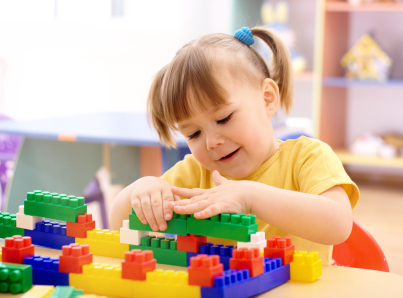
Celebrate Inventors Month with the benefits of music

Benefits of Play for Children

Happy Inventors Month! In 1998, the United Inventors Association of the USA (UIA-USA), the Academy of Applied Science, and Inventors’ Digest magazine started Inventor’s Month as a way to celebrate the various contributions of inventors. Inventors make our lives easier from electricity to indoor plumbing to modern medicine to peanut better.
The list of top inventors probably includes Thomas Edison, Benjamin Franklin, Albert Einstein, George Washington Carver, Marie Curie, every childBenefits of Play for Children. Wait. “Every child?” Yes! Children make great inventors. Think about it. An inventor is someone who creates some new process, appliance, machine, or thing. To a child, everything is a new process—from learning how to eat, roll over, stand, walk, talk, roll a ball, and more. Children also discover new uses for everyday objects. A laundry basket becomes a turtle shell, a stack of pillows turns into a mountain worth exploring,  a baby spoon makes a great instrument, and blocks become, well, just about anything!

3 ways to encourage children as inventors

  1. Participate in the arts. Research indicates that STEM graduates (those majoring in Science, Technology, Engineering, or Mathematics fields) showed an increased involvement in visual arts, acting, dance, and creative writing. Even better, 93 percent of those graduates participated in music classes as a child.
  2. Combine music and learning. Music is more than, well, music. The benefits of music include supporting the social-emotional, physical, and the cognitive development of children. New research found that science-themed music videos boost scientific learning. We already learn our ABCs through song, so why not learn about gravity, phases of the moon, the life cycles of frogs, and all about magnets, too?
  3. Play together. Children learn through play. Provide the children in your life with hands-on playtime with caring, loving adults. Playing together helps children learn about their world and their place in it.  One of the greatest inventors of all time, Albert Einstein, understood the benefits of play. After all, he said, “Play is the highest form of research.”

4 musical activities to celebrate Inventor’s Month

Kindermusik@HomeFor Babies: (From Cuddle & Bounce, “Bluebird, Bluebird”—Crinkly, Furry, Bumpy, Strange)
Touch, squeeze, feel, pat. Babies explore their worlds with their hands (and sometimes mouths). With an adult there to exercise diligent supervision, of course, there are plenty of ways to introduce new and interesting textures and sensations to a baby.
For Young Toddlers: (From Sing & Play “Family All Around Me”—Fill & Empty)
Fill it up, dump it out. Fill it up, dump it out. Sound familiar? Fill and empty is an enduring ‘play scheme’ among toddlers, and there are so many variations on the theme! Here are a few fresh ideas that will engage toddlers.
For Older Toddlers: (From Wiggle & Grow “Beach Days”—Let’s Make…A Beach in a Bottle! 
Kindermusik@HomeYou know that feeling, when you’ve spent a great day at the beach and you just wish you could bottle it and bring it home with you…?
For Preschoolers: (From Laugh & Learn “Outside My Window”—Be a Sound Inventor: Weather Sounds)
You won’t believe how easy it is to make these weather sound effects! This friendly tutorial teaches you how to imitate the sounds of light rain, heavy rain, thunder, and wind.

Do you want to bring the power of music to your child and family? Find a local Kindermusik educator today! 

Contributed by Lisa Camino Rowell, whose oldest daughter learned about the phases of the moon through song.  
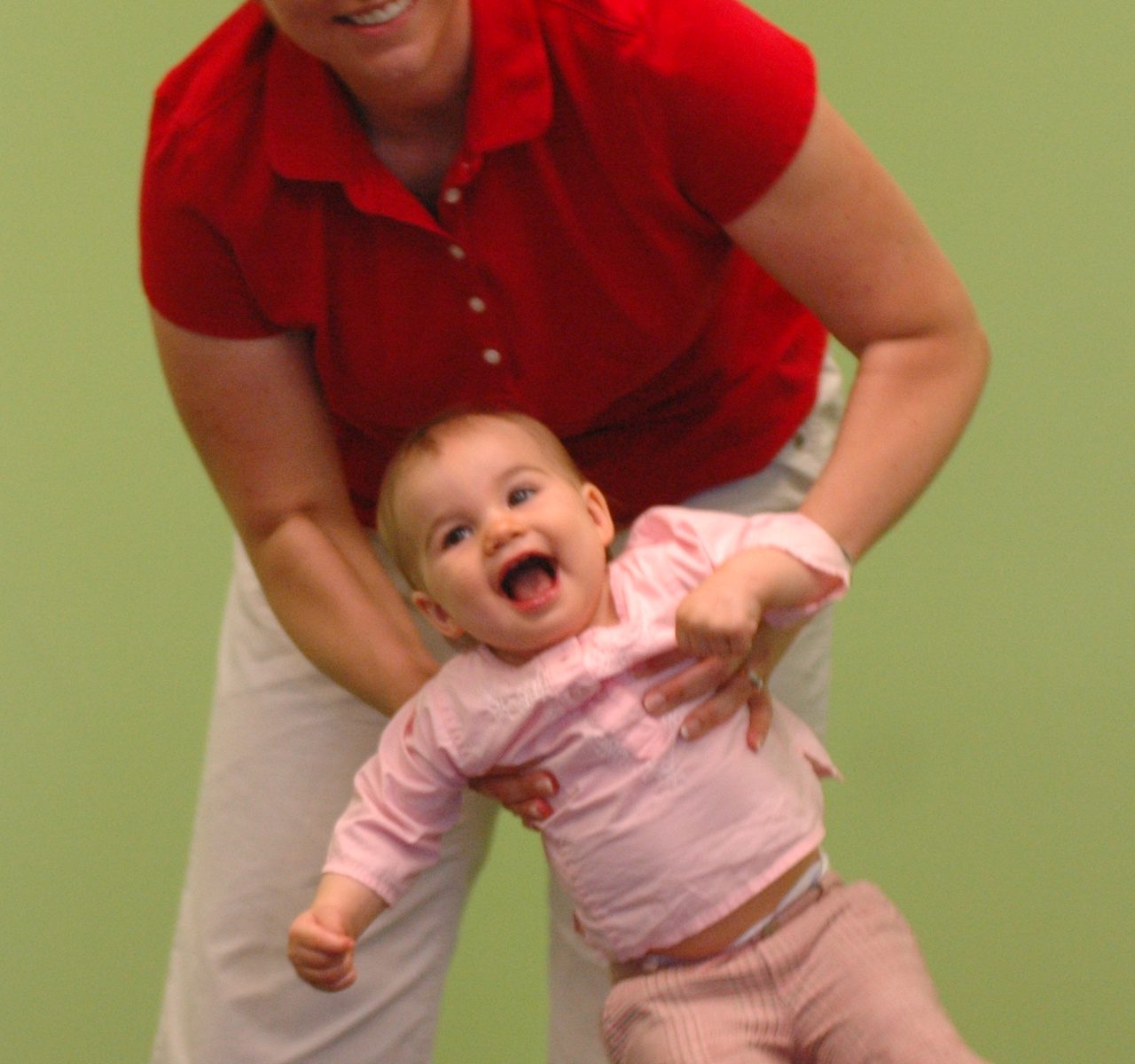


Music and Movement Benefits: The Power of the Vestibular System

The vestibular system controls the sense of movement and balance.  From birth to about 15 months, the vestibular system is very active as the child gains a sense of gravity and knowledge of the physical environment through movement.  Rocking, swaying, and movement which rotates the head stimulates the vestibular system, stimulating the brain for new learning.”  – Smart Moves, by Carla Hannaford.

Activating learning through movement

The vestibular system is the “vestibule” or “entryway” for learning into the brain.  By stimulating the vestibular system, we are helping your child’s brain get ready to learn.  By intentionally stimulating the vestibular system during your baby’s early years, your child becomes even more aware of the physical environment through movement.  Research shows that vestibular stimulation is not only tied to “alertness” but also to a child’s language development.

A parent’s insights can give a child an academic advantage

Understanding how children learn in the early years and what activates that learning is vital to understanding how children will learn and progress through school later on, according to developmental psychologist Dr. Katherine Towney.  This is precisely the reason that Kindermusik educators are so fond of sharing the benefits and the reasons for what we do in class.  We believe that parents are children’s first and best teacher, and the more you know and understand about your child, the better learner you can help him/her become.

Why we move, rock, dance, and sway in a Kindermusik class

Here’s a brief of overview of just how we activate the vestibular system – and a child’s learning – in our Kindermusik classes:
Babies:  Using and labeling movements like twisting, swaying, turning, and rocking.
Toddlers:  Helping the children learn to move confidently and creatively on their own – with mom, dad, grandma, or nanny near by, of course.
Preschoolers:  Introducing a whole new vocabulary of movement and joyfully exploring all of those new words and ways to learn.
Big Kids:  Keeping the movement in our feet and whole bodies inspires the children as they are also learning to read, write, and compose music.

12 Fun Ways to Use Music to Inspire Learning in the Summer

[vc_row][vc_column][vc_column_text]We’re excited that we can let you in on the secret.  Your secret resource is music!  You could even think of music as your secret super power
Well, maybe that wasn’t such a surprise, but here are some ideas for utilizing music as your secret super power – your way to banish boredom and inspire learning.

12 Fun Ways to Use Music to Inspire Learning in the Summer

1. Read together. 
There’s a strong connection between the skills required for reading books and reading music, and you can enhance both reading literacy and music literacy by reading with your child.  It’s a great way to sneak in some calming snuggle time too!
2. Take a listening walk.
Listening is a huge part of music and music appreciation.  And there’s nothing like a listening walk to captivate your child’s imagination, hone their listening skills, and develop an appreciation for the world around us.  (By the way, we highly recommend the book for children by Paul Showers called The Listening Walk.)
3. Turn on some gentle music and blow bubbles.
Blowing bubbles is one of the cheapest forms of childhood entertainment, and you can even sneak in some music appreciation benefit by playing some classical music during the activity. We suggest selections by J.S. Bach or Mozart.  By the way, a bubble wand with more than one hole is the secret to a better bubble-blowing experience.
4. Color to music with sidewalk chalk.
Want a no-mess activity that also gets your child’s creative juices flowing?  Give your child some sidewalk chalk and offer the canvas of your driveway.  Add a variety of music for fresh inspiration and enjoy watching your little artist go to work.
5. Use painter’s tape to create roads and movement pathways.
Hum along as you drive small cars around tape-defined roads or dance and move around paths marked by painter’s tape. The fun will be in deciding where to put the tape down, and the learning comes as you sing and label with movement words.
6. Use a hula hoop as a prop for dancing.
Hula hoops are great for helping children develop spatial awareness and refine large motor skills.  The joy comes in exploring all the different ways to dance with, around, and through the hoop!
7. Make a homemade instrument… or two!
Here are ideas for a coffee can drum, tubular bells, cardboard guitar, simple shakers, homemade maracas, and castanets.
8. Start your own marching band. 
Grab your homemade instrument, turn on some marching music, and have a parade through the house… and back around again!
9. Make your own musical water classes.
What a great way to learn about what makes a high sound and what makes a low sound!  A delightful experiment in sound, logic, and listening skills.
10. Play a Musical Alphabet Chairs Game.
This is a fun educational twist on a classic childhood game that combines moving, listening to music, stopping on cue, and identifying letters of the alphabet.  Perfect for when it’s too hot or yucky to be outside!
11. Dance like nobody’s watching!
Put on some homemade ankle bells and dance, dance, dance!  This is a great activity for indoors or outdoors.  You can even help your child experiment with different kinds of music for all kinds of creative movement ideas.  (Tip for the ankle bells:  If you don’t crochet, simply cut of the top of an old pair of socks and sew the bells on them.)

Not only will you have the weekly class to look forward to, but you’ll have Home Materials to use and enjoy throughout the week, including lots of great music to listen, sing along, and dance around to!  Find a class nearby.[/vc_column_text][/vc_column][/vc_row]

From a cowboy community to the Kindermusik community

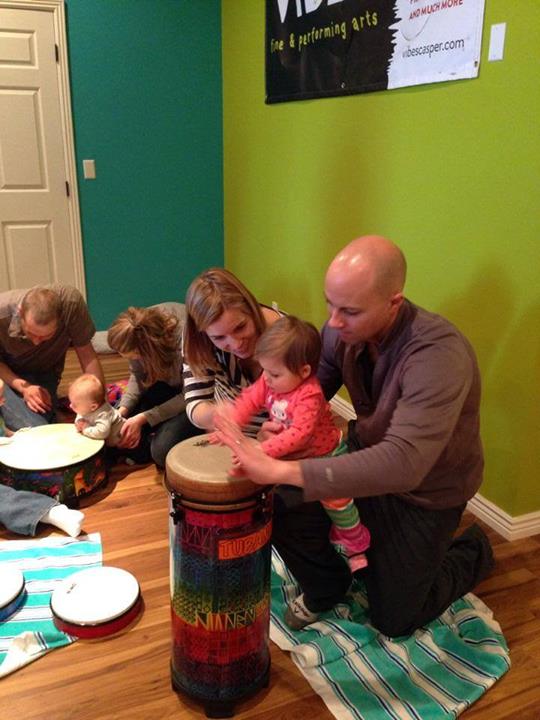
Music can both bring an existing community together and create a new community. Director, Musician, and Kindermusik Educator Amy Munsell understands the power of Amy Munsell 2music to make connections between people of all ages and all backgrounds.
When she opened her studio in Casper, Wyoming, late last year, many people in her area questioned the need for music classes for babies, toddlers, preschoolers, and families. Now after growing from 20 families to over 200 (and still growing!), people no longer question it. Well, local pediatricians do. They contact her to find out what she teaches in Kindermusik class, because they can tell the developmental difference during well-child checkups!
“My studio, VIBES, is about putting good and positive vibes out into our community, allowing students to excel in music and the arts, and to expose students and families to new opportunities in the world,” explains Amy.
With a Bachelor of Arts in Music Education, a seasoned saxophone performer, and more than 10 years of music teaching experience, Amy researched various early childhood music programs before deciding to teach Kindermusik. “With my background, I looked for specific things in a curricula. I love how Kindermusik supports the educator as the guide and the parent a the most important teacher in a child’s life. Also, Kindermusik starts with newborns through 7, such as critical time in early childhood development,” Amy explains. “Plus, I immediately loved the sense of community Kindermusik portrays—from the training to the curriculum development to the classroom.”

Building community in the everyday moments with music

Amy Munsell 3Of course, music makes those big life occasions all the more memorable. What is a wedding without music to walk down the aisle or a graduation without a little “Pomp and Circumstance”? But, music also celebrates those everyday (and just as important!) moments.
“I was working so hard as a performer to share one big moment with an audience, but in teaching Kindermusik, I get to share so many little moments every day in the classroom,” confesses Amy. “And with babies and toddlers—especially—this is such an important time in their lives. Every moment is important.”
Each week in Kindermusik, Amy gets really silly in class.  “We have a little party every time,” explains Amy. “The parents, children, and I get to have so much fun through music and we secretly teach kids all at the same time. The magic of what I get to do and the moments that we share together is magical!” concludes Amy.

From the cowboy community to the Kindermusik community

Amy Munsell 3Casper, Wyoming, may be known as “cowboy country” but thanks to Amy Munsell—with the support of her husband, Lukas—it’s also now Kindermusik country. We know that the sense of community she and her Kindermusik families create is making a profound difference in the lives of children in Casper.
Are you interested in joining the Kindermusik community as a licensed Kindermusik educator or by enrolling your family in a class? Learn more!

Contributed by Lisa Camino Rowell, a freelance writer and believer in the power of Kindermusik to create community.

6 educational activities for kids to celebrate International Museum Day

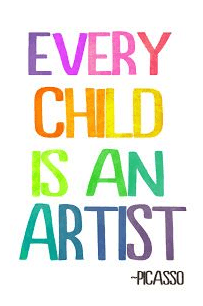
Every child is an artist
(Source: Discoverymoments.com)

Every May 18th marks International Museum Day. As a community of early childhood educators and families, we know—as Pablo Picasso pointed out—“All children are artists. The problem is how to remain an artist once they grow up.” Introducing children to new experiences, such as various genres of music or art, can be one of the ways to help them hold onto their artistic and creative side…and reminding all of us grownups about our own creative side!
While in our Kindermusik classes for babies, toddlers, big kids, and families, we introduce children to a variety of musical styles from around the world, a trip to a local museum can show children the various contributions found in the art world. However, for those not able to travel to a museum, we put together 6 educational activities for kids that help celebrate International Museum Day at home or at school.

6 ways to celebrate International Museum Day with young children

  1. Visit the Musical Instrument Museum for a virtual listening tour.  Go on a listening tour of featured instruments found at the only museum dedicated to global instruments. From the Octobasse to the Cajun Accordion and metal clarinet to the differences between the Irish Bouzouki and the Greek Bouzouki, children (and adults) will enjoy discovering new musical instruments!
  2. Plan a virtual visit to one of the world’s most famous museums. Choose from The Louvre in Paris, The Frick Collection  in New York, or The British Museum in London. These museums house some of the most-loved and well-known masterpieces.
  3. Take a virtual self-guided tour of the Smithsonian National Museum of Natural History. Children find art in the smallest details, including a ladybug on a leaf, dewdrops, or a rainbow after a storm. This museum is dedicated to inspiring curiosity, discovery, and learning about the natural world.
  4. Create a museum in your home or classroom. Set aside one room or area in your house or early childhood classroom to display children’s creations. Invite family members and friends to come over for a tour.
  5. Create art!  Need inspiration? Here’s a collection of art projects and crafts for Kindermusik@Homeyoung children from Kindermusik@Home, using their hands as shapes, tools, and mementos.
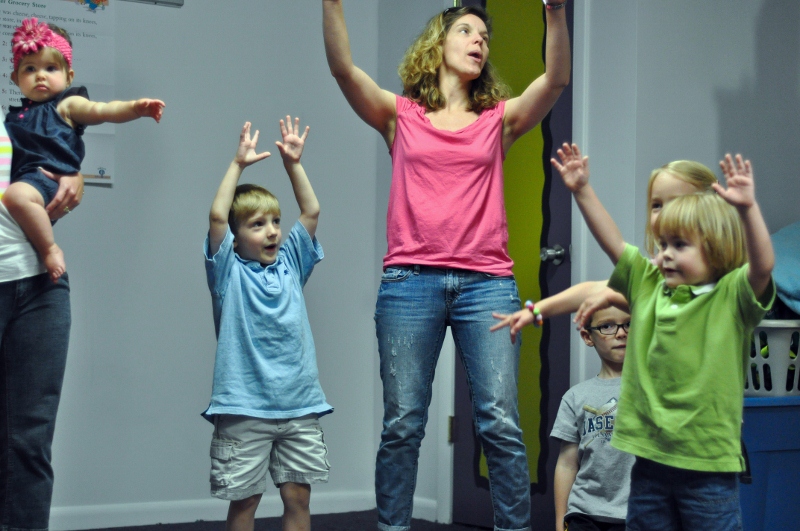
  6. Read children’s picture books together and celebrate the art of illustration. Visit your local library or download the Reading Rainbow app, featuring hundreds of books and videos, including new music-themed content by Kindermusik.

Contributed by Lisa Camino Rowell, who plans to celebrate International Museum Day by creating handprint art with her two girls.
 

The Surprising Movement-Literacy Connection

taking risk risks

At Kindermusik, we’ve said it for years…

Movement and learning go hand in hand.

music and movementThat’s why we found it fascinating that a recent study done in Australian schools identified a direct correlation between young children who engaged in a movement program as they were also being taught to read.  The findings were astounding.  The combination of consistent movement and exercise while being taught to read resulted in the students becoming better learners.  Reading, writing, and fine motor skills improved, and the students were much more focused.  In fact the program was such a huge success that it was implemented in all K5 and 1st grades at Applecross Primary School.
If you want your child to be a better reader, you don’t have to be one of the lucky students who attends Applecross Primary School in Melville, Australia.  You can simply find your local Kindermusik educator and enroll in a Kindermusik class!

“Thinking and learning are anchored by movement.”*

Here are a few of the ways we move in Kindermusik that help our Kindermusik kids be ready – ready for school, ready to read, ready for music lessons, and ready to succeed in life!

  • Expressive movement:  Whether it’s dancing in Daddy’s arms as a baby or learning the steps of a minuet as a big kid, dancing is an important part of self-expression and developing creativity.
  • Synchronized movement:  Bouncing, clapping, stomping, or playing an instrument to a steady beat – first with and then later without Mom’s help.
  • Fingerplays, songs, and chants:  Moving little fingers, hands, and arms is a big part of how we learn through labeling and how fine motor skills – essential for holding a pencil, cutting with scissors, and playing the first notes on a piano – begin to develop.
  • Group dances and circle songs: Simple choreography or moving together as a group provides vital social interactions that also facilitate a sense of community and belonging.
  • Spatial exploration: Exploring the “where” and “how” of movement as it relates to one’s sense of self and relationship to personal and general space is a how the all-important skill of spatial awareness is developed.
* Dr. Carla Hannaford, Smart Moves: Why Learning Is Not All in Your Head


Let’s call the whole thing early language development!

Are you familiar with the old George and Ira Gershwin song, “Let’s Call the Whole Thing Off”? They wrote it for the 1937 film Shall We Dance, starring Fred Astaire and Ginger Rogers. Sing with us:

You like potato and I like potahto

You like tomato and I like tomahto

Potato, potahto, Tomato, tomahto.

Let’s call the whole thing off.”

 [youtube]https://www.youtube.com/watch?v=zZ3fjQa5Hls[/youtube]
In the song, the two characters sing about their differences, primarily around the way they pronounce certain words. We love that song (and movie clip) even more after reading a new early language development study from the University of Toronto.

Toddlers and early language development

In the early language development study, researchers set out to investigate if and how children in the early stages of learning their first language come to understand words spoken in different regional variants of their native language. (You like potato and I like potahto!”) For example, English spoken in England sounds different from English spoken in Australia or the United States, not to mention the multiple dialects found within regions of countries.
The team found that toddlers are remarkably good at comprehending speakers who talk with regional accents, even if the accent is new to the children. Although initially in the study, children as young as 15 months old could not comprehend unfamiliar accents, they quickly learned to understand after hearing the speaker for a short time.
“Fifteen-month-olds typically say relatively few words, yet they can learn to understand someone with a completely unfamiliar accent,” explained Elizabeth K. Johnson, associate professor with the University of Toronto’s Psychology department in a press release.  “This shows that infants’ language comprehension abilities are surprisingly sophisticated.”

ELL students and early language development

While the University of Toronto study focused on a toddler’s first language, it highlighted the incredible language-learning abilities of very young children. Children under the age of 8 who learn a second language are more likely to speak like a native speaker and also show marked improvements in their first language. Our ESL curriculum, ABC English & Me, uses English songs for kids in an immersion environment filled with music and movement.  In addition to the ESL curriculum in the classroom, ABC English & Me includes materials for families to use together at home to support a parent’s role as a child’s first teacher and further develop English language skills. Try this ESL activity for kids:

Find & Count: Where’s the Frog? 

Kindermusik@HomeYoung children love to search for hidden or missing items. Following the English language directions in the video, and then finding (and saying hello to!) the frogs, fish, and ducks, provides young ELL students much-needed feelings of mastery and success in English.
Learn more about bringing ABC English & Me and the power of music to your school!


Contributed by Lisa Camino Rowell who prefers tomatoes but will eat a tomahto or two on occasion. 

Take it outside—the benefits of music that is!

Ah, summertime. Warmer temperatures, playing in sprinklers, catching fireflies, and walking barefoot in the grass—summer is the perfect season to “take it outside.” In the world of childcare curriculum development, it can also mean the season of the slide. No, not the slide found at the local playground or park, but the summer slide, which refers to what can happen to the early literacy and language, early math or other cognitive development skills of children who do not participate in learning activities over the summer.
KindermusikPresents_ABCMusicAndMe_AGlobalEarlyChildhoodCurriculum[1]Thankfully, the benefits of music engage children in learning throughout the year. Summertime can be the perfect season to grab a CD player and take the educational activities outside as part of a childcare summer curriculum. Our early childhood curriculum, ABC Music & Me, includes 3-package units to make it easy to engage children in early literacy and language development as part of a summer camp or as part of summer programming. Plus, Kindermusik includes @Home activities to connect what happens at school with the every day routines and rituals of a family’s life.

3 summer programming options to take the benefits of music outside

1. Wiggle & Grow celebrates the unique joys of young toddlers. Children will love the songs, stories, and games and early childhood educators will love helping  them practice a  wide variety of skills such as gross and fine motor, turn-taking, social skills, and active listening.
The summer-friendly 3-unit package includes themes: Up in the Sky, Marvelous Me, Time for Lunch
Sneak-peek at one of the activities from Kindermusik@Home that supports parent involvement in early childhood education:
Kindermusik@Home Sky Counting From “Up in the Sky”: Sky Counting
Learning number words (e.g., one, two, three, four) is the first number sense skill. Research shows that number sense is a critical early predictor of future mathematics success. A sky full of clouds, airplanes, blimps, and more… 1, 2, 3, 4, 5…families will love counting them all.
 2. Laugh & Learn encourages preschoolers’ natural love of music, storytelling, and imaginative play with age-appropriate activities that introduce early music concepts and foster independence, social and emotional skills, language growth and self-control.
The 3-unit summer-friendly package includes themes: Home Sweet Home, Let’s Play, On the Go
Sneak-peek at one of the activities from Kindermusik@Home that supports parent involvement in early childhood education:
Home on the Hive Kindermusik@HomeFrom “Home Sweet Home” Home on the Hive
Measurement is one of the core areas of early math. In the activity, families will enjoy comparing relative size and position of the bees in the hive.
3. Move & Groove engages students in music and movement activities such as songs, rhymes, and dances that also promote creativity, social-emotional skills, physical coordination, confidence and more. Plus, language rich content boosts vocabulary while strengthening cognitive and literacy skills to help increase school readiness!
The 3-unit summer-friendly package includes: Sounds Abound, Jazz Kitchen, and Dance with Me
Sneak-peek at one of the activities from Kindermusik@Home that supports parent involvement in early childhood education:
From Sounds Abound: Can You Guess What Song? 
Kindermusik@Home Guess What SongIn this game, children are asked to identify a familiar song by listening to the sounds presented through a voice humming. Sounds simple—but to be successful, children must process the sounds, connect them to the music and lyrics of songs they know, and then recall the name of the song. Processing skills are the primary skills being exercised here. Processing, or the ability to perceive information, is an important cognitive skill that starts developing rapidly during the preschool and early school years.

Want to learn more about taking the benefits of music outside at your preschool or childcare center as part of your summer programming? Email us at info@abcmusicandme.com.


Music is a parent’s secret super power

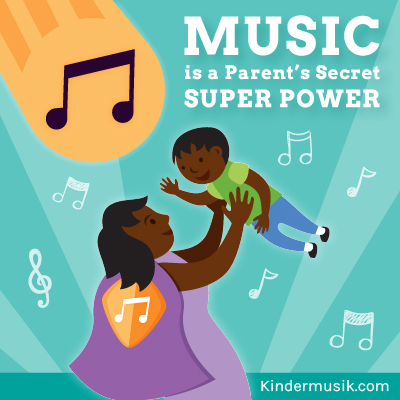
Music is a parents secret super powerParents of young children need special superpowers. Forget about leaping tall buildings in a single bound or even flying, parents really need the ability to turn invisible in order to check on a sleeping baby, the power to fully function on only 3 hours of interrupted sleep, and the capacity to do the laundry faster than a speeding bullet! Who knew someone so little could go through so many clothes!?
Music can’t help parents with those super powers (although we wish it could!), but the power of music can give parents other hero-worthy powers. After all, parents are heroes every day of the year—not just on Mother’s Day and Father’s Day.

4 ways music is a parent’s secret super power

  1. Music gives families the power of laughter and silliness. Children literally bring more laughter into our lives by laughing 10x more each day than the average grown-up. Children can easily find a reason to laugh. Bubbles in the bathtub, funny sounding words, dogs wearing clothes, and, even just jumping off the front step can all cause a child to erupt into fits of giggles. In Kindermusik, we laugh, giggle and even, yes, guffaw a lot when we sing silly songs like “Gang-Goo” or “Sally the Camel,” play or listen to funny sounding instruments, and even share a few knock-knock jokes during story time. Children develop a sense of humor over time as they learn what is and isn’t funny—and when it is appropriate (or not) to laugh. In our music education classes, we support your child’s growing sense of humor and give your whole family more reasons to chuckle. Plus, all this giggling strengthens your immune system, lowers stress, and supports your child’s divergent thinking skills.
  2. Music provides families the power to predict the future. OK, this one is for your little ones…but it certainly helps make a parent’s job easier! Young children’s brains seek predictable patterns to help regulate their internal clock and navigate daily transitions. Routines and rituals teach children that the world is a predictable (and safe) place. Listening to lullaby music at the end of the day, signals to children that bedtime is near. They can predict what comes next in the routine—warm bath, infant massage, special book, final bottle or nursing for the night, etc. Rituals and routines work closely together to provide continuity and connectedness—both vital to your child’s development. Adding musical cues helps make the transition to bedtime easier for everyone!
  3. boy asleep with musicMusic transmits the power of relaxation and sleep. Have you ever heard someone say, “You need to learn how to relax”? Well, they were right. Relaxing is a learned behavior that even the youngest child can begin developing. In Kindermusik, we include an unstructured quiet time with soothing music specifically designed to learn and practice relaxation. Your child’s world can be full of stimulating experiences. Teaching young children how to relax after a period of activity gives them time to recoup and prepare them for what’s next. An added bonus: Children who know how to relax and self-soothe can be better sleepers.
  4. Music celebrates the power of love and affirmation for parents. In school, we learned that following the rules, completing assignments on time, and studying for tests usually equals passing grades. That lesson continues into the workplace where a yearly performance evaluation determines bonuses, raises, or even promotions. Unfortunately, the same evaluation system does not exist in the world of parenting. Eighteen years is a long time to wait for a passing grade!  At Music is a secret super power badgeKindermusik, we don’t think you need to wait that long to receive affirmation. Breathe. Enjoy the moment with your child. You ARE your child’s best and favorite teacher. Every smile, every hug, every kiss is an A+. Each week in our music classes for babies, toddlers, big kids, and preschoolers, we intentionally include bonding activities, such as rocking and infant massage, to support the amazing connection you share together. It’s okay if you don’t have all the answers. (No parent ever does!) You do have all the love and that is better than any letter on a report card.

Looking to tap into music’s super powers for your family? Find a local Kindermusik educator and visit a class! 

Contributed by Lisa Camino Rowell, who loves tapping into the secret (and not so secret) powers of music.

How Kindermusik Graduates are Prepared to Succeed

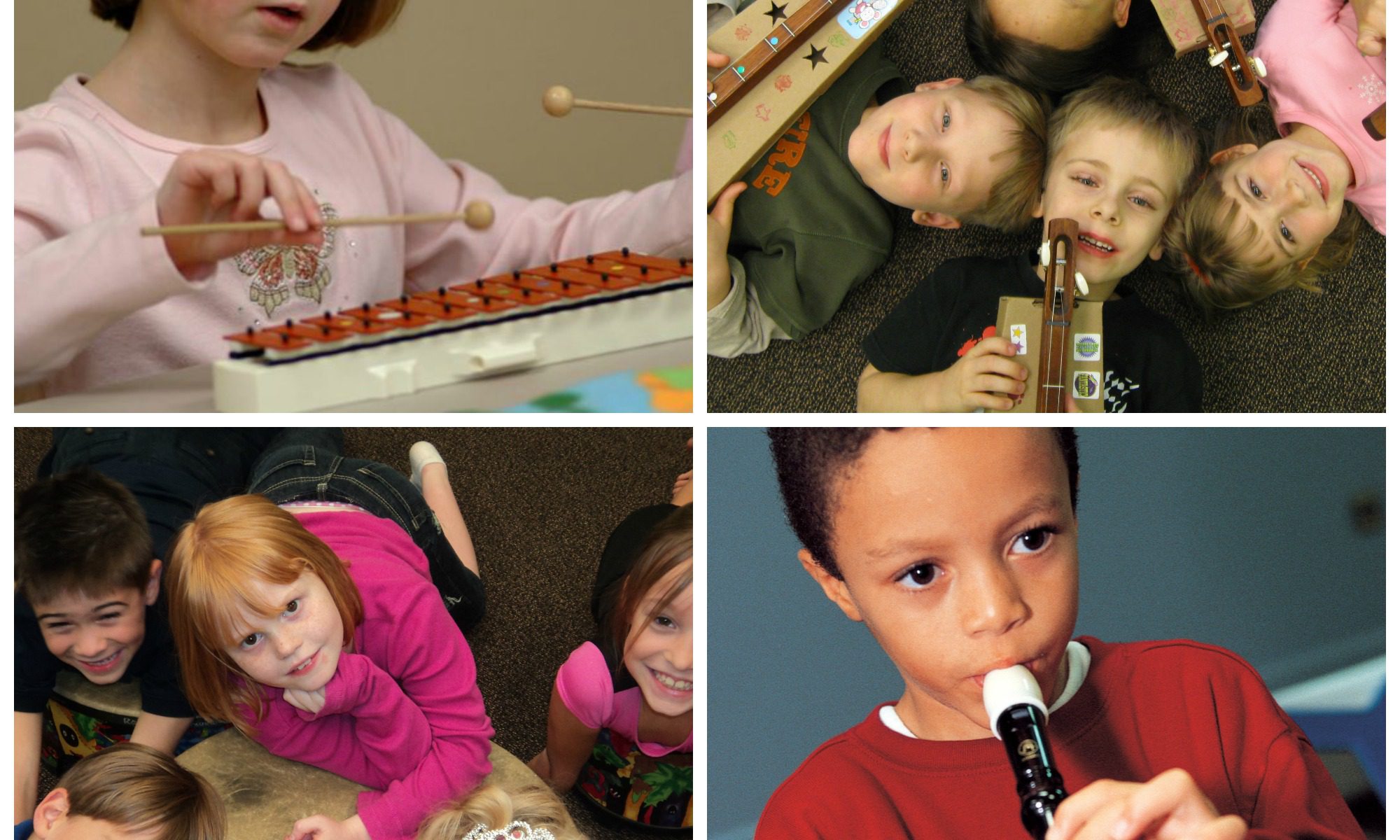
Young Child students play glockenspiel dulcimer drum and recorderThis is the time of year when many Kindermusik educators are bidding a fond farewell to their Kindermusik graduates – a bittersweet time for sure!  But they are sent way with so much pride, not just because of their accomplishments, but because of how Kindermusik has prepared them to succeed.

How Kindermusik Graduates are Prepared to Succeed

Musically – With hands-on experience with musical instruments and musical concepts under their belts, Kindermusik graduates are ready to take the next step into formal music instruction.  The rich foundation that was laid in the early years with Kindermusik uniquely prepares a child not just to do well, but to excel in music lessons.
Cognitively – Experiencing music with Kindermusik affects nearly every kind of intelligence and stimulates development in every area of the brain.  Kindermusik kids are problem solvers, creative thinkers, and eager learners.  They have strong, independent reasoning skills.
Creatively – Kindermusik kids have been given the freedom to be self-expressive, to explore the possibilities, and to think outside of the box.  Their imaginations have been encouraged and their minds stretched to think in terms of possibilities and “what if’s.”
Emotionally – Being in the safe, nurturing environment that Kindermusik provides has helped develop the key social skills and resilience that are essential for school-readiness and success.  Kindermusik kids are well-adjusted and socially adept.
Socially – Self-confidence and the ability to cooperate and work together in a group are just some of the social skills that set Kindermusik kids apart.  The friendships that blossom in Kindermusik and the sense of belonging that results imbue a sense of confidence and emotional well-being and connectedness that last long after graduation from Kindermusik.
Physically – Kindermusik graduates know how to move!  They’ve developed a sense of self, learned to move creatively, and experienced the joy of movement.  Kindermusik has provided these graduates with opportunities for noncompetitive, success-oriented, creative experiences. Gross and fine motor skills have been refined.
Aesthetically – A child in Kindermusik develops an appreciation of the arts and is more aware of the beauty around him.  His soul has been touched by the power of music during the early years when these kinds of musical and aesthetic experiences have the greatest impact.

YC Grad 5Poised for success in music, in school, and in life.

Kindermusik kids are ready… perfectly poised to succeed in music, in school, and in life.  And the path to readiness has been filled with exuberant delight, happy memories, and joyful learning – all of it accomplished through the power of music and an experience that is uniquely Kindermusik.
Congratulations, Kindermusik graduates!  We couldn’t be prouder.

Interested in learning more about how Kindermusik will benefit your child?  Learn more at www.Kindermusik.com and also visit a free class!