It’s that time of year when everyone is talking about resolutions. Losing weight. Exercising. Working less…but when it comes to parenting resolutions, those are little harder to navigate.
Here’s the thing—changes you make for the sake of stronger development for your child(ren) and easier communication between everyone are WORTH it. So, here are 4 practical musical resolutions you can start right away and stick to.
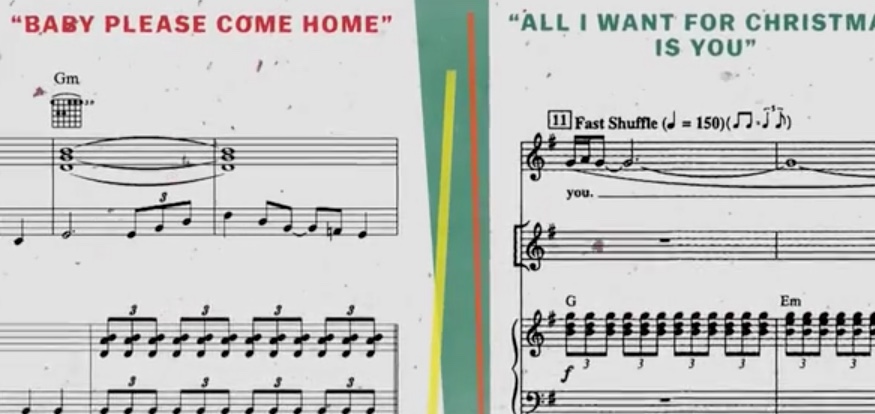
It’s that time of the year again. Gifts, egg nog, and mistletoe are everywhere. But along with the drinks and decorations, Christmas music is everywhere. To celebrate the season, we turn to the the folks over at Vox. In this video, Vox tells the tale of that secret chord that shows up in so many Christmas songs, from Bing Crosby to Mariah Carey.
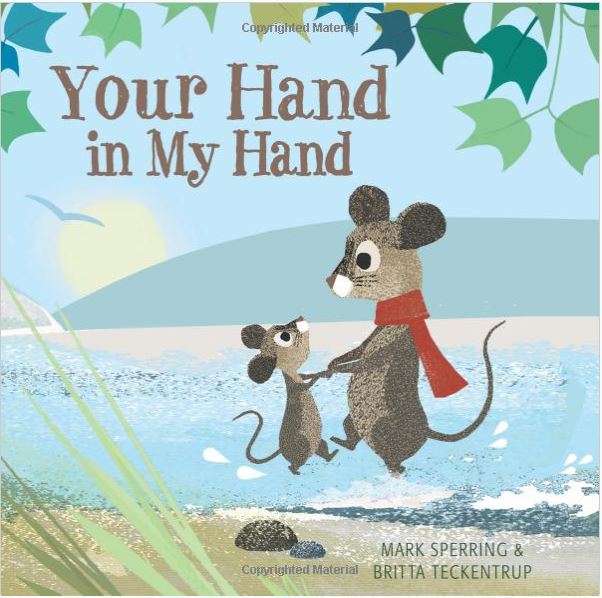
In this book review installment, we look at Your Hand in My Hand, a sweet story of togetherness through the seasons that celebrate the simple moments and experiences that bond a child and their special grown-up even more closely – those times when life can truly be enjoyed at its fullest.
You don’t plan for it to happen, but sometimes the stress creeps in over the holidays. And your children, being the sensitive little souls that they are, often feel it too, whether they can articulate it or not. So how can you make the holidays a little easier and more enjoyable? We’re delighted to share seven musical ways to make your holidays less stressful – for you and your child.
Study after study after study in respected, peer-reviewed journals in a variety of fields tell us the same thing over and over, and we don’t mind pointing it out each time a new researcher adds to the heap of science telling us what we already know: if you make music, it positively impacts other areas of learning. In other words, music makes you smarter!
Repeating the same songs in the car or reading the same stories at night can be cumbersome for adults, but humans are rooted in repetitive structure. And it’s that structure that catapults brain growth in the first few years of life. Continue reading “Why Repetition Matters in Early Childhood Development”
I’m guessing that if you are here, reading this blog, that music is important to you. Your kids might take part in Kindermusik, or perhaps music lessons. You may attend concerts or listen to music on a regular basis. I probably don’t have to convince you about music’s power and its importance in the human experience. I’m not worried about you. It’s the folks that might not know what music can do – the impact it can have on a person’s life – those are the folks I want to reach.
You may know some folks that might not know the benefits of music education or the effect music has on the developing brain, particularly in young kids. So…I want to turn you all into advocacy experts. I want to provide you with knowledge you can pass on to others when they ask “why is this so important?”
Here we go!
Music Makes You Feel
I bet you’ve had this experience. You are at a concert or you are listening to the radio and a song comes on that you have never heard before. I have had many of these experiences – many of them on the podium while conducting. But the most intense instance was about a year after my father passed away. I was living in Hawai’i by myself. My wife had relocated back to the mainland in anticipation of my discharge from the Navy. I hadn’t really processed my father’s death. I hadn’t cried. I hadn’t really mourned.
As I was driving home from an event in Honolulu, Tracy Chapman’s The Promise came on the radio. Take a listen:
It was the combination of Tracy’s voice and the following lyric that got to me:
If you think of me If you miss me once in a while Then I’ll return to you I’ll return and fill that space in your heart
I lost it. I actually had to pull over to the side of the interstate (yes, there are interstate highways in Hawai’i) as I couldn’t see the road through the tears. A year’s worth of bottled emotion all came flooding to the surface because of this song. The music released my previously padlocked feelings about my Dad. How? Music causes chemical changes in the brain. As far as emotion is concerned, music causes the nucleus accumbens, the amygdala, and the cerebellum to light up. These areas are related to emotion.
In this instance, music acted as a key to a lock for me. It was incredibly therapeutic.
Music Builds Bridges
I’ve told stories about students at festivals sharing why they sing. The answers range from sweet and silly at the beginning of a festival to deep and complex toward the end. Recently, I was in Wisconsin conducting a middle school choral festival. These young musicians had just met each other – 100 seventh, eighth, and ninth graders came together to make music. During breaks, I would ask my question – why do you sing? These kids felt safe enough to share some very meaningful reasons:
“My grandfather passed away three years ago. We would sing together in church choir. It’s my way to stay close to him.”
“It’s the only place I feel like I can really be me.”
“Music makes me realize that I am powerful.”
“Music is my home.”
Last month, I conducted a county high school choral festival. One student wrote the following:
“Music has prevented me from making a decision that could have altered my life (multiple times). It has brought me pure happiness in times of endless sorrow.”
To share these things with folks you have just met doesn’t happen too often. Making music with others builds compassion and empathy. It’s a pretty amazing thing to be a part of.
Experiencing music at a young age starts this process. It helps with social development in ways that other activities do not. If you have a second, head over and read my friend Elliot Cole’s post about why music matters. He shares the story about a prison inmate letting his guard down because of music. It’s quite the tale.
Music Fertilizes the Brain
Music for music’s sake should be reason enough as to why we should study music. John Adams gave us this gem in a letter to his wife, Abigal Adams:
I must study politics and war that my sons may have liberty to study mathematics and philosophy. My sons ought to study mathematics and philosophy, geography, natural history, naval architecture, navigation, commerce, and agriculture, in order to give their children a right to study painting, poetry, music, architecture, statuary, tapestry, and porcelain.
It’s right there – one of the United States’s founding fathers told us – music is a noble art and worthy of our time. But, in the interest of advocacy, music has a positive impact on how we learn other subjects. The National Association for Music Education provides a great list for music advocacy superheroes. Here is a selection:
Musical training helps develop language and reasoning: Students who have early musical training will develop the areas of the brain related to language and reasoning. The left side of the brain is better developed with music, and songs can help imprint information on young minds.
Students learn to improve their work: Learning music promotes craftsmanship, and students learn to want to create good work instead of mediocre work. This desire can be applied to all subjects of study.
Better SAT scores: Students who have experience with music performance or appreciation score higher on the SAT. One report indicates 63 points higher on verbal and 44 points higher on math for students in music appreciation courses.
Kids stay engaged in school: An enjoyable subject like music can keep kids interested and engaged in school. Student musicians are likely to stay in school to achieve in other subjects.
The list goes on. Music can reduce recovery time after surgery and working out. It can improve cognitive brain function and help folks manage anxiety. I’ve said it before – music is magic.
Go Forth and Advocate!
Now that you have the details – spread them far and wide! And if you are looking for more ways to pull music into your life, take a class! Get your kids involved with Kindermusik! Write a song! Don’t wait any longer – go see that band you’ve been wanting to see or maybe head to your local symphony.
[vc_row][vc_column][vc_column_text]Oh, the directions we could take this article! Written music is a language. Phrase structure…how a piece of music unfolds section by section can be considered a language. And like any language, the more you experience these aspects of music, the easier they are to understand. When you get used to Bach’s compositional language, you are more likely to spot a piece by Bach you don’t know. The same can be said for Miles Davis’s playing or James Taylor’s style. If you’ve experienced a lot of those artists’ output, you know their “language” when you hear it.
But that’s not what we are talking about today. Our brains actually process music much like our brains process language. Let’s science!!! (Yes…I used science as a verb. It’s okay. Roll with it.)
[/vc_column_text][/vc_column][/vc_row][vc_row][vc_column][vc_column_text]Jazz Improv and Dr. Charles Limb: Otolaryngological Surgeon and Musician
What is improv in jazz? Well, first, it’s music made up on the spot, following agreed-upon rules, like tonal center, meter, and duration. It’s almost like a good debate. One person expresses their views and then another person counters. This happens often in jazz, this dialogue. Dr. Limb decided he wanted to learn more. He wanted to see what was going on in the brain of a performing musician. From The Atlantic:
He and a team of researchers conducted a study that involved putting a musician in a functional MRI machine with a keyboard, and having him play a memorized piece of music and then a made-up piece of music as part of an improvisation with another musician in a control room.
[/vc_column_text][/vc_column][/vc_row][vc_row][vc_column][vc_column_text]What did Dr. Limb discover? While taking part in these jazz dialogues, while musicians improvise with other musicians, the parts of the brain that process language light up on the MRI. What’s more important, the area of the brain specifically linked to syntax, the arrangement of words to construct well-formed sentences in a language, also lit up.
Jazz Dialogue is Language – with an Interesting Difference
While the brain’s language areas light up while conversing in jazz, there is a substantial difference that actually makes sense. Syntax areas respond – but semantic areas do not. What does this mean? Semantics has to do with meaning. When speaking or listening to a sentence, the brain will work out structure (syntax) and meaning (semantics). When dealing with improvised jazz, the parts of the brain responsible for meaning are dormant.
Ok. What does that mean? Dr. Lamb explains:
Music communication, we know it means something to the listener, but that meaning can’t really be described,” Limb said. “It doesn’t have propositional elements or specificity of meaning in the same way a word does. So a famous bit of music—Beethoven’s dun dun dun duuuun—we might hear that and think it means something but nobody could agree what it means.
– Dr. Lamb/The Atlantic
[/vc_column_text][/vc_column][/vc_row][vc_row][vc_column][vc_column_text]Victor Wooten, a bassist, composer, and author, expands on this idea in his TedEd video:[/vc_column_text][/vc_column][/vc_row][vc_row][vc_column][vc_video link=”https://www.youtube.com/watch?time_continue=13&v=3yRMbH36HRE”][/vc_column][/vc_row][vc_row][vc_column][vc_column_text]Dr. Lamb’s TedTalk is pretty interesting. Take a look and see what you think.[/vc_column_text][/vc_column][/vc_row][vc_row][vc_column][vc_video link=”https://www.ted.com/talks/charles_limb_your_brain_on_improv”][/vc_column][/vc_row]
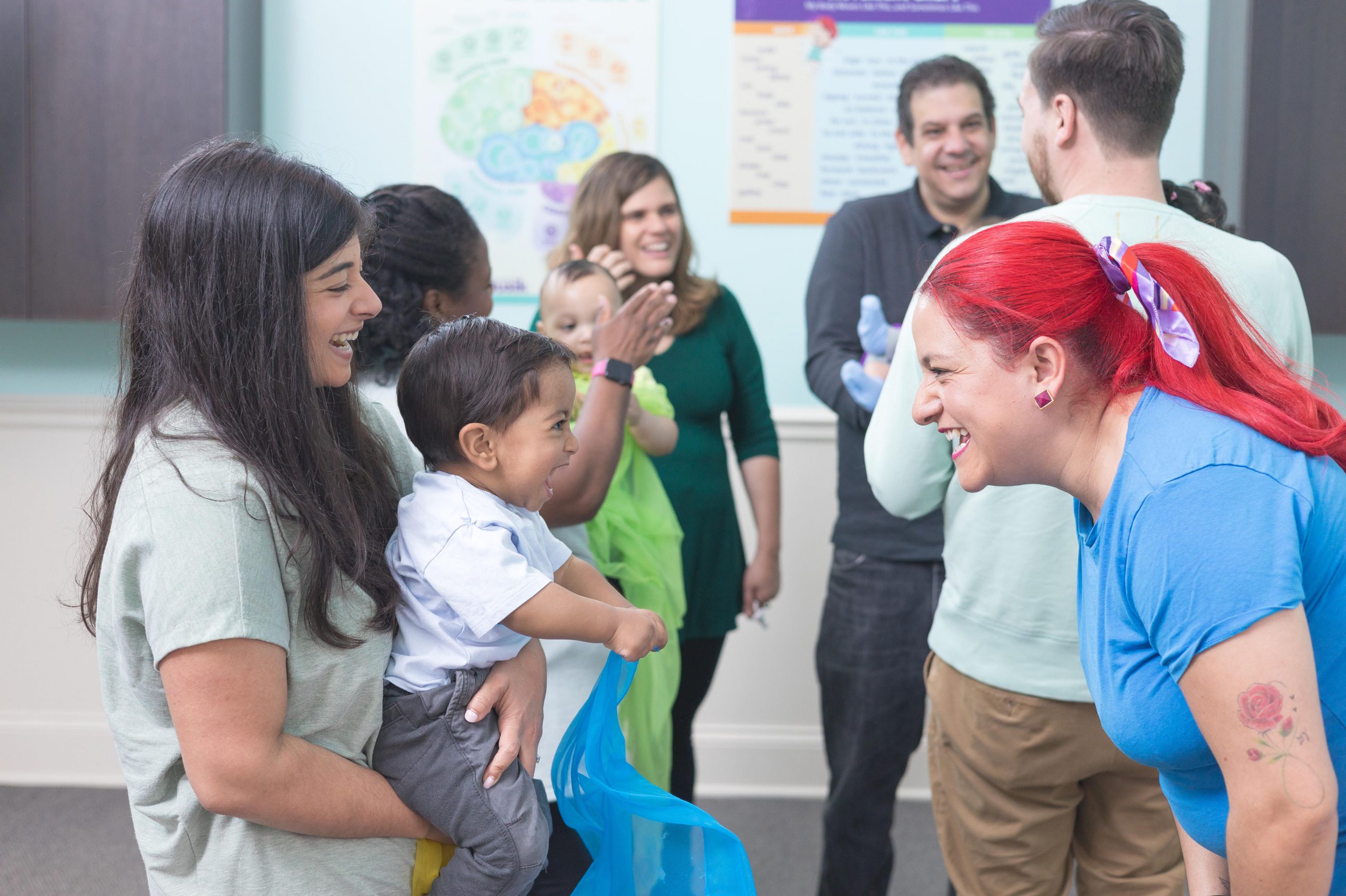
All you have to do is look around the classroom during a Kindermusik class, and you’ll see why children love Kindermusik so much — from beloved class routines to pint-sized friends to favorite instruments to that teacher they absolutely adore. Look a little closer, and you’ll notice that the adults are really loving “their” Kindermusik too. Here are some of the surprising reasons why.
Theresa Case changing lives!
You’ll Receive Great Parenting Support
This support comes in many different packages. Sometimes it’s that hug of empathy when your child is having a bit of a rough day. Sometimes it’s that spontaneous celebratory cheer of delight when your child takes his first steps in class. Sometimes it’s sharing the joy as another child sings for the first time. Sometimes it’s that interesting fact about child development or that musical tip you can take home with you. And then at home, you can find all kinds of musical parenting insight and support through the Home Materials.
You’ll have a Social Outlet, Too
Let’s face it. Parenting a young child can be lonely sometimes. It’s tough work too. And that’s why so many adults tell us that they look forward to coming to Kindermusik as much as their child does! In class, Kindermusik parents meet other adults with children – and challenges – that are similar. And there’s nothing that inspires community and connection more than the circle dances and social activities that are built into every class.
You’ll Gain Tremendous Insight into your Child’s Heart and Mind
There’s something about being in a music class with a proven curriculum that’s been so carefully rooted in child development. Being in a Kindermusik class opens various windows of understanding as you observe your child in the weekly class setting, interacting with other children and adults, participating and engaging in his/her own way, and even listening to the teacher.
You’ll Know – or be Able to Adapt – a Song for Nearly Every Situation
From the “toys away” song to that one lullaby that works every time, you’ll have a whole playlist of songs and rhymes to make day-to-day routines and transitions a little easier. Best of all, these will be the kinds of songs you’ll enjoy singing – songs that bring a smile, soothe, distract, or inspire play.
You’ll Feel Really Good about Being Able to Enjoy an Activity with your Child that has Such a Lifelong Impact
It isn’t every day that the things you do with your child can strengthen your heart ties with each other or create the feelings of connection and stability that being in Kindermusik does. And knowing that you are fostering a lifelong love of both music and learning makes being in Kindermusik all the more special.
You might think that you enrolled your child in Kindermusik because the Kindermusik experience is so good for him or her. But after over 30 years of bringing children and families together in the Kindermusik classroom to enjoy and make music together, we can say with confidence that Kindermusik is just as good for the grownups who participate as it is for the children they bring to class each week.
Shared by Theresa Case who has had the joy of making a difference with Kindermusik in the lives and hearts of children and families at Piano Central Studios in beautiful upstate South Carolina for nearly 25 years now.