Educator Spotlight Preview

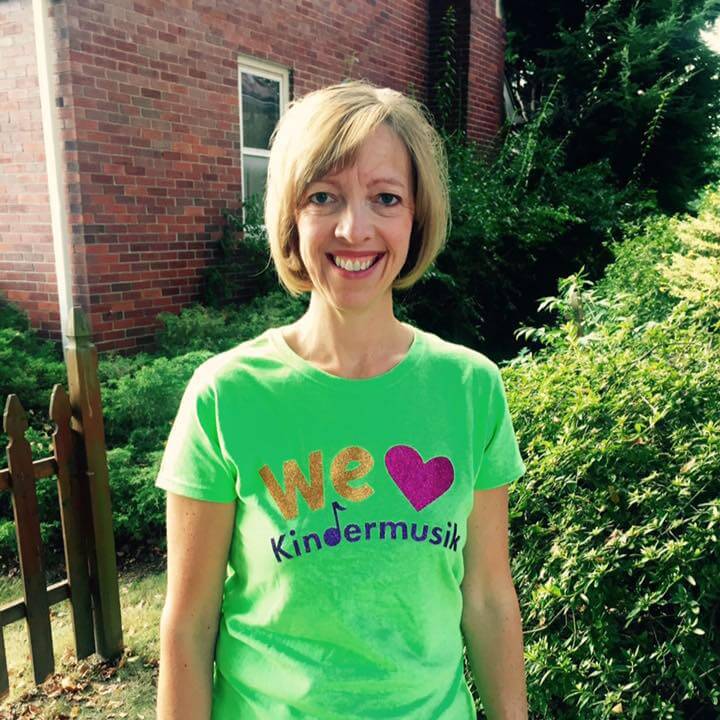
Christa Beck, Educator

[vc_row][vc_column][vc_single_image image=”8332″ img_size=”full” add_caption=”yes” alignment=”center”][/vc_column][/vc_row][vc_row][vc_column][vc_column_text]Happy Monday, friends! Next month, we will be starting a regular feature at Minds on Music – our Educator Spotlight! I will have the good fortune of interviewing a Kindermusik Educator. The sun never sets on Kindermusik! Somewhere on the globe, at any moment, there’s a Kindermusik educator leading children in song and movement. These talented, dedicated folks make the magic happen. We should get to know them!

Christa Beck, Educator
Christa Beck

Our first subject will be 9 time Maestro Award recipient Christa Beck. As a preview, here’s a recent article about Christa and her work with Kindermusik that appeared in the Pittsburgh Tribune-Review. She is a wonderful example of the type of people teaching our kids, and a great place to start!

Know an educator we should feature? Let me know! Contact me at dr.boyle@markaboyle.com.[/vc_column_text][/vc_column][/vc_row]

Why I Teach Music

Theresa Case

At certain times of the year, I find myself reflecting back on what it is that I love so much about teaching music, and specifically, teaching Kindermusik.  Little did I know the beautiful journey that would unfold for me professionally or the countless precious memories that I would come to treasure when I taught my first class way back in 1994.

Photo by Hal Cook, 2014, taken at Piano Central, Greenville, SC.

So why do I teach Kindermusik?  There are literally thousands of reasons – most of whom are under 3 feet tall, have adorable smiles, and have quite stolen my heart.  But if I had to pick a few highlights, these would be the some of my favorites.

I teach Kindermusik because I…

  • Get to be a part of helping parents linger in the moments of experiencing a music class with their children and making musical memories that knit their hearts together.
  • Get to share in the happy celebration with all the other parents when a little one takes his first wobbly steps or says his first word in class.
  • Get to swallow the lump in my throat when I hear a little voice singing parts of our Hello song with me for the first time.
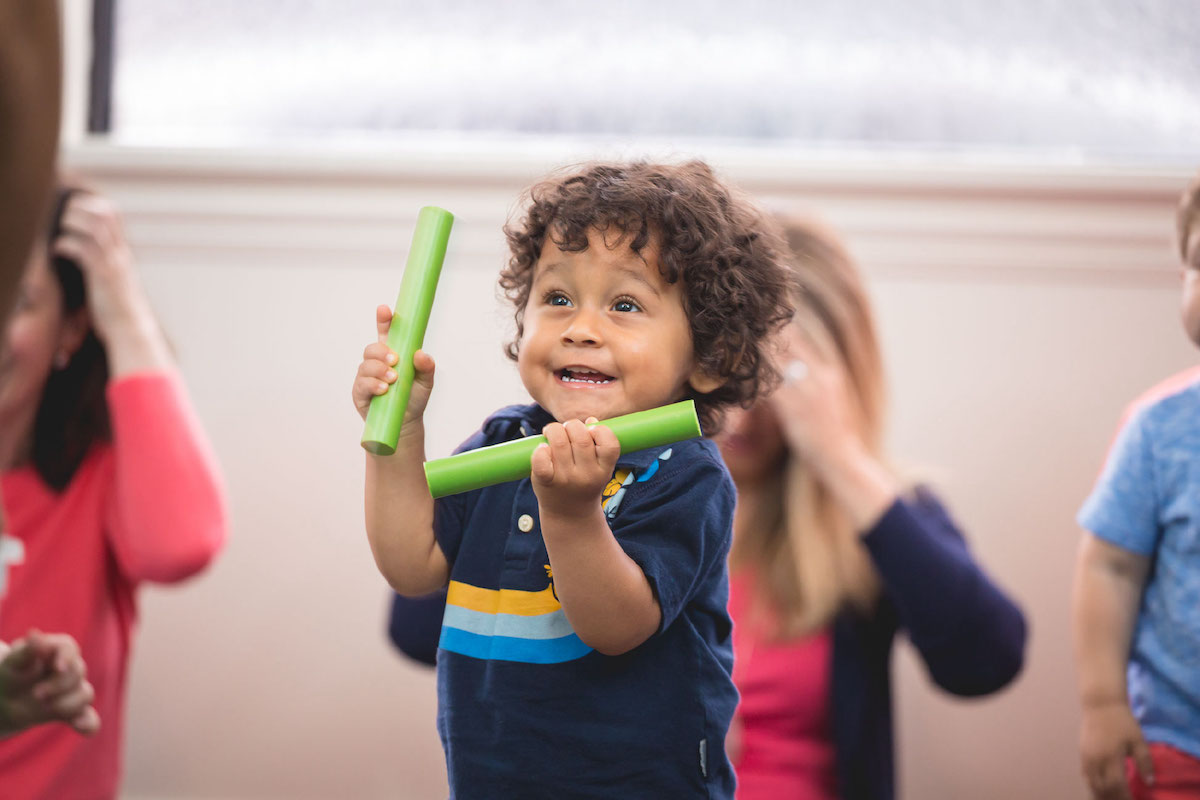
  • Get to be a proud onlooker as a parent and child discover at least 10 different ways to play the rhythm sticks – together.
  • Get to smile right back with a preschooler who is just beaming with pride over raising his hand to share his best idea for singing a song.
  • Get to hold my breath in delight as a big kid confidently plays the notes of his first composition on the glockenspiel.
  • Get the best hugs from little children whose love for music and their music teacher sweetly overflows after each and every class.
  • Have had a front-row seat to see Kindermusik babies graduate from the Kindermusik program, continue on in music lessons, and grow up to have a life-long love and aptitude for music.
  • Have the deeply fulfilling satisfaction of knowing that the world will be a better place because of the song my Kindermusik kids will have in their hearts forever.

And so, if you don’t mind, I think I’ll keep teaching Kindermusik for another 20 years or so… probably until my knees give out and I no longer have a voice.

Village baby with new logoWhy do YOU teach Kindermusik?  Share your reasons on the Kindermusik International Facebook page and tag #WhyITeachKindermusik.

Contributed by Theresa Case who has loved every minute of teaching Kindermusik and running an award-winning Kindermusik program in Greenville, South Carolina for over 20 years now

3 Ways Music Enhances Auditory Processing

A 2-year-old boy prepares to play the fiddle sticks in a Kindermusik class.

The pressure to establish strong pre-readers can be overwhelming. Early literacy development (the foundations needed for reading and writing) depends greatly on auditory processing skills, which includes auditory identification, discrimination, and sequencing. It’s hard to imagine the time it would take to focus on all of those skill sets individually. But there’s a one-stop-shop. 

Continue reading “3 Ways Music Enhances Auditory Processing”

Professional Development for all "Seasons" of Your Music Teaching Career

Grownups

Theresa Case teaches KindermusikOne of the things that sets Kindermusik educators apart is the requirement to not only be trained to teach our world-class curricula, but also the requirement to maintain and improve through professional development.  No matter what “season” you are in with your current or potential Kindermusik career, Kindermusik International offers professional development that’s just what you need when you need it.

When you’re just starting out as a new Kindermusik educator

After a vocal review, the professional development for new Kindermusik educators begins with a rich, in-depth online training course that helps prepare the new educator for everything from learning about each Kindermusik curriculum level to positive classroom management techniques to successful business processes.  Under the care and guidance of an experienced Kindermusik mentor, new educators are rewarded with their official Kindermusik license upon completing all of the training requirements.

Once you’ve been teaching Kindermusik for awhile

Just like the good beginning that Kindermusik gives to young children never ends, Kindermusik educators recognize that the journey towards masterful teaching never really ends.  Kindermusik International works to provide that additional professional development through Virtual Conferences, recorded webinars, and suggestions for other related training opportunities outside of the Kindermusik community.

When you need a shot in the arm

It happens to the best of us.  Because educators give so much of themselves in their classrooms and in the businesses, burnout can start to set in.  And when it does, Kindermusik is right there to support and encourage through face-to-face local meetings sponsored by the Partnership of Kindermusik Educators (PKE), recorded webinars, and other regular training and connection opportunities.

If you’re teaching for someone else

Kindermusik_SoundtrackForAnySeason_web-250x250-250x250Best of all, Kindermusik training is not just for the Kindermusik business owner – it’s for those teachers who are the backbone of that Kindermusik business owner’s program.  For Kindermusik educators who teach for someone else, there are training topics about classroom management, pedagogy techniques, child development, relationship-building, and more.

When you’re ready for a change

Teaching Kindermusik is a wonderful choice for teachers, music educators, music therapists, or moms who are looking for something different – and a way to make a difference through music in the lives of children and their families.  Kindermusik International provides plenty of helpful tools and lots of friendly guidance to help you make the best choice.
So, whether you are a prospective, newly licensed, or experienced Kindermusik educator, Kindermusik International is right there with you to support and encourage your professional development and personal growth – no matter what “season” you’re in.
Learn how YOU can Teach Kindermusik!

From a cowboy community to the Kindermusik community

Music can both bring an existing community together and create a new community. Director, Musician, and Kindermusik Educator Amy Munsell understands the power of Amy Munsell 2music to make connections between people of all ages and all backgrounds.
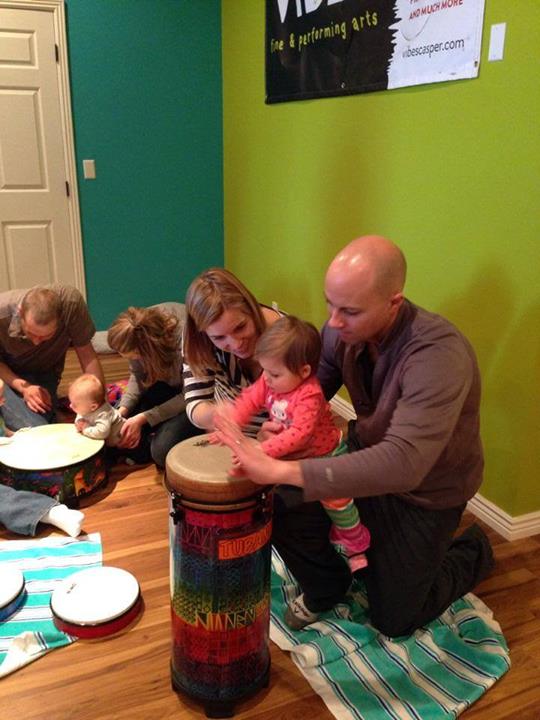
When she opened her studio in Casper, Wyoming, late last year, many people in her area questioned the need for music classes for babies, toddlers, preschoolers, and families. Now after growing from 20 families to over 200 (and still growing!), people no longer question it. Well, local pediatricians do. They contact her to find out what she teaches in Kindermusik class, because they can tell the developmental difference during well-child checkups!
“My studio, VIBES, is about putting good and positive vibes out into our community, allowing students to excel in music and the arts, and to expose students and families to new opportunities in the world,” explains Amy.
With a Bachelor of Arts in Music Education, a seasoned saxophone performer, and more than 10 years of music teaching experience, Amy researched various early childhood music programs before deciding to teach Kindermusik. “With my background, I looked for specific things in a curricula. I love how Kindermusik supports the educator as the guide and the parent a the most important teacher in a child’s life. Also, Kindermusik starts with newborns through 7, such as critical time in early childhood development,” Amy explains. “Plus, I immediately loved the sense of community Kindermusik portrays—from the training to the curriculum development to the classroom.”

Building community in the everyday moments with music

Amy Munsell 3Of course, music makes those big life occasions all the more memorable. What is a wedding without music to walk down the aisle or a graduation without a little “Pomp and Circumstance”? But, music also celebrates those everyday (and just as important!) moments.
“I was working so hard as a performer to share one big moment with an audience, but in teaching Kindermusik, I get to share so many little moments every day in the classroom,” confesses Amy. “And with babies and toddlers—especially—this is such an important time in their lives. Every moment is important.”
Each week in Kindermusik, Amy gets really silly in class.  “We have a little party every time,” explains Amy. “The parents, children, and I get to have so much fun through music and we secretly teach kids all at the same time. The magic of what I get to do and the moments that we share together is magical!” concludes Amy.

From the cowboy community to the Kindermusik community

Amy Munsell 3Casper, Wyoming, may be known as “cowboy country” but thanks to Amy Munsell—with the support of her husband, Lukas—it’s also now Kindermusik country. We know that the sense of community she and her Kindermusik families create is making a profound difference in the lives of children in Casper.
Are you interested in joining the Kindermusik community as a licensed Kindermusik educator or by enrolling your family in a class? Learn more!

Contributed by Lisa Camino Rowell, a freelance writer and believer in the power of Kindermusik to create community.

10 Ways Music Gives Teachers Super Powers

MusicIsATeachersSecretSuperPower_Kindermusik_Square (2)For over 30 years now, we here at Kindermusik International have been empowering music teachers all around the world with a special kind of super power – the power of music.
10 Ways Music Gives Teachers Secret Super Powers

Secret Super Power #1: Engaging a child’s mind, as well as his heart.  Many studies over the past two decades have suggested that there is a strong connection between music, learning, and academic success.
Secret Super Power #2:  Stimulating development in every area of the brain.  Music powerfully affects brain development including vision, balance, hearing, speech, behavior, sensation, skill, movement, and emotion.
Secret Super Power #3: Capitalizing on the close connections between music, movement, and learning.  It is movement, often in response to music, that “…integrates and anchors new information into our neural networks,” according to Dr. Carla Hannaford.
Secret Super Power #4: Making classroom routines and transitions easier.  Using a simple song or rhythmic chant  to transition from one activity to the next is often more effective – and more fun! – than verbal instructions.
Secret Super Power #5: Accessing a powerful tool that makes learning stick.  Ever met an adult who learned the state capitals of the United States by singing a song?  They can probably still sing all of those capitals!
Secret Super Power #6: Changing the energy level in the room at the touch of a button.  (The “play” button on your device, that is!)  Whether it’s a need for calm or a need for more focus, music can make the difference.
Secret Super Power #7: Music creates a positive atmosphere that enhances learning potential.  A classroom without music is like a teacher without a smile!  Music is one of the joys of life, and it can also result in more joyous and motivated learning.
Secret Super Power #8: Facilitating multi-sensory learning.  Children who learn through more than one sense tend to have the kinds of cognitive connections and associations that allow for more ways for information to be remembered, retained, and recalled.
Secret Super Power #9: Enhancing self-confidence and friendship through shared musical experiences.  Music has a way of bringing people together, and no where can this be more true than in a classroom.
Secret Super Power #10: Touching places in the heart that nothing else can.  Humans are innately musical beings, and we respond instinctively to the power of music.

For more ideas about integrating music into the classroom (and improving your super powers!), we recommend this article from the Johns Hopkins School of Education.  You can also learn more HERE about becoming a licensed Kindermusik educator.
 
And to all of the teachers who make such a difference in the hearts, minds, and lives of children every day… Happy National Teacher Day!  (Celebrated in the United States on May 7 and in Columbia/Mexico on May 15)
 

Educators in Italy speak the language of music and learning

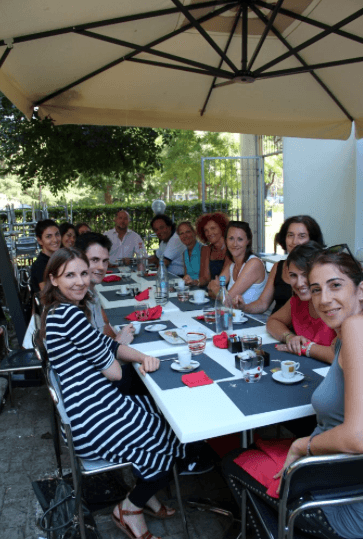
Italy trainingWith educators in over 70 countries, you can imagine we speak a lot of languages when we get together! Thankfully, we do share one common language: music and learning. A group of  VYL ELL teachers in Italy recently experienced this common language at a one-day training session hosted by Kindermusik.
Danny Berryman and Laura D’Abbondanza, Kindermusik project leaders and Teacher Trainers in Italy, brought together this group of VYL ELL teachers from Lingua Point in Reggio Emilia and The Victoria Company in Recanati and Jesi for a one-day training session using ABC English & Me, Kindermusik’s English Language Learning curriculum. Lingua Point and The Victoria Company are both authorized Cambridge ESOL examination centers, recognized by the Italian Ministry of Education and Members of the Italian Association of Language Schools (AISLI), founded in 1979 to promote excellent teaching standards.
And, even though we know “We Love Kindermusik” Week officially ended last week, we didn’t want to wait until next year to share with you why these VYL ELL teachers in Italy love Kindermusik! Here’s what some of them had to say about the experience.

Why VYL ELL teachers in Italy love Kindermusik…

Italy ESL training“I’ve really enjoyed this ABC English & Me Training day. It was very informative and gave us many opportunities to try out this comprehensive and effective way of teaching. I was pleased to see that it is based on strong research and feel it is something that will surely help me develop, both professionally and personally. I am confident that this method of teaching will successfully bring a whole new way of language learning to this school that can only benefit our students.” ~ Kate Letts – Lingua Point
“During the workshop, we learned an innovative method for teaching English to children aged 2 to 7 years old. This method, Kindermusik, combines music and movement for language acquisition; and is loaded with lots of fun! We also had a great time by emerging ourselves in the method with the techniques learned in class during role-play sessions.”  ~ Julia Stegmann – Lingua Point
“Danny Berryman and Laura D’Abbondanza, Kindermusik project leaders and Teacher Trainers here in Italy, gave Lingua Point the opportunity to get to know and experience an engaging and alternative teaching approach for our most precious clients: kids! The training combined didactics, marketing, and the sharing of ideas. The above, along with a nice lunch and many laughs, were the ingredients of a day that was full of ideas and energy. It is always nice to invest in projects that make you grow! From now on, English learning for our kids from 3 to 6 is going to be set to music.”  ~ Enrichetta Antichi, school co-founder – Lingua Point
“This day gave me a new perspective when it comes to teaching English to young children. This method is dynamic, rich and most importantly, fun! It offers structure and more material than a teacher could desire while at the same time not limiting the teacher’s imagination in the education process.  It is truly interesting and one to try out!” ~ Oana Alexandra Samolia –The Victoria Company 
Italy ESL trainingThis training was very useful. In reality, putting the method into practice is much simpler than it seems with the help of the Kindermusik site and digital teachers guides. I have no doubt that the children will find the lesson activities engaging and fun. On the other hand, the teachers can find all the support necessary on the website and through the music provided.” ~ Sara Verducci – The Victoria Company
“It was a beautiful experience that not only answered questions with words, but in a concrete and practical way also. This training has motivated me even greater and I am certain that both the teachers and children are going to be enthusiastic about this project. Parents will have a real chance to take part in the development of their children as they see the method and fall in in love with it just like myself. ~ Ilaria Mandolini – The Victoria Company

ABC English & Me - Teaching English to Children through MusicLearn more about bringing ABC English & Me to your school!

Bringing the benefits of music to the slums of Thailand

Thailand 1The benefits of music can transform a child’s life. Music can also be a lifeline. In early childhood music classes around the world, music brings light and laughter and joy to children surrounded by poverty and crime and exploitation. Kindermusik educator, Nikol Hellebrandova shares ABC English & Me (an English Language Learning program) with young children in one such place.

Early childhood music in the slums of Thailand

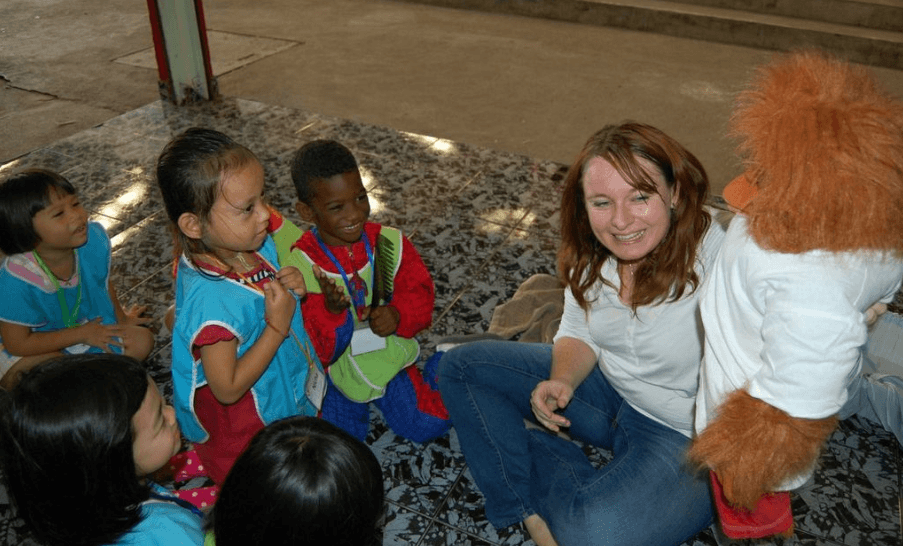
Two times each week Nikol Hellebrandova teaches ABC English & Me to a small group of children between the ages of 4 and 6 at a charity daycare in the slums of Pataya, Thailand. The Hand to Hand nursery school is located in an old business building. The former garage and warehouse area now serve as two classrooms for 60 children. A third room is used to store material, clothes, non-perishable food, and various items distributed to families and others living in the slums.
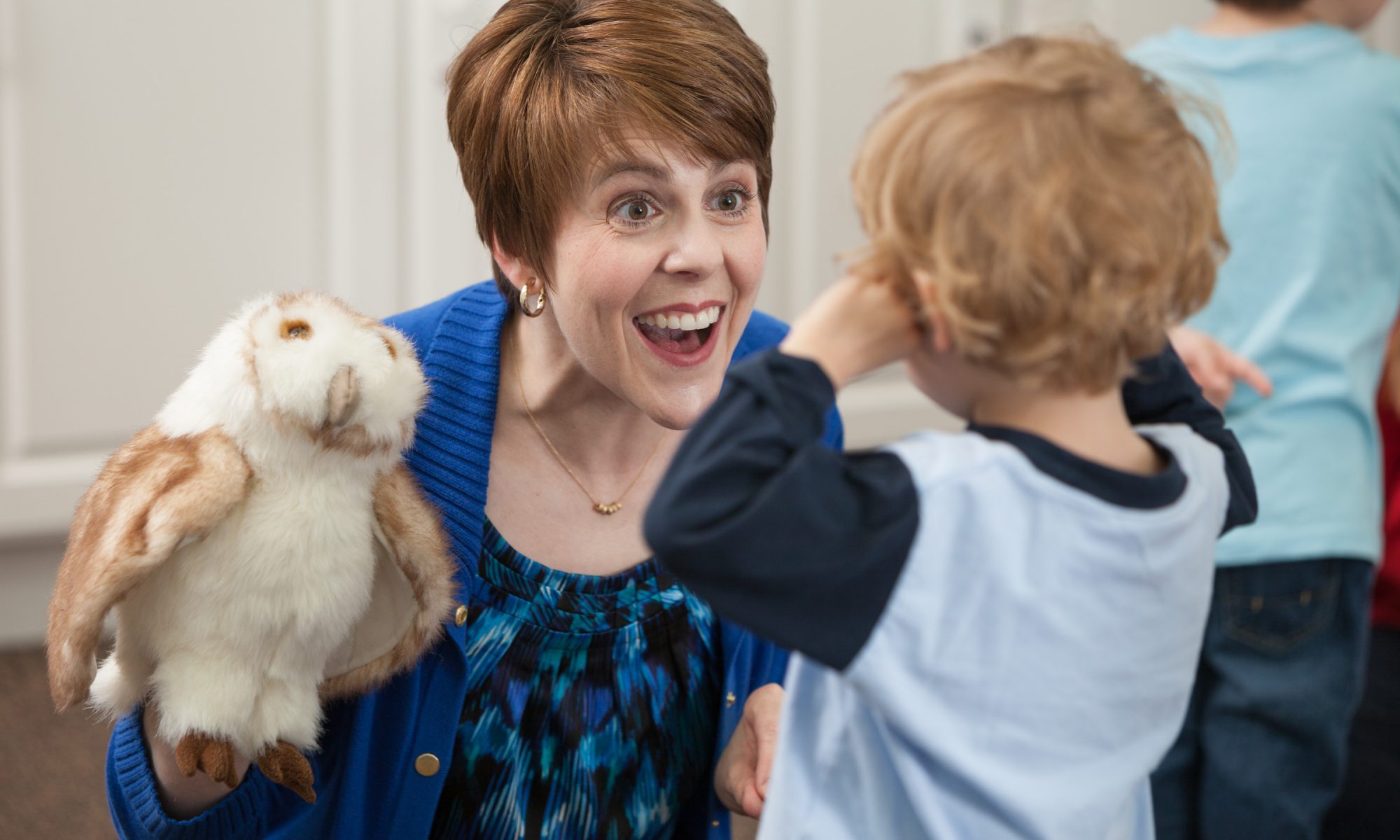
Thailand 2“Despite the hardships these children encounter each day, they love music class! The lessons are very interactive and the children are really getting into it,” explains Nikol. “They especially love interacting with the orangutan puppet and playing the instruments. In the class, children also enjoy taking turns being the ‘activity leader’ and giving instructions in English for the rest of the class—including me—to follow!”
Since beginning the ABC English & Me classes, children can now answer simple questions, name pictures, and sing the English songs for kids. Although the children can only access the home and classroom materials at school, Nikol also integrates the English vocabulary throughout other parts of the day so children’s English language learning happens naturally and through play.
“Sometimes it is difficult to arrange everything to make a nice learning environment,” confesses Nikol. “I really salute the courage and self-sacrifice of the Hand to Hand staff. They do so much more than run a daycare. They visit and take care of people in the hospitals, in jail, and in the neighborhood by supplying food, clothes, and medicine. In spite of everything, they always find the reasons and the way to enjoy life!”
Thailand 3Hand to Hand works everyday, one child at a time to make a difference to the children living in the slums. Hand to Hand provides a safe place where potentially exploited children can come and play and receive food, clothes, and a sense of worth. Hand to Hand is changing the lives of children.

To learn more about the Hand to Hand Foundation, visit their website.

Teacher Training is the Best Investment

That’s a bold claim, but it’s true.  The best investment all educators or teachers can make is to actively take advantage of ways to constantly improve themselves and to be open to new possibilities.  Teacher training matters – it enhances job satisfaction and quality of teaching.
Weston chime ball resizeAnd that’s why Kindermusik educators are some of the best teachers on the planet.  They love their job; they’re thrilled to be in the classroom; and they are required to complete regular professional development goals each and every year.  Their professional development helps them grow in areas like early childhood professional development, business and marketing skills, classroom management, and more masterful teaching of the world’s best early childhood curriculum – Kindermusik!
If you love teaching children, we’d love to encourage you to consider pursuing the opportunity to teach Kindermusik.  You can choose two different paths – teaching for yourself or teaching for an established Kindermusik program.  Learn more HERE.

Read more… Kindermusik Educators: Who They Are and How We Train Them

Kindermusik Classes - Enroll Now - For a Child's Brain, Body, Heart & SoulAnd if you’re a parent interested in enhancing your child’s musical development and inspiring a lifelong love of music, we invite you to try a free preview class and see just why we think our Kindermusik educators are head and shoulders above the rest!
 

Why Kindermusik Parents Make Great Kindermusik Teachers

mom and child bond in KindermusikAs a Kindermusik program owner, some of the very best teachers I’ve ever hired were Kindermusik parents first. So I am a firm believer that Kindermusik parents make great Kindermusik teachers!

Kindermusik parents who become Kindermusik teachers…

  • have seen first-hand what teaching children in Kindermusik means for the educator, for the parents, and for the children.
  • have hearts big enough to love other people’s children almost as much as they love their own.
  • bring a unique perspective to their teaching because they understand how a Kindermusik parent thinks and feels.
  • relate well to other parents because they all have something in common – they have kids in Kindermusik!
  • have a leg up because they’ve had the opportunity to learn by actively observing and participating in many Kindermusik classes.
  • are familiar with how a Kindermusik program runs and have a vested interest in the program they have enrolled their child in.
  • have the passion and appreciation of both parent and educator for the value of musical learning and the power of Kindermusik.
  • understand what it means to benefit from the Kindermusik experience in class and from the Kindermusik Home Materials all week in between at home.
  • know and love Kindermusik because they’ve seen it through their own child’s eyes.

Are you a Kindermusik parent who’s Interested in becoming a Kindermusik educator? Talk to your local Kindermusik educator today and take a look at some helpful information on KI’s website. You’ll be glad you did!

Shared by Theresa Case who has an award-winning Kindermusik program at Piano Central Studios in Greenville, SC, and is always happy when one of her Kindermusik parents expresses interest in teaching Kindermusik for her!