
Kindermusik Top Program: Song of the Heart Studios

Each year, Kindermusik International awards Top Program honors to Accredited Educators around the world. For the 2024-2025 assessment period, Carol Stringham and her team at Song of the Heart Studios had the fifth highest number of registered families for Kindermusik classes. 

It all began with a friendly chat. Combining her experience in early education and as a musician, Carol took a leap into the Kindermusik world, and has gone on to deeply impact her community through shared music-making.

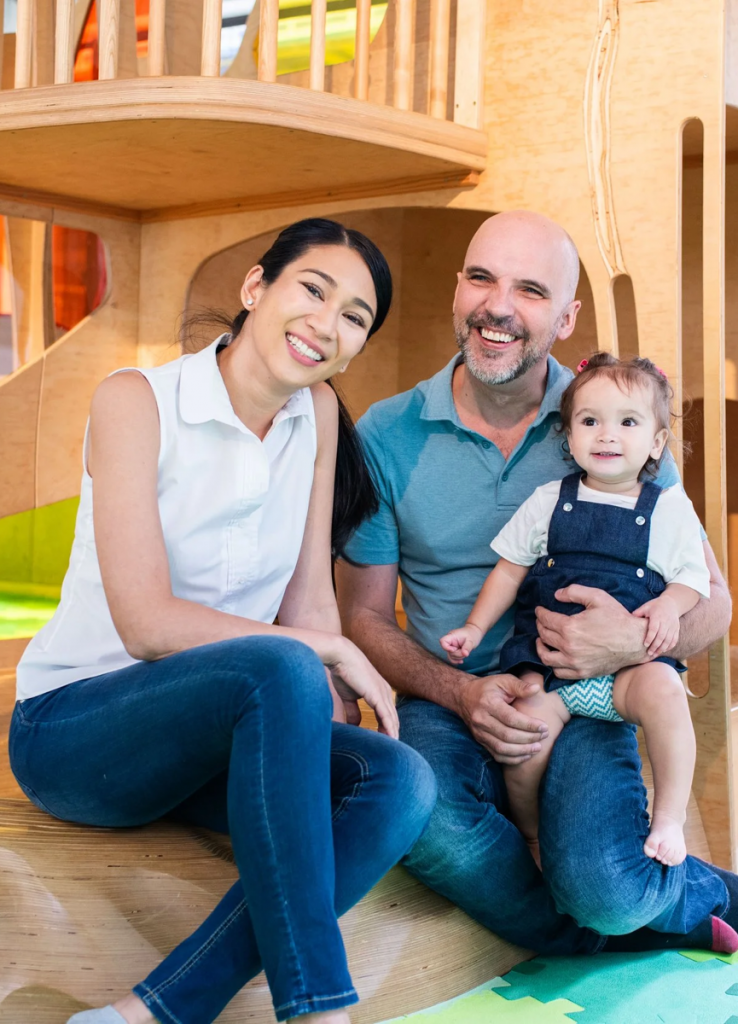
Song of the Heart Studios Director/Owner Carol Stringham.

Carol, where is your location and how many years have you been accredited?

Salt Lake City, Utah, USA. I just finished year 28!

How did you originally hear about Kindermusik and what was your journey to becoming accredited like?

I was visiting my sister in Seattle and chatting with her friend at a party about the Kindermusik program she was running. My heart went pitter-patter and I couldn’t wait to learn more. I was a mom of three, had taught school for several years, loved pedagogy, was fascinated by educational philosophy, and I was a musician.

I was completely taken with the Kindermusik way and knew immediately I wanted to be part of it. Unbelievably, there was an in-person training taking place in Salt Lake City just a few months later. I immediately signed up. I felt like I had come home! Kindermusik has been the place where all of my talents, skills, AND dreams came together. It has brought me hope, joy, growth, connection, and pure love for 28 years.

What was your program like at first, what’s it like now, and what has changed versus stayed the same?

When I began, my goal was to provide the most present, loving, educational experiences for the people who trusted me with their children. As my program grew, I had to chase that growth and learn how to run a business. I taught in my home for 3 years, moved to a ballet studio where I rented space for ten years, and then on to my own studio space 15 years ago. Along the way, I obviously had to hire educators, make sure they were trained in what we call “The Song of the Heart Studios Way”, and continue to mentor them on their Kindermusik journeys. This has been both a joy and a delightful challenge.

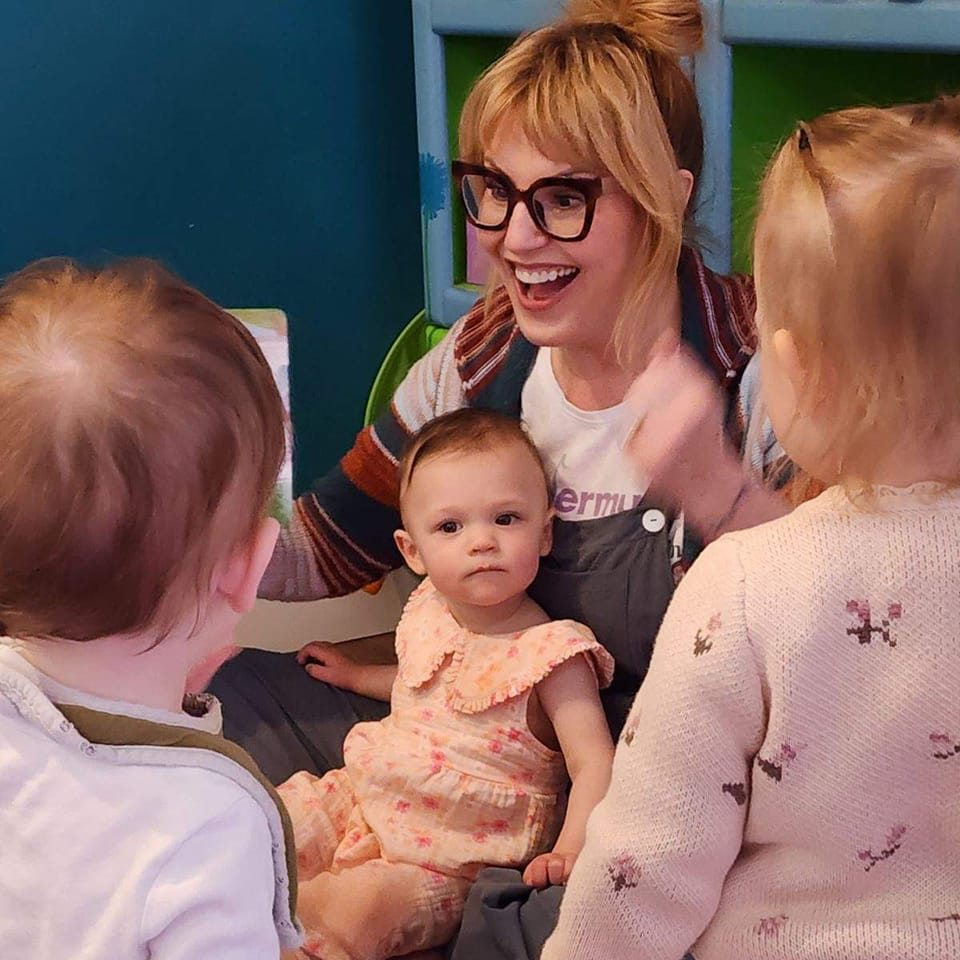
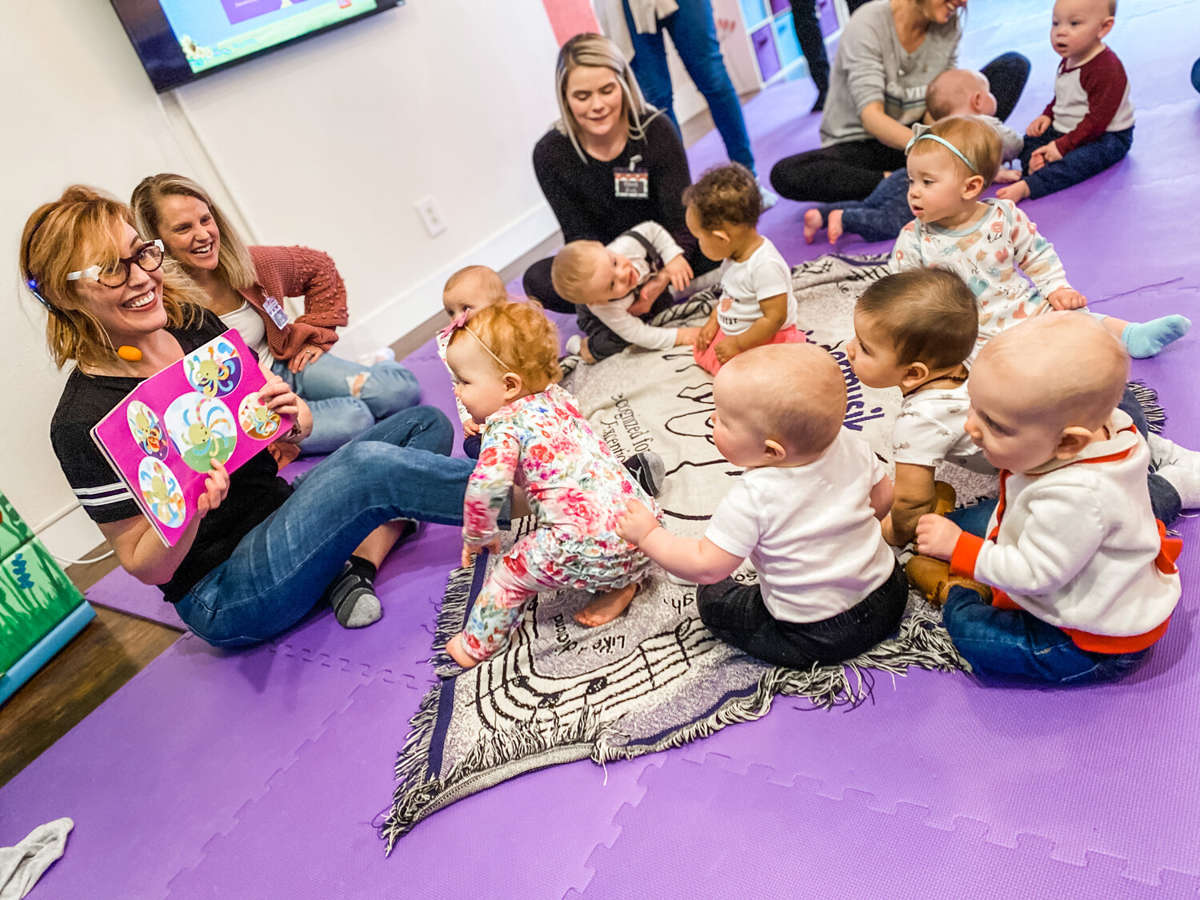
Carol Stringham and her Kindermusik families enjoying circle time!

What standards do you hold for yourself and any employees as educators, and how do you keep that top of mind? 

We have studio values that we infuse into everything we do. A stellar classroom experience? The educators infuse everything they do in the classroom with joy, connection, family, growth and heart. If you begin with your values and use them as your vision, the end often takes care of itself.

Teaching is a solitary endeavor but we need one another to become better at what we do. So, we include lots of sharing and also educator observations to keep us all growing and our classroom environments fresh. Teaching is a beautiful evolution, and I try and lean into that as a philosophy and as a practice.

Tell us a little bit about your community. What have you learned from them and what about them drives you to create a safe, creative, and supportive space for the families you serve? 

We have the most beautiful Kindermusik community! I must say my favorite thing at the moment is former students who are now bringing their OWN children to class. It’s so gratifying to see the impact Kindermusik has had on their lives and see them continue the joy with their own little ones. I have learned to be present because of our Kindermusik families. I’m a mover and a doer so the opportunity to sit on the floor of the classroom, slow down, and guide parents and their children has caused me to breathe and be present while giving them the best possible experience. That has been a true gift and has made me a better educator.

my favorite thing at the moment is former students who are now bringing their OWN children to class. It’s so gratifying to see the impact Kindermusik has had on their lives and see them continue the joy with their own little ones.

– Carol Stringham, owner of Song of the Heart Studios
Carol and Kiddos enjoying a Kindermusik class.

Do you have any memorable “a-ha” moments from teaching a class? 

I love facilitating their little friendships and watching their imaginations grow. I love their sparkle. I love watching their grownups discover the phenomenal growth…

– Carol Stringham, owner of Song of the Heart Studios

I love teaching so much that If I could still teach every single class, I would. With about 60 classes on our roster, this is obviously impossible. That being said, I think one of my My biggest “a-ha” moments over the years—and this is vulnerable—has been the angst of handing classes over to other educators.

Would they give the same care that I do? Would they see the importance of relationship? Would they be as dedicated to their families? Would they prepare and work hard? The answer has been yes. Yes, they have and they do!

Although I love teaching every level, my absolute favorite is Level 3. I love watching the growth and delight that Kindermusik inspires, and helping children feel capable and comfortable without their parent or caregiver in the room. I love facilitating their little friendships and watching their imaginations grow. I love their sparkle. I love watching their grownups discover the phenomenal growth that music provides their preschooler.

Carol and her Kindermusik Musicians participating in a musical activity!

What continues to drive you as 1) an educator and 2) a business owner?

As an educator, I love to work with children to develop their soft skills. The skills that will help them do well in school and in life. For the grownups who love them, I am driven to help them “make their great parenting even better.” As a business owner, I am driven to be a mentor that helps my educators make their stellar teaching even better. I’m also driven to find the best systems to manage 400+ students and help each one feel loved and cared for. To be, as one of my business coaches says, “conspicuously human.”

What vision do you have for your studio in the years to come? 

My true vision is to have our studio values, our systems and processes, along with our classes so dialed in that everyone associated with the studio—myself, my admin staff, my educators, the grownups, and every single student—feels like they are part of a movement. “A movement where childhood is honored, families are strengthened, minds are nourished, creativity is encouraged, community deepens, and hearts are filled with joy. To be the place where hearts sing, eyes shine, and children flourish.”

Find out more about Top Program studios like Song of the Heart Studios, and locate one near you. If you’re interested in becoming an Accredited Educator like Carol, check out our training options. You can also connect with Song of the Heart Studios on Instagram and Facebook

Kindermusik Top Program: Kathy’s Music

Each year, Kindermusik International awards Top Program honors to Accredited Educators around the world. For the 2024-2025 assessment period, Kathy Morrison and her team at Kathy’s Music had the fourth highest number of registered families for Kindermusik classes. 

Through helping caregivers understand what Kindermusik is all about and why it matters, Kathy and her staff have built a lasting relationship with the families that lead to developmental milestones for their kiddos. Big thank you to Kathy for sharing her story, insights, and experiences with us!

Kathy’s Music Director/Owner Kathy Morrison.

Kathy, where is your location and how many years have you been accredited?

Pittsburgh, Pennsylvania, USA. I began teaching in Summer 2000—26 years.

How did you originally hear about Kindermusik and what was your journey to teaching like?

I became a Kindermusik parent 30 years ago in Theresa Case’s program in South Carolina. Four years later, I began teaching. Four years after that, we moved to Pennsylvania and I opened my own program in Pittsburgh. 

What steps do you think were critical in helping you achieve a Top Program status initially and how have you built on that to become the #4 Program in the world?

One of the most critical factors in my early success was the opportunity to learn inside another top-performing program. I spent four years on an existing team, and that experience gave me a clear vision of what was possible, not only in delivering excellent early childhood music education, but in building a program that was organized, intentional, and sustainable.

What kind of professional development standards do you hold for your team?

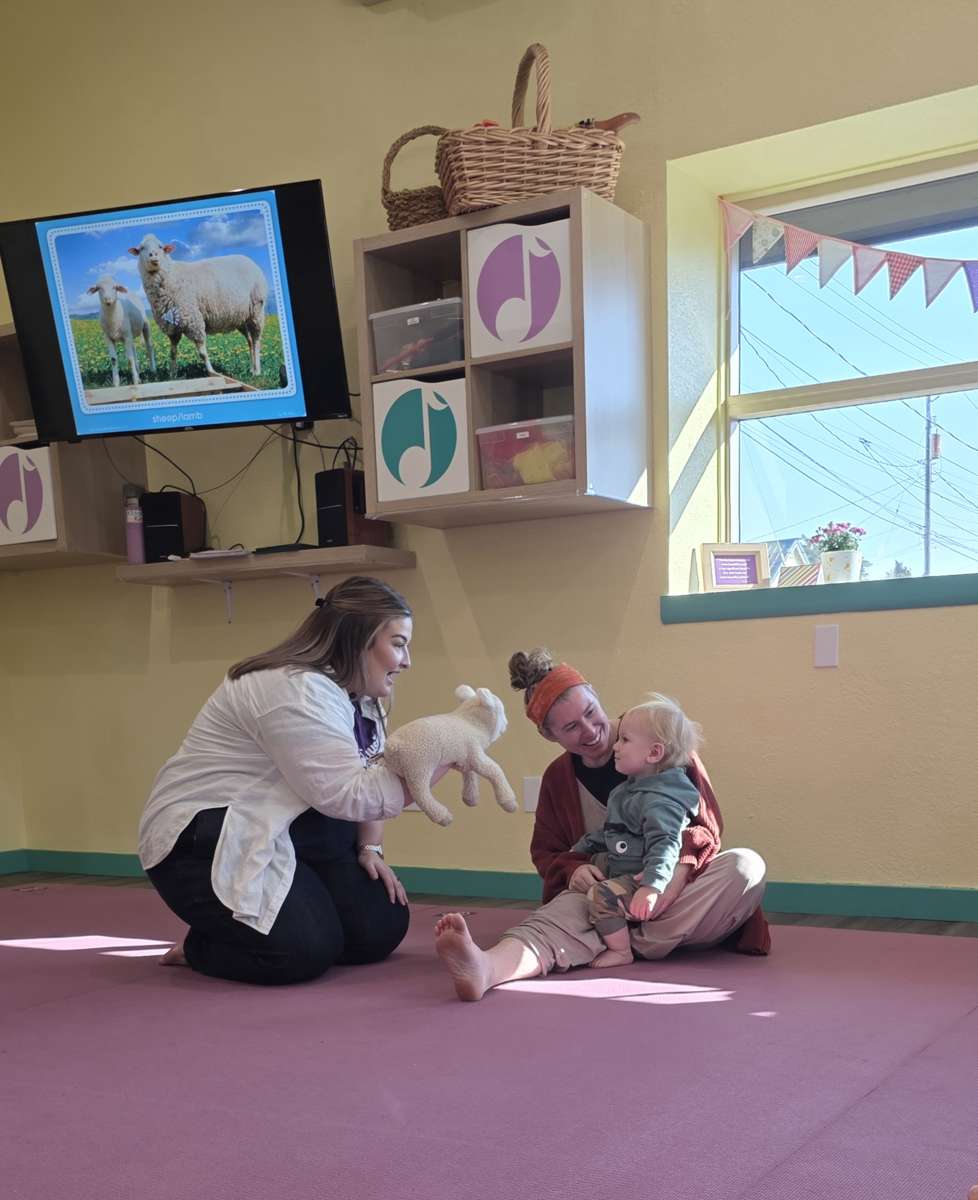
Musical activities with egg shakers in a Kindermusik class at Kathy’s Music.

I am deeply committed to the ongoing training and development of our teachers. We invest in professional development throughout the year through webinars, in-person trainings, book studies, and curriculum-focused work. To deliver this level of experience consistently requires more than initial training. It requires a shared understanding that masterful teaching is a journey.

To deliver this level of experience consistently requires more than initial training. It requires a shared understanding that masterful teaching is a journey.

Kathy Morrison, owner of Kathy’s Music
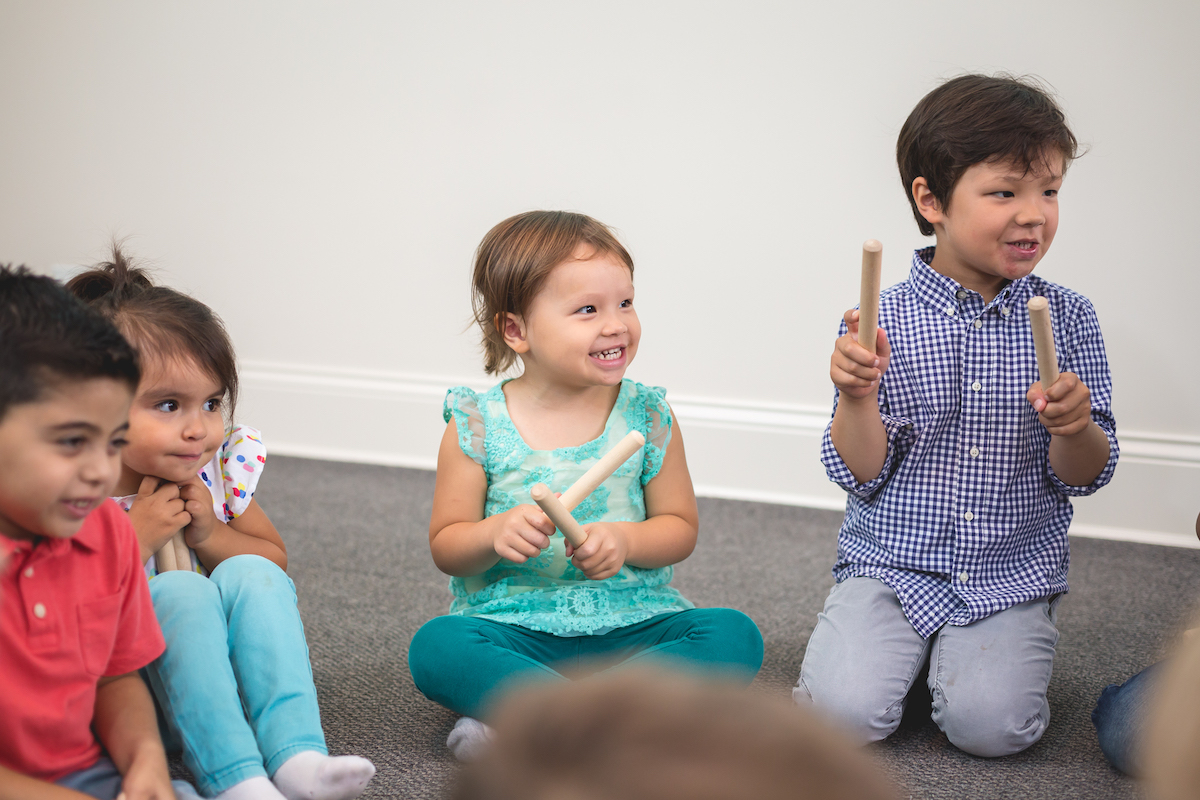
Kiddos playing with rhythm sticks in one of Kathy’s Kindermusik classes.

What makes Kathy’s Music different from other music studios—why you and why Kindermusik?

Sustained growth only happens when the experience in the classroom is strong. For us, that starts with clear standards for how we teach and how we show up for children and families every day.

We want parents and caregivers to understand not just what we are doing, but why it matters.

Kathy Morrison, owner of Kathy’s Music

First, we hold a deep commitment to the Kindermusik curriculum. We teach children from birth through age 7, and we believe in the full progression. That means leaning into the process as it’s designed and understanding how each level builds on the one before it. There is intention behind every activity, and we honor that.

Within that structure, we focus on three key elements in every class: connection, education, and celebration. Connection means building real relationships with both the child and the parent. Education means having a clear focus for each lesson. We are not there to entertain. We are there to teach, with purpose, and to build skills week by week. Celebration means recognizing growth along the way. Every small milestone matters, and we make sure families feel that progress.

Grownup education is also a critical part of our standard. We want parents and caregivers to understand not just what we are doing, but why it matters. That happens through benefit statements in class, teachable moments during activities, and resources they can use at home. We want families to feel cared for at every step, with moments along the way that they can truly savor.

Singing Hello in a Level 2 Kindermusik Class at Kathy’s Music

Tell us a little bit about your community. What have you learned from them and what about them drives you to create a safe, creative, and supportive space for the families you serve? 

Our community is made up of families who are deeply invested in their children. They are looking for experiences that truly support their child’s growth. Many of the parents we serve are balancing a lot between work, school schedules, activities, and the pace of family life. They value meaningful time with their children and they want to get it right. They are looking for something that feels purposeful. Something that helps them connect with their child, while also supporting their development in a real and lasting way. This has shaped so much about how we designed our program.


Families share in an activity in one of Kathy’s Kindermusik classes.

Do you have any memorable “a-ha” moments from teaching a class? 

It’s hard to pick just one “a-ha” moment, because honestly, they happen all the time and they’re not always big. They’re small and quiet and easy to miss if you’re not paying attention. Sometimes it’s a baby. The bells come out, and their whole face lights up. They grab that bell, start shaking it, and you can see it. Joy—just pure joy! And you realize, this might be one of the first times they’re connecting sound, movement, and feeling all at once.

Sometimes it’s in a preschool class. There’s a three-year-old who’s been coming week after week and barely says a word. Just watching. Taking it all in. And then one day…they actually sing. Maybe just a few words, but it’s huge and you can feel the room shift.

Or it’s in a higher level class. One child is struggling with a song on the glockenspiel, and before I even step in, another child leans over and says, “I know how to play that. I can help you.” And they do. No prompting. Just kindness and desire to help out. (Be still my heart!)

Toddlers enjoying a fun parachute activity in a Kindermusik class at Kathy’s Music.

What’s the one thing you would tell a family who is considering Kindermusik classes?

I often go back to my own experience as a parent. My daughter was 18 months old when we first enrolled in a Kindermusik class. At that stage, you don’t always know what to expect. You hope it will be a positive experience, but you’re not sure what the impact will really be. Within the first three months of attending weekly classes, we began to see a change in her. She experienced so much joy in class and a deep sense of familiarity. She knew what to expect because of the rituals and routines. She felt secure. And from that sense of security, we started to see budding independence.

What vision do you have for your studio in the years to come? 

My vision for the future of my studio is centered around people.

Looking ahead, I see a studio that continues to grow in both reach and depth. A place where families can begin with us when their child is a baby and continue through years of musical development. A place where teachers build meaningful careers and feel a strong sense of purpose in their work. A place where our systems and training allow us to grow without losing the heart of what we do.

Kiddos riding in bilibos with their grownups in a Kindermusik class at Kathy’s Music.

At its core, my vision is to build something that lasts in the lives of the families we serve and the educators who are part of our team.

Find out more about Top Program studios like Kathy’s Music, and locate one near you. If you’re interested in becoming an Accredited Educator like Kathy, check out our training options. You can also connect with Kathy’s Music on Instagram and Facebook

Early Literacy through Music-Making: 5 Things Teachers, Parents, and Caregivers Need to Know

Before children read words on a page, they learn to read the world around them. It’s all part of early literacy.

They read faces. They read voices. They read patterns. They hear rhythm, tone, pitch, pauses, repetition, and emotion long before they understand letters or print.

That’s why music-making is not an “extra” in early childhood. It is one of the most natural, powerful, and joyful ways to build the brain systems children will later use for language and reading.

Continue reading “Early Literacy through Music-Making: 5 Things Teachers, Parents, and Caregivers Need to Know”

Kindermusik Top Program: Kiddos and Kin

Have you ever searched for a Kindermusik class and wondered what that circular “Top Program” icon really means? Each year, we award Kindermusik Top Program status to studios across the globe with the highest registrations and other factors that contribute to their offerings being the best early childhood music and movement programs around.

Through focusing on a business that grows with families, and offering an experience grounded in care and authenticity rather than performance, Shay Ryan and her team at Kiddos and Kin had the third highest number of registered families in 2025 for Kindermusik classes in the world.

Continue reading “Kindermusik Top Program: Kiddos and Kin”

Kindermusik Top Program: Kindermusik by Baumhaus

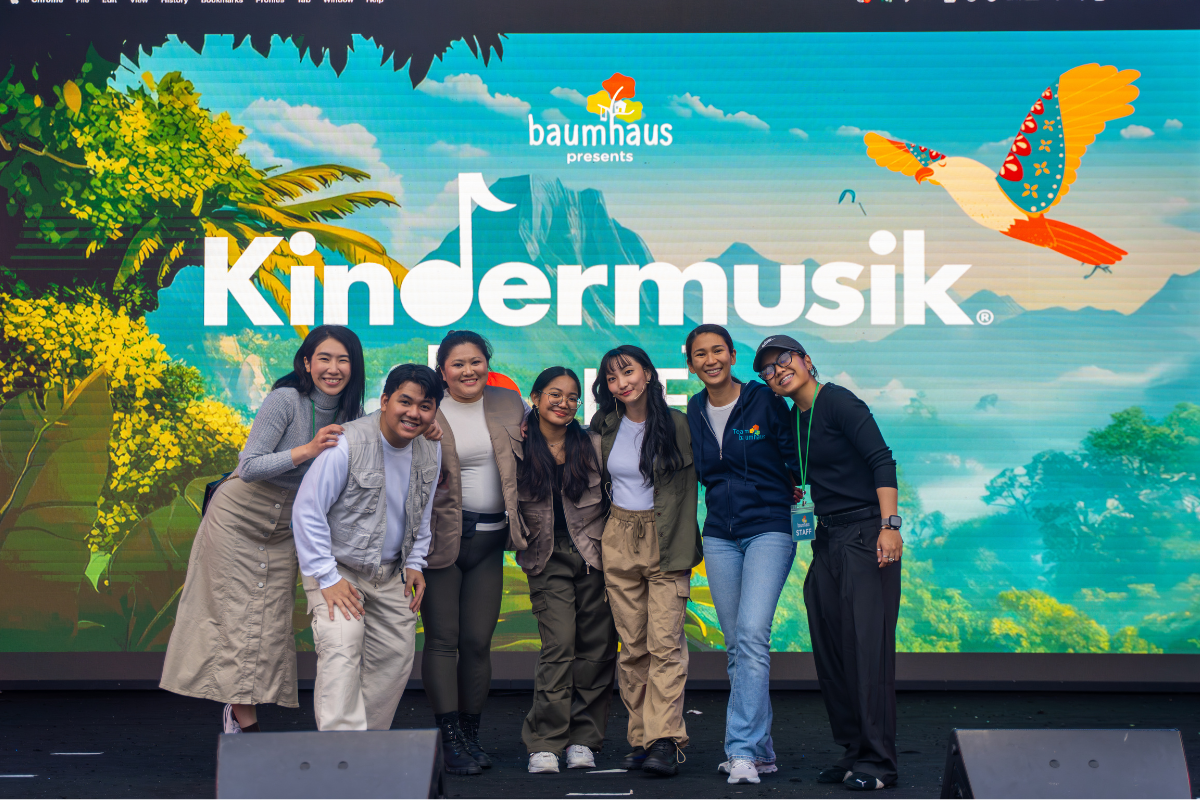
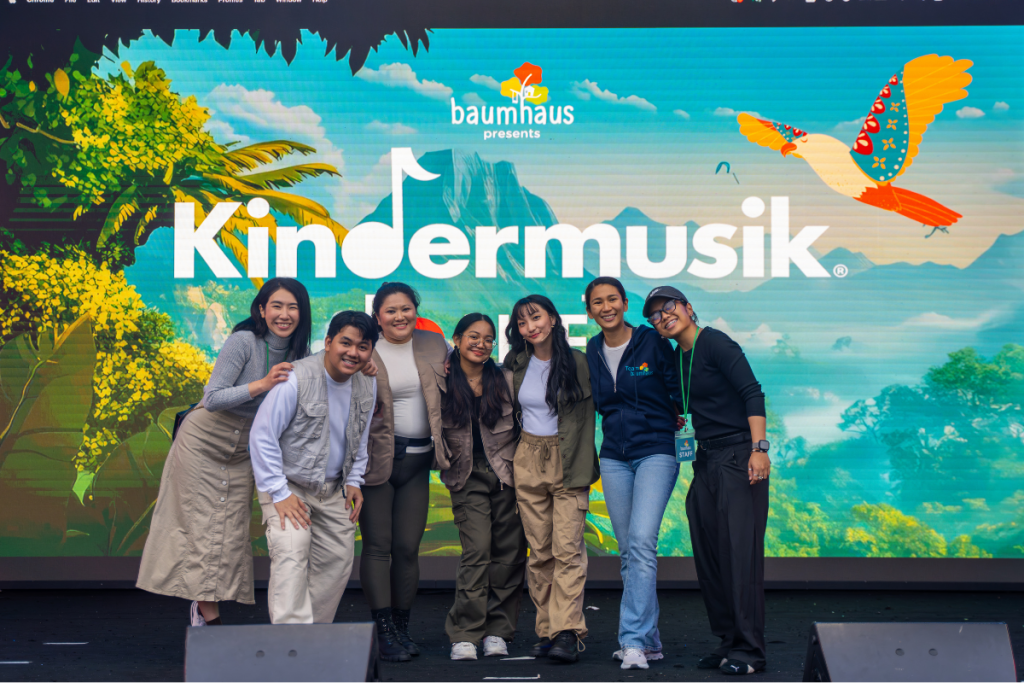
Teachers from the Hong Kong child music program Baumhaus pose for a picture at a community event.

Have you ever searched for a Kindermusik class and wondered what that circular “Top Program” icon really means? Each year, we award Kindermusik Top Program status to studios across the globe with the highest registrations and other factors that contribute to their offerings being the best early childhood music and movement programs around.

Through genuine community connections, an investment in their team’s training, and meeting families where they are, Crisel Consunji and her team at Kindermusik by Baumhaus had the second highest number of registered families in 2025 for Kindermusik classes in the world.

Meet Crisel and take a look at this amazing Kindermusik Top Program from Hong Kong!

Continue reading “Kindermusik Top Program: Kindermusik by Baumhaus”

Preschool Music Best Practices Are Clear: Why Policy Needs to Catch Up

Preschoolers play wooden sticks during circle time to strengthen early handwriting skills.

An open letter from Kelly Green, President of Kindermusik International

If you ask preschool administrators what they’re doing to incorporate music into their classrooms, the answer usually looks something like a few songs during circle time, a clean-up song, some background music during play, and perhaps some instruments to investigate in a learning center.

What’s missing is intentional, child-participatory music-making during play and choice time—which is where so much learning actually happens.

In “Best Practices for Preschool Music Education: Supporting Music-Making Throughout the Day,”  Dr. Jentry Barrett of University of Nebraska-Lincoln goes beyond “music is good.” She and her colleagues spell out what high-quality music-making actually looks like in preschool and which curricula are doing it well.

Even more exciting (and humbling): when the researchers compared several commercially available preschool music programs, Kindermusik was the curriculum that aligned with the greatest number of best practices.

This paper gives us a powerful bridge between what the research says and what policy makers, standards writers, and program leaders can do next.

The Big Shift: From “Music Time” to Music All Day

According to years of research, not weaving in intentional, shared music-making into preschool curricula itself is a huge missed opportunity because music is a cross-domain accelerator. Planned, teacher-directed music instruction:

  • Improves language and literacy: Singing supports phonological awareness, rhyming, prosody, and vocabulary—the very pre-reading skills many states are racing to shore up.
  • Builds pro-social skills like cooperation and empathy: Shared music-making encourages cooperation, turn-taking, inhibitory control, and empathy.
  • Supports gross motor development and coordination: Movement and instrument play support gross and fine motor skills, coordination, and body awareness.
  • Enhances cognitive development and executive function: Music games that involve starting, stopping, patterning, and following multi-step directions exercise attention and working memory.

The paper also highlights serve-and-return interactions in musical contexts—those back-and-forth “my turn, your turn” exchanges between teacher and child using song, drums, shakers, or claps. These are not “nice-to-haves;” they are the same kind of reciprocal interactions that Harvard’s Center on the Developing Child identifies as foundational to healthy brain development and language growth.

In other words, when children are actively making music in a group—as opposed to passively listening—it’s not an extra. It’s a strategy that directly supports the very outcomes most early childhood systems are under pressure to improve.

Why Teachers Don’t Feel Ready to Incorporate Shared Music-Making 

(And why that’s a policy issue)

Barrett and her co-authors surface an important truth:

  • Most preschool music experiences are led by classroom teachers, not music specialists.
  • Those teachers often have little or no formal preparation in music or the creative arts.
  • They report needing more training, concrete lesson ideas, and access to instruments.

So, the gap isn’t a lack of goodwill. It’s a systems problem: policies and standards expect music, but they rarely fund the training, planning time, and vetted resources needed to do it well.

That’s exactly the space Kindermusik’s audio-led programming was built to inhabit—giving early childhood teachers who are not music specialists everything they need to confidently lead high-quality music-making (but we’ll come back to that).

What Does “Best Practice” in Preschool Music Actually Look Like?

The University of Nebraska-Lincoln researchers did something incredibly helpful: they pulled together state and national early learning standards, major curricula like Creative Curriculum and HighScope, music education texts, and early childhood organizations such as NAEYC and NAfME, and distilled them into nine best-practice standards for preschool music.

Across those nine best practices, three big buckets of music-making emerge, and here’s what they look for 3–5-year-olds:

1. Singing

  • Children sing often.
  • Songs are pitched in a child-appropriate range (roughly middle C to A above middle C) so they can sing in tune without strain.
  • Repetition is intentional—children may need to sing a song many times before they can reproduce words, rhythm, and pitch confidently.
  • Songs reflect cultural diversity and invite children to express preferences and feelings about what they hear.

2. Using Instruments

  • Children start with body percussion—clapping, patting, stomping—before transitioning to rhythm instruments like sticks, shakers, and drums.
  • Instrument play is not randomized; it’s connected to beat, patterns, and listening games.
  • As skills grow, children can use more complex percussion (like glockenspiels or xylophones) for melodic exploration.

3. Movement & Dance

  • Children move freely to music long before we expect perfectly synchronized marching or clapping.
  • Movement is used to explore tempo, dynamics, and mood—not just “wiggle time.”
  • As they get older, children can participate in simple circle or line dances, matching their bodies to the beat.

Across all three, one core principle is clear:

Music in early childhood should be participatory, playful, and integrated, not performance-based.

We’re not rehearsing for a show. We’re wiring the brain for learning and connection.

How You Can Help: Send a Direct Message to Policy Makers

So what do we do with all this? If you’re in a position to influence standards, funding, QRIS criteria, or curriculum adoption, here’s what this research (and decades of practice) suggest:

1. Name active music-making explicitly in standards.

Don’t stop at “exposure to music.” Call out daily, participatory singing, movement, and instrument play as core experiences for 3–5-year-olds.

2. Fund training, not just materials.

Remember, most preschool teachers are not music specialists and say they need more support and ideas.

  • Invest in professional learning that builds musical self-efficacy.
  • Prioritize programs (like Kindermusik) that go beyond a box of materials, and include strong professional development and training.

3. Screen curricula against research-based best practices.

Ask:

  • Does this program integrate singing, instruments, and movement—every week, all year long?
  • Is it participatory rather than performance-based?
  • Does it respect children’s vocal range and developmental sequence?
  • Does it intentionally connect music to language, social-emotional learning (SEL), and physical development goals?
  • And does it meet all nine of the best practices outlined in Barrett et al.?

5. Embed music-making into accountability frameworks—not as an afterthought.

Literacy, SEL, and school readiness matter. So, music-making shouldn’t live in the “extras” section of the standards manual. It should be one of the levers you expect programs to pull—and support them to pull well.

How Kindermusik Shows Up and What’s Next

One of the most validating parts of the paper, from my vantage point at Kindermusik, is the section where the authors independently review several preschool music curricula to see how well they align with these nine best practices.

“Notably, although these curricula included many best practices, Kindermusik incorporated the most.

In their appendix, they map Kindermusik’s program against each best practice and find that it aligns with all nine.

What does that look like in action?

  • Singing is woven through every lesson, with clear vocal models and repetition designed around how children actually learn songs.
  • Instrument play is purposeful and progressive: children explore shakers and drums, tap and rub rhythm sticks, and eventually move into more melodic percussion.
  • Movement is built into each unit—free dance, guided actions, circle games, and beat-matched movement.
  • Activities are participatory, not recital-driven; success is measured in engagement, not perfection.

Our teach-along curricula is explicitly designed so non-musician early childhood teachers can implement it with confidence, supported by Kindermusik University training and ongoing coaching.

For decades, preschools offering Kindermusik around the world have seen the fruits of what Barret and her colleagues describe—a clear, research-backed blueprint for what preschool music education should look like. 

The next step is not more evidence that music matters. We have that.

The next step is policy that treats music-making as essential infrastructure for early learning, and partners with programs that already know how to do it well.

With gratitude,

Kelly Green

Kelly Green is President of Kindermusik International, the global leader in early childhood music-and-movement. For more than 30 years she has championed what’s best for young children’s development. During her tenure at Kindermusik, one thing has become clear: practice and neuroscience show the power of active music-making, but policy still lags behind—a gap she is determined to help close.

Kindermusik Top Program: My Little Conservatory

Kindermusik Top Program 2025

Have you ever searched for a Kindermusik class and wondered what that circular “Top Program” icon really means? Each year, we award Kindermusik Top Program status to studios across the globe with the highest registrations and other factors that contribute to their offerings being the best early childhood music and movement programs around.

This year, the very TOP of the Top Programs is My Little Conservatory in San Jose, California. Owned by Accredited Kindermusik Educator, Amelia Vitarelli, My Little Conservatory’s recipe to an award-winning program is a mix of listening to families’ needs first, requiring the highest standards from teachers and team members, and ensuring that a heart for and belief in early childhood music education is at the center of every class.

Continue reading “Kindermusik Top Program: My Little Conservatory”

Dad Album + Activity!

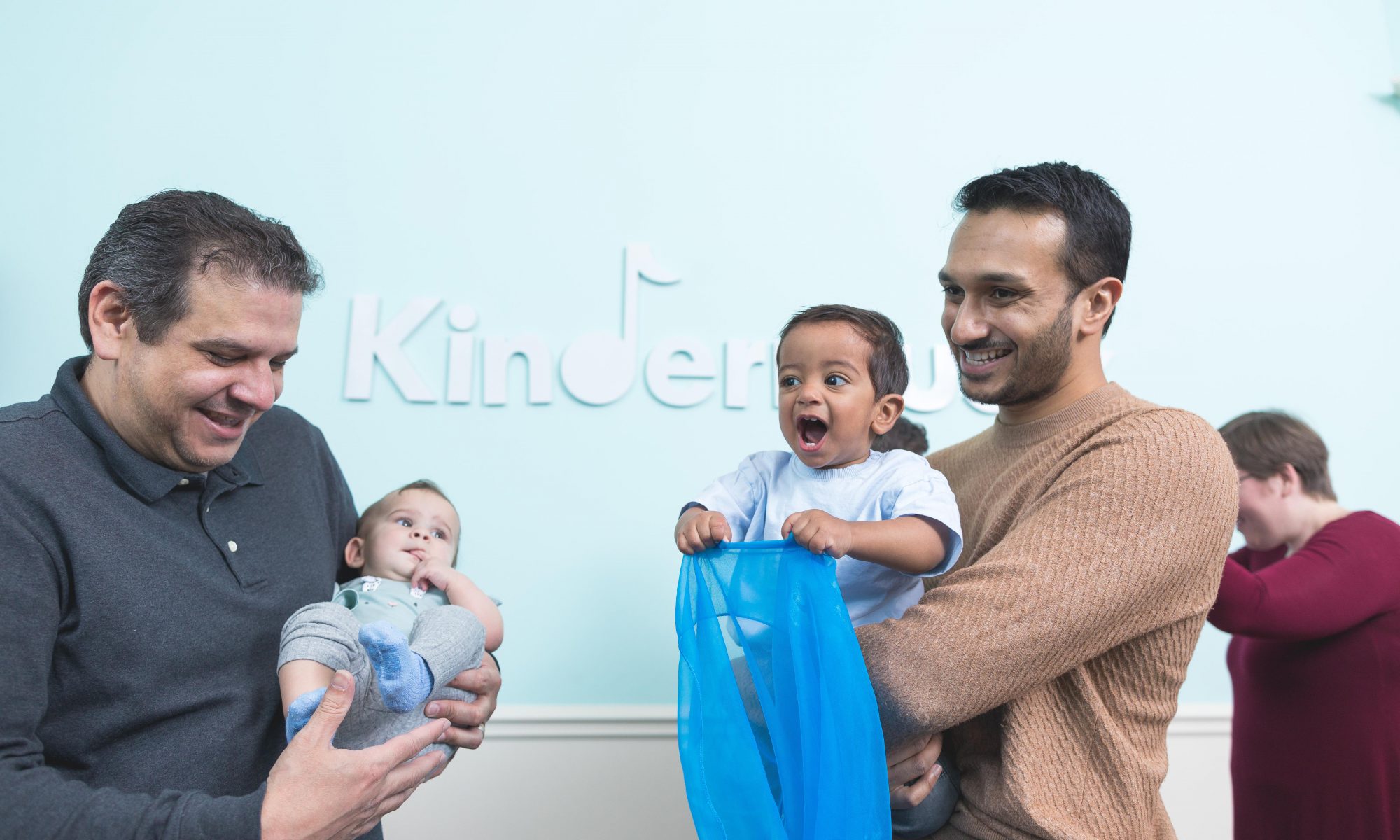
Dads hold their toddler and baby boys during a Kindermusik class and dance to the dad album

Dads, like-a-dads, uncles, grandfathers…the male caregiver role is hugely important to early nurturing and positive whole-child development.

Superdad Soundwaves is the new dad album from Kindermusik

To amplify their presence and put it to the tune of fun, we created Superdad Soundwaves, on the free Kindermusik app and your favorite streaming platforms, including:

Plus, we’ve got an activity you can pair with it below!

What research says about father involvement…

Studies show that father involvement in the early years makes a big difference.

Researchers from Imperial College London, King’s College London and Oxford University found that “babies whose fathers were more engaged and active when playing with them in their initial months performed better in cognitive tests at two years of age.”

And a study conducted by the University of Leeds showed that fathers who regularly and intentionally engaged their three-year-olds by reading, drawing, singing, and playing “helped their children do better at school by age five.”

Empowering dads with the tools they need to keep that engagement going is where musical play can really help. It’s a multisensory activity that’s portable, screen-free, and fun!

Try our Dad Album activity…

  • Stream “Love Somebody” from the Superdad Soundwaves album in the free Kindermusik app or play it below.
  • Follow the movement directions—dancing high/low, bouncing, clapping, etc.
  • Each time you hear “you, you, you,” give your child a big hug or point to them. 

The benefits…

This activity is full of cognitive, social-emotional, and motor benefits, but we love that:

  • Matching movements to lyrics promotes understanding and language acquisition. 
  • Synchronizing movements synchronizes your heartbeats and bodies, promoting connection. 

Keep that family engagement going…

Intentional time is the best time. Make it part of your daily routines, and growth and connection will skyrocket.

Whether you’re looking for more no-cost resources like this album + activity, a grownup-and-me class near you, or home visiting or teaching tools, we’ve got a solution for that.

How Pre- and Postnatal Singing Support Secure Attachment

Mom sings to baby in a Kindermusik class to promote secure attachment.

The bond between caregiver and infant is one of the most critical factors in positive whole-child development, and the keyword is secure attachment. 

Secure attachment doesn’t mean constant baby-wearing or helicopter parenting—it does mean a consistent series of positive and nurturing interactions between caregivers and infants that form the foundation for healthy social-emotional and cognitive growth. 

So, how do you know if you’re making these connections happen? Singing can help.

Continue reading “How Pre- and Postnatal Singing Support Secure Attachment”