

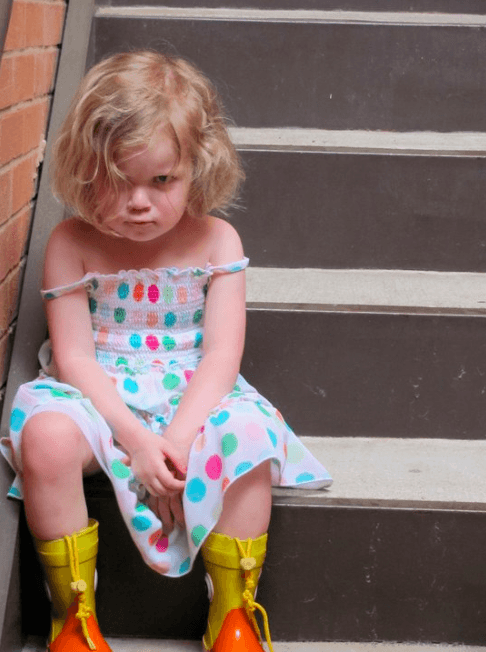
Yes. It’s true. My daughter, Ellery, slept through Kindermusik class—for four months! Now, before you begin conjuring up images of a snuggled and swaddled baby girl being gently rocked to quiet lullabies, let me stop you.
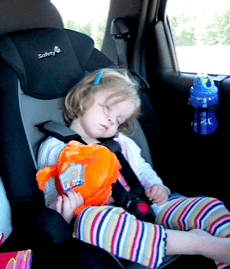
She was two and not really asleep. She just didn’t want anyone to see her. And, in fact, if I am perfectly honest, she didn’t always want to go to class. She wanted to play on the stairs outside of class or smell the tulips in front of the building or peek in the window during her older sister’s Kindermusik class. But, as soon as we stepped inside her class, the eyes would shut and she would slump in my lap—asleep.
Seriously, this is the face of my child when it was time to go into class:

Just when I thought I had this parenting thing figured out
At this point, I should confess that I thought I had this parenting—and Kindermusik—thing down. After all, I lived and breathed Kindermusik as the Senior Director of Marketing for seven years at Kindermusik International. I knew all the latest parenting—and music education research—and participated in Kindermusik classrooms around the world long before becoming a parent, which meant I learned from THE BEST in the business. Plus, we had Emerson, our oldest daughter (AKA “The Rule Follower” and “Safety Patrol”). But, along came Ellery, our spirited child.
Now, if you’ve never had to participate in an active Kindermusik class with, um, a sleeping child, it’s not easy. It’s kind of like taking the class by yourself, while swinging a 25 pound bag of sugar in the air and bouncing it on your knees! But, thankfully, I knew one thing. Ellery was absorbing it all in and participating in the way that best fit her at that developmental stage. How do I know? Well, on the car ride home, she would sing all of the songs, repeat the fingerplays, and even mention certain things her teacher, Jane Hendrix, said in class. Then later, Ellery and Emerson would play Kindermusik class in the living room and (surprise, surprise!) Ellery would be fully awake for that class!
I knew that this sleepy behavior could last the first few classes as Ellery adjusted to this new group of friends. In fact, it can often take five weeks for a young child to feel confident enough to participate more actively in class. And, I was right…sorta.
Kindermusik celebrated my child—even when she was asleep
 I should mention that our Kindermusik Educator, Jane Hendrix, took my Ellery in stride. Every week Jane would try a new tactic to encourage participation while also fully accepting Ellery’s form of engagement. In fact, we would often “sleep hello to Ellery” at the start of each class or sing “Resting in the Green Grass.” Eventually, Jane uncovered the one thing that finally coaxed Ellery’s eyes open for longer and longer moments—a dog puppet. Little by little Ellery began to participate with her eyes open, as long as the dog puppet watched. She danced with the dog. Played instruments with the dog and even got to take the dog home one week to play Kindermusik at home. She took that dog everywhere, which meant we played Kindermusik everywhere! We even sang hello–well, barked hello–to the peonies at the grocery store.
I would love to say that from that day forward Ellery eagerly bounded into class each week, but no. She still wanted to play on the steps, smell the flowers, and basically do her own thing, but we kept going and learning and playing and singing. And, you know what? It paid off, because I have the gift of time to see how it did!
5 Years Later
 As parents, it takes years to see the fruits of our labor. Are we making the right choices for our kids? Is this worth the time, the money, the struggle? Well, today Ellery is halfway through first grade. And guess what? She participates with her eyes wide open! Kindermusik helped set the foundation for her love of learning—and her confidence to be herself. She loves to read, excels at math, and easily creates a network of close friends who accept her for her. Is she musical? Yes…but we plan to hold off on the drum lessons for now.
Last month, Miss Jane posted a picture on my Facebook page and said, “This girl reminds me of Ellery”:

You see. That’s the other thing. Kindermusik creates bonds that transcend the classroom experience long after a child “ages out.” I know that Jane will always celebrate Ellery for who she is. It’s why Jane—and Kindermusik—will remain firmly planted in my heart.
Kindermusik: A Place to Celebrate Your Child
Every child is welcomed in Kindermusik and celebrated for who they are and how they participate. There is no right or wrong way. Even when children don’t seem to be participating in class (i.e. sleeping or running or sitting in your lap), they are absorbing and participating in their own unique way. It’s one of the reasons why Kindermusik provides materials for families to use together outside the class. Children are most comfortable at home in their own environments. It is worth it…even when they sleep through class!
 Find a local Kindermusik educator at www.kindermusik.com and experience firsthand how we celebrate every child!
Contributed by Lisa Camino Rowell, a freelance writer living the Atlanta area.


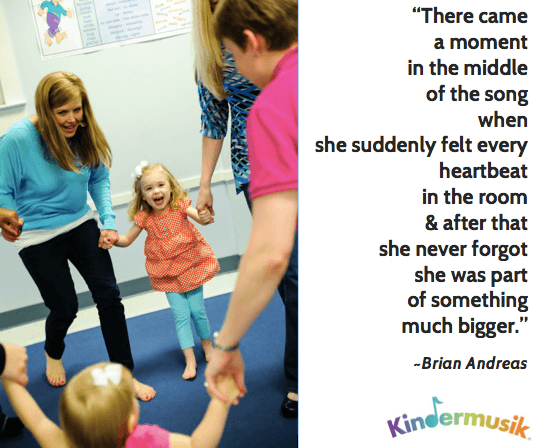


 Ever wonder what happens when a group of teachers gather together for Kindermusik training? Well, we sing, laugh, play instruments, dance with scarves on our heads, and learn through (and about!) music. In fact, it looks a lot like a Kindermusik class without little kids.
 “We would love to give more of these conferences to more schools around the country,” confesses Paula Bassi, International Director Latin America, Central America and Caribbean. “It is wonderful to create a community of Kindermusik schools in Costa Rica and around the world.”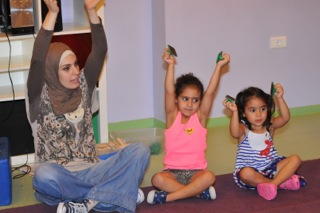
 Take the story of children attending Kindermusik at Learn & Play in Beirut, Lebanon, for example. Last year this pioneer nursery in Lebanon began offering two Kindermusik curricula:
  Learn & Play teaches children French, Arabic, and English. Since using ABC English & Me to introduce young children to English as a second language, children can now count, sing, and name different parts of the body using English. Music is a great way to help children become familiar with English and the different visuals and animated stories used in ABC English & Me make it easy for children to interact and learn English.
 “Kindermusik started out as a way for our family to bond and a place for my daughters to express themselves long before they had words to communicate. Now it is a place for us to be silly, meet new families, and make lots of music together. We love Kindermusik!” ~Kindermusik Parent, Emily R
 4. Participating in musical activities supports cognitive development in children, including language and literacy, spatial-temporal reasoning, and mathematical abilities.
 8. Music is the one language in the world every single person speaks. We see this the world over. Bring in a basket of instruments to children in Ohio, South Africa, Italy, Australia, The Philippines, Mexico—and everywhere in between—and they will shake, scrape, tap, beat, and create beautiful music. No translation needed.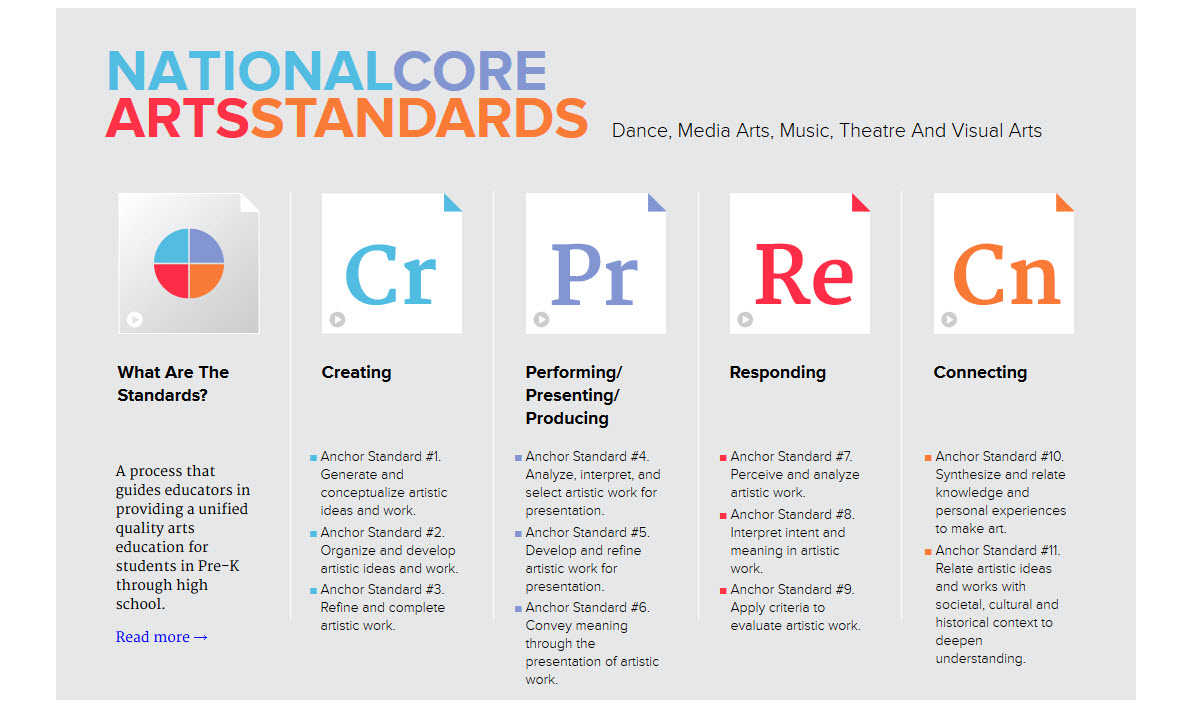


 Creating music is what we do in each class. We provide enough instruments for each child in the class to participate and make their own music. Through a variety of age-appropriate and kid-safe instruments, like egg shakers, jingle bells, chime balls, sand blocks, rhythm sticks, and many more, we allow children to be creative and come up with their own way of playing the instrument. We guide them with ideas, and allow kids to express themselves through music.
 Performing, presenting or producing music is also integrated into our classes. Although Kindermusik curriculum is based on process not performance, we do encourage children to present their ideas to class. For example, a teacher may ask, “Johnny, how do you want play your rhythm sticks; fast, slow, loud, or soft?” This allows each child to determine their own preferences and encourages them to play music to a group of their peers, boosting self-esteem and confidence.

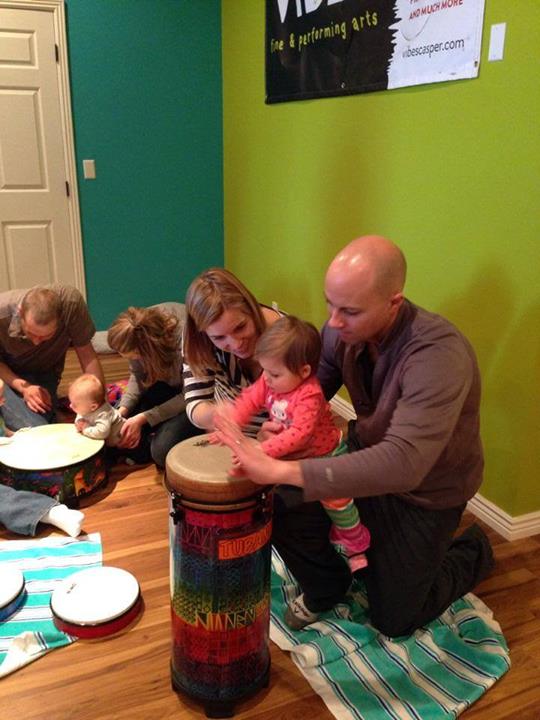
 Kindermusik isn’t just for kids – it’s for parents too!
 Of course, music makes those big life occasions all the more memorable. What is a wedding without music to walk down the aisle or a graduation without a little “Pomp and Circumstance”? But, music also celebrates those everyday (and just as important!) moments.
 Casper, Wyoming, may be known as “cowboy country” but thanks to Amy Munsell—with the support of her husband, Lukas—it’s also now Kindermusik country. We know that the sense of community she and her Kindermusik families create is making a profound difference in the lives of children in Casper.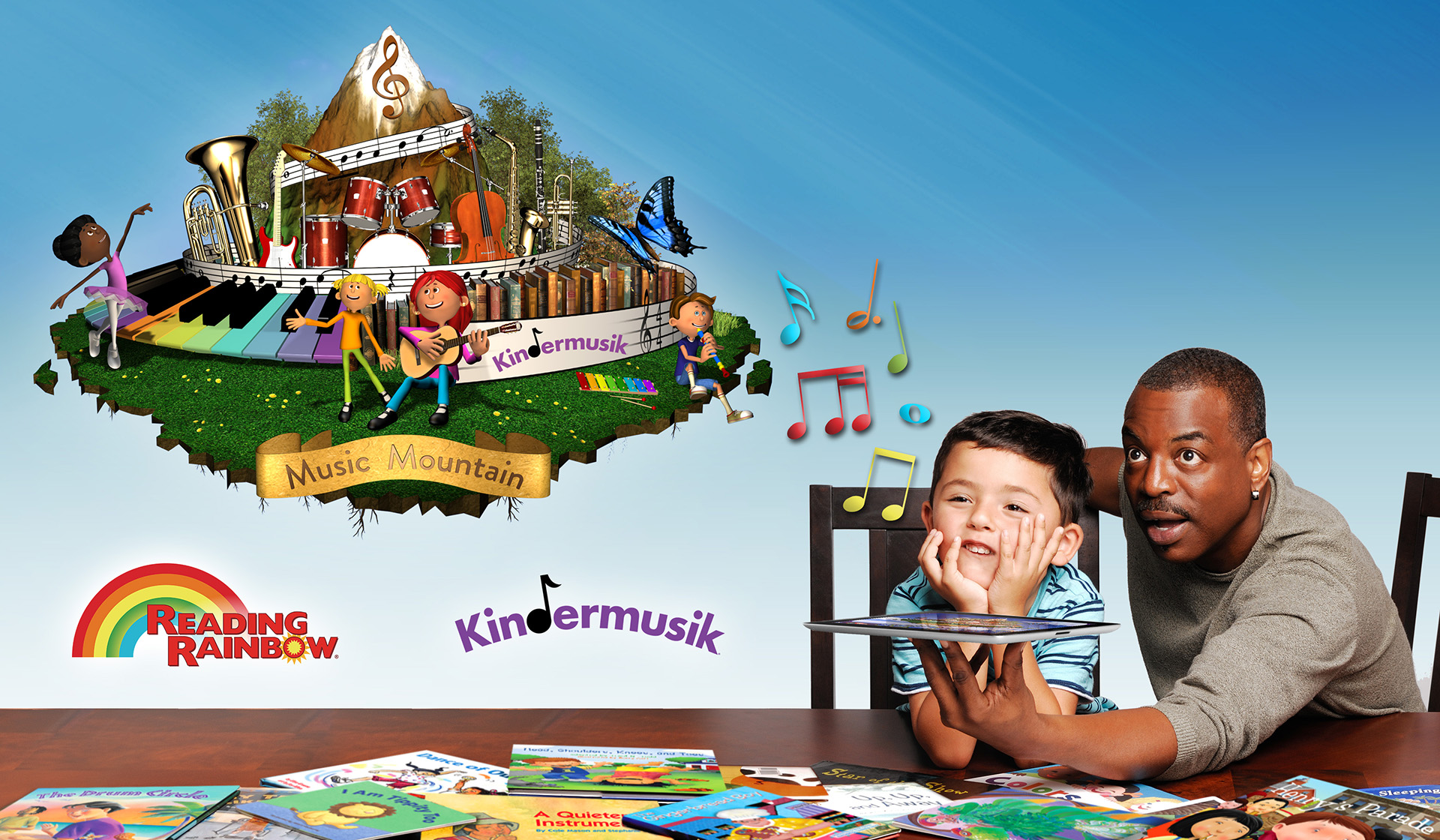
 “This partnership with Kindermusik emphasizes the important, proven connection between literacy and music,” said LeVar Burton, RRKidz/Reading Rainbow co-founder. “We know that when young children are engaged by music in age-appropriate ways, they can build skills that are the foundation for reading. By integrating the other arts and sciences, we aim to further inspire a lifelong love of learning.”