Nothing really prepares you for parenting. It feels a bit like playing a game where the rules change constantly. For example, shortly after mastering the perfect origami-like swaddle, your child no longer needs it to sleep through the night. Or maybe you finally figured out how the straps on the stroller work but now your little one insists on crawling or walking everywhere. Sometimes, just when you think you got it figured out, it changes again. So how can baby music classes help?
Effective grownup and me classes should abide by one constant rule:
A parent is a child’s first and best teacher.
That might sound overwhelming, but here’s the thing: you shouldn’t have to navigate how to be the best teacher alone. In Kindermusik, we support parent and parent figures by introducing them to powerful music and movement strategies that help with everything from making tummy time successful to sleeping—and that goes waaaaaay beyond lullabies.
One study showed that babies who participate in interactive baby music classes with their parents smile more, communicate better, are easier to soothe, and show earlier and more sophisticated brain responses to music.
How is that possible? Let’s break it down.
4 Ways Baby Music Classes Support Development
1. Music supports the early stages of language development.
Does your baby sound like a pterodactyl? Totally normal. When we hear babies exploring the wide range of noises they can make with their mouths and tongues, they are actually engaging in play—vocal play to be specific. Cooing, babbling, blowing raspberries and, well, screeching like a pterodactyl are all part of it.
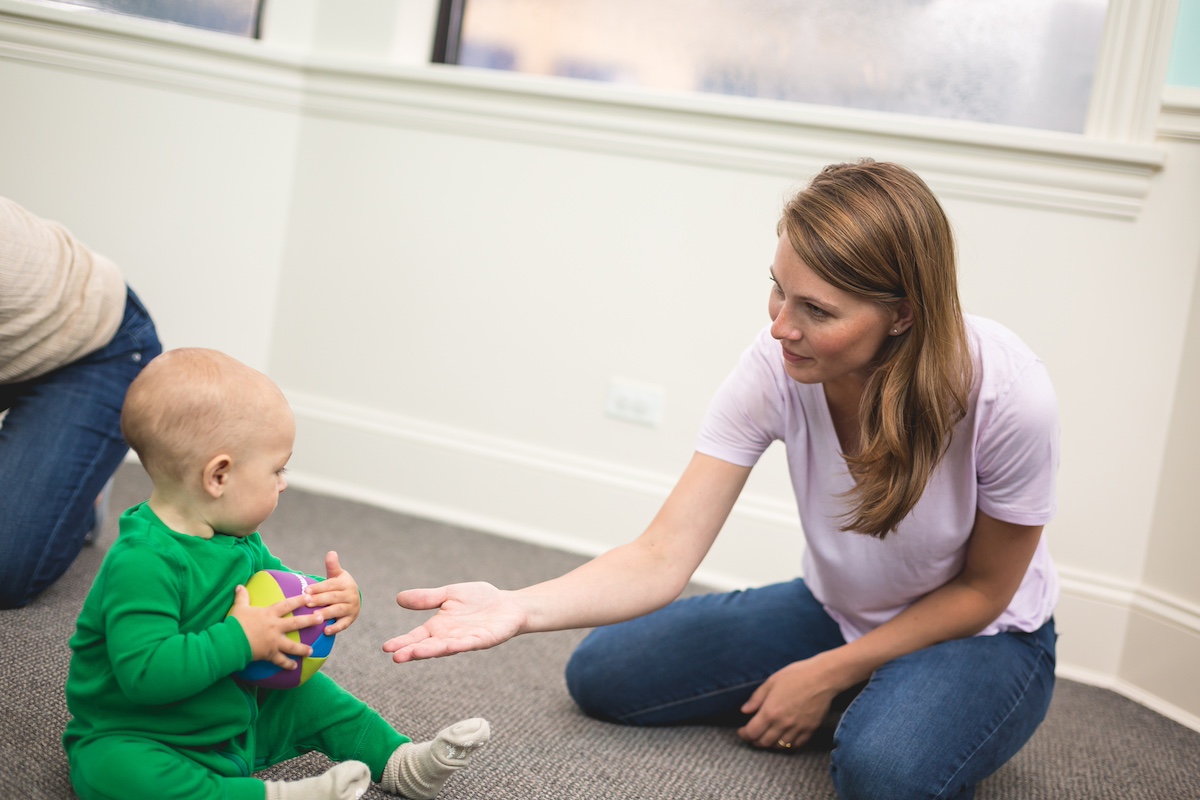
Vocal play is one of the early stages of language development and parents play a pivotal role. In class, a baby and caregiver engage in vocal play by touching, gazing, observing, listening, and imitating. All of this vocal play support’s a child’s vocal development by encouraging breath control, the use of the vocal cords, and the coordination of the small muscles in the face and mouth. Plus, the pausing and waiting during vocal play teaches a baby conversational turn-taking.
2. Music helps babies experience patterns.
During the first several months of life, babies follow a predictable pattern. Eat. Sleep. Diaper change. Eat. Sleep. Diaper change. Patterns help babies connect to and learn about the world. From recognizing the facial pattern of two eyes, a nose, and a mouth to responding to the daily routine pattern and eventually sleeping longer at night (really)!
Babies and young children who learn to identify patterns strengthen their sense of safety and even future academic success because they can better predict what happens next. Each week in class, babies experience patterns through rhythm and meter, tempo contrasts, dances, language and vocal play and the routine of the lesson flow.
3. Music and movement provide opportunities for fine- and gross-motor skills development.
Babies grow by leaps and bounds their first year—or more accurately by grasps and scoots. One minute, you hold a newborn who reflexively grasps your finger. The next minute, your baby intentionally reaches up to touch your nose. Whether reaching for a nose, lifting a head during tummy time, clapping, rolling over, sitting up, crawling, or walking, a baby spends tireless hours learning how to intentionally move.
Each week in class, we provide many opportunities for a baby to engage in fun, musical activities that support and strengthen each stage of a child’s movement development. From tummy time to playing with baby-safe instruments to gently bouncing a baby in a caregiver’s lap, class activities will support the development of the small and large muscles as well as coordination for more complex movements like eventually kicking a ball, jumping, and even writing.
4. Music helps babies gain active listening skills.
Do you ever just stop and really listen to your surroundings? It’s kind of noisy. You might hear the humming of the refrigerator, birds singing, cars driving by, wind blowing…
As an adult, you know how to tune in to the sounds that matter most. Babies do not. In fact, young babies hear most of it—including the more than 300 different phonemes, tones, and clicks used to express every single language in the world!
At Kindermusik, we know babies need to learn how to tune in to the sounds and language most needed in their daily lives. In fact, a baby can already distinguish the sound of a parent’s voice from everyone else’s voice. In class each week, we enhance a baby’s growing discriminatory listening skills when we listen to and imitate different animal noises, the various sounds of instruments, and the voices of adults singing and humming. This ability to detect and attend to sounds, and to distinguish between them, sets a baby on the path to fine-tuned listening and receptive language.
Baby music classes are for parents, too!
 Becoming a parent turns a person’s world (and social calendar) upside down and inside out. A person moves from lengthy conversations over dinner to brief chats scheduled around naptimes.
A grownup-and-me class should help children develop social and emotional skills, but we also connect grownups with other parents and caregivers who understand the unique joys and challenges of raising a child. One of the most rewarding things educators witness is how the adults make lasting connections of their own.
Search for a Kindermusik class near you or check out our early learning kits to learn more about how to sing to babies in a way that supercharges development.
Contributed by Lisa Camino Rowell, a freelance writer living in the Atlanta area.




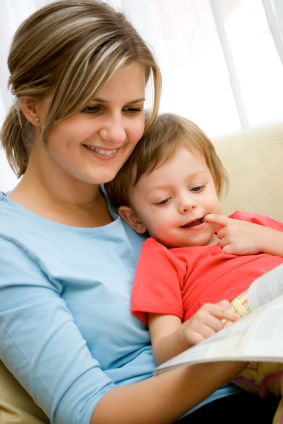
 “Again! Again!” It is not a coincidence that young children ask to read the same book 22 nights in a row. While the adults involved may secretly (and not so secretly) wish for more diversity, all that repetition strengthens the learning or growth of neural connections in children’s brains.


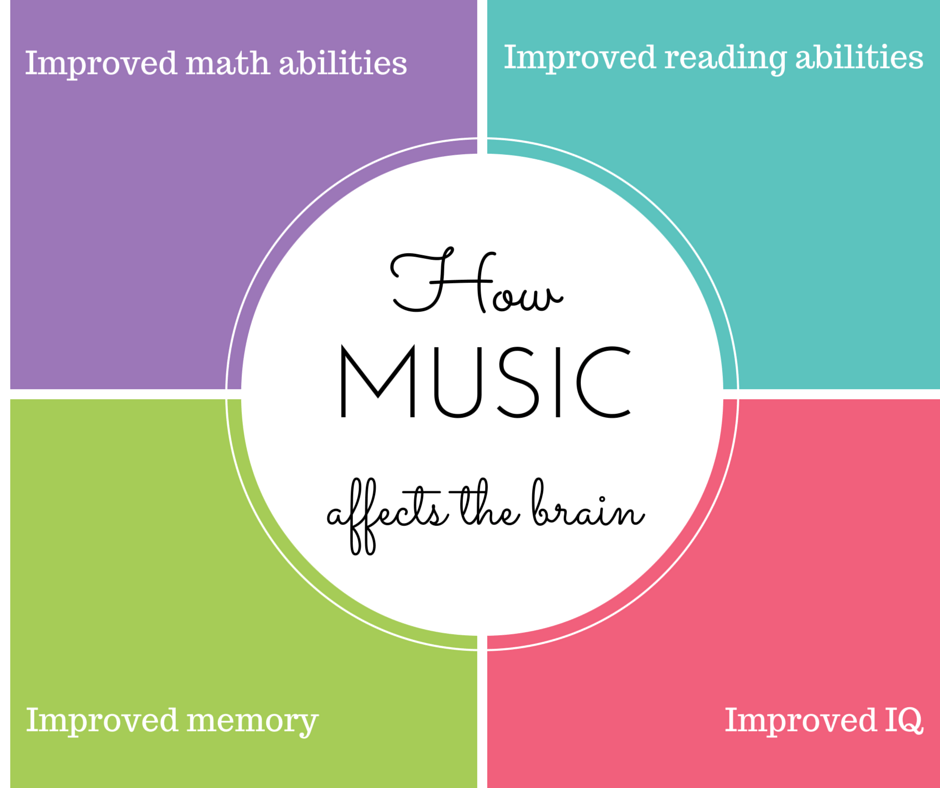
 Young children love music, dancing, painting, playing, and other creative ways to express themselves and make sense of the world around them. However, as if those reasons weren’t enough to include things like art and music in early childhood education, research indicates that the arts, including music education for kids, significantly impacts cognitive development, increases self-esteem, and actively engages everyone in learning—children, parents, and teachers!
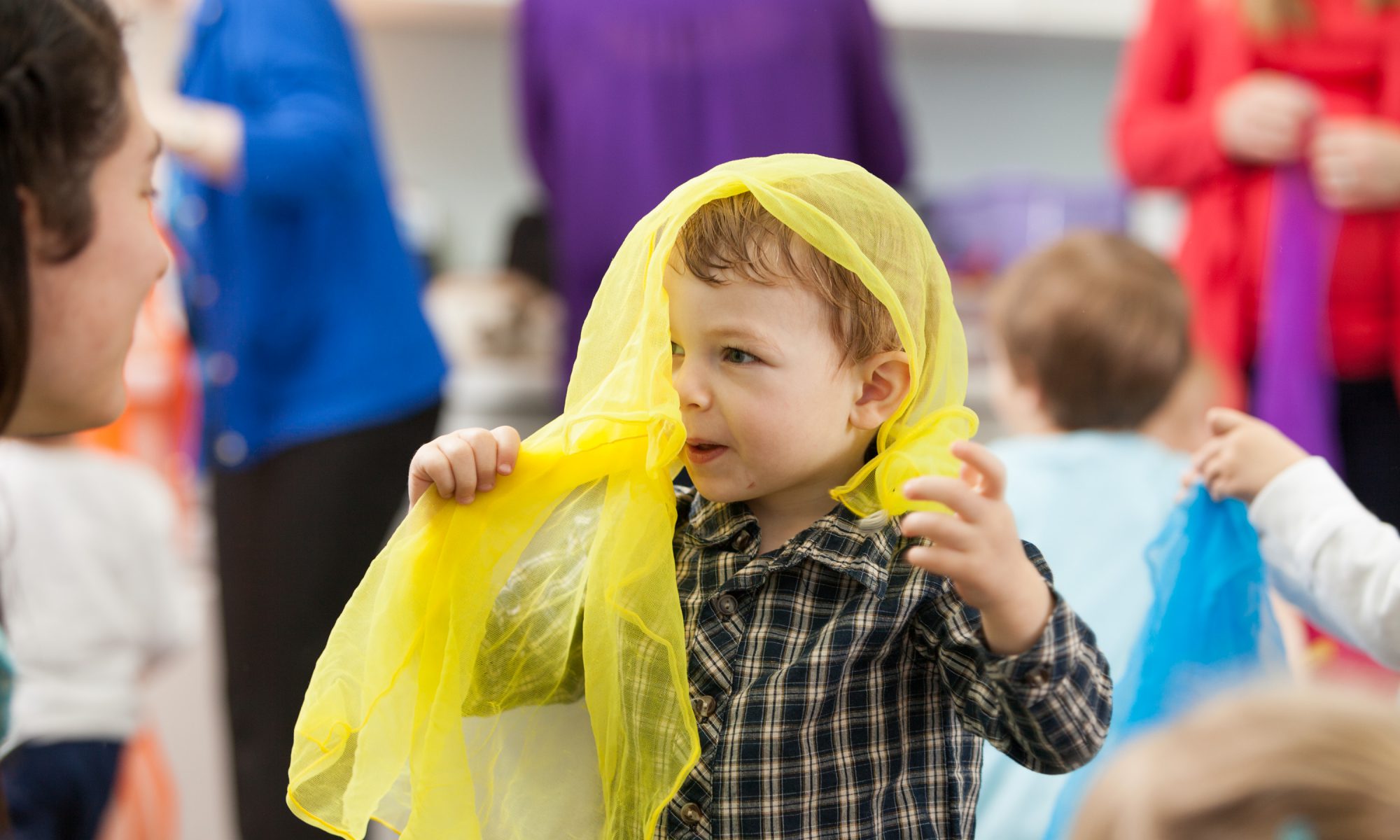
 Children thrive on (and naturally respond to!) multi-sensory learning opportunities, such as music and the visual arts. Each of our five senses (sight, smell, sound, touch, taste) activates specific neurons in the brain. For young children, multi-sensory activities provide more learning opportunities than single-sensory activities because more of the brain becomes involved in the lesson. For example in a music class, children experience multi-sensory learning when they listen to and imitate animal sounds vocally or with an instrument, see the animals in the story, and then move around like them. Art activities can bring in the sense of smell and taste through edible art works, such as creating rainbows out of colored cereal or even using edible finger paints for the youngest learners. Plus, experiences that integrate several senses simultaneously are responsible for lasting impressions and greater retention.
 This could mean listening intently as a child explains the colors of the rainbow on a painting brought home from school and then finding the perfect spot on the refrigerator to hang it. Or it can mean singing and dancing to the songs from music class or pretending to be favorite characters in the book from circle time.
![KindermusikPresents_ABCMusicAndMe_AGlobalEarlyChildhoodCurriculum[1]](https://media2.kindermusik.com/website/sites/2/2014/05/KindermusikPresents_ABCMusicAndMe_AGlobalEarlyChildhoodCurriculum1-300x167.png) Plus, teachers and parents love Kindermusik. It’s easy to use with minimal planning and intentionally provides a method for teachers to participate, notice, and observe the class. Teachers can just pop in the hosted audio and a trained Kindermusik educator comes alive in their classroom through the guided activities.
Plus, teachers and parents love Kindermusik. It’s easy to use with minimal planning and intentionally provides a method for teachers to participate, notice, and observe the class. Teachers can just pop in the hosted audio and a trained Kindermusik educator comes alive in their classroom through the guided activities.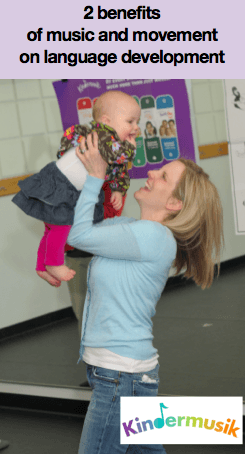
 almost exclusively on what they hear in order to acquire language. Children’s brains make a connection based on what they experience (being lifted high or twirling around) and hear (“up” or “twirl”). So, when a parent of caregiver lifts a child high “up, up in the sky” or “twirls around like a leaf” while singing the songs in Kindermusik class, young children learn the word and understand the concept. Later, children will discover those words correspond to marks on a page which eventually leads to letter recognition and reading.
 Come experience for yourself the benefits of music!
![KindermusikPresents_ABCMusicAndMe_AGlobalEarlyChildhoodCurriculum[1]](https://media2.kindermusik.com/website/sites/2/2014/05/KindermusikPresents_ABCMusicAndMe_AGlobalEarlyChildhoodCurriculum1.png)

 From “Home Sweet Home
 Parents of young children need special superpowers. Forget about leaping tall buildings in a single bound or even flying, parents really need the ability to turn invisible in order to check on a sleeping baby, the power to fully function on only 3 hours of interrupted sleep, and the capacity to do the laundry faster than a speeding bullet! Who knew someone so little could go through so many clothes!?
