How Music Class Helps Parents Nurture a Child’s Development

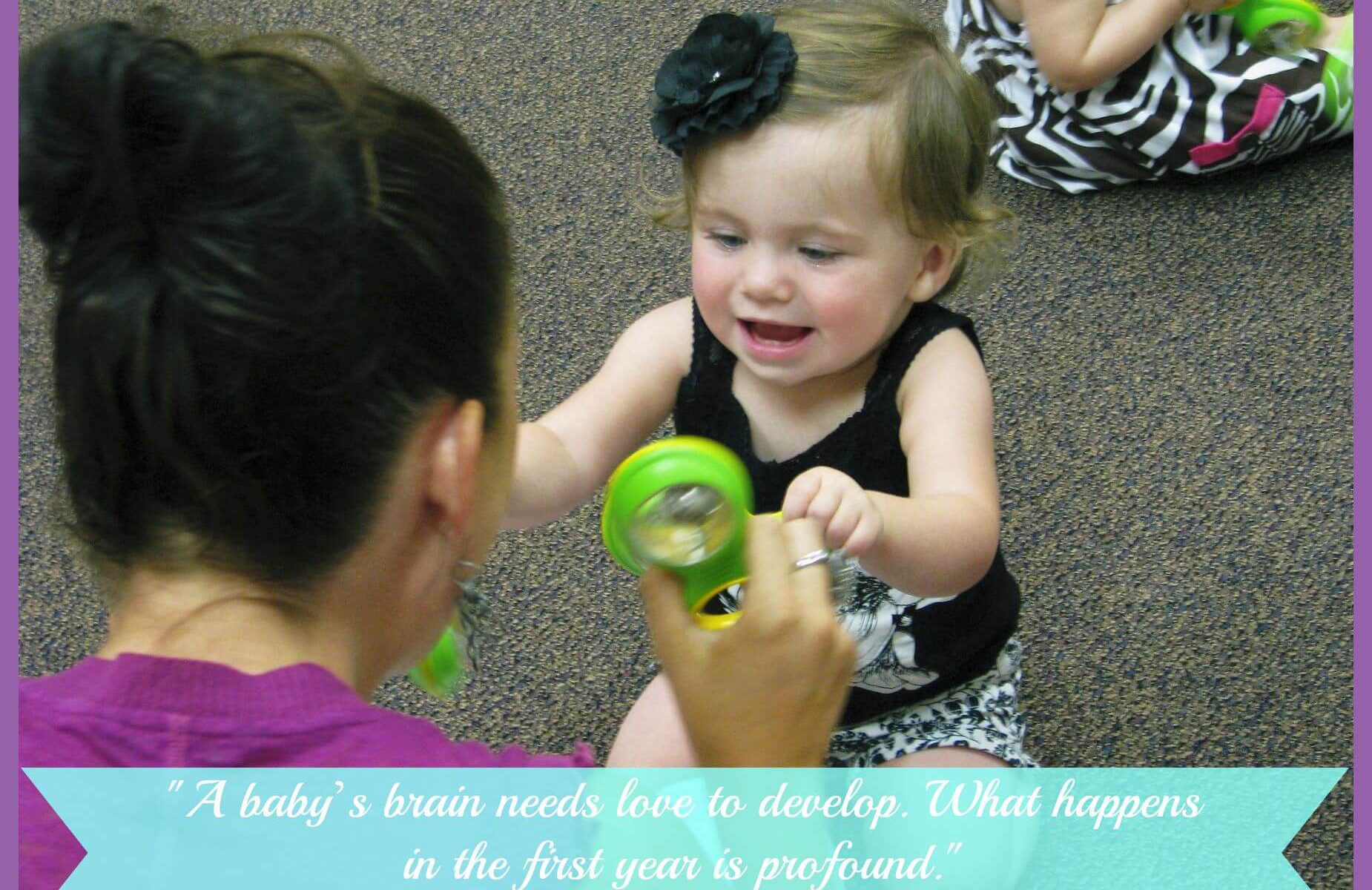
A Baby's Brain Needs Love to Develop

Turns out that nature does need a little nurturing after all, especially when it comes to the development of the brain.  The “Philadelphia study,” as it’s been called, was the first to establish a clear connection between childhood experience and how the brain develops.

Despite coming prewired with mind-boggling capacities, the brain depends heavily on environmental input to wire itself further. Scientists are now discovering precisely how that development is molded by the interplay between nature and nurture.

In the early years, much of the “environmental input” that’s so critical for brain development is directly facilitated by a child’s parents and the kind of interactions and experiences they provide for a child.  That’s why Kindermusik has always asserted that parents are a child’s first, and best, teacher.  One of the best kinds of early experiences a parent can provide is in a music class, especially one that offers a rich, multi-sensory and developmentally appropriate experience, supported by Home Materials that take the joy, learning, and bonding into the home and throughout the week in between classes.

Five ways a music class like Kindermusik helps parents nurture a child’s development

  • A music class gives parents the time and inspiration for the kind of one-on-one attention and nurturing that can result in higher IQs.
  • A music class helps parents give their child an opportunity for social development in a warm and welcoming environment.
  • A music class strengthens emotional bonds through lots of cuddling, dancing, loving touch, and playful connection.
  • A music class encourages language development through singing, rhyming, vocal play, and conversation.
  • A music class supplies parents with ideas and resources for play and together time at home.

The more scientists find out about how children acquire the capacity for language, numbers, and emotional understanding during this period, the more they realize that the baby brain is an incredible learning machine. Its future—to a great extent—is in our hands.

Find a local Kindermusik class and experience firsthand how music classes can support your parenting and your child’s development.

*Quotes taken from this National Geographic article.

Give Kids’ Brains a Break with Music

teach kindermusik

The Electric Slide, The Cha-Cha Slide, and The Macarena can impact kids’ brains in a powerful way…and probably not in the way you may think. Music and movement “brain breaks” can actually improve attentiveness, concentration, and focus. (Yes! Even The Macarena.) Brain breaks can also help kids discover new solutions—or THE solution—to a problem.

So, the next time the kids in your life need a break, try one of these at home or in the classroom!

4 Quick and Easy Music and Movement Brain Breaks

  • 5-4-3-2-1. In this game, children perform 5 different movements in descending order. For example, a teacher or parent says: Clap your hands five times. Hop four times. Spin around three times. Stomp two times. Jump one time. Pause between each number to allow time for every child to process the instruction and do it.
  • Sing “Head, Shoulders, Knees, and Toes.” This gets kids moving and stretching. Plus, movement paired with the word also supports vocabulary development!
  • Play Freeze Dance. Put on a favorite song and tell children to dance or move around until the music stops. When the music stops, they must stop, too. This brain break game also gives children the opportunity to practice inhibitory control.
  • Look at pictures of cute baby animals. This one isn’t a musical brain break, but kids love looking at baby animals. (Who doesn’t?!) A Japanese research study showed that looking at all of those cute baby animals actually increases concentration and attentiveness! To make it musical, listen to music while you gaze at the cuteness.

Want more musical brain break ideas for your family? Visit a local Kindermusik class and we’ll give you enough to last throughout the week!

Contributed by Lisa Camino Rowell a freelance writer in the Atlanta, Georgia, area.

How Kindermusik Prepares Kids for Piano Lessons

Kindermusik prepares kids for music lessons

What’s the best preparation for piano lessons?  Any piano teacher who’s ever taught a Kindermusik graduate will tell you without hesitation that piano students who have had Kindermusik progress more quickly, have a solid grasp of music fundamentals, and stick with their lessons longer.  Many will even go so far as to say that a former Kindermusik student is a dream piano student.

I make those bold claims after 20+ years of watching Kindermusik kids graduate and not only do well, but absolutely flourish and thrive in our music program.  As director of a large music school, Kindermusik educator, and former piano teacher, I’ve seen, heard, and celebrated success after success that could only be attributed to Kindermusik.  In fact, I’ve conducted my own non-scientific “research” several times throughout the year when I’ve waited to tell my piano teacher that her new student was a Kindermusik grad.  And the experiment never fails to produce the expected result.  Within just a few weeks of working with that student, I always get a text or a phone call from the piano teacher, “Has this child been in Kindermusik?!”

In celebration of September being “National Piano Month,” I’d like to celebrate just some of the ways that Kindermusik prepares kids for piano lessons.

Kindermusik kids learn musical terms and concepts in the most perfectly beautiful and natural of ways.  These concepts are happily experienced and curiously explored in the kind of rich, multi-sensory environment that supports optimal learning and connection.

Kindermusik kids have an ear for all types of music.  This is because the Kindermusik library is so vast and varied, introducing these young musicians to music from all different cultures, different centuries, different genres, and different traditions.

Kindermusik kids develop an ingrained sense of steady beat.  From bouncing to rocking to dancing to marching, a sense of rhythm has been instilled from the time they were infants.  First in mama or daddy’s arms, and then on their own two feet.  They can feel it in their whole bodies.  And nothing is more central to music than steady beat.

Kindermusik kids know how to make music together, in groups both big and small.  They first learn to interact with mom and dad.  Then with others, in side-by-side play and exploration.  Their ensemble skills come into full bloom as the children successfully play their instrumental part with the rest of the class, on cue and in rhythm.

Kindermusik kids learn to read, write, and compose music at a young age, between 4.5 and 7 years.  What they grew to love in their hearts as babies, toddlers, and preschoolers becomes what they delight in understanding and creating as big kids.  The Kindermusik formula stays the same – singing, moving, exploring, listening, playing – all gently leading a child to a level of understanding that could only be the product of such a joyful, process-based approach.

Kindermusik kids are confident musicians.  From their very first classes, they’ve been encouraged to explore, to try new things, to think outside the box, and to use their imaginations – not because they were trying to find the one right way, but because there are oh-so-many ways to participate in Kindermusik class where process is always emphasized over performance.  This process-based approach develops a unique kind of self-confidence, not just at the piano, but also in the classroom and later, in the workplace.

Kindermusik kids love music, from the top of their heads to the tips of their toes.  This is the deepest kind of love that grows the strongest as it is lovingly nurtured and encouraged from an early age.  It’s the kind of love that opens the door to reaching the fullest potential in musical study.

Many Kindermusik kids have come through our doors over the years.  They have all left with a song in their heart that will stay there forever.  Many also left with another incredible gift – the ability to play the piano and enjoy making music the rest of their lives.

Do you want to prepare your child for piano lessons? Find a local Kindermusik class and see for yourself how Kindermusik prepares kids for formal music lessons later on.

Shared by Theresa Case who has been the Director of Piano Central Studios in Greenville, South Carolina for over 20 years now.

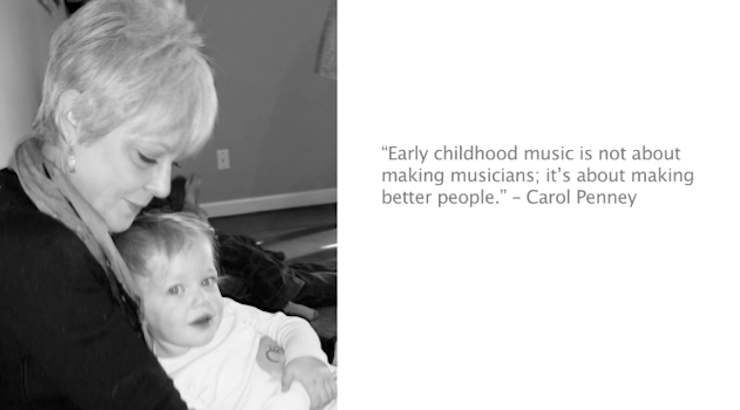
Carol Penney: A Tribute

So often as parents, we want others to see our children as we see them:

Beautiful.

Amazing.

Overflowing with possibilities.

That’s what we see. Right? It’s why we can spend hours watching our babies sleep, talk incessantly about how our little ones perfected their own versions of crawling and probably why our social media feeds contain hundreds of images and videos of our most cherished everyday moments.

Yes! Our children are beautiful, amazing, and overflowing with possibilities. You know it. But, you may not know the name of a person who spent the past 30 years—and her life’s best work—devoted to creating the Kindermusik community where we invite—and celebrate—every beautiful and amazing child into the Kindermusik circle (or running around outside of it or sitting quietly in a parent’s lap).

Carol Penney.

That’s her name. While you may not know her name, you know the community that she was instrumental in creating. You know the songs and the lessons that she helped craft. You know the Kindermusik educator that she trained, encouraged, and inspired. Yes, you may not know her name—Carol Penney—but you do know her.

She is beautiful.

She is amazing.

She is overflowing with possibilities—
both during her 30 years at Kindermusik and now as she enters semi-retirement.


So, while we may sing the “Good-bye” song to Carol, it isn’t really good-bye. After all, we know that just as a Kindermusik class doesn’t really end after that final song, Carol’s contributions to Kindermusik will continue throughout the rest of the week, months, and years to come. And we are better people for knowing her.

Thank you, Carol, for giving us all a Good Beginning that Never Ends. Here are just a few reasons why you are loved the world over.


Carol Penney Tribute Video


Contributed by Lisa Camino Rowell, who counts Carol as a friend, mentor, and colleague. Carol, you are loved more than these words can express. Thank you for sharing your gifts and your heart with us all.

School Readiness Begins at Birth

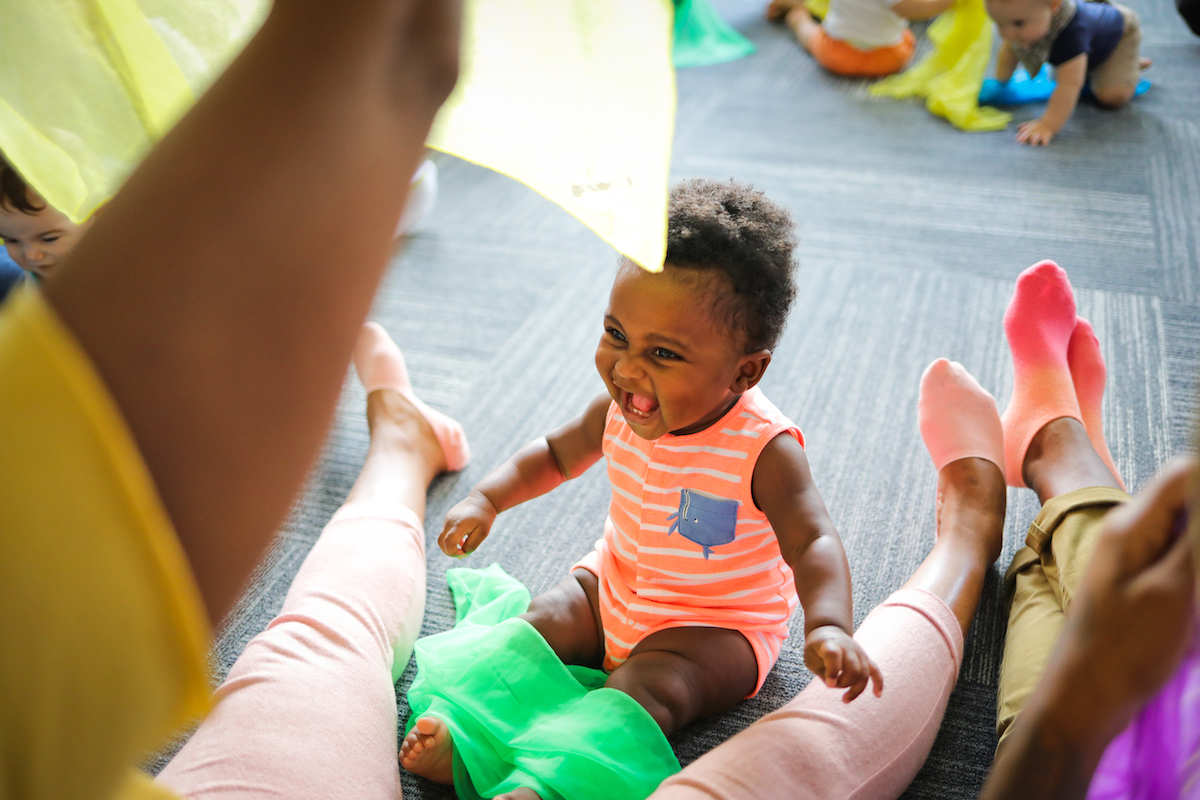
9-month-old baby engages in scarf play with mom during a Kindermusik class designed to support early school readiness.

School readiness for babies? Sounds a little extreme, but did you know an infant’s brain doubles in size during the first year? This window of learning opens wide in those first 12 months, and the easiest way to boost school readiness is to amplify bonding moments, joyful age-appropriate play, and rich multisensory activities that support those critical brain leaps. 

Shared musical play is the perfect tool.

Continue reading “School Readiness Begins at Birth”

Scientists Call Music “The Social Glue that Bonds People”

Kindermusik for Schools

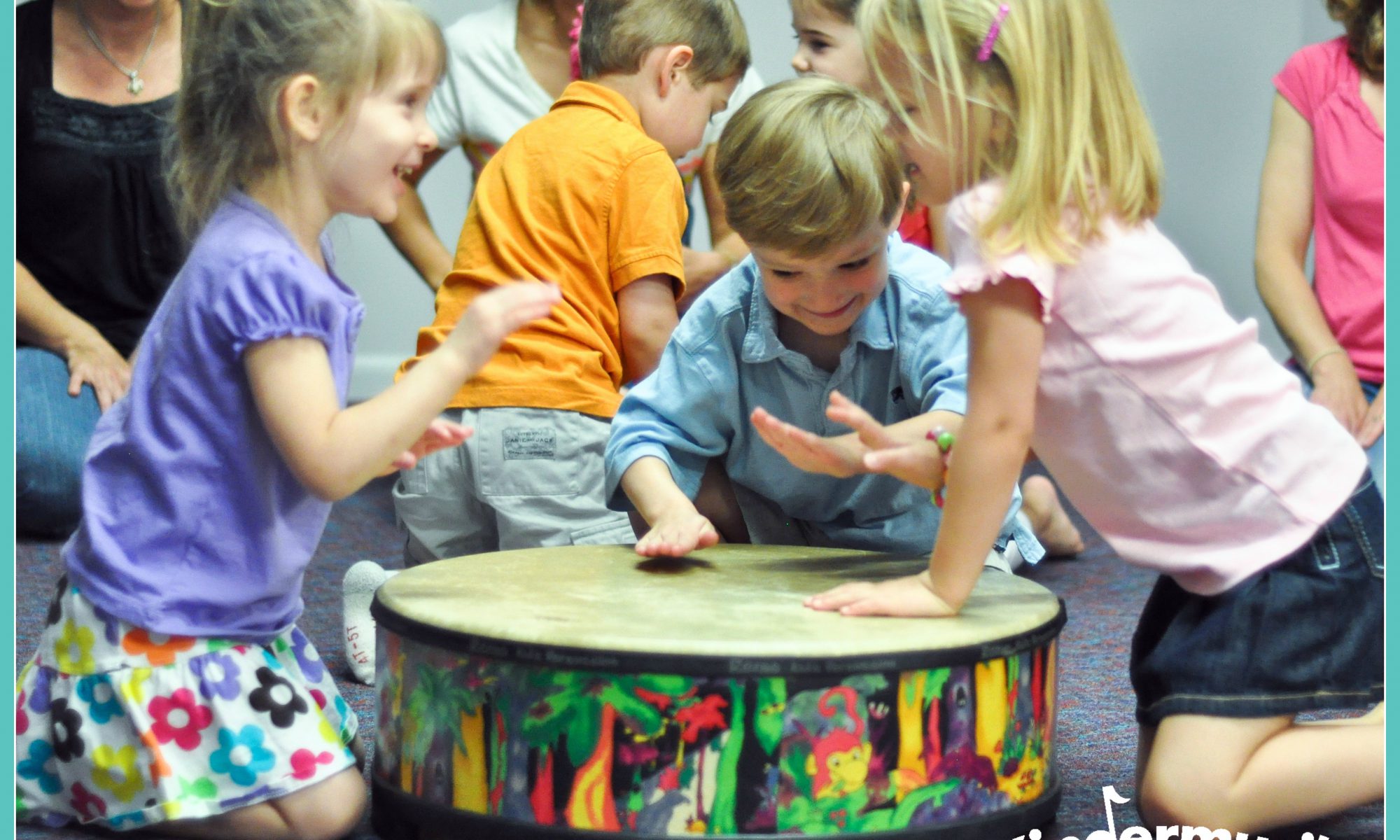
It seems as if we all march to the same beat even if we play different drums. According to new research, music from around the world tend to share common features, including a synchrony on the drums in Kindermusik classstrong rhythm that enable coordination in social settings and encourage group bonding.

The research team from the University of Exeter analyzed the recordings of 304 stylistically diverse musical compositions from around the world. Their research found dozens of common characteristics across various world regions, including features related to pitch and rhythm and social context and interrelationships between musical features. For example, the team found rhythms based on two or three beats present in music from all regions: North America, Central and South America, Europe, Africa, the Middle East, and South Asia, East Asia, Southeast Asia and Oceania.

Why We Make Music

Thomas Currie from the University of Exeter gave insight into the team’s research: “Our findings help explain why humans make music. The results show that the most common features seen in music around the world relate to things that allow people to coordinate their actions, and suggest that the main function of music is to bring people together and bond social groups — it can be a kind of social glue.”

Music as social glue works for parents and young children, too, as one of the researchers discovered (and as those of us involved in Kindermusik already know): “My daughter and I were singing and drumming and dancing together for months before she even said her first words. Music is not a universal language… music lets us connect without language,” explained Pat Savage, a PhD student from the Tokyo University of the Arts.

Village baby with new logoWant to connect your family with others who share a love of music? Find a local Kindermusik class.

How a Violin Teaches Kids to Read

Matching sounds to a visual image is an extremely important early literacy skill. It is, in fact, the precursor skill to the alphabetic principle, or the understanding that there is a relationship between letters and sounds. Before children can explore letter-sound relationships and learn to decode words, they must first understand the connection between a sound they hear and an image they see.

This fun early literacy game from Kindermusik@Home features violins and provides kids lots of practice with associating a specific bit of audio with a specific bit of visual. While kids have no idea that this game is actually preparing them to read, YOU will know!

Kindermusik@Home Listening Game: Which Violin?


Kindermusik@Home Activity

This game also supports other important early childhood cognitive competences, including:

  • Selective Attention: The ability to selectively concentrate on one aspect of the environment while ignoring distractions.
  • Auditory Working Memory: The ability to retain information that has been presented orally (e.g., listening to a target sound and then matching the sound to its image).
  • Auditory Discrimination: The ability to discriminate between similar sounds.

Looking for more fun, musical learning ideas? Follow us on Pinterest.

Guest Post: Seven Years of Kindermusik

This post originally appeared on the blog: mymommyology.com 

It took me a while to write this post — partly because June was quite the busy month, and also because I get emotional just thinking about it.  We’ve reached another milestone in Sam’s childhood — the end of Kindermusik.  sniff!

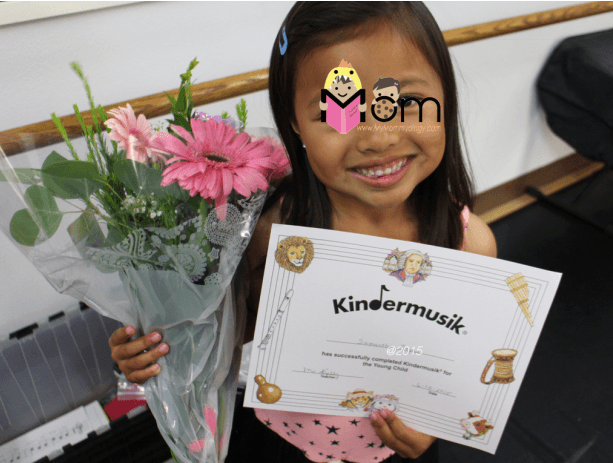
Kindermusik Graduation

It has been seven years after all (give or take a few months!).  Seven years, three wonderful teachers in three different parts of the globe.  I’d definitely recommend it to anyone with kids seven and below, no matter where in the world you are.

We spent a majority of those years in our first Kindermusik home with Rebecca in Chapel Hill.

Rebecca Dyck

Prior to that I’d never heard of Kindermusik — I was a Gymboree / Little Gym kind of parent (which I see now is very different from what Kindermusik offers).  To this day though, I am so so SO glad I came across it in my endless search for mom-child programs for my infant.  And I’m even more thankful we landed in Rebecca’s little home.  It’s where we made our first set of friends, who are still friends to this very day.

We owe a lot to Rebecca, as she set the bar high for the wonderful and highly educational experience we had over the years.  I’ve said it time and again, Rebecca is a wonderful maestro of music, and she absolutely loves the kids and their families.  I learned a lot about music, parenting, child development and even a little bit about teaching from Rebecca!  I remember asking her every sort of question, from the purpose of each type of song or stage, to the perfect age for piano lessons (If you want to know what she said, ask me!  I’ll never forget that piece of advice she gave).

When we moved to Manila, I sought out Teacher Jeannie (upon Rebecca’s recommendation).  

She and her staff of teachers (Teacher Maya in particular!) were also another set of wonderful teachers for the girls.  Little did we know that Kindermusik with Teacher Jeannie was in the top 1% of the total Kindermusik programs in the world.  But the wonderful experience continued for both myself and Sam, and she continued to look forward to Kindermusik every week.

Because of the volume of Teacher Jeannie’s enrollment in the country, at the end of every Kindermusik year, she’d hold a Kindermusik Festival, the highlight of which would be the Young Child students’ performance and graduation.

It’s one event Sam misses and talks about with so much gusto, until this day.  Sam joined last year’s performance and was looking forward to graduating on Teacher Jeannie’s stage, except we’d moved to California.

And so, Sam finished her last year in Young Child 3 and 4 in Kelly Meyers’ studio.

Ms. Kelly, as we fondly call her, held a little graduation ceremony for all the parents and friends in her Young Child class and the kids performed several numbers together.  Each one did a solo too on the instrument of their choice.

At the onset, Kindermusik may seem like any other music program, with song and dance,  instruments and games, but across our transcontinental encounters of it, I was very impressed with the consistency of its program and curriculum.  We picked up exactly where we had left off.  And at the end of it all, Sam had so much fun learning the different musical concepts, composers and terms, and remember them all to this day.  She and Jamie, who has been in Kindermusik since she was in my tummy) can tell you the difference between piano and forte, crescendo and decrescendo, staccato and legato among other things. They both already know the different instrument families, as well as facts about Bach, Mozart and Beethoven, and their respective work.  All of these things, I learned when I was in high school, and most of it was because I took the time to learn it myself as well!

In my opinion, what sets Kindermusik apart from all other music programs is its Young Child curriculum.  Young Child is a 4-semester course for 5-7 year olds that is run over a period of two years.  At the end of it all, the child learns how to read through the entire C scale, and play simple tunes on three different instruments.  Sam knows about flats, and sharps, and she can read the notes and their respective rhythms.  She can write her own beat and tune, and find where it is (on her own) on a keyboard, on a dulcimer, a glockenspiel and a recorder!

Young Child

Each week’s session has a different song, story or theme, but it is readily applied to what they’re learning, and it progressively builds on each other.  Everything has a purpose, and it becomes much clearer as the lessons go by.

I am a true believer in the Kindermusik program.  I grew up knowing that music has many benefits to a child’s development, and I can see how Kindermusik has shaped that into the fun and interesting curriculum it has today.  I can’t imagine the childhood of my girls without it!

My girls love music because of Kindermusik.  The teachers, the program and all of our experiences have shaped Sam’s musicality into what it is today and I will forever be grateful.  I’m so glad Jamie has 2 more years left!

Contributed by Jenny Reyes. Jenny Reyes is a mother to two beautiful girls. They teach her about parenting and motherhood everyday. Apart from the blog, Jenny is a marketing consultant and part-owner to a locally manufactured Children’s Furniture and Accessories line. She currently resides with her family in California.

Create your own family musical memories. Find your local Kindermusik class!

Why Your Child Needs Routines and Rituals

Routine.  Ritual.  Often the words are used interchangeably, but they have slightly different nuances.  Routines are every day.  More commonplace.  Things we do at the same time in the same way.  Rituals are special and meaningful, memory builders, if you will.  They have purpose and are carried out with intentionality.  Your child needs and thrives on both.  Here’s why.

RepetitionRoutines give your child predictability, and with predictability comes a great sense of security for your child.  Routines are the defining structure of a day or a week and provide a certain organization that prevents chaos.  They are comforting and reassuring, helping your child know what to expect.
Rituals define us.  They help us bond and connect.  Rituals are enjoyable and repeated shared experiences – a certain way you celebrate life’s happy occasions or that special way you put your child to bed each night.  They contribute indelibly and inextricably to a happy childhood, making for a lifetime of the best of memories.

Here’s a good example of the difference between routines and rituals.  Attending a weekly Kindermusik class becomes a favorite routine, something you and your child both look forward to.  You have a familiar and predictable structure to each week’s class (with a little new coming in with new themes, songs, and activities), and the same wonderful Kindermusik educator year after year.

What you learn in class and the Home Materials you receive then become the inspiration for memorable, heart-warming, bonding rituals at home.  Like the toe-tickle you do each morning to chase away the morning grumpies.  The way you cuddle up and read your Kindermusik story before naptime.  The happy dance you do around the kitchen together when daddy walks in the door.  Or the sweet lullaby that calms and quiets your child before bedtime… the very same one he’ll sing to his own little one someday.

Routines.  Rituals.  They are beautiful things, especially when they are set to music.

Make Kindermusik a part of your weekly – and daily! – routine.  Find a class near you today.

Shared by Theresa Case whose award-winning Kindermusik program at Piano Central Studios in Greenville, SC, has been helping families enjoy delightful routines and special rituals for over 20 years now.

5 Easy Ways to Boost Early Reading Skills

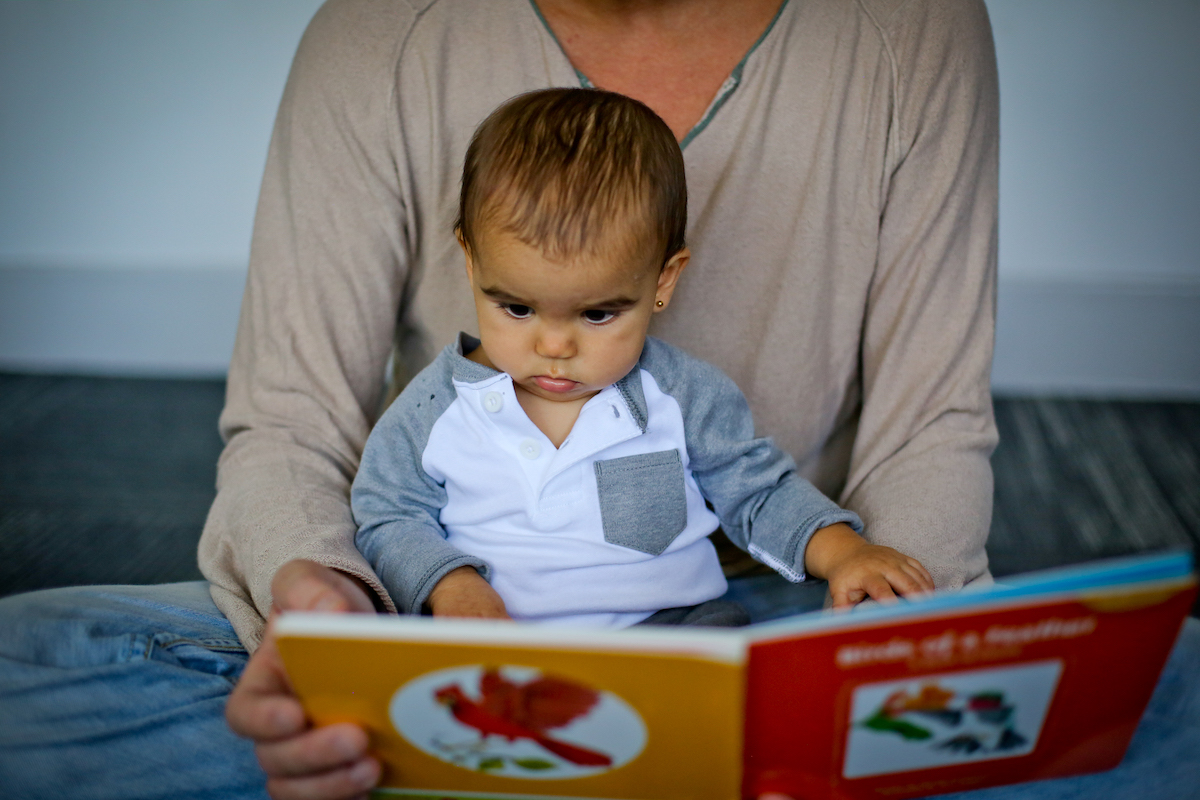
Dad boosts early reading skills by reading a board book to his baby.

My nine-year-old daughter CAN NOT put down Harry Potter and the Sorcerer’s Stone. Her eyes gulp down the words while her imagination dives into the depths of the wizard world. It’s the 11th time she’s made the same journey, not counting the first time we read the book out loud together. So when did her reading skills take flight?

She wasn’t a born reader—no one is—but a love of reading can develop early (and the earlier the better). My daughter’s love of reading began practically at birth, certainly long before she heard the name Harry Potter, and it 100% had to do with integrating these easy reading development tips…

Continue reading “5 Easy Ways to Boost Early Reading Skills”