Child's Play

Benefits of Play for Children

We call it play, the work children do all the day long. From rolling a ball to tasting it, from building with blocks to knocking them down, a child’s job is to play.

Activities for Kids at Home

Children learn and grow through play. Toys that mimic everyday objects, like kitchen appliances and gardening tools help a child to act out what he sees the grown-ups doing. Toys that specifically encourage creativity, like blocks, scarves, and Legos equip children as they use their ever-amazing minds to construct and pretend. Other simple things that inspire open-ended play include cardboard boxes, dress-up clothes, and Lincoln logs. Read here for more open-ended play ideas.

The most important play-thing

As parents, we want our children to have the best toys to help with their development. After

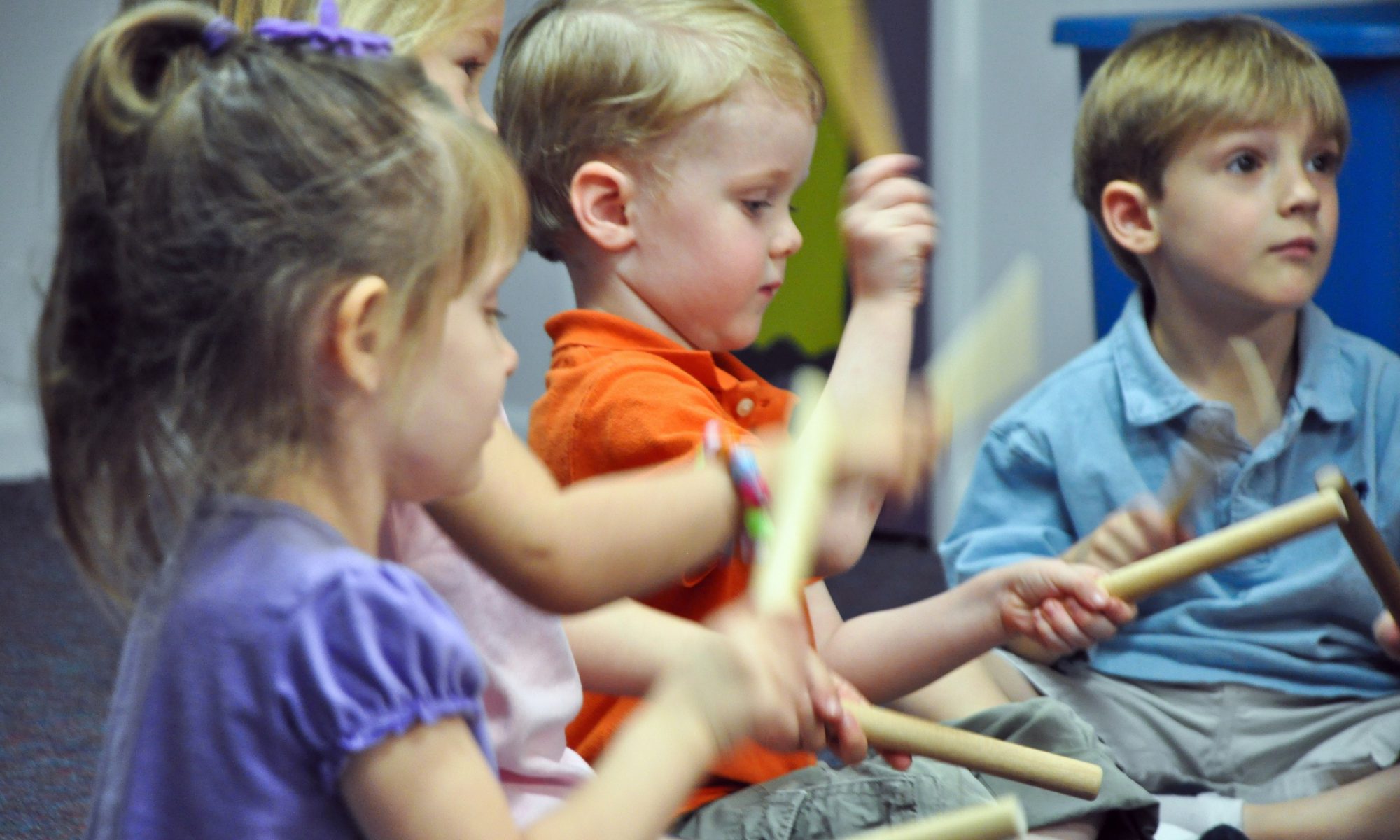
all, creating a stimulating home environment is the least we can do. But the most important play-thing that your child can have does not come in a box or from a store. Children need loving parents and caregivers to not only provide them with quality tools for their work, but they need adults to stop, sit, and become co-workers at play. This is one of the best educational activities for 2 year olds, 3 year olds, and beyond. It’s easy to delight a child with a new toy and walk away. But a child needs personal interaction with the adults in her life as she learns and grows.

It’s hard to take a break from what we view as important: work-related issues, financial problems, the upkeep of a home. But investing daily in the lives of our children by sitting down with them, allowing them the freedom to choose what to play, following them and labeling their actions, resisting the urge to organize and perfect their play, is the most important work that you can do as a parent.

Inspiring play through music and movement

In our Kindermusik classes you’ll find lots of inspiration for play, both musical and non-musical. Though our classes are music-based, we’ll give you lots of tips and ideas for playing with your child in class and at home – tips and ideas that come from an understanding of the concept of scaffolding, from learning more about your child’s developmental stage, and from the child-centered way that we approach our classes. There’s nothing like a Kindermusik class to give you a reason for playing with your child – once a week in class and throughout the week at home.

The simple act of investing time in play with your child is one of the very best investments you can make. Take a few minutes to play today!

Edited and revised by Theresa Case, whose Kindermusik program at Piano Central Studios in Greenville, SC, is proudly among the top 1% of Kindermusik programs worldwide.

11 summer-friendly literacy activities for parent involvement in education


Ask a child to define “summer slide” and responses may include descriptions of the tunnel slides at the local park, the indoor slide at the restaurant down the street, or maybe the water slide at the pool. Ask an early childhood educator, however, and the response would probably include an explanation of what can happen to the early literacy skills of a child who doesn’t read or engage in early literacy activities over the summer.
As a child’s first and best teacher, parent involvement in early childhood education can stop the “summer slide.” We put together 11 tried-and-true early literacy activities for families to do together over the summer (or anytime!) that supports early literacy development.

11 summer-friendly early literacy activities

1. Read with your child 20 minutes each day. Include a mixture of books that you both choose.
2. Practice letter writing in the sandbox, chalk on the sidewalk, or even a cookie sheet with flour (for those rainy days).
3. Act out your child’s favorite story together.
4. Go on a “Letter Sound” scavenger hunt. Help your child find objects around the house or in your neighborhood that start with every letter of the alphabet.
5. Listen to books on CD or download stories from play.kindermusik.com.
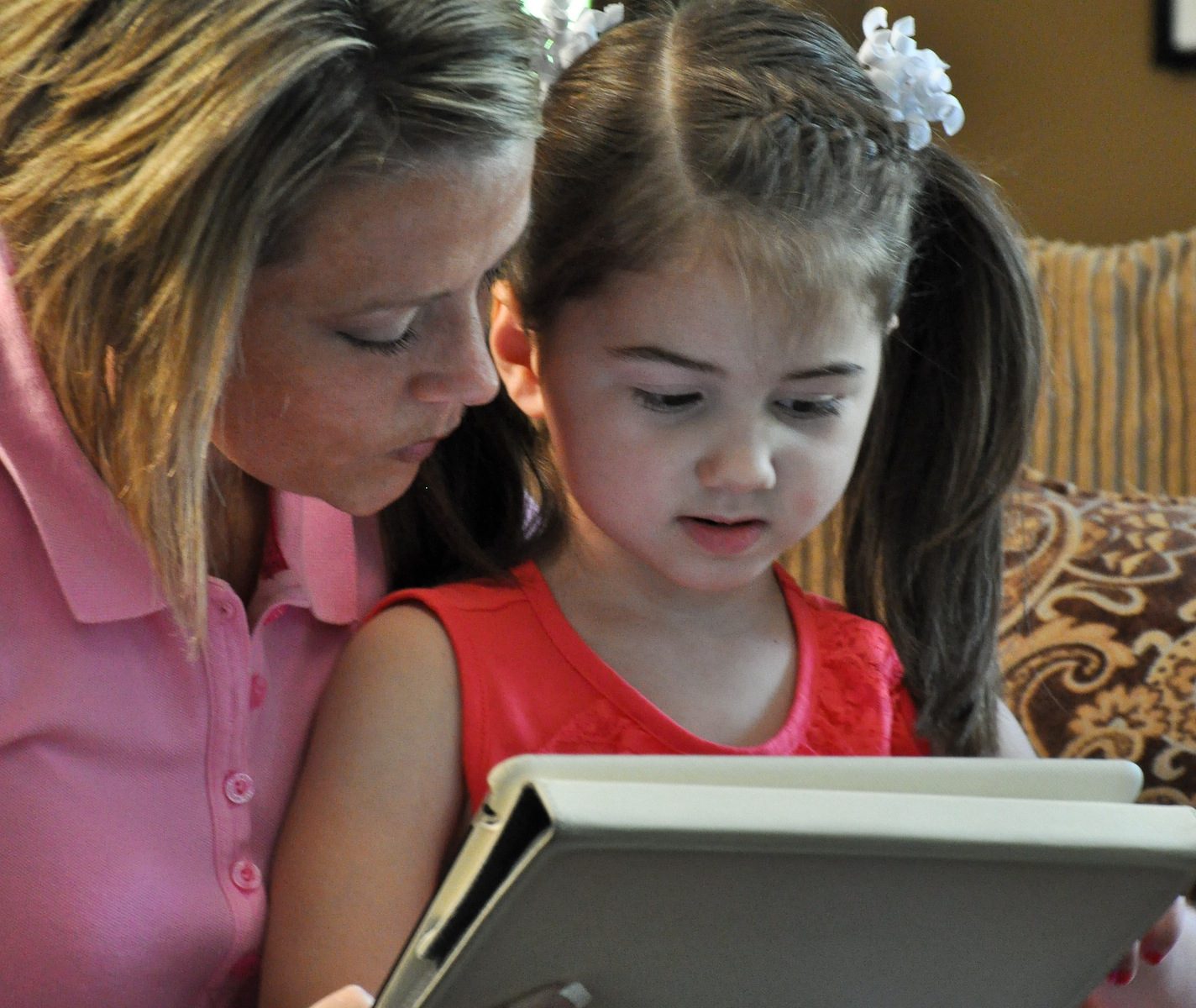
11 Summer-friendly early literacy activities6. Add eBooks to your reading list. eBooks can be especially engaging for reluctant readers.
7. Go fishing. Put magnetic letters in a bowl. Tie a string to a paper clip and let your child “fish” for a letter. After catching a letter, your child identifies the letter and the sound it makes.
8. Connect stories to your child’s life. Reading a book with characters that live in the woods? Go on a hike. Is the setting at a lake? Visit a lake, pond, or even a stream.
9. Look at the clouds and make up stories about what you see.
10. Play “I Spy” with letter sounds. “I spy something that starts with the letter B.” (Then make the sound of the letter.)
11. Download the Reading Rainbow app, the number 1 app in Education. Plus, with hundreds of books and videos, new content added every week, and music-themed content by Kindermusik, we know you can find something for every young reader!

Early childhood curriculum increases family involvement in early childhood education

ABC Music & Me is an early childhood curriculum that uses music and movement to teach young children. We also increase parent involvement in early childhood education by providing families each month with the music from class as well as a Family Activity Guide (available in English and Spanish). The guide includes the story from class and related literacy activities that families can do together at home.
For more information on how ABC Music & Me uses music to teach early language and literacy and increase parent involvement, email us at abcinfo@kindermusik.com.

4 Significant Benefits of Music Education

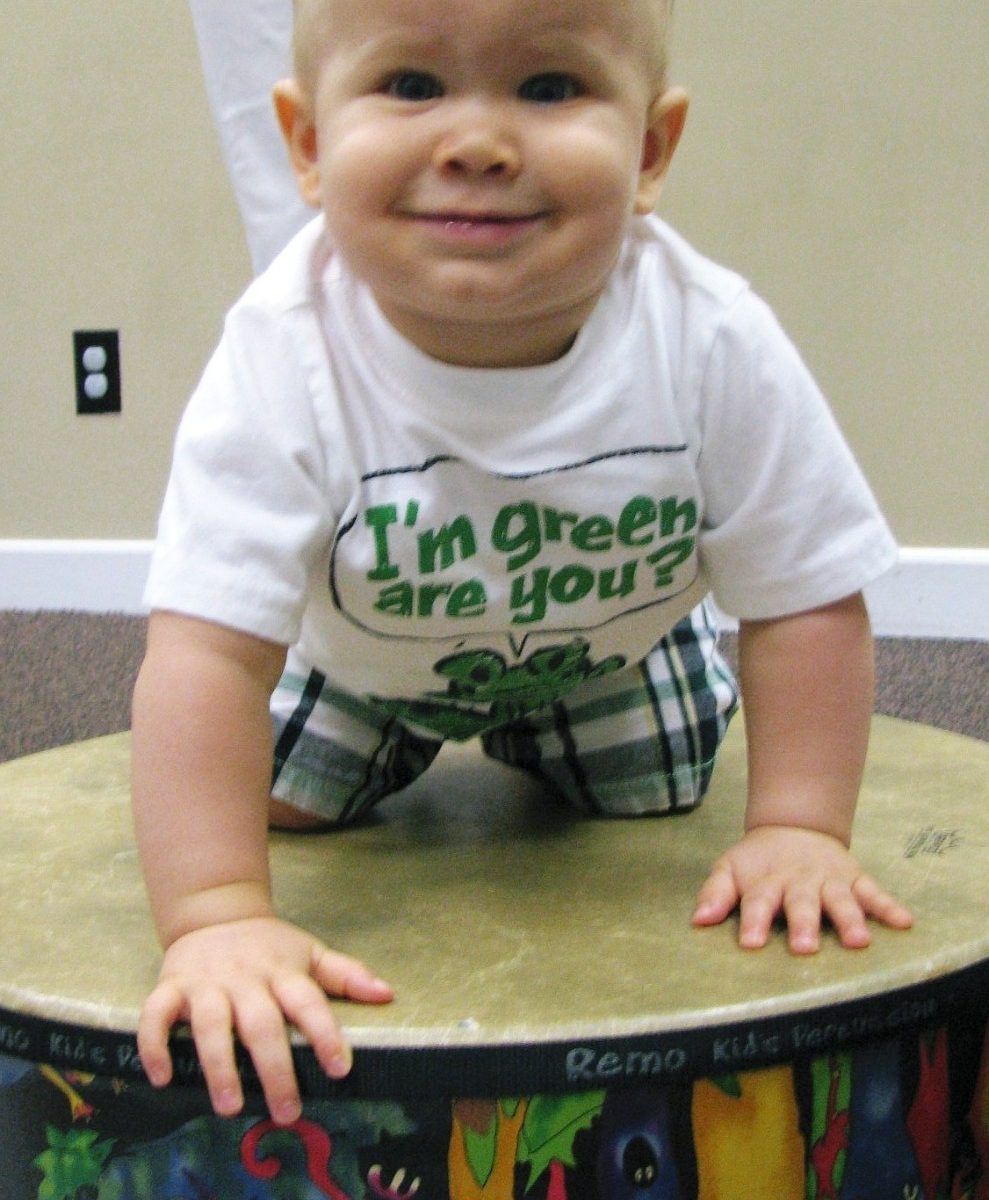
baby playing drum
(article originally published at realmusicproduction.com)

baby playing drumMusic is a very powerful subject – It has been used since the Greek times for healing, communication, relaxation and for enjoyment. Even before birth we are aware of our mother’s heartbeat and during infancy are relaxed by the song of a lullaby. Every day everybody hears some form of musical pitch or rhythm and it can even be found in nature such as how birds communicate through a song-like speech.
Music is such a powerful force, it creates deep emotions in humans – it is played at weddings for happiness, in horror films and during war for fear and at home for happiness and because of this lends itself to relaxation, stress relief and health therapy – and the connection between music, body, and soul has even been shown to improve physical and mental health.
Skills such as working in teams, communication, self-esteem, creative thinking, calmer attitudes, imagination, discipline, study skills and invention are learned and improved through the study of music and by focusing on the fact that young children are mostly highly receptive to pitch and rhythm – one of the main ways a child learns its language – that we can drive education in music to children to help them with benefits ranging success in society and in life.

Benefit One: Success in Society

“We believe the skills the arts teach -creative thinking, problem-solving, risk-taking, teamwork and communications – are precisely the tools the workforce of tomorrow will need. If we don’t encourage students to master these skills through quality arts instruction today, how can we ever expect them to succeed in their highly competitive business careers tomorrow?” -Richard Gurin Chief Executive Officer, Binney and Smith, maker of Crayola crayons
Music is a part of our society and a part of all communities – every human culture uses music to carry forward its ideas and ideals. A study of the arts provides children with an internal glimpse of other cultures and teaches them to be empathetic towards the people of these cultures. This development of compassion and empathy, as opposed to developing greed and a selfish attitude, provides bridges across different cultures that lead to a respect of other races at an early age.
Music has a great value to our economy – it creates jobs, increase’s tax base, boosts tourism and spurs growth in related businesses. Music study develops skills that are necessary in the workplace such as teamwork skills and discipline – during musical performances all members must work together to create the sounds they wish to achieve and for this regular practice is also required. Music favors working and ‘doing’ as opposed to observing, and these are the ethics employers are looking for.
Because of music’s ability to relax, calm and heal, and its optimal platform for emotions, the involvement with music helps to carve brighter attitudes – more optimism towards the future, less TV and non-productive activities, low use of alcohol, tobacco and illicit drugs and desire to develop individual abilities.

Benefit Two: Success in School

Music requires study skills, communication skills, and cognitive skills and as these are learnt and developed they expand the student’s abilities in other academic areas and help them become better students. – Students with coursework/experience in music performance and music appreciation scored higher on the SAT: students in music performance scored 57 points higher on the verbal and 41 points higher on the math, and students in music appreciation scored 63 points higher on verbal and 44 points higher on the math, than did students with no arts participation. – College-Bound Seniors National Report: Profile of SAT Program Test Takers. Princeton, NJ: The College Entrance Examination Board, 2001.
The discipline of music, particularly through participation in ensembles, helps students learn to work effectively in the school environment without resorting to violent or inappropriate behavior – According to statistics compiled by the National Data Resource Center, students who can be classified as “disruptive” (based on factors such as frequent skipping of classes, times in trouble, in-school suspensions, disciplinary reasons given, arrests, and drop-outs) total 12.14 percent of the total school population. In contrast, only 8.08 percent of students involved in music classes meet the same criteria as “disruptive.” – Based on data from the NELS:88 (National Education Longitudinal Study), second follow-up, 1992.

Benefit three: Success in Developing Intelligence

Many studies have been conducted on the effects of music in the brain. Scientists say that children who are exposed to music or those who play an instrument do better in school than those who don’t. Recent research suggests exposure to music may benefit a child’s reading age, IQ and the development of certain parts of the brain.
It can be shown that some measures of a child’s intelligence are increased with music instruction – a connection between music and spatial intelligence (the ability to perceive the world accurately and to form mental pictures of things) helps people to visualize and imagine solutions. This helps people to solve problems creatively and is critical to the sort of thinking necessary for solving mathematical problems and even general daily tasks.
“The musician is constantly adjusting decisions on tempo, tone, style, rhythm, phrasing, and feeling–training the brain to become incredibly good at organizing and conducting numerous activities at once. Dedicated practice of this orchestration can have a great payoff for lifelong attention skills, intelligence, and an ability for self-knowledge and expression.” – Ratey John J., MD. A User’s Guide to the Brain. New York: Pantheon Books, 2001.
Along with mental development music study can support the brains physical development – it has been indicated that musical training physically develops the parts of the brain known to be involved with processing language and reasoning, and can actually wire the brain’s circuits in specific ways. Memory can be improved through the linking of familiar songs with objects just as linking images can – past memories and emotions can be triggered by audio.

Benefit four: Success in Life

“Why arts in education? Why education at all? The purpose of education is not simply to inform but to enrich and enlighten, to provide insights into life as it has been led and as it may be led. No element of the curriculum is better suited to that task than arts education.” -David Kearns Now retired Chairman and Chief Executive Officer of Xerox Corporation
Ideally we want our children to experience “success” throughout life itself. The benefits may be psychological, spiritual and physical and with the challenge of making life meaningful and fulfilled and to reach a higher state of development by participating in music we develop self-expression which in turn leads to self-esteem – ultimately helping us to succeed at these challenges.
“Casals says music fills him with the wonder of life and the ‘incredible marvel’ of being a human. Ives says it expands his mind and challenges him to be a true individual. Bernstein says it is enriching and ennobling. To me, that sounds like a good cause for making music an integral part of every child’s education. Studying music and the arts elevates children’s education, expands students’ horizons, and teaches them to appreciate the wonder of life.” – U.S. Secretary of Education Richard W. Riley, July 1999.
Conclusion
Music is a powerful tool and as seen can dramatically improve and enrich everybody. It makes sense to push music education and to allow young generations to gain these wonderful benefits – higher intelligence through increased creative thinking, problem solving and physically stronger brains, a higher perception of life including better attitudes, strong desires to achieve and fulfill and higher self-esteem, better developed discipline, study skills, concentration, communication and team skills which transfer from education through to career and a better understanding of communities and society.
Edward Droscher is the founder of Real Music Production and works to develop music education systems privately and in schools.

New research proves ABC Music & Me boosts early literacy skills!

ABC Music & Me early literacy curriculum

New research proves ABC Music & Me boosts early literacy skills for preschoolers:

ABC Music & Me early literacy curriculumDuring the 2012-2013 school year, SEG Measurement, an independent research firm, conducted a multi-state study to investigate the effectiveness of the use of the ABC Music & Me program with preschool students in the United States. The findings of the study show that the students who used ABC Music & Me as part of their preschool education showed significantly greater gains on the PALS (Phonological Awareness Literacy Screening) Pre-K Assessment than a comparable group of preschool students who did not use ABC Music & Me, indicating that the ABC Music & Me program shows proven success in boosting early literacy and other important school-readiness skills.

The study’s design allowed for comparison of ABC Music & Me students vs. a control group:

This study incorporated a pre-post treatment-control group design in which all participating students took the same pre and post test (PALS-PreK assessment) at the beginning and end of

the school year. Students in the treatment group received ABC Music & Me instruction and activities as part of their preschool instruction during the school year. Students in the control group did not receive any ABC Music & Me instruction or activities. Students in the control and treatment groups attended the same or comparable schools and statistical analyses were conducted to ensure that the groups were comparable. Analysis of Covariance was used to compare the performance on the post-test between the treatment and control groups while controlling for any initial differences in ability.

About the PALS-PreK test:

PALS-PreK is a scientifically-based phonological awareness and literacy screening that measures preschoolers’ developing knowledge of important literacy fundamentals and offers guidance to teachers for tailoring instruction to children’s specific needs. The assessment reflects skills that are predictive of future reading success and measures name writing ability, upper-case and lower-case alphabet recognition, letter sound and beginning sound production, print and word awareness, rhyme awareness and nursery rhyme awareness.

Stay tuned for more information about the full research report!

Try ABC Music & Me in your classroom for early reading success!

Too Small to Fail, indeed

Too Small To Fail - Early Childhood Initiative

Every day in our music classes for toddlers, babies, big kids, and families, we see (or hear about!) how early childhood education positively impacts a child’s future. We know our early childhood curriculum makes a difference.

Too Small To Fail - Early Childhood Initiative
Source: TheNextGeneration.org

However, we also know that too many children start school without an early learning foundation that leads to school and life success.
A new early childhood initiative, Too Small to Fail, focuses on improving the lives of young children. This joint initiative of the Clinton Foundation and Next Generation caught our attention because of their commitment to improving the lives of young children in ways that aligns with our philosophy (and the latest early childhood research!) including:

  1. Parents are a child’s first and best teacher.

  2. During the first five years of a child’s life, early childhood education can make a significant difference in the development of the brain.

  3. Early childhood curriculum that teaches a young child to love learning continues to positively impact the way a child perceives school, including math and science.

See for yourself:


We look forward to watching this new early childhood initiative develop and discovering how we might be a part. You can join in the Too Small to Fail conversation on Facebook – or comment below – to share your ideas or stories of your own experiences with the power and importance of early childhood education.

How to Help Your Child Become a Better Reader

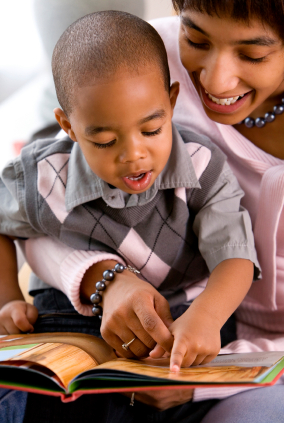
benefits of reading with young childrenWe all know that reading to our children is an important part of their intellectual and emotional development. But why is this so?  Susan B. Neuman, professor of childhood studies at the University of Michigan, gives some insight.
Dr. Neuman points out that reading is fun, stimulates the imagination, provides knowledge of the world and life, including problems and the solving of problems. Language development is also strengthened by hearing words being read aloud. Children who are read a variety of books on a daily basis also develop a sense of community, an understanding of “what it means to be human,” and to learn empathy as they are introduced to cultures and people that are different than their own.
Most parents are already convinced of the importance of reading, but with so many children’s books on the market, it can be hard to know which books are best.  Here are some simple tips for choosing – and reading! – books according to your child’s age.
birth – 1 year
Look for small, brightly colored books with photos of babies and familiar objects like balls and bottles. Draw attention to the objects by saying things like, “Look at the ball,” or point to pictures and ask, “What’s that?”
1 – 2 years
Look for sturdier books that can be handled and carried; few words on teh pages or simple rhyming themes. Talk about the pictures — you don’t necessarily have to read the book to tell the story.
2 – 3 years
Look for silly or funny books with subjects like food, animals, or making friends. SImple word books are good choices. Keep stories short and read them with few interruptions. Then, re-read them.
3 – 4 years
Look for books that tell simple stories with a beginning, a middle, and end; stories that relate to life, like overcoming fear; information books about children’s interests. As you read ask your child questions about the story: “What do you think will happen next? Why?” Keep them engaged.
5 – 6 years
Look for stories and information books that evoke children’s lively imagination and interests; books about space, machines, time, and other cultures. Ask your child to tell you what interests her most about the story. Use open-ended questions to encourage her to relate her ideas. Allow her to ask questions as you read.
Compiled by Theresa Case, whose Kindermusik program at Piano Central Studios in Greenville, SC, is proudly among the top 1% of Kindermusik programs worldwide.

5 ways eBooks support early literacy and the environment for kids

Using eBooks with children

Using eBooks with childrenAt Kindermusik, we like to say that we are doing our life’s best work by creating and teaching early childhood curricula that instills a lifelong love of music and learning in children. Our life’s best work, however, also includes being mindful of our impact on the environment for kids. We strive to balance educationally sound curricula with business practices that support sustainability. Providing eBooks to families as part of enrollment in Kindermusik is one of the latest ways we can do both. eBooks support early literacy and the environment for kids. Here’s how:

5 ways eBooks support the environment and early literacy

  1. eBooks encourage even reluctant readers to read more. Some children naturally gravitate towards reading and books, where other children need a little more encouragement. Research shows that eBooks can turn even reluctant readers into more eager readers.
  2. eBooks are better for the environment for kids. Printed books result in the emission of almost four times the amount of greenhouse gases than e-readers.
  3. With eBooks, reading together can happen wherever you and your child are—waiting at the doctor’s office, sitting on the beach, or snuggling on the couch. We know most parents—even librarians!—rarely carry a bag full of children’s books ready to pull out at a moment’s notice. However, most parents never leave home without their phone. Parents can access eBooks for kids at the touch of a button.
  4. Printed books emit larger quantities of ozone-depleting substances and chemicals associated through their life cycles.
  5. eBooks with rich visualizations, sounds and music appear to help early language and literacy skills, especially for young at-risk students.

Parents are a child’s first and most important teacher. Kindermusik gives parents the tools (and eBooks) needed to support that role. Our music classes for toddlers, babies, big kids, and families now include access to Kindermusik@Home. With Kindermusik@Home, parents can access favorite Kindermusik songs and activities, learning games for kids—and eBooks!—and more in a green-friendly digital format any time from any smart phone, iPad, tablet, laptop, or computer.

To learn more about enrolling in Kindermusik classes and receiving access to Kindermusik@Home, contact a local Kindermusik educator via our Class Locator.

Schools, preschools, and childcare centers can also benefit from Kindermusik@Home. To learn more about bringing our digital early learning curriculum into your classroom, email us at info@abcmusicandme.com.

Music & Reading: 2 of our favorite things

Yes, it’s true. As creators of music education programs and early literacy curriculum, we love both music and reading. Study after study continues to show how music can support a young child’s early literacy and language development. As Julie Andrews would sing, music and reading are like “raindrops and roses.” It’s no wonder that music and reading are two of our favorite things. After all, research shows music supports a child’s early literacy development in many ways, including music’s impact on phonological awareness, vocabulary learning, listening skills, and verbal memory.

Musical training supports early literacy development

One of the newest studies, “The effects of musical training on the decoding skills of German-speaking primary school children”, published in The Journal of Research in Reading, strengthens the understanding of how music supports early literacy development. Led by Iris Rautenberg, the team investigated the connections between musical skills (perception and differentiation of the rhythmical and tonal/melodic patterns) and decoding skills, and the effects of musical training on word-level reading abilities.
The researchers recruited 159 German first graders. One-third of the children received musical training for nine months. One-third of the children received visual arts training and the remaining group did not participate in any special training. The music training specifically focused on rhythmic skills, tonal/melodic skills, and auditory discrimination of timbre and sound intensity. Rautenberg’s study found two ways that musical training supports early literacy development.

2 ways musical training boosts early literacy development

  1. Rhythmical abilities showed a strong positive correlation with decoding skills, both in reading accuracy and reading prosody.
  2. Children participating in the music classes performed significantly better on reading accuracy in word reading when compared with the other two groups.

Early literacy curriculum uses music as vehicle for learning

ABC Music & Me uses music and movement to teach young children early literacy and early language development. During class, children receive music instruction including active music making and kinesthetic movements to emphasize steady beat, rhythm and pitch, as well as the association of sounds with developmentally appropriate symbols.

For more information about using ABC Music & Me to teach early language and early literacy, email us at info@abcmusicandme.com.

One of the Best Ways to Get Your Baby to Sleep

Music to help baby sleep

Music to help baby sleep
Photo Credit: all-free-download.com

To re-phrase an old saying, “When baby ain’t sleepin’, ain’t nobody sleepin’!” Desperate parents will go to any and all lengths to get their baby to sleep. We’d like to suggest that one of the best ways to get your baby to sleep is to sing – a lullaby, that is. And no, your voice doesn’t have to be stage-perfect, because to your baby, your voice is the most beautiful sound there is. Besides that, who else is going to hear you singing softly at 2 a.m.?!

Lullabies for Babies

As your baby learns to fall asleep on his own, you might choose to let him fall asleep to some gentle lullaby recordings. Here are a few of our favorite suggestions:

You Are My Sunshine by Kindermusik International – available at Amazon or play.Kindermusik.com
Violin Lullabies, a new release by violinist Rachel Barton Pine
Flying Dreams, a harp and flute recording by Emily Mitchell and James Galway

Create a Playlist

If you’re a Kindermusik family, you know that your Kindermusik music always includes some gentle listening music as well as lullabies. You might choose to create a playlist of all of your favorite Kindermusik lullabies and rocking songs so that it’s ready at the touch of a button – in the car, before a nap… or when you’re too tired to remember the words in the middle of the night!
Shared by Theresa Case, whose Kindermusik program at Piano Central Studios in Greenville, SC, is proudly among the top 1% of Kindermusik programs worldwide.

The Value of Music for Babies

Music Classes For Babies - Kindermusik Cuddle & Bounce

Music Classes For Babies - Kindermusik Cuddle & BounceSome people are surprised to find out that Kindermusik is for children as young as newborns. In fact, a new curriculum called “Cuddle and Bounce” created just for newborns and 1 year olds along with their parents will be available soon. But really, what can such a small child gain from starting Kindermusik before they can even crawl or walk?
The following statement, jointly issued by The National Association for Music Education (MENC), the National Association for the Education of Young Children (NAEYC), and the US Department of Education, helps explain just how important music education for even the youngest musicians can be….

The Value of Music for the Very Young

The idea that very early education provides great long-term benefits has been rendered incontestable by studies in cognition and early learning. Research in developmental psychology and commonsense observation underscore both the importance and the wisdom of making music an integral and overt part of the earliest education of young children:

(1) We know that music is among the first and most important modes of communication experienced by infants.

The youngest children lack the gift of speech, but they are deeply responsive to the emotional ethos created by music. The lullabies sung by parents help children to accomplish the fundamental developmental task of learning-to trust their environment as a secure one. Songs communicate adult love and the experiences of joy and delight; they teach children that the world is a pleasurable and exciting place to be. Music is essential to the depth and strength of this early foundation for learning and for connecting to life itself.

(2) As young children grow and develop, music continues as a basic medium not only of communication, but of self-expression as well.

Through music, children expand their cognitive universe as they first experience-and later learn to produce-sounds organized to carry musical meaning within their culture. Music expands memory and assists in developing crucial language skills. Music exerts a multiplier effect on reasoning skills, especially on spatial reasoning-an effect that has been demonstrated experimentally. Music also reinforces such logical and perceptual ideas as beginning and ending, cause and effect, sequence and balance, harmony and dissonance, as well as arithmetic concepts such as number, enumeration, and timing.
Kindermusik Baby Music Class - Self Expression Through Music
In addition, as centuries of tradition and modern vehicles such as Sesame Street have taught us all, music in the lives of young children is a highly effective means of delivering vital information about the world itself, as when it is used to teach such basic content as counting, colors, relationships among ideas, social skills, and the wonders of the natural world. Music is also a powerful tool for communicating the full spectrum of human emotion in ways appropriate to children’s experience. Children who may not be able to express verbally their happiness, anger, or sadness can find in music the right outlet and mode for what they cannot yet identify or express clearly using the tools of language.

(3) As preschool children not only listen to and respond to music, but also learn to make music by singing and playing instruments together, they create important contexts for the early learning of vital life skills

such as cooperation, collaboration, and group effort.

(4) Guided music experiences also begin to teach young children to make judgments about what constitutes “good” music,

thereby developing in them the rudiments of an aesthetic sense.

(5) Music contributes strongly to “school readiness,” a foundational education aim of the American people for all our children, as expressed in our National Education Goals.

Music experiences can help children prepare to learn to become literate as it helps them become more aware of and focused on the phonemes that make up the language or languages they will need to excel in school. When children develop musical skill and understanding, they are developing basic cognitive, social, and motor skills necessary for success throughout the educational process. They are preparing skills that will apply to language, to literacy, and to life itself.

…[U]nless the positive learning engendered by music in the earliest years is nurtured by those in the best position to provide it, i.e., parents, music teachers, and professional caregivers, the educational power of music and its potential for sound development can be diminished and diluted.

Try A Free Kindermusik ClassSee the value of music in action…Try a Free Kindermusik Class!

– Excerpted from a report from the Early Childhood Music Summit, June 2000 and shared by Theresa Case, whose Kindermusik program at Piano Central Studios in Greenville, SC, is proudly among the top 1% of Kindermusik programs worldwide.