

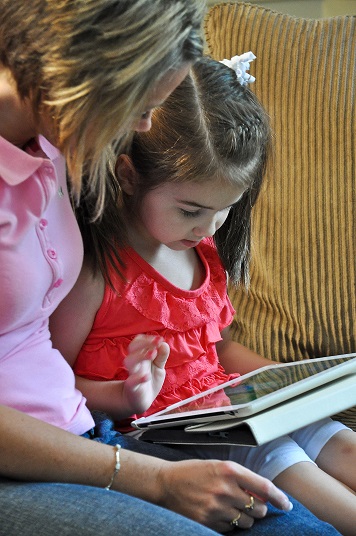
 Young children learn best through hands-on, multi-sensory experiences with a loving and trusted caregiver. However, with technology firmly imbedded into the daily lives and routines of families today, parents and early childhood educators often struggle with knowing the ideal ways to incorporate screen time that also supports what we know about how children learn.
One thing we do know without a doubt is that parents’ involvement in screen time matters. A new report from Zero to Three, “Research-Based Guidelines for Screen Use for Children Under Three Years Old,” offers some practical suggestions for parents concerning screen time and technology. Here are a few of the tips.
3 Tips for Healthy Screen Time with Young Children
1. Parents should participate in the screen experience and make it a language-rich, interactive activity. As parents and children watch or play screen-based games together, parents can talk with their children about what they are seeing. We love how this mom beautifully incorporates a video field trip from Kindermusik@Home into on-the-floor, sensitive, child-centered play with her toddler. Notice how she encourages counting and asks questions about what they see on the screen:
[youtube]https://www.youtube.com/watch?v=t19lH9ly7rs[/youtube]
2. Make connections between what children see on the screen with the real world. In the school years, children will be asked to make those connections when reading, such as text-to-self and then later text-to-text. Early childhood offers the ideal time to lay a foundation for recognizing associations between things. For example, if children learn about the different letters of the alphabet by playing a game on a tablet, parents can later point out various objects in the room or at the grocery store that start with those same letters. Or, if a character in an interactive ebook learns over the course of the story how to share a favorite toy with a friend, parents can refer back to that lesson when teaching their own children how to share with friends.
3. Create ways to extend the learning away from the screen. For example, in the video above, the parent and child can go on a walk together and notice the various dogs they encounter or visit a pet store to see the fish. While there, the mom can point out the different colors they see, encourage counting, and make connections between what they watched at home.
Find out more about Kindermusik at www.Kindermusik.com.
Contributed by Lisa Camino Rowell, a freelance writer in the Atlanta area.
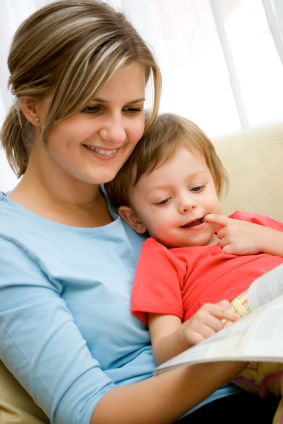
 “Again! Again!” It is not a coincidence that young children ask to read the same book 22 nights in a row. While the adults involved may secretly (and not so secretly) wish for more diversity, all that repetition strengthens the learning or growth of neural connections in children’s brains.
 It’s Halloween! In many parts of the world, this means dressing up in costumes and pretending to be a cowboy, ninja, ballet dancer, or even a cowboy ninja ballet dancer. (Hey, it could happen!) While the stores—and Pinterest—overflow with costume options for children this time of year, truth be told, children love dressing up and pretending all year long. And they should! It’s good for them.
 An
An 
 Here are six music activities that support early language development – all six are favorites of our Kindermusik parents in class and at home:
 Learn more about how Kindermusik can give you the inspiration you need for improving your child’s language development at
 We get fired up about the importance of early childhood education. The reason is simple. In the first seven years of a child’s life, their brains are firing up with learning—literally! Every new experience lights up the synapses in the brain and repetition makes those pathways stronger.
 has a positive impact on learning a second language. For example, in class ELL students may hear and repeat the rhythmic language of a nursery rhyme or song multiple times. The repetition creates stronger connections in the brain and helps children learn to speak and later read in English as their English language phonological awareness increases.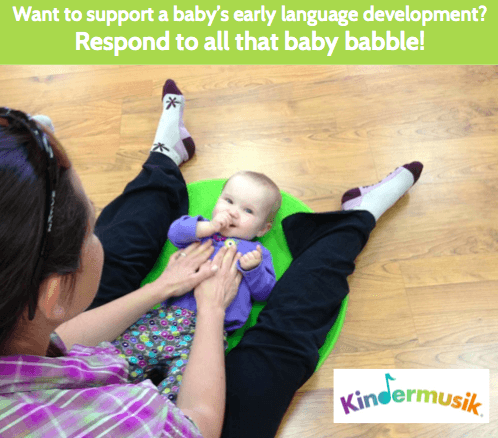
 New early childhood research from the University of Iowa and Indiana University found that how parents respond to all that baby talk can speed up a baby’s vocalizing and language development. That’s great news for those of us no longer fluent in Baby talk.
 What better way to celebrate


 A
A