
10 Reasons Why Music Belongs in Every Child’s Home

#1 Misconception about musical play for kids: the participants need to be musically inclined.

Musical play should be all about awakening and refining senses and skills to help children soar in any environment, and home is the best place to start.

Creating a musical home doesn’t mean parents and caregivers can play instruments or know any of the top Broadway tunes. A musical home is simply a safe environment where listening to music, appreciating and enjoying music, and actively engaging in musical activities are part of everyday life.

10 reasons why we think music belongs in every child’s home

1. Children naturally and instinctively express thoughts and feelings through movement and music. 

Watch your baby’s eyes light up as you dance and sing “Skinnamarink” to her. Or listen in on your child’s play time… chances are you might catch your little one singing or humming to themselves. For some entertainment, see what happens when you start playing some of your child’s favorite music. There will almost always be some kind of response!

You can find a great version of this tune on our free app

2. Music provides children a method of communication long before they can speak.

This is an amazing video of a 3-month-old baby “singing” back to her mom. Wait for it… this little one really gets going once she gets warmed up!

baby singing video
3. Singing makes children (and grown-ups!) feel happy.

And it’s not just because you’re singing your favorite song. The act of singing actually releases “feel good” hormones in the brain. Singing also makes us feel good because it is usually a social activity—singing with family, singing with friends in a Kindermusik class, or even singing in a chorus or choir.

4. Music builds a child’s confidence.

Learning to sing, dance, and play instruments gives a child a confidence unlike any other activity. Perhaps it’s because music can be such personal self-expression or because making music with others feels so rewarding.

5. It’s good for their brains.

From language skills to early literacy skills to math skills, music supports healthy cognitive development with a proven positive impact when compared to children with less music in their lives.

6. Listening to a wide variety of musical styles and genres teaches children about the world around them.

As a reflection of ourselves and of our culture, music all around the world is distinct and diverse. But it also tells a story…the story of our past, our present, and even of our future.  Diversity in musical listening encourages children to be creative, open-minded, and inquisitive.

7. Music creates memories.

From quietly humming a lullaby to bouncing a child in time to the beat of a song to singing a certain tune at dinnertime to get a child to open up, music knits together those everyday family moments.

This morning routine repeats itself in bedrooms around the world—snuggling in bed and singing songs.

musical morning routine
8. Music supports a child’s fine and gross motor skills development.

Exploring and playing all kinds of instruments—from shaking and tapping baby-safe bells to grasping the mallets to play the glockenspiel—develops those fine motor skills so crucial for writing, tying shoes, or playing the violin someday. And what better way to learn to walk, jump, skip, or gallop than with music that inspires you to move in just those ways!

9. Music can create connections between the generations.

Musical styles may change from generation to generation, but a love for music never changes. Music is still the one thing we can all share and have in common. Music gives a way to be together, sing together, dance together, and make memories together.

10. Best of all…music, especially shared music-making, is fun!

We must never overlook the obvious need for children (and families) to actively engage in joyous activities together, and there’s nothing like music to bring families together, put a smile on their faces, and happiness in their hearts.

Want to learn how to bring more music into your home? Find an in-person or virtual Kindermusik class and follow us on social media for practical tips!

Music is a Laughing Matter

Children can easily find a reason to laugh—throwing a spoon on the floor, jumping into puddles, saying a made-up word, a dog eating popcorn. Hil-ar-ious!

[youtube]https://www.youtube.com/watch?v=BTOeuH-iEJ8[/youtube]

You couldn’t help but laugh, right? Children literally bring more laughter into our lives by laughing 10x more each day than the average grown-up. (No wonder Peter Pan never wants to grow up!) All this laughter and silliness is actually teaching children what’s funny—and what isn’t. Support an older child’s growing sense of humor with these musical jokes. You might try the popcorn trick, too!

Musical Jokes to Put Kids on the Right Laugh Track

Why was the piano invented?
So the pianist would have a place to put her coffee.

What do you call a cow that can play a musical instrument?
A moo-sician

Music Joke What type of music are balloons scared of?
Pop music!

What makes music on your head?
A headband!

What part of the chicken is musical?
The drumstick!

Knock knock!
Who’s there?
Little old lady?
Little old lady who?
Wow! I didn’t know you could yodel!

Why did the singer climb a ladder?
She wanted to reach the high notes!

Looking for more ways to evoke laughter from kids? Try these silly Kindermusik songs! 

Put on Your Listening Ears!

Did you know the ear needs training in order to hear all of the different sounds? Auditory discrimination skills develop and sharpen through practice. It’s why in a Kindermusik class we may encourage children to listen intently to a certain sound and try to identify it. It’s one way to sharpen those listening skills!

Listening Game Exercises the Ear

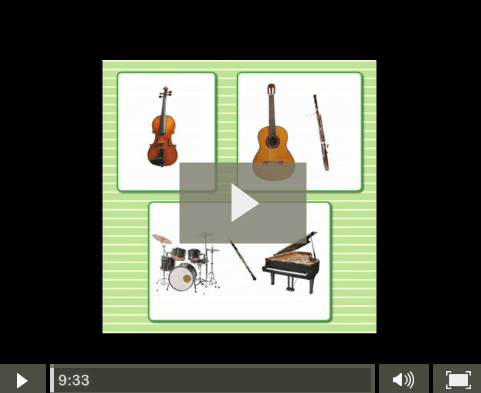
This Listening Game activity from Kindermusik@Home will put those listening ears to the test…or at least give them a good workout! Get your listening ears ready—you’re going to need them! Listen to these short music clips and decide…are you hearing a solo, a duet, or a trio? By the way, the most challenging aspect of this activity isn’t understanding the concept of solo, duet, and trio. It’s actually hearing the different instruments within the musical piece.

Kindermusik@Home Listening Game

You can try this idea with other solo and duet musical pieces, too. First, identify whether you think one or two instruments are playing. Once you’ve strengthened that skill, it can be fun to try to identify the two different sounds in a duet. When choosing music for this extension activity, make selections that have very different instruments playing together. For example, a piano and a flute will be easier for your ear to separate than a cello and violin will be. The visual support provided by pictures (you can point at the piano while it plays, then point to the flute while it plays) will help a lot, too.

Kindermusik@HomeAll Kindermusik classes include activities and resources to extend the learning outside the classroom. Learn more about the educational activities created specifically for families to do together.

5 Common Misconceptions about Music

Before human beings spoke…before we defeated time and became immortal by drawing pictures on cave walls…we made music. Somewhere, one of our ancestors took a stick, hit a rock, and music was born. With this in mind, music is our birthright. But for some of us, we think it’s beyond our understanding or something we simply consume like popcorn at the movies. Here are some of the most common misconceptions about music…

1. Making music is for musicians only.

Well that’s just silly. The hardest step is always the first one. Can you bang on a can? Do Tone-Deafyou hum in the car or sing in the shower? Well – guess what? YOU are a musician! Just because you aren’t doing it for a living doesn’t mean you can consider yourself a musician. Think about it: Chorus America states there are about 42.6 million people singing approximately 270,000 choirs in the US. That is a lot of people. You could be one of them! If you can walk you can dance; if you can talk you can sing!

2. Music is a privilege.

No! Music is a necessity of the human condition – like food or breathing. Think about it – in some of our darkest moments – the concentration camps of WWII or slavery in the US – those people, just trying to survive – produced beautiful music! Music is not something for a select few simply because it’s fun (though the fun part is true). Music is a basic need, like food or water – it’s not a privilege. Music expresses that which can’t simply be said or written down – we need it. It crosses socio-economic and cultural divisions and brings people together. Remember this children’s orchestra in Paraguay? They play instruments made from recycled trash! Take a moment and imagine a world without music. No film scores…no songs on the radio…no rock bands…no singing in the shower. That is a boring, colorless world.

3. It’s too early to start learning about music – or too late!

Scientists constantly tell us the benefits of music – and it’s never too early get children involved. Take a look at how these 11 month old twins respond to their Dad’s guitar playing. They’re movin’, man! They are engaged! They are connected to each other and their parents through the music! Are your kids banging on pans? Let them! They are figuring out sounds and making neurological connections in their brains – real “science-y” stuff. But back to the kids – you can see them light up when the music starts. This is a no-brainer. Early is better but it’s never too late. (Here are the twins a year later, still dancing to the music with a more developed sense of steady beat!)

4. I’m tone deaf.

Lies and slander! Okay – there is an extremely small percentage – ridiculously small as to be statistically insignificant – that is biologically tone deaf. For you two people – you can be drummers! The rest of you just think you are tone deaf. We convince ourselves we can’t do it so we don’t. And when you don’t do something regularly, it becomes a bit harder to do it well! Do you drive a car with a standard transmission? Can you tell the difference between your brother and sister when they call on the phone? Guess what? You aren’t tone deaf!

5. Music is only something I can do alone.

Science warning!!! Did you know that when a group of people sing together, their heartbeats sync! Amazing! Making music builds community in amazing ways. Getting together in groups to make music may be beneficial for our health. It certainly helps with socialization for young kids. It gets them out of their shells, interacting with others, building new friendships, all while sharpening the mind! Music for music’s sake is wonderful, but the science is real: a mind engaged by music yields a host of benefits beyond the wonderful joy of the art itself. And group musical instruction does much to help kids connect to others in a fun environment. Kindermusik is the perfect prescription from this music doctor; their music classes can make a world of difference for kids from birth!

Music class drumConsider this story – a group of kindergarteners were asked, “Who here can sing?” They ALL put their hands up. “I can sing!”…”Me, too! I’m really good!” That same group, three years later – asked the same question. About 20% fewer kids said they could sing. The same group three years later? Another 20% decide they can’t sing. By the time that group is in high school? Less than 15% might say they sing well. Why? Well – most of the time, it’s lack of encouragement. Get them involved early and encourage artist exploration! Now is the time!
Contact Kindermusik to learn how you can be part of an amazing experience for your child.

Contributed by Dr. Mark A. Boyle, Director of Choral and Vocal Activities at Seton Hill University. He is sought after nationwide as a guest conductor, soloist, and clinician.Dr. Mark A. Boyle

New Research: Cochlear Implant Users Feel the Beat in Music

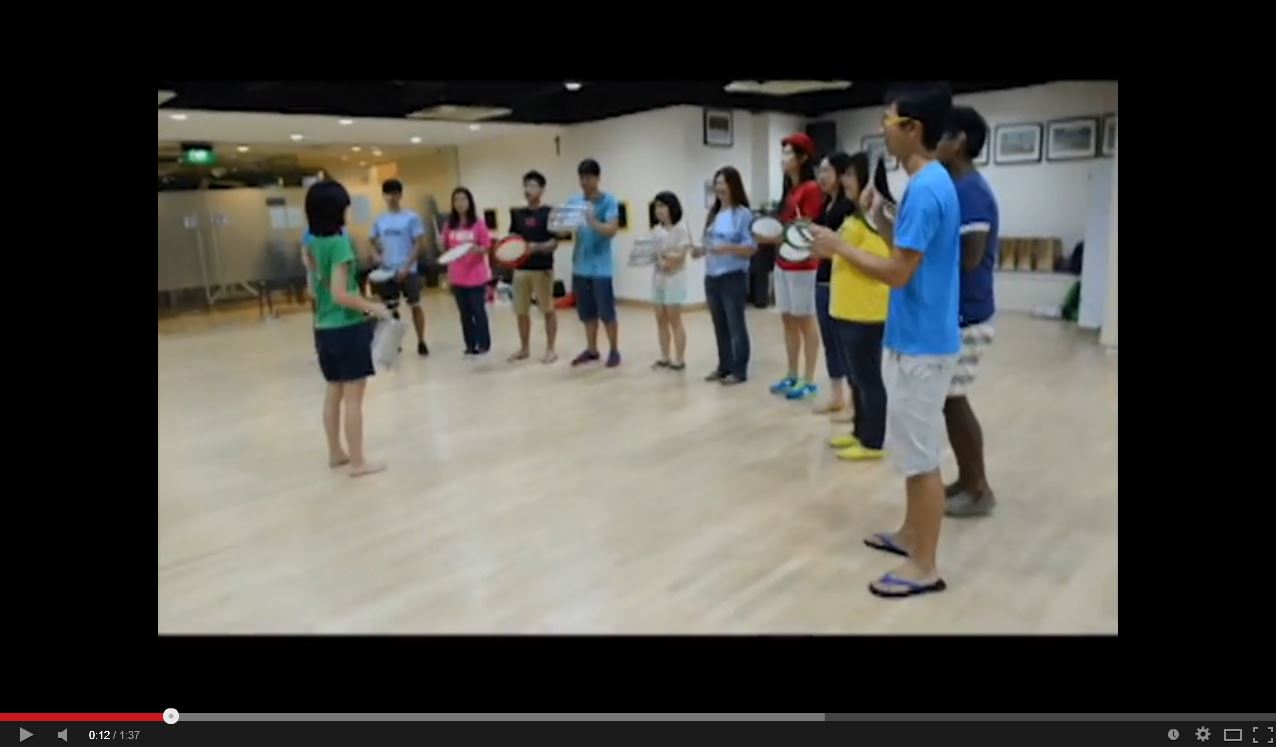
Yes, music can evoke various feelings when we listen to it. But, what about if you can’t hear it? Imagine experiencing music without hearing music. Take a look at a performance by this group of deaf percussionists from Singapore. They hear the music through their whole bodies as they experience the beat!

ExtraOrdinary Horizons plays us a beat
This is exactly what researchers hoped to confirm in a recent study conducted at the International Laboratory for Brain, Music and Sound Research in Montreal – that even those with cochlear implants “…can enjoy a myriad of musical benefits if the composition significantly emphasizes the beat…”

Previously, many who used cochlear implants for profound hearing loss were given very little, if any, exposure to music or musical movement because the implants are deficient in transmitting the pitch and tone quality of music, and all that was heard through the implants was noise.

Fast forward to the study led by Dr. Jessica Phillips-Silver.  Dr. Phillips-Silver’s premise proved correct.  By using music that emphasizes a beat, cochlear implant users experienced improvement not just in music perception, but also in language perception.  In writing about the research results, Dr. Phillips-Silver’s team asserted that not only could language use and understanding be improved by exposure to the beat in music, but there could also be corresponding improvement in “emotional and social quality of life.”

iStock_000003815422X girl clapping good beginning“We know that music training engages some brain plasticity — it refines the sense of rhythm, benefiting the perception of speech, so that may help them understand spoken language. But also there is so much enjoyment in music — a strong beat activates the joy of body movement,” Phillips-Silver says. “What we hear is what we feel and what we feel is what we hear.”
All of this supports research findings from this study done in 2007 which found that “…[c]hild implant users enjoy music more than adult implant users. Moreover, younger age at implantation increases children’s engagement with music, which may enhance their progress in other auditory domains.”

These exciting research findings confirm yet again the incredible power of music to touch not just our emotions, but to profoundly affect nearly every other part of our being – music is good for our brains, our bodies, our hearts, and our souls.

Here at Kindermusik, we believe that all children can – and should! – experience music.  Contact your local Kindermusik educator to learn more.  www.Kindermusik.com


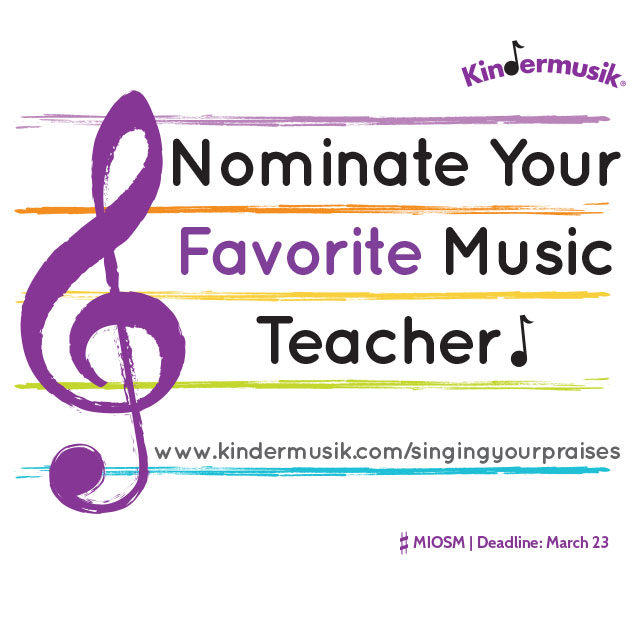
Call for Entries: Nominate Your Favorite Music Teacher

Singing-Our-Praises-NominateMusicTeacher-INSTAGRAM-640x640-3Every Music Educator we meet inspires us. After all, we share the mission of bringing music to children and each educator brings her or his own unique talents and gifts into the classroom! As we celebrate Music in Our Schools month, we wanted to mark the occasion by singing the praises of music educators and giving YOU the opportunity to do it, too!

Sing the praises of a local Kindermusik educator, a school music teacher, or both by nominating them below. All nominated educators will be featured on our Facebook page. Five finalists in each category will be recognized for their remarkable impact and featured in more detail on our Facebook page. The community will then vote on their favorite educator from both categories to receive a special package from Kindermusik.

Deadline for nominations is March 23, 2015. The five finalists will be announced on April 6, 2015 and the winner on April 13, 2015. Here’s how to nominate an educator!

How to Nominate a Kindermusik Educator

Is there a Kindermusik Educator who inspires (or inspired) you? Let the whole world know! We are now accepting entries for the #SingingYourPraises nominations.

Who’s eligible?

Current, full-time music educators around the world who teach music in a Kindermusik licensed studio.

One winner will receive:

  • $500 worth of Kindermusik instruments and product for their Studio.

How to Nominate a School Music Teacher

Do you know a music teacher from school who is impacting the lives of others through music? We are now accepting entries for the #SingingPraises nominations.

One winner will receive:

  • If the winner is an elementary school teacher: a Kindermusik classroom kit of their choice
  • If the winner is not an elementary school teacher: a Kindermusik classroom kit in which they can “gift” to an early childhood program of their choice.

Nominations due by March 23! Nominate your favorite Kindermusik educator! 

 Nominate your favorite school music teacher!

10 Reasons Why Music Belongs in Our Schools

This year we celebrate a significant milestone:  30 years of Music in Our Schools month. Thirty years ago music in schools meant recorders and “Hot Cross Buns.” Now, it still means recorders and “Hot Cross Buns,” but it also means English Language Arts, Math Class, Social Studies, and more. Here’s why we should be celebrating Music in Our Schools today… and 300 years from now!

30 years of Music in Our Schools Month

10 Ways Music Plays at School

Music & Math Class. Music teaches young children foundational math skills, including geometry, pattern recognition, and numbers. Watch these children read and repeat various music patterns.

Kindermusik rhythms
Music & Social Studies. Music teaches children about other cultures through songs and dances. Long before people could read or write, the culture of a nation or people was passed down through song. That tradition continues in the drum circles of the Native Americans, the Shakuhachi flutes of Japan, or an Irish jig. …

Music & Creativity & STEM. Music provides children a creative way to express their thoughts, ideas, and emotions. That creativity spills over into STEM (science, technology, engineering, and mathematics) classes as well, where young children are also encouraged to explore, question, and create solutions.

Why STEM should be changed to STEAM

Music & English Language Arts. Music supports phonological awareness needed in English Language Arts. In fact, our brains process language and music in similar ways. For example, understanding the spoken language requires a child to hear (and identify!) the individual phonemes combined with the intonation communicated through pitch. With music, a child must hear the individual notes along with their rhythmic value.

Music & Group Work. Singing together lowers stress and relieves anxiety. Plus, children gain practice working together to create something beautiful. Play along with this song…and try NOT to smile.

Music and group work
Music & Transitions. Musical cues teach children how to easily transition from one activity to another. Young children can struggle with transitioning from one activity to another as they also experience rapid—and turbulent—emotional development. Singing a song to signal the end of one activity and the start of another helps children navigate those feelings and learn how to move on to something else.

Music & Recess. A classroom dance party gets young children up and moving around on those days when it is too cold or wet to play outside for recess. Getting out those wiggles can help children be ready for whatever is next in the lesson. A quick song of “Head, Shoulders, Knees, and Toes” or the “Hokey Pokey” can bring lots of giggles to the classroom, too!

Music & Language Development. Songs and rhymes teach children the rhythm of language, its construction, and its acquisition.  Singing songs and saying rhymes give children practice with words and sounds that not only help children learn to speak clearly, but also effectively, by teaching the vital skills of communication and conversation.

Music & Memory. Children who learn through movement show a marked improvement in memory.  That’s because movement wakes up the brain and gets it primed for learning.  But music can also aid memorization of facts… like learning U.S. states and capitols later on in elementary school.

music aids learning
Music & English Language Learners. When English Language Leaners clap their hands to the beat of English nursery rhymes or songs, they practice active listening and pattern recognition. Research shows that students who are better at recognizing patterns in language learn another language more quickly than those who do not.  Here’s an example of how clapping, tapping, and playing along with a music video from our Kindermusik @Home Materials gives fun practice with recognizing patterns.

Change-the-world-Facebook-Profile-Image1“Music in our Schools Month” is the perfect platform for the message to resonate – music matters!  And here at Kindermusik, we believe that music can change our world, one child and one family at a time.

Do you want to bring more music into your school? Learn how. http://www.kindermusik.com/schools/

Happy World Read Aloud Day!

WorldReadAloudDayIt’s World Read Aloud Day.

Presented by LitWorld.org, this day represents a global literacy movement to show the world that the right to read and write belongs to all people. Of course, we think the best way to celebrate is to read a book out loud with children like this Kindermusik mom and daughter.


[youtube]https://www.youtube.com/watch?v=ha1GKAwFf0s[/youtube]

The Educational Benefits of Reading Aloud to Children

In many homes around the world, this scene of a parent and child sharing the joy of reading together repeats itself over and over again—and children love it! In fact, the latest Kids & Family Reading Report from Scholastic, shows that when it comes to being read aloud to at home, more than eight in 10 children (83%) across age groups say they love(d) or like(d) it a lot—the main reason being it was a special time with parents.

In addition to bonding, reading aloud holds other benefits, whether reading aloud with a parent, teacher, or other caregiver. Reading aloud increases a child’s print awareness, teaches them the cadence of language, boosts vocabulary, and expands a little one’s understanding of the world. It’s no wonder one of our favorite children’s authors, Kate DiCamillo said: “Reading should not be presented to children as a chore or duty. It should be offered to them as a precious gift.”

3 Quick Kindermusik Tips for Reading Out Loud

  1. Read children’s books YOU love. One of the ways children learn to love reading is when the adults in their lives model that love!
  2. Encourage movement by imitating what you read. A child who moves around during story time is still gaining the benefits of reading. Plus, “jumping” when a character jumps or “reaching up high” to pluck an apple from a tree gives children a greater sense of the vocabulary words.
  3. Use funny voices and speak animatedly. This makes it fun for both the reader and the listener!

Watch how this Kindermusik educator puts those tips into action.

[youtube]https://www.youtube.com/watch?v=3ObHpJlQIcw[/youtube]

Looking for more ideas on supporting a young child’s early literacy development? Visit a Kindermusik class to experience the connections between music and reading!

Contributed by Lisa Camino Rowell, a freelance writer in the Atlanta area.

The One Thing that Isn’t on Your Baby Registry But Should Be

Congratulations! You are having a baby. Whether pregnant with your first or fourth, all babies need certain things. Usually, this means adding them to a baby registry or shopping at your local consignment sales (or a combination of both!). Typically, the parents-to-be wish list includes diapers, rocker, crib, clothes, baby bathtub, stroller, specific toys, etc. However, there is one thing not on most baby registries but it really should be…music. Wait. What?

Musical NurseryMusic marks so many important milestones in our lives, such as singing a song on your birthday or walking across the stage to receive your diploma while listening to “Pomp & Circumstance” or dancing the first dance together on your wedding day. So of course, music should be a part of this season in your life, too! Plus, music gives parents a go-to resource for playtime, bathtime, bedtime, and hanging-around-the-house-in-our-pajamas time! You don’t need to deck out your child’s nursery like this one in order to bring music into your child’s life. (Can we pause to say “Wow!”?) Here are some ideas of what to include on your baby registry.

What to Include on Your Baby Registry for Music Lovers

  1. Lullaby Music—Music can help babies sleep better and even from an early age signal the start of the bedtime routine. Some of our favorites include:
  2. Baby safe instruments—Develop fine motor skills right from the start with instruments specifically created for the littlest member of your family. Plus, you Gift Certificate Baby Boynever know when you might want to start your own family band! Consider including:
    • Egg shakers
    • Chime balls
    • Baby bells
  3. Musical books like these: (Check out our “Books for Kids We Love” board on Pinterest for hundreds of more ideas.)
    • Hand, Hand, Fingers Thumb by Al Perkins
    • Elephants Can Not Dance by Mo Willems
    • I Know a Shy Fellow who Swallowed a Cello by Barbara S. Garriel
    • Zin! Zin! Zin! A Violin by Lloyd Moss
    • Any rhyming book!
  4. Gift certificates to a music class. Music classes can provide some tender one-on-one time between you and your baby and also get you plugged into a community of other families with children the same age as yours.

Gift Certificate Baby GirlGift Certificates to Kindermusik class make a great baby gift, too! We will get you started with one free class for your baby boy or baby girl. Find your local educator today!

Contributed by Lisa Camino Rowell, a freelance writer living in the Atlanta area.

Turn Bath Time Battles into Happy Tub Tunes

As if we parents needed any more guilt trips about experiences we’re not giving our kids… thanks for raising the bar on bath time, Pinterest!  Despite how you may feel after perusing Pinterest, you really don’t need frozen ice cubes in different colors, glow-in-the-dark sticks, colorful bath paints, or epic construction or princess themed bath times. All you need is your voice and an “instrument” or two! 

Dollarphotoclub_49610785 - musical tips for turning bath time into fun timeHere are a few musical tips for turning bath time into fun time – all minus the tears and tantrums.

Who says you only sing in the shower?  Singing in the tub can be even better.

Sing “Head, Shoulders, Knees, and Toes,” “Looby Loo,” or “The Hokey Pokey” as you bathe your child. For older children, mix up the words for extra giggles. So, while you sing about putting “your left leg in” wash the “right arm instead.”

Establish your own BTSO – Bath Time Symphony Orchestra!

Create a water symphony with all of the bath sounds (splashing water, water pouring out of and into cups, rubber duck squeaks, etc.). Help your little one practice active listening by talking about what the different sounds are and asking your little one to identify the sounds, too.

Try a little back-and-forth play, vocal play, that is!

You make a sound, and wait for baby to imitate. Say a short little rhythm, like “ta – ta – ti-ti – ta,” and have your toddler echo back. Or sing a phrase of a song, and see if your preschooler will sing the next phrase.

Bubbles make everything about bath time even better.

Sing the “Bubbles” song from Kindermusik as you bathe your child. Notice how this Kindermusik educator pauses the bubbles and encourages young children to communicate that they “want more, please.” Consider making a bubble bath or blowing bubbles, too.

BubblesCreate a sweet little bath time lullaby routine.

Listen to lullaby music in the bathroom to signal to your child that bedtime is near, and soon it will be time to start settling down for the day – once your little one has had her after-bath massage.  (This is a great time to rub in that baby lotion and connect in a special way with your child by singing softly and making lots of intentional eye contact.)

Looking for more practical parenting tips?  Visit a local Kindermusik class and discover even more ways to make great parenting just a little bit easier with music.

Contributed by Theresa Case whose award-winning Kindermusik program at Piano Central Studios is located in beautiful upstate South Carolina.