
“I just don’t see the point of going to music class with my young child. I can sing and dance and listen to music with my little one at home so why should I enroll in a class?”
We get that comment a lot and we GET it. Yes. Parents SHOULD “play music class” at  home. We believe so strongly in the importance of creating a musical home that we provide the music, instruments, or other resources—like our Pinterest Boards!— needed to make it easy for parents to integrate musical learning throughout the day. Those everyday musical moments make memories, imbed a love for learning in young children, and make life fun for the whole family! (Plus, we know how music can help make parenting just a little bit easier, too!)
However, for young children to receive the maximum benefits of participating in learning (and playing!) through music, they need music at home and in a class group environment. Children thrive on both. In fact, research even shows that engagement, consistency, and longevity of participating in music classes directly correlate with the language, literacy, and other cognitive benefits of music.
Learning in a Group Matters
Learning in a group of peers, regardless of age, is different than learning by yourself—or with your child at home. Also, each group is unique from the next because each group is comprised of different individuals contributing to the group.
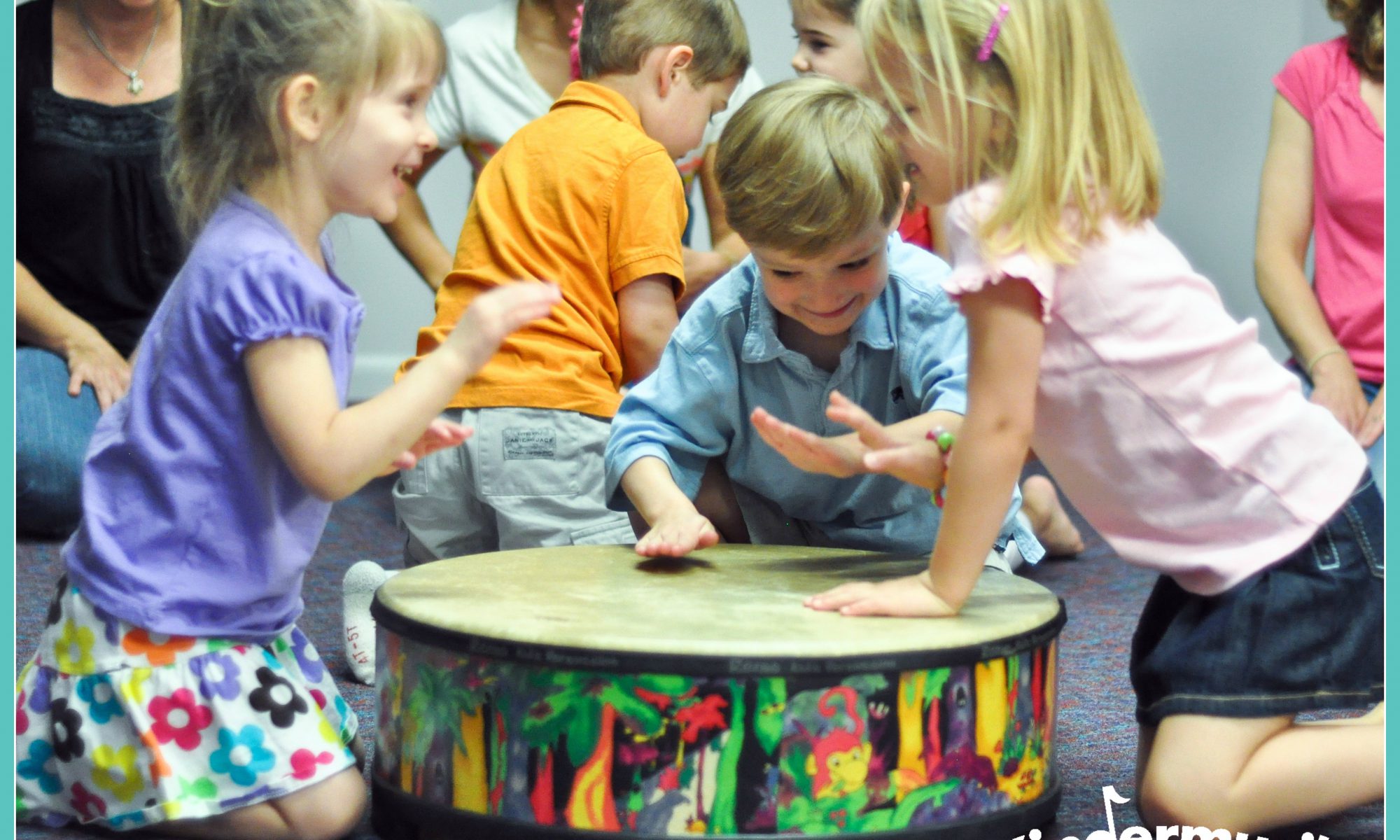
In music classes for young children, like Kindermusik, we intentionally create a learning environment where every participant contributes and takes away something unique based on their own experiences, both inside and outside the classroom. Parents notice this right away when each child can choose to sing, wave, jump, or even blink hello to their friends during the very first song.
 This experiential environment where the learning process is shared by everyone in the group—including children, parents, and the teacher—is called “social constructivism.” For example, in each class a Kindermusik educator guides the class towards a learning objective, such as steady beat, timbre, or vocal play, with children as active participants in the learning process. Providing children with ample time to reflect, compare, make choices, express opinions and preferences, and engage in problem-solving activities together teaches children not only the lesson focus but it teaches them how to learn.
Children participate, collaborate, and contribute to the process in a group learning environment. So, while the lesson plan is repeated in classrooms around the world, the experience is slightly different based on each individual group. So, yes, “playing music” at home matters, but so does “playing music” in a group. Children need both to fully experience the life-altering benefits of music education.
Oh and by the way: Participating in a music class benefits parents, too. After all, parents make connections with other families in the same season of life. As parents, we can all use a group of friends who understand the unique challenges of potty training, sleeping through the night, healthy snack choices, best parks for a 2-year-old AND a five-year-old, and even which consignment or second-hand sales are worth attending.
 Want to “play music” in a classroom with other families? Find a local Kindermusik educator!
Contributed by Lisa Camino Rowell, a freelance writer in the Atlanta, Georgia, area.

 For parents with young children, Life Balance is a mythical beast! A hammock gently swaying in a warm ocean breeze as you watch ships leave the harbor or the quiet creaking of a porch swing in the dappled afternoon sunlight can bring thoughts of a little Life Balance in an increasingly complex world. For parents of children under 2, however, the nursery glider moving back and forth at 10:16pm, 2:01am, and 5:34am might be the closest you can get to that beach or front porch. It can work in a pinch though!


 Understanding and accepting similarities and differences among people is the foundation of Social Studies skills in the early childhood years. Teaching social studies through the arts, including music education, increases children’s understanding and engagement and also gives voice to cultures that may not be reflected in the current classroom or community.


 Want a child to speak more than one language fluently? Start early! Research shows that when children learn another language at a young age the more likely they are to understand it and speak like a native speaker. It’s never too early to begin learning another language. In fact, evidence indicates that babies have the ability to learn all the languages of the world but self-select to their native language as early as 9 months.
 Freeze Game Activity for the Classroom: Have the children spread around the room. Tell them that they can run around the room freely once you clap your hands, but when you shout, “Freeze,” they must stop in their current position. To begin, let the children run around for 30 seconds and then shout “Freeze!” Make sure children hold the position for at least 10-15 seconds before you let them run around again. When focusing on language learning, use simple linguistic phrases to describe what you see: “Andrea is standing up like a tree”or “Olivia is a stone.” Repeat several times.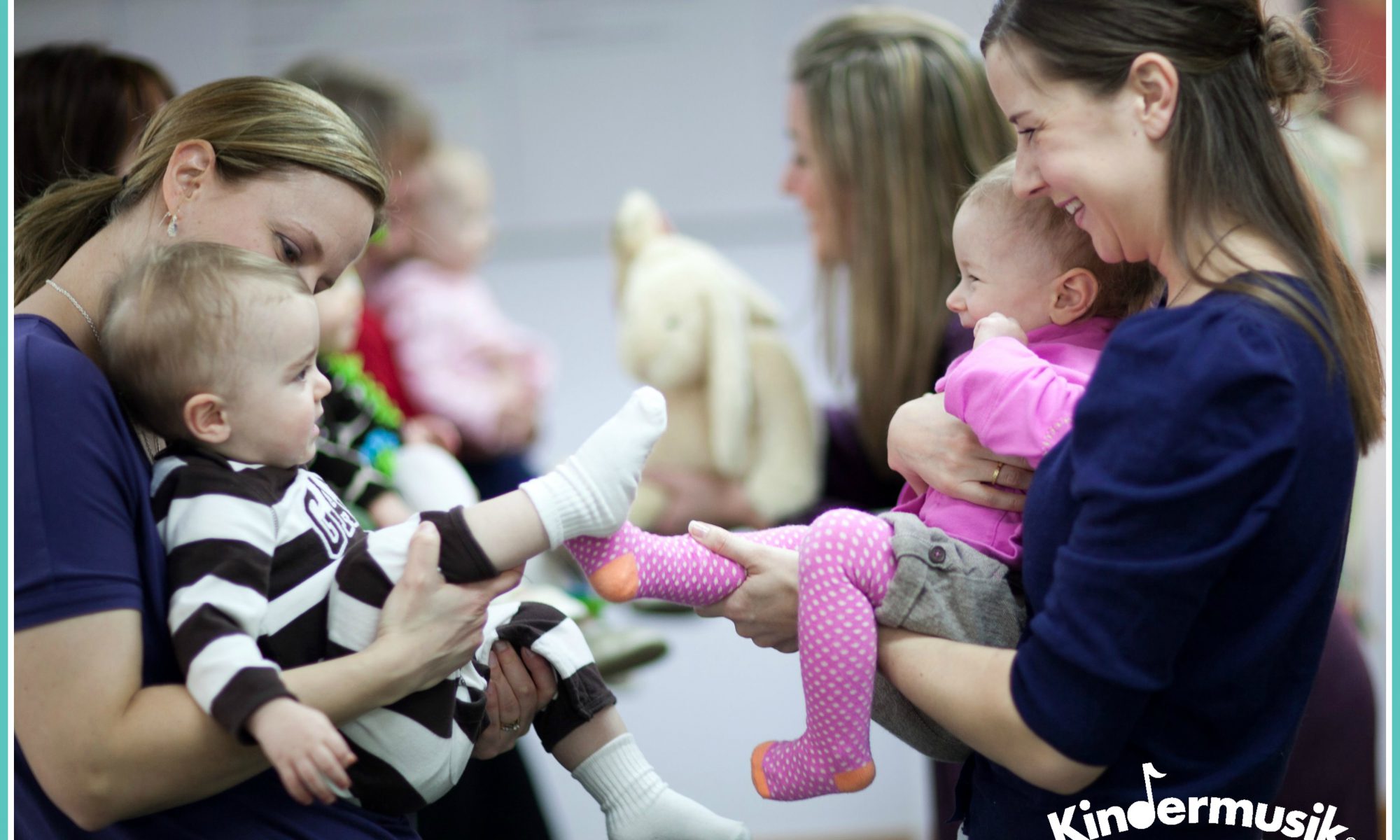

 Find a local Kindermusik class


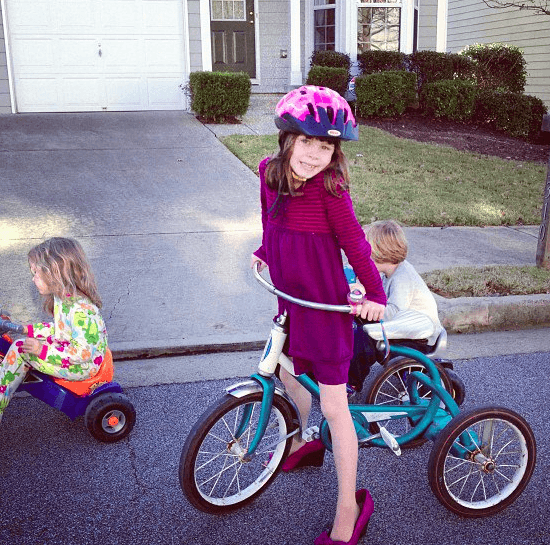
 It’s coming, one day soon (if it hasn’t already). Your child will want to learn how to ride a bike—the big kid kind. There will be spills and thrills for both of you as your helmeted child learns how to balance and maintain the right rhythm and tempo for pedaling and braking. Shouts of “Don’t let go!” “I need a push!” and “Arggg!” will be commonplace until that moment when it all comes together and your child successfully rides down the street.
 It was bound to happen.
 Emerson with experiences that would equip her to grow into that person. Through those classes, we encountered music teachers devoted to their calling and to the power of music to unlock a child’s potential. Yes. Those are lofty goals reached far off into the future and so seldom seen by those early childhood music teachers in their own students. After all in early childhood, we can only catch glimpses of the long-term impact of our choices and experiences. It’s all about trusting the process.
 a song from a country different from your own you teach children more about our world. Every time you encourage children to move their bodies in new ways you give them confidence in their abilities. Every time you bring out that basket of instruments you teach children the importance of sharing with others. Every time you lead children to sing, dance, or play instruments you give them an outlet for creativity, imagination, self-expression, and joy!