Mommy (or Daddy!) and Me

Have you ever been to a Kindermusik class? If the answer is “yes”, you know the music is great. You know the classes are more fun than you can imagine. Your child probably loves it! And the Home Materials help you enjoy Kindermusik even when you’re not in class, making your daily routines just a little bit easier.

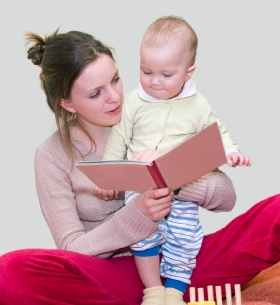
But as Kindermusik teachers, one of the things we hear over and over from our parents is that the they love the way Kindermusik inspires those magical moments of bonding and together-time. These are the moments that we as parents treasure and remember forever.

Here’s one mom’s story about a simple, but special, Kindermusik day: http://www.themitschkes.com/2010/05/kindermusik-in-park.html

Music. Smiles. Dancing. Hugs. Happiness. And parents enjoying their children. . . . I think I must have the best job in the whole wide world.
-educator Theresa Case

Theresa’s Kindermusik program, Kindermusik at Piano Central Studios, is in the top 1% of all programs in the world.

Kindermusik International: the company behind your educator

These days consumers give serious pause when considering the company behind their favorite brands. With recession, product recalls, harmful ingredients, investment scams, CEOs going to jail, and so on. Whew! It’s enough to make us think twice about with whom we exchange our hard earned dollars for products and services.

Making the choice to entrust our children to others is among the most important work we do as parents. As a Kindermusik parent, you rely on both the Kindermusik licensed educator and Kindermusik International, the publishing and training company behind your teacher.

Kindermusik teachers are experts in early childhood music, trained to follow a proven, research-based curriculum, and a delight for your children to be around. I have trusted these teachers with my own children and I delight in the fabulous work they do for our communities. If you go to Kindermusik, you know them well.

But Kindermusik International (KI), the company that stands behind them, is perhaps less visible to you. We are North Carolina based and 100% owned by our twenty-seven employees. We have no investors to satisfy. No dream of going public. Our dreams get fulfilled every day: doing our life’s best work in service of the extraordinary music educators who teach and delight you and your child.

Before KI, many of us worked in taller buildings, wore suits and ties or dresses (as 19 of us are women), and were taught to obsess about profits. KI is our second career – the one where we work together to “do good” rather than simply to “do well.” Many of us, myself included, have been on this musical mission for fifteen years or more, an uncommon allegiance in today’s transient workforce. We are bound together by doing the hardest and most meaningful work of our lives.

I refer to KI as a sustainable social enterprise, not a company. Above all, we seek to do no harm: that is, always putting the needs and safety of families. This is why we invest relentlessly in product safety testing. Next, we focus our efforts on supporting our educators, for making a livelihood as a music teacher is not for the faint of heart. Finally, we aim to honor our communities: our environment through sustainable products and packaging; our world of less fortunate children through our outreach and scholarship programs.

Our goal is simple: make this world a more musical place for children – today and for generations to come.
-Michael Dougherty, CEO of Kindermusik International

An educator’s thoughts on a “perfect child”

Is your child perfect?

I read this interesting blog this morning. It is so hard as parents (especially mothers) to not get caught up in comparing our children to others –- both favorably and unfavorably. But the beauty and wonder of our children is that they develop in their own time and in their own way. Every child is perfect at being who they are. We can help our children become confident adults by not pushing them too hard or holding them back too long. What a fine balance that is!

This is why at Kindermusik we allow each child to experience class on his own terms. The one who want to sit snuggled in the grown-up’s lap and observe is perfect, the runner at the back of the room is perfect, the one climbing up my leg is perfect. As long as we set appropriate boundaries for safety and how to treat others, it doesn’t matter if he hides the eggshaker in his pant leg, refuses to take it, or shakes the dickens out of it. It is all perfect.

Here’s the article I was reading: www.mamapedia.com/voices/perfect

So enjoy YOUR children and their milestones to the fullest by not putting pressure on yourself or other moms to keep up. Remember, they are perfect.
-by Kindermusik educator Christa Sigman (pictured above are Miss Christa’s “perfect” girls)


Miss Christa is a Kindermusik Maestro educator, which means her program is one of the top in the world.

Wiggle while you read

From the moment you get pregnant, you’re inundated with literature telling you to read to your child. It’s pretty hard to not see articles touting the lifelong benefits of reading and the importance of reading to your child early.

But let’s face it…reading to a young child can be stressful.

Young children do not like to sit still for hours and hours, or for minutes and minutes, for that matter. It doesn’t matter if you are telling them a hilarious story about what happens if you give a pig a pancake, some children do not want to sit still for it. I have heard about children who, from infancy, cuddle up on their parents lap and desire nothing else in life other than to sit there and be read to. I’ve sat and listened to soft-spoken moms tell me how they spend hours just reading, reading, reading to their kids. And I am thrilled for those parents, I truly am.

But let me just be clear about this…none of the Venning Children exhibited anything remotely close to that kind of behavior. My early parenthood visions of what reading to my kids looked like soon gave way to the reality that reading more often entails me loudly reading words over a moving passel of arms and legs on the living room floor.

Now, I’m not advocating total chaos while you read. I mean, kids need to learn proper behavior and jumping on the living room couch is not acceptable movement during reading time (uh, or anytime for that matter). But simple movements, such as rolling on the floor or building with blocks can actually enhance your child’s learning.

I remember my breaking point. I had a newborn and was a probably a little post-partum, but I remember sobbing and sobbing one day after attempting to read to 2-year-old Kevin because he would “NEVER learn to read and would NEVER enjoy sitting and reading and what kind of mother was I that couldn’t read to her child?” (Okay, from the sound of that, I was probably a LOT post-partum!) Anyway, for a while, I think I even gave up reading to him altogether.

My enjoyment in reading to my young kids greatly increased once I learned that it’s okay for kids to be moving while you read to them. In fact, it’s good for them. Now, if I were my friend Analiisa (one of the smartest people I have ever personally known) I’d be able to insert a paragraph here about the connection between young children’s brains, motor skills and learning styles. I absolutely love listening to her teach me this kind of info, but I do her injustice when I try to retell it and it comes out something as simple as this “kids moving = good learning.” So I apologize, my dummy brain just gives you the bottom line.

And the bottom line is that kids need to move in order to learn, and some more than others. To require them to sit still during reading time actually works backward for them: they’re using their brain’s energy to concentrate on sitting still, instead of concentrating on learning the rhythm and rhyme of the words. Let these wiggle worms play quietly on the floor and you’ll notice their love for reading time increase.

Now, in our home, the rule is that they can choose what they want to play with while I read, but it cannot be a noise maker and they cannot be a noise maker. Other than that, they can wiggle, roll, lay, bounce or build. And now, eight years later, do you know what Kevin often does (yes, the Kevin I had a breakdown)? His favorite thing now is to cuddle up on my lap and read along with me! Where was this child six years ago? Trapped inside a little body that needed to wiggle while I read.
-posted by Donna Venning, a stay-at-home mom who, after fifteen minutes of reading to her older kids, will make them get up and “shake the wiggles out” before going back to read for another fifteen minutes. She can even be caught wiggling with them more often than not.

Special thanks to Studio 3 Music for allowing us to share this great post from the Studio 3 Music Blog. Studio 3 Music in Seattle, Washington, the world’s largest Kindermusik program.


Kindermusik’s Inspirational Educator of the Year

Last week Kindermusik International announced our list of “Maestro” educators for 2010-2011. These are the educators with the largest programs, our masterful teachers, and those doing significant outreach work in their communities. Our Maestros are a special group, and we couldn’t be more proud of them.

As well, we announced our Inspirational Educator of the Year. This year’s recipient of the award was educator Ally Trotter from Columbia, South Carolina. Ally has captured our heart with her incredible passion. Just as inspiring as Ally herself is Bryann Burgess, who Ally has taken under her wing to mentor. Ally writes of her mentorship with Bryann:

This movement began the summer of 2009, as a partnership with Kindermusik By Ally and USC’s newly founded Carolina Life program. This partnership has united Carolina Life with Kindermusik by Ally, and is making all the difference in finding the stepping stones to making Bryann’s dream of becoming a music teacher a reality.

Visit Ally and Bryann’s blog, Notable Accomplishments. We dare you to not be inspired by it! Trust us, it’s impossible.

Bryann had one of the most noble dreams we can think of – to teach music. Ally is helping her reach that dream. Thanks to Ally. Thanks to Bryann. Thanks to all our educators around the world who are helping make this world a better place.


Happy Earth Day! Let’s try something new today.

Happy Earth Day!

Almost any parent would agree that children should spend more time actively engaging their bodies and minds and less time in front of TVs, PSPs, DVDs, and computers. But even our best intentions can be hard to follow through on unless we have something to replace those things. If you want your kids to try something new, you’ve got to have replacement activities ready to go.

Not only is today Earth Day, but we’re also midway through TV Turnoff Week. So it’s the perfect day to say, “Kids, we’re going outside!” Make it fun! Make it an adventure. The more we can teach children that there is as much stimulation in the world outside the moving screen, the more willing they’ll be later in life to make that decision for themselves. As an added bonus, those who spend time outside inevitably develop an appreciation for Mother Nature, which is a perfect tie in on Earth Day.

So head outside! Tell your kids a story about the Earth. Make up an Earth-related song. Find some sticks or little stones and drum out a beat. Play a game that involves weather or seasons or plants. Do something different today. Who knows, tomorrow they may just want to do it all over again!

Want some more suggestions for TV Turnoff Week? Here’s some ideas for both indoors and outdoors.

www.screenfreeweek.org – this website was specially created by the publishers of the early childhood magazine, Tessy & Tab. It has lots of great ideas and tools!

play-activities.com – play activities for screen-free week

www.dorchesterhealth.org – 101 screen-free activities

play.kindermusik.com – our Kindermusik Play website has a number of free downloadable activities to accompany songs. Just look for the orange buttons with a capital A in a box. Those are free activities you can download and try at home.

Click here for a fact sheet on screens and very young children.

Special thanks to Kindermusik educator Theresa Case for contributing to this post. Theresa’s Kindermusik program, Kindermusik at Piano Central Studios, is in the top 1% of all programs in the world.

A life changed through music

As you may know, ABC Music & Me is a Kindermusik curriculum that was developed to be used in preschools and group child care settings. We knew it was special, we knew it was good, and we knew it would allow us to reach out to so many more children—but I’m not sure any of us were quite prepared for the power of what was to come!

Every week, with joy, our “ABC team” receives calls and letters from parents and teachers who are quite simply bursting to tell us about the incredible impact ABC has had on their children and students, including so many who are at-risk or who have physical impairments or developmental delays. We never forget: music is magic, reaching out to every single child!

Here is a quick peek into our ABC Mail Bag. It’s the story of Ethan, from a letter from his mom:

My 4-year-old son, Ethan, has a mild form of autism and has been diagnosed with developmental delays, speech delays, and low muscle tone. It’s hard for him to run, bounce, and sometimes even walk. Even something as simple as sitting in circle time is hard. He struggles to sit and do schoolwork all day; he really needs a physical release.

We love ABC Music & Me because it’s so easy to use, it helps Ethan develop, and it lets us get involved at home. We listen to the CD at home and around town in the car, we have fun and get lots of ideas, and it gives us different ways to work on his speech, social, and OT issues, too. It’s so nice to get to use something at home that he truly enjoys!

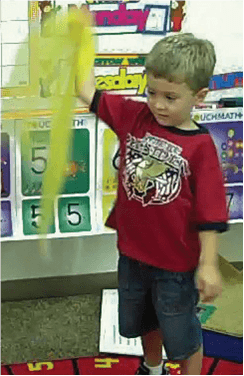
In class, Ethan gets to play instruments and refine his motor skills. The scarf activities have been some of his favorites. At school, Ethan goes straight from music class to work on speech and reading, and his teachers tell me that he has been improving ever since ABC started! It’s such a confidence-builder for him to have his learning carry over to other parts of his day! He may not be able to do everything the rest of the students can do, but he CAN do this.

The program has been so good for Ethan. Music is a common thread for him. It helps him truly grasp what is going on. Some children may not be able to communicate their emotions, but through music, they can express themselves.
–Lisa Clifford, Ethan’s mom

For more information about the amazing impact Kindermusik’s ABC Music & Me curriculum is having in public school classrooms, visit www.abcmusicandme.com.

Early education experts in the Kindermusik community

Kindermusik’s top program in the world, Studio 3 Music, is run by a talented and dynamic trio of educators that includes Analiisa Reichlin. If you read Minds on Music regularly you may recognize Analiisa’s name as she often contribute posts to this blog.

Analiisa will soon be adding another entry to her long string of accomplishments when she’s featured as a regular commentator on BAM Radio program called “Music and the Brain.” BAM Radio is the largest education radio network in the World. And BAM couldn’t have made a better selection – Analiisa is a wealth of knowledge on this topic.

Analiisa, and educators throughout the Kindermusik network, are recognized as experts in the field of early education and childhood development. We’re proud to be represented by each and everyone one of them.

To keep up with Analiisa and her contributions to BAM, she will be blogging about her experiences at the Studio 3 Music blog.

About BAM Radio Network
The BAM Radio Network is an online, education-focused, radio network for parents, teachers, administrators, advocates, journalists, legislators and all people interested in education-related topics. The site offers 20 channels of education programming available on demand and hosted by leading educators. The network is a joint venture between privately held New Hampshire-based Moving & Learning and Los Angeles-based Jackstreet Media Ventures LLC. The programming is produced by Emmy-winning broadcaster Errol St. Clair Smith and distributed through the Affiliate Nanocasting Network.

Sing your baby talk

Even before your baby is born, she responds to the sound of your voice. Researchers have observed that a baby in the womb can respond to the sound of a mother’s voice as early as 5 months into pregnancy.

After your baby is born, you’ll naturally talk to him or her in a cooing, sing-song-y language formally called infant-directed talk (IDT) or child-directed speech (CDS). Some also refer to it as “motherese” or “parentese.” But we know it more commonly as baby talk.

Research shows that these are the first sounds that your baby will try to imitate with cooing and babbling. Studies have also shown that children can recognize and even imitate certain musical notes. So, mix up your language-building parentese with singing, talking, and rhyhming. This will help expose your baby to a variety of sounds to aid her singing and language development.

Kindermusik Tips:
Your Baby: In the first year, your baby will be especially interested in listening to the sound of you singing. So, choose songs that you love, hold her close, and sing and dance together.
Your Toddler: Simple songs that go back and forth between two notes are easiest for toddlers to repeat. Songs with this interval include, “Rain, Rain, Go Away” and “Star Light, Star Bright.”
Your Preschooler: Expand your preschooler’s musical vocabulary by adding more notes with songs like, “Twinkle, Twinkle, Little Star,” “Baa Baa, Black Sheep,” and “The Alphabet Song.”

Want to discover even more great techniques to use with your baby? Try a free Kindermusik Village class today. Village is for caretakers and babies from newborn to 18 months. Visit our Kindermusik Class Locator to find a class.

Music helps stroke victims communicate

We all know music can be a powerful thing. But the beauty of music is that we learn new things about it every day. Research has really just begun to scratch the surface of how powerful music can be.

A great example of this is an article we recently came across in the Wall Street Journal. The article’s headline is Music Helps Stroke Victims Communicate, Study Finds.” It’s pretty astounding stuff.

The article describes a small research study that “produced often dramatic results in 12 patients whose speech was impaired after a stroke to the left hemisphere of the brain.” This was accomplished using a method called melodic intonation therapy, which teaches the patients “to speak in a more ‘sing-songy’ way than a person with normal speech.” The audience at the American Association for the Advancement of Science greeted the results “with enthusiastic applause.” Further studies are currently being planned.

This could really change lives. And it’s just another example of the power of music. At Kindermusik, we firmly believe that music can change lives, including very young ones. The research proves this as well. You can learn more about our baby, toddler, and big kid music and movement classes.

There are certain to be even more fantastic discoveries about music in the coming years. We can’t wait!