FOL Fridays: The Benefit of a Routine

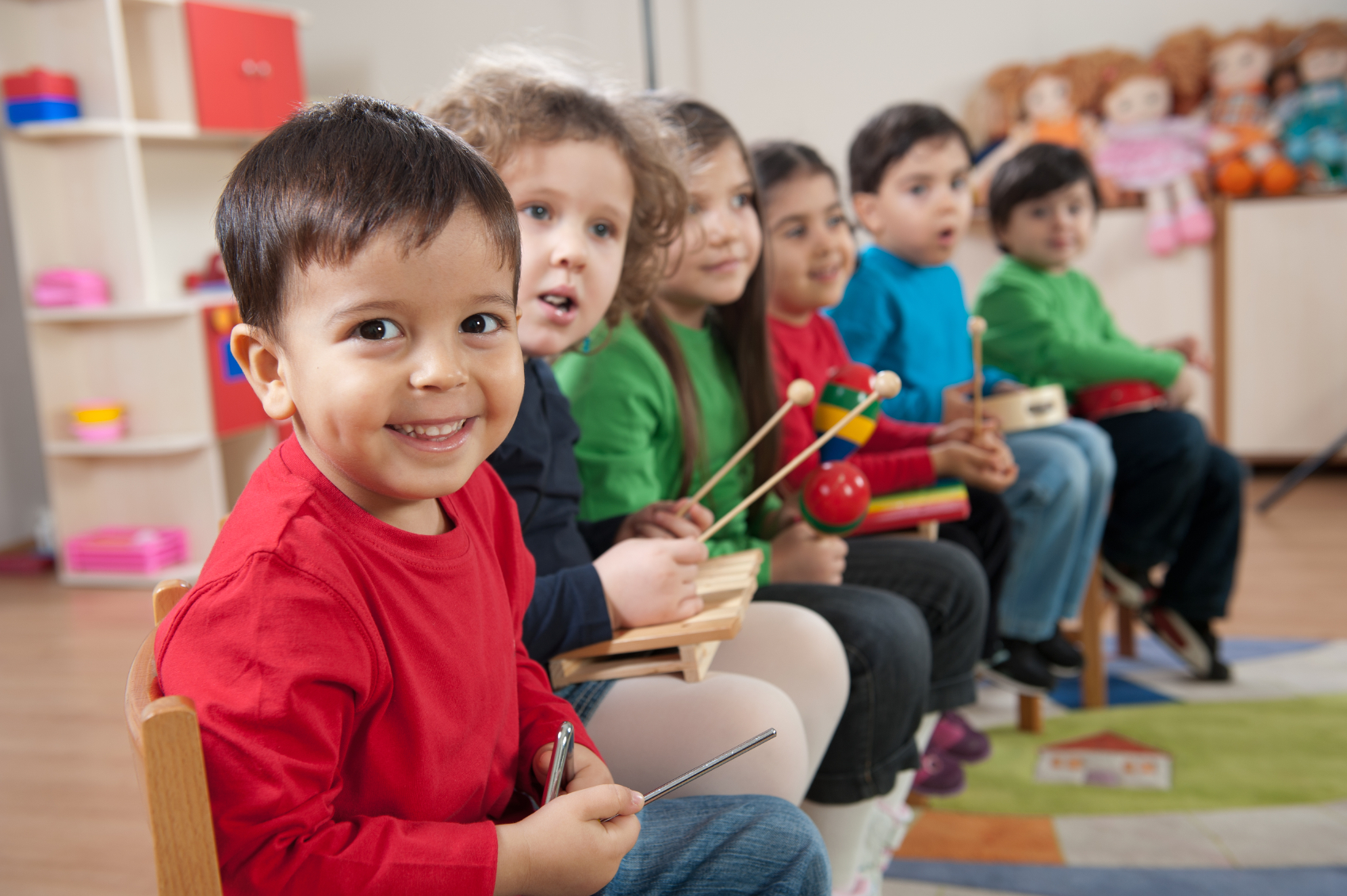
happy child at music classRegular schedules provide a framework that orders a young child’s world. While predictability can be tedious for adults, children thrive on sameness and repetition. “Knowing what to expect from relationships and activities helps children become more confident,” says Dr. Peter Gorski, assistant professor of pediatrics at Harvard Medical School (Asher).

Tips for parents: The days never seem

to go exactly as planned with young children, but it’s helpful for both of you to have a general schedule for the day. Naps and moods will improve tremendously, and you’re likely to have fewer outbursts to deal with. Of course, one predictable weekly activity that we highly recommend is… Kindermusik!

– Contributed by Theresa Case, whose Greenville, SC program, Kindermusik at Piano Central Studios, is proudly among the top 1% of Kindermusik programs worldwide.

How Music Classes Prepare Your Child for School

Early childhood education is important, and Kindermusik International believes that you – the parent – are your child’s first and best teacher.  But what to do with your child until he is 7 years old?  We’d like to recommend Kindermusik classes!

9 ways Music Classes prepare your child for school

teaching children in Kindermusik - mom and sonMusic classes in the early years that include parental involvement and focus on learning in a fun, developmentally appropriate way inspire a lifelong love for learning.
Practice with steady beat, enjoying movement activities, and playing instruments help develop coordination and motor skills necessary for cutting with scissors, holding a pencil, or kicking a ball, for example.
Music classes that are teaching children rhymes and then later, the basics of beginning to read music pave the way to literacy.
Music classes give your child a place to practice those all-important social skills, like cooperatively play, sharing, and following directions.
The best music classes will encourage your child to think creatively, developing critical thinking skills and the ability to problem-solve.
In an environment where process, not performance, is stressed, music classes build self-confidence and a willingness to try new things.
Music classes that gradually increase a child’s independence at the class help the child more successfully transition to the school classroom.
In these classes, children have the opportunity to bond and interact with their teacher, learning to listen and respond to someone other than the special adults who surround them at home.
Science and research have proven time and time again that music positively impacts a child in all areas of development – social/emotional, language, cognitive, physical, and language/literacy.

Kindermusik Classes - Enroll Now - For a Child's Brain, Body, Heart & SoulFrom music skills to life skills, it’s all there in Kindermusik, where music and learning play!  Find a class near you and try a free Kindermusik class on us today.

 
Written by Theresa Case, whose Kindermusik program at Piano Central Studios in Greenville, SC, is proudly among the top 1% of Kindermusik programs worldwide.

5 essential skills taught in early childhood education

Source: She Knows Activity Center

In early childhood education, we understand that teaching children involves celebrating the uniqueness of each child and preparing them for academic success beyond the preschool classroom. As creators of a standards-aligned daycare and preschool curriculum, we also know just how important these early years can be to a child’s lifelong learning abilities. Early childhood education may look like fun and games (and it is!) but the skills learned through these “fun and games” as part of a daycare or preschool curriculum can help a child make a smoother transition to Kindergarten.

5 skills taught in early childhood education that prepare a child for Kindergarten

  1. Early literacy skills, including knowing all the letters in the alphabet by sight and sound, vocabulary acquisition, phonological awareness, and print awareness, help prepare a toddler and preschooler for the more rigorous reading instruction in elementary school.

  2. An elementary school classroom usually includes more students and involves more time sitting at a desk when compared to a preschool classroom. Children with strong inhibitory control abilities can sit quietly, stay focused on the task at hand, think before they act, and behave in other appropriate ways.

  3. In Kindergarten, a child’s fine motor skills get a workout with writing letters and words, drawing shapes, using scissors, and even typing on a computer.

  4. Social and emotional skills help a child make friends, share, participate in classroom discussions, and like inhibitory control, can help a child experience fewer classroom behavior challenges.

  5. Children may spend up to 75 percent of classroom time learning through listening. While hearing is one of the five senses, learning how to actively listen takes practice and can also be a foundational skill for literacy and language development.

Preschool curriculum uses music to teach key skills

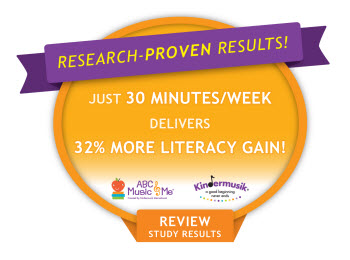
When used as part of a daycare curriculum, research shows music can engage young ABC Music & Me - Early Literacy and Language Curriculumlearners and teach them these key skills needed for continuing academic success. For example, a new study shows that children participating in ABC Music & Me, our daycare curriculum, 30 minutes each week experience a 32 percent literacy gain when compared to other children.

Schools, preschools, and childcare centers can learn more about using our daycare curriculum, ABC Music & Me, by emailing us at info@abcmusicandme.com

Research Proves Just 30 Minutes/Week of ABC Music & Me Delivers 32% Literacy Gain!

Improving Student Language & Literacy Skills:

A Study of the Effectiveness of ABC Music & Me

Overview

To evaluate the effectiveness of Kindermusik’s ABC Music & Me curriculum, an independent research firm, SEG Measurement, conducted a national, multi-site study* following 299 preschool children during the 2012-13 school year. ABC Music & Me is a supplemental early childhood curriculum that uses music and movement to engage young children while teaching a variety of skills critical to later school success. Extensive at-home materials, provided to parents monthly with each new curriculum unit, inform families of their children’s classroom experiences and provide the means for continuing classroom learning at home.

Research Proves 32% Literacy GainThe findings indicate that students in classes using the ABC Music & Me program made significantly greater gains in language and literacy skills as compared to students in classes that did not use any of the ABC Music & Me program components.

Study Design

The study examined the effectiveness of the ABC Music & Me program by comparing the growth in language and literacy skills among preschool students receiving the ABC Music & Me curriculum to a comparable group of preschoolers who did not receive the ABC Music & Me program.
The study incorporated a pre- and post-test treatment- and control-group design. All participating students took the Phonological Awareness Literacy Screening (PALS) Pre-K Assessment** at both the beginning and end of the school year. Students in the treatment group received ABC Music & Me instruction and activities as part of their preschool curriculum during the school year. Students in the control group did not receive any ABC Music & Me instruction or activities.
Students in the control and treatment groups attended the same or comparable schools, and statistical analyses were conducted to ensure that the groups were comparable. Analysis of Covariance was used to compare treatment and control-group performance on the post-test while controlling for any initial differences in ability.
Teacher and parent feedback regarding ABC Music & Me was also collected through biweekly teacher surveys on curriculum usage, an end-of-year teacher survey, a classroom environment survey, and two parent surveys investigating families’ use of the ABC Music & Me Home Materials.

Results

The results of the study show that students who received ABC Music & Me instruction showed significantly larger gains on the PALS test than did students who did not receive ABC Music & Me instruction. In fact, ABC Music & Me students showed 32% more improvement on the PALS test than did control group students. These results indicate that the ABC Music & Me program successfully boosts preschoolers’ language and literacy skills.
Graph: Research Proves PreK Student Literacy GainsResults from teacher surveys indicate that preschool teachers found the ABC Music & Me curriculum to be effective in teaching a variety of skills, and would strongly recommend it to other preschool teachers, and that parents would recommend the program to other parents.

Conclusions

Students who participated in ABC Music & Me showed significantly greater gains in language and literacy skills than students who did not receive ABC Music & Me instruction.
Teachers who used ABC Music & Me found the program to be effective in many areas. Both teachers and parents would strongly recommend the program to others.
*This study was conducted by SEG Measurement, supported by a grant from Kindermusik International. SEG is an independent research firm, providing research services to educational publishers, technology providers, and government agencies, since 1979.
**About PALS: The PALS-(Phonological Awareness Literacy Screening (PALS) Pre-K Assessment is a scientifically-based phonological awareness and literacy screening that measures preschoolers’ developing knowledge of important literacy fundamentals and offers guidance to teachers for tailoring instruction to children’s specific needs. The assessment reflects skills that are predictive of future reading success and measures name writing ability, upper-case and lower-case alphabet recognition, letter sound and beginning sound production, print and word awareness, rhyme awareness and nursery rhyme awareness.
View a Summary of the Report
View the Full Report

The Top 10 Benefits of Enrolling in Kindermusik

Kindermusik Classes - Enroll Now - For a Child's Brain, Body, Heart & Soul

With so many choices out there for young children, we thought we’d try to help make the decision a little easier by sharing our top 10 benefits of enrolling in Kindermusik.
Kindermusik Classes - Enroll Now - For a ChildBenefit #1: Kindermusik gives your child that unique head start you’ve been looking for – musically, cognitively, and academically.
Benefit#2: Kindermusik inspires a love of music from an early age with songs, instruments, and activities that are just right for each age and every stage.
Benefit #3: Kindermusik enhances every area of your child’s development – we are so much more than just music!
Benefit #4: Kindermusik gives you the time and the tools to enjoy quality time with your child – in class and at home.
Benefit #5: Kindermusik Home Materials let you take the music, fun, and learning with you all week long, wherever you go.
Benefit #6: Kindermusik classes provide a happy social outlet for your child and a valuable support network for you.
Benefit #7: All Kindermusik activities are research-proven and giggle-approved, and all are supported by a developmental and musical focus.
Benefit #8: Kindermusik lays a strong foundation for future success in school and in formal music lessons later on.
Benefit #9: Kindermusik is something you and your child will use every day – at home or on the go!
Benefit #10: Kindermusik offers a comprehensive program with the potential for positively impacting your child from newborn all the way to 7 years of age.

Kindermusik - Where Music and Learning PlayFrom music skills to life skills, it’s all there in Kindermusik. Best of all, your child will

love it, and so will you. Find a class near you and enroll today!
Contributed by Theresa Case, whose Kindermusik program at Piano Central Studios in Greenville, SC, is proudly among the top 1% of Kindermusik programs worldwide.

Musical Variety is the Spice of Life

Infants are born with the ability to process musical sounds and patterns, and there is an optimum window of time between birth and three years when the ear is ripe for aural language development. The musical stimulation we provide as parents is so important for this language development.
Because music is also important in developing a child’s sense of patterning and memory skills, it follows that providing exposure to a wide variety of music should be one of our educational goals as parents. Kindermusik effectively widens the musical world for your child by providing choice selections from many lands and cultures.

Exposure to cultures through music

Children need a balance between the familiar and the new… and Kindermusik provides just that. One of the ways we can help our children appreciate and begin to understand other cultures and people groups is by exposing them to their music. One of the great joys of music is the connection it provides emotionally across cultural lines.
As your child listens and engages in musical experiences provided by Kindermusik and at home, he acquires a musical repertoire that will last a lifetime. He is developing his musical “taste buds”, to “appreciate the finer things”, and to enjoy new musical “tastes and textures”. The wider the array of musical styles, the richer that repertoire will be. Listen to your Kindermusik recordings and you’ll find multi-cultural music in a variety of musical styles. And the best part? It’s just plain fun to listen to! Now if only Kindermusik could accomplish the same thing with your child’s diet, right?!

Are you looking for some musical variety?

Try a free Kindermusik class today!  It’s a musical experience with songs and activities the whole family will love – in class and at home.

Compiled by Theresa Case, whose Kindermusik program at Piano Central Studios in Greenville, SC, is proudly among the top 1% of Kindermusik programs worldwide.

FOL Fridays – Creativity: It's In All of Us

child playing dress up

child playing dress upCreativity isn’t a trait that some people have and others don’t.  It’s a way of using your mind and body as you engage in a task that has no prescribed approach.  In the creative process, your ideas, feelings, skills, and knowledge flow together in innovative ways, allowing you to make or learn something new.”
(“Creative Minds at Play” in Scholastic Parent & Child Dec./Jan. 1998 by Charlotte Doyle, Ph.D.)
Ideas for parents: There are many simple ways to effectively encourage your child’s creativity.  Here are just a few…

  • Ask open-ended questions or silly “What if…” kinds of questions.
  • Use the technique of scaffolding – Observe what your child is doing.  Copy it, then suggest or model a slight change to what they’re doing.  (This is a good technique with instrument play.)
  • Recycle paper towel tubes, plastic containers, and boxes and keep them available for open-ended play inspiration.
  • Keep a box of dress-up clothes in the playroom – from cowboy hats to princess shoes to tutus to a fireman’s vest to scarves.
  • Stock up on simple art supplies like large sheets of paper, washable markers, finger paints, and crayons.  Turn on some music and encourage your child to draw what he hears.
  • Turn off your cell phone, sit down, and play with your child.  Pretend play is a great way to relieve stress and bond with your child!

Try this Creative Activity with your Kids

Here’s a sample activity from Kindermusik@Home that allows your children to show their creative side. Watch these silly animals and let your kids imitate their movements – in their own creative way.
Shared by Theresa Case, whose Kindermusik program at Piano Central Studios in Greenville, SC, is proudly among the top 1% of Kindermusik programs worldwide.

11 summer-friendly literacy activities for parent involvement in education


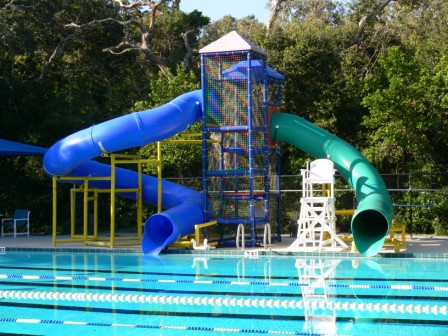
Ask a child to define “summer slide” and responses may include descriptions of the tunnel slides at the local park, the indoor slide at the restaurant down the street, or maybe the water slide at the pool. Ask an early childhood educator, however, and the response would probably include an explanation of what can happen to the early literacy skills of a child who doesn’t read or engage in early literacy activities over the summer.
As a child’s first and best teacher, parent involvement in early childhood education can stop the “summer slide.” We put together 11 tried-and-true early literacy activities for families to do together over the summer (or anytime!) that supports early literacy development.

11 summer-friendly early literacy activities

1. Read with your child 20 minutes each day. Include a mixture of books that you both choose.
2. Practice letter writing in the sandbox, chalk on the sidewalk, or even a cookie sheet with flour (for those rainy days).
3. Act out your child’s favorite story together.
4. Go on a “Letter Sound” scavenger hunt. Help your child find objects around the house or in your neighborhood that start with every letter of the alphabet.
5. Listen to books on CD or download stories from play.kindermusik.com.
11 Summer-friendly early literacy activities6. Add eBooks to your reading list. eBooks can be especially engaging for reluctant readers.
7. Go fishing. Put magnetic letters in a bowl. Tie a string to a paper clip and let your child “fish” for a letter. After catching a letter, your child identifies the letter and the sound it makes.
8. Connect stories to your child’s life. Reading a book with characters that live in the woods? Go on a hike. Is the setting at a lake? Visit a lake, pond, or even a stream.
9. Look at the clouds and make up stories about what you see.
10. Play “I Spy” with letter sounds. “I spy something that starts with the letter B.” (Then make the sound of the letter.)
11. Download the Reading Rainbow app, the number 1 app in Education. Plus, with hundreds of books and videos, new content added every week, and music-themed content by Kindermusik, we know you can find something for every young reader!

Early childhood curriculum increases family involvement in early childhood education

ABC Music & Me is an early childhood curriculum that uses music and movement to teach young children. We also increase parent involvement in early childhood education by providing families each month with the music from class as well as a Family Activity Guide (available in English and Spanish). The guide includes the story from class and related literacy activities that families can do together at home.
For more information on how ABC Music & Me uses music to teach early language and literacy and increase parent involvement, email us at abcinfo@kindermusik.com.

4 Significant Benefits of Music Education

baby playing drum
(article originally published at realmusicproduction.com)

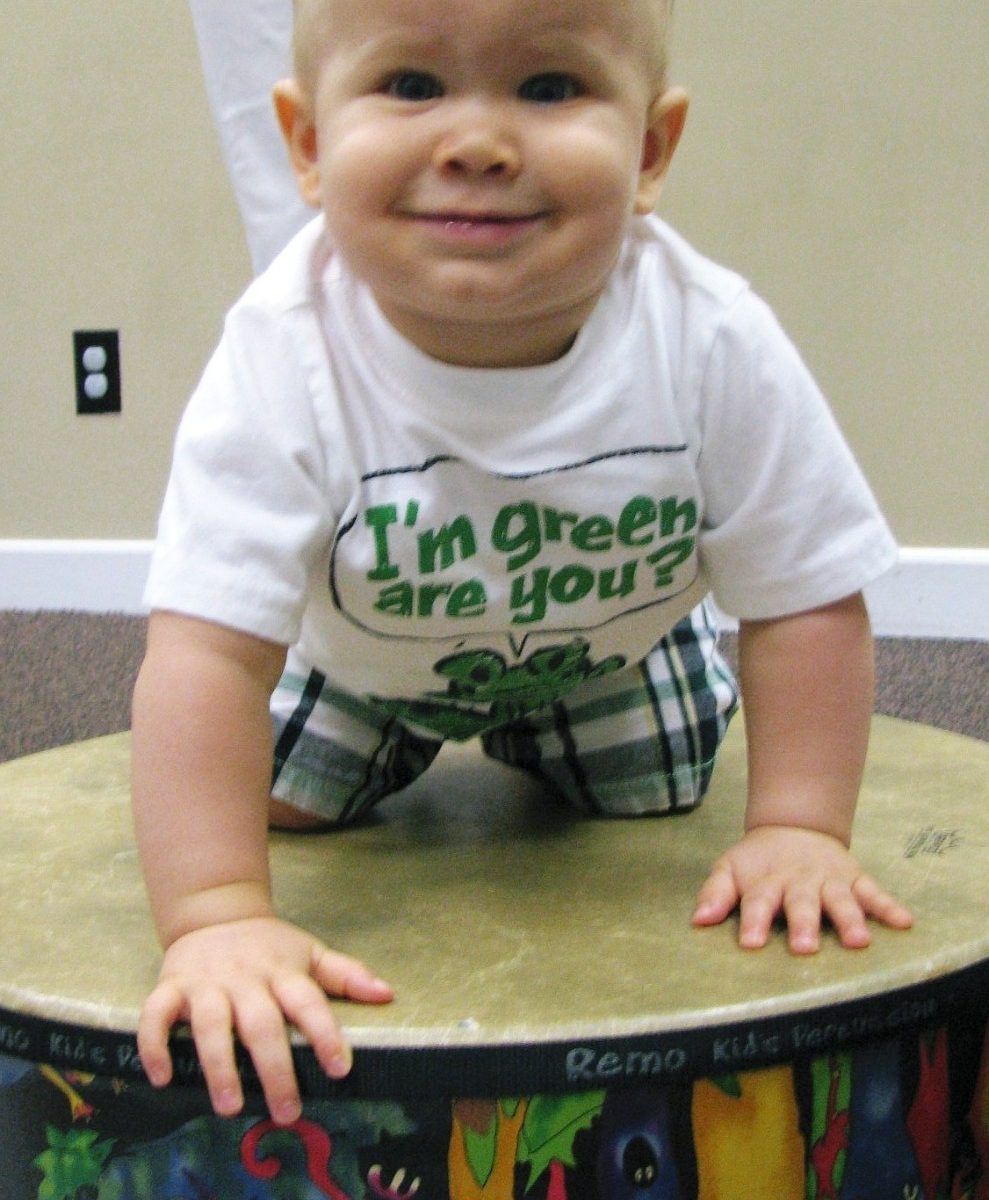
baby playing drumMusic is a very powerful subject – It has been used since the Greek times for healing, communication, relaxation and for enjoyment. Even before birth we are aware of our mother’s heartbeat and during infancy are relaxed by the song of a lullaby. Every day everybody hears some form of musical pitch or rhythm and it can even be found in nature such as how birds communicate through a song-like speech.
Music is such a powerful force, it creates deep emotions in humans – it is played at weddings for happiness, in horror films and during war for fear and at home for happiness and because of this lends itself to relaxation, stress relief and health therapy – and the connection between music, body, and soul has even been shown to improve physical and mental health.
Skills such as working in teams, communication, self-esteem, creative thinking, calmer attitudes, imagination, discipline, study skills and invention are learned and improved through the study of music and by focusing on the fact that young children are mostly highly receptive to pitch and rhythm – one of the main ways a child learns its language – that we can drive education in music to children to help them with benefits ranging success in society and in life.

Benefit One: Success in Society

“We believe the skills the arts teach -creative thinking, problem-solving, risk-taking, teamwork and communications – are precisely the tools the workforce of tomorrow will need. If we don’t encourage students to master these skills through quality arts instruction today, how can we ever expect them to succeed in their highly competitive business careers tomorrow?” -Richard Gurin Chief Executive Officer, Binney and Smith, maker of Crayola crayons
Music is a part of our society and a part of all communities – every human culture uses music to carry forward its ideas and ideals. A study of the arts provides children with an internal glimpse of other cultures and teaches them to be empathetic towards the people of these cultures. This development of compassion and empathy, as opposed to developing greed and a selfish attitude, provides bridges across different cultures that lead to a respect of other races at an early age.
Music has a great value to our economy – it creates jobs, increase’s tax base, boosts tourism and spurs growth in related businesses. Music study develops skills that are necessary in the workplace such as teamwork skills and discipline – during musical performances all members must work together to create the sounds they wish to achieve and for this regular practice is also required. Music favors working and ‘doing’ as opposed to observing, and these are the ethics employers are looking for.
Because of music’s ability to relax, calm and heal, and its optimal platform for emotions, the involvement with music helps to carve brighter attitudes – more optimism towards the future, less TV and non-productive activities, low use of alcohol, tobacco and illicit drugs and desire to develop individual abilities.

Benefit Two: Success in School

Music requires study skills, communication skills, and cognitive skills and as these are learnt and developed they expand the student’s abilities in other academic areas and help them become better students. – Students with coursework/experience in music performance and music appreciation scored higher on the SAT: students in music performance scored 57 points higher on the verbal and 41 points higher on the math, and students in music appreciation scored 63 points higher on verbal and 44 points higher on the math, than did students with no arts participation. – College-Bound Seniors National Report: Profile of SAT Program Test Takers. Princeton, NJ: The College Entrance Examination Board, 2001.
The discipline of music, particularly through participation in ensembles, helps students learn to work effectively in the school environment without resorting to violent or inappropriate behavior – According to statistics compiled by the National Data Resource Center, students who can be classified as “disruptive” (based on factors such as frequent skipping of classes, times in trouble, in-school suspensions, disciplinary reasons given, arrests, and drop-outs) total 12.14 percent of the total school population. In contrast, only 8.08 percent of students involved in music classes meet the same criteria as “disruptive.” – Based on data from the NELS:88 (National Education Longitudinal Study), second follow-up, 1992.

Benefit three: Success in Developing Intelligence

Many studies have been conducted on the effects of music in the brain. Scientists say that children who are exposed to music or those who play an instrument do better in school than those who don’t. Recent research suggests exposure to music may benefit a child’s reading age, IQ and the development of certain parts of the brain.
It can be shown that some measures of a child’s intelligence are increased with music instruction – a connection between music and spatial intelligence (the ability to perceive the world accurately and to form mental pictures of things) helps people to visualize and imagine solutions. This helps people to solve problems creatively and is critical to the sort of thinking necessary for solving mathematical problems and even general daily tasks.
“The musician is constantly adjusting decisions on tempo, tone, style, rhythm, phrasing, and feeling–training the brain to become incredibly good at organizing and conducting numerous activities at once. Dedicated practice of this orchestration can have a great payoff for lifelong attention skills, intelligence, and an ability for self-knowledge and expression.” – Ratey John J., MD. A User’s Guide to the Brain. New York: Pantheon Books, 2001.
Along with mental development music study can support the brains physical development – it has been indicated that musical training physically develops the parts of the brain known to be involved with processing language and reasoning, and can actually wire the brain’s circuits in specific ways. Memory can be improved through the linking of familiar songs with objects just as linking images can – past memories and emotions can be triggered by audio.

Benefit four: Success in Life

“Why arts in education? Why education at all? The purpose of education is not simply to inform but to enrich and enlighten, to provide insights into life as it has been led and as it may be led. No element of the curriculum is better suited to that task than arts education.” -David Kearns Now retired Chairman and Chief Executive Officer of Xerox Corporation
Ideally we want our children to experience “success” throughout life itself. The benefits may be psychological, spiritual and physical and with the challenge of making life meaningful and fulfilled and to reach a higher state of development by participating in music we develop self-expression which in turn leads to self-esteem – ultimately helping us to succeed at these challenges.
“Casals says music fills him with the wonder of life and the ‘incredible marvel’ of being a human. Ives says it expands his mind and challenges him to be a true individual. Bernstein says it is enriching and ennobling. To me, that sounds like a good cause for making music an integral part of every child’s education. Studying music and the arts elevates children’s education, expands students’ horizons, and teaches them to appreciate the wonder of life.” – U.S. Secretary of Education Richard W. Riley, July 1999.
Conclusion
Music is a powerful tool and as seen can dramatically improve and enrich everybody. It makes sense to push music education and to allow young generations to gain these wonderful benefits – higher intelligence through increased creative thinking, problem solving and physically stronger brains, a higher perception of life including better attitudes, strong desires to achieve and fulfill and higher self-esteem, better developed discipline, study skills, concentration, communication and team skills which transfer from education through to career and a better understanding of communities and society.
Edward Droscher is the founder of Real Music Production and works to develop music education systems privately and in schools.


New research proves ABC Music & Me boosts early literacy skills!

ABC Music & Me early literacy curriculum

New research proves ABC Music & Me boosts early literacy skills for preschoolers:

ABC Music & Me early literacy curriculumDuring the 2012-2013 school year, SEG Measurement, an independent research firm, conducted a multi-state study to investigate the effectiveness of the use of the ABC Music & Me program with preschool students in the United States. The findings of the study show that the students who used ABC Music & Me as part of their preschool education showed significantly greater gains on the PALS (Phonological Awareness Literacy Screening) Pre-K Assessment than a comparable group of preschool students who did not use ABC Music & Me, indicating that the ABC Music & Me program shows proven success in boosting early literacy and other important school-readiness skills.

The study’s design allowed for comparison of ABC Music & Me students vs. a control group:

This study incorporated a pre-post treatment-control group design in which all participating students took the same pre and post test (PALS-PreK assessment) at the beginning and end of

the school year. Students in the treatment group received ABC Music & Me instruction and activities as part of their preschool instruction during the school year. Students in the control group did not receive any ABC Music & Me instruction or activities. Students in the control and treatment groups attended the same or comparable schools and statistical analyses were conducted to ensure that the groups were comparable. Analysis of Covariance was used to compare the performance on the post-test between the treatment and control groups while controlling for any initial differences in ability.

About the PALS-PreK test:

PALS-PreK is a scientifically-based phonological awareness and literacy screening that measures preschoolers’ developing knowledge of important literacy fundamentals and offers guidance to teachers for tailoring instruction to children’s specific needs. The assessment reflects skills that are predictive of future reading success and measures name writing ability, upper-case and lower-case alphabet recognition, letter sound and beginning sound production, print and word awareness, rhyme awareness and nursery rhyme awareness.

Stay tuned for more information about the full research report!

Try ABC Music & Me in your classroom for early reading success!