New Research: Music Therapy Benefits Babies

Sleeping Baby BoyDeanna Hanson-Abromeit, assistant professor of music education and music therapy at the University of Kansas, is doing some significant work in learning how music helps premature infants not just survive, but thrive, according to this recent article from the Kansas Health Institute.
Dr. Joanne Loewy, director of the music therapy department of Mount Sinai Beth Israel Hospital in New York, highlighted some of the astounding effects that music therapy had on premature infants, including the ability to “…render other heart rates, different sleep patterns, improve caloric intake and sucking behavior, and that parent-preferred lullabies could decrease stress.”
The study, and its results, are revelatory and insightful, not just for music therapists, but also for parents.  Using music in an interactive way has positive effects on brain development.  However, it’s not just any kind music that makes the difference.  What’s important is the kind of music and how it is used.
Here are a few tips from Hanson-Abromeit’s findings that are very helpful for parents of babies, especially the premature babies but also for full-term babies.

  • Simple is best.  Singing a favorite lullaby or children’s song to your little one can be the best kind of therapy you can give.
  • Live music is better than recorded music.  Premature babies in particular benefit the most from attentive, interactive musical experiences.
  • Watch for baby’s cues, or non-verbal communication.  For example, breaking eye contact, squirming or arching the back, or wrinkling the forehead are some of the signs from baby that it may be time to try something different.
  • It doesn’t always have to stay the same.  Changes to the music’s volume and tempo are ways of adapting and adjusting to baby’s cues.
  • Musical experiences have the power to soothe.  For a small baby who is often overwhelmed with external stimuli, music can help the brain organize at staying calm.
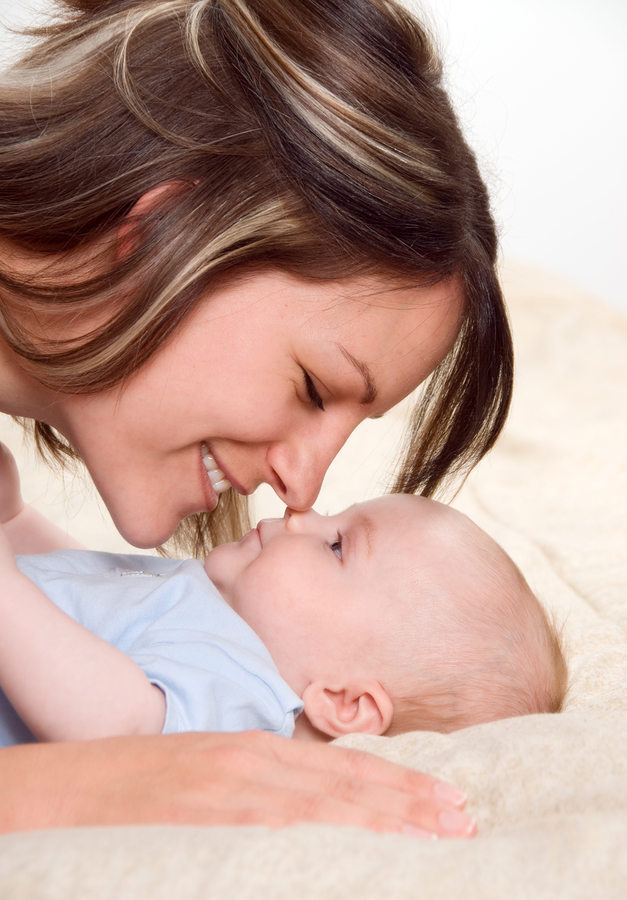
  • Intentional loving experiences with music help the bonding process.  There’s something very personal about a shared musical experience, especially one within the arms of loving parent-child connection.

At Kindermusik, and especially in our baby music classes, we use music with the same intentionality and purpose as suggested by the findings of Hanson-Abromeit’s study.  In fact, it’s one of the things that has caused many music therapists to also become licensed Kindermusik educators.  It’s a joy to celebrate that once again research confirms what we music educators and parents have known along – music is a powerful key to unlocking every part of who we are and what we have the potential to become.
Learn more about the difference Kindermusik can make in your life at www.Kindermusik.com

Contributed by Theresa Case whose award-winning Kindermusik program at Piano Central Studios is celebrating 20 years of offering the best music and movement program around!

Kindermusik Unites Educators in Costa Rica

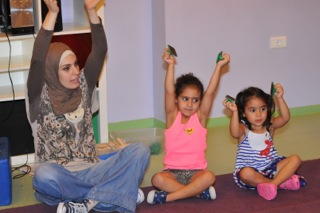
Costa Rica ConferenceEver wonder what happens when a group of teachers gather together for Kindermusik training? Well, we sing, laugh, play instruments, dance with scarves on our heads, and learn through (and about!) music. In fact, it looks a lot like a Kindermusik class without little kids.
This past July a group of educators gathered at Yimbore in San Antonio de Belén for the Costa Rica Conference. Thirty educators participated and gained hands-on experience learning more about various topics including:

  • The importance of music and English language learning in young children
  • How Kindermusik integrates with music and movement to teach both English and music
  • The importance of digital materials to continue the learning process throughout the week and support a parent’s role as a child’s first and best teacher.

Costa Rica Training“We would love to give more of these conferences to more schools around the country,” confesses Paula Bassi, International Director Latin America, Central America and Caribbean. “It is wonderful to create a community of Kindermusik schools in Costa Rica and around the world.”

Interested in learning how to bring Kindermusik to your school? Visit Kindermusik.com/schools to learn more.

3 Musical Activities Every Parent Can Do

“It began as a heartbeat and sprouted a rhyme…”  We are all musical beings.  It’s why babies respond to music in utero, why toddlers do that adorable little bounce-dance to music, and why preschoolers and big kids love to sing and play instruments.  But how exactly do you encourage that song in your child’s heart?  Here are three simple suggestions.

3 Ways to Put a Song in Any Child’s Heart

1. Sing to (and with!) your child.
Singing with MomYou may think your voice is only good enough for the shower, but to your child, your voice is the sweetest, best sound in the whole world.  Babies especially respond to the soothing sounds of the lullaby you sing, but you also model using your voice to express yourself when you sing to or with your older child.  Singing is also a great “together time” activity.  Before naps, in the kitchen, during bath time, in the car – all of these are perfect times to hum and sing along.
2. Keep the music playing.
toddler smilingWith music that streams on our phones, Internet radio stations that play our favorites at the click of a mouse, and even still some CD players in our cars, it’s easy to fill your child’s world with music.  But it does take some intentionality.  Not only will you be able to expose your child to a wide variety of music and begin to shape their musical preferences, but you can also use music to bring out a smile, inspire a cuddle, or chase away the grumpies with an impromptu dance around the kitchen.
3. Invest in some age-appropriate instruments. 
Bells, shakers, sticks, and drums… Keep some musical instruments handy, perhaps in a container near your child’s favorite basket of books.  You might be surprised at how much pure joy your child will derive from being able to make music on his own.  And when you need a fun little activity to do together, simply turn on your favorite Kindermusik song, grab some instruments, and enjoy your own little family jam!
favorite Kindermusik instrumentsHint: Need a source for some high-quality, safety-tested, age-appropriate instruments?  Look no further than the Kindermusik store online at shop.Kindermusik.com.
And when you need a little more musical inspiration…
A weekly Kindermusik class is one of the very best ways to enhance your child’s musical development and natural love of music.  You’ll be amazed at how a gently structured, delightful weekly music class will maximize the rich benefits of early music instruction and capitalize on that critical early window of opportunity.  In addition to providing a social outlet for you in a small class with friends you really get to know and enjoy, a weekly music class also gives you a lot of musical inspiration and ready resources for making music a part of your daily routine at home in between the weekly class.
Learn more about music classes for children at www.Kindermusik.com.

Contributed by Theresa Case whose award-winning Kindermusik® program at Piano Central Studios in beautiful upstate South Carolina is joyfully celebrating 20 years!

How to Teach Babies Language Skills Before They Can Talk

bigstockphoto_Happy_Mom_1646790Do you ever wonder what newborns would say if they could talk? Where am I? What just happened? Who turned on the lights? Whew, that was a lot of work! I’m exhausted. Why is everyone staring at me? Do I have something on my face? Mom! Dad! It’s me! Truth is—most newborns all say the same thing: WaaaaWaaaa!
Of course, children aren’t born talking. However, even at birth, a child can usually respond to a mother’s voice, an early sign of communication, Speech and early language development involves both receptive language (what a child hears and understands) and expressive language (what a child says to others through sounds and gestures). Receptive language skills show up first as babies learn to turn towards interesting sounds or respond to tones and even their own names.

New Research: Improving Babies’ Language Skills Before They Can Talk

A new study from Rutgers University indicates that babies can be taught to better recognize sounds that “might” be language. This would increase brain development in the areas responsible for language acquisition and processing.
In the study led by Emily Benasich who directs the Infancy Studies Laboratory at Rutgers University’s Center for Molecular and Behavioral Neuroscience, the team found that when 4-month-old babies learned to pay attention to increasingly complex non-language audio patterns, their brain scans at 7 months old showed they were faster and more accurate at detecting other sounds important to language than babies who had not been exposed to the sound patterns.
“Young babies are constantly scanning the environment to identify sounds that might be language,” explained Benasich in a press release. “This is one of their key jobs – as between 4 and 7 months of age they are setting up their pre-linguistic acoustic maps….If you shape something while the baby is actually building it, it allows each infant to build the best possible auditory network for his or her particular brain. This provides a stronger foundation for any language (or languages) the infant will be learning.”
Take a look inside the Laboratory:
[youtube] https://www.youtube.com/watch?v=fJ3yZDoRwOs[/youtube]

Use Music to Support Early Language Development

In Kindermusik classes, we provide many opportunities for caregivers and babies to communicate with each other both verbally and nonverbally. For example, when we actively listen to a specific sound such as a clock sound or running water sound, integrate language and movement during a song, or use sign language, babies gain practice hearing words and making connections to their meanings—all which heightens babies’ abilities to communicate!

Find out more at Kindermusik.com.

Contributed by Lisa Camino Rowell a freelance writer living in the Atlanta area.

Bringing musical learning to children in Beirut

With Kindermusik classes in more than 70 countries, we receive stories from parents and teachers from all over the world. While each story is unique, music—and the power of learning through music—connects them all.
Kindermusik Class in BeirutTake the story of children attending Kindermusik at Learn & Play in Beirut, Lebanon, for example. Last year this pioneer nursery in Lebanon began offering two Kindermusik curricula: ABC Music & Me  and ABC English & Me. Since then, the parents and teachers have loved seeing the children completely engaged in learning through songs and instruments while also gaining confidence in making their own music. Of course, the parents and teachers appreciate how the curricula use music and movement to teach children lifelong skills.
The ABC Music & Me music program for schools is specifically designed to support the development of the whole child from birth through school age. Teachers at Learn & Play notice that it combines children’s natural love of music, storytelling, and imaginative play while developing their attention skills, social skills, verbal memory, listening skills, and sound discrimination.
Kindermusik in BeirutLearn & Play teaches children French, Arabic, and English. Since using ABC English & Me to introduce young children to English as a second language, children can now count, sing, and name different parts of the body using English. Music is a great way to help children become familiar with English and the different visuals and animated stories used in ABC English & Me make it easy for children to interact and learn English.

Interested in bringing Kindermusik to your school? Visit Kindermusik.com/schools for more information.

6 Ways Music Delivers on the Promise of Early Learning

Especially when it comes to teaching children the skills they need in order to be successful in school, there’s a critical window of learning that’s widest open only during the first seven years of a child’s life.  In fact, the kind of early childhood learning and experiences a child has before the age of 7 can actually change the trajectory of his/her life.  But what kind of early learning opportunities have the greatest, most long-term effect?

6 ways music delivers on the promise of early learning

1. Cognition: Young children actively engaged in music-making develop foundational math skills, including patterns, geometry, and number awareness.
One, two, tie my shoe.
Three, four, shut the door.
Five, six, pick up sticks.
Seven, eight, lay them straight.
Nine, ten, let’s do it again!
2. Language & Literacy: Music improves early literacy skills, including phonological awareness, auditory discrimination, and auditory sequencing discrimination.
For example, in 2012-2013, an independent research firm found that students who participated in ABC Music & Me for as little as 30 minutes each week experienced 32% greater gains on the Phonological Awareness Literacy Screening (PALS™).
3. Social & Emotional: Music teaches children inhibitory control, which many early childhood teachers say is one of the key skills needed to be “ready to learn” in Kindergarten.
benefits of music
4.  Physical: Music supports motor skills development: playing instruments (fine motor skills) and moving to music (gross motor skills).playing instruments and moving to music
5. Creative: Kids love music and dancing…. and learning should be fun! Music classes teach children to love learning and school. Through music, children can express themselves in unique ways, share ideas, and celebrate the ideas of others.
What shall we do when we all go out,
All go out, all go out?
What shall we do when we all go out,
When we all go out and play?
6. Parent Involvement in Education: Parents love music too. Music engages parents. A parent is a child’s first and best teacher. Singing, dancing, and playing instruments together throughout the week supports a parents’ pivotal role in a child’s life.
Kindermusik - A parent's story
Find out more about how music – and Kindermusik! – delivers on the promise of early learning at www.Kindermusik.com.

Parents’ Involvement in Screen Time Matters

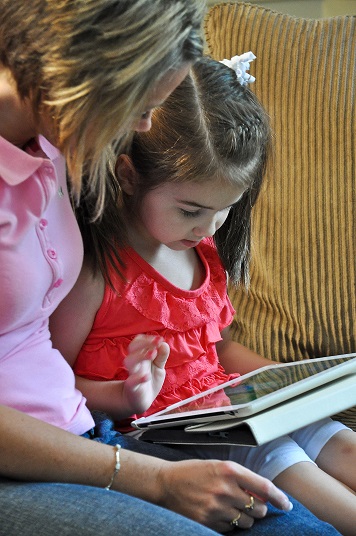
mom and young girl reading ebook togetherYoung children learn best through hands-on, multi-sensory experiences with a loving and trusted caregiver. However, with technology firmly imbedded into the daily lives and routines of families today, parents and early childhood educators often struggle with knowing the ideal ways to incorporate screen time that also supports what we know about how children learn.
One thing we do know without a doubt is that parents’ involvement in screen time matters. A new report from Zero to Three, “Research-Based Guidelines for Screen Use for Children Under Three Years Old,” offers some practical suggestions for parents concerning screen time and technology. Here are a few of the tips.

3 Tips for Healthy Screen Time with Young Children

1. Parents should participate in the screen experience and make it a language-rich, interactive activity. As parents and children watch or play screen-based games together, parents can talk with their children about what they are seeing. We love how this mom beautifully incorporates a video field trip from Kindermusik@Home into on-the-floor, sensitive, child-centered play with her toddler. Notice how she encourages counting and asks questions about what they see on the screen:
[youtube]https://www.youtube.com/watch?v=t19lH9ly7rs[/youtube]
2. Make connections between what children see on the screen with the real world. In the school years, children will be asked to make those connections when reading, such as text-to-self and then later text-to-text. Early childhood offers the ideal time to lay a foundation for recognizing associations between things. For example, if children learn about the different letters of the alphabet by playing a game on a tablet, parents can later point out various objects in the room or at the grocery store that start with those same letters. Or, if a character in an interactive ebook learns over the course of the story how to share a favorite toy with a friend, parents can refer back to that lesson when teaching their own children how to share with friends.
3. Create ways to extend the learning away from the screen. For example, in the video above, the parent and child can go on a walk together and notice the various dogs they encounter or visit a pet store to see the fish. While there, the mom can point out the different colors they see, encourage counting, and make connections between what they watched at home.

Find out more about Kindermusik at www.Kindermusik.com.

Contributed by Lisa Camino Rowell, a freelance writer in the Atlanta area.


Repeat After Me: Kids Learn from Repetition

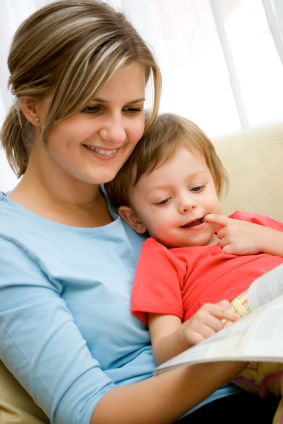
mom reading to her baby“Again! Again!” It is not a coincidence that young children ask to read the same book 22 nights in a row. While the adults involved may secretly (and not so secretly) wish for more diversity, all that repetition strengthens the learning or growth of neural connections in children’s brains.
Repetition is good for children. In fact, it’s how they learn. A one-time experience is not enough for a neural connection to form and stabilize. Children need repeated exposure to an experience. Each time an experience is repeated the neural connection grows stronger. Think about it. Even as adults, we don’t usually learn how to do something the very first time we try it. According to Conscious Disciple, for a child to learn a new skill or concept, it takes 2,000 times in context. Whoa! That is a lot of readings of Good Night Moon!
Repeated exposure also helps children become comfortable with new objects and experiences. So, for example, in a Kindermusik class the first time we bring out a new instrument children may only want to watch it being played, but the next week they might decide to try playing it, and the next week they may try suggesting a new way to play it.

Why We Love Repetition in Music

Musical repetition can be heard across most musical genres around the world. There are reasons for it, too. According to the TEDx video, “Why We Love Repetition in Music,” people actually prefer familiar music. During repeated passages or songs, listeners shift their attention and hear or notice different sounds. (By the way, this happens with repeated readings of the same book, too!) In one scientific experiment, people even rated music with repetition as more enjoyable and more interesting.
Watch the TEDx video here:
[youtube] https://www.youtube.com/watch?v=1lo8EomDrwA[/youtube]
Kindermusik Tip: Tap into a child’s love of and need for repetition. Repeat songs and re-read books to children. (It’s one of the reasons we repeat songs, stories, and activities from week to week!) Point out different sounds and instruments or fast and slow parts of the music. In books, make note of the illustrations in the story—the different shapes, colors, or even the numbers of objects on the page.

Find out more about Kindermusik at www.Kindermusik.com

Contributed by Lisa Camino Rowell, a freelance writing living in the Atlanta area.

Why Halloween Should Last 365 Days a Year

child playing dress up

child playing dress upIt’s Halloween! In many parts of the world, this means dressing up in costumes and pretending to be a cowboy, ninja, ballet dancer, or even a cowboy ninja ballet dancer. (Hey, it could happen!) While the stores—and Pinterest—overflow with costume options for children this time of year, truth be told, children love dressing up and pretending all year long. And they should! It’s good for them.
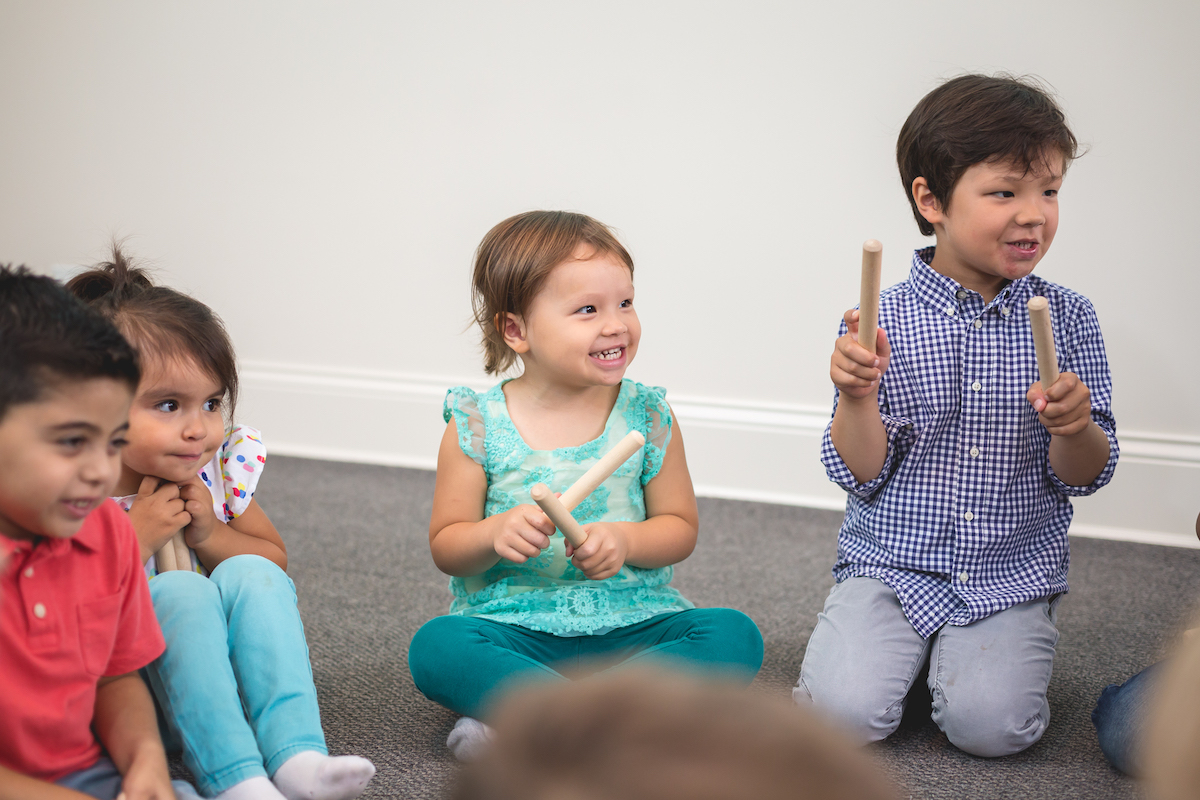
Pretend play develops imagination, creativity, social skills, and language

Imitation is the first stage of pretend play and begins as an infant when a baby mimics an adult’s facial expressions. As children grow and imitation evolves, pretend play becomes more imaginative. Children use pretend play to re-examine life experiences by adding or changing what actually happened. Pretend play lets children try out their ideas and solve problems as they create characters and “rules” in their imaginary world.
During pretend play activities, social interaction between children—and participating adults—is usually characterized by a heightened use of action and language, helping to develop children’s language and social skills. In addition, pretend play helps children learn the difference between reality and fantasy, and even experience emotional support from parents as they pretend along with kids.
So, don’t put up those Halloween costumes on November 1. Keep them out all year round. After all, you never know when you might need a cowboy ninja ballet dancer to come save the day.

Learn more about Kindermusik at www.Kindermusik.com.

Contributed by Lisa Camino Rowell, a freelance writer in the Atlanta area.