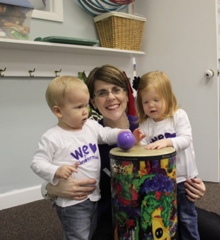
Teachers are always observing their students. Here at Kindermusik International, we have a sneaking suspicion that you might have noticed something a little different, a little special, about some of the students in your class… We think we might know the secret – those stand-out students probably have something in common… they’ve all been in Kindermusik!
So how can you know for sure? Here are six clues that usually give it away.
You might have a Kindermusik kid in your classroom if you notice a student who…
… socializes well with his/her classmates
… demonstrates good coordination and balance while moving
… is confident, happy, and emotionally secure
… expresses him/herself well verbally
… excels academically, thinks creatively, and has a great imagination
… loves anything and everything musical! If you’ve ever wondered how you could help better prepare a child for school by combining your love of teaching, love of children, and love of music, consider becoming a Kindermusik educator! As the world’s best early childhood music and movement curriculum, Kindermusik is your chance to provide a child with a solid educational basis for future learning and a lifelong love of music.
To learn more about how you can turn music into smiles and give kids a head start in school and in life through early childhood music education, visit the Kindermusik website and click on the “Teach Kindermusik” tab.
American writer Sarah Dessen is not a Kindermusik teacher nor does she specialize in early childhood special education. However, she seems to understand how music can reach individuals of all
abilities. She wrote: “Music is the great uniter, an incredible force, something that people who differ on everything and anything else can have in common.”
In Kindermusik, we say it this way: “Everyone speaks music.” In the classroom, Kindermusik educators celebrate the individuality and contributions of each child. It’s no wonder music therapists love recommending Kindermusik and teaching Kindermusik. With our similar child-centered philosophies, music therapists are discovering Kindermusik offers opportunities for both their practice and their clients.
4 reasons why music therapists love using Kindermusik as part of a special education curriculum
The Kindermusik curriculum naturally integrates typically developing children and children with special needs into one welcoming and loving environment.
Kindermusik classes support the work done in individual music therapy sessions. Music therapists and families appreciate how Kindermusik takes many of the concepts children with special needs work on in occupational therapy, physical therapy, and speech and puts it into a group learning environment.
Music therapists understand firsthand the benefits of music on children, including cognitive stimulation, self-expression, self-awareness, and increased motor movements.
Music therapists can use their music therapy skills to reach more children and to expand their income potential.
Teaching children as a Kindermusik educator
“Being able to integrate typically developing children and special needs kids was just a dream come true,” explains Julie Wade, music therapist and Kindermusik educator. “The Kindermusik curriculum enables you to do just that in a positive therapeutic environment.”
Listen to what else Julie loves about being both a music therapist and Kindermusik educator. Plus, hear from her students, too!
Il Chiostro dei Bambini was a three-day event that took place at The Diocesan Museum in the San’Eustorgio district, one of the most antique and monumental complexes of Milan, Italy. An exhibition dedicated to children and their families
was set up in the larger square courtyard of this museum built from joined units of the basilica and Dominican convent.
On invitation, over 40 stands of the best Kindergartens, language schools, programs, dance, art and sport associations were present along with Kindermusik! This event gave parents and their children the possibility to take part in numerous, games, workshops, performances and other extra-curricular activities, including activities for toddlers and other children.
A preview of baby and toddler music classes and more!
Along with meeting many like-minded people, who dedicate their lives to improve children’s education, the best part of the event for us was that many children were able to enjoy the magic of Kindermusik in this unique setting with mom and dad. During baby music classes or our other Kindermusik classes, it is always heartwarming to see the surprise on a mother’s face when her 7 month old baby interacts with an egg shaker or when a five year old responds to all the directions given in another language even though it is their first time meeting you. (Kindermusik in Italy is music, movement…and English!)
It was also an occasion for experienced and new educators from different parts of Italy to gather. Meghan Shanaphy, from Milan, was our star performer as she led two groups of over 30 children and their parents in an ABC English & Me Trip to the Farm!
As we were packing up the stand at the end of the three days, the Kindermusik purple balloons took off into the sky and we renewed our wish: “May the magic of Kindermusik reach all the children of this world.”
To experience the magic of Kindermusik with your child, find an educator near you and see why families all around the world love our baby and toddler music classes as well as our classes for older children, too.
There’s an old Proverb that says, “Iron sharpens iron, so one man sharpens another.” That’s exactly how Kindermusik educators stay sharp, pardon the pun. We learn from each other! Here are some ways all licensed Kindermusik educators use peer learning:
The learning groups in KI’s unique training course, Kindermusik Fundamentals
This is where Kindermusik educators get their start and begin forming connections and friendships with other educators all around the world. It’s online training and connecting at its best!
The comments in our cutting-edge Digital Teacher Guides
The best ideas and tips are available at the click of a button! Suddenly a great idea from an educator in the Philippines becomes the inspiration for an educator in the American midwest.
The Partnership for Kindermusik Educators (PKE)
The Partnership for Kindermusik Educators, or PKE, provides the structure for educators to facilitate local gatherings and even online conferences. You can believe that lots of great ideas fly when educators get together, in person or online!
The colleagues who become mentors and dear friends
Out of all the peer connections come the relationships that become some of the most inspiring of mentors and the dearest of friends. There’s nothing like the bond of Kindermusik, not just for the families in our classes, but also for the educators themselves!
We know that the most successful multilingual learners are exposed to non-native languages in the first years of life, but using music as a teaching tool boosts their ability to achieve fluency faster.
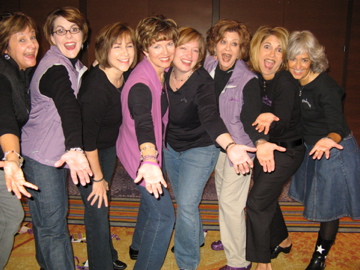
Why teach Kindermusik? There are many benefits of becoming a licensed Kindermusik educator, but here are the top ten favorites.
1. Convenient online training and the connections you make with other educators-in-training
2. The community of passionate, caring Kindermusik educators from all around the world who regularly connect and share virtually via the Kindermusik Cafe
3. The Kindermusik curricula which has been carefully researched and created by Kindermusik International, the world’s most trusted name in musical learning
4. Access to one-of-a-kind digital Teacher Guides where you’ll find an incredible amount of resources, helps, support, and ideas with every lesson plan
5. Opportunities for ongoing professional development that keep you motivated, inspired, and growing as a teacher
6. Having a company like Kindermusik International partnering with you
7. The tools, support, and empowerment to do something you LOVE
8. The precious children and their families whose lives you will touch
9. The satisfaction of making a difference in a child’s life, possibly from newborn to 7 years
10. The smiles, the joy, and the hugs that you’ll get each and every week in class
Written by Theresa Case, who has had the privilege of being a licensed Kindermusik educator since 1994 and whose Kindermusik program at Piano Central Studios in Greenville, SC, is proudly among the top 1% of Kindermusik programs worldwide.
Yesterday was one of my Kindermusik days — my day to teach, to be in the classroom with 10 delightful toddlers and their special adults. Besides being an invigorating ton of fun, every one of my Kindermusik days reminds me of why I’m so lucky to do what I do!
As a program owner, I am privileged to work alongside the other wonderful Kindermusik educators on my staff. I spend time in the office, administrating and overseeing the business that enables me to reach so many more families with the power of Kindermusik. The time I spend teaching inspires and motivates me when it’s time to put on the other hats I wear as a Kindermusik program owner and director of Piano Central Studios.
Smiles, Love, Learning, Joy & Music
My own boys have long since graduated from Kindermusik into taking music lessons, but I still remember the joy of experiencing Kindermusik as a parent, now precious memories of spending time together and watching their love for music blossom. Thankfully, I still get to be in the Kindermusik classroom as a licensed Kindermusik educator, witnessing firsthand how the magic of Kindermusik brings out the smiles, the love, the learning, the joy, and the music in the parents and children in my classes.
What a precious gift my Kindermusik days are to me!
– Shared by Theresa Case, director of Piano Central Studios in Greenville, SC
Howard Levy is a featured musician on one of Kindermusik's recordings.
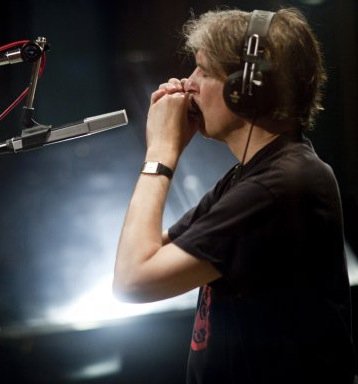
Musician Howard Levy has played with some of the world’s best musicians – from the innovative, future-forward stylings of banjoist Béla Fleck to Dolly Parton, Bobby McFerrin, as well as symphony orchestra musicians around the world with his Concerto for Diatonic Harmonica and Orchestra.
Howard is also a featured musician on two Kindermusik recordings: “Riding the Rails” and “I’ve Been Working on the Railroad.”
Composer and arranger Jon Negus worked with Howard on the Away We Go! session. Here’s what Jon had to say about it:
When I was describing to Howard and the violinist (Peter La Bella) that “Riding the Rails” was going to be a duel between harmonica and violin, Peter said “Gee… I wonder who’s going to win that one….!”.
Howard was “off the charts” amazing even back then. A kind and gentle man who always educated while he played.
Musician, composer and arranger David Huff added this about the session:
Jon and I were completely awestruck by this man’s virtuosity. Though Howard got it in one take, Jon asked him to do it again just so we could repeat the experience of watching/hearing him play.
Howard is a world-touring musician, playing piano and harmonica. He’s also a dedicated educator teaching harmonica at the online school Artist Works. In this video, Howard talks about his musical beginnings.
Kindermusik's age-appropriate Hohner harmonicas Want to play? Harmonica is a featured instrument in Kindermusik’s Away We Go! music and movement program for toddlers. Join the worldwide community of educators and musicians around the world — sharing the gift of musical learning with children and their loving caregivers. If you’re ready to become a Kindermusik educator, our online training program provides a flexible, supportive learning environment.
"Inspired by musician and eco-philosopher David Rothenberg’s book of the same title, this documentary explores the intriguing, charming, complex and often conflicting theories on why birds sing like they do and why humans are so attracted to the sound.
"The film features contributions from musicians including Laurie Anderson, Jarvis Cocker and Beth Orton; enlightening and often startling analysis from some of the world’s most eminent birdsong scientists; a literary guide
to birdsong in poetry; a bizarre birdsong-themed art ‘happening’; the creation of a new musical composition from the Afro-Celt Sound System, entirely made up of manipulated birdsongs; and a strange musical duet at New York’s Bronx Aviary, featuring humans and birds.
"Filmed in the forests, aviaries, studios and laboratories of England, Germany and the USA, this is a colourful, entertaining, informative and occasionally weird journey through the songs of nature that have enchanted and perplexed humans for thousands of years."
Do you love to sing? Ask today about using Kindermusik to help more families sing together – for the joy of it.
Mollie Greene is a former Kindermusik Educator, musician, mother, writer, and published craft book author living in Greenville, SC.
One of my favorite bloggers is former Kindermusik Educator Mollie Greene. She posts pictures, adores coffee, and in the summer, complains about the heat like a paper daisy wilting in the sun. My favorite posts are the lists, like this one: “2013 things to do in 2013.”
say no to guilt
say yes to long walks
buy large houseplants and keep them alive
play goldberg variations
play gin rummy
make the dog behave
One of Mollie’s paper creations, available on her Etsy shop.
Her carefully crafted sentences and lists drop and gently spin like her carefully crafted paper mobile artworks. In addition to writing, Greene also creates and makes paper art, available on her Etsy shop, Royal Buffet.
Hey Mollie. Add this one to the list: Publish that new paper craft book.
The former Kindermusik educator, musician, writer, blogger, crafter, and mother of four is about to add “published author” to her list of accomplishments. In July, Greene and California publisher Chronicle Books will release Sweet Paper Crafts, 25 Simple Projects to Brighten Your Life. You can pre-order it now on amazon.com
Greene created the book with photographer (and her husband) Aaron Greene. Her paper work has also been featured on numerous Web sites and blogs including Martha Stewart Weddings, Free People, Design Sponge, and Decor 8. In print, her work has appeared in Southern Living Magazine and the craft book Playing with Books.
Her first paper-craft book was a self-published project with Aaron, Make & Do Paper Fascinations for Every Lovely Occasion.
We recently caught up with a properly caffeinated Mollie Greene to say congratulations, and to ask, “how’d you do it?”
Mollie’s new book is available for pre-order now on amazon.com
Name: Mollie Greene Location: Greenville, SC Kindermusik Educator: 2001-07 at Piano Central Studios. The studio’s founder and owner, Theresa Case, is also author for this blog’s Foundations of Learning posts.
Why did you start teaching Kindermusik?
In college (for Piano Performance at Bob Jones University) I had to observe a Kindermusik class, and I was impressed with the storytelling aspect of the class, and the themes, and dancing, and using music to work with kids is always fun. I just thought it was a whole lot of fun, and I thought it would be a fun way to make a living for a little while.
Why did you stop teaching Kindermusik?
After I had my third baby it was just too crazy. I have four children now. Henry is 10, Jude is 8, Lola is 5, and Dot is 5 months.
The new book is different from your first self-published book. How so?
In the self-published book we did about 10 tutorials. They were mostly things that people had asked me about. We thought about putting the tutorials in a blog format but, because there were so many, we just did it as a book.
The new book with Chronicle has 25 projects and the crafts are all different, there’s much more variety.
Some activities are things that I’ve sold in my Etsy shop. Most are new projects that I’ve been working on with my editor so there would be more variety – in the kind of paper you would use and the variety of projects – so there wouldn’t be 25 butterfly projects. They all needed to be different so there will be more appeal to more people across the entire book.
Some were things I haven’t made in years, made when I was a kid, for a more modern, grown up way to make it.
Mollie sells her paper creations online.
Are the crafts for kids or adults?
The book targets adults. Most of the projects take a little more time or skill with scissors, but most of the projects could be adapted for kids. Otherwise, most of the crafts are good for kids around middle school and up.
How did you get the book published?
Chronicle Books is a great source for art books, books about the arts – especially crafting books. I sent them a copy of the self-published book because we didn’t know if they’d be interested in picking that one up; and because it was a good sample of the work.
The editor I sent it to liked it and she helped us get it started.
How long did it take for Chronicle to respond to you and and pick up the book?
We sent the first book in October and heard back in November, 2011. We started working on it in February and it was only a few months before we had to get the ball rolling and start writing.
On your blog, you said this project started last spring, “when I was morning sick and in the midst of a big household move.” Why in the world would you do that?
It all kind of came at once. I’d just found out I was pregnant with Dot and we were moving across town, and they just wanted to get started so we could publish it by this summer. So we had to get it all done by last summer.
And I just thought, you know, you have more time than you think you have. If you can get organized, you can do more than you think you can. Which is not my typical way of living.



 Teachers are always observing their students. Here at Kindermusik International, we have a sneaking suspicion that you might have noticed something a little different, a little special, about some of the students in your class…
 If you’ve ever wondered how you could help better prepare a child for school by combining your love of teaching, love of children, and love of music, consider becoming a Kindermusik educator! As the world’s best early childhood music and movement curriculum, Kindermusik is your chance to provide a child with a solid educational basis for future learning and a lifelong love of music.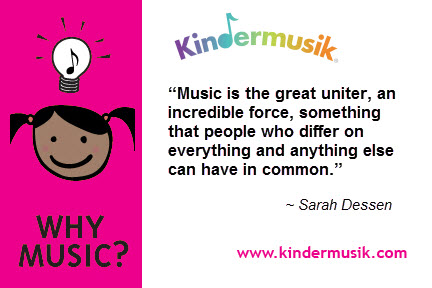






 Why teach Kindermusik? There are many benefits of