
Why the Wiggles Aren’t Bad: Understanding the Vestibular System and Children’s Need for Movement

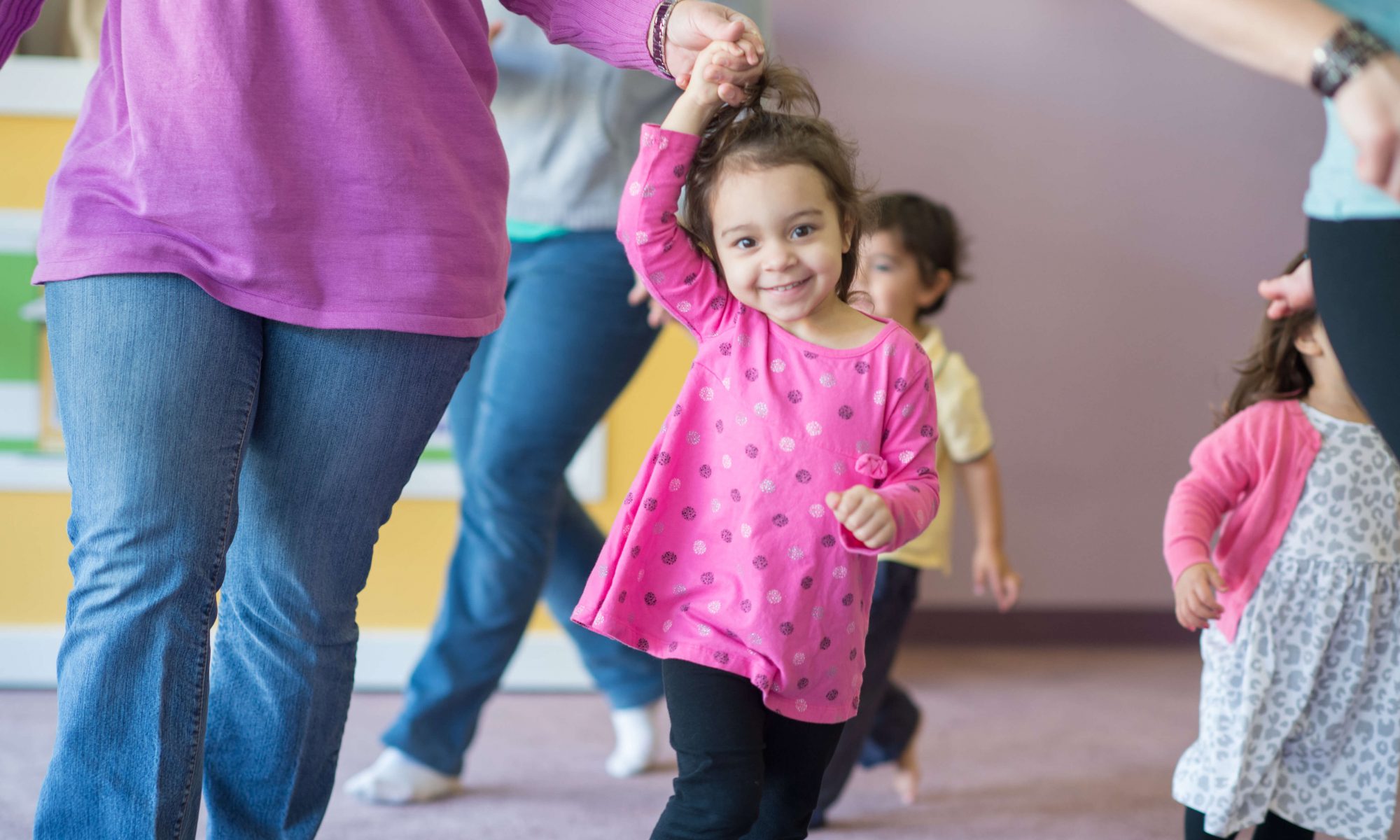
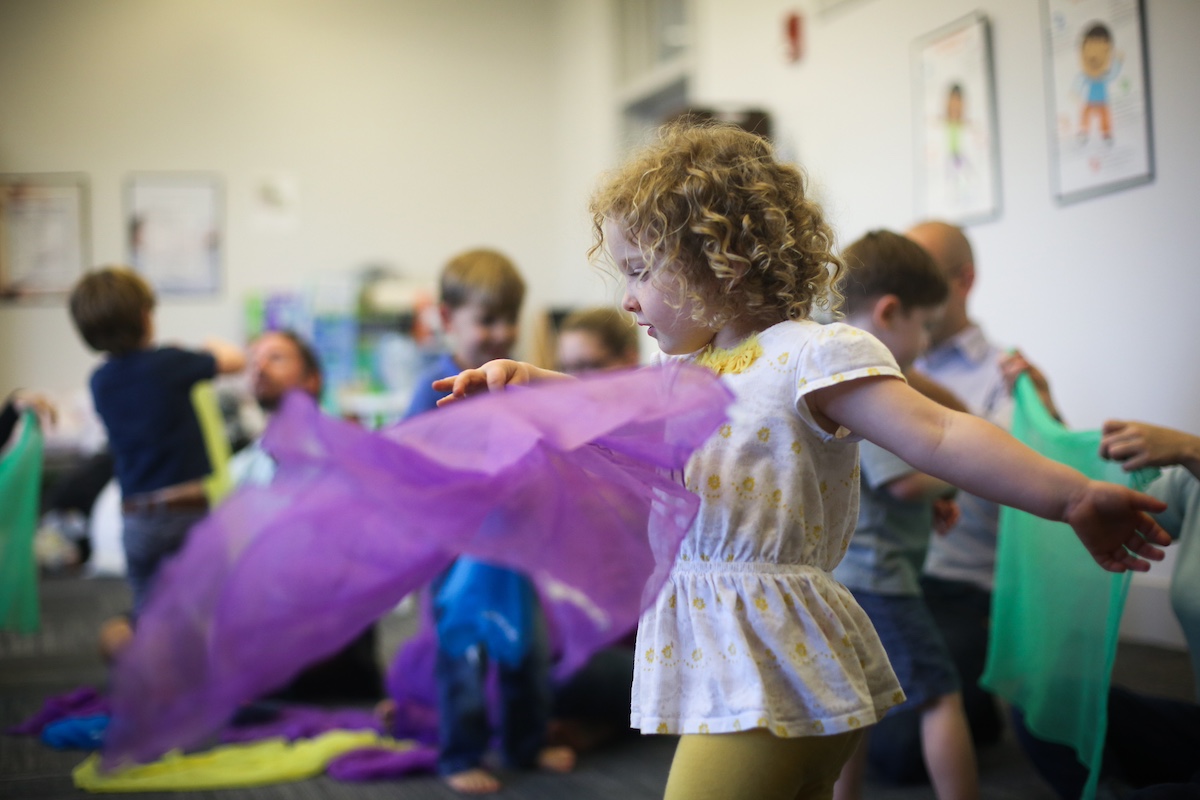
3-year-old girl twirls with scarf during a Kindermusik class to stimulate the vestibular system.

This post was authored by Accredited Kindermusik Educator and Early Education Specialist, Diana Cameron.

Is your child constantly jumping, spinning, or rolling around the floor? Or perhaps they seem the opposite — motion-sensitive, hesitant to swing, or quick to get carsick?

These behaviors aren’t just quirks. They often point to a vital and often overlooked part of your child’s brain development: the vestibular system.

What is the Vestibular System?

The vestibular system is located in the inner ear and is responsible for balance, movement, and spatial orientation. It works like the body’s internal GPS—helping us know where we are in space, whether we’re moving or still, and how to coordinate what we see and hear with how our body moves.

In children, a healthy vestibular system supports everything from emotional regulation to motor planning and even early literacy.

According to Dr. Christopher Zalewski, audiologist and National Institutes of Health research scientist, vestibular input plays a foundational role in developing posture, balance, and cognition. It also helps the brain prioritize sensory messages and stay organized. When functioning well, it frees the brain to focus, attend, and learn.

What Happens When It’s Out of Sync?

When the vestibular system is dysregulated, children may behave in ways that seem puzzling or disruptive, but are actually adaptive.

Some children seek movement. They might:

  • Jump on furniture
  • Spin in circles
  • Rock their bodies
  • Hang upside down

These are not acts of misbehavior. They’re strategies to get the sensory input their brain craves to feel grounded.

Other children may avoid movement. You might notice:

  • Fear of swings or playground equipment
  • Discomfort when their head is tilted
  • Motion sickness in cars
  • Reluctance to climb or spin

In both cases, children are communicating through action. When the vestibular system is out of sync, behavior becomes a form of self-regulation, not rebellion.

And here’s something many people don’t realize—right before children learn a major new movement skill, like jumping or climbing, their brain goes through a kind of “vestibular upgrade.”

You’ll start to see clues: more spinning, rolling, or swinging.

Here’s How You Can Help…

Movement is the answer. That’s why Kindermusik includes intentional, rhythmic movement that stimulates the vestibular system in a safe and supportive way within every level of our curricula.

Before major motor milestones like crawling, walking, or jumping, a child’s brain needs what I call a vestibular upgrade. This often shows up as a spike in spinning, rolling, or bouncing activity 6–8 weeks before the new skill is mastered.

Knowing this, parents and educators can respond with patience and purpose.

And music-based movement activities really pack a punch. A McMaster University study showed that vestibular activity is directly connected to musical rhythm processing—a powerful reason to combine music with movement.

Try these simple vestibular-supportive, music-based activities for each stage of early childhood.

Vestibular System Activities for Babies
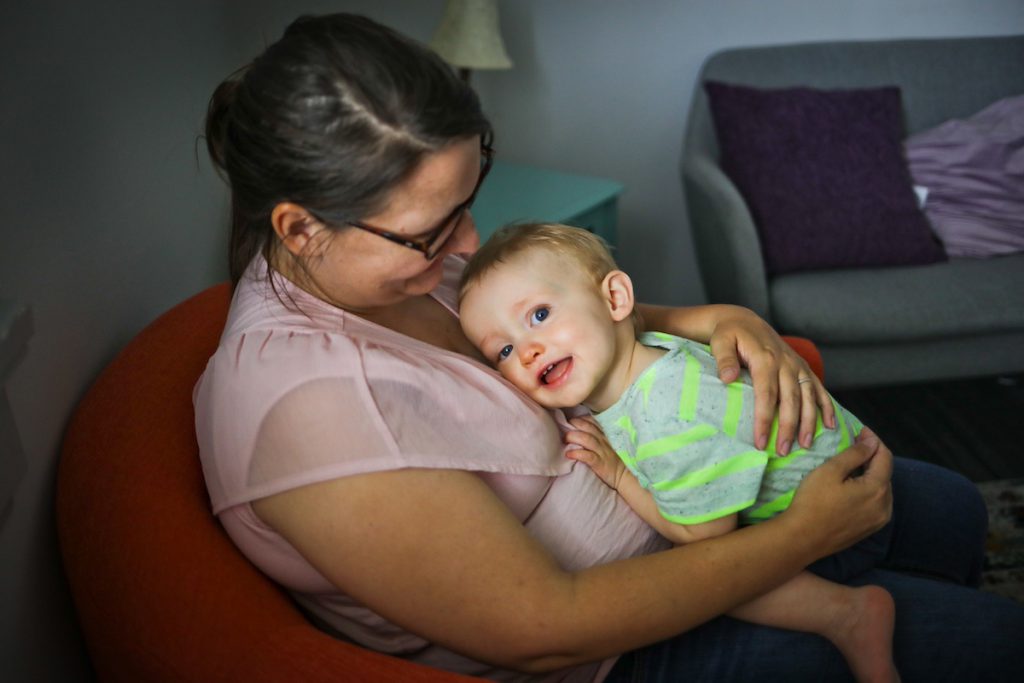
Try 3-way rocking.

Gently rock your baby:

  • Side to side
  • Forward and back
  • In a circular motion

Pair this with humming or soft music for added calming effects.

One of our favorite songs for rocking is “Golden Slumbers.” Play it here or stream it (and many other options) from the Relaxation album in the free Kindermusik app

“Golden Slumbers” from the free Kindermusik app.

Vestibular System Activities for Toddlers

Encourage rolling on the floor, spinning games, or gentle swinging. 

These activities build vestibular pathways needed for jumping, running, and balance.

You can easily incorporate this stimulation through pretend play:

  • For walkers: Using tissues or lightweight scarves, pretend to be birds flying and spinning around the room. 
  • For non-walkers: Pick up the child and gently swing and fly them around the room. Please make sure to safely hold them—to swing them low to the ground, hold their torso under their arms with your hands clasped together across their chest. To swing them up high, place one arm from shoulder to opposite under arm and the other arm through their legs.
“Come Fly with Me” in the free Kindermusik app.

Vestibular System Activities for Preschoolers
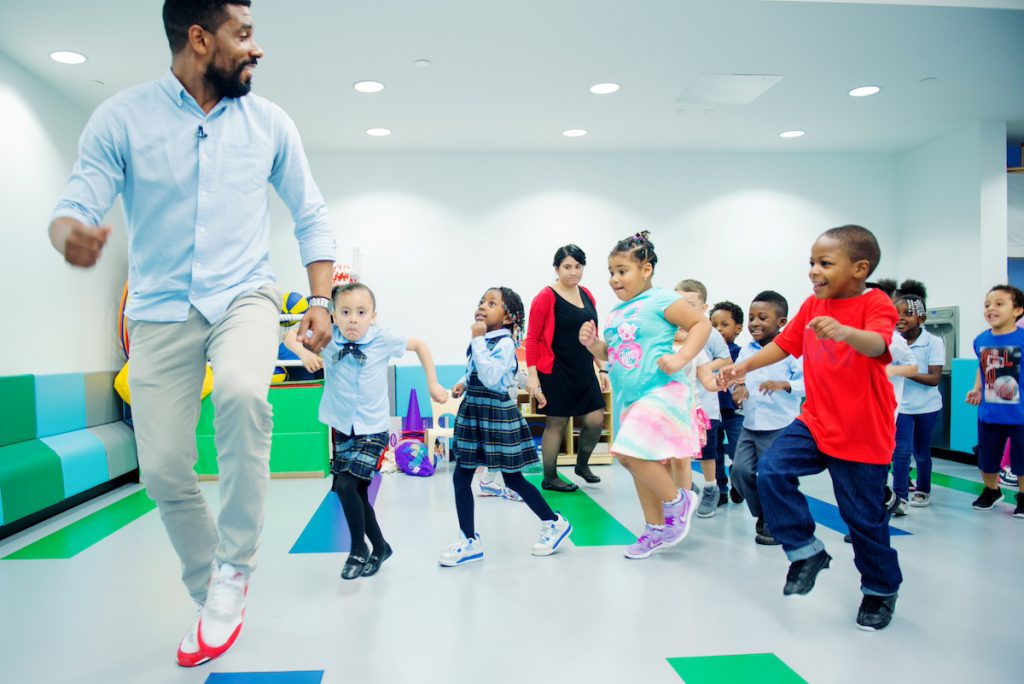
Incorporate direction and rhythmic changes during musical play. 

For 3-5-year-olds, these activities integrate vestibular input with coordination and self-regulation.

Try “Waltz and Jig” from the free Kindermusik app (or play it below). This song goes from a gliding waltz to a bouncy jig within the same track. 

  • Encourage children to twirl and move gently in one direction around the room as the waltz plays. 
  • When the music changes to “Dance a jig…”, instruct them to bounce to the beat in the other direction. 
  • Continue these changes throughout the song.
“Waltz and Jig” from the free Kindermusik app.

Your child’s constant motion (or movement reluctance) isn’t random—it’s a message. And once you understand the role of the vestibular system, that message becomes clear.

Movement isn’t just fun. It’s foundational. It supports balance, focus, behavior, and learning from the inside out.

So the next time your child endlessly jumps, spins, or wiggles, take a breath and ask “What is their brain telling me?”

By supporting vestibular development through intentional and safe musical play, we’re helping answer a developmental need, and giving children the tools they need to thrive.

Diana F. Cameron (MEd) is an Accredited Kindermusik Educator, Kindermusik University coach, and early childhood development specialist in Queensland, Australia. She’s also the owner of Building Brain Connections—find more of her educational videos here.

For more vestibular system activities, find a Kindermusik class near you or check out our teaching solutions for ages 0-6. 
Sing and Dance that Stress Away

Music and movement stress

Stress. We all deal with it from time to time….and friends, so do our kids. Don’t forget – we have a lifetime of experience in managing stress – and even then we can have a hard time with it. Our kids deal with stress, too…and they are stress novices. It’s up to us to help them develop the skills and methods to cope with stress in their young lives. As it turns out, and this is in no way by accident, music and movement, the very things at which we are experts, are fantastic ways to alleviate stress. Science lights the way. Let’s check it out!

Continue reading “Sing and Dance that Stress Away”

Don’t just sit there – MOVE!

movement

[vc_row][vc_column][vc_column_text]At a time when it seems there is so much pressure on kids to perform academically, more and more research about the social, emotional, cognitive, and health benefits of movement and play is coming to the forefront. The recent consensus of a group of researchers who studied the evidential links between moving, playing, and learning was overwhelmingly definitive – taking time to move and play actually improves academic performance. So…don’t just sit there…MOVE![/vc_column_text][/vc_column][/vc_row][vc_row][vc_column][vc_column_text]And why is this? Simply put, movement wakes up our brains and primes the brain for learning. As one writer stated, “movement isn’t a break from learning; movement is learning.” Professor Emily Cross sums it up this way:
“New neuroscience research…shows that active learning—‘where the learner is doing, moving, acting, and interacting’—can change the way the brain works and can accelerate kids’ learning process.”

That’s pretty compelling evidence, if you ask me, and we’ve only scratched the surface of the myriad of sources, studies, research, and analysis that could have been cited.[/vc_column_text][/vc_column][/vc_row][vc_row][vc_column][vc_column_text]It should come as no surprise then, that as the world’s leader in music and movement education, Kindermusik International has long been an advocate for the power of movement and play, especially with music in the mix. For over 30 years, the Kindermusik curricula have been based on the premise that movement is key to learning.  That is both the success and the joy of the Kindermusik classroom experience.[/vc_column_text][vc_column_text]movement[/vc_column_text][/vc_column][/vc_row][vc_row][vc_column][vc_column_text]

So how can you ensure that your child is getting enough time for moving and playing?

1. Make sure that your child has time every day to just play.
2. Play music regularly. Most children respond very naturally to music with movement.
3. Inspire imagination, play, and movement by encouraging your child to be outdoors.
4. Take time for physical activity yourself. Your example is a powerful model for your child.
5. Enroll in a Kindermusik class. (Okay, we couldn’t resist!)

You’ll not only enjoy lots of movement and play in class, but your Home Materials will also inspire you with more musical play and movement at home all week long.

[/vc_column_text][vc_separator][/vc_column][/vc_row][vc_row][vc_column][vc_column_text]Contributed by Theresa Case whose award-winning Kindermusik program at Piano Central Studios in upstate South Carolina has been inspiring children and families to move, play, and make music together for over 20 years now.[/vc_column_text][/vc_column][/vc_row]

Movement and Music: Hop, Wiggle, Squirm, and Sing!

Babies movement smiles

[vc_row][vc_column][vc_column_text]Lisa Sempsey, Kodály Educator

Kids have boundless energy! That statement is no surprise if you’re a parent, caregiver, or teacher to a child. There are times that you may look at the children under your care and think, “they may not need a nap, but I do!” or, “how do they just keep going?” Well, movement: touching, rolling, skipping, jumping, wiggling…it’s just part of how a child explores her world. It’s also how their brain/body develops “must have” connections to grow up in a healthy way. Movement is key! But, traditional sports or dance classes are not the only way to keep children moving. Don’t get me wrong, organized athletics and dance programs have an important impact in the world, but there are also other ways to keep your little ones on the move and having fun![/vc_column_text][blockquote cite=”Ralph Waldo Emerson”]It is a happy talent to know how to play.[/blockquote][vc_column_text]Music and movement have a natural connection. Think about it, when you sing to an infant, you rock them. Squirmy toddler? You’ll probably bounce that little guy on your knee as you recite a traditional rhyme to him. Is your kindergartner having a birthday party? Then, you might organize a round of musical chairs. All of these examples have a music-movement connection. But, they just scratch the surface. There are hundreds of “old” movement games that children still love to play, plus, new ideas on how children can explore movement, and often, music at the same time.

Not sure where to start? There are many websites and online libraries that are treasure troves for kid-friendly and parent/teacher approved, movement rich activities. I used to use them with my own child. (He’s twelve now!) I use them for planning activities at summer camps, and school lessons with many age levels, pre-school through high school. Try out the two online resources below. Take a look. Explore and see how much fun you and your children can have![/vc_column_text][/vc_column][/vc_row][vc_row][vc_column][vc_column_text]
Music and Movement Resources

  • GoNoodle.com: What a fun website! Sign up for free, create a monster, click on an activity, and let the fun begin. Whether it’s yoga with Maximo, Zumba for Kids, silly movement with Koo Koo Kachoo, or one of the many other choices. Kids are engaged, challenged, and most likely giggling!
  • Kodaly.hnu.edu: This is an online library for folk songs, inspired by the Kodaly philosophy of music education. While I have many, MANY song sources for my classroom, this is my go-to resource when I’m in a pinch. Click on “search the collection” to look for song material that meets your needs. Looking for a movement activity? Scroll all the way to the bottom to the “game type” drop-down box. Choose a genre and you’ll get many songs with the game or dance directions written out for you. Some songs even have field recordings that you can listen to.

[/vc_column_text][/vc_column][/vc_row][vc_row][vc_column][blockquote cite=”Zoltán Kodály”]Singing connected with movements and action is a much more ancient, and, at the same time, more complex phenomenon than is a simple song.[/blockquote][/vc_column][/vc_row][vc_row][vc_column][vc_column_text]Want even more ideas?  Looking to integrate movement into a group setting with children?  There are many books with music and movement ideas together.  Some of my favorites are:

Music and movement are a natural fit at home and in school.  Those wiggly kids will sing, play, move, and laugh their way through great games and dances both old and new!


Lisa Sempsey
Lisa Sempsey

Mrs. Sempsey is an active clinician and workshop presenter in south-central Pennsylvania covering topics including classroom management, choral reading sessions, technology in the music classroom, movement and music curricular connections, Kodaly philosophy, curriculum development, and lesson planning, and Orff-Schulwerk philosophy, curriculum development, and lesson planning.


Mrs. Sempsey has taught kindergarten through sixth grade general music, elementary choruses, as well as elementary and middle school strings in Lower Dauphin and Conestoga Valley School Districts, as well as been the Artistic Director and Prelude Choir Director for the Children’s Choir of Lancaster from 2005-2012.  Currently, Mrs. Sempsey teaches kindergarten through sixth grade general music, choruses, and Orff & Drum Ensembles in Columbia Borough School District.   She is also the K-12 Art & Music Curriculum Coordinator.[/vc_column_text][/vc_column][/vc_row]

Get the wiggles out and keep the learning in

thinking and learning are anchored by movementA recent article in the Washington Post highlighted a growing concern for parents and educators:  more and more kids are having trouble sitting still in school. The root of the problem is that kids are being expected to sit still for longer periods of time. Recesses are shorter, and often kids aren’t running, jumping, and playing outside even once they get home.
Our bodies are wired to move. In fact, it is through movement that the brain becomes activated for learning. This is often why kids get wiggly and fidgety – their bodies are trying to wake up their brains! It is also through movement that kids develop core strength, increase their coordination and balance, stimulate their vestibular systems, and improve gross motor skills – among other things.
In this Kindermusik video, expressive movement is helping these young children gain a greater understanding of a poem about a train as they visualize and act out the words through movement. Notice how the children hear the words (aural), see the words represented in the movement (visual), and act them out (kinesthetic). Even though the children are doing the movements while seated, they are working out some of their wiggles and sealing in the learning – all at the same time!
[youtube]https://www.youtube.com/watch?v=saygYVHlPII[/youtube]
Learn more about how children benefit from the powerful combination of music and movement at www.Kindermusik.com.
 

Jump for joy: Busy bodies and second language learning

This video demonstrates the Total Physical Response approach to second language learning and shows a parent and child at home using one of the recorded activities from ABC English & Me.

It all started with movement. When James Asher, a professor of psychology at San Jose State University in California, started asking why young children were dropping out of school, he found a link to second language acquisition:

“The most difficult learning task for both children and adults may be the attempt to acquire a second language in school. A number of studies have shown that few students – often less than 5% who start in a second language – continue to proficiency. This lack of success is striking when compared to the language achievement of most six-year-olds, who without schooling have mastered all the essential parts of the individual’s native language.”

Searching for a solution, Asher started looking at why some young learners developed a second language skill and why others didn’t. The link was movement. What he found is that children who could hear a movement word, and demonstrate comprehension of that movement word by doing it – such as jump, dance, or run – were better able to learn and retain the new information over a period of time.

He developed a method for second language learning centered on movement and wrote a book about it, Learning Another Language Through Actions: The Complete Teacher’s Guidebook.

Asher called this physical approach to teaching a second language: total physical response or TPR.

In study after study for 25 years, laboratory experiments and classroom observations have demonstrated results that were extremely positive. When the instructor skillfully uses the target language to direct the student’s behavior, understanding of the utterance is transparent, often in only one exposure. Also, the understanding is achieved without stress and then retained for weeks, months, and even years. Language-body communications is a fascinating and powerful principle of learning. It seems to be a universal principle that holds true for language including sign language for the deaf. It seems to hold true for an age group that has been studied from children to senior citizens.

This approach is an essential part of the ABC English & Me program. And we were so delighted to watch a parent and child share the joy of learning – and moving – at home.

It’s the kind of learning that makes you jump for joy.

Would you like to know more about the research-based approach of ABC English & Me? Click here for more information. We’d love to show you how it works.