
Music & Movement Benefits: Playing with Sound
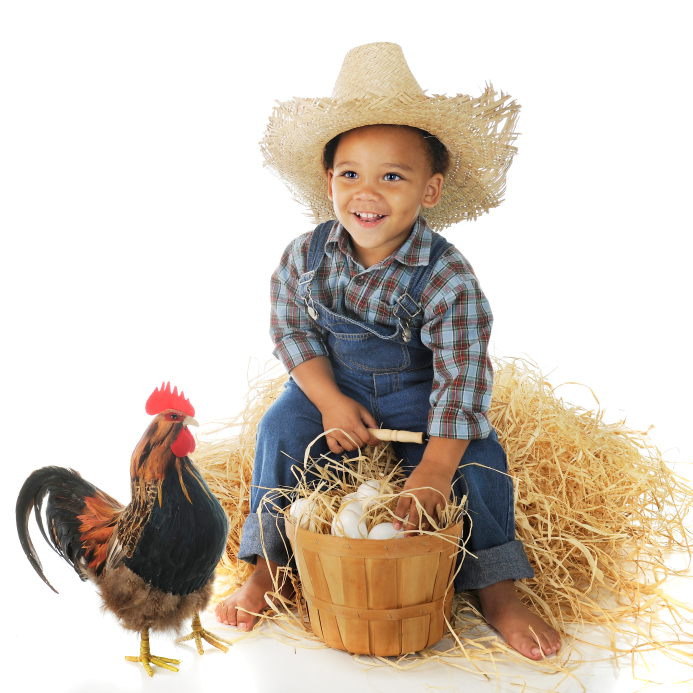
Little Egg CollectorAccording to the authors of the book Ladders to Literacy, “…playing with the sounds of words encourages children to practice perception, production, word recognition, and memory  for words, phonemes, all important foundations for phonological awareness.” Phonological awareness, the ability to recognize that words are made up of sounds, is an important first step towards success in reading later on.
So, while it may seem a little silly, playing with rhymes, parts of words, or the beginning sounds of words, will actually help your child be a better reader.  And music and rhythm-based activities are a perfect way to “practice” and keep the learning fun.
Ideas for Parents and Kids: Watch the video, “Morning Sun Has Risen,” from Kindermusik International’s newest curriculum, ABC English & Me.  Play with the different sounds that animals make, echoing the sounds back and forth or even making up silly rhythm patterns or songs with the animal sounds.  If you happen to have a different Mother Language other than English, have a little fun making the animal sounds in both your native language and in English.  And if anyone asks, it’s Mother Language Day today!

Music & Movement Benefits: "Scaffolding" Your Child's Learning

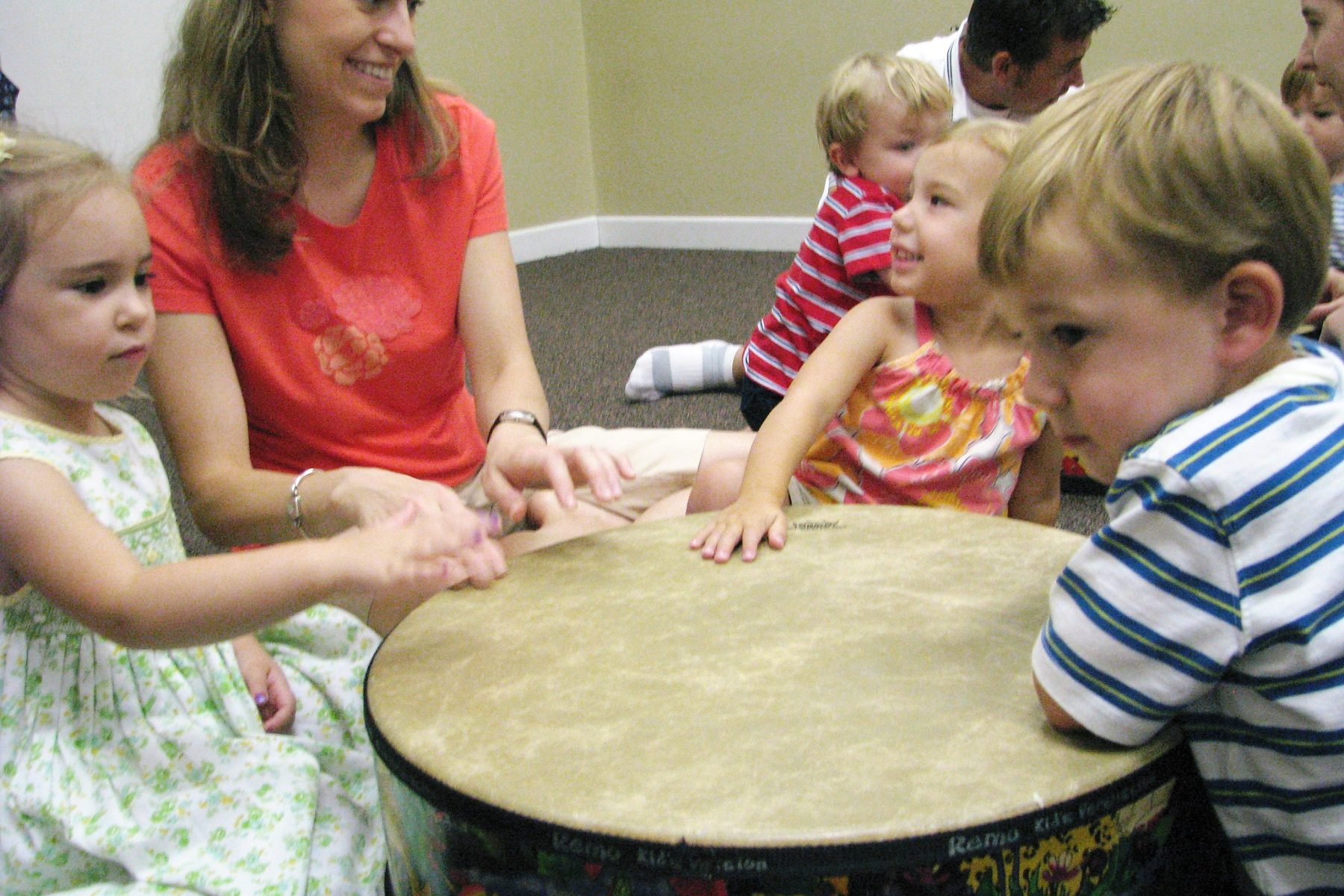
mom and child playing drums in KindermusikThe term scaffolding evokes the image of a temporary support structure in a construction site.  The process of scaffolding in an educational sense is much like the traditional definition of scaffolding as a temporary support system used until a task is complete and a building stands without support. That sounds a lot like our job as parents, doesn’t it?  We provide a temporary support system for our children until they can stand on their own in the world.
Scaffolding occurs all the time in our Kindermusik classes as parents and children play with instruments, props, your voices, and movement and discover ways to adapt activities to their own style and their child’s unique interests and abilities.  Kindermusik combines this educational strategy (scaffolding) with music and learning activities as just another way to enhance the child’s whole development – cognitive development, emotional development, language development, and more!
Helps for Parents:  Be on the lookout for scaffolding opportunities at home, at the park, the grocery store…anywhere at all. Three easy directives to remember (while you’re providing that “temporary platform” for life): Ask questions, make observations (eye-to-eye, imitate & label), and give challenges – and before you know it, that little “building” will be standing with no support.
Learn how to scaffold with us – try a free Kindermusik class today!
Compiled by Theresa Case, whose Kindermusik program at Piano Central Studios in Greenville, SC, is proudly among the top 1% of Kindermusik programs worldwide.

Baby Talk Helps Your Baby Talk

Even before your baby is born, she responds to the sound of your voice. It’s one of the really precious things that bonds parents with their unborn child. In fact, researchers have

observed that a baby in the womb can respond to the sound of a mother’s voice as early as 5 months along in the pregnancy.

Later, when your little one is born, you’ll naturally talk to her in a sing-song language called “motherese” or “parentese” – also known as "baby talk." Research shows that these are the first sounds that your baby will try to imitate with cooing and babbling – babbling being the first vital step towards saying words.

A recent study funded by The National Science Foundation Science of Learning Program further emphasizes "…that what spurs early language development isn’t so much the quantity of words as the style of speech and social context in which speech occurs." Here are some tips from that study to help get your little one happily babbling back and forth with you:

  • Talk in an animated "baby talk" style. Elongated vowels and a higher pitched voice really stimulate the babbling.
  • Keep the conversation private. Your baby will be more inclined to babble without others around, and you’ll probably be less reserved about your baby talk too!
  • Let it happen naturally. Talk through everyday activities like changing diapers or getting dressed.
  • Emphasize the important words. Speak slowly and with a happy tone of voice.
  • Focus on the interaction. It’s the back-and-forth verbal engagement that’s most important, more so than one-sided conversation.

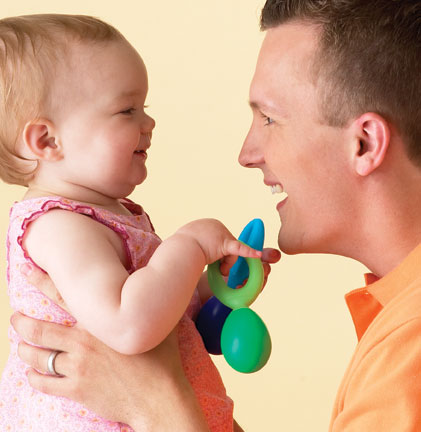
Dad and baby babbling and bonding in KindermusikIn Kindermusik, we give you lots of opportunities to babble, bond, and build connections that prompt early communication and enhance language development through songs, rhymes, vocal play, bounces, and more. We help you mix up your language-building parentese with singing, talking, and rhyming, to expose your baby to a variety of sounds that will aid her singing and language development. Language AND music AND learning – just one of the many benefits of early music learning you’ll enjoy in Kindermusik.
Find inspiration for your baby talk in a free Kindermusik preview class. Go online to schedule your free visit today!


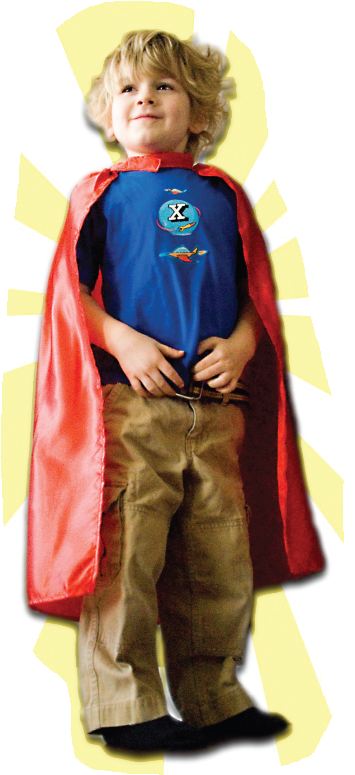
Music is a Super Power

calling all preschoolersEver wonder why there is not a superhero with the Power of Music? Seriously. Sure, super strength and the ability to fly come in handy, but the Power of Music can sooth and calm a fussy baby (well, really a person of any age—adults included!), convince a reluctant toddler to clean up toys, help a preschooler discriminate between letter sounds, and even teach a child self-control.
Let’s face it. The Power of Music is a super power, especially when it comes to the cognitive development in children. But, wait, there’s more! Studies even show that the benefits of music extend well beyond childhood. Who needs to leap tall buildings?

Two long-term cognitive benefits of music

Two recent studies on the benefits of music show that music lessons in childhood can protect an adult’s brain from dementia, positively impact memory recall, and help aging adults maintain sound discrimination that supports speech:

  1. As explained in the Journal of Neuroscience when adults age, many experience challenges in understanding and responding to speech, especially in certain environments, such as restaurants. However, older adults with music training as children do not exhibit neural timing delays. Adult participants with 4 to 14 years of musical training as children had faster response times to speech than those without musical training as children. Most surprisingly, they had not attended music classes in over 40 years! 
  2. Dr. Luis Fornazzari of St. Michael’s Hospital in Toronto has also studied adult musicians’ memory in relation to dementia. He noticed that older adults who could play music as children did not experience the same level of decay in the discrimination of sounds when compared to non-musicians. “The brain becomes absolutely trained in the discrimination of the sounds, the human voice and the different instruments, the different notes and that lasts,” Fornazzari explained in Learning music early build’s up brain’s reserves. “If the disease [dementia] occurs and you have good brain reserve capacity, you can tolerate the effect of the disease for longer not showing the symptoms until later.” 

So, while we may not be able to give our children the Super Power of flight or strength—or even an invisibility cloak for that matter—we can give our children the super power of music! Do you want to bring the power of music to your child and family?

Find a local Kindermusik educator. 

Music & Movement Benefits: Why and How to Sing to Your Child

Most of us have some songs we can recall from our childhood.  Start singing and the tune and the words will probably come back to you.  And if you’re in a Kindermusik class, you are enjoying a growing repertoire of songs to pull out and sing for almost any occasion!
Why Sing
Singing to a child is a priceless gift.  It doesn’t matter if you feel like your voice is not star quality; to your child, the sound of your voice is the best sound in the whole world.  According to Scholastic Parent & Child Magazine (Dec/Jan 1999), singing with and to your child can:

  • calm when upset, soothe fears, and reduce irritability;
  • enhance a child’s grasp of language and sense of beauty;
  • remind a child that he/she is cherished and loved;
  • improve communication and intimate bonding between parent and child.

How to Sing

  • Bounce your child in your lap and sing a song together.
  • Pick out individual words or groups of words from the song and let your child echo you.  Change your voice, using lots of inflection.
  • Accompany yourselves by tapping wooden or plastic spoons together with a beat.
  • Dance while you sing.
  • Put your own words to a song – whatever fits the occasion or the task at hand.
  • Let a song inspire dress-up and pretend play.

Take the song, “The Muffin Man,” for example.  The words are:
Do you know the muffin man, the muffin man, the muffin man?
Do you know the muffin man who lives in Drury Lane?
Yes, I know the muffin man, the muffin man, the muffin man.
Yes, I know the muffin man who lives in Drury Lane.
You can have fun singing, adapting, and playing with this song in many ways.  Here are just a few ideas to get you started:

  • Try inserting another occupation, like “the bakery lady,” “the lawn mower man,” “the fireman,” or “our doctor friend.”
  • Substitute your own street name for Drury Lane.
  • Accompany yourself by tapping a spoon on a muffin pan.
  • Explore the many different kinds of sounds you can make as you tap, rub, or scrape the muffin tin.
  • Create a muffin game.
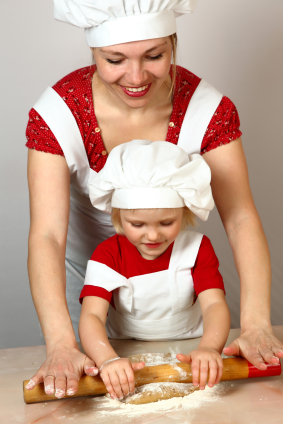
  • Put on an apron and/or a chef’s hat and then bake some muffins together – or just pretend to do so!
  • Play with the question and answer part of the song.
  • Come up with your own muffin song.

Shared by Theresa Case, who has an award-winning Kindermusik program at Piano Central Studios in Greenville, SC.
 

Bringing the benefits of music to the slums of Thailand

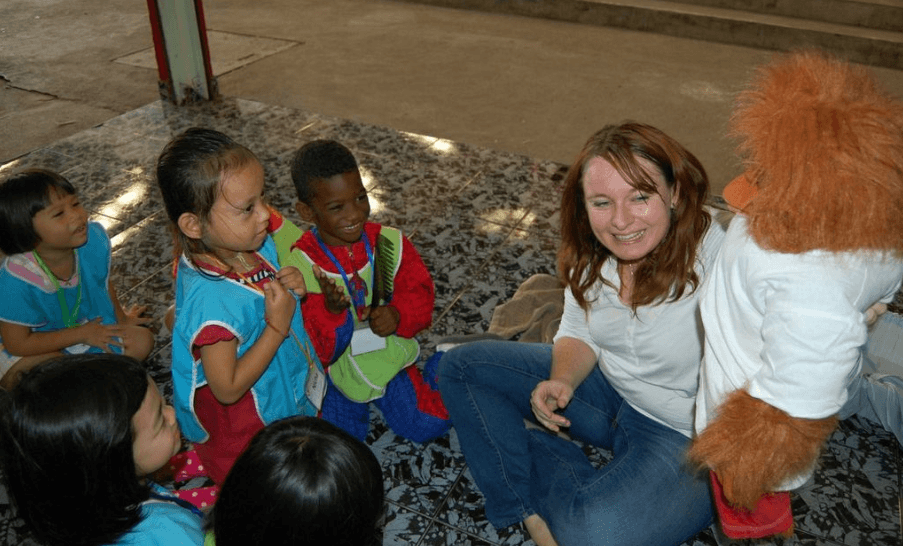
Thailand 1The benefits of music can transform a child’s life. Music can also be a lifeline. In early childhood music classes around the world, music brings light and laughter and joy to children surrounded by poverty and crime and exploitation. Kindermusik educator, Nikol Hellebrandova shares ABC English & Me (an English Language Learning program) with young children in one such place.

Early childhood music in the slums of Thailand

Two times each week Nikol Hellebrandova teaches ABC English & Me to a small group of children between the ages of 4 and 6 at a charity daycare in the slums of Pataya, Thailand. The Hand to Hand nursery school is located in an old business building. The former garage and warehouse area now serve as two classrooms for 60 children. A third room is used to store material, clothes, non-perishable food, and various items distributed to families and others living in the slums.
Thailand 2“Despite the hardships these children encounter each day, they love music class! The lessons are very interactive and the children are really getting into it,” explains Nikol. “They especially love interacting with the orangutan puppet and playing the instruments. In the class, children also enjoy taking turns being the ‘activity leader’ and giving instructions in English for the rest of the class—including me—to follow!”
Since beginning the ABC English & Me classes, children can now answer simple questions, name pictures, and sing the English songs for kids. Although the children can only access the home and classroom materials at school, Nikol also integrates the English vocabulary throughout other parts of the day so children’s English language learning happens naturally and through play.
“Sometimes it is difficult to arrange everything to make a nice learning environment,” confesses Nikol. “I really salute the courage and self-sacrifice of the Hand to Hand staff. They do so much more than run a daycare. They visit and take care of people in the hospitals, in jail, and in the neighborhood by supplying food, clothes, and medicine. In spite of everything, they always find the reasons and the way to enjoy life!”
Thailand 3Hand to Hand works everyday, one child at a time to make a difference to the children living in the slums. Hand to Hand provides a safe place where potentially exploited children can come and play and receive food, clothes, and a sense of worth. Hand to Hand is changing the lives of children.

To learn more about the Hand to Hand Foundation, visit their website.

Kindermusik… It's What's Good for You!

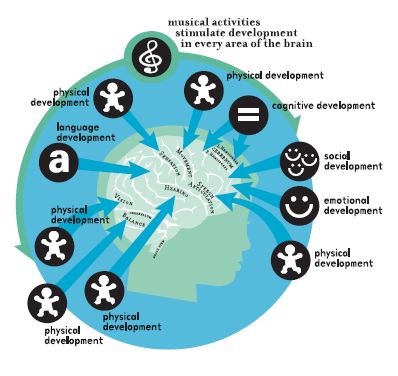
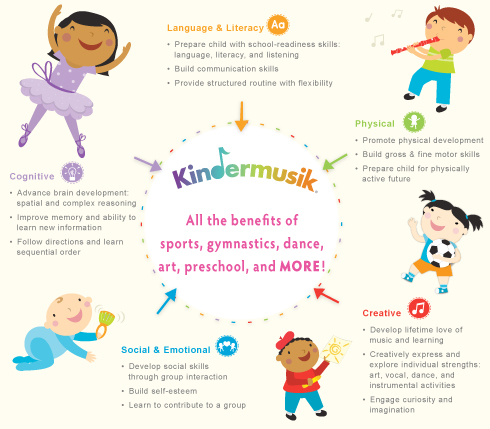
Development of the BrainOne of the best things about Kindermusik is the way the music and movement activities are so carefully and creatively designed to enhance every area of a child’s development.  You might think it’s just about the music, but as we’re often fond of saying, “We’re so much MORE than just music.”  There are many benefits of music, but none more important than those that affect every area of a child’s development – like Kindermusik does.
Chants and Fingerplays help children explore fun sounds and practice new words, providing a rich language environment.
Rhymes and Stories give Kindermusik kids a rich head-start in literacy development.
Singing and Playing Instruments inspire a love for music and lay a foundation for musical learning.
Marching, Jumping, Bouncing, and Twirling allow a child to be more self-expressive and to explore the many different ways a body can move, contributing to his physical development.
Rocking and Quiet Time promote special bonding time between parent and child and make those emotional ties even stronger.
Multi-sensory Activities which engage more than one sense at a time are part of what sparks vital cognitive development.
Circle Dances foster a sense of belonging and community, contributing to a child’s healthy social development.
Come See KindermusikMusic and learning go hand-in-hand.  So come swing, sway, dance, LEARN, and play with us at Kindermusik.  Try a free class today!  You’ll love seeing firsthand all the many ways your child will flourish in Kindermusik – in every area of his development.

FOL Fridays: Body Management

Discovering and exploring movement provides young children with profound learning experiences.  They are delighted to practice and show off their emerging skills, and they will seek out opportunities to practice these skills frequently.  It is during this time that the foundation is laid for body-management activities needed in childhood games, recreational activities, and eventually sports (Carson 2001).
Ideas for parents:  One fun way to explore movement ideas together is to play a simple “Copy Me” game.  The first person moves and the partner copies.  Take turnings being the one moving and the one copying.  This game is likely to become quite hilarious with preschoolers and big kids who will have fun coming up with the silliest ideas ever!  Add a little music, and you’ve got the inspiration for some happy, fun music and movement activities that will keep you entertained and physically active!

Kindermusik… It's all in here!

Kindermusik - all the benefits of sports, gymnastics, dance, art, preschool, and moreLooking to meet other moms and kids?
Kindermusik is like having you with your very own weekly playgroup with music and more!
Looking for ways to keep your child active?
Kindermusik develops your child’s motor skills, rhythm, and coordination.  It’s a great way to provide physical activities for kids.
Looking to enhance your child’s creativity?Kindermusik is a place where your child’s imagination, curiosity, and love for learning is encouraged and expanded.
Looking for tips on childhood development?
Kindermusik supports you, in class and at home, with expert research and helpful ideas in the middle of all the fun.
Looking for memories to last a lifetime?
Kindermusik inspires cuddles, giggles, imagination, and learning in class and at home.
Looking for great group activities for kids?
Look no further than your local Kindermusik program.  In fact, we invite you to try a class for FREE on us!

Kindermusik gives your child so much more than just music.  Backed by more than 30 years of experience, Kindermusik is a carefully planned curriculum and a delightfully enjoyable experience that also offers the benefits of sports, gymnastics, dance, art, preschool… and then some!

– Special thanks to Kindermusik educators Theresa Case and Cathy Huser for their contributions to this post.


4 musical learning tips that make parenting a little bit easier

It doesn’t take a parent long to figure it out. No baby or toddler or preschooler—or teenager for that matter!—comes with an owner’s manual. Sure, parents can Google, look to books and blogs, talk with other parents, and even ask Siri but there is no one-size-fits-all answer to parenting.
At Kindermusik, we don’t have all the parenting answers either. We do, however, have one thing that makes parenting just a little bit easier and unlocks a child’s potential: Musical learning! Here are just a few ways to use musical learning throughout the week in your everyday routines and rituals.

4 musical learning tips that make parenting a little bit easier

  1. Music helps children, even babies, learn how to relax. Relaxing is a learned sleeping babybehavior. A child’s world can be full of stimulating experiences, from practicing new skills like standing or walking to all the sights, sounds, and smells of a trip to the grocery store. Teaching children how to relax after a period of activity gives them time to recoup and get ready for what’s next. Listening to some quiet music, snuggling together, or gentle rocking can show children how to relax. By the way, children who know how to relax and self-soothe can be better sleepers!
  2. Singing or humming a comforting song can soothe a child or ease anxiety and fears. From 2am feedings to boo-boos to thunderstorms to visits to the doctor, singing a soothing song can calm fears and comfort little ones in many different situations. The world’s most famous and revered nanny, Mary Poppins agrees. After all, she sang, “A spoonful of sugar helps the medicine go down.”
  3. Music can signal to your child it’s time to transition to something else. In our music classes for babies, toddlers, big kids, and families, we sing “instruments away, instruments away. It’s time to put our instruments away.” That tells every child that the instrument playing time is over and we are moving on to another activity. After a few times, children begin to understand and will put the instruments away (most of the time!).  Try using that little song throughout the week to signal the end of bathtime, playtime, or even time to leave the park.
  4. Make a playlist of your child’s favorite music for your next road trip. Few children enjoy being strapped in their car seats for long periods of time. Music makes it easier. Create a playlist of your child’s favorite Kindermusik songs for the trip. Here are some of our favorites. Mix in your own favorites, too, for a family musical playlist.

New benefits of music on the cognitive development of children continue to be discovered by researchers. However, throughout the years generations upon generations of parents have used musical learning to help make parenting just a little bit easier. We invite you to come visit a Kindermusik class and discover for yourself a loving, welcoming community of families who are discovering the power of musical learning!

Find a local Kindermusik educator in your area today.