

The Parent Test

“My child is so unique and special! I want to be the best parent that I can possibly be for my child.” As parents, isn’t this our heart’s desire?

We search to find just the right activities and experiences that will benefit our children and help them grow to their fullest potential, such as baby development classes or toddler music classes. We check reviews, ask friends, and spend countless hours to find and decide on just the right toys, foods, books, music, play, clothes, activities for toddlers, and the list goes on… Everything that touches the lives of our children must pass THE ultimate test – the PARENT TEST!

This unwritten Parent Test is full of many questions and concerns that automatically become an ingrained part of our thought process. Many times these questions are so automatic that they become almost instinctive. If you took the time to write it down, your Parent Test may look a little like this:

  • I want my child’s LANGUAGE skills to develop. Does this help my child develop a love for books and reading?
  • I know early learning is important for my child’s COGNITIVE development. Is this helping my child learn something new in an age-appropriate and enjoyable way?
  • Healthy EMOTIONAL development is key to growing into a confident and secure individual. Does this help strengthen the parent-child bond and help my child feel good about himself?
  • My child needs an opportunity to develop PHYSICALLY. How can I help my child actively explore skills like running, jumping, galloping, and skipping?
  • My child and I both need a SOCIAL outlet. Is there a place where we both can benefit from a positive group experience that also teaches my child social skills like sharing, playing cooperatively, and making friends?
  • I recognize the importance of MUSIC for my child’s total development. Does this teach and inspire my child to be more musical, to be prepared for music lessons in the future, and ultimately, to have instilled a lifelong love for and enjoyment of music?

For over 30 years, Kindermusik has passed the Parent Test with flying colors, time and time again. That’s because the powerful combination of the Kindermusik classroom experience and our Home Materials empower parents to instill a lifelong love of music and learning and capitalize on all of the rich benefits of music for children during that critical window of early learning.

It’s also because our research and experience has shown time and time again that music and movement are the best vehicles for helping a child reach his or her fullest potential in every developmental category – language, cognitive, emotional, physical, social, and music.

Kindermusik - Where Music and Learning PlaySimply stated, there is no better way to enhance your child’s early development and learning or to inspire their natural love of music than Kindermusik.

We invite you to experience the magic of Kindermusik for yourself. Try a free

class today!

Edited and revised by Theresa Case, whose Kindermusik program at Piano Central Studios in Greenville, SC, is proudly among the top 1% of Kindermusik programs worldwide.

5 reasons why family involvement in education matters to ELL students

Parental Involvement Supports Early Literacy Developement

Parental Involvement Supports Early Literacy DevelopementParent is another word for teacher—regardless of what any thesaurus says! (It’s also another word for nurse, doctor, chef, driver…) So, of course, parent involvement in early childhood matters. Studies continue to highlight the importance of family involvement in education, especially in regards to early language and literacy development. After all, we’ve said it before: a parent is a child’s first and best teacher.
However, unlike professional teachers, most parents do not have formal training in early childhood education or teaching English to children. Thankfully, parents do not need formal education in order to support their children learning English as a second language (or as a first!). They do need 20 minutes a day, English language books, and a comfortable place to read together. Here’s why:

5 reasons why parent involvement in education through reading makes a difference to English Language Learners

  1. Reading together promotes language and literacy development in both languages.
  2. Reading to children increases their vocabulary acquisition.
  3. Parents who read to their children improve their child’s chances of success in school-based literacy programs, including an ESL curriculum.
  4. Children’s reading achievement, vocabulary, and comprehension skills improve when their parents read to them. Plus, parents who are also learning English as a second language gain practice, too!
  5. Children develop a positive awareness of the structure of stories, the language of stories, the nature of reading behavior, and the sounds of the language.

ESL activities for children to do at home

ABC English & Me - Teaching English to Children through MusicDuring our ESL curriculum development, we intentionally created content for families to use together at home to support the classroom learning and parental involvement in early childhood education. ABC English & Me includes thematic 30-minute lessons for classroom teachers to use with English language learners between the ages of 2 and 6 years old. Children learn English vocabulary and expression in a musical environment that also connects the classroom learning with the learning at home through Kindermusik@Home. These monthly online home materials include ESL activities for children, a new English language eBook each month, English songs for kids, and more.

Get more information on teaching English to childrenaround the world with Kindermusik and ABC English & Me.

5 ideas to involve the whole family in being green

(Source: Washington Trails Association)

Sustainability for kids can start with a seed—literally and figuratively. We put together five ways to involve the whole family in protecting the environment for kids. From planting a garden to planting the knowledge about the importance of sustainability, we think you and your family will enjoy “going green!”

5 ideas for family involvement in education that will have you seeing green

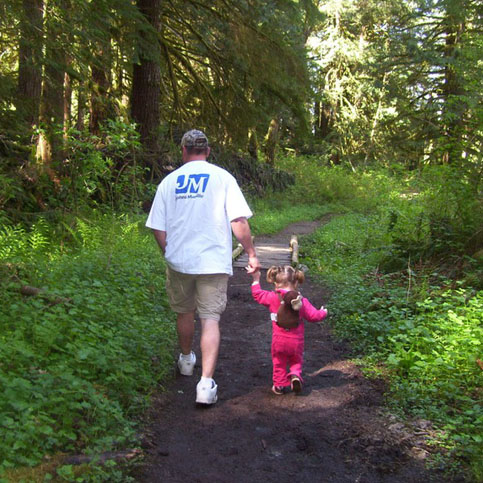
  1. Take a hike. Parental involvement in early childhood education looks different in various settings from preschool to home to the grocery store. To a child, every setting—and every moment—can be a teachable one. Going on a hike together can be the ideal place to investigate a local ecosystem, look for signs of the changing season, and gain an overall appreciation of the world outdoors. Plus, by bringing an extra garbage bag and gloves to pick up trash along the way, it’s also an easy way to work in recycling activities for kids.
  2. Go green for the holidays. Make the holidays fun while also supporting a green environment for kids.  Use LED lights for decorative lighting. Compost pumpkin remains and recycle Christmas trees instead of throwing them away. Buy from local farmers for your holiday feasts. Decrease your carbon footprint and purchase holiday gifts from local merchants and artisans.
  3. Plant a garden. You don’t need an acre of land to teach your children that food doesn’t grow at the grocery store. All you need is sunlight, water, and dirt. A windowsill is the perfect spot to grow herbs. A back deck or patio can grow beautiful tomatoes. Save the apple seeds from your child’s snack and plant them in a small container. Your child can watch a little apple tree grow!
  4. Read all about it! Combine your child’s love of reading with these 20 children’s books that show the importance of sustainability for kids.
  5. Recycle together. Recycling activities for kids can be fun and support family involvement in education at the same time. Recycling that cereal box? Give your children the “job” of checking all items for “Labels for Education” or “Box Tops.” Many preschools and elementary schools collect them as part of their fundraising efforts.

At Kindermusik, we believe in the power of music to unlock a child’s fullest potential while also supporting family involvement in education. In addition, we believe that protecting the environment for kids and being mindful about the way we conduct business is part of the process.

You can read more about how our passion for supporting sustainability for kids impacts our business decisions.

4 new research-proven benefits of music on children

why_music_quotes14An elementary school teacher wrote: “The education of a child involves three major components: teacher, student, parents.” We absolutely agree that parent involvement in early childhood education in collaboration with classroom teachers best equips children for a successful learning environment at school and in the home.  Music can help build connections between the teacher, student, and parents.
The benefits of music on children and family involvement in education continue to gain the interest of researchers. Two new studies show that making music together in school may improve young children’s behavior and make them like school better, too.

3 benefits of music on children and their social skills

In the first study, four-year-old children were placed in either a “music group” or a “no music group.” The 24 children in the music group played percussion instruments and sang, whereas the other children listened to a story.  After participating in the groups, all the children played games that measured cooperation, helping skills, and problem-solving abilities.

  1. Children in the music group were 30 times more likely to help than those in the other group.
  2. Making music was also shown to improve cooperation among all the children in the ‘music group’ who were six times more likely to cooperate than those in the reading group.
  3. Boys in the music group were four times more likely to problem solve.

Researcher Rie Davies said in a press release: “This study…highlights the needKindermusikClass_SocialEmotionalDevelopment for schools and parents to understand the important role music making has in children’s lives in terms of social bonding and helping behaviors. Music making in class, particularly singing, may encourage pupils with learning differences and emotional difficulties to feel less alienated in the school environment.”

One more of the benefits of music on children

In a separate study looking at the benefits of music on children, researchers from Finland found that children participating in extended music classes liked school better. Nearly 1,000 students participated in the study, which included taking a survey in Year 3 and Year 6 that measured the quality of school life.
“Singing in a choir and ensemble performance are popular activities at extended music classes. Other studies have established that people find it very satisfying to synchronize with one another. That increases affiliation within the group and may even make people like each other more than before. Other subjects in the school do not have as intensive training in synchrony and coordination as music lessons, which could explain part of the phenomenon,” explained the principal investigator of the study, Doctoral Student Päivi-Sisko Eerola, in a press release.

Music and family involvement in education

ABC Music & Me is our research-based early childhood curriculum that includes 30-minute classroom lessons with materials and resources that encourages parental involvement in early childhood education. Whether used as a daycare curriculum, early literacy curriculum, or even as an after school curriculum, the benefits of music on children includes early language development, vocabulary acquisition, strengthened fine- and gross-motor skills, and as the research shows cultivates sharing and boosts school satisfaction.

For more information about using ABC Music & Me in your school, preschool, or daycare to boost early literacy and language skills and increase parent involvement in education, email us at info@abcmusicandme.com.

FOL Fridays – The Music Inside

Twinkle twinkle little star from Family All Around MeChildren need opportunities to hear music sung, and they need invitations to hear music internally, with no external sound source. Being able to hear music “in your head” (audiation) like this is an important part of musical literacy, just as learning to think sentences and thoughts without speaking is an important feat in language development and part of early literacy development. Omitting parts of familiar songs is one way to help children begin to “fill in the blanks” and hear music internally.

Fun at home or in the car: Sing a song like “Twinkle, Twinkle.” Leave out a word and then pause… you very well may hear your child fill it in! Or hum a favorite tune

and see what happens when you don’t sing the last note. (Can you hear it in your head?!)

By singing a song and allowing your child to fill in the blanks, you are developing her sense of inner hearing as related to pitch and melody. Singing a song in your mind is akin to thinking a story or making a plan without speaking out loud. Remembering the sequence adds an additional level of complexity. It is a necessary life skill.

Shared by Theresa Case, whose Kindermusik program at Piano Central Studios in Greenville, SC, is proudly among the top 1% of Kindermusik programs worldwide.

October Giveaway! Share Your Kindermusik Home Memories & Win!

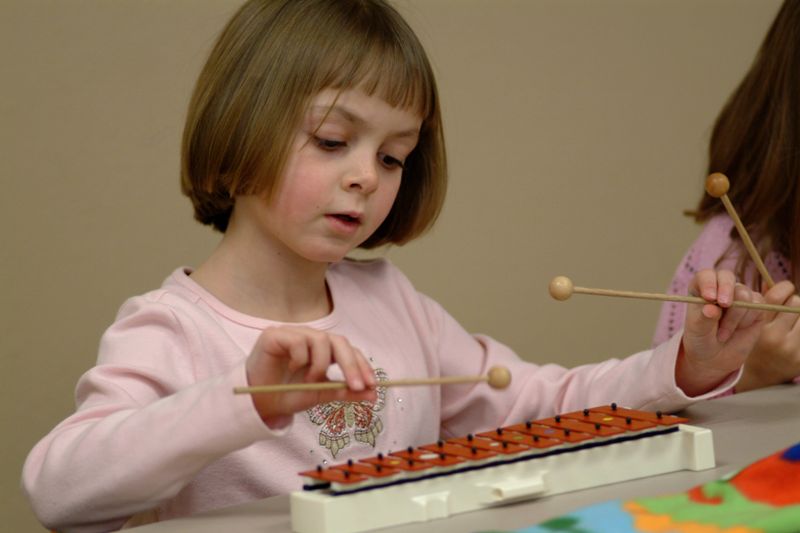
A Kindermusik Young Child student playing the glockenspiel.

A Kindermusik Young Child student playing the glockenspiel.At Kindermusik, we intentionally provide resources, materials, music, and activities to support parent involvement in early childhood education. Now, this October, you can show us how you extend the magic and music of Kindermusik into your home for a chance to win!
All month, you can share a photo of your child doing his/her favorite Kindermusik activity at home. Whether your child likes to sing along to a Kindermusik song, read a favorite Kindermusik story, or play along with one of their favorite Kindermusik @Home activities, we invite families to share how they include Kindermusik in their every day! The winning family will win one month of free Kindermusik tuition! All parents who send entries will also be entered into the Grand Prize drawing to win an iPad for themselves and their educator!

Show your family involvement in education one of these two ways to enter (you only need to do one!)

  1. Post your photo on the Kindermusik Official Facebook page.
  2. Email a photo to marketing@kindermusik.com

Each month through December we will offer you more chances to enter our Grand Prize drawing!
By uploading your photos, you are confirming that you own the image and all rights to it. You MAY NOT upload any image which violates ANY copyright law, international or otherwise. By the process of uploading, you are giving your permission to use the photographs for Kindermusik marketing purposes.

20 family-friendly books about the environment for kids

(Source: Babble.com)

“I take care of the earth because I know I can do little things every day to make a BIG difference,” writes Todd Parr in his book, The EARTH Book, that teaches sustainability for kids. Children help us see the beauty and wonder in the little things. A walk through the neighborhood becomes an exploration in ants, newly fallen leaves, ladybugs, and yes, even a tiny drop of water on a blade of grass. Support your child’s early literacy development and learn about the little (and big!) ways your family can “go green,” such as recycling activities for kids, by reading books about the environment for kids. Here are 20 to get you started!

20 children’s books that show the importance of sustainability for kids

  1. The EARTH Book by Todd Parr
  2. Biscuit’s Earth Day by Alyssa Satin Capucilli
  3. It’s Earth Day by Mercer Mayer
  4. The Giving Tree by Shel Silverstein
  5. Big Earth, Little Me by Thom Wiley
  6. The Lorax by Dr. Seuss
  7. Big Bear Hug by Nicholas Odland
  8. The Tiny Seed by Eric Carle
  9. Compost Stew by Mary McKenna Siddals
  10. Listen, Listen by Phyllis Gershator
  11. Emeraldalicious by Victoria Kahn
  12. The Berenstain Bears Go Green by Jan & Mike Berenstain
  13. The Barefoot Book of Earth Tales by Dawn Casey
  14. Me…Jane by Patrick McDonnell
  15. A Leaf Can Be by Laura Purdie Salas
  16. Rah, Rah, Radishes! A Vegetable Chant by April Pulley Sayre
  17. Life in the Ocean: The Story of Oceanographer Sylvia Earle by Claire A. Nivola
  18. And Then It’s Spring by Julie Fogliano
  19. Step Gently Out by Helen Frost
  20. Outside Your Window: A First Book of Nature by Nicola Davies

Become a Super Hero for the environment (and early literacy development)

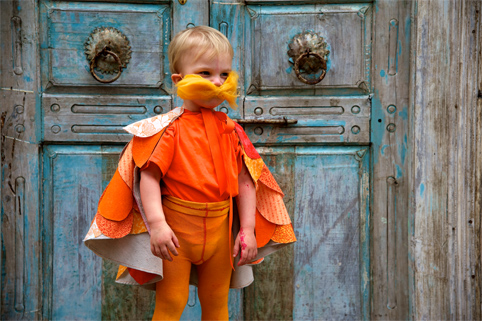
Pretending to be a favorite character in a book helps children understand the parts of a story, build sequencing skills, boost vocabulary skills, and even supports creativity and comprehension. So, go ahead, be the Lorax in full costume found here, or Mama Bear, or even a leaf floating down from a tree in fall. Your child will love this pretend play and you will love supporting your child’s early literacy development while also learning more about the importance of sustainability for kids.

4 Ways Kindermusik Educators Use Peer Learning

Kindermusik educators and peer learningThere’s an old Proverb that says, “Iron sharpens iron, so one man sharpens another.”  That’s exactly how Kindermusik educators stay sharp, pardon the pun.  We learn from each other!  Here are some ways all licensed Kindermusik educators use peer learning:

The learning groups in KI’s unique training course, Kindermusik Fundamentals

This is where Kindermusik educators get their start and begin forming connections and friendships with other educators all around the world.  It’s online training and connecting at its best!

The comments in our cutting-edge Digital Teacher Guides

The best ideas and tips are available at the click of a button!  Suddenly a great idea from an educator in the Philippines becomes the inspiration for an educator in the American midwest.

The Partnership for Kindermusik Educators (PKE)

The Partnership for Kindermusik Educators, or PKE, provides the structure for educators to facilitate local gatherings and even online conferences.  You can believe that lots of great ideas fly when educators get together, in person or online!

The colleagues who become mentors and dear friends

Out of all the peer connections come the relationships that become some of the most inspiring of mentors and the dearest of friends.  There’s nothing like the bond of Kindermusik, not just for the families in our classes, but also for the educators themselves!


9 reasons why teachers love our early literacy curriculum

Early Literacy Curriculum with Research-Proven Results

Music and early literacy development go together like peanut butter and jelly, cheese and crackers, or to quote the final song from Grease, “Rama lama lama ka dinga da dinga dong.” When used as part of an early childhood curriculum, music can increase phonemic and phonological awareness, boost vocabulary acquisition and print awareness, and more.

Early Literacy Curriculum with Research-Proven Results

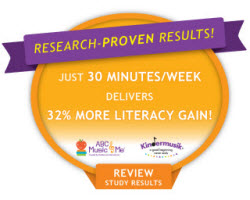
Our early literacy curriculum, ABC Music & Me, uses music and movement to teach young children early language and literacy. A new independent research study proves using this early childhood curriculum just 30 minutes a week delivers a 32 percent literacy gain. SEG Measurement, an independent research firm, conducted the comprehensive study of the effectiveness of ABC Music & Me during the 2012-2013 school year using

both quantitative and qualitative methods. The study shows that children participating in ABC Music & Me experienced significantly greater gains in language and literacy skills as compared to students in classes not participating in this early literacy curriculum.

Teacher perceptions on the effectiveness of early childhood curriculum on student skills

Early childhood educators love teaching ABC Music & Me. In fact, both teachers and parents would strongly recommend the early literacy curriculum to others. As part of the study, teachers identified nine specific areas they perceived to be especially effective on their students’ abilities:

  1. Listening
  2. Vocabulary development
  3. Phonemic and phonological awareness
  4. Pattern recognition
  5. Coordination
  6. Cooperation
  7. Engagement in classroom activities
  8. Attitudes toward learning
  9. Following directions

One participating preschool teacher noted: “The most effective aspects of ABC Music & Me are that the children all participate and have fun doing the different activities each week. The lesson plan is easy to follow. The assessment forms from Fall to Spring show growth in many areas….Overall, I feel that ABC Music & Me has now become a daily part of my lesson plan. I look forward to using the program next year!”

To learn more about bringing our early literacy curriculum—and a 32 percent literacy gain—into your classroom, email us at info@abcmusicandme.com.

6 websites and mobile apps for kids that support early literacy development

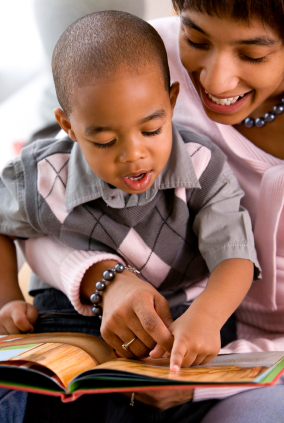
iStock_000002617208XSmall mom-boy readingTalking to babies, toddlers, and preschoolers throughout the day, reading together, and playing learning games for kids all help support early literacy and language development. When babies react to their mothers’ voices, they are responding to the familiar cadence of the language. While sitting in a parent’s lap listening to a story before bedtime, toddlers begin to see and recognize letters and sounds and the proper way to read a book. As preschoolers practice writing letters—and

even their names—they foster phonetic awareness. Throughout this process, children look to their parents as their first and best teacher!

As creators of early childhood curricula, including an early literacy curriculum, ABC Music & Me, we know just how important family involvement in education can be to a young child’s early literacy skills and language development. So, we pulled together six of our favorite websites and mobile apps for kids that support early literacy development and a parent’s role as a child’s first and best teacher. Enjoy!

6 websites and mobile apps for kids that support early literacy development

  1. Reading Rainbow: We love Reading Rainbow! LeVar Burton started RRKidz when the beloved show was canceled so he could continue to bring reading and education to kids using the newest and best technology. This mobile app for kids offers a trusted library of books and video field trips to visit fascinating people and places. New books and videos are added every week expanding the collection. Kindermusik will be partnering with Reading Rainbow to bring a “Musical Island” to the app!
  2. WeGiveBooks: We Give Books supports parent involvement in education and early literacy skills by providing online books for families to read together. Using any device with Internet access, parents can read books to children at home or on the go. The available children’s books include selections of fiction and non-fiction for children through 10 years old.
  3. PBSKids Island: Together, you and your child can visit PBSKids Island and play learning games for kids that feature PBS favorites, such as Sesame Street, Martha Speaks, and Super WHY! While not an early literacy curriculum, these educational activities for kids support early literacy development through letter recognition, rhyming, and even spelling challenges.
  4. Backyard Phonics Adventure: This mobile app for kids uses letters and pictures to teach letter recognition and beginning phonics. Children match a beginning sound to a letter or a beginning sound to another picture with the same beginning sound.
  5. Starfall.com: Many preschools and elementary schools use Starfall.com as a supplement to an early childhood or early literacy curriculum. This free website includes learning games for kids that teach letter recognition and the corresponding sounds, phonics, and more.
  6. Kindermusik@Home: Available as part of enrollment in Kindermusik, Kindermusik@Home supports a parent’s role as a child’s first and best teacher while also providing fun learning games for kids. Accessible Kindermusik@Homefrom any smart phone, iPad, tablet, or laptop, Kindermusik@Home provides educational activities for kids that support early literacy development, such as eBooks, active listening games, virtual field trips, plus an abundance of ideas and developmental insights behind using music and movement to support a child’s early literacy development. The activities connect what happens in the classroom to the everyday routines and rituals of families.

To learn more about enrolling in a Kindermusik class and receiving access to Kindermusik@Home, contact a local educator via our Class Locator.

Schools, preschools, and childcare centers can also benefit from Kindermusik@Home. To learn more about bringing our early literacy curriculum into your classroom while also increasing parental involvement, email us at info@abcmusicandme.com.