
“Conjunction Junction wants your function? Hooking up words and phrases and clauses.” Do you know the rest of the lyrics to that old School House Rock favorite? Take a listen and sing along!
[youtube]https://www.youtube.com/watch?v=U6GrqMtlrf4[/youtube]
You might be surprised to learn that the song provided more than a Saturday morning distraction. It also actually taught children about grammar. In fact, a first-of-its-kind research study from Vanderbilt University shows an association between musical rhythm and grammar.
Exploring the links between grammar and musical rhythm
In the study, Reyna Gordon, Ph.D. measured the grammar skills and music skills of 25 typically developing 6 year olds. While the two tests were different, Gordon found that children who performed well on one of the tests also did well on the second test. Musical experience, socio-economic backgrounds, or IQ did not matter. Gordon suggests that the similarities between the rhythms in music and the rhythms of language explain how children who did well on one test also did well on the other.
According to the study, in grammar children’s minds sort the sounds they hear into words, phrases, and sentences. The rhythm of language helps them to properly sort those sounds. In music, rhythmic sequences give structure to musical phrases and help listeners move to a steady beat.
“I’ve been thinking a lot about this idea… is music necessary?” confesses Gordon in a press release. “Those of us in the field of music cognition, we know—it does have a unique role in brain development.”
Yes! Yes, it does!
Don’t Do Try this at Home or in Class
Parents and early childhood educators can support young children’s grammar skills by actively engaging in musical activities together. Try putting on some music or singing a song and inviting children to tap along to the steady beat. Children can clap hands or knees, gently bang a wooden spoon on a plastic bowl, or shake a homemade instrument. This Kindermusik class in the Ukraine tapped to the beat using rhythm sticks:
[youtube]https://www.youtube.com/watch?v=PGrkriXGhBw[/youtube]
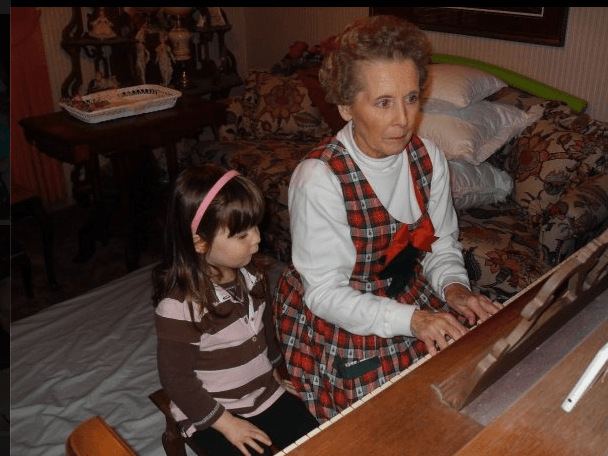
 When thinking back to our own childhoods, holiday memories rarely bring to mind a specific gift we received. (Unless, you happen to be Ralphie and you can narrate a whole movie about that Christmas you received a Red Ryder!) For the rest of us, however, we tend to recall the time spent with loved ones.

 Deanna Hanson-Abromeit, assistant professor of music education and music therapy at the University of Kansas, is doing some significant work in learning how music helps premature infants not just survive, but thrive, according to
 This perfectly summarizes what happens in a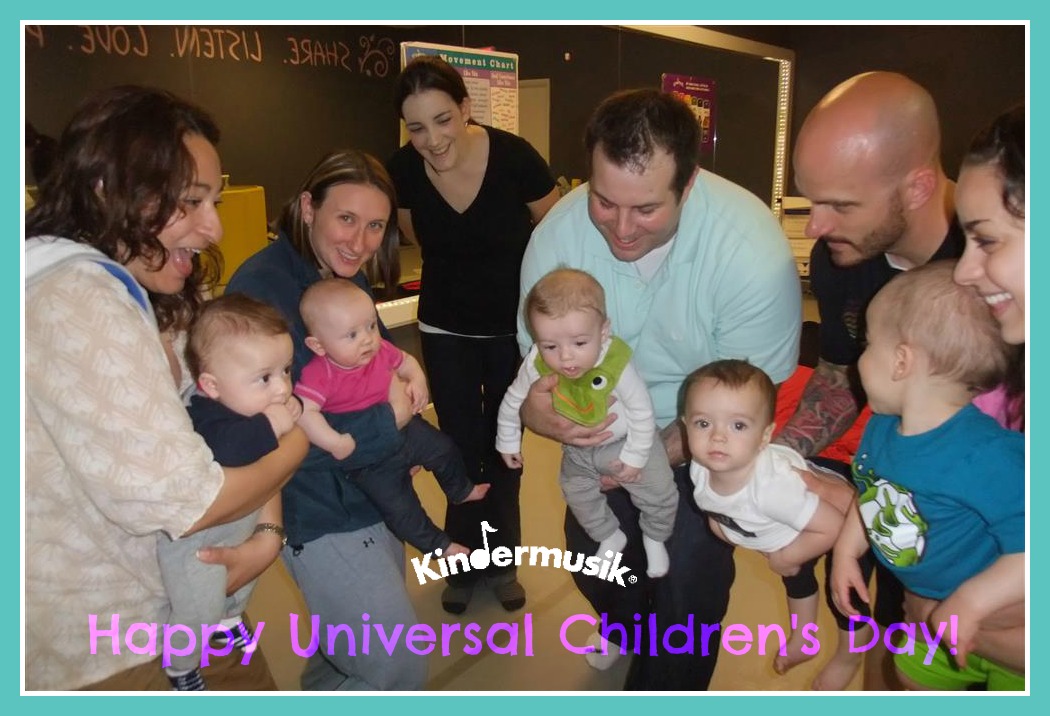


 Ever wonder what happens when a group of teachers gather together for Kindermusik training? Well, we sing, laugh, play instruments, dance with scarves on our heads, and learn through (and about!) music. In fact, it looks a lot like a Kindermusik class without little kids.
 “We would love to give more of these conferences to more schools around the country,” confesses Paula Bassi, International Director Latin America, Central America and Caribbean. “It is wonderful to create a community of Kindermusik schools in Costa Rica and around the world.”

 With music that streams on our phones, Internet radio stations that play our favorites at the click of a mouse, and even still some CD players in our cars, it’s easy to fill your child’s world with music. But it does take some intentionality. Not only will you be able to expose your child to a wide variety of music and begin to shape their musical preferences, but you can also use music to bring out a smile, inspire a cuddle, or chase away the grumpies with an impromptu dance around the kitchen.
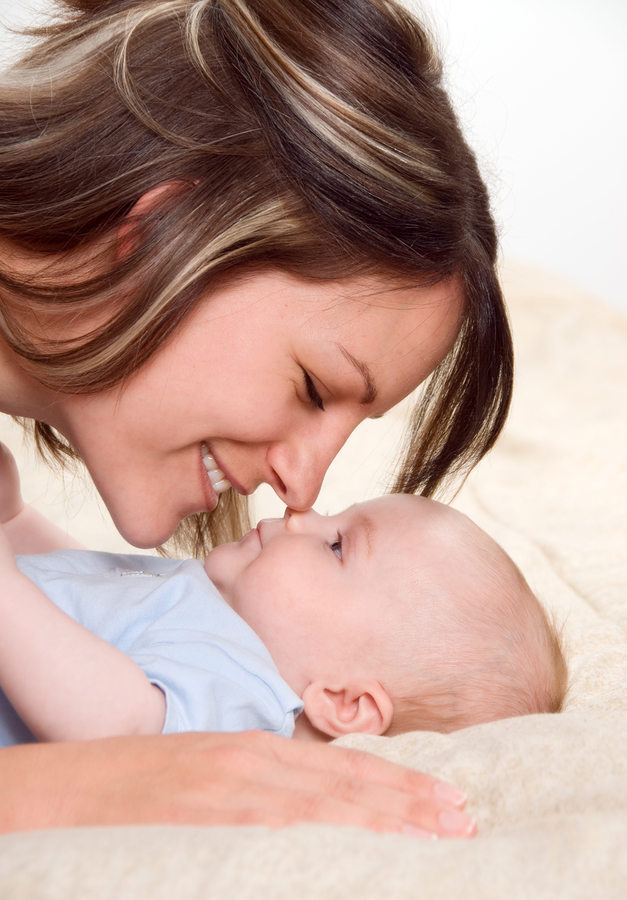
 Do you ever wonder what newborns would say if they could talk? Where am I? What just happened? Who turned on the lights? Whew, that was a lot of work! I’m exhausted. Why is everyone staring at me? Do I have something on my face? Mom! Dad! It’s me! Truth is—most newborns all say the same thing: WaaaaWaaaa!

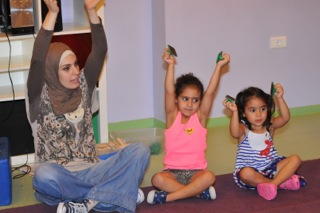
 Take the story of children attending Kindermusik at Learn & Play in Beirut, Lebanon, for example. Last year this pioneer nursery in Lebanon began offering two Kindermusik curricula:
  Learn & Play teaches children French, Arabic, and English. Since using ABC English & Me to introduce young children to English as a second language, children can now count, sing, and name different parts of the body using English. Music is a great way to help children become familiar with English and the different visuals and animated stories used in ABC English & Me make it easy for children to interact and learn English.