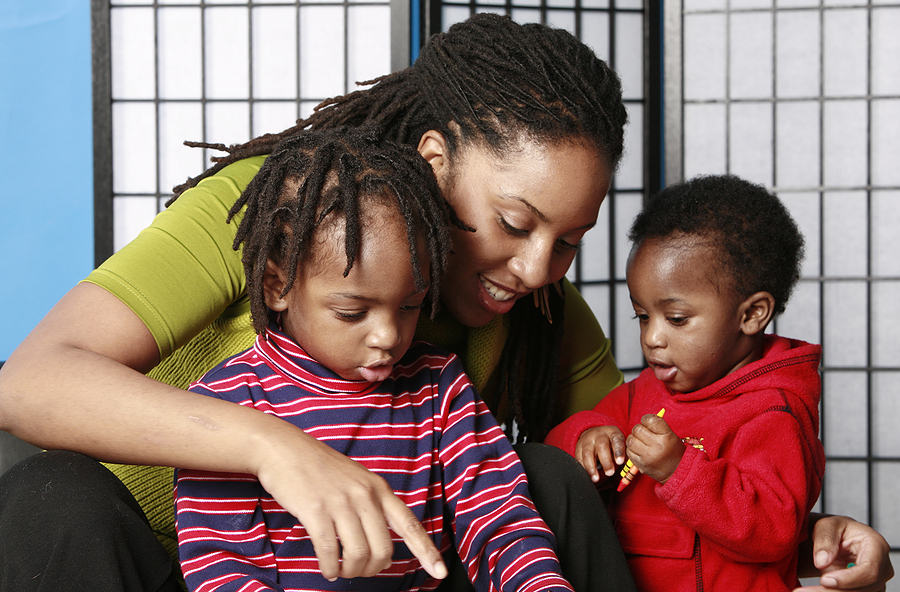
International Children’s Book Day has been celebrated annually since 1967 as a way not only to inspire a love for books and reading, but also to draw attention to great books for children. At Kindermusik, we celebrate – and foster! – a love of reading and wonderful books in classandat home with our exclusive Kindermusik Home Materials all throughout the year.
In honor of International Children’s book Day, here is a short list of books we love to read in the Kindermusik classroom… PLUS a few of favorite books found in the Reading Rainbow app: Big Red Barn by Margaret Wise Brown The Doorbell Rang by Pat Hutchins Dancing Feet by Lindsey Craig Zin! Zin! A Violin by Lloyd Moss If You Give a Mouse a Cookie by Laura Joffe Numeroff On Mother’s Lap by Ann Herbert Scott Jamberry by Bruce Degen From Head to Toe by Eric Carle Clap Your Hands by Lorinda Bryan Cauley
And as a bonus, we also wanted to highlight a few of our favorite Kindermusik books now available on the Reading Rainbow app for free on iPad or Kindle Fire:
A Quieter Instrument
Flip-Flap, Sugar Snap!
Henry’s Parade
I Went to Visit a Farm One Day
Jenny Jenkins
We also invite you to learn more about the music-literacy connection by downloading our Music and Reading guide and by trying a free Kindermusik class. Most of all, we hope you’ll cuddle with your child and a good book and enjoy celebrating International Children’s Book Day together!
It’s a beautiful day in this neighborhood, A beautiful day for a neighbor. Would you be mine? Could you be mine?…
How many of us as children sang this song with the beloved Mr. Rogers? And, of course, we always answered, “Yes!” to being his neighbor. After all, who wouldn’t want to go over for a visit with Mr. Rogers—and maybe even a quick to trip to see King Friday and Queen Sara!
Will you be my neighbor?
Kindermusik also said “Yes!” when asked to partner with the Fred Rogers Center and be featured on their website, Ele, which stands for Early Learning Environment. Partnering with the brand that drafted today’s standards, along with NAEYC, for children and technology in early childhood is a great way to showcase our quality curricula & materials!
This position statement on using technology and interactive media as early education tools is a great resource for Kindermusik families who are concerned about screen time. In fact, Kindermusik drafted our official screen time position, using the guidelines crafted by NAEYC and the Fred Rogers Center.
Kindermusik’s Official Position on Screen Time
Kindermusik International knows and respects that each family gets to decide what’s best for them when it comes to the issue of screen time or the use of technology and young children. In creating our new digital tools and parenting resources, Kindermusik has read about and researched this topic thoroughly. We have aligned our stance with that of the highly respected NAEYC and the Fred Rogers Center for Early Learning, recognizing that children can benefit from a responsible and age-appropriate use of technology in combination with hands-on experiences and in partnership with an actively involved caregiver. We are proud to bring these high-quality educational materials to your family in hopes we can truly embody the very best of both worlds- a responsible introduction to technology AND lots of hands-on, movement-rich, in-your-lap, down-on-the-floor learning.
Spread the News Through Your Neighborhood
Ele is like a library and a playroom where parents and early childhood educators can find online and mobile educational activities for young children. Ele focuses on using technology in age-appropriate ways to improve the language and early literacy skills of young children. A perfect partnership for Kindermusik!
Access to the resources is free and there is no cost to join the Ele community. Parents and educators will get great content, they’re able to make playlists and add favorites, and can join in discussions about early childhood education and digital learning.
Kindermusik plans to add four Kindermusik@Home units to Ele.
Right now, two are available:
On Ele, all of the activities are searchable for use at home or in the classroom, by age, media type, and even activity type (listening and talking, reading, writing, playing, arts, and science and math.)
Engage in more Kindermusik activities and support your children’s early language and literacy development on the Fred Roger’s Center website, Ele! Visit Kindermusik in the “neighborhood” today!
We spy something GREEN. Well, of course, we do! It’s St. Patrick’s Day. Celebrating all things Irish takes on a whole new level of fun when you add children to the mix. Take a look inside a Kindermusik class to see how we like to celebrate in the classroom and then discover some ways for you to celebrate at home.
Try 6 of our favorite (EASY!) ways to celebrate St. Patrick’s Day with these activities for kids at home!
Wear green! It doesn’t get any easier than this. Plus, with the two to three wardrobe changes young children typically encounter each day, you can pick more than one cute green outfit!
Sing some Irish songs. Our favorites include “That’s an Irish Lullaby” and “My Wild Irish Rose.” Of course, you can always introduce children to famous contemporary musicians from Ireland, such as U2, Van Morrison, The Chieftains, or Enya.
Dance an Irish jig. You don’t need to lace up your ghillies to dance an Irish jig. You will need some lively music though! Why not grab some green instruments to play along?!
Eat or drink something green. Little ones love the novelty of eating a food that doesn’t look like it usually does—green milk, green pancakes, green eggs, green cookies.
Make a rainbow—with or without a pot of gold. Create a rainbow of fruit using strawberries, oranges or cantaloupe, pineapple, kiwi, blueberries, and cut up purple grapes. As a special treat after eating a healthy snack, perhaps a gold (chocolate!) coin can be found.
Read a book about St. Patrick, leprechauns, or Ireland. We pinned some books for babies, toddlers, preschoolers, and older kids on the Kindermusik Pinterest board: “Books We Love for Kids.” Or, look for St. Patrick’s Day themed books on the Reading Rainbow app. The Music Mountain Island featuring Kindermusik content includes, “Under the Rainbow,” a story about a little boy and his grandmother searching for a pot of gold at the end of the rainbow.
Looking for more things to do with kids that include music and movement activities, support early literacy development, and enhance the cognitive development of young children? Be sure to follow Kindermusik
Most everything is more fun with a friend, and that’s especially true of Kindermusik! Kindermusik is one of those really wonderful activities that is just as much for you as it is for your child – one special benefit being the friendship and support the adults find amongst each other because of Kindermusik. Many friendships have come out of being with other adults in a Kindermusik class, and many friendships are made that much stronger and more special because of attending Kindermusik class together.
Your local Kindermusik educator would be thrilled to hear that you wanted to try Kindermusik with a friend, or even that you want to pay the highest compliment possible to her by introducing a friend to all that you’ve come to know and love about Kindermusik.
Simply contact your local educator about scheduling options.
And how you can make even more out of attending a weekly Kindermusik class with a friend?
Here are a few simple ideas:
Come a little early to class so that you can enjoy catching up and chatting before the class activities begin.
Arrange to meet after class at a local kid-friendly restaurant or coffee shop or even at a favorite playground for a picnic.
Organize a playdate with the other families in your class, either after class or on another day of the week.
Plan a “Girls Night Out” with the other Kindermusik moms – go out to eat, get a pedicure, attend a concert, etc. – without the kids.
Have a “Dad’s Day” or “Grandparents Day” where dads or grandparents attend the class and get to meet each other.
When it comes to all things technological, today’s kids seem to be genetically predisposed to easily understanding and assimilating anything tech related. They usually know which buttons to push before their parents do, even if it’s the first time they’ve had the remote control or device in their hands!
A new study finds that a staggering two-thirds of kids between the ages of 2 and 13 years are now reading e-books, an increase of over 50% from a similar study conducted just about a year ago.
We’re proud to say that Kindermusik International, the world’s leader in early music and movement learning, is already ahead of the curve. They’ve been publishing musical e-books to complement their @Home Materials for several years now. Kindermusik is a huge advocate of parental choice about the amount of screen time and have aligned themselves with that of the highly respected NAEYC and the Fred Rogers Center for Early Learning, recognizing that children can benefit from a responsible and age-appropriate use of technology in combination with hands-on experiences and in partnership with an actively involved caregiver.
With that in mind, we’d like to share these excellent tips from the Reading Rockets website for reading e-books with young children :
“Recognize the novelty factor. The first few times your child is interacting with a new e-book, allow time for exploration of the features. Once your child has spent some time exploring, set out to read or listen to the story without too many non-story related interruptions.
Enjoy the features, but don’t forget to focus on the story. See if you can help your child find a balance between having fun with the games and sticker books and really enjoying and understanding the story. As with all books, engage your reader in conversations about the story. ‘What do you think will happen next? What is your favorite part of the story?’
Stay present with your child and the book experience. It’s tempting to let the device do the work — read the story, play a game and interact with your child. But there’s no substitute for quality parent-child conversation. Keep talking, commenting on interesting words and ideas, and sharing your love of literacy with your child.”
Learn more about Kindermusik and the delightful Home Materials that are part of every enrollment! Start with a free Preview Class today.
Most of us have some songs we can recall from our childhood. Start singing and the tune and the words will probably come back to you. And if you’re in a Kindermusik class, you are enjoying a growing repertoire of songs to pull out and sing for almost any occasion! Why Sing
Singing to a child is a priceless gift. It doesn’t matter if you feel like your voice is not star quality; to your child, the sound of your voice is the best sound in the whole world. According to Scholastic Parent & Child Magazine (Dec/Jan 1999), singing with and to your child can:
calm when upset, soothe fears, and reduce irritability;
enhance a child’s grasp of language and sense of beauty;
remind a child that he/she is cherished and loved;
improve communication and intimate bonding between parent and child.
How to Sing
Bounce your child in your lap and sing a song together.
Pick out individual words or groups of words from the song and let your child echo you. Change your voice, using lots of inflection.
Accompany yourselves by tapping wooden or plastic spoons together with a beat.
Dance while you sing.
Put your own words to a song – whatever fits the occasion or the task at hand.
Let a song inspire dress-up and pretend play.
Take the song, “The Muffin Man,” for example. The words are: Do you know the muffin man, the muffin man, the muffin man? Do you know the muffin man who lives in Drury Lane? Yes, I know the muffin man, the muffin man, the muffin man. Yes, I know the muffin man who lives in Drury Lane.
You can have fun singing, adapting, and playing with this song in many ways. Here are just a few ideas to get you started:
Try inserting another occupation, like “the bakery lady,” “the lawn mower man,” “the fireman,” or “our doctor friend.”
Substitute your own street name for Drury Lane.
Accompany yourself by tapping a spoon on a muffin pan.
Explore the many different kinds of sounds you can make as you tap, rub, or scrape the muffin tin.
Create a muffin game.
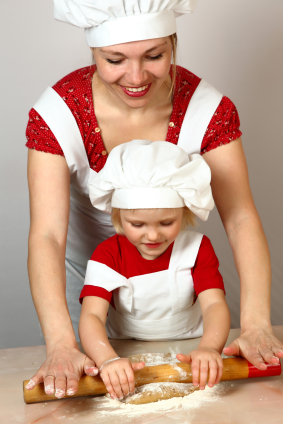
Put on an apron and/or a chef’s hat and then bake some muffins together – or just pretend to do so!
Play with the question and answer part of the song.
Come up with your own muffin song.
Shared by Theresa Case, who has an award-winning Kindermusik program at Piano Central Studios in Greenville, SC.
“It will be a wasteland if we don’t recycle,” stated a four-year-old child in a recent preschool study. Wow! Teaching children never stops but neither does learning from children.
Although we are nearing the end of the United Nations Decade for Sustainability (2005-2014), our commitment to sustainability remains intact. It’s why we strive to find ways to make and deliver our product that decreases our carbon footprint. It’s also why we continue to provide resources and ideas–such as recycling activities for kids–for educators and parents to use when teaching children about the environment and our impact on it. After all, investing in a greener world is also an investment in our world’s children.
Using play to teach sustainability for kids
Of course, in early childhood education, making a personal connection and involving the whole child in the process deepens the understanding. One recent study looked at different ways to engage children in an early childhood education curriculum that taught sustainability. In the study, the preschool teacher created a recycling “center” for children. At the center, children could sort various items into a recycling bin, the trash, or a compost bucket. The teacher offered this center three times in three different ways:
Modeled play: In the first recycling activity for kids, the teacher showed the children how to look for the triangle on plastic containers and bottles. Using a chart, she indicated whether or not the item could be recycled.
Open-ended play: In the second recycling activity for kids offered on a different day, the teacher let the children problem solve on their own.
Purposeful-play: In the final recycling activity for kids, the teacher and children engaged together in conversations about and interaction with the materials, including the purpose behind the activity. The teacher also made connections between the activity in the classroom and how this could look in their homes and communities.
Recycling activities for kids at home
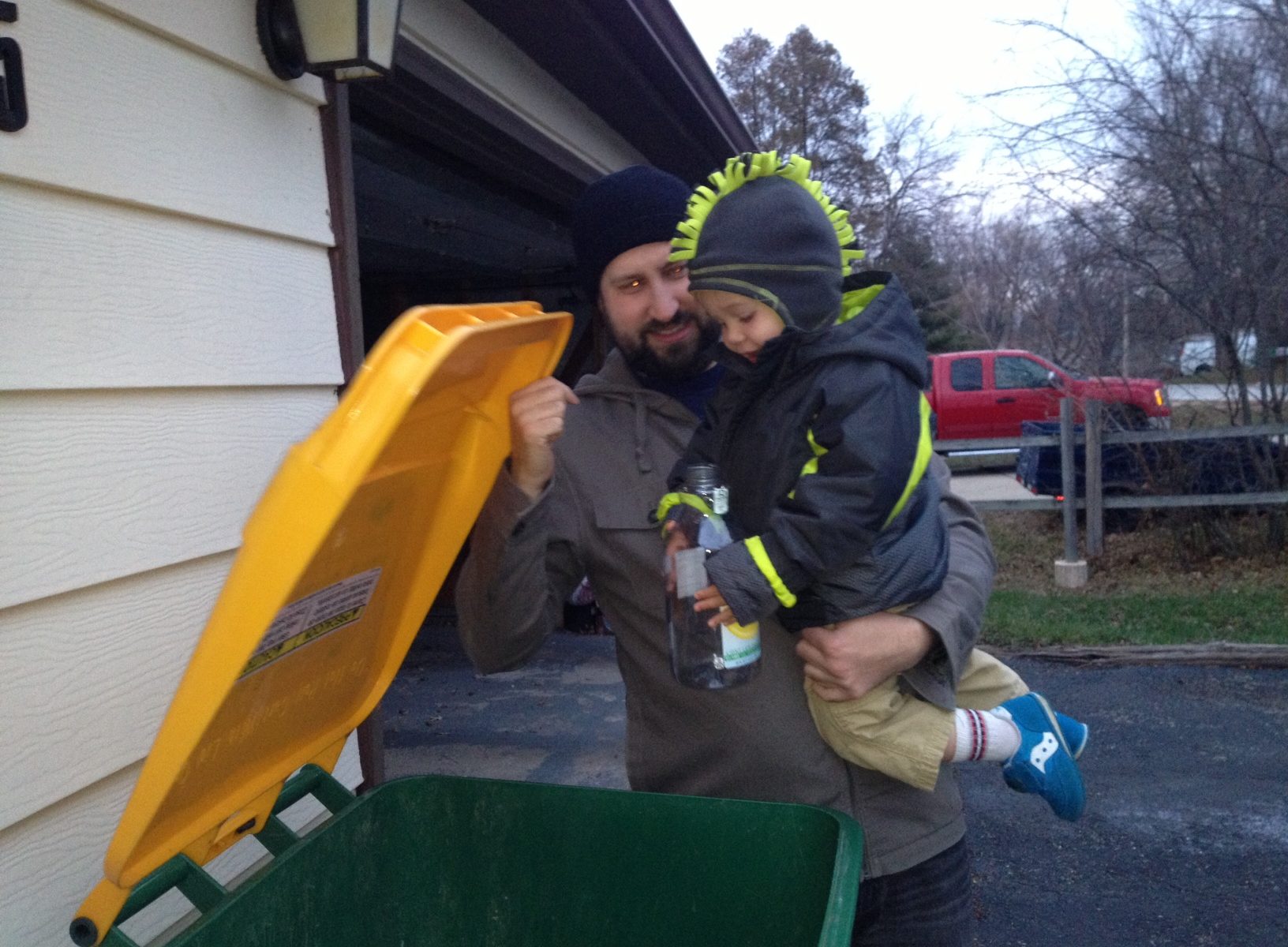
This small study about sustainability for kids can be replicated at home and in classrooms. To a child, every moment is a teachable moment—even taking out the trash. One of the goals of the United Nations Decade for Sustainability is “to motivate and empower learners to change their behavior and take action for sustainable development.” At Kindermusik, we can think of no better way than to start by actively engaging our children in the process. Together, we can create a greener world.
Kindermusik International’s English Language Learning (ELL) curriculum, ABC English & Me, is a fun, musically-based way for ELL children to learn English. As with all of Kindermusik’s newest curricula, the class experience is supported and enhanced by @Home Materials which are accessed digitally and conveniently available to families at any time, anywhere.
The Kindermusik @Home Materials that come with every ABC English & Me enrollment provide fun activities for kids learning, including English songs for kids as well as other ELL activities. We’ll spotlight two of those educational activities for kids here as a free sneak peek!
Just Me!
Just Me! is a delightful music video from the ABC English & Me unit also entitled Just Me! Children can’t help but move, giggle, and learn as they learn the English words for head, shoulder, knees, and toes! (And yes, parents can join the fun too. After all, you’re helping your children learn, right?!)
Find & Count
In Find & Count, featured in the unit called Leap Frog, children learn to count as they find the frogs, ducks, and fish in the pond. This activity is enhanced by the colorful, engaging graphics, lively instructions, and sweet music.
So, go ahead. Try one – or both! – of these activities for yourself. It’s okay if the kids aren’t around! We think you’ll be amazed at the way Kindermusik International is yet again proving itself to be the world’s leader in music and movement curricula, now supported by digital learning through their exceptional @Home Materials.
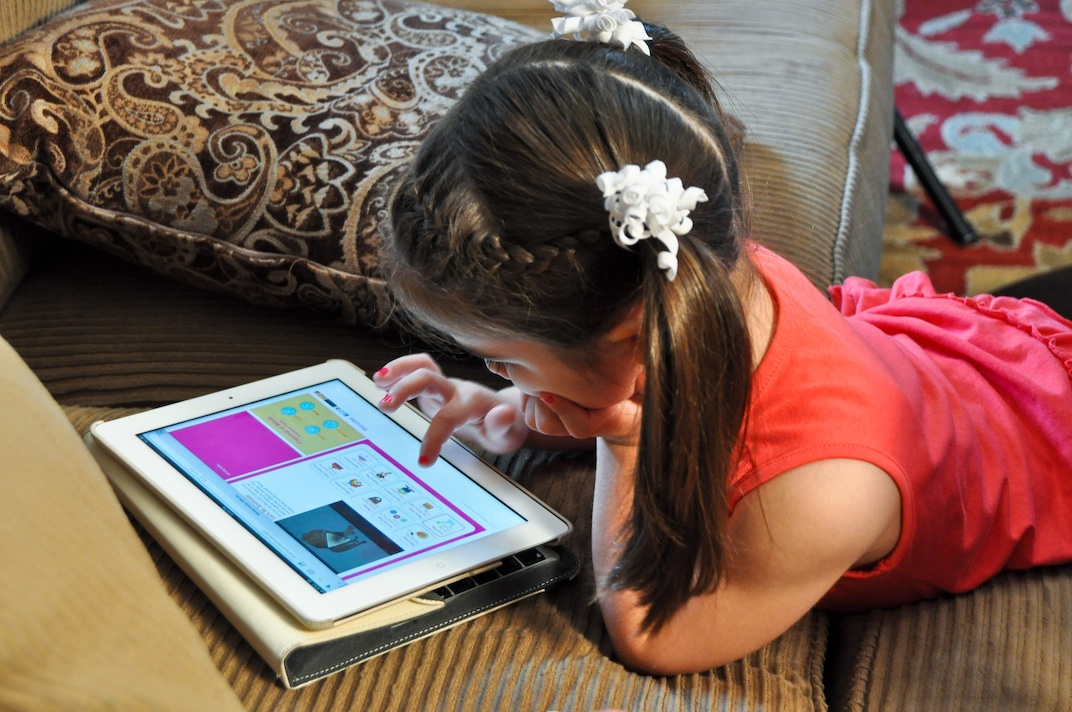
Back in October, Common Sense Media published a report that indicated the usage of mobile apps for kids more than doubled in two years. In fact, the report showed that 75 percent of children under the age of 8 had access to mobile devices at home. However, with the holidays recently behind us, we can make an educated guess that the number of children with access to mobile devices only increased in the few months since the publication of that report.
Of course, access to mobile devices and mobile apps for kids doesn’t necessarily equate to educational activities for kids. In fact, one of the great parenting challenges of raising digital natives involves finding the right balance of screen time for families, including young children. At Kindermusik, we align our stance with the NAEYC and the Fred Rogers Center for Early Learning, recognizing that children can benefit from a responsible and age-appropriate use of technology in combination with hands-on experiences and in partnership with an actively involved caregiver.
In early childhood, the most effective educational activities for kids involve multi-sensory learning, such as talking (or singing!), interacting, exploring, building, pretending, and manipulating. New research on mobile apps for kids (or those used by kids) sheds some positive insight on how technology can be used as a tool to support language development and teach social skills to young children.
2 educational benefits of mobile apps for kids that use video
Five or 10 years ago, video chat was used primarily for business purposes. Now, families Skype or FaceTime with loved ones all around the world as a means to stay connected. When children—even older babies and toddlers—engage in communicating with loved ones via video chat, they learn social skills and support language development in much the same way as if the conversation happened within the same space.
“We’re finding pretty consistently — in fact, two recent studies with actual Skype [calls] — that children do seem to learn better when there is social interaction from a person on video. So it’s kind of encouraging with FaceTime or Skype for parents and grandparents to know that [with] that interaction, the children might actually be willing to learn from a person on a screen because of the social interaction showing them what’s on the screen is connected to their lives,” Georgene Troseth said in an NPR interview, “What You Need To Know About Babies, Toddlers And Screen Time.” (Source: The News Tribune DEAN J. KOEPFLER/Staff photographer)
Other classroom-based research shows that with preschoolers, video modeling can teach children positive social skills, such as sharing, taking turns, or using kind and polite words. One preschool in Minnetonka, Minnesota, uses Flip cameras to record students during their daily rituals and routines. Children can then watch the videos on an Ipad individually or on the SmartBoard as a class to see how to handle certain situations, talk to peers, and even where to go and how to act during circle time.
“Video modeling is just a really easy and effective way to teach children within and without special needs how to do something,” explained Brenna Noland, an early childhood special education teacher, in a news report.
Kindermusik@Home: More than a music app for kids
Enrollment in Kindermusik includes access to Kindermusik@Home a robust, web-based site that supports active engagement and playtime between a parent and a child while also providing an age-appropriate introduction to digital learning. Each month families receive access to the songs and stories from class, virtual field trips and video modeling, and ideas for taking the learning away from the computer, smart phone, of other device.
For more information about Kindermusik@Home and enrolling in Kindermusik, contact your local educator.
When the weather keeps you indoors or you just need something to relieve a certain little someone’s boredom, here are a few fun and easy suggestions for keeping your child occupied and making a few memories along the way too! These are just a few simple, tried-and-true things to do with kids – at home and out and about. Suggestion 1: Try a Kindermusik class!
Of course we couldn’t resist a small plug here! But we happen to think that Kindermusik classes are one of the very best things you can do with – and for! – your child newborn to 7 years. Not only do you get to enjoy a weekly class together, but you also receive Home Materials (now available digitally!) that help you enjoy and extend your Kindermusik experience at home throughout the week. With Kindermusik @Home, you can take your Kindermusik with you wherever you go!
Sign up for a free Preview Class here.
If you’re already enrolled in Kindermusik and need a little extra inspiration, take some time to explore the myriad of downloadable activities and music at play.Kindermusik.com – a great music app for kids AND their parents! Suggestion 2: Sing a song and play along.
For example, remember the song “Hickory, Dickory, Dock” from your childhood? With a simple song like “Hickory, Dickory” as your inspiration, you can explore the sounds that different materials make when struck together. Try familiar materials such as wooden blocks, pots and pans, and cardboard tubes. Which sounds most closely mimic the ticking of a clock? Kids of all ages will also enjoy accompanying themselves with simple rhythm instruments while they sing. Suggestion 3: Create some cool art.
Here’s a three-ingredient recipe for Pretty Puffy Snow. You will need 1 cup flour, 1 cup salt, and 1 cup water. Mix all ingredients and place the mixture in a squeeze bottle (try recycling an empty honey bottle or mustard container). Draw a wintery scene on a piece of stiff paper, then squeeze on your puffy “snow” for some really cool 3-D highlights.
By the way, art projects are always more enriching and more inspired when you’re playing a little music in the background… or when you choose this for one of your family activities! Suggestion 4: Try these learning games for kids. (And get a sneak peek at one of the fabulous ideas available exclusively through Kindermusik @Home!)
Here’s a free music learning game that’s perfect for toddlers, but fun for all ages too: Finding Family
This adorable “get up and move” activity from Kindermusik provides opportunities for toddlers to be active, to engage in looking-and-finding, to follow directional cues (e.g. ‘under’, ‘behind’, ‘up’), and to identify (and open conversation-opportunities about) family members.
Shared by Theresa Case, whose Kindermusik program at Piano Central Studios in Greenville, SC, is proudly among the top 1% of Kindermusik programs worldwide.


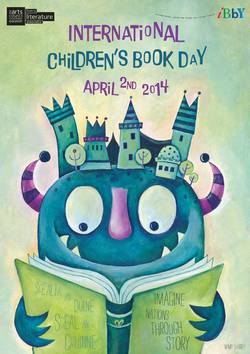
 International Children’s Book Day has been celebrated annually since 1967 as a way not only to inspire a love for books and reading, but also to draw attention to great books for children. At Kindermusik, we celebrate – and foster! – a love of reading and wonderful books in class and at home with our exclusive Kindermusik Home Materials all throughout the year.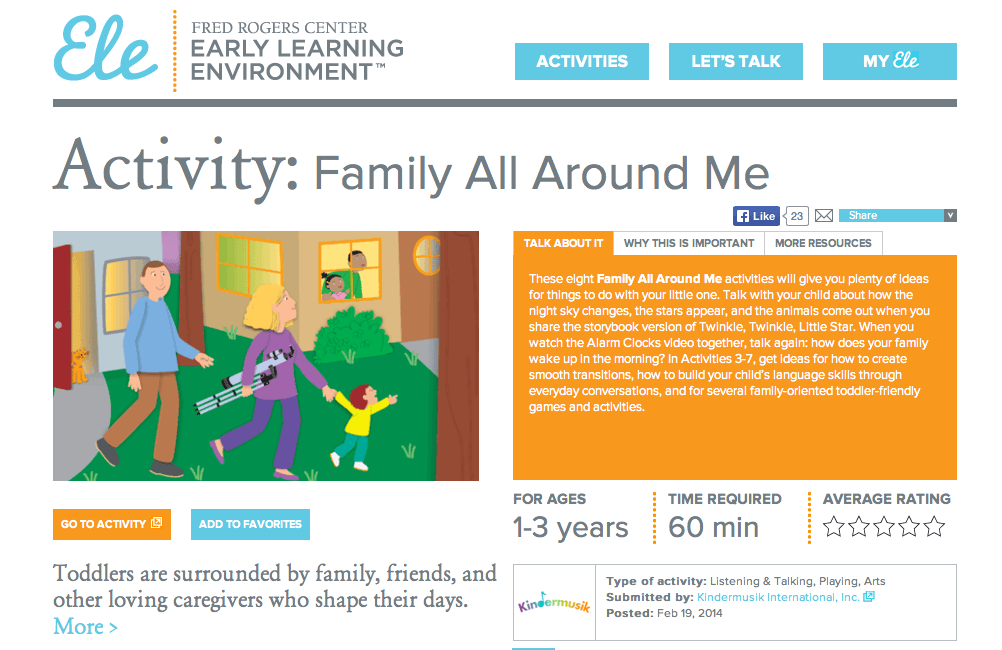

 wardrobe changes young children typically encounter each day, you can pick more than one cute green outfit!

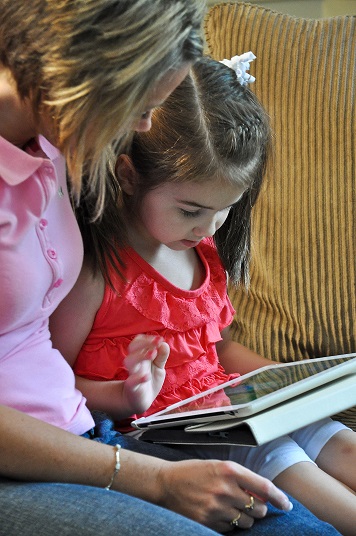
 When it comes to all things technological, today’s kids seem to be genetically predisposed to easily understanding and assimilating anything tech related. They usually know which buttons to push before their parents do, even if it’s the first time they’ve had the remote control or device in their hands!
 Learn more about Kindermusik and the delightful Home Materials that are part of every enrollment! Start with a