One of the great things about musical activities is that they make really great indoor activities. When it’s too hot or too cold to be outside, you can make musical fun indoors with a little creativity, a little inspiration, and these five simple ideas.
It’s that time of year when everyone is talking about resolutions. Losing weight. Exercising. Working less…but when it comes to parenting resolutions, those are little harder to navigate.
Here’s the thing—changes you make for the sake of stronger development for your child(ren) and easier communication between everyone are WORTH it. So, here are 4 practical musical resolutions you can start right away and stick to.
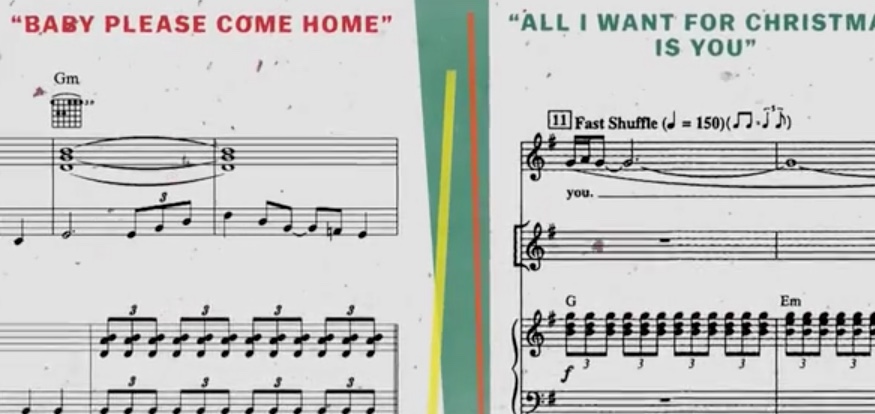
It’s that time of the year again. Gifts, egg nog, and mistletoe are everywhere. But along with the drinks and decorations, Christmas music is everywhere. To celebrate the season, we turn to the the folks over at Vox. In this video, Vox tells the tale of that secret chord that shows up in so many Christmas songs, from Bing Crosby to Mariah Carey.
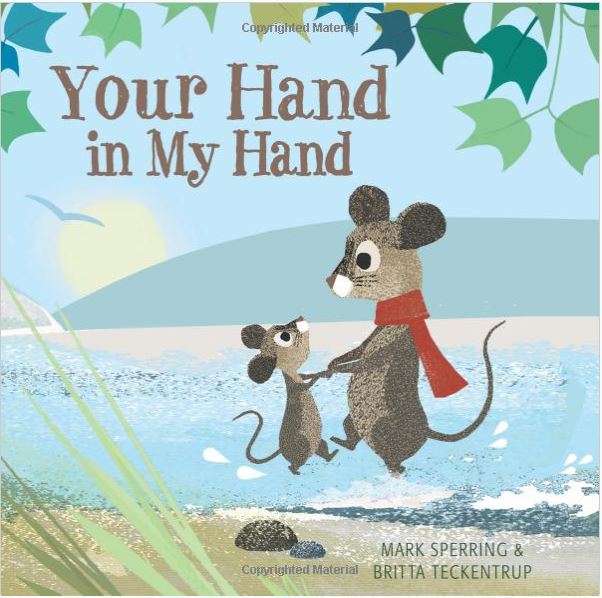
In this book review installment, we look at Your Hand in My Hand, a sweet story of togetherness through the seasons that celebrate the simple moments and experiences that bond a child and their special grown-up even more closely – those times when life can truly be enjoyed at its fullest.
You don’t plan for it to happen, but sometimes the stress creeps in over the holidays. And your children, being the sensitive little souls that they are, often feel it too, whether they can articulate it or not. So how can you make the holidays a little easier and more enjoyable? We’re delighted to share seven musical ways to make your holidays less stressful – for you and your child.
Lovingly known as “Mrs. Marie” or “Madame Marie” to the children in her Kindermusik classes, Marie Kusters has been bringing Kindermusik into the hearts and homes of children and families in Ottawa, Ontario at Mieke Musike Music Studio for over 24 years now. Marie is a dedicated educator and accomplished musician, with a heart not only for her own Kindermusik families, but also for her Kindermusik colleagues. She has served as a Kindermusik Faculty Member, a Kindermusik Mentor, and is a member of the Suzuki Association of the Americas as well as the Suzuki Association of Ontario. She is passionate about sharing her love and knowledge of music in a way that her families describe as loving, nurturing, and encouraging. Anyone who has been around Marie Kusters for very long at all will agree — to know Marie is to be inspired by her…. and “Mr. Marie” too (aka, Marie’s husband, Doug)!
Study after study after study in respected, peer-reviewed journals in a variety of fields tell us the same thing over and over, and we don’t mind pointing it out each time a new researcher adds to the heap of science telling us what we already know: if you make music, it positively impacts other areas of learning. In other words, music makes you smarter!
Repeating the same songs in the car or reading the same stories at night can be cumbersome for adults, but humans are rooted in repetitive structure. And it’s that structure that catapults brain growth in the first few years of life. Continue reading “Why Repetition Matters in Early Childhood Development”
I’m guessing that if you are here, reading this blog, that music is important to you. Your kids might take part in Kindermusik, or perhaps music lessons. You may attend concerts or listen to music on a regular basis. I probably don’t have to convince you about music’s power and its importance in the human experience. I’m not worried about you. It’s the folks that might not know what music can do – the impact it can have on a person’s life – those are the folks I want to reach.
You may know some folks that might not know the benefits of music education or the effect music has on the developing brain, particularly in young kids. So…I want to turn you all into advocacy experts. I want to provide you with knowledge you can pass on to others when they ask “why is this so important?”
Here we go!
Music Makes You Feel
I bet you’ve had this experience. You are at a concert or you are listening to the radio and a song comes on that you have never heard before. I have had many of these experiences – many of them on the podium while conducting. But the most intense instance was about a year after my father passed away. I was living in Hawai’i by myself. My wife had relocated back to the mainland in anticipation of my discharge from the Navy. I hadn’t really processed my father’s death. I hadn’t cried. I hadn’t really mourned.
As I was driving home from an event in Honolulu, Tracy Chapman’s The Promise came on the radio. Take a listen:
It was the combination of Tracy’s voice and the following lyric that got to me:
If you think of me If you miss me once in a while Then I’ll return to you I’ll return and fill that space in your heart
I lost it. I actually had to pull over to the side of the interstate (yes, there are interstate highways in Hawai’i) as I couldn’t see the road through the tears. A year’s worth of bottled emotion all came flooding to the surface because of this song. The music released my previously padlocked feelings about my Dad. How? Music causes chemical changes in the brain. As far as emotion is concerned, music causes the nucleus accumbens, the amygdala, and the cerebellum to light up. These areas are related to emotion.
In this instance, music acted as a key to a lock for me. It was incredibly therapeutic.
Music Builds Bridges
I’ve told stories about students at festivals sharing why they sing. The answers range from sweet and silly at the beginning of a festival to deep and complex toward the end. Recently, I was in Wisconsin conducting a middle school choral festival. These young musicians had just met each other – 100 seventh, eighth, and ninth graders came together to make music. During breaks, I would ask my question – why do you sing? These kids felt safe enough to share some very meaningful reasons:
“My grandfather passed away three years ago. We would sing together in church choir. It’s my way to stay close to him.”
“It’s the only place I feel like I can really be me.”
“Music makes me realize that I am powerful.”
“Music is my home.”
Last month, I conducted a county high school choral festival. One student wrote the following:
“Music has prevented me from making a decision that could have altered my life (multiple times). It has brought me pure happiness in times of endless sorrow.”
To share these things with folks you have just met doesn’t happen too often. Making music with others builds compassion and empathy. It’s a pretty amazing thing to be a part of.
Experiencing music at a young age starts this process. It helps with social development in ways that other activities do not. If you have a second, head over and read my friend Elliot Cole’s post about why music matters. He shares the story about a prison inmate letting his guard down because of music. It’s quite the tale.
Music Fertilizes the Brain
Music for music’s sake should be reason enough as to why we should study music. John Adams gave us this gem in a letter to his wife, Abigal Adams:
I must study politics and war that my sons may have liberty to study mathematics and philosophy. My sons ought to study mathematics and philosophy, geography, natural history, naval architecture, navigation, commerce, and agriculture, in order to give their children a right to study painting, poetry, music, architecture, statuary, tapestry, and porcelain.
It’s right there – one of the United States’s founding fathers told us – music is a noble art and worthy of our time. But, in the interest of advocacy, music has a positive impact on how we learn other subjects. The National Association for Music Education provides a great list for music advocacy superheroes. Here is a selection:
Musical training helps develop language and reasoning: Students who have early musical training will develop the areas of the brain related to language and reasoning. The left side of the brain is better developed with music, and songs can help imprint information on young minds.
Students learn to improve their work: Learning music promotes craftsmanship, and students learn to want to create good work instead of mediocre work. This desire can be applied to all subjects of study.
Better SAT scores: Students who have experience with music performance or appreciation score higher on the SAT. One report indicates 63 points higher on verbal and 44 points higher on math for students in music appreciation courses.
Kids stay engaged in school: An enjoyable subject like music can keep kids interested and engaged in school. Student musicians are likely to stay in school to achieve in other subjects.
The list goes on. Music can reduce recovery time after surgery and working out. It can improve cognitive brain function and help folks manage anxiety. I’ve said it before – music is magic.
Go Forth and Advocate!
Now that you have the details – spread them far and wide! And if you are looking for more ways to pull music into your life, take a class! Get your kids involved with Kindermusik! Write a song! Don’t wait any longer – go see that band you’ve been wanting to see or maybe head to your local symphony.