The below paper was written by a junior high school student who has attended Kindermusik class at Kindermusik by Music Connections Foundation in Bloomington, IL. Thank you to Jonah for his thoughtful & insightful work, showcasing the benefits of the Kindermusik program and to Katie Henderson, Founder/Director of the Kindermusik by Music Connections Foundation for sharing this with us.
 By: Jonah K., former Kindermusik Kid
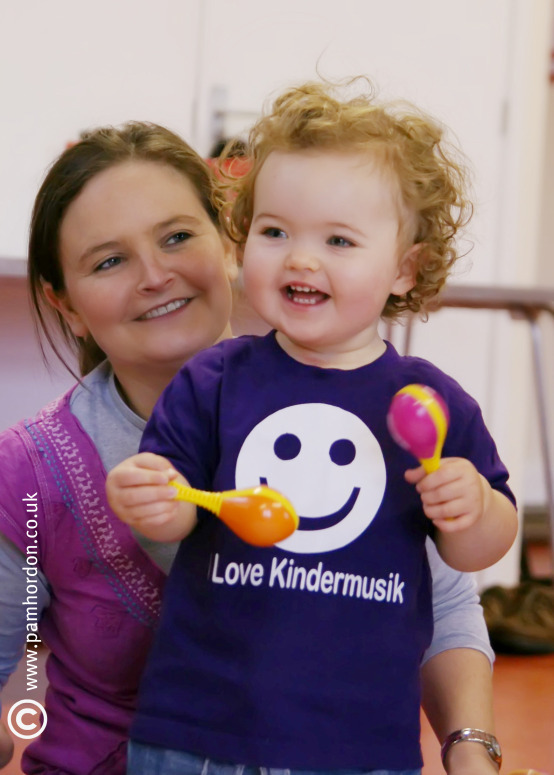
If you went into this place, you would hear children laughing. If you looked inside, you would see happy parents, playing kids, a kind, happy atmosphere, and catchy, cool music playing. When it’s time to leave, all the kids have had SO much fun, and they can’t wait to come back again! Is this an amusement park? Guess again! This is just one of the many music classes presented by the amazing charity of Music Connections Foundation right here in Bloomington-Normal.
You may think, “Music? Ha! Music isn’t important! It has no effect on life!” But that’s very far from the truth. As experts like Jim Powell, Ed.D, say, “good music (is) invaluable as a teaching tool.” Music education helps cognitive (memory,) social, physical, emotional, language (lingual,) and (of course) musical development in young children. It also can help kids’ self-esteem. Studies show that music enhances the learning process in young minds. Not only does MCF help with learning through music, MCF can help get a child ready for life ahead, and give them a head start in school!
Kindermusik, the program MCF offers, was brought into the U.S.A. in 1978. Kindermusik’s mission is to instill a lifelong love of music and a foundation for learning in children. Kindermusik has been well researched, developed, and proven by many experts, to make sure children can have the best learning experience! It has expanded to 72 countries, from Argentina to Vietnam. In 2002, employees bought the company from investors. This means there is no one in the way to help get music into children. From 2008 to the present time, Kindermusik has been getting greener and greener from going digital to
using less paper.
MCF includes many ways to get kids immersed in music and dancing. After all, experts like Anne Green Gilbert tell, “Movement is the key to learning.” When MCF includes music with running and bouncing and jumping, it’s fun for all! Here are the programs that MCF provides: “Village”, ages from 0-1 ½, “Our Time”, ages 1 ½ to 3 ½, “Imagine That!”, from 3 ½ to 5, and “Young Child”, ages 5-7, or Kindergarten to 2nd grade. They also have a family-oriented class called “Wiggle and Grow- Family Style”, which ranges in age from 6 months to 6 years. They also have summer camps, ages Birth-10, from piano to music with cooking. To reach out to the community, MCF also does a Village with Seniors class, allowing mother, child, and “grandmother/father” to bond and care for each other, “Ninos y Musica”, a bilingual version of Kindermusik, and classes for special needs children and their families.
Though many of these classes have a price to be able to be in them, much of this money is put towards materials, extra donations (scholarships,) and to pay the kind teachers who work hard and long to even get the ability to teach the children (not to mention the classes they come up with!) Even if you can’t make that price up, that doesn’t mean you can’t have Kindermusik! There are scholarships for people with low income and people with disabilities.
Grants and donations will help MCF’s efforts to make sure children can come to learn and experience music. MCF has many plans and ideas to help get children into music and learning, but the financial part of these plans may be just out of reach. If you help and donate to MCF, they can help spread music to children in the county, in the state, and, through Kindermusik, all around the world. Imagine what life would be like if everyone could be immersed in learning. If you help MCF, this could come true. So many lives we could all change with the wonderful power of music. Wouldn’t that be a wonderful thing to see?


 “I think play is an expression of our creativity; and creativity, I believe, is at the very root of our ability to learn, to cope, and to become whatever we may be. To me, play is the process of finding new combinations for known things – combinations that may yield new forms of expression, new inventions, new discoveries, and new situations.”



 As long as you have your phone, your tablet, or your computer, you have your Kindermusik@Home with all of the activities, resources, play ideas, and music at your fingertips.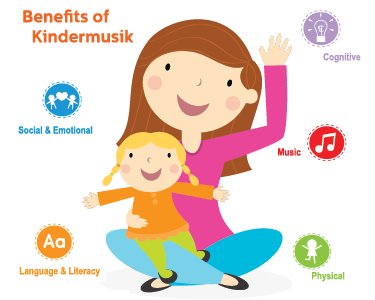

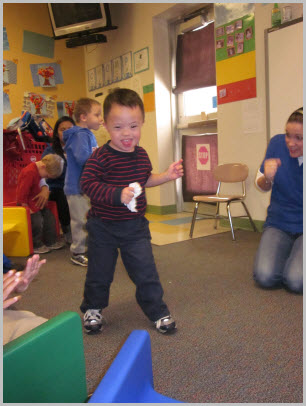
 “I began using ABC Music & Me with my developmentally delayed preschool classroom in the fall of 2011 when it was brought into our school system. The program was ready to use out of the box with a few simple modifications for my students with visual impairments. From the first day of use my students fell in love with the songs, instruments and activities from the unit called Laugh & Learn. I really like the way the program has a wide mix of listening, movement, and instrument activities scattered throughout the lessons. This setup keeps the students actively engaged and prevents their attention from wondering.
 The transition of programs has been a little bit of adjustment for me as I need to become familiar with the content change. I do make some modifications to meet my students’ developmental needs such as shortening the lessons and taking out areas that may be frustrating for them. Overall we have all enjoyed our new program. Through the use of ABC Music & Me all of my students have started to sing, hum or make vocalizations to the music even my students who are non-verbal. We have also discovered that many of our friends have great rhythm. I am so glad that I was introduced to ABC Music & Me and was able to bring the program to my students.”
 Early childhood is a wonderful window of opportunity for music learning. Music activities are not just fun – they are also a perfect way to help children learn and grow. But a program like Kindermusik offers much more than just a