
FOL Fridays: How Repetition Strengthens the Brain

“Repetition continues to be important in the development of language and movement, as it is repeated experiences that reinforce the pathways of the brain. By two years of age, a toddler’s cerebral cortex contains well over a hundred trillion synapses, which is actually some fifty percent more synapses than she will keep as an adult. While new synapses form rapidly during this time frame, a ‘pruning’ process is also taking place. This process strengthens frequently used pathways, while deleting those that are not used. As pruning continues, it will allow your child to process thoughts and actions more quickly and efficiently” (zerotothree.org. 1998-2001)

Tips for parents:

You can incorporate more repetition in your child’s life in some fairly simple ways. One way is to set aside time each day for reading his or her favorite books together. You’ll probably read his favorites repeatedly! Another way to foster more repetition is to make full use of your Kindermusik home materials, enjoying the music and activities together regularly.

Try a few Kindermusik@Home activities for free today!

– Contributed by Theresa Case, whose Greenville, SC program, Kindermusik at Piano Central Studios, is proudly among the top 1% of Kindermusik programs worldwide.
Spatial Skills Linked to Math Learning from Education Week

Repetition for child development

Repetition for child development
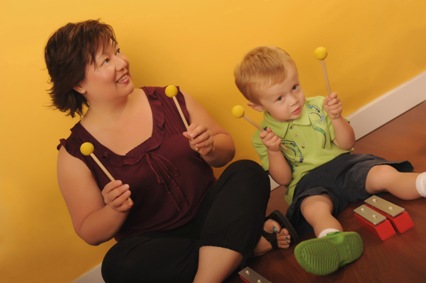
Learning how to hold a mallet!

This morning, Education Week published an article affirming spatial skills as a key to math learning. Movement and “task” activities (cutting paper shapes, building blocks, coloring in lines, clapping, stomping, singing) not only improve a child’s discipline ability to write neatly, they improve his or her capacity for abstract reasoning. The article quotes Claire E. Cameron, research scientist at the University of Virginia’s Center for Advanced Study of Teaching and Learning, on this point:

“We think of early-childhood classrooms as being really high in executive-function demands, but what children are being asked to exercise [executive function] on end up being visual-motor and fine-motor tasks.”

Here’s how it works. As you listen to music or make music, certain neuronsin the cortex of your brain start firing. The pathways created are the same pathwaysthat are used when you complete complex spatial reasoning tasks. The more of these pathways that are forged and the more they are in use, the stronger the connections become. Strong connections lead to easier access, which translatesinto better skills.
Although listening to music does give the neural network a workout, the gains in spatial
reasoning skills have been shown to be very short-term—15 minutes or less. This “Mozart
effect” is much longer-lasting when you engage in making music, however. Studies are showing that the attendant spatial reasoning gains can extend over months or even years (Rauscher et al, 1997; Gardiner, 2000; Hetland, 2000b). Studies focused on music for young children are also suggesting that math gains increase according to the number of years that students engage in active music learning (Gardiner, 2000), with some indication that the younger children are when they begin music instruction, the greater the gains will be.
Read more from Kindermusik about the benefits of music and math here, and comment below with questions or feedback!

Oh Mother!

Photo Credit: latinohealthzone.com

As an early tribute to Mothers Day, we’d like to share some thoughts on the indefatigable job of – you guessed it – being a mom.

Mothers live an interesting paradox: they are either recognized as saints or servants. A child is a mother’s most important responsibility, and consequently, motherhood is celebrated culturally around the world. Mothers are emblems of caring, giving, patience, and love.
Of course – there’s more to a mother’s saintliness than meets the eye. Is there a biological reason for a mother’s celebrated traits? In this article, Bill Muehlenberg comments on a mother’s dual role in guiding her child both spiritually and practically. He reminds us of Ann Crittenden’s poignant description of this double responsibility. On one hand, Crittenden points to the Jewish adage, which says, “God could not be everywhere, and therefore He made mothers.” On the other hand, there’s the Arab adage, which says, “the mother is a school; if she is well reared, you are sure to build a nation”.
The Arab adage resonates with Kindermusik’s key principle that the parent is the child’s best teacher. In biology, the body is considered to stop physically optimizing once a mother has passed her child-bearing years – evolution is a hard-hearted process of competition, survival of the fittest, and passing genes from one generation to the next. But after a woman has finished having children, another fascinating evolutionary trait sets in: caretaking.
A fascinating Radiolab podcast, “The Good Show,” illuminates this paradox. If altruism (motherhood!) is the opposite of survival of the fittest, how do we explain (as Radiolab puts it) “why one creature might stick its neck out for another?” Why do mothers spend a lifetime “sacrificing” themselves for their children?
The answer, according to “The Good Show,” is still genetic (hence not “purely altruistic”) – a mother is protecting her genes by protecting her child. Even if the show decides that pure altruism doesn’t exist, a mother’s lifelong task of raising her child (to protect her genes) is the most influential force in a child’s development. Maybe we can all agree that being a mother can feel like a selfless plight of altruism, but in the end, the giving, caring, music classes and teaching! – really, really, pays off. What do you think? Comment below!

Happy Mothers Day!

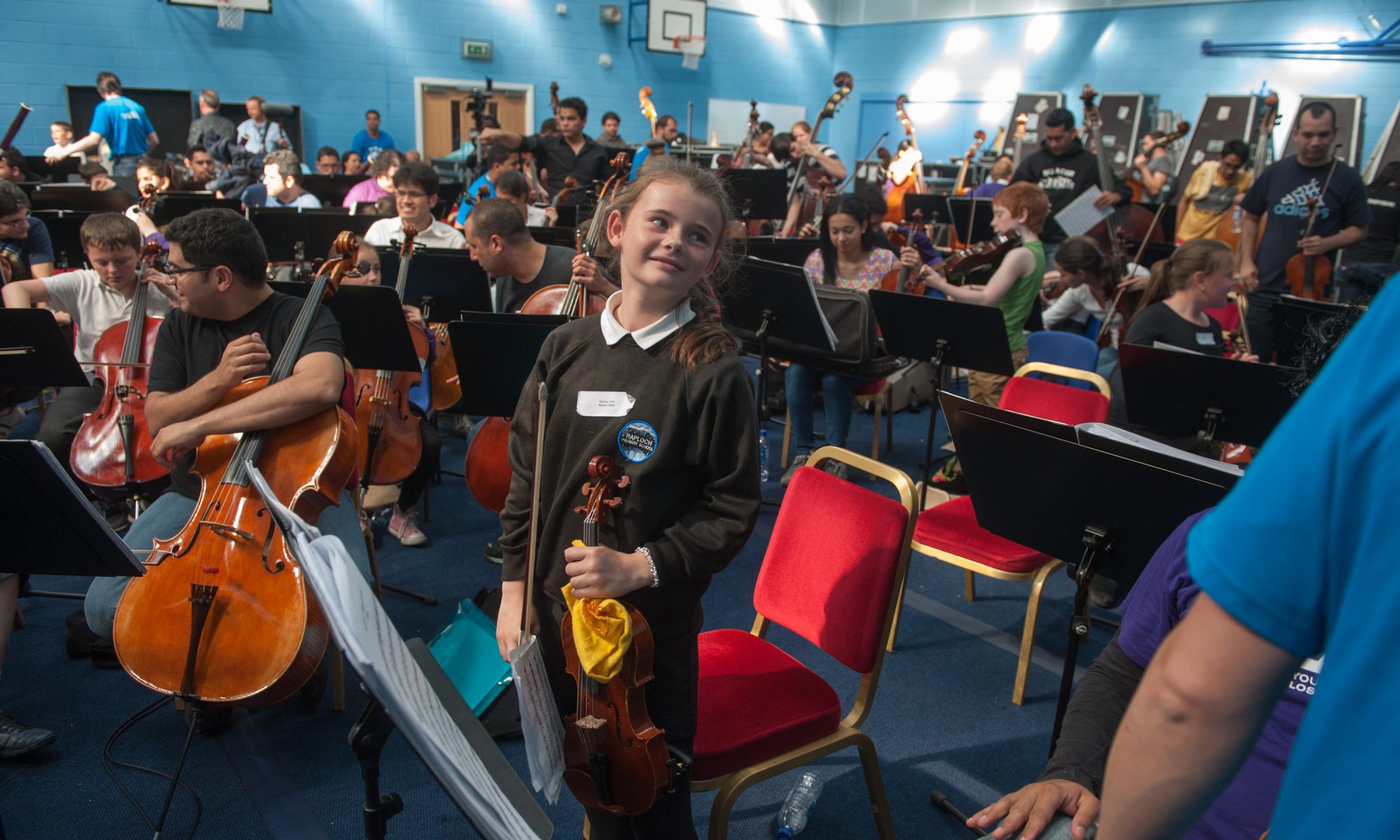
In Venezuela, Classical Music Fights Poverty

Photo Credit: La Prisma (theprisma.co.uk)

Is music literally capable of saving lives? According to Dr. José Antonio Abreu, it definitely is. His story is a reason to celebrate this Monday morning, and a powerful reminder of the power of music for children.

In 1975, Dr. Abreu, a Venezuelan economist and musician, founded El Sistema, “The System,” a classical music youth training program for children in some of the poorest Venezuelan communities. Now publicly funded with branches in the United States, United Kingdom, and Portugal, El Sistema helps Venezuela’s 125th youth orchestras with training, funding, and the ability to travel worldwide to perform some of the highest level youth classical music in the world.
Why use music as the mechanism for social change? When asked about his vision for El Sistema, Dr. Abreu said:

“Music has to be recognized as an agent of social development, in the highest sense because it transmits the highest values – solidarity, harmony, mutual compassion. And it has the ability to unite an entire community, and to express sublime feelings.”

Seventy to ninety percent of the children who participate in the program come from the poorest neighborhoods in Venezuela– like Sevilla, a slum in Caracas. Abreu’s success in navigating the program through thirty-eight years of political turmoil is testament to his determination and conviction about the power of music for children. Watch the 60 seconds video here, or watch the clip below!

FOL Fridays: Becoming a Good Listener

Focusing on one sense at a time helps children strengthen their perception.  Focusing on sound, for example, sharpens listening skills.  Experts say that about two-thirds of everything learned is learned through listening.  When children are given an opportunity to practice their listening skills, they also enhance their abilities to focus and pay attention, allowing them to understand and interpret more of what they hear.

Ideas for parents:

As you take a walk outdoors with your child, encourage your child to listen, identify, imitate, and discuss the different sounds you hear.  Listen for the sound of birds, neighbors chatting, lawn mowers, vehicles, and more.  You’ll have a lot of fun playing the “Listening Game,” and your child’s listening skills will be sharpened too!

Try a Free Kindermusik Class!

We engage kids in fun activities every week in Kindermusik music classes for kids – and focus on developing listening skills, cognitive skills, musical skills and more. Learning through music and movement is fun and effective, come check it out.

– Contributed by Theresa Case, whose Greenville, SC program, Kindermusik at Piano Central Studios, is proudly among the top 1% of Kindermusik programs worldwide.
Last Day of National Poetry Month

As the month of April ends and so does National Poetry Month in the U.S. we wanted to share this collaborative effort from Reading Rainbow. For the first time ever, they have combined a number of responses from their fans and followers on Facebook and Twitter – and have crafted a community poem, themed: Dare to Read!

Watch the video below to hear LeVar Burton read part of this brand new Reading Rainbow Community Poem.

We’d love to hear from the Kindermusik Community.

Please, share your comments below on why you and your children love to read – or perhaps, your favorite book from Kindermusik class!

What's the Rhythm of Spring?

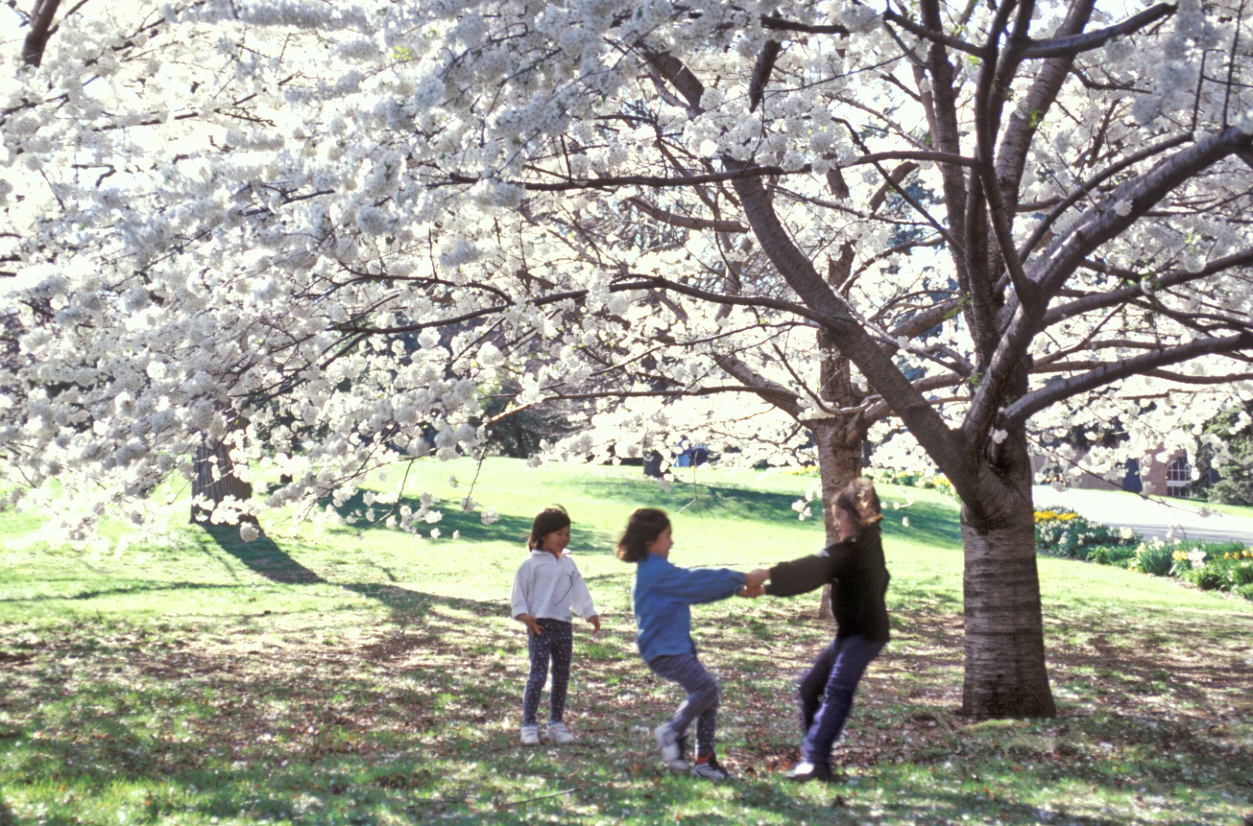
Monday mornings are best begun with a poem. We think this E.E. Cummings poem, "in Just-" celebrates spring, children, and music in a refreshingly dissonant way. What do you think?

in Just–
E.E. Cummings

in Just-
spring when the world is mud-
luscious the little
lame balloonman

whistles far and wee

and eddieandbill come
running from marbles and
piracies and it’s
spring

when the world is puddle-wonderful

the queer
old balloonman whistles
far and wee
and bettyandisbel come dancing

from hop-scotch and jump-rope and

it’s
spring
and

the
goat-footed

balloonMan whistles
far
and
wee

Rhythm is central to this poem. It is typographical – the disjointed spacing, repetition of verses, and vertical arrangement makes movement tangible: moving children, wind, and the whistle thread the poem together in evolving combinations. It is also lyrical – the refrain, the balloonMan’s whistle "far and wee," is contrasted with the huffing breaths of young children running, slurring names "eddieandbill" and "bettyandisabel" together. The whistle has the effect of an ice cream truck’s song, calling children to chase after it. To the adult (the reader?), the whistle is the belittled sound of a, "lame," "little," "goat footed" man. But to the children, the whistle is a mysterious a-harmonic tune. It is a mysterious sound. It implores them to break away from their games and explore an even more magical realm of the imagination.

What does this poem mean to you? Share your thoughts below, or share another poem that reminds you of spring, play, rhythm, or the imagination below!

Earth Day 2013 with Kindermusik

Kindermusik Green - Sustainability

This year, the theme for Earth Day is the Face of Climate Change – and we want to know what the Kindermusik community is doing to support our environment.

Please share your comments, or post pictures from your events to the Kindermusik Facebook page.
Kindermusik Green - SustainabilityAt Kindermusik International, you can see ways we embrace sustainability for kids in our business practices, protecting our children’s world – and some of our notable green business initiatives over the last year.
We also like to share information from other organizations, like this Earth Day infographic published by Elite Research, found on the edudemic.com site which highlights some interesting facts about recycling, highest pollution areas around the world, and ways we can protect our environment just by changing some routines in our daily lives.

Earth Day 2013 Infographic

Share your Earth Day 2013 stories or comments below!

What Does "350" Mean to You?

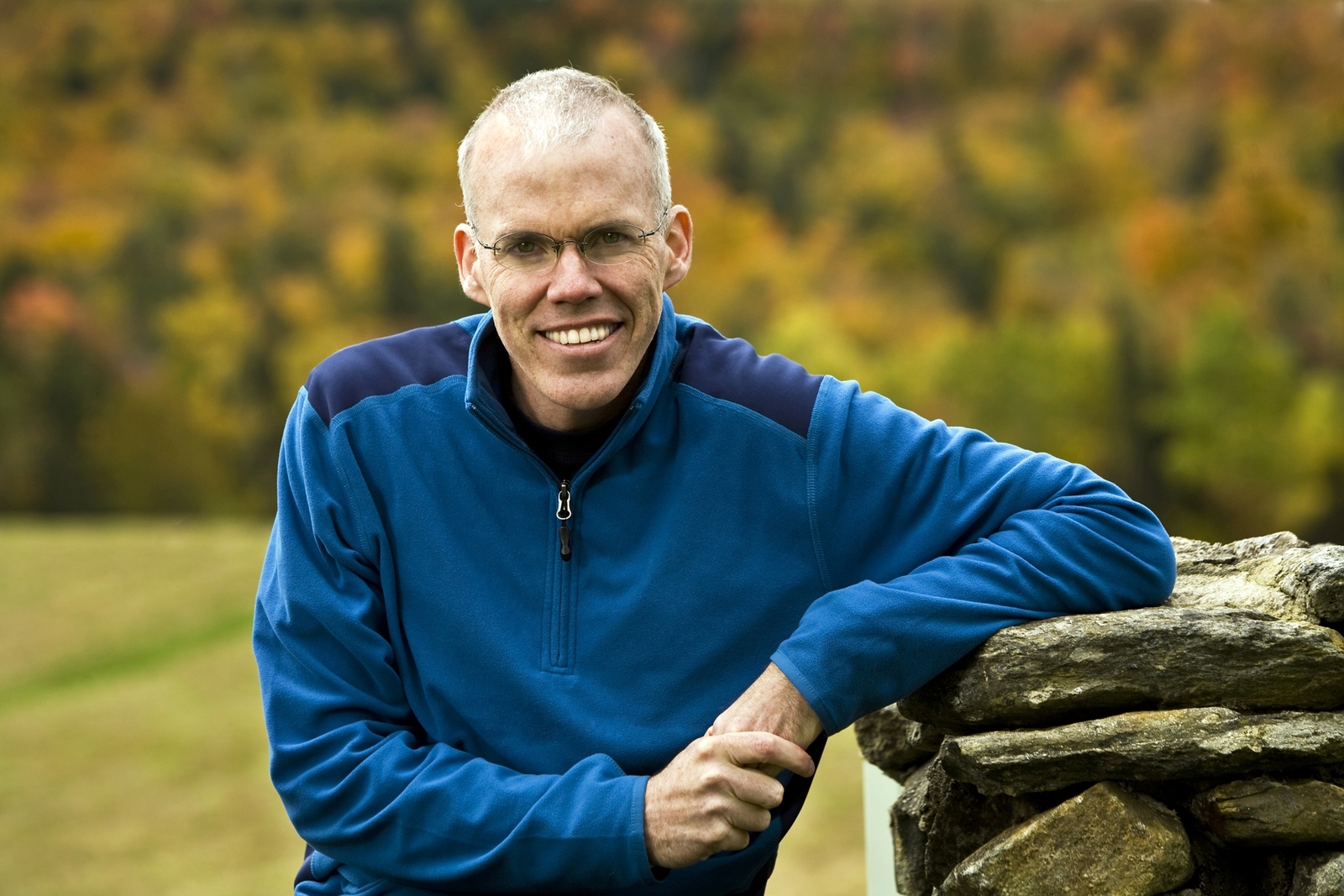
Bill McKibben’s new climate change movie, “Do the Math,” airs April 21st across the United States. We’ve always loved Bill McKibben for his scientific integrity – his ability inspire people through his careful articulation of the evolving data behind climate change. In a world where science has largely eroded from the pop culture “green movement,” Bill McKibben is a crusader for a movement based on pure science. Watch the trailer below:
Science and math tend to scare people. We think we encounter numbers in a limited scope: as prices, hours, pounds, or grocery items. The irony, of course, is that numbers are ubiquitous; numbers describe the very atoms that make you you, and me me. And science is just a way of interpreting and predicting them.
The psychological impact of numbers is why we think the name of McKibben’s campaign, 350.org, is so powerful. 350 is the number that leading scientists say is the safe upper limit for carbon dioxide—measured in “Parts Per Million” in our atmosphere. 350 PPM—it’s the number humanity needs to get back to as soon as possible to avoid runaway climate change. If we can internalize this number, we can internalize behaviors which, on the individual level, can stop the global catastrophe that Bill McKibben foretells. Numbers are not opinions, they are iterations of truth. Truth alone inspires people.
We are proud of our passionate, adaptive, curious Kindermusik community of educators and leaders. You all would make tremendous advocates for the 350.0rg campaign – and we just recently learned how you can join! 350.org hosts workshops where you can learn how to achieve climate change goals specific to your community’s environmental issues, policies, and economic development.

Find out more about becoming a 350.org workshop leader here, an opportunity which will teach you how to:

  • Understand recent climate science and policy.
  • Be able to present your own stories through the lens of Public Narrative.
  • Know how to communicate effectively about climate change and local organizing.
  • Be able to identify strategic targets and goals.
  • Understand campaign nuts and bolts.
  • Develop a campaign plan.

We’ll leave you with 350.org’s definition of leaders. Leaders are those who do the work of helping others to achieve purpose in the face of uncertainty.

The Power of Talking (and Singing) to your Baby!

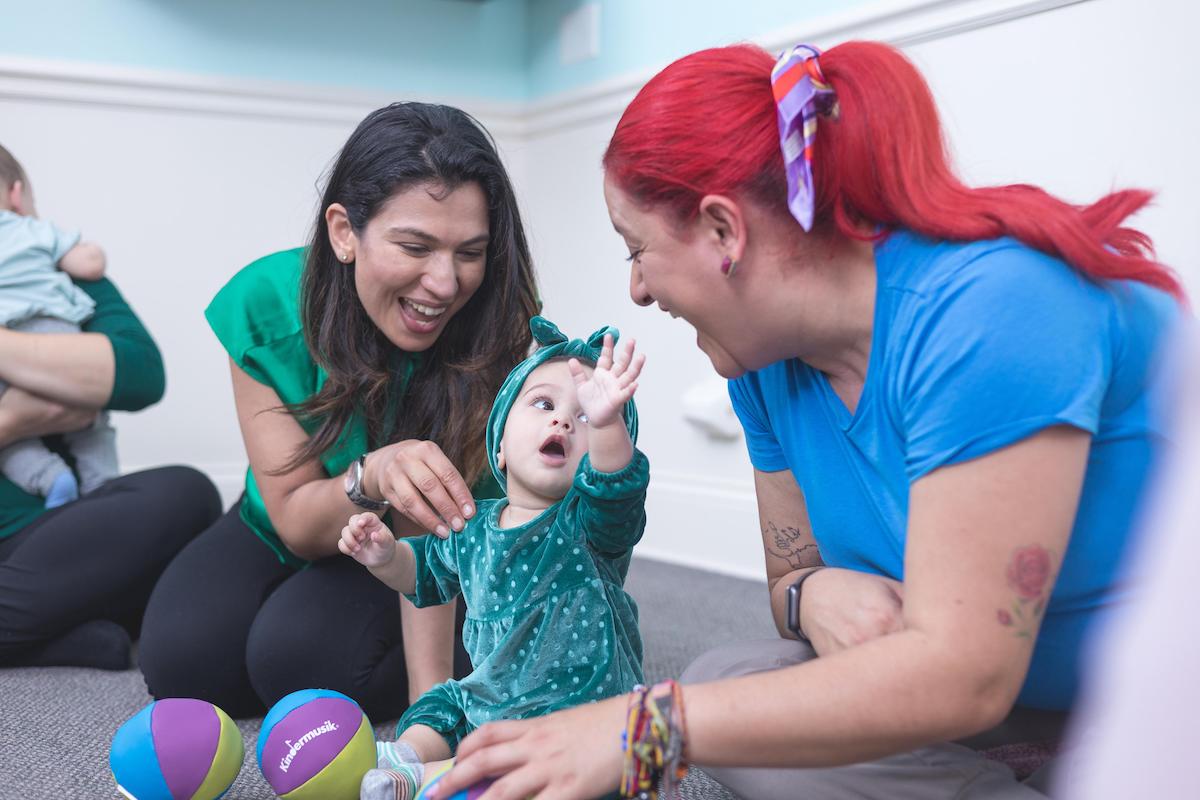
A Kindermusik teacher mimics baby babble to encourage early conversational skills in class.

Now for the drum-roll deserving, edge-of-your-seat, epic, astrological, million dollar question. What makes a good parent?


We’d cue the drum-roll but that would be redundant. Of all the pillars of child-rearing– instilling good behavior, table manners, diligence and potty training– the most critical aspect of parenting is something so obvious it’s practically shouting at us. The answer is simply that good parents talk to their babies.

Hart & Risley Study – Parents Talking to their Children

A 1995 study by Betty Hart and Todd R. Risley at the University of Kansas found that parent-to-child baby talk is perhaps the most critical part of early child development (specifically from birth until age three). Hart and Risley studied 42 families from varying socioeconomic backgrounds over six years, measuring the speech patterns between parents and their children. Not only did they measure how many words parents from affluent, working-class, and welfare dependent families spoke to their children per hour — they measured the number of “conversational turns” and ratio of positive and negative tone to the conversation.

The results?

Affluent parents spoke over 2,100 words per hour to their babies. Working-class 1,200 words per hour. Welfare… 600 words per hour. When it came to conversational tone, Hart and Risley found the ratio of affirming (encouraging) words to prohibition words to be 32:6 per hour. For working-cass families, families accumulated 12 affirmatives and seven prohibitions per hour (approximately 2:1 affirmatives to negatives). For the average welfare family, the ratio of affirmations to prohibitions was 1:2.
On one hand, these discrepancies are easy to explain. Families on welfare are under more stress and may not have the same educational backgrounds to garner a generational vocabulary. But overwhelmingly, welfare parents were reportedly unaware that talking was connected to their child’s intellectual development.

“The greater the number of words children heard from their parents or caregivers before they were 3, the higher their IQ and the better they did in school.”

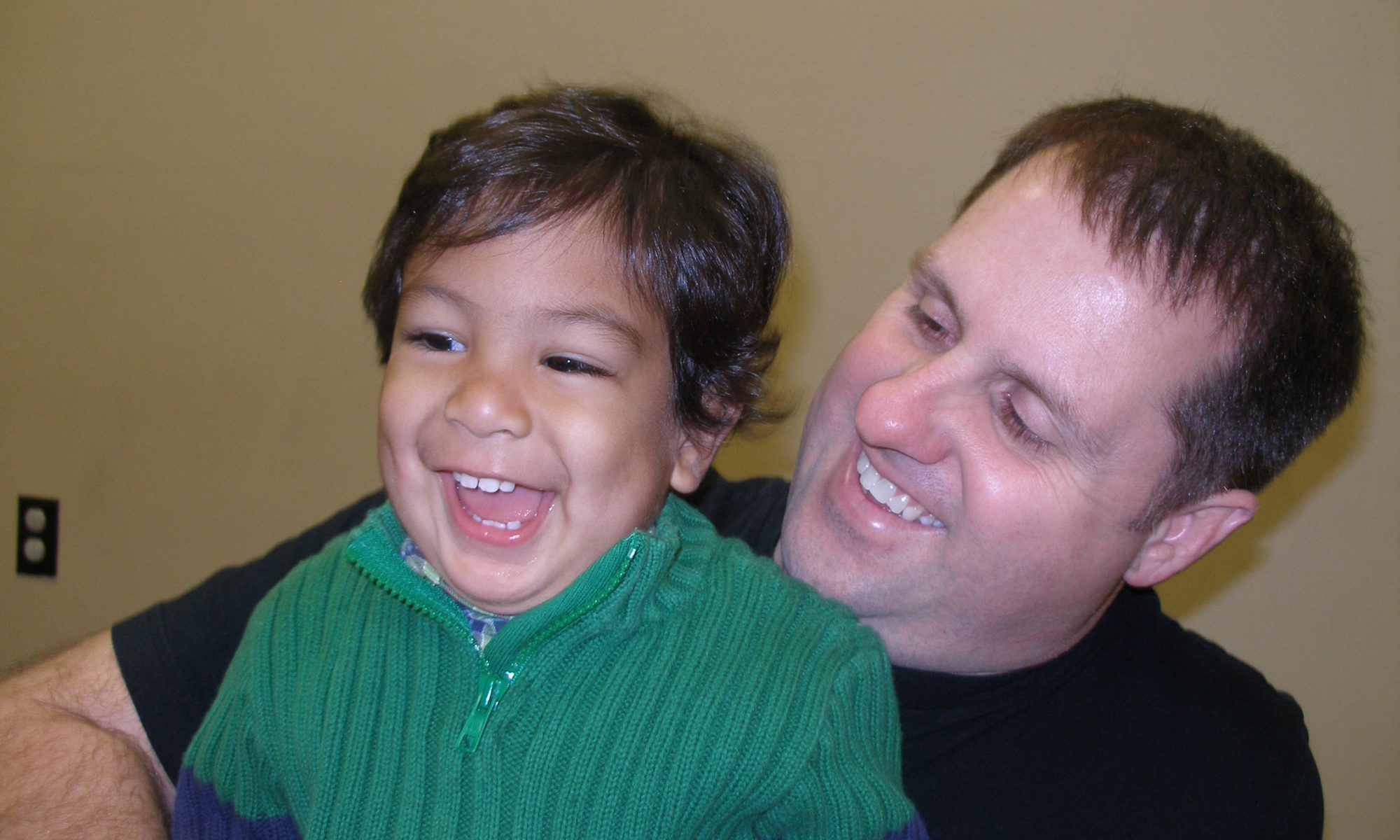
Hart and Risley’s study, reviewed in this recent NYTimes article by Tina Rosenberg, cuts to the heart of Kindermusik’s mission. The power of talking can just as easily be said for the power of singing. Whether you’re transporting your child to the stony, riverside city of Galway singing “All the Way to Galway” or counting with “Wheels on the Bus,” you’re exposing your child to the world’s complexities in a fun, nurturing way– not leaving them without a means of expression and understanding.
In Kindermusik classes for babies and toddlers, there are many activities that support parent and child interaction, especially involving talking and singing with your child. For example, in one of our music classes for toddlers, we have fun with a song called Morning Song which allows parents to sing with their child, letting the kids insert the sounds an animal makes when they get up in the morning.

Parent: “When dogs get up in the morning, they always say good day.”

Child: “Ruff, ruff, ruff, ruff”

Parent/Child together: “That is what they say.”

Parents can extend the learning at-home by making up their own verses and using different animals and sounds to teach their children.

Try A Free Kindermusik ClassYou can Try a Kindermusik Class for Free to experience the positive connections parents and children make each day — by participating in class and taking the learning home to support your child’s development.