
Kids Crafts Inspired by Kindermusik@Home

Cardboard Castle

What do a cardboard castle and a paper plate sun have in common?  They’re both two of the many kids craft ideas conveniently found in Kindermusik@Home.

Crafts for Preschoolers

Cardboard CastleWhat’s great about the cardboard castle featured in Make Believe are the kid-friendly instructions. With just a little help from an adult, they are just perfect for preschoolers who thrive on a little independence and the joy of creative self-expression. The best parts are all the imaginative pretend play once the castle is complete, and the learning that happens best through active play and hands-on interaction.

Crafts for Toddlers

Paper Plate Sun CraftA simple but fun craft idea for toddlers is found in Kindermusik@Home, Up in the Sky.  Hint:  You might want to make two so that you can both sing and dance with your Paper Plate Sun.  (Or turn on the recording of “Mr. Sun.”)  The paper plate sun is one of several “sky crafts” that promote interactive learning while also inspiring together-time ideas.
As a unique benefit of your Kindermusik enrollment, your Home Materials, conveniently available when you log in to Kindermusik@Home, offer you and your child music and then some – engaging, delightful craft ideas being among the highlights.

Together time fueled by creativity and imagination…

…all inspired by the power of Kindermusik – in class and at home all week long.
Shared by Theresa Case, whose Kindermusik program at Piano Central Studios is among the top 1% of Kindermusik programs worldwide.

My Kindermusik Day

Kindermusik educator Theresa Case in Baby Music Class

Kindermusik educator Theresa Case in Baby Music Class
Yesterday was one of my Kindermusik days — my day to teach, to be in the classroom with 10 delightful toddlers and their special adults. Besides being an invigorating ton of fun, every one of my Kindermusik days reminds me of why I’m so lucky to do what I do!
As a program owner, I am privileged to work alongside the other wonderful Kindermusik educators on my staff. I spend time in the office, administrating and overseeing the business that enables me to reach so many more families with the power of Kindermusik. The time I spend teaching inspires and motivates me when it’s time to put on the other hats I wear as a Kindermusik program owner and director of Piano Central Studios.

Smiles, Love, Learning, Joy & Music

My own boys have long since graduated from Kindermusik into taking music lessons, but I still remember the joy of experiencing Kindermusik as a parent, now precious memories of spending time together and watching their love for music blossom. Thankfully, I still get to be in the Kindermusik classroom as a licensed Kindermusik educator, witnessing firsthand how the magic of Kindermusik brings out the smiles, the love, the learning, the joy, and the music in the parents and children in my classes.
What a precious gift my Kindermusik days are to me!
– Shared by Theresa Case, director of Piano Central Studios in Greenville, SC


Learn more about becoming a licensed Kindermusik educator or program owner like Theresa.

Music, creativity, and English Language Learners

Einstein playing a guitar

Children naturally engage in creative activities: from storytelling to singing to dancing to turning a shoebox into a submarine, doll bed, or even another planet. An often-quoted IBM poll of 1,500 CEOs identified creativity as the number one “leadership competency” of the future. Albert Einstein also understood the importance of creativity when he said, “Creativity is intelligence having fun.” So, how do we foster creativity in young children that sustains through adulthood?

Music and teaching English to children supports creativity

Einstein playing a guitar
Source: Flickr.com

Einstein often used music as a creative way to solve complex problems. He believed, “The greatest scientists are artists as well.” Playing an instrument, singing with others, and dancing to music all support a child’s creative process and encourages individual expression and exploratory behavior. Learning a second (or third!) language can also foster creativity. In fact, research indicates that bilinguals tend to be more creative thinkers and perform better in problem-solving skills than those who speak only one language.
An article published in the Early Childhood Education Journal, “Using Music to Support the Literacy Development of Young English Language Learners,” reviews current research to highlight some of the reasons why music can effectively be used when teaching English to children.

8 reasons to use music with ELL students

  1. A child’s initial introduction to patterned text often occurs first in songs, chants, and rhymes, which can lead to greater understanding of print concepts.
  2. Songs present opportunities for developing automaticity in the language process. The repetitive nature of many children’s songs helps ELL students learn the language as they hear words and phrases repeated.
  3. Music can be integrated throughout the day in the classroom and at home to develop and to extend vocabulary and comprehension skills.
  4. Music can improve listening and oral language skill development, improve attention and memory, and enhance abstract thinking.
  5. Music enriches ELL students’ creativity and cultural awareness.
  6. Songs can be used to practice and reinforce consonant sounds.
  7. Songs can teach a variety of language skills, such as sentence patterns, vocabulary, pronunciation, rhythm, and parts of speech.
  8. Music is a way for children to experience rich language in a fun way.

English Language Learners curriculum uses music

Created by Kindermusik International, ABC English & Me uses music and movement to teach English to speakers of other languages that meets the TESOL curriculum standards for Pre-K. This beginners program for English Language Learners combines our extensive experience in early childhood education with the latest research on learning a foreign language.

Get more info on teaching English to children around the world with Kindermusik and ABC English & Me.

4 reasons to include play in a preschool curriculum

preschoolers playing

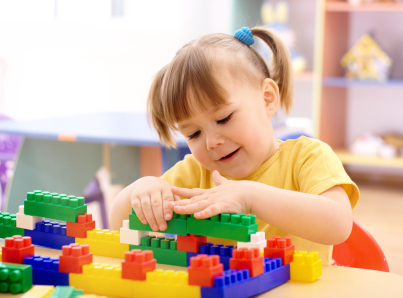
Children participating in a daycare curriculum that incorporates play receive immeasurable—and measurable—benefits. Children naturally learn through play that engages all five senses. Plus, children learn just how fun, well, learning can be!

preschoolers playing4 reasons (and tips) to include play in a daycare curriculum

  1. Play gives children the opportunity to try out new ideas and concepts in a safe environment. Cognitive benefits include boosts to imagination, problem solving, and abstract thinking. Tip: Ask and incorporate children’s ideas into the lessons. Learning about farms? Ask children what kind of animals they would see on the farm. What would they sound like? How would they move? You never know what kind of farm children might create together!
  2. When children play together, they practice cooperation, sharing, taking turns, and conflict resolution—all vital skills needed for success in school, at home, and in life! Tip: Point out positive behavior you see throughout the day.
  3. The language benefits of play include storytelling, vocabulary acquisition, communication skills, and even emergent literacy. Tip: After reading a book to the class, create an “And Then” story together. What happens to the characters after the book ends? After each child’s turn as storyteller, say “And then…”
  4. Play provides opportunities for physical development, such as fine- and gross-motor skills, physical challenges, and self-help skills. Tip: Go outside and play. Research shows children can better concentrate and self-regulate after spending time on a playground during the day.

Preschool curriculum uses music (and play!) to promote school-readiness skills

ABC Music & Me is a standards-based supplemental daycare curriculum. All levels of our toddler and preschool curriculum use music, movement, and play to cultivate turn-taking and sharing, improve self-control, enhance creativity, and boost early language development and early literacy.
For more information about bringing our preschool curriculum to your childcare or daycare, email us at info@abcmusicandme.com.

5 Benefits of Play for Children

Benefits of Play for Children

Benefits of Play for ChildrenI think play is an expression of our creativity; and creativity, I believe, is at the very root of our ability to learn, to cope, and to become whatever we may be.  To me, play is the process of finding new combinations for known things – combinations that may yield new forms of expression, new inventions, new discoveries, and new situations.
Fred Rogers, 1993

We couldn’t agree more, Mister Rogers! That’s why play is such an important part of the Kindermusik experience, both in class – where we explore instruments, use our imaginations, enjoy pretend play, and even play games – and at home – where Kindermusik@Home learning resources and educational activities for kids inspire all kinds of together-time play.
Play is so much more than just the proverbial fun and games. Play is a natural activity for children. The child at play is self-motivated and actively engaged. Whereas games are governed by rules, the value of play is that it provides freedom from evaluation and judgment. The freedom of a playful atmosphere fosters intellectual development as well as self-construction and the development of personality.

In short summary, play is:

  1. how children learn
  2. one of the first steps toward social interaction
  3. a means for children to develop self-motivation
  4. one essential that helps accelerate a child’s cognitive development (Dr. Carla Hannaford, author of Smart Moves: Why Learning is Not All in Your Head)
  5. a great way for adults and children to bond

Kindermusik - Where Music and Learning Play

Shared by Theresa Case, whose Kindermusik program at Piano Central Studios in Greenville, SC, is proudly among the top 1% of Kindermusik programs worldwide.

4 ways Kindermusik@Home protects the environment for kids

Kindermusik@Home

Kindermusik@HomeLong before Kermit the Frog sang, “It’s not easy being green,” Chief Seattle spoke about the importance of sustainability for kids. He said, “We do not inherit the earth from our ancestors. We borrow it from our children.” At Kindermusik, we take those words and our role as educators and protectors of the environment for kids seriously. It’s one of the reasons we introduced Kindermusik@Home in 2012. With these educational activities for kids, families participate in age-appropriate digital learning, such as reading eBooks, virtual fieldtrips, and music downloads, that connects the classroom with a family’s daily routines and rituals while also supporting Kindermusik International’s commitment to sustainability.

4 ways Kindermusik@Home helps protect the environment for kids

  1. Kindermusik@Home eliminates the printing and shipping costs of traditional books, CDs, instruments, and packaging.
  2. Virtual fieldtrips introduce children to new ideas, places, animals, and people without using carbon fuels to travel long distances or possibly disturbing fragile ecosystems. On a virtual fieldtrip, families may visit the studio of a drum maker in Chicago, go on a bird walk to see and hear birds from around the world, or even experience a carnival (without the long lines!).
  3. Digital eBooks provide children and families with the same educational benefits of print books while saving nearly 5 million (and growing!) sheets of paper each year.
  4. Parents discover creative ways to re-use items normally reserved for the recycle or trash bin to create instruments, parade crafts, a train, and more. These fun and practical ideas spark imaginations and turn “trash” into a beloved treasure.

To learn more about enrolling in a Kindermusik class and receiving access to Kindermusik@Home, contact a local educator and 
Find a Kindermusik Class Near You.

Schools, preschools, and childcare centers can also benefit from Kindermusik@Home. To learn more about bringing our digital early learning curriculum into your classroom while also increasing parental involvement, email us at info@abcmusicandme.com

Using eBooks with ELL students to aid reading comprehension

Using eBooks with children

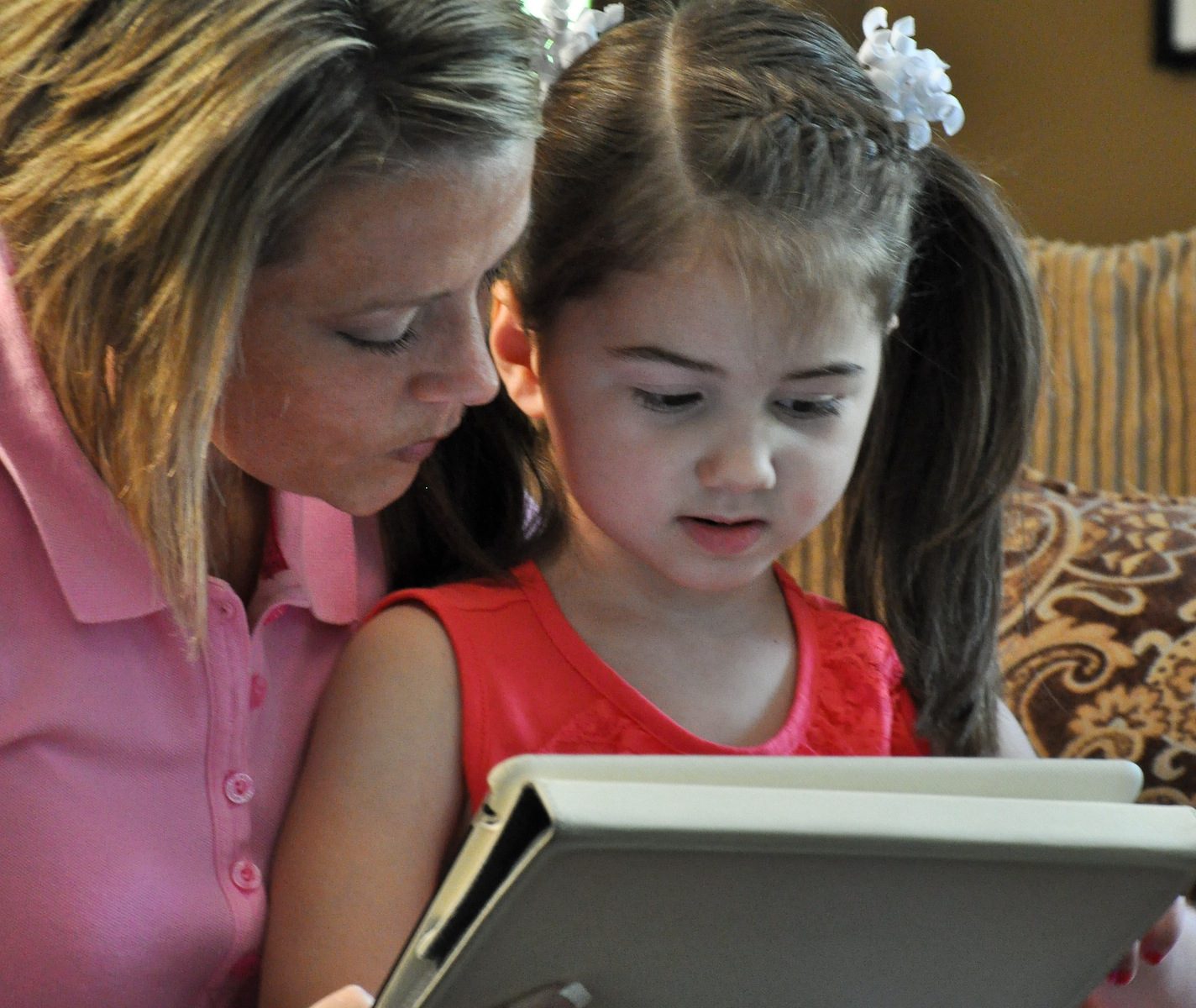
Today’s children live in an increasingly digital and global society. These digital natives can intuitively navigate around a smart phone, tablet computer, or iPad. As early childhood educators and curricula creators, we closely evaluate how established and emerging technologies can be used in an age-appropriate manner that supports how a child learns best. More and more research continues to emerge about digital learning, including a new study about reading comprehension and eBooks.

How eBooks measure up on reading comprehension

Using eBooks with childrenAs published in the Applied Cognitive Psychology journal, researchers assessed the impact of technology on reading comprehension. Under the leadership of Dr. Sara Margolin, the research team split the 90 participants with an average age of 19 into three groups to read 10 passages. One third read the passages on paper, one third read on a Kindle eReader, and one third viewed the passages on a PDF-reader via computer. The passages contained an equal number of non-fiction and fiction excerpts. After reading each passage, participants answered comprehension questions. The research team found no difference in comprehension scores across all three platforms.

English Language Learners and eBooks

While the students in this study were not ELL students, reading comprehension remains a key focus for teaching English to children. As mentioned in a previous blog, “5 Ways to Support English Language Learners,” the number of young ELL students in the United States continues to rise. However, teaching English to children extends beyond the United States as more and more parents understand how teaching a young child a second (or third!) language can help prepare a child for future success.
With ABC English & Me, we use music and movement to teach English to speakers of other languages that meets the TESOL curriculum standards for Pre-K. This beginners program for English Language Learners combines Kindermusik’s decades of experience in early childhood education with the latest research on learning a foreign language. Plus, with Kindermusik@Home, children and parents get the added benefit of using technology, including eBooks and music downloads, in age-appropriate and fun ways that engage the whole family.

Get more info on teaching English to children around the world with Kindermusik and ABC English & Me.

3 Advantages of Kindermusik@Home

Kindermusik@Home

Kindermusik@HomeYou might have heard the exciting news – there’s something new at Kindermusik. But not only is there a brand-new curricula with fresh and delightful themes, there is also a whole new kind of home materials to complement those themes and extend the classroom experience in a whole new way.
Introducing… Kindermusik@Home!

Advantage #1: More educational activities for kids to enjoy

The new curricula introduce a new theme every four lessons, and with every new theme comes another set of learning activities and parenting resources, automatically delivered to you.

Advantage #2: With you wherever you (or your device!) are

Kindermusik@Home - Online Learning Games for KidsAs long as you have your phone, your tablet, or your computer, you have your Kindermusik@Home with all of the activities, resources, play ideas, and music at your fingertips.
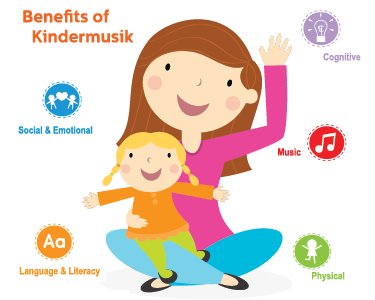
Whether you’re at home, or on-the-go, you and your kids can enjoy fun and educational activities, any time or day of the week!

Advantage #3: Yours for always and forever

The longer you’re enrolled in Kindermusik, the larger your library of Kindermusik@Home learning games and educational activities for kids becomes. And that library will always be available to you, even if you are no longer enrolled in Kindermusik classes.
There’s no better gift you can give your child than Kindermusik, especially when it includes all of the advantages of Kindermusik@Home!
Shared by Theresa Case, whose Kindermusik program at Piano Central Studios in Greenville, SC, is proudly among the top 1% of Kindermusik programs worldwide.

4 Surprising Ways Your Child Benefits from a Variety of Music

Benefits Of Music for Children

Kindermusik is dedicated to bringing you and your child a variety of music. See how this type of exposure to musical learning expands your child’s development of 4 essential, surprisingly, non-musical skills.

Benefits Of Music for Children

Greater language proficiency

Just as you read a variety of books to expand your child’s vocabulary, exposure to a wide variety of music and sounds expands your child’s “ear vocabulary.” High quality musical recordings and real instruments help your child “fine tune” her ear to recognize and imitate the sounds that make up words and language.

Spatial awareness

When a child listens to music, her mind perceives the sound in multi-dimensional ways. The sound is loud or soft, fast or slow, it moves up and down, or left to right. Eventually, she’ll use that “awareness of space” to work with her body when she walks through the living room and tries not to hit the coffee table. Much later, this same awareness is necessary skill for learning how to get around things, jump, run, and move in zig-zag ways.

Temporal reasoning

You hear this skill in action when a preschooler tells a story. He starts with his own experience and then moves to some imagined place with a princess or a superhero then goes back to something real again. Music does the same thing. It goes back and forth between established places (the chorus) and to new places that take you somewhere else (the verse). The ability to go back and forth from something established to something imagined comes from temporal reasoning, a skill used in music writing, storytelling, and problem solving.

Emotional intelligence

With exposure to a greater variety of musical styles—like jazz, folk, or classical, this increased exposure to music increases a child’s awareness and understanding of different moods and emotions.
So there you have it – at least four reasons why we make the claim that Kindermusik is so much more than just music.  But we’ll not only help your child become a better learner, we’ll also deliver a classroom experience that inspires a lifelong love for music and gives you tips, ideas, and tools like Kindermusik@Home, resources for parents and educational activities for kids with music downloads that make great parenting just a little bit easier.
Edited and revised by Theresa Case, whose Kindermusik program at Piano Central Studios in Greenville, SC, is proudly among the top 1% of Kindermusik programs worldwide.

Public Schools, Elementary Curriculum – Making a Difference with ABC Music & Me

ABC Music & Me Special Education Curriculum - Sycamore Creek Elementary

Teachers at Sycamore Creek Elementary in the Wake County Schools, North Carolina share their experience with ABC Music & Me, and the difference this elementary school curriculum from Kindermusik International has made with their students.

ABC Music & Me Special Education Curriculum - Sycamore Creek Elementary“I began using ABC Music & Me with my developmentally delayed preschool classroom in the fall of 2011 when it was brought into our school system. The program was ready to use out of the box with a few simple modifications for my students with visual impairments. From the first day of use my students fell in love with the songs, instruments and activities from the unit called Laugh & Learn. I really like the way the program has a wide mix of listening, movement, and instrument activities scattered throughout the lessons. This setup keeps the students actively engaged and prevents their attention from wondering.

In late 2011 I was moved into a classroom for kindergarten to second grade students with Autism at the same school. The school PTA was looking at purchasing a different music program for the class with the previous teacher. After hearing this I instantly contacted Ms. Kerri, my trainer, from ABC Music & Me and began discussing with her what would be the most appropriate level for my new students. Ms. Kerri and I gathered the needed information and I took the proposal for the unit called Move & Groove back to the PTA. After seeing the proposal and hearing my success with the preschool students the PTA agreed to purchase Move & Groove for our Autism programs. We began using our Move & Groove program in August of this year.
ABC Music & Me Elementary School Curriculum - Sycamore Creek ElementarySchoolThe transition of programs has been a little bit of adjustment for me as I need to become familiar with the content change. I do make some modifications to meet my students’ developmental needs such as shortening the lessons and taking out areas that may be frustrating for them. Overall we have all enjoyed our new program. Through the use of ABC Music & Me all of my students have started to sing, hum or make vocalizations to the music even my students who are non-verbal. We have also discovered that many of our friends have great rhythm. I am so glad that I was introduced to ABC Music & Me and was able to bring the program to my students.”
Trisha Dillon, NBCT ’04
Autism 1 Special Education Teacher
Sycamore Creek Elementary
Wake County Schools, North Carolina

ABC Music & Me Elementary Curriculum - Sycamore Creek Elementary
“Being a new teacher it has been wonderful using ABC Music & Me. The children look forward to it and it is a great outlet for some of our kids who love dance and music.  We have a best practice curriculum in our classroom, so it is always nice to have a program to follow for a certain subject area. The program is easy to use and to follow and that is nice as a new teacher because there are so many other things that I need to take care of. It is nice to have a program that is so easy to use and the kids love so much.”

Cindy Winter
Developmentally Delayed Preschool Classroom Teacher
Sycamore Creek Elementary
Wake County Schools, North Carolina

For more information, email us at: info@kindermusik.com