The Picture-Reading Connection

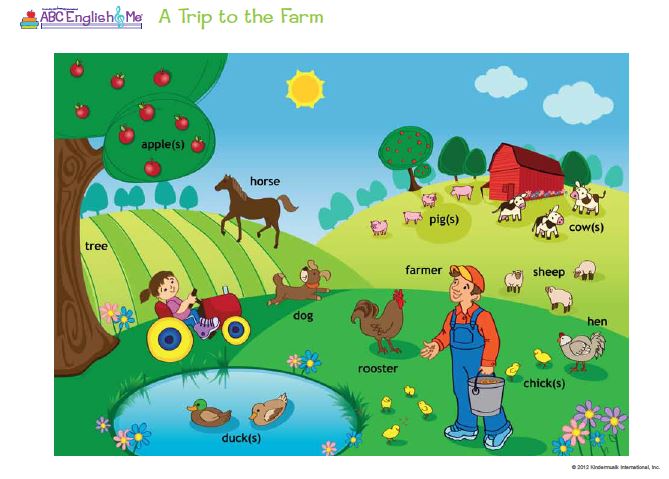
ABC English & Me - A Trip to the Farm - Educational Activity for ChildrenThey say that a picture is worth a thousand words, but in ABC English & Me, Kindermusik International is using the research-proven technique of using a picture to help a child learn to read a word.  In fact, a recent study by Chinese researchers again confirmed the impact of a visual-rich context on literacy.
Along with music, movement, and interactive @Home Materials, the ABC English & Me curriculum actually utilizes a variety of pictures and visuals to help reinforce the learning that happens in class and at home including:

  • illustrated rhymes
  • illustrated stories
  • posters
  • flashcards

You may not be enrolled in an ABC English & Me program, but you can help enhance your child’s literacy development in other simple ways.  Here are a few ideas and resources to get you started…

  • Build your own library at home.  From e-books to traditional books, you can buy books new, put them on a birthday or Christmas list for Grandma, or find gently used books at local bookstores or online at sites like Amazon.
  • Spend time reviewing this great list from The Children’s Book Review: 20 Sites to Improve Your Child’s Literacy
  • Point out the letters and words that surround us.  Whether it’s a box of cereal, a menu at a restaurant, or a sign on a building, opportunities abound to highlight the connection between letters, sounds, and words in every day, casual conversation.
  • Label things around the house.  Make some simple signs and label objects around the house.  You can use sticky-tack so that the signs are temporary.  Include a picture with the word for extra benefit.
  • Read aloud.  There’s no better way to bond with your child, create memories for a lifetime, AND increase their love for books and interest in learning to read for themselves.

Try A Free Kindermusik Class
See for yourself how Kindermusik can benefit your child in so many ways… including literacy development!  Try a free class today.
 

Kindermusik joins the Fred Rogers Center’s neighborhood!

It’s a beautiful day in this neighborhood,
A beautiful day for a neighbor.
Would you be mine?
Could you be mine?…

How many of us as children sang this song with the beloved Mr. Rogers? And, of course, we always answered, “Yes!” to being his neighbor. After all, who wouldn’t want to go over for a visit with Mr. Rogers—and maybe even a quick to trip to see King Friday and Queen Sara!

Will you be my neighbor?

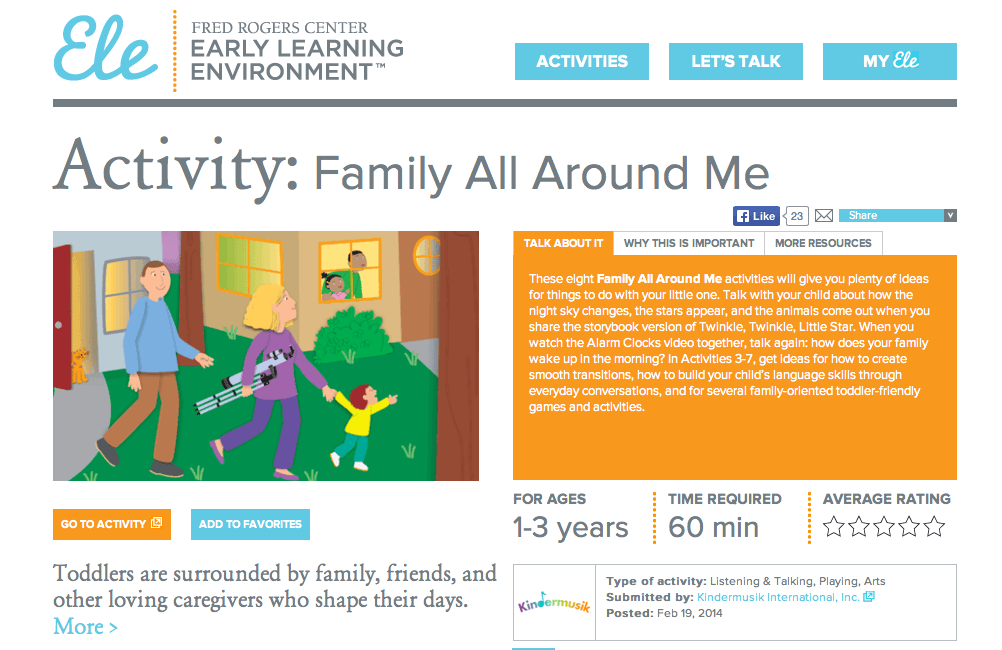
Kindermusik also said “Yes!” when asked to partner with the Fred Rogers Center and be featured on their website, Ele, which stands for Early Learning Environment.  Partnering with the brand that drafted today’s standards, along with NAEYC, for children and technology in early childhood is a great way to showcase our quality curricula & materials!
This position statement on using technology and interactive media as early education tools is a great resource for Kindermusik families who are concerned about screen time. In fact, Kindermusik drafted our official screen time position, using the guidelines crafted by NAEYC and the Fred Rogers Center.

Kindermusik’s Official Position on Screen Time
Kindermusik International knows and respects that each family gets to decide what’s best for them when it comes to the issue of screen time or the use of technology and young children.  In creating our new digital tools and parenting resources, Kindermusik has read about and researched this topic thoroughly.  We have aligned our stance with that of the highly respected NAEYC and the Fred Rogers Center for Early Learning, recognizing that children can benefit from a responsible and age-appropriate use of technology in combination with hands-on experiences and in partnership with an actively involved caregiver.  We are proud to bring these high-quality educational materials to your family in hopes we can truly embody the very best of both worlds- a responsible introduction to technology AND lots of hands-on, movement-rich, in-your-lap, down-on-the-floor learning.

Spread the News Through Your Neighborhood

Ele is like a library and a playroom where parents and early childhood educators can find online and mobile educational activities for young children. Ele focuses on using technology in age-appropriate ways to improve the language and early literacy skills of young children. A perfect partnership for Kindermusik!
Access to the resources is free and there is no cost to join the Ele community. Parents and educators will get great content, they’re able to make playlists and add favorites, and can join in discussions about early childhood education and digital learning.
Kindermusik plans to add four Kindermusik@Home units to Ele.
Right now, two are available:
Fred Rogers Center Ele!

On Ele, all of the activities are searchable for use at home or in the classroom, by age, media type, and even activity type (listening and talking, reading, writing, playing, arts, and science and math.)

Engage in more Kindermusik activities and support your children’s early language and literacy development on the Fred Roger’s Center website, Ele!
Visit Kindermusik in the “neighborhood” today!


6 St. Patrick’s Day activities for kids at home

We spy something GREEN. Well, of course, we do! It’s St. Patrick’s Day. Celebrating all things Irish takes on a whole new level of fun when you add children to the mix. Take a look inside a Kindermusik class to see how we like to celebrate in the classroom and then discover some ways for you to celebrate at home.

Try 6 of our favorite (EASY!) ways to celebrate St. Patrick’s Day with these activities for kids at home!

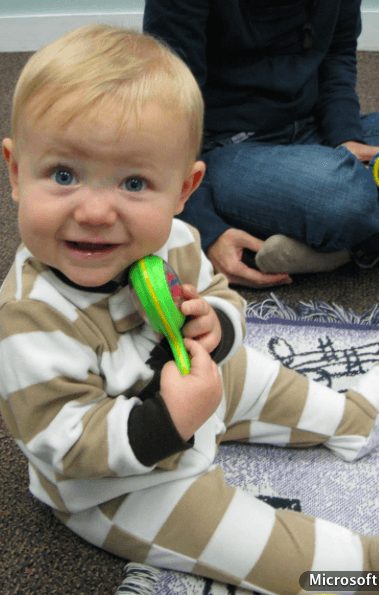
  1. Wear green! It doesn’t get any easier than this. Plus, with the two to three Baby playing instrumentwardrobe changes young children typically encounter each day, you can pick more than one cute green outfit!
  2. Sing some Irish songs. Our favorites include “That’s an Irish Lullaby” and “My Wild Irish Rose.” Of course, you can always introduce children to famous contemporary musicians from Ireland, such as U2, Van Morrison, The Chieftains, or Enya.
  3. Dance an Irish jig. You don’t need to lace up your ghillies to dance an Irish jig. You will need some lively music though! Why not grab some green instruments to play along?!
  4. Eat or drink something green. Little ones love the novelty of eating a food that doesn’t look like it usually does—green milk, green pancakes, green eggs, green cookies.
  5. Make a rainbow—with or without a pot of gold. Create a rainbow of fruit using strawberries, oranges or cantaloupe, pineapple, kiwi, blueberries, and cut up purple grapes. As a special treat after eating a healthy snack, perhaps a gold (chocolate!) coin can be found.
  6. Read a book about St. Patrick, leprechauns, or Ireland. We pinned some books for babies, toddlers, preschoolers, and older kids on the Kindermusik Pinterest board: “Books We Love for Kids.” Or, look for St. Patrick’s Day themed books on the Reading Rainbow app. The Music Mountain Island featuring Kindermusik content includes, “Under the Rainbow,” a story about a little boy and his grandmother searching for a pot of gold at the end of the rainbow.

Looking for more things to do with kids that include music and movement activities, support early literacy development, and enhance the cognitive development of young children? Be sure to follow Kindermusik

on Pinterest!

Bring a Friend to Kindermusik!

Most everything is more fun with a friend, and that’s especially true of Kindermusik!  Kindermusik is one of those really wonderful activities that is just as much for you as it is for your child – one special benefit being the friendship and support the adults find amongst each other because of Kindermusik. Many friendships have come out of being with other adults in a Kindermusik class, and many friendships are made that much stronger and more special because of attending Kindermusik class together.
BringAFriendToKindermusik
Your local Kindermusik educator would be thrilled to hear that you wanted to try Kindermusik with a friend, or even that you want to pay the highest compliment possible to her by introducing a friend to all that you’ve come to know and love about Kindermusik.

Simply contact your local educator about scheduling options.

And how you can make even more out of attending a weekly Kindermusik class with a friend?
Here are a few simple ideas:

  • Come a little early to class so that you can enjoy catching up and chatting before the class activities begin.
  • Arrange to meet after class at a local kid-friendly restaurant or coffee shop or even at a favorite playground for a picnic.
  • Organize a playdate with the other families in your class, either after class or on another day of the week.
  • Plan a “Girls Night Out” with the other Kindermusik moms – go out to eat, get a pedicure, attend a concert, etc. – without the kids.
  • Have a “Dad’s Day” or “Grandparents Day” where dads or grandparents attend the class and get to meet each other.

New to Kindermusik?

Try A Free Kindermusik Class
Try a Class for Free…and tell your friends!


Changing our world…through music!

There was a fascinating article recently published in Forbes magazine about how one man is using music, and specifically a music school, to shape a new generation in Vietnam.  The title of the article says it all, “Music Awakens Education in Vietnam.”  Nguyen Hong Minh’s vision is to use music to broaden minds, expand opportunities, impact the current culture, and create future leaders – all with a goal of changing his society for the better.  And he believes that he can accomplish his mission through one very powerful means… giving students an opportunity to study music and the performing arts at Erato Music & Performing Arts.
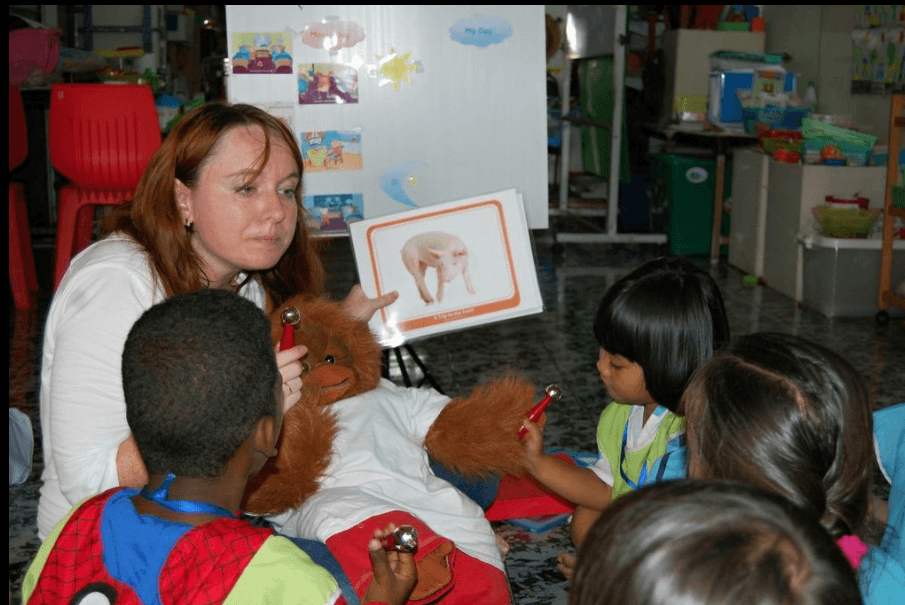
Thailand 3For over 30 years, Kindermusik International has also been committed to a similar mission – that of changing our world through music, one child at a time.  KI’s newest initiative, ABC English & Me, demonstrates the power of music to help children learn, develop, and blossom.  ABC English & Me is a unique and exciting mix of music and movement activities proven to help teach young English language learners while at play.
But like all Kindermusik classes, ABC English & Me is much more than just a weekly class experience.  The fun, music, and learning extend throughout the week at home through interactive @Home Materials that help parents support, enjoy, and enlarge the learning process in the place where children often learn best – at home.

Here are a few simple ways you can change your own little corner of the world through music and make a powerful difference in your child’s life:

  • Expose your children to a wide variety of music.
  • Keep music playing at home and in the car whenever possible.
  • Talk about what you hear in the music, identifying specific instruments or discussing the qualities of the music (fast, slow, loud, soft, etc.).
  • Have age-appropriate musical instruments available for your child to explore and play.
  • Sing and dance together – Your child doesn’t care how good you are, just that you care enough to sing or dance with him!
  • Read books about music to your child.  Here’s a list compiled by an elementary music teacher.
  • Take your children to music performances and concerts.
  • Watch good music and performing arts performances on TV, DVD, or webcast.
  • Inspire a love for music and take advantage of the benefits of music from a very early age – Kindermusik classes are a great place to start!  (You can even try a class for free!)

Music: A prescription for healing

Kelsey SpringstedMeet Kindermusik educator Kelsey Springsted

A spiral-bound notebook might not look like much, but to a 15-year-old girl diagnosed with Ewing’s sarcoma (a rare form of bone cancer), it became a lifeline. Kelsey Springsted always loved music—from creating musicals to perform in the living room for her family to piano lessons to playing the oboe in high school band. However, all of that came to a stop as a teenager when Kelsey learned she had cancer.

Chemotherapy treatments compromised Kelsey’s immune system so rather than spending her time in the typical teenager ways—hanging with friends, lamenting about homework, or performing with the band—Kelsey stayed in her room, alone. However, she did have a notebook.

“I began writing songs. That was how I got through each day,” confesses Kelsey. “I was rarely allowed to see my friends, even my twin sister, because of how weakened my immune system was, but the music allowed me to write about it and express myself. I wrote in my notebook and composed on the piano every day.”

Bringing musical healing to other children

Kelsey learned at an early age that music can indeed save us and transcend our circumstances. So, as her health improved at 16, Kelsey brought music to the hospital. She shared her notebook songs with children undergoing cancer treatment and other life-threatening illnesses.

“Music can be a therapy in many ways,” Kelsey explains. “It can get you through the day.”

Kelsey’s music led to organizing makeup parties for the girls, silly string and Nerf gun battles, and even a special gingerbread-making event around the holidays. Thanks to Kelsey and her gift of and for music, she helped make the days in the hospital a little bit better.

However, the music didn’t stop there! After battling cancer a second time when she was 19, Kelsey became involved in the Philoptochos Kids ‘n’ Cancer Camp Agape. Camp Agape offers families dealing with cancer and other life-threatening childhood diseases a refuge for four days in the summer, away from the sights and sounds of doctors, laboratories, and hospitals, where they spend so much of their lives. Children and their families engage in hands-on group activities that provide a reprieve from their daily challenges.

Each summer Kelsey runs the nightly campfires and leads families in playing instruments and singing together in Dunlap, Julian, and San Diego, California. Take a listen to her singing “No More Chemo” (with little voices singing along). The nurses taught Kelsey this song when she went through chemotherapy and she shares this at Camp Agape each year:

)

Making a difference with Kindermusik

In her early twenties, Kelsey taught for a kid’s gym. “I got excited when the kids started singing with me. That’s where I felt joy,” shares Kelsey. “A Kindermusik educator offered classes at the gym so I talked with her about Kindermusik. As that educator’s circumstances changed, so did mine. Now, I own all of her studios, with my main studio in Valencia, California.”

Kelsey loves being a Kindermusik educator: “I know that I am making a difference in the lives of children. When a child comes in to class having a bad day, the singing makes it all go away. Plus, I see how Kindermusik changes children. They are learning steady beat and sharing, language and literacy, and so much more. They are learning how to learn.”

It’s about the parents, too. “I get to be silly at work and the parents can get silly with their children in the classroom,” explains Kelsey. “I love that I can teach new parents how to play with their little ones and what a difference singing to their children can make.”

Kindermusik and Reading Rainbow

Kindermusik educator, Kelsey Springsted, and employee-owner, Jamie Sterling, with Reading Rainbow host LeVar Burton and CEO Mark Wolfe.

Now, as a Coloratura soprano and a graduate of the California Institute of the Arts with a Bachelor of Fine Arts, Kelsey participates in multiple opera and musical theater productions each year. One of this year’s “live performance” highlights took place last month at the Kindermusik and Reading Rainbow event to help celebrate the launch of the Kindermusik “Music Mountain” island on the Reading Rainbow app.

At the event, Kelsey led the auditorium full of children through Kindermusik activities. The entire hall filled with music and clapping and twirling and laughter—in typical Kelsey fashion.

“I loved being the musical theatre person on stage,” shares Kelsey. “I got like a 1,000 high fives!” (And, we loved being a part of it with you!)

Oh, and that notebook?

It’s gone—lost at Disneyland—but not forgotten. Yes, those songs helped Kelsey through her diagnosis and treatment. Yes, those songs encouraged more children when Kelsey sang to them in the hospital and at Camp Agape. And, yes, the roots of those songs spread into her Kindermusik classroom each week. So, the music lives

on. And so does Kelsey—5 years cancer free!

Contributed by Lisa Camino Rowell, Kindermusik parent, former Employee-Owner, and lifetime believer in the power of music.


Music & Movement Benefits: Music, Relaxation, and Nap Time

Today, on National Napping Day, we here at Kindermusik International are celebrating the benefit of learning to relax, one of the best gifts you can give your child.  (We wish we could celebrate in true form by taking a nap ourselves, but alas, duty calls… and we digress.)  Whether there’s simply a need to unwind or whether it’s time to settle down for a nap, music can be an important part of either of these childhood routines.
Just as your child needs stimulation and engagement in age-appropriate activities, she also needs periods of relaxation. This is one of the reasons why many of our Kindermusik classes for babies and toddlers specifically include Quiet Time or Relaxation Time ritual in every class.  Lights are lowered; adult and child cuddle up; and we all settle in to enjoy a lovely recording together.
mom and baby relax to musicBut a “quiet time” isn’t only for young children; it’s also beneficial for older children as well. And times set aside for relaxation are just as important at home as they are in the Kindermusik classroom. Creating regular quiet times at home gives your child practice in learning to calm herself, slow her pace, and relax. Plus it helps her develop a valuable lifelong skill – the skill of learned relaxation.
Slow, gentle music (like Kindermusik’s You Are My Sunshine) can best provide an environment most conducive to relaxation. Some families have created a favorites playlist of all their favorite Kindermusik Quiet Time music.  Or find new favorites to download at play.kindermusik.com.  Search by style for lullabies.  Find what your child likes, and then create a beloved and soothing routine by playing music whenever it’s time for your child to relax or go to sleep.
And so, in honor of National Napping Day, we encourage you to take a few moments to relax and listen to some beautiful music with your child today. You’ll love how good it makes you – and your child – feel!
 

Music & Movement Benefits: Why We Dance in Circles

preschoolers playing

In our baby music classes and toddler music classes, we almost always include a circle dance in every class. Together we’re a circle of support, love, and belonging.Those circle dances are great fun, but there’s serious purpose behind them too.
A circle is a symbol of community, and in it we all contribute equally. For your child, our circle dances give him a chance to see everyone, be part of our community, and to belong. There is no beginning or end to our circle, just as there are no leaders or followers; we all create our dance together.
Besides the power of the emotional connections created in our circle dancing, we are also igniting the brain to work at its fullest capacity. Only through movement and movement activities can the brain fully develop. As Anne Green Gilbert, dance and movement expert, explains: “The brain has a plan for development that involves specific and intensive motor activities to make full use of our complicated nervous system.”
“Circle dances come from the wonderful tradition of communities dancing together, a tradition which is timeless in origin and yet relevant today in its capacity to foster togetherness. Dancing in a circle actually benefits the mind, body, and spirit.” (Michaelsen)
Want to experience some of these same music and movement benefits in the best early childhood music classes on the planet? Come dance with us at Kindermusik! You can try a class on us for free!
Compiled by Theresa Case, whose Kindermusik program at Piano Central Studios in Greenville, SC, is proudly among the top 1% of Kindermusik programs worldwide.

Music in Our Schools Brings Harmony to Learning

(Source: National Association for Music Education)

Each March, we join with the National Association for Music Education for the observance of Music in Our Schools Month to help raise awareness of the importance of music education for all children.
With over 35 years of experience in using music to reach children of all abilities, we know without a doubt that music belongs in our schools. Why? Because that’s where our children are!  

Music opens the door to learning

When young children are consistently engaged by music in an age-appropriate, socially accepting environment, they benefit at so many levels. Here are just a few… 

  • Early Literacy Skills. They gain the phonological processing, spoken language, and comprehension skills that are the foundation of reading and early literacy skills.
  • Quantitative. They build the spatial-temporal and reasoning skills required for math, science, and engineering.
  • Social-Emotional. They develop social and emotional skills that are essential for school readiness—like the ability to regulate their responses and relate to others in complex ways.
  • Physical. By moving and dancing to music and playing simple instruments, children improve their gross and fine motor skills.
  • Creative. Activities that encourage freedom within a fun and friendly structure spark children’s creativity and provide inspiration.
  • And of course, they develop a lifelong love of music.

Music brings harmony to learning…and school

3_why_music_rectangle_yellowIn the early childhood classroom, the teacher, the paraprofessional, and the children all contribute to the learning process and environment. This experiential environment where the learning process is shared by everyone in the group is called “social constructivism.” Music creates a learning environment where every participant contributes and takes away something unique based on their own experiences, both inside and outside the classroom. For example, in our early literacy curriculum, ABC Music & Me, our classes provide children with ample time to reflect, compare, make choices, express opinions and preferences, and engage in problem solving activities together. This teaches children not only the lesson focus but it also teaches them how to learn. Plus, these shared experiences create a sense of community, harmony, and even teaches empathy.

What about you?

Why do you think music belongs in our schools? Take a minute to let us know by posting on our Facebook page. In the meantime, listen to children from Public School 22 in Staten Island, New York. Yes, music belongs in our schools. Every child deserves the opportunities that music can bring. We think these children would agree!


4 ways to make every day National Read Across America (AND the World) Day

Some celebrations should last more than one day. At Kindermusik, we think National Read Across America Day is one such day. It doesn’t necessarily mean we need to dress up like The Cat in the Hat every day, but we can celebrate the joy of reading to and with children every day.
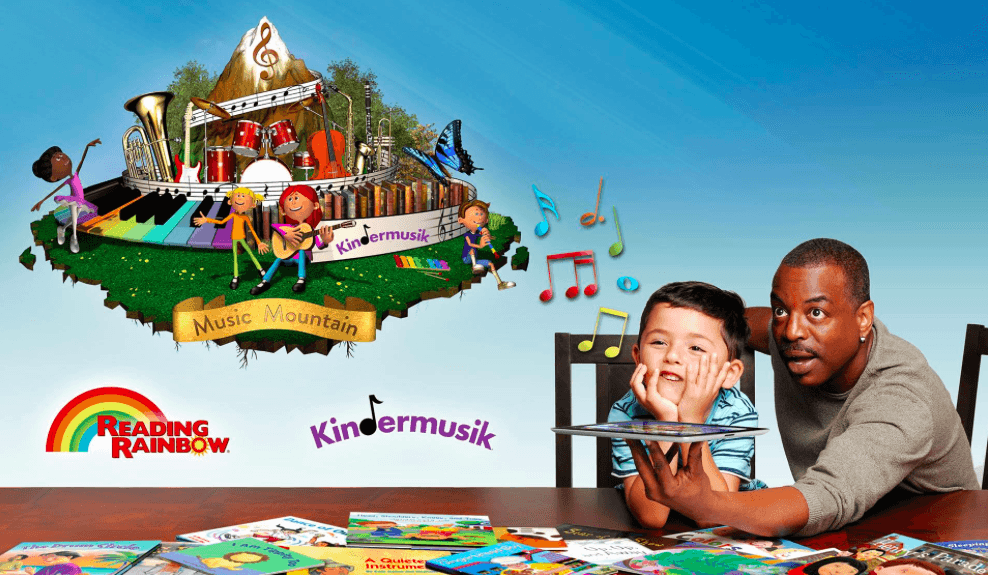
Reading Rainbow Kindermusik IslandOn Friday, we kicked off National Read Across America Day with LeVar Burton and Reading Rainbow to celebrate the launch of our partnership to build early literacy skills in children. With the addition of Music Mountain Island to the Reading Rainbow tablet-based reading service, Kindermusik’s music themed books and videos are featured alongside other newly produced content from Reading Rainbow and their partners. Of course, the celebration doesn’t stop there. Parents and early childhood educators can make every day National Read Across America Day with these early literacy tips:

4 ways to support early literacy development

  1. Let children pick the books. Children will naturally gravitate towards specific books that reflect their tastes and interests. While you might not pick up a book about snakes or garbage trucks or fairies or kittens, those topics might be just the book to delight the child or children in your life.
  2. Introduce children to eBooks and digital learning. Your little one will never remember a time before touch screens, eBooks, and digital learning. Try the Reading Rainbow app for iPad or Kindle Fire.  From sing-along stories to nursery rhymes, enjoy the library of musical tales that will encourage your little one to sing, dance, and read! Plus, music-themed video field trips hosted by LeVar Burton will take your family around the world to discover interesting musicians, music, and instruments! You can try the Reading Rainbow app for free!
  3. Play the part. Children learn through play. Encourage your little one to dress up like a favorite storybook character or act out the story using stuffed animals, Little People, or even the family pet. Pretending to be a part of the story helps children gain a greater understanding of the plot and characters, try out alternative endings, and even understand the world a little bit better. Added bonus: A child “in character” might be less reluctant to participate in certain daily routines and rituals, such as getting dressed or taking a bath.
  4. Point the way to reading. With very young children, reading doesn’t always look like, well, reading. However, pointing to the pictures on the page, making letter sounds, talking about what you see together gives children an early understanding of reading.

As an added bonus in celebrating National Read Across America Day, we’d like to share this video where LeVar Burton reads poetry selections from “I Am the Book”. Recently filmed in the library at Thomas Edison Elementary School – where Reading Rainbow and Kindermusik hosted an energetic Read-And-Sing-Along event for the children. Enjoy!

Looking for more ideas on making National Read Across America (and the World) Day—every day? Follow Kindermusik on Pinterest.