
Extraordinary benefit of music on the cognitive development of children

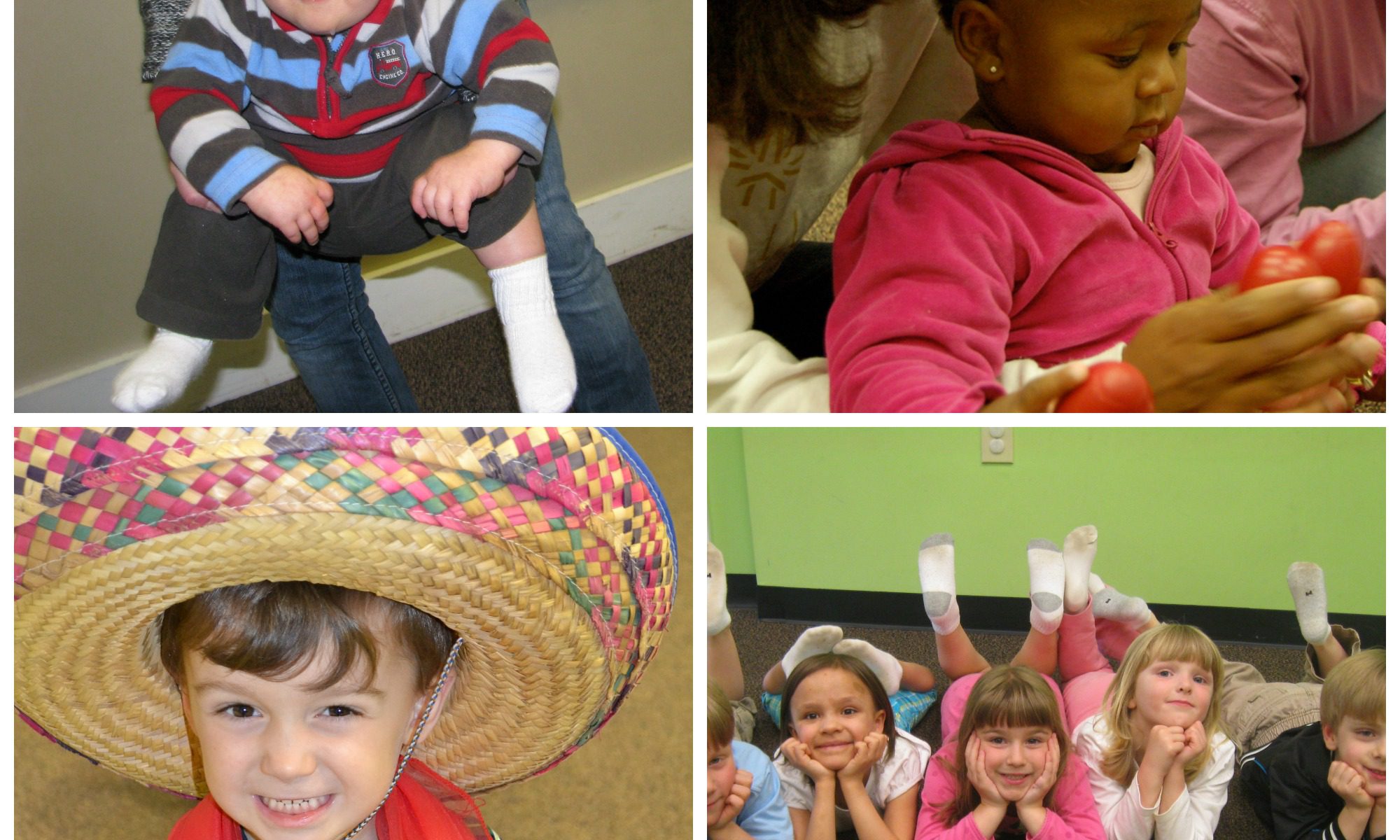
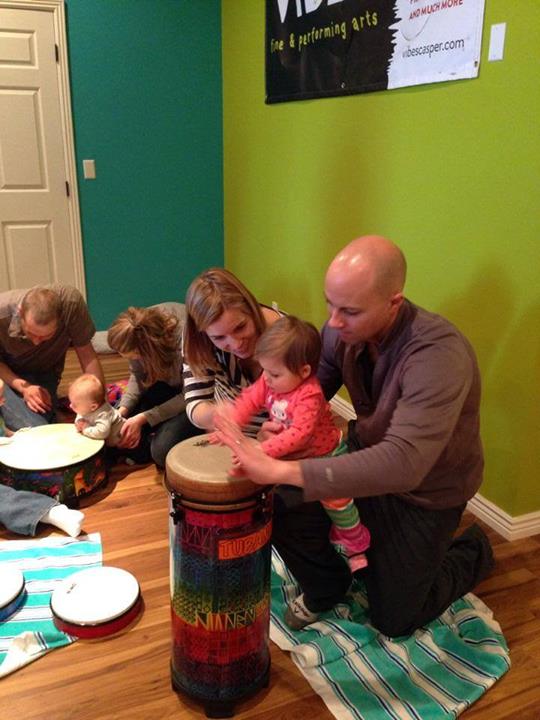
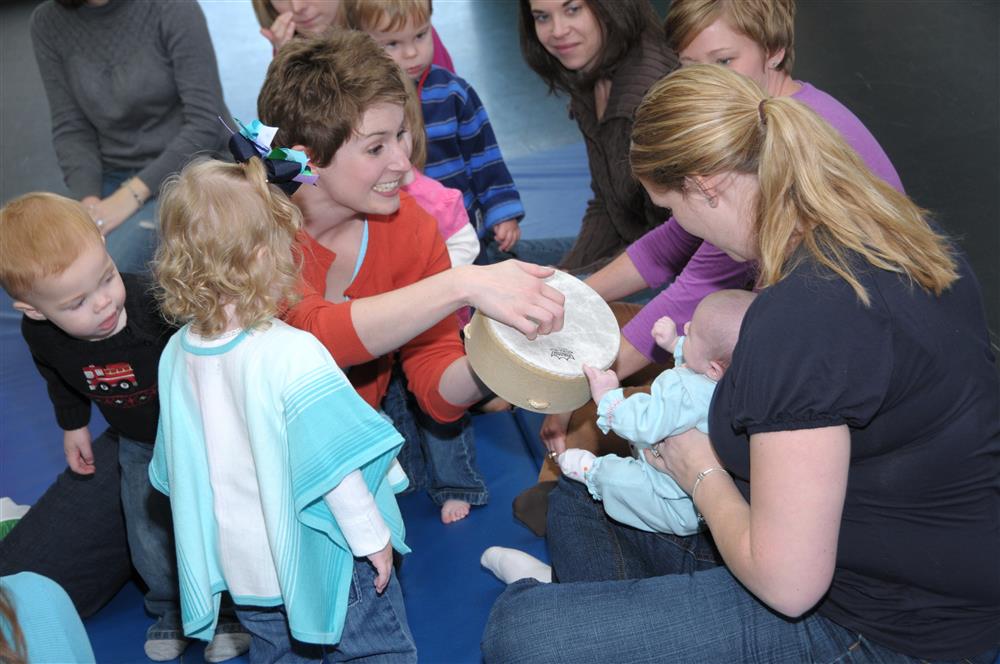
Music class drumTake a peek inside any Kindermusik classroom around the world and you will see much of the same thing. We sing. We dance. We play instruments. We listen to music. We move our bodies in response to music. We create music.
In all of our musical activities for kids, we engage children and families in learning both in the early childhood classroom and in the daily routines and rituals of family life. While this peek represents an ordinary (and fun!) day in a Kindermusik classroom, the benefits of music on the cognitive development of children is so much more than ordinary. For a young child’s brain development, the benefits of music are actually extra-ordinary.

A peek at the cognitive development of children who participate in music classes

While any parent can contact a local Kindermusik educator and take a free peek at a class, we need the help of scientists to look inside a child’s brain. Researchers from Boston’s Children’s Hospital recently took a closer look at what happens when children participate in music classes. The team studied 30 adults between the ages of 18 and 35 (15 working musicians and 15 non-musicians), and 27 children between the ages of 9 and 12 (over half of whom had at least two years of musical training).
As published in the online journal PLOSONE, they discovered that children with early musical training experience advanced executive function skills during cognitive testing. So, in other words, the benefits of music enables a child’s brain to more quickly process and retain information, regulate behaviors, make good choices, solve problems, plan, and adjust to changing mental demands. Sounds pretty extraordinary to us!
“Since executive functioning is a strong predictor of academic achievement, even more than IQ, we think our findings have strong educational implications,” explained study senior investigator Nadine Gaab, PhD, of the Laboratories of Cognitive Neuroscience at Boston Children’s in a press release. “While many schools are cutting music programs and spending more and more time on test preparation, our findings suggest that musical training may actually help to set up children for a better academic future.”

A child’s brain on Kindermusik

Brain on musicIncorporating music and movement into a child’s learning routine stimulates all areas of the brain and that is why music is the best vehicle of learning for early childhood education. Independent research studies show that Kindermusik—specifically—impacts the cognitive development of children. Children participating in our music classes show a 32 percent literacy gain and show marked improvement in inhibitory control.
So, whether you are looking to enroll your child in a Kindermusik class, bring Kindermusik to your childcare center or Head Start program, or even to your language school, the cognitive benefits of music will be evident.
For more information about bringing the benefits of music to your school or to find a local Kindermusik educator, visit the Class Locator.

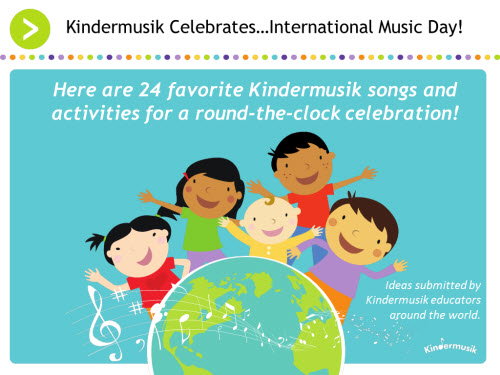
24 Favorite Kindermusik Activities for the 24 Hours of International Music Day

KindermusikInternational_CelebratesInternationalMusicDay_24MusicalActivities

Download PDF:  24 Musical Activities

Every day is international music day in our Kindermusik classes because our music, our activities, and our educators are from all around the world.
But in honor of the day especially set aside for a worldwide celebration, we are delighted to share 24 favorite Kindermusik activities to help you sing, sway, dance, and play your way through all 24 hours of International Music Day.
 

4 ways after-school programs help students who may be at risk

Elementary Curriculum - ABC Music & Me

Elementary Curriculum - ABC Music & MeFor students who may be at risk, school can be a place to eat a warm meal, access and read books, and play safely outside with friends. When the bell rings at the end of the day, many underserved students leave the safety and structure of school for an environment less than ideal. However, quality after-school programs can provide many benefits for children, especially those students who may be most at risk.
The Afterschool Alliance reviewed dozens of studies on after school programs in the United States. The Summary of Formal Evaluations of
 the Academic Impact of Afterschool Programs found four reoccurring themes that showed how an after-school curriculum impacts underserved students.

4 key ways quality after-school program curriculum impacts students who may be at risk

  1. At-risk students who participate in after-school programs show improved school attendance and measurable increases in learning engagement during regular school hours.
  2. At-risk students enrolled in an after-school curriculum improve test scores and grades, including in the areas of literacy and math.
  3. The frequency and duration that students who may be at risk participate in after-school programs is directly correlated to the positive benefits of attendance.
  4. Students at the greatest risk show the greatest gains from participating in an after school program curriculum.

After-school curriculum uses music to teach early language and literacy

Created by Kindermusik International, ABC Music & Me uses the proven cognitive benefits of music to boost the school readiness skills of young learners, including students who may be at risk. ABC Music & Me can be used as an after school curriculum to help all students experience gains in phonological and phonemic awareness, boost vocabulary acquisition, increase self-control abilities, and grow gross motor skills through whole body movement. In fact, participation in just 30 minutes a week delivers a 32 percent literacy gain!
Here’s what one Executive Director of an early learning center (and one of the first schools to use ABC Music & Me) said about how music, and ABC Music & Me, reaches at-risk children in her community.
[youtube]https://www.youtube.com/watch?v=KhYRlQz5W2s[/youtube]
KindermusikPresents_ABCMusicAndMe_AGlobalEarlyChildhoodCurriculum[1]
 

Learn more about using ABC Music & Me as an after school program curriculum for young learners, including students who may be at risk. Email us at info@abcmusicandme.com and request a demonstration to experience firsthand our customizable options for after-school programs.

Music & Movement Benefits: Reading with Babies

mom reading to her baby“You may have tangible wealth untold: caskets of jewels and coffers of gold.  Richer than I you can never be… I had a mother read to me.”  – Strickland Gillilan, The Reading Mother
Reading aloud to a child is the most powerful way to prepare her for success in reading.  .  In her book, Reading Magic, author Mem Fox explains that “…the more language a child experiences through books and conversation with others, the more advantaged socially, educationally, and in every way that child will be for the rest of his or her life.”  That’s some pretty powerful motivation for reading aloud – plus you get the cuddles and the memories too!

Tips for reading with babies

Begin introducing books at about 4 months of age.
This is about the age when babies become interested in objects – like books!  At first vinyl and cloth books will be best since babies learn by putting things in their mouths.  Your little one will be ready for board books at about 6 months of age.
Have realistic expectations. 
Even a few minutes in your lap engaged with a book should be considered a success!  Don’t worry… As your child grows, so does their attention span.  And when it comes to early reading experiences, it’s okay to let your child take the lead.  At this age, it still counts as “reading” if they are opening/closing the book, stacking books, or even just looking at a few of the pictures on a page.
Establish a routine.
By around 1 year of age, you can establish a regular reading routine – after breakfast, before nap time, after bath time – whatever is best for your child.  By now, your child may even have a favorite book that they like to read over, and over, and over…. and over again.  That’s okay – repetition strengthens the brain!
Music Makes My Day - Reading with Baby
BONUS!  For more great ideas for reading with your baby, check out this free activity from Kindermusik @Home: “Reading” with Baby

Musical Parenting in the Four Seasons of Early Childhood

baby - toddler- preschooler - big kidWe’ve all heard that there are seasons of life, but it can be particularly insightful for parents of young children to think of the seasons (or stages) of early childhood, each with its own unique joys and challenges – joys and challenges that also have the potential to give way to some of the greatest rewards of parenting.  Kindermusik classes not only meet the needs of children at the various stages of development, but Kindermusik also meets the needs of parents at these different seasons.

Babies… When change is the only constant

There is so much that happens that first year or two – so many “firsts” to treasure, memories to capture, and sweet cuddly baby-sized little people to hold on to, for forever if you could!  Your weekly Kindermusik class gives you the time (and the excuse!) to slow down, hum a lullaby, cuddle a little longer, and share a few more smiles.  All along the way, you’ll gain precious developmental insights into the wonderful little person your baby is quickly growing to be!

Toddlers… When it’s life in the fast lane!

From when they wake up until they fall fast asleep, it’s all about go-go-GO! in the world of a toddler. (Just ask their exhausted parents!!)  There’s a lot of cuteness, curiosity, and personality emerging – some of it you laugh at, some of it you scratch your head about.  Kindermusik gives you and your child the perfect opportunity to laugh together, play together, engage and connect in new ways, socialize, and even sneak in a few extra hugs.  Plus we’ll teach you a song to get you through nearly every routine in your day!

Preschoolers… When it’s time to get ready

Preschoolers are on the verge of becoming more independent, bigger thinkers, social butterflies, and more curious learners.  But don’t let those big changes fool you.  Your preschooler still needs you to spend time with him and be a part of his world.  Kindermusik can be the highlight of the week – the one thing that is predictable, familiar, and yet challenging all at the same time.  Time by himself with his friends in class and time with you too – even the structure of the class supports your child at this crucial time.  We’ll help you hang on to those fleeting childhood years just a little bit longer!

Big Kids… When they’re poised for new adventure

Your big kid is so much more capable and independent, and they are eager for new challenges that still keep the fun, pressure-free adventure in the learning process.  Kindermusik comes alongside you and your child at this special time, giving you a special weekly activity that is a choice, not a requirement.  Kindermusik is all about partnering with you to unfold the unique miracle that is your child, without pressure, performance, or state standards – all while inspiring a love for music that will stay with her the rest of her life.

Parents… How to Stop, Pause, and Celebrate each Season

In a world where the pressure on parents can be immense, we here at Kindermusik invite you to let us help you stop, pause, and celebrate each season of childhood – from baby to toddler to preschooler to big kid – by taking time together in a Kindermusik class.  We’ll be right there beside you cheering you on and encouraging you to relish the little moments of life that make such a big difference in your child’s life.
Come See Kindermusik
See for yourself the difference that time together in Kindermusik can make.  Schedule your free preview class today!

Shared by Theresa Case who has an award-winning Kindermusik program at Piano Central Studios in beautiful Upstate South Carolina.


Music and language share common brain pathways

(Source: http://www.womenshealthmag.com)

Athletes employ the benefits of music to boost overall performance. Science shows that specific types of music can really get the blood pumping and focus the mind on the task at hand—like 1-minute planks or running those last few miles. However, a new study also shows that music can get the blood pumping for language development, too.
Music and language development on the same path to learning
In two related studies, researchers from the University of Liverpool found that brief musical training can increase the blood flow in the left hemisphere of the brain—the same area of the brain responsible for language learning.
The initial study examined the brain activity patterns in musicians and non-musicians as they participated in musical activities and word generation tasks at the same time. The results showed that the musicians’ brains showed similar paths during the activities, but the non-musicians did not.
In the follow-up study, the researchers measured the brain activity patterns of non-musicians who participated in both a word generation task and music perception task. Then, the participants received 30 minutes of musical training and then completed the tasks again. After the musical training, significant similarities were found in the brain.
Amy Spray, who conducted the research, explained in a press release:  “The areas of our brain that process music and language are thought to be shared. Previous research has suggested that musical training can lead to the increased use of the left hemisphere of the brain. This study looked into the modulatory effects that musical training could have on the use of different sides of the brain when performing music and language tasks. It was fascinating to see that the similarities in blood flow signatures can be brought about after just 30 minutes of simple musical training.”
Music and young ELL students
ABC English & Me - Teaching English to Children through MusicWhile the study above focused on adult participants, the results impact English language learners in the early childhood classroom, too.  ABC English & Me, our English Language Learners curriculum, uses ESL activities for kids, words with picture cards, puppets, and English songs for kids to teach young children English. From the first song at the start of each class to the last shake or tap of an instrument, children quickly become engaged in actively learning English through fun, games, and, of course, music!
Plus, we provide materials for families to use together at home. These monthly interactive materials support the classroom learning, while giving parents the tools they need to continue the English language learning at home through music.

Learn more about bringing ABC English & Me and the power of music to your school!

4 Things You May Not Know About Kindermusik

Kindermusik is for parents tooKindermusik isn’t just for kids – it’s for parents too!
You’ll love the support and friendship you find amongst the other adults in the class.  The class activities are just as much fun for you as they are for your child – and no one cares how well you sing or dance.  It’s all about the kids!  Plus you’ll take home what you learn so that along with your Home Materials, you’ll have the tools and resources at your fingertips to extend the fun, music, and learning at home.
Kindermusik classes will become the highlight of your week.
Kindermusik isn’t just one more thing for your busy schedule, it’s the one thing that allows you time to slow down and savor those precious, fleeting years from newborn to age 7 years. Kindermusik classes give you uninterrupted quality time with your child and unique insights into your child’s development.  And there’s nothing more rewarding than knowing that you (and Kindermusik!) just put that big smile on your child’s face and a happy song in his/her heart.
Kindermusik helps you influence your child’s early learning.
With Kindermusik, your young child has his/her first learning experiences in a group where the gentle, nurturing structure of the class is shaped not only by your caring, licensed educator, but more importantly, by your support and involvement in class.  It’s in the early years that brain activity is at its peak, and where the window of learning is open widest.  With carefully developed curricula enhanced by your Home Materials, Kindermusik helps you give your child an early learning advantage.  After all, you are your child’s first and best teacher!
A Kindermusik enrollment pays huge dividends.
It’s impossible to put a price tag on the long-term benefits of investing in Kindermusik for your child.  Kindermusik is truly the good beginning that never ends, nurturing your child’s total development, creating memories of the happiest moments, and fostering a lifelong love of music.  The bonding and together time contributes to healthy social-emotional development.  And the research continues to confirm a strong connection between music and academic achievement.  Even more studies are finding that the beneficial effects of early childhood music experiences extend even into the elderly years.
Kindermusik is where music and learning play
Want to learn more about Kindermusik?  Get started today with a free preview class on us.

What You Need for Your Child When Your Child Needs It Most

Every stage, or “season,” of early childhood has its triumphs and its challenges.  At Kindermusik, we believe that music and movement should be a huge part of both the celebrations and the everyday moments of each stage of childhood.
That’s why Kindermusik classes are not just filled with happy music and delightful activities for kids, but are also full of practical tips and musical helps for parents.  And it all comes packaged in such a way as to also give you invaluable insights into the way your child will grow and develop into the special individual he/she is meant to be.
Village baby with new logo
Babies need nurture.
The first years are all about connections and learning.  A lullaby will become a beautiful ritual before nap time.  A sweet little finger play makes bath time extra fun.  A quick dance around the kitchen provides a needed distraction around supper time.
In Kindermusik, we’ll teach you all of the songs, fingerplays, and dances you need, but we’ll also give you the time to settle in and savor these precious early years.  The window for learning is open the widest right now, and there’s nothing more powerful than music and movement.
Our Time girl with new logoToddlers need engagement.
Busy brains and busy little bodies need something to keep them active. And yet they thrive on predictability and routine.  Despite attempts to be fiercely independent, these busy little people still need you and they still need lots of cuddles.  And they do love their music!
We’ll help you add plenty of activity to your week – in class and at home.  And we’ll give you the music to dance to, the songs to sing, and the lullabies to hum, along with the insights you need to better understand this beautiful little person that is your child.
IT girl with new logoPreschoolers need adventure.
More than at any other stage, play is your preschool child’s work.  Play is how they’ll learn best.  The preschooler enjoys action and adventure, and he/she is eager for the kinds of rich experiences and interactions that will best help get him/her be ready for school, for music lessons, and for life.
Pretend play, big imaginations, socializing, and new musical concepts – all of these and more are how this stage of Kindermusik helps your child thrive and flourish.  Best of all, Kindermusik allows you to be part of the grand adventure of preparing for some very exciting transitions.
YC boy with new logoBig Kids need opportunity.
Your child seems so grown up all of the sudden, but he/she is not as grown up as you might think.  Now more than ever, your child needs to move, to explore, and to have fun even while being challenged with new ideas and ways to learn.  Your child is more than capable of learning the more specific musical concepts that will continue to foster a love for music and prepare him/her for that next step to formal music instruction.
As we capitalize on your child’s love of learning and making music with friends, we’ll also keep you involved through pressure-free music-making and simple activities at home.  You’ll learn right along with your child, and you’ll have the resources you need to make time for music and enjoy time with your child.
Try A Free Kindermusik Class
We’d love for you to come see for yourself how Kindermusik meets your child’s musical and developmental needs at every stage in early childhood, from newborn to age 7.  Try a free class today!
 

Shared by Kindermusik educator Theresa Case who has an award-winning Kindermusik program at Piano Central Studios in beautiful Upstate South Carolina

Professional development for teachers helps preschoolers, too

Kindermusik Music Teacher

Kindermusik Music TeacherMary Kay Ash, the founder of Mary Kay, wrote: “If you think you can, you can. And if you think you can’t, you’re right.” Undoubtedly, she knew more about building a cosmetics business than early childhood education, but she understood the power of believing in your abilities. Now, early childhood research shows that when teachers believe in their abilities it impacts more than just them. Teachers who believe in their abilities also help preschoolers more with language and literacy skills than those who are less confident.

Confident preschool teachers boost preschoolers’ early literacy skills

As published in the journal of Teaching and Teacher Education, a research study followed 67 teachers and 328 of their students for 30 weeks. During the study, preschool teachers rated their own self-efficacy or belief in their ability to succeed in certain situations, such as keeping students on task for difficult assignments. Teachers and students were also observed interacting together in the classroom. Researchers rated the quality of emotional support as low, mid, or high. The team also evaluated the language and literacy abilities of children at the beginning and end of the 30 weeks. The researchers found that teachers who believed in their abilities as an educator positively impacted their students’ early literacy and language abilities.

2 ways teacher confidence impacts students’ abilities

1. Children whose teachers had high self-efficacy showed greater gains in print awareness
2. Children increased vocabulary knowledge skills when they had a classroom that offered emotional support in addition to having a teacher with high self-efficacy
One surprising finding indicated that preschool teachers with more experience had less confidence in their own abilities. “Fresh teachers who are straight out of training think that they can change the world. Then, when they get into the work place they realize how serious and difficult their jobs really are. This is why we think self-efficacy may decline among some preschool teachers through the years,” explained Laura Justice, co-author of the study, in a press release.

Professional development for teachers increases job satisfaction and abilities

One key way to both increase self-efficacy and job satisfaction is professional development for teachers. According to the most recent MetLife Survey of the American Teacher, only 39 percent of teachers say they are very satisfied with their jobs. Budget cuts, teacher and school support staff layoffs, job insecurity, and increased class sizes, probably contribute to the drop in teacher satisfaction rates. The survey did identify, however, three areas that significantly increase teachers’ job satisfaction.

3 ways to increase job satisfaction among teachers

  1. Adequate opportunities for professional development
  2. Time to collaborate with other teachers
  3. Support from principal, other teachers, and parents to help engage and communicate with students’ parents effectively

Increase self-efficacy and job satisfaction of teachers AND literacy and language abilities of preschoolers KindermusikMovesMe-Logo-Hashtag-2331x869-2331x869

Training, collaboration, and connecting with parents are key components of Kindermusik. Our half-day trainings include a hands-on demonstration and provide early childhood educators with a clear understanding of the research behind the method and how it works on different skills and within different learning domains. However, we know the learning doesn’t stop after the training ends. Each unit includes an Activity Demonstration DVD that shows every activity being modeled in a real classroom setting.
Kindermusik even makes connecting with parents easier. Forget about creating and photocopying take-home sheets week after week. Each month every child receives take-home materials, including a Family Activity Guide and CD, which reinforce the classroom learning with reading, writing, and listening activities.

Learn more about bringing Kindermusik to your childcare center, preschool, or school! Email us at info@abcmusicandme.com.

4 Cool Music Facts

4 Cool Music FactsWhen young children are consistently engaged by music in an age-appropriate, socially accepting environment, they benefit at so many levels. Learning through music literally lights up every area of a child’s brain and teaches little ones to love learning. So, in our music education classes for babies, big kids, toddlers, preschoolers, and families when we recite a nursery rhyme, participate in a circle dance or movement activity, play a vocal game, and explore instruments, children develop skills in early literacy and language, spatial-temporal and reasoning skills, physical development, and creativity.

4 Cool Music Facts

1. Making music together connects brains.

Researchers in Germany conducted a study with trained guitarists in which they attached electrodes to their heads while they played a duet. During the study, they found that the brain waves coordinated between the two guitarists while they played the duet together. This also applies to choral groups, orchestras, small ensembles, and yes, even music education classes for kids.

2. Singing (and dancing) the Hokey Pokey helps children learn to read, walk around the room, and understand geometry.

When young children explore the directions up and down during a fingerplay or put their left hands in and take their left hands out, they gain a greater understanding of spatial awareness. Spatial awareness is the ability to be mindful of where you are in space and to see two or more objects in relation to each other and to yourself. This eventually helps young children to safely navigate around a room, tell the difference between letters and group them together on a page to recognize words, and understand geometry.

3. Music and movement experiences in a group teach children how to be a good friend.

Actively participating in a music class class for babies, toddlers, big kids or families, impacts all seven areas of social-emotional development, including confidence, curiosity, intentionality, self-control, relatedness, capacity to communicate, cooperativeness. All key skills needed to be a good friend.

4. Steady beat gives children the ability to walk effortlessly, speak expressively, and even regulate repeated motions such as riding a bicycle, brushing teeth, or dribbling a ball.

Through music, children experience and respond to steady beat during lap bounces, instrument play, and by dancing. While children move to the beat with their bodies instinctively, learning to control those movements, and to follow—or create—is an essential component of a child’s early development.


Need more? Join a Kindermusik class near you! We’ve been making music together with families all around the world for 40 years, and we’d love to sing, dance, and refine those critical skills with you. 


Contributed by Lisa Camino Rowell, a freelance writer and former Kindermusik parent, who loves seeing the long-term impact of Kindermusik classes on her children.