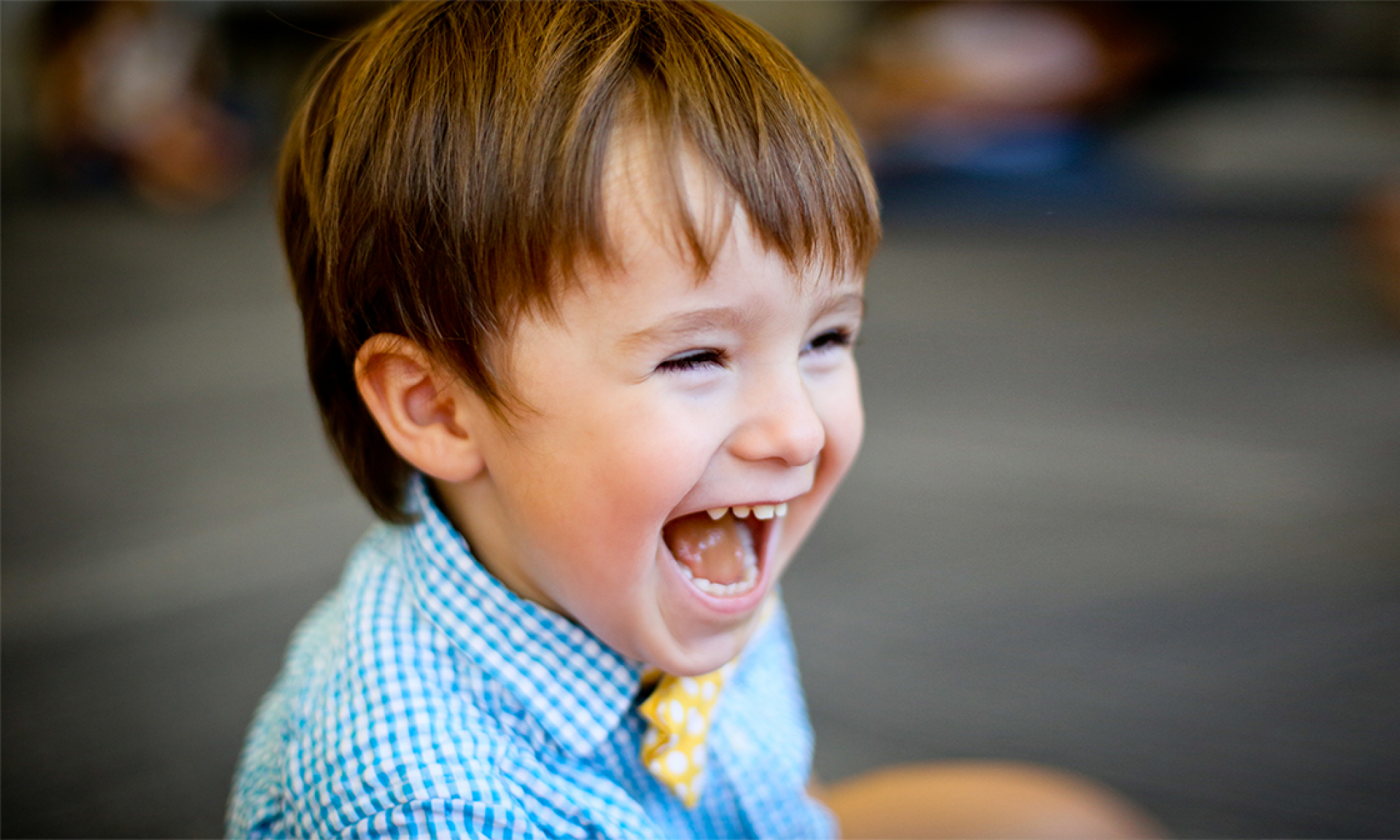

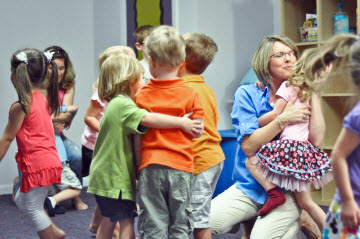
 Happy. Well-adjusted. Confident. Shows empathy. Cooperates with peers. Has good self-control. Any parent would be delighted to hear this assessment of his or her child. These words describe the social-emotional skills that are so closely tied to success in school and success in life.
For young children, social-emotional development can be enhanced through age-appropriate group musical experiences, like those in the Kindermusik classroom.
From music skills to life skills…
Here are just a few examples of how music and movement classes improve children’s listening skills and support social-emotional development:
- Gathering time where the children informally explore instruments or play with special props gives lots of opportunity for practicing sharing… and resolving conflict when two children want the same instrument.
 Ensemble experiences help children to listen closely and work together as they play-along and sing-along together as a group.
- Waiting for a turn to explore a special instrument or to share an idea helps children learn self-control.
- Sitting on the Story Blanket during musical story time teaches children how to empathize (Where can Susie sit?), cooperate (Let’s make sure all of our friends can see.), and listen.
- “Stop and go” activities also give opportunities for children to practice inhibitory control in a fun way – including using the ASL sign for “Stop!”

- “Follow the leader” activities require children to listen and cooperate, take turns, and practice inhibitory control. You can practice this at home with an impromptu musical parade around the house as you take turns being the band leader.
- Circle dances require every one to move together in the same direction and at the same speed. But they also inspire a sense of community, belonging, and self-esteem.
- Listening to music, moving to music, and singing are ways children can communicate about their feelings, helping them begin to better self-regulate and providing them with a safe and creative outlet for self-expression.
Find out more about Kindermusik at www.Kindermusik.com.
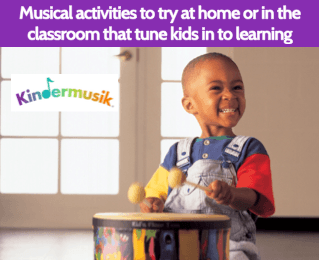
 For Toddlers: Toddlers who march, stomp, jump, and tiptoe to a steady beat tapped on rhythm sticks are discovering new ways to move their bodies—and gaining confidence and an understanding of spatial awareness, too. Instructing children to stop when the beat stops (and moving when the beat starts again) includes inhibitory control development as toddlers learn to control their bodies.
 Find out more about Kindermusik at
 Apparently, most Americans love music, too, at least when it comes to music preparing them for successful careers. According to a new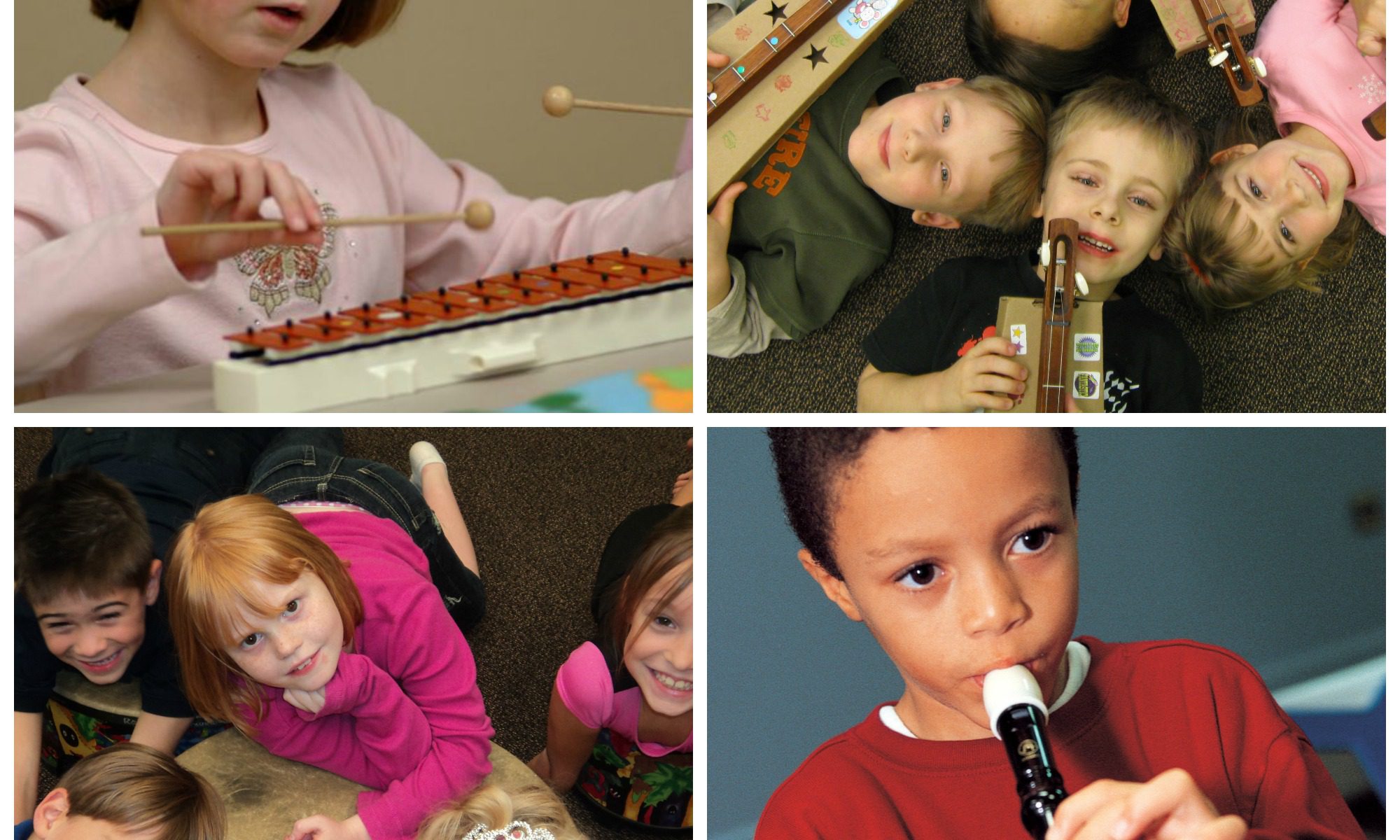
 Ever heard of a
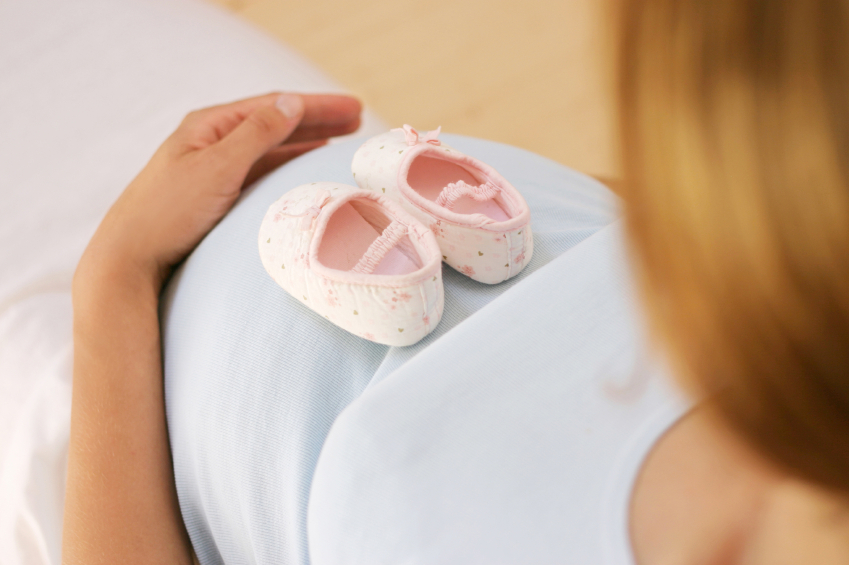
 Expectant parents plan for – and worry about! – a lot of things. Your unborn baby’s musical development may not be on the check list just yet, but don’t worry – you and your baby are more prepared than you might think.
 And so, when things settle down a bit, we’ll look forward to having you and your newborn in Kindermusik. The brain grows and develops at an astounding rate in the early years, and there’s no better window of opportunity for exposing your baby to the rich developmental benefits of music. Plus you’ll love the opportunity to gain precious insights into this new little miracle as you spend special time together in class, make new friends, find a support network, and savor these precious, fleeting moments of babyhood. Parents agree… there’s no better bonding experience than Kindermusik. We’ll look forward to seeing you in class soon!
 Growing up, but not all grown up yet – thankfully! The early years of childhood pass so quickly, and before you know it, your child has officially earned “big kid” status. The turbulence of the toddler years and the exuberance of the preschool years are past, and your big kid can mostly be described as composed, calm, cheerful, and capable. Big kids are eager, curious learners, and they love to share their ideas.
 For parents…


 You want to give your child every advantage. And yet, you don’t want to let him or her grow up too fast. Childhood is meant to be savored and enjoyed, a time that you share experiences and create memories that stay in the heart for years to come.
 Experience the benefits of Kindermusik for yourself.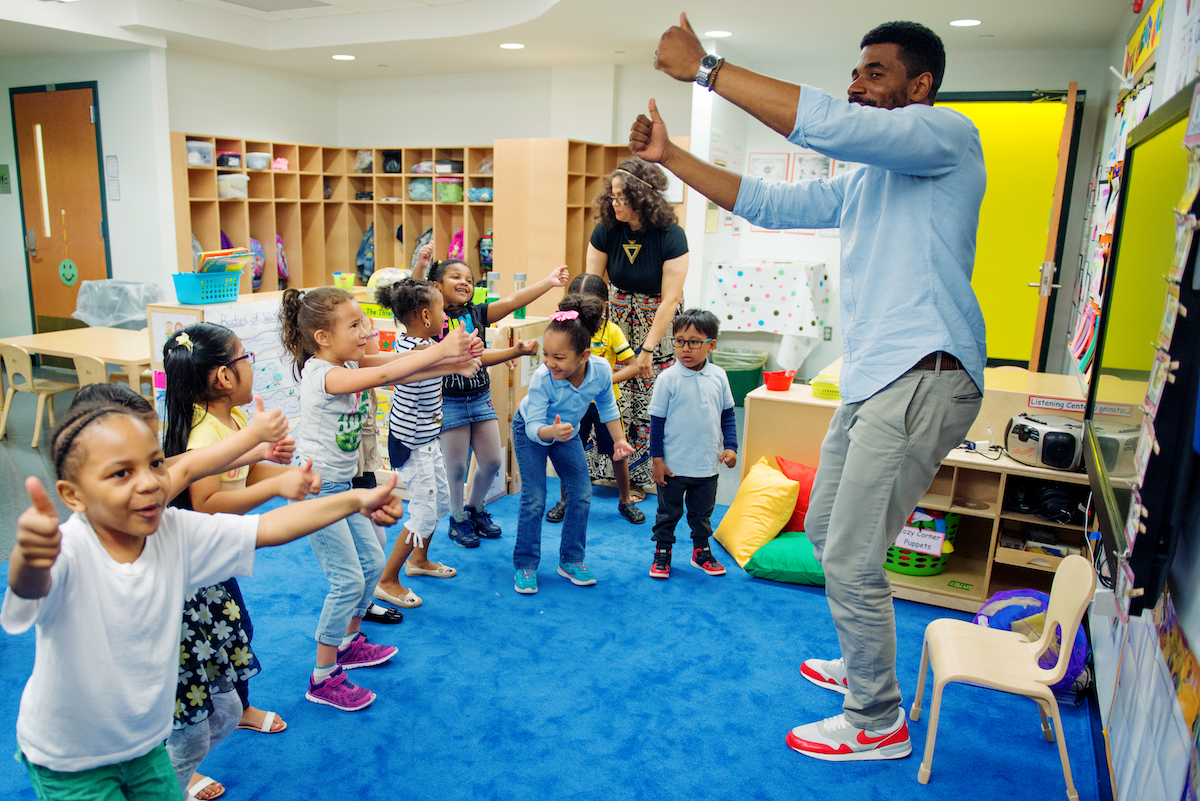

 The entire Kindermusik experience, from class to home (and back again!), provides a vital support network for parents of busy toddlers. Not only does Kindermusik foster and strengthen the parent-child relationship, but Kindermusik classes are also a social outlet for parents as well, a place to share both the joys and challenges of parenting a toddler.