Getting the Rhythm of Language Development

Our speech is made up of sounds, patterns, and rhythms, so it makes sense that being in a environment of sounds and developing a strong sense of rhythm and steady beat in the earliest years of childhood can positively impact language development.  Some researchers even go so far as to make the bold claim that “[w]ithout the ability to hear musically, it would be impossible to learn to speak.”

Enter Kindermusik, where we too would agree that “…music is a special type of language” and where rhythms, songs, rhymes, and steady beat become almost as natural as breathing.  All throughout the Kindermusik experience, from birth to 7 years, children are immersed in a world of communication through sound, through musically being sung to and spoken to as infants and then invited to be participants in the sound-making by singing and speaking back.  In addition to singing, rhymes and steady beat activities also form some of the earliest experiences with music in this immersive environment.

Because of the process-based emphasis in Kindermusik, the learning is natural, easy, and fun.  Kids and parents love it, and it doesn’t take long to realize the depth and long-lasting impact of such a rich musical environment on the development of language.

Kindermusik and Language Development

Want to support your child’s early language and literacy development? Then find a local Kindermusik class!

7 Ways Music Teaches Kids Thankfulness

Music changes us.  Makes us better.  Helps us think.  Gives us a way to express ourselves.  Lifts our spirits.  Impacts our memory.  Gets us moving.  Boosts self-confidence.  Raises IQ and academic potential.  But music classes like Kindermusik can also instill values, perhaps one of the most important values being that of gratitude.

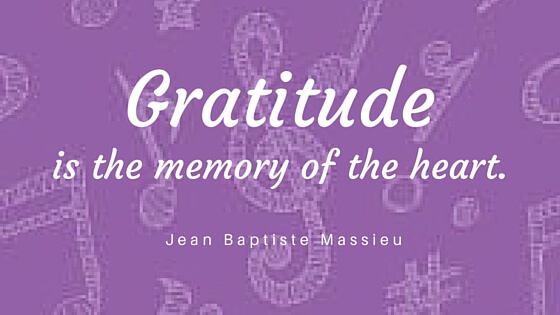
Gratitude is the memory of the heart

The root of gratitude is in our emotions, and there’s no better tool for getting us in touch with our feelings and emotions than music.  So how exactly does a music class inspire gratitude?

  1. Music classes are a group experience and as such, teach kids to be appreciative of each individual’s contributions to the the group.
  2. Music classes are a happy experience, and out of that happiness often comes a spontaneous, straight-from-the-heart expression of gratitude from children.
  3. Music classes are an interactive experience, bringing parents and kids together in class and/or at home and strengthening the loving bonds between family members.
  4. Music classes are an enlightening experience, helping all of us to affirm, celebrate, and be grateful for each child’s own unique gifts.
  5. Music classes are a social experience that gives kids a chance to develop friendships that they will appreciate for a long time to come.
  6. Music classes are a delightful experience, creating special memories that we will hold in our hearts forever.
  7. Music classes are an inspiring experience, making us thankful for the little things – a smile, a hug, a together moment, and a song in our hearts.

Contact your local educator to experience how music teaches kids thankfulness… and so much more!

Top 3 Kindermusik Art Activities Used with Common Core

Looking for a few hands-on activities to expand your earth science or English Language Arts lessons for your early childhood classes? Here are three Kindermusik art activities teachers love to use in PreK, Kindergarten, and First Grade.

3 Art Activities to Use to Support Common Core Lesson Plans

1. Life Cycle Unit: Egg Carton Caterpillar

Use this as children explore the life cycles of plants and animals along with the Common Core exemplar texts as part of your state’s or schools standards. The Egg Carton Caterpillar activity supports a multi-sensory approach to learning that actively engages young students. The completed caterpillar can also be used in English Language Arts as children create a story about their creation.

Egg Carton Life Cycle


2. Recycling Unit: I Spy Recycled Bottle Kids’ Activity

Use this activity as part of an Earth Day, Ecology, or Science Lesson. As your class chooses which items to add to the bottles, discuss what each of the objects are and what they might be turned into after recycling. Ask the students to share how the objects are alike and different.

Earth Day Activity


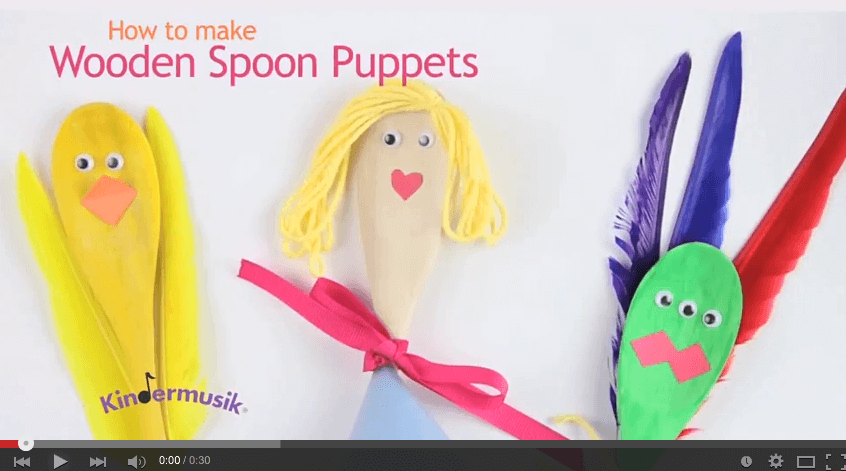
3. English Language Arts: Wooden Spoon Puppets

Use this activity along with ELA lesson plans to use storytelling to support reading, writing, speaking and listening, and language development. For example, as young children create a fairytale, a puppet can be used in collaboration with their story to enrich the narrative experience. Storytelling through wooden spoon puppets provides an avenue for young children to gain, evaluate, and present increasingly complex information, ideas, and evidence through listening and speaking as well as through their own creations.

Wooden Spoon Activity


Looking more video-based ideas for classroom activities? Follow Kindermusik International on YouTube!

Contributed by Lisa Camino Rowell, a freelance writer in the Atlanta area.

Why Parents Repeating Themselves is Good for Babies

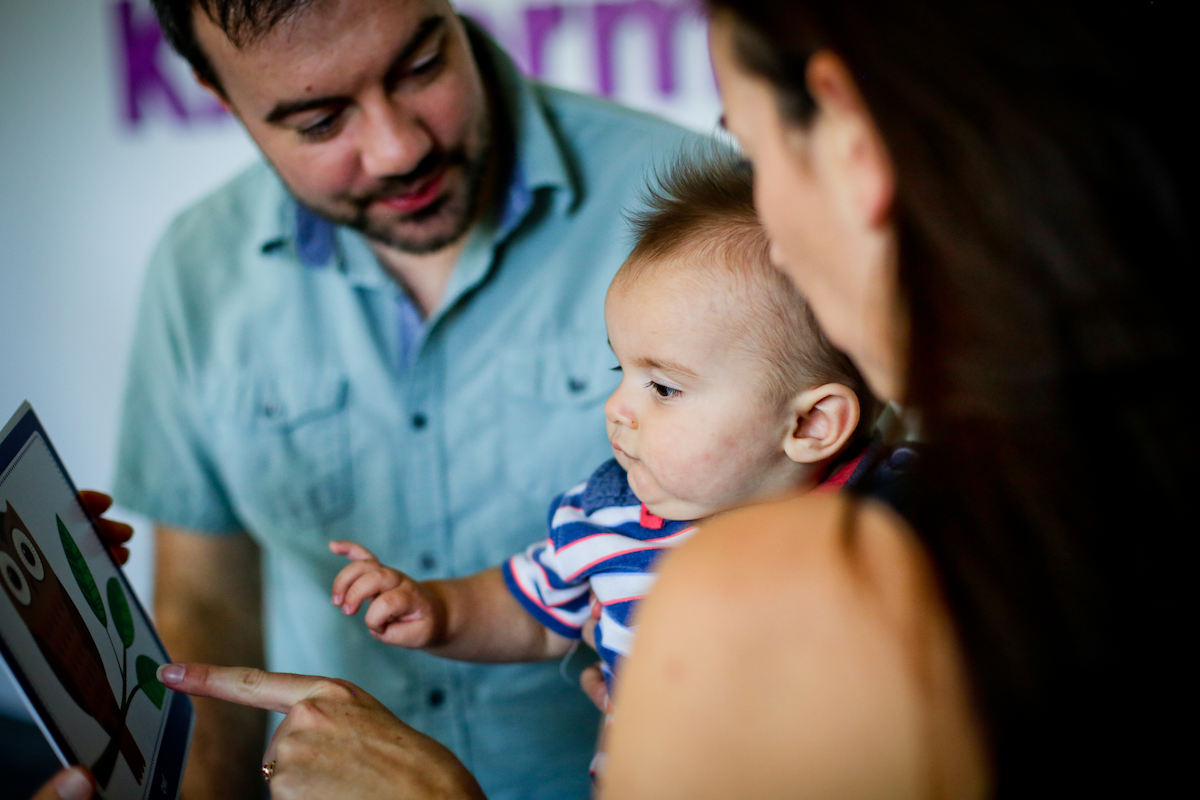
Parents use early repetition by pointing to image and repeating its name with baby.

Every parent looks forward to hearing that first word, first sentence, first conversation…and early repetition is key. 

Research gives insight into the kind of parent-baby verbal interaction that can best spur on early language development, so that by the time the baby becomes a toddler, they actually have a larger vocabulary. 

Your pediatric provider probably reminds you to “talk, talk, talk” at every check-up. Yes, talking is a great way to pump up language skills, but the secret is to “repeat, repeat, repeat.” And music can help.  

Continue reading “Why Parents Repeating Themselves is Good for Babies”

What to Do When It’s a Rough Day in Kindermusik

Baby crying

Although it is not any more difficult to be a Kindermusik parent than it is to just be a parent, sometimes things happen in class that make it difficult to be a parent in Kindermusik class. So what to do when your child runs around, gets extra clingy, or acts out?

First, just find your breath for second. Nothing will get worse in the time it takes you to pause, and everything stands to get better for your having done it.

Next, realize that most parents are not judging you, and neither is your Kindermusik teacher. They are most likely feeling a great deal of empathy for you at the moment!  And even if they were judging, this isn’t about them. It’s about the fact that your child is either hungry, tired, or just plain trying to exercise some control over his or her world.

So here’s what to do.  Try engaging with your child at a level that is best at the moment.  You can also feel free to disengage for a minute by sitting away from the group or even stepping out in the lobby for a bit if necessary. Perhaps your little one is just a bit too over-stimulated and needs some calm and quiet. A snack and a drink out in the lobby may be all it takes to resurrect that happy little person you normally live with and enjoy in class.

If your child isn’t quite ready to relinquish an instrument or object, that’s okay. Give it a minute. Some kids need more time than others to transition. Once we’ve moved on to a different activity, most kids aren’t so interested in that particular instrument anymore and will be happy to put it where it goes.

It may be that your little one didn’t get enough sleep or is starting to get sick and just doesn’t feel well.  If you need to leave, send us an e-mail and we can reschedule!  We happily offer unlimited make-up classes.  [Note: Contact your local educator for options for rescheduling or makeup classes.]

And, finally, check out Becky Bailey’s work for additional discipline resources—there are lots of free ideas on her website.

Remember that it can take several time for your child to adjust to Kindermusik, whether it’s his first classes ever or she’s just getting used to being with back in the routine or with some new friends.  Kids are kids.  We wouldn’t have been in the business of Kindermusik for so many years now if we didn’t accept and love them just the same!

Connect with other parents who can relate to your parenting stage.  Visit a local Kindermusik class today!

Shared by Theresa Case who has an award-winning Kindermusik program at Piano Central Studios in the beautiful upstate of South Carolina.  This post first appeared on the Piano Central Studios blog.

November 12 ~ Free Webinar for Early Childhood Educators

Using Music to Boost Infant and Toddler Development

Kindermusik International partners with Hatch Early Learning to offer this Free Webinar, “Using Music to Boost Infant and Toddler Development.” Music is the one constant in an infant’s everyday life. All over the world, parents are bonding with their babies through musical sounds and rhythmic movement. Parents know instinctively what scientists have now proven: infants thrive on music.

Join us on November 12th as we team up with Hatch Early Learning to bring you a free webinar that will detail how and why music and movement provide the best learning vehicles for early childhood development (newborn to age 3). Kindermusik International’s Director of Professional Development, Betsy Flanagan, will lead the webinar.

  • What You’ll Learn
    • How immersive musical experiences create and strengthen an infant’s neural pathways
    • Ways to create special bonding moments with newborn to age 3 learners
    • Specific techniques that have worked in Early Head Start programs
    • Active music making ideas that “light up” a baby’s entire brain

Register for this FREE Webinar on November 12 at 2pm EST.

If you’re unable to attend this webinar live, that’s no problem! Be sure to register and we will send you a link to our on-demand portal to view a recording of the live event.

What Parents See Vs. What Teachers See

White lab coats. Sterile rooms with fluorescent lights. Charts and spreadsheets. And people named Doctor So-and-So or You-Know-Who, PhD.

Yes. That image often materializes when we think about the word RESEARCH. We rarely think about the game Peek-a-Boo or filling a tissue box with balls (and dumping them out) or mimicking someone’s face. But, that is RESEARCH, too. In fact, young children are the youngest scientists. Research and good ol’ trial-and-error: It’s how children learn about the world around them.

Of course, babies and toddlers don’t don white lab coats and create spreadsheets when they conduct research. Instead, they play. That’s right. Children conduct research through play. Parents may not always recognize when a child is learning because it almost always looks like playtime. However, early childhood educators see beyond the laughing, dancing, and singing to see the hard work of learning through play. Take a peek at all of the learning happening through play.

What Parents See Vs What Teachers See

  • Parents see a baby shaking an instrument. Teachers see a baby practicing fine motor skills and learning cause-and-effect.
  • Parents see a baby being rocked back and forth to a lullaby. Teachers see baby’s developing vestibular system at work and parent-child bonding. Strong bonds with a parent leads to increased confidence to learn about the world.
  • Parents see a mom dancing with her baby while waving a scarf. Teachers see a sight-strengthening activity that encourages eye-tracking and strengthens both depth perception and eye-hand coordination.
  • Parents see a toddler jumping up and down, stomping to the beat, or mimicking a farm animal’s movement. Teachers see young children actively practicing all of those gross motor skills.
  • Parents see a toddler reciting the fingerplay “The Itsy-Bitsy Spider.” Teachers see children exercising finger, hand, thumb, hand, and wrist muscles, all of which are needed for holding and writing with a pencil.
  • Parents hear a toddler singing a song over and over again. Teachers hear a child singing a song with a verse then a chorus then a verse then a chorus…or in other words using music to experience the early math skill of patterns.
  • Parents hear a preschooler singing a silly song and laughing at the unfamiliar words. Teachers see children developing a sense of humor as they learn what is and isn’t funny—and when it is appropriate (or not) to laugh.
  • Parents see a preschooler tapping out a steady beat on the drum or by clapping hands. Teachers see a child learning the same skill that helps them walk effortlessly, speak expressively, and even regulate repeated motions such as riding a bicycle, brushing teeth, or dribbling a ball.

What Do YOU see in a music class? (Hint: It’s not just singing, dancing, and playing instruments!) Take a peek!

WhatHappensInMusicClass

Do you want to see what Kindermusik educators see? Contact your local educator and visit a class!

Contributed by Lisa Camino Rowell, a freelance writer in the Atlanta, Georgia, area.

Finding Your Voice: Lessons Learned from Isabella

This guest post originally appeared on the blog: One Random Angel. 

I’ve been working with children since I was old enough to babysit. Been teaching children in some capacity for the last 23 years. So I don’t want to say I’ve seen it all, but I will say not much surprises me. And I generally think I’m pretty good at reading kids and meeting them where they are and bonding with them from there. Or at least I thought that until this past year when a creative, loud, happy child named Isabella surprised me and taught me a new lesson that will help me now to be a better teacher and maybe even a better person.

Let me back up. When I first began teaching Isabella, then 2 years old, in one of my parent/child gymnastic classes, I did not see her at all as creative, loud, or happy. In fact, I saw her as timid, introverted, and nervous. She hid most of the class behind her dad’s legs. And her kind, supportive parents, along with her kind, well-meaning teacher would encourage her to try skills and push her to participate. But if I’m honest, she didn’t really ever seem to enjoy the class in those days. I thought she needed time: time to get to know me, time to be comfortable in the environment, and time to just watch and observe before doing.

Then we started a new Kindermusik program at my gym.

Isabella and her mom joined my very first class. I could see the first day that Isabella was more comfortable. From day one, she participated fully in the class. As the weeks went on, Isabella became louder and louder in her participation. She modeled for the other kids all the imaginative play involved in Kindermusik. She was the first to vocalize and sing along. She really transformed into a leader before my eyes. One week early on we were dancing with scarves to classical music. Isabella stood off to the side and sang “Let It Go” as loudly as she could over the music. It was glorious.

As amazing as watching her come out of her shell in music class was, here is the part that really blew me away. When she found her voice in Kindermusik, the way she participated in the gym class also changed! She stepped out from behind her dad’s legs and into the center of the circle. She met me in the gym class with the same imaginative spirit that we used in music class. In our opening circle for example, instead of burying her head in her dad’s chest when I’d ask her for her name, she began to give me a different name each week for what I should call her. Then she’d pretend to be that person (usually a princess). One day during our exploration time, she said to me, “I’m Miss Angel and you are Isabella. You follow me.” She led me around equipment that a few months earlier I couldn’t even get her to go near.

Lessons Learned from a Child

Isabella didn’t need more time or understanding from me. She needed a change in environment. She needed to find her voice where she felt confident and where the activities spoke to her and her strengths. She found those things in Kindermusik. Then she owned her new voice and used it to overcome whatever fears she had in the gym. Now she tries skills. Now she participates fully. She is sometimes still nervous when trying new physical skills, but instead of hiding and refusing to try, she just tells you that she feels nervous. Then she tries it anyway.

Isabella is a joy to teach in both programs. Take a look at Isabella and her family singing with me and the Wiggle and Grow Family class. You’ll recognize her from her confidence and joyful, loud singing!

Finding Your Voice Video Clip

So my hope for all of us is that we can find a change in environment when we need it. Find a place where we feel confident. A place that speaks to our strengths and draws out the very best in us. A place where we can sing “Let It Go” loudly even when entirely different music is playing.

What lessons have you learned from a child? Join in the conversation on our Facebook page and tag your response #lessonslearnedfromkids.

Angel Hundley has owned and operated a The Little Gym Franchise in Huntsville, Alabama, since 2007. She has taught hundreds and hundreds of children. She hopes they’ve learned from her. Angel is certain that she’s learned from them!
Toddlers Learn through Laughter. No Kidding.

While some say laughter is the best medicine, it turns out that it’s not so bad for learning either! A new French study found that humor helps toddlers learn. In the study, Rana Esseily and her colleagues designed an experiment to see whether using humor impacted the learning abilities of 18-month-olds. During the study, each child watched an adult using a tool to grab an out-of-reach toy. In one group, the adults played with the toy after retrieving it. In the second group, the adults immediately threw the toy on the floor after getting it. This made half of the toddlers laugh.

When the research team reviewed the data, they found that the toddlers who laughed were able to repeat the action themselves more successfully than those who didn’t laugh, as well as those who were included in the control group.

Young Children Give Us Permission to Be Silly

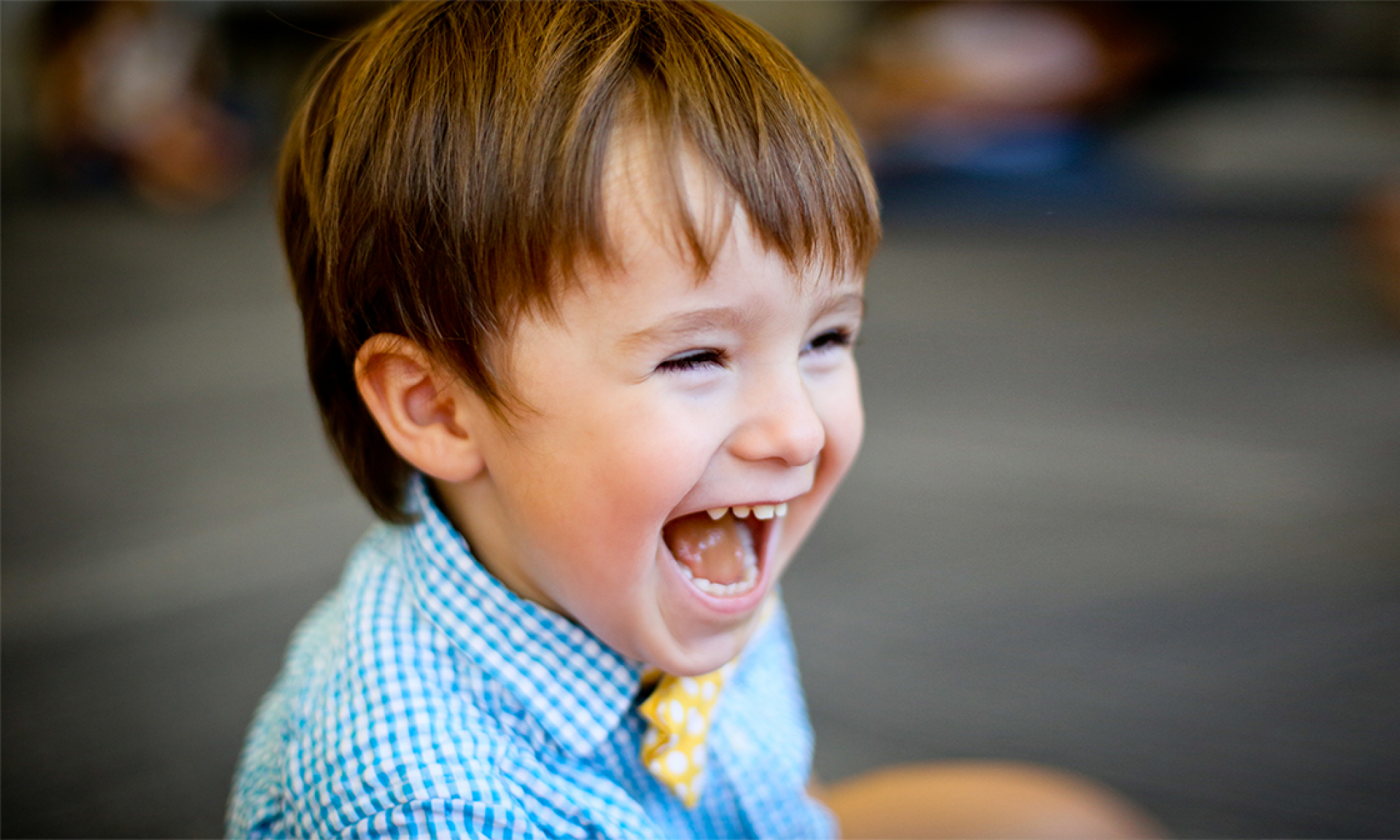
We laugh a lot in our classes. A lot. Children somehow remind us to laugh and smile and notice the little things in life. Take this child. He can’t stop laughing at what his dad does.

Laughing Toddler


Children develop a sense of humor over time as they learn what is and isn’t funny—and when it is appropriate (or not) to laugh. With classes in over 70 countries, we know a thing or two about families and children around the world. We know, for instance, that every child speaks music and laughter sounds the same in any language. And, to a child, funny things can be found anywhere—blowing dandelions, made-up words, knock-knock jokes, chasing the dog, and even—sometimes—mommy’s “angry face.” (You know it’s true.)

On average, children laugh about 200 times every day. Silliness is a great way to evoke laughter and foster the development of humor (and help kids learn, too!). So, we include a lot of it in class each week, including singing songs with silly words (guli, guli, guli), playing one-bell jingles with our feet or on our head, and even a surprise tickle. All that laughing encourages a child’s physical, emotional, and social health. Plus, it’s a lot of fun and can be a developmentally appropriate way to motivate, engage, and redirect children during the early years.

Try out some of our favorite musical jokes and see if you can get a chuckle out of the kids in your life!

Contributed by Lisa Camino Rowell who admits to laughing with her young kids so much that tears fall.

The Importance of Triangulation

Without a doubt, it takes all of the caring adults in a child’s life working together to effectively foster and nurture a child’s overall development.  That’s really what’s been at the heart of Kindermusik for over 30 years now – to empower parents as a child’s first and best teacher and connect a parent and child with their Kindermusik educator who can provide expert tips and loving support throughout those precious, formative early years.

This is the power of triangulation in its most positive context – teacher, parent, and child coming together in ways that significantly impact the child’s development, attitude toward learning, love of music, academic performance, self-confidence, creativity, and relationships with others.

From those first baby classes to the last big kid classes, the Kindermusik learning process is based on that beautiful, unending triangle of parent(s) – child – teacher.  The parent engages with the child, in class and/or at home.  The teacher not only interacts with the child, but also the parent, providing support and resources that help make great parenting a little bit easier (and a whole lot more musical!)  The teacher and parent then work together on behalf of the child, to ensure that the child is gaining the full cognitive, academic, social, and musical benefits from the experience.

And then there are those incredible @Home Materials that are the glue that holds the parent-teacher-student Kindermusik triangle together.  The @Home Materials are almost as good as being able to take your Kindermusik teacher home with you because you can take the music, fun, and learning with you all week long, wherever you go.

Kindermusik truly goes from class to home and back again, all because of that wonderful parent-teacher-student triangle that is the backbone of the Kindermusik philosophy and experience.

Parent - Student - Teacher Triangle