

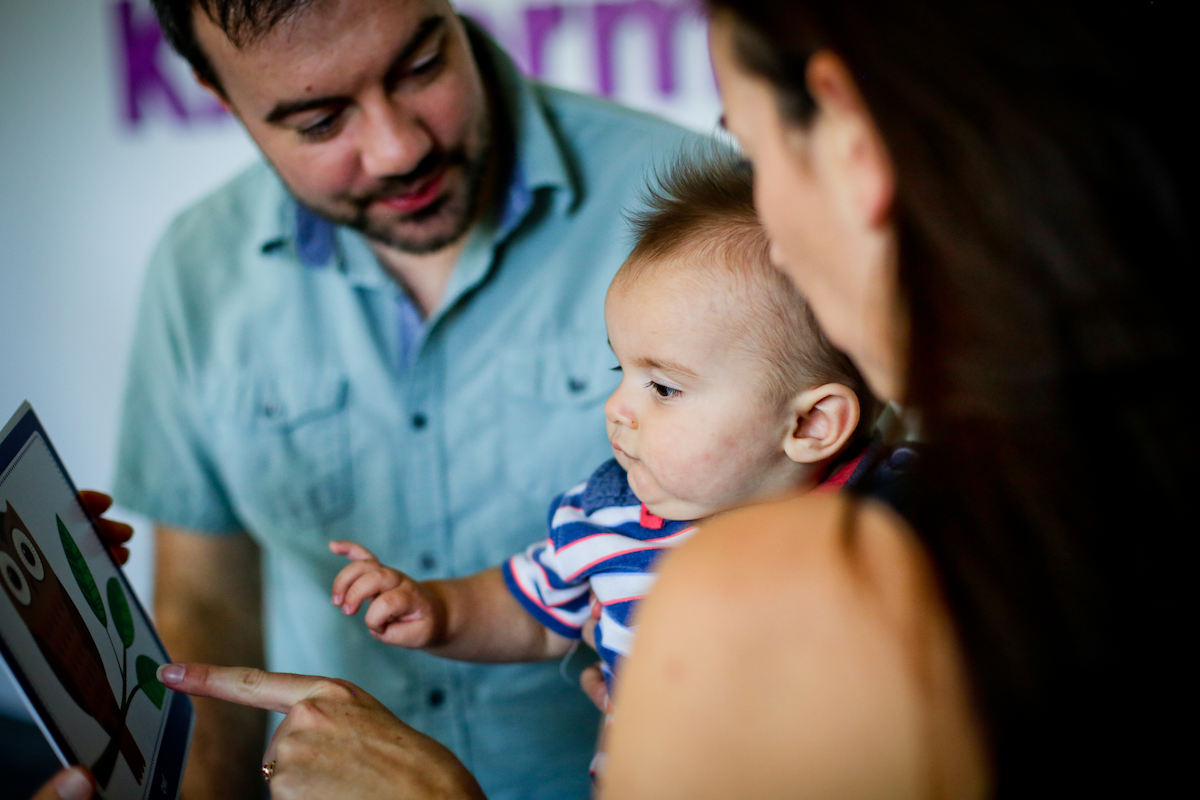
What can rhythmic repetition do? Encourage that first word, first sentence, first conversation. Repeating yourself through song or chant during the first year makes repetition less of a task and more of a joy, and babies will latch onto those joyful moments.
What science says about repetition and rhythm…
Research gives insight into the kind of caregiver-baby verbal interaction that can best spur early language development, so that by the time babies become toddlers, they have a larger vocabulary, stronger comprehension skills, and sharper speech abilities.
“Parents who repeat words more often to their infants have children with better language skills a year and a half later.”
Rochelle Newman, PhD, University of Maryland

According to a University of Maryland study, “Parents who repeat words more often to their infants have children with better language skills a year and a half later.”
So, what happens when repetition is paired with rhythm?
Scientists from the University of Cambridge and Trinity College of Dublin found that “…rhythmic speech helps babies learn language by emphasizing the boundaries of individual words and is effective even in the first months of life.”
Rhythmic speech—speaking (and repeating) to babies in a metered, sing-song manner—is critical because phonetic information is not processed until around 7 months of age.
Try this rhythm-based repetition activity.
Repetition has always been a cornerstone of Kindermusik’s approach to music composition, activity selection, and overall structure. Songs and rhymes are repeated from week to week in class (in a studio, early intervention, or childcare setting), not only because repetition strengthens the brain, but because little ones love songs and rhymes.
Live, joyful interaction is key to making the learning stick, and it’s easier than you think.
Here’s how to put rhythmic repetition into action, both in class and at home.
- Play “Yum, Yum” below (or stream on the free Kindermusik app) before mealtime or as a standalone activity.
- When you listen together, model the roll of the repeating voice so baby can see your mouth form the words and watch you repeat in real time.
- After a few listens, use this rhyme with foods from your environment. As baby grows into a toddler, watch them repeat and expand their vocabularies and speech skills with you!
Try repetition through read-aloud.
In addition to chants and songs, storytime is the perfect way to incorporate repetition to the beat.
As with chants like the activity above, read-aloud time—with a simple book containing repetitive phrases—connects words to images. And when you read in a sing-song voice, that really helps tiny humans form the building blocks of comprehension.
This is exactly why Kindermusik units typically use the same book for at least four lessons. Sounds and connections are unlocked over time, and the “a-ha!” moments begin to flourish.
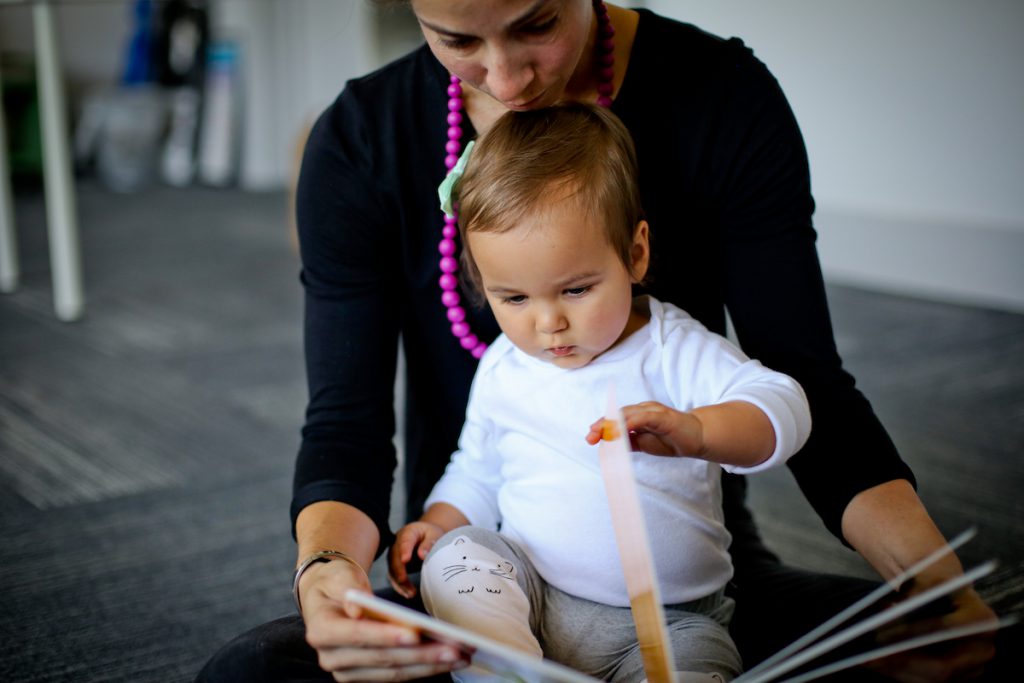
The bottom line with repetition in the first year.
Repetition should be woven into every focused chunk of time you have with your students or child(ren), but it shouldn’t be stressful. Slowly start using transition times to be more intentional about it, and infuse rhythm and music into how you repeat the words. You’ll supercharge those first-year neural pathways in no time.
We can help you get started with early repetition tools. Find a Kindermusik class near you or check out our first-year teaching solutions.