
You Know it: Kids Feel Stress, Too

stressed child

[vc_row][vc_column][vc_single_image image=”8342″ img_size=”620×288″ alignment=”center”][/vc_column][/vc_row][vc_row][vc_column][vc_column_text]Ok…I’m about to tell you all something you already know…our babies, our toddlers, our kids…they feel stress! We “old” folks don’t have a monopoly on this lovely feature of the human condition. Now think about this: we are supposed to have things together by adulthood, but let’s face it, how many times do you get into a situation and look around for a more “adultier” adult than you!? We are supposed to have a developed sense of self-awareness that allows us to – hopefully – use developed coping strategies to process stress in a heathy way. Now…imagine an infant or toddler experiencing a stressful situation. Not only might the situation be new, they are still figuring out how to respond! This can compound stress in a child. No fun, right?

stressed child stress toddler
Harumph! Don’t look at me!

Recently, the Center for the Developing Child at Harvard University (I’ve heard of this Harvard – supposedly they’re pretty smart, guys) posted about ways to mitigate (Ivy League lingo for the win!) toxic stress in kids. The main idea? If we can’t help kids deal with stress, the health development of the next generation might be thrown of the tracks and “can have damaging effects on learning, behavior, and health across the lifespan.” So…what can we do?[/vc_column_text][/vc_column][/vc_row][vc_row][vc_column][vc_column_text]

Responses to Stress

The Center defines three types of responses to stress and how these responses impact the body:

  • Positive – this is common and often short-lived. New babysitter? Perhaps a new food to try? A child might experience this type of response. Think a short rise in heart rate.
  • Tolerable – Often the result of a loss of a loved one or perhaps experiencing something scary like breaking a bone. This can last longer than the Positove response. With an environment of supportive adult relationships, the effects of this type of stress can have a buffering impact and help a child recover.
  • Toxic – this is longer lasting and can be a result of such awful things as neglect, abuse, or the results of economic hardship – and occurs when supportive relationships are not present.

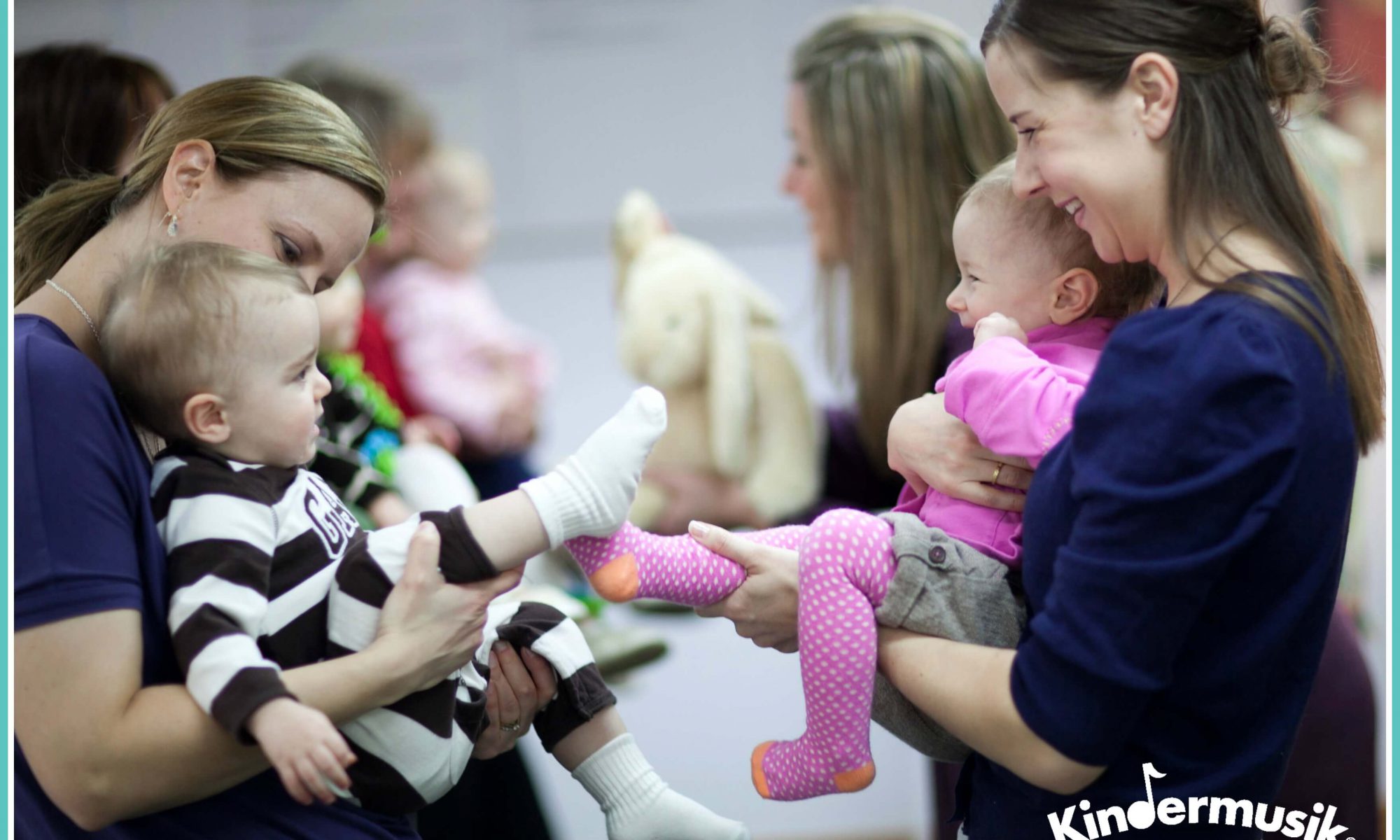
One aspect of these supportive relationships is “Serve and Return.” As it turns out, a tennis match of interactions between our children and caring adults has a positive impact on developing brain structures, stress levels, and processing stress in a healthy way. From the Center:

“When an infant or young child babbles, gestures, or cries, and an adult responds appropriately with eye contact, words, or a hug, neural connections are built and strengthened in the child’s brain that support the development of communication and social skills. Much like a lively game of tennis, volleyball, or Ping-Pong, this back-and-forth is both fun and capacity-building. When caregivers are sensitive and responsive to a young child’s signals and needs, they provide an environment rich in serve and return experiences.”

As you build the circle of positive interactions for your child, you increase the child’s ability to respond to the world, learning that these “tall people” really care, and it would seem that the earlier this occurs, the better.

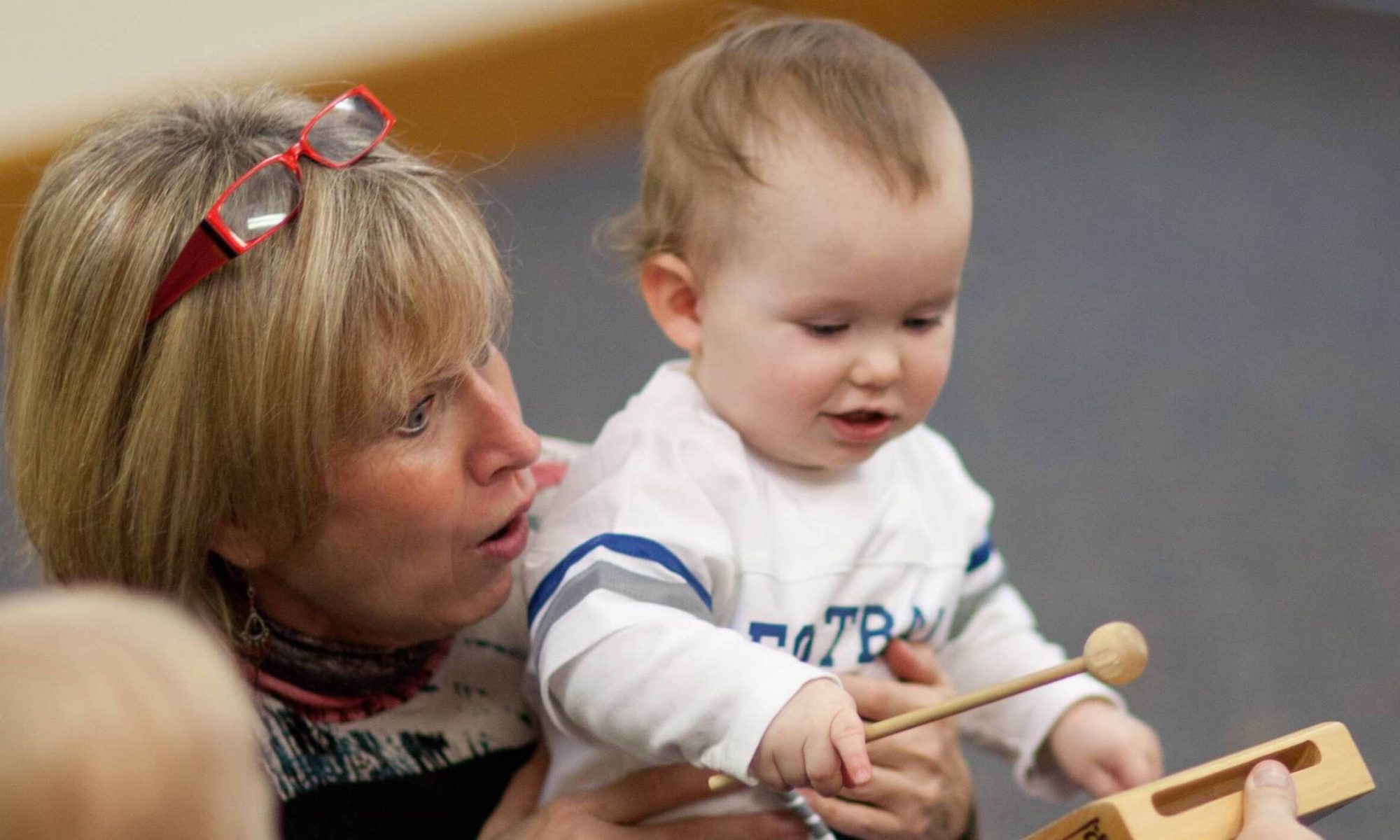
Now…think about the types of interactions that occur during Kindermusik classes. See a connection? I do! When taking part in regular group musical activities lead by a caring adult, a child’s circle of positive relationships grows. Singing together, call and response activities (a musical version of “serve and return”), and group movement, all can have a positive impact on stress levels. Did you know that groups that sing together can sync their heart beats? Crazy, right?

So consider this the next time your child is overwhelmed by the world around them…and not just when they are anxious to go to bed at night…sing a song together, dance together, or get out some pots and use them as drums. You bang and then have them mimic you. Music can reduce those hormone levels, singing can control breathing, and that stress response can be brought back to a healthy place.

Friends…the power of music![/vc_column_text][/vc_column][/vc_row]

Educator Spotlight Preview

Christa Beck, Educator

[vc_row][vc_column][vc_single_image image=”8332″ img_size=”full” add_caption=”yes” alignment=”center”][/vc_column][/vc_row][vc_row][vc_column][vc_column_text]Happy Monday, friends! Next month, we will be starting a regular feature at Minds on Music – our Educator Spotlight! I will have the good fortune of interviewing a Kindermusik Educator. The sun never sets on Kindermusik! Somewhere on the globe, at any moment, there’s a Kindermusik educator leading children in song and movement. These talented, dedicated folks make the magic happen. We should get to know them!

Christa Beck, Educator
Christa Beck

Our first subject will be 9 time Maestro Award recipient Christa Beck. As a preview, here’s a recent article about Christa and her work with Kindermusik that appeared in the Pittsburgh Tribune-Review. She is a wonderful example of the type of people teaching our kids, and a great place to start!

Know an educator we should feature? Let me know! Contact me at dr.boyle@markaboyle.com.[/vc_column_text][/vc_column][/vc_row]

Why Do You Sing?

[vc_row][vc_column][vc_column_text]

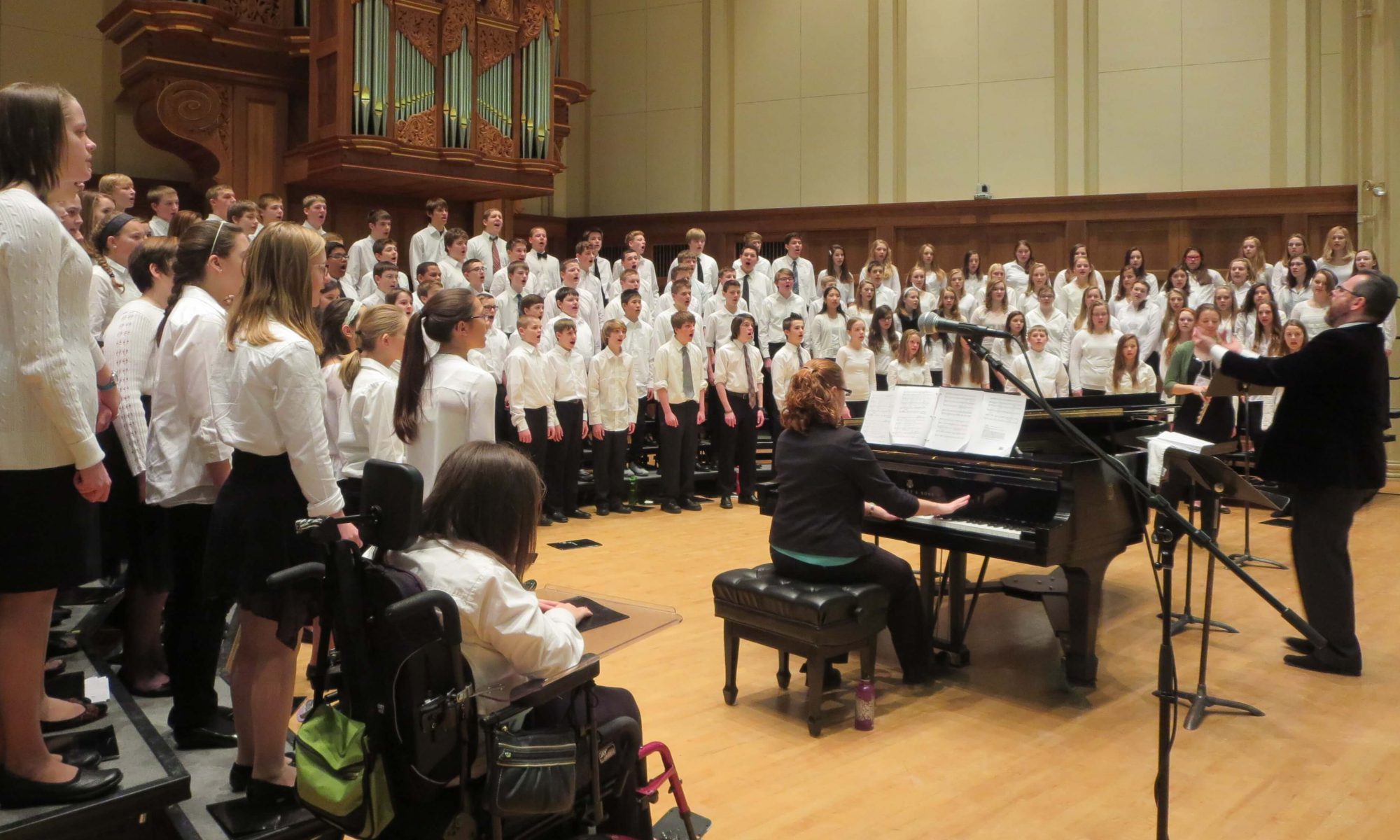
Dr. Boyle conducts the Middle Level All State Choir in Wisconsin. Scedra is right in the front row.

[/vc_column_text][/vc_column][/vc_row][vc_row][vc_column][vc_column_text]I teach my students that it’s the conductors job to make others musically powerful. This concept was crystalized for me by Ben Zander in his TED Talk. If you haven’t watched it, you should! As conductors, we develop a vision and inspire others to realize that vision.

When I work with choirs, I tell it like it is. I tell them what I expect – and to paraphrase my friend and fraternity brother, Karl Paulnack, from his Welcome Address to the parents of incoming Boston Conservatory students – I expect them to save lives with their music.

The Wisconsin Middle Level All State Choir was no different. They sang! They gave away their collective voice, honoring the composers, each other, and the audience. I told them – you never know whose life you might change with your music. I believe that. I believe that there could be someone in that audience whose life is at the crossroads – and honest and selfless art given freely by a group of emotionally connected middle schoolers has the power to pull them down the road that leads to life.

We sang! But we also talked about the music. We talked about the historical context of McCartney’s “Blackbird” – so relevant today. Not about a blackbird, friends. Sir Paul wrote this in response to the riots occurring in ’68 after Dr. King was assassinated. And the middle school musicians ate up this information. You could have heard a pin drop when I talked to them about this.

I have started taking a moment at festivals to ask students why they sing – particularly in choir. One young woman, Scedra (pronounced Say-dra – her name was a combination of the initials of grandmothers and great grandmothers) particularly touched me. Scedra was born 2 months premature. She fit in the palm of your hand. Her father’s wedding ring could slide up her arm to her shoulder with room to spare. Scedra is in a wheel chair. She put her hand up to share why she sang….[/vc_column_text][/vc_column][/vc_row][vc_row][vc_column][blockquote cite=””]“I sing because it makes me feel like flying. I don’t feel like I’m in my chair. It’s like I’m not disabled anymore.”[/blockquote][/vc_column][/vc_row][vc_row][vc_column][vc_column_text]I wept. I’m weeping now typing this. 149 of her new friends instantly applauded her. The smile on her face eclipsed her chair. Scedra is often (at first sight) defined by her wheelchair, but in that moment, she was simply and beautifully a young woman overjoyed to be making music with her new friends.

Scedra and a host of her colleagues shared from their hearts in a room full of people they had just met. Music did this. Music created this place that allowed these people to be who they were (are!) without fear of judgment.

And that is music’s power.

These young men and women changed my life and for that I will be forever grateful.

Thank God, the universe, and all good things for music.[/vc_column_text][/vc_column][/vc_row]

New Thoughts for a New Year: Music for Music’s Sake

Music for Music's Sake

Happy New Year! It is my great honor to join the Kindermusik team as the editor of Minds on Music Blog. Music has and continues to be my life’s passion, and I am excited to curate a useful resource on behalf of this wonderful organization. Learn more about me here.

We often read that music has tremendous collateral benefit in other subject areas, such as math and English. This is quite true, with plenty of research to back this up. But music possesses intrinsic worth, providing a host of benefits to our human condition. In fact, last year the US Senate voted to list music as a core subject in the Every Child Achieves Act. This recognition was a huge win for music educators and students alike. We’ll explore some of these intrinsic benefits in depth this year, but before we do, here’s a brief list exploring involvement in music for music’s sake.

Continue reading “New Thoughts for a New Year: Music for Music’s Sake”

Music, Autism, and One Little Girl’s Story

During certain times of the year, our lives seem to operate on warp speed. December often flies by the fastest. So, today, we ask that you press pause on your life for a moment and catch a glimpse of one little girl’s story, the loving adults invested in her life, and their shared experience with and through music. This little girl’s story, like music, will challenge you to listen with your heart as well as your ears. As her mom explains: “Life is busy. She has taught us to slow down. I love to look at the world through her eyes….to hear your child sing when they have been nonverbal for so long is amazing.”

So, take a moment and see the world through her eyes.

Music & Autism Video


Learn more about music as a curriculum solution in your school and working with children with special needs.

Contributed by Lisa Camino Rowell, a freelance writer in the Atlanta area.

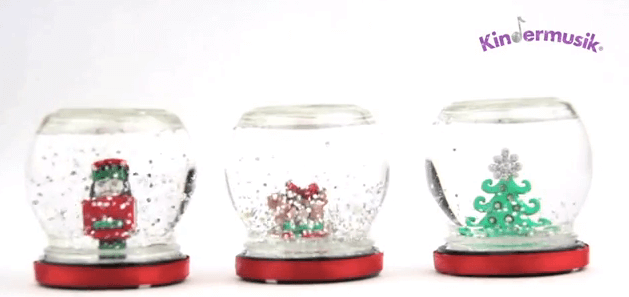
Toddler and Preschooler Craft: Snow Globe

Looking for an idea to entertain the little ones this week? Let it snow globe! Let it snow globe! Let it snow globe! Gather up a few materials and your toddlers and preschoolers can create both memories and a keepsake with you.

KindermusikSnowGlobe

Post your family’s creations on the Kindermusik International Facebook page. Tag it #KindermusikSnowGlobe.

Research: Involving Parents Increases Positive Outcome for Kids Enrolled in Head Start

New research once again shows that an intentional partnership between parents and teachers positively supports children’s educational outcomes. Without a doubt, parents are a child’s first and best teacher. We know that intuitively and we hear that from early childhood experts and teachers. But, let’s face it. Parents need help. They need partners in their children’s education to best equip them in their role as teachers. They need information and they need practical ideas and tools that they can easily use in their everyday routines with their children.


Involving Parents Helps Young Children Maintain Literacy Skills

Recently, a research team recruited 200 children and parents from families enrolled in 24 Head Start programs in rural and urban Pennsylvania. The families were split into two groups. The control group received math games to play on their own. The other group received materials, such as books and learning games, and visits from “educational counselors” who provided coaching on how to use the games with their children. Those materials specifically supported the lessons from the Head Start classroom.

The children who participated in the second group showed significantly higher retention of literacy skills (vocabulary and fluency) and social skills (self-directed learning and social competence) acquired in the classroom when compared to the control group.

A Listening Game to Support Early Literacy Skills

While not a part of the Head Start study above, Kindermusik programs provide materials (games, music, books) and child development information and resources parents can use OUTSIDE the classroom to support what happens INSIDE the classroom. For example, this fun game—“Reading” the Violin”—supports children’s early literacy skills.

 Violin game

Matching sounds to a visual image is an extremely important early literacy skill. It is, in fact, the precursor skill to the alphabetic principle, or the understanding that there is a relationship between letters and sounds. Before children can explore letter-sound relationships and learn to decode words, they must first understand the connection between a sound they hear and an image they see.

This game provides kids lots of practice with associating a specific bit of audio with a specific bit of visual, and they’ll have no idea that this game is actually preparing them to read. It also supports other important early childhood cognitive competences, including:

  • Selective Attention: the ability to selectively concentrate on one aspect of the environment while ignoring distractions.
  • Auditory Working Memory: the ability to retain information that has been presented orally (e.g., listening to a target sound and then matching the sound to its image)
  • Auditory Discrimination: the ability to discriminate between similar sounds.

Did you know Kindermusik offers a program for Head Start and Early Head Start Programs that include materials and resources, like the game above, for families to use? Learn more.

7 Reasons to Give the Gift of Experiences—Like Early Childhood Music Classes!

We love music around here. Surprised? We didn’t think so. During the holiday season, you can often find us listening to favorite songs we first heard as children. (Muppets Christmas, anyone?)

Just listening to certain songs revives memories of twinkling lights, candlelight, laughter, the smell of yummy goodness baking in the oven, and the comfort of family. Each year we look forward to creating more musical memories with our friends and families. It’s no wonder that Oscar Wilde penned: “Memory is the diary we all carry about with us.”

Our childhood memories and experiences help shape who we become as adults. This holiday season why not give the gift of experiences to your child. Every child on your shopping list will love the gift of time and an individualized gift of doing something you love WITH someone you love!

Graphic_GiveTheGiftOfMusic_gift-certificate_holiday_Instagram_510x510-510x510

7 Reasons to Give the Gift Experiences to Children

  1. The memories will last a lifetime—long after a child loses interest in the latest toy or gadget.
  2. An “experience” gift can be custom-tailored to a child. Does your little one love new books? Take a trip to the library and read 20 books in one afternoon or all the picture books by the same author. Does your child sing throughout the day? Host a family karoke night and spend the evening singing and dancing together. Is your little guy or girl fascinated with the great outdoors? Camp out in the living room!
  3. You don’t need to find a spot for one more toy. (You know what we are talking about!)
  4. Your child learns the value of spending time together.
  5. No batteries or assembly required (i.e. no late nights spent putting together toys or lamenting proper sticker placement on tiny plastic cars.) Woo-hoo!
  6. It’s fun for you, too.
  7. Investing time with our kids pays off by creating heart-to-heart connections with them. As your children grow, they will begin to shift focus to peer-to-peer relationships but by teaching them the value of spending time as a family, children will RETURN the gift to you during the teen and adult years….and pass the gift on to their own children.

Of course, we would LOVE for you to give the gift of music. It’s what we do after all. However, here are 18 other ideas for “experience” gifts.

Graphic_GiveTheGiftOfMusic_holiday-icon_Pinterest_600x600Find a local Kindermusik educator to give the gift of music AND support a local small business owner.

Calm Your Baby by Singing

If there was something that could keep your baby calm for twice as long as anything else, would you use it?  New research from the University of Montreal has discovered the secret… singing to your baby!
Sing Your Heart Out

At Kindermusik, we could be considered something of an expert on not just what to sing to your baby, but also how to sing to your baby.  (And don’t panic.  Our suggestions have nothing to do with voice lessons or singing in public.)  Since we’re also all about making parenting a little easier and a whole lot more musical, here are some of our best tips for what and how to sing to your little one.  You can thank us later for being able to enjoy twice the amount of calm!

What to sing to your baby

You Are My Sunshine*
Love Somebody*
Everybody Loves Baby*
Skinnamarink
May There Always Be Sunshine
Golden Slumbers
Tell Me Why

FREEBIE! Download the songs marked with an asterisk (*) for free here.  Other songs are available for purchase here.

How to sing to your baby

  • Even if you’d never sing a solo in public, remember that your voice is the most beautiful sound in the world to your child.
  • Forgot the words?  No problem.  Humming works too!
  • While standing, gently sway to the steady beat as you sing.  The combination of your singing and the side-to-side pendulum-like motion is very soothing.
  • Use both the power of music and intentional touch.  After bath time, incorporate a little infant massage as you sing to your baby.
  • Sing in the car.  No one will ever know that it’s the third time around singing “Skinnamarink” because it’s your favorite song too!
  • Cuddle your baby close and rock together.  Your little one will love feeling the reassuring vibration of your vocal chords and the gentle thump of your heartbeat.

Looking for other ways to calm your baby?  Come visit a Kindermusik class and learn from an early childhood expert.

Shared by Kindermusik educator and award-winning program owner Theresa Case, who has loved every opportunity she’s had over the past 20-plus years to encourage parents to sing and bond with their babies.

The Power of “I Love You” Rituals

Created by Dr. Becky Bailey, founder of Conscious Discipline and author of “I Love You Rituals,” the concept of the “I Love You” rituals is simple and yet astoundingly powerful.  Caring touch, kind words, and intentional routine will form the kind of bond and connection that opens not just the heart, but also the mind and the will.  Because of the dopamine that’s released and the emotional connections that are made, “I Love You” rituals actually wire the brain for greater impulse control, spur a desire for positive behavior, and increase attention span and impulse control – all things that are crucial for children to succeed in relationships, in school, and in life.

Just as important as the “I love you” part is the ritual part.  Rituals are those special ways you do things – the way you greet one another, the way you reconnect after time apart, or what you do every night before bed.  Rituals are not only meaningful; they are also deliberate and predictable.  Dr. Bailey’s “I Love You” rituals are used to strengthen relationships, build trust, and during daily routines or transitions from one activity to the next.

Two of Dr. Bailey’s more well-known “I Love You” rituals are a beautiful revision of two well-known nursery rhymes.

Twinkle, Twinkle, Little Star
Twinkle, twinkle, little star,
What a wonderful child you are!
With bright eyes and nice round cheeks,
Talented person from head to feet.
Twinkle, twinkle, little star,
What a wonderful child you are!

A Wonderful Woman
A wonderful woman lived in a shoe.
She had so many children
She knew exactly what to do.
She held them,
She rocked them,
And tucked them in bed.
“I love you, I love you,”
Is what she said.

In Kindermusik, we use music and often a few special rituals borrowed from Dr. Bailey to strengthen bonds and emotional connection.  The power of “I love you” and the ritual of “I love you” is truly in the emotional connection, an emotional connection the ultimately comes full circle.  Grab a tissue and watch this video, and you’ll be convinced.  “I Love You” rituals should have a place in every home, in every classroom, and in every heart.

I Love You Rituals

Are you at the Zero to Three Conference in Seattle, Washington, December 2-4, 2015? Stop by the Kindermusik International booth!