
Infant social-emotional health…is that a new thing? Though some medical providers, first-year educators, and early childhood researchers have always valued things like eye contact, skin-to-skin, etc., that holistic terminology that includes ALL of the things supporting a baby’s social-emotional needs is relatively new for families.
It may sound like it’s a no-brainer—snuggle your baby, sing to your baby, and so on. But what’s not common knowledge are the many key behavioral competencies social-emotional development feeds.
The ability for babies to (eventually) self-soothe, for toddlers to not bite their friends, for older children to play well with others, or listen when the teacher’s talking, or not run into traffic…it’s all connected to positive social-emotional growth.
And the first stop is baby’s connection with parents or primary caregivers.
That’s a lot of pressure for grownups, but infusing music into daily interactions can lighten the load. There’s a deep-seated and innate response to music, even in very young children, and when you share that joy with another human, it’s incredibly powerful.
4 Ways Music Fuels Infant Social-Emotional Health and Strengthens Bonding
Think of first-year social-emotional milestones as connections. All of them create a sense of safety for little ones to explore, express, and regulate their emotions. And something that is often overlooked is the social-emotional support these interactions provide grownups—primary caregivers need connection to help facilitate baby’s growth.
Common connection: When you share musical activities, even in the first year, you are creating core memories together and building trust.
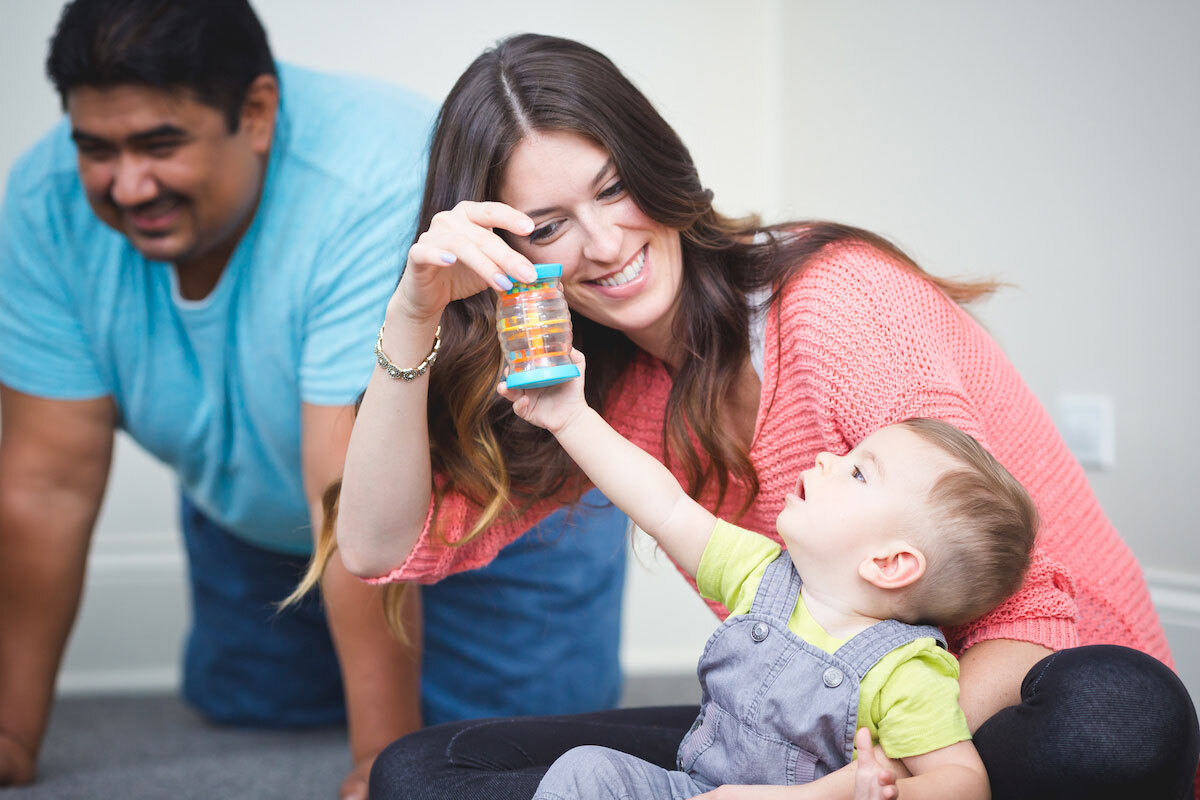
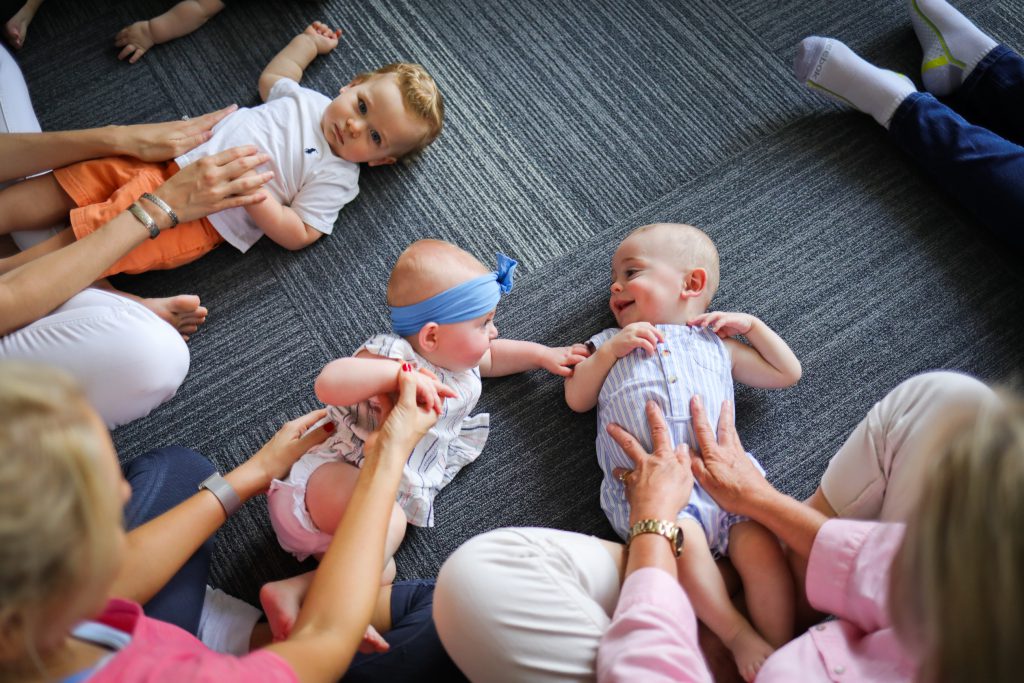
Intimate connection: Singing, playing age-appropriate instruments, and dancing (think lap bounces, dancing with baby on hip, and letting them bounce when they’re ready to begin standing) together facilitate bonding through eye contact and loving, intentional touch.
Creative connection: When you wait for your baby’s response when singing with them (just like in daily babble), or allow them to tap, shake, or play an infant-specific instrument, they develop the emotional security and self-confidence they need to create in the moment and moving forward.
Cognitive connection: Our brains are pre-wired to respond to music, and when we pair simple listening to singing, moving, and playing instruments, we activate ALL the senses, making those neural connections longer and stronger.
When you intentionally and consistently make shared musical play a part of a baby’s first year, it will set the stage for positive social-emotional growth for year’s to come.
Practice these strategies in a Kindermusik class for babies or explore musical teaching resources for infants and families.
This post was originally authored by Theresa Case whose award-winning Kindermusik program is located at Piano Central Studios in the Greenville, South Carolina area.
Some great points here. It really shows how much of an impact music has on our lives and our connections to others. It’s something everyone, regardless of age, can appreciate together.