How Shared Music-Making Nurtures Emotional Intelligence

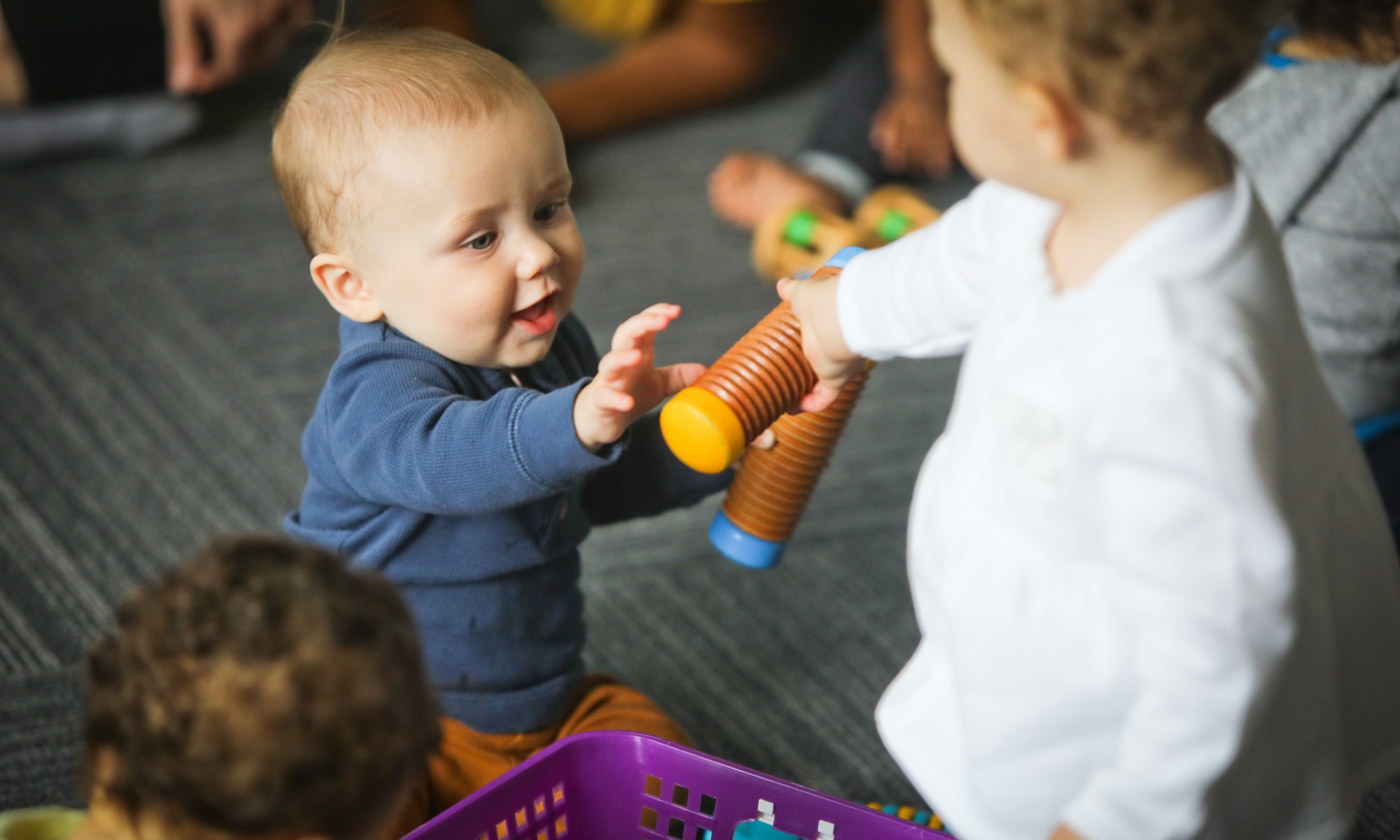
Two 1-year-old boys pass instruments to each other during a Kindermusik class; early cooperative play like this supports emotional intelligence.

What is emotional intelligence?

Since the early 90s, early educators have been keenly interested in “emotional intelligence” (the awareness of our emotions, how to manage them, and use them) and its connection to wellness and success. What we know now is that a child’s brain is primed for nurturing emotional intelligence, and there are scientifically proven reasons why shared music-making is the best nurturing tool out there.

Continue reading “How Shared Music-Making Nurtures Emotional Intelligence”

How Music Skyrockets Infant Social-Emotional Growth

baby boy reaches for shaker during Kindermusik class—interactive musical play boosts infant social-emotional health.

Infant social-emotional health…is that a new thing? Though some medical providers, first-year educators, and early childhood researchers have always valued things like eye contact, skin-to-skin, etc., that holistic terminology that includes ALL of the things supporting a baby’s social-emotional needs is relatively new for families.

It may sound like it’s a no-brainer—snuggle your baby, sing to your baby, and so on. But what’s not common knowledge are the many key behavioral competencies social-emotional development feeds.

The ability for babies to (eventually) self-soothe, for toddlers to not bite their friends, for older children to play well with others, or listen when the teacher’s talking, or not run into traffic…it’s all connected to positive social-emotional growth.

And the first stop is baby’s connection with parents or primary caregivers.

That’s a lot of pressure for grownups, but infusing music into daily interactions can lighten the load. There’s a deep-seated and innate response to music, even in very young children, and when you share that joy with another human, it’s incredibly powerful.

Continue reading “How Music Skyrockets Infant Social-Emotional Growth”

Kindermusik and Your Child: Social-Emotional Development

  • Making friends.
  • Sharing.
  • Learning how to express frustration appropriately.
  • Figuring out conflicts peacefully.
  • Helping someone who has been hurt.
  • Waiting patiently.
  • Following rules.
  • Enjoying the company of others.
  • Internal motivation to succeed.

All of these qualities (and more!) describe what we all wish to see as parents is the healthy social development of our children. Like any skill, young children develop these abilities in small steps over time, and they learn them from you, their first social connection and teacher. On the whole, young children who spend time singing, playing, and moving with other children are better prepared to be confident and self-aware, build positive relationships with peers, and get the best out of the learning environments and opportunities that life will bring them…just one of the many reasons that Kindermusik is so much more than music!

The Kindermusik classroom is the perfect place for your child to practice and develop social skills. Our activities help children learn to work with, understand, and enjoy others, while teaching parents to model activities that include social interaction and the joy of learning. At every level from Birth – 7, Kindermusik curricula are written to support the development of your child’s social & emotional skills with age-appropriate, challenging activities.

In fact, studies show that music and movement experiences in a group setting impact all seven areas of social-emotional development* identified by researchers.  Those seven areas are:

  • Confidence
  • Curiosity
  • Intentionality
  • Self-control
  • Relatedness
  • Capacity to communicate
  • Cooperativeness

*Click to read more FABULOUS Research on the 7 Social Competencies and Kindermusik by Heidi Bennett.

Compiled by Theresa Case, whose Kindermusik program at Piano Central Studios in Greenville, SC, is proudly among the top 1% of Kindermusik programs worldwide.