
Thank You, KI Green Community!

Kindermusik Green Contest - Doubled!

Kindermusik Green Contest - Doubled!What better way to celebrate the international Human Rights Day than by reading all of your outstanding entries for the KI Green Competition? We are so, so proud of the unique, creative, and dedicated sustainability efforts you shared with us over the past two months! You’ve installed solar panels, written and played musical recycling raps, upcycled old sandblock instruments, and altruistically nominated teachers and parents from your Kindermusik classes, while doing your own good work. It is a poignant coincidence that Human Rights Day, honoring the United Nation’s adoption of the Kindermusik Green - Sustainability Universal Declaration of Human Rights in 1948, should be the day that we choose our contest winner. Thank you all for aligning with us to protect our world for children. Please check back Wednesday when we will announce the contest winner!

Star Steward Competition Winnings DOUBLED IF We Reach 18K Facebook Fans!

Kindermusik Green Contest - Doubled!

Kindermusik Green Contest - Doubled!We are prepared to DOUBLE the winnings for the first Kindermusik Green – Star Steward Competition IF our Facebook page reaches 18,000 by day’s end.

If this happens, the winner of our first Kindermusik Green Star Steward competition will be able to donate $200 to their charity of choice – AND receive 100 FREE KINDERMUSIK SONGS!

Kindermusik’s first official Star Steward Competition was designed to illuminate outstanding sustainability efforts in the Kindermusik community!  If you, your child, or someone close to you has taken on an active environmental leadership role, tell us for a chance to have your story and project shared on Minds on Music.

Kindermusik - Like Us On Facebook

If you don’t already like us on Facebook, please do.
Tell your friends & family too!

Word learning and early literacy development

Source: Teachmama.com

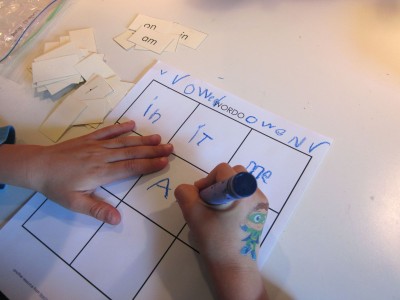
In. It. Me. He. Unless you work in the early literacy and language development arena, those four little words are, well, just four little words. However, early childhood teachers recognize them—and 90 plus more—as “Kindergarten High Frequency Words” in conjunction with the common core state standards. According to the Common Core Language Arts, children in Kindergarten will learn to read these words by sight.

Early word recognition and lifelong reading skills

Even people outside the early literacy field recognize that children and adults read differently. Early readers depend on phonemic awareness to carefully sound out each word. Eventually, children learn words by sight and can read without delay. Now early literacy development research indicates that early word acquisition can lead to better reading skills as an adult. By measuring the age at which children learn words, Dr. Tessa Webb wanted to uncover why the reading patterns of children differs from that of adults.

“Children read differently from adults, but as they grow older, they develop the same reading patterns,” Dr. Webb explained in a press release. “When adults read words they learned when they were younger, they recognize them faster and more accurately than those learned later in life.”

In Dr. Webb’s early literacy research, 300 children read aloud both familiar and unfamiliar words. Fifty percent of the words followed spelling to sound rules, whereas the other half did not. Dr. Webb’s research showed that children in the early school years read words differently from adults, but by age 10, children’s reading patterns mirrored that of an adult. Dr. Webb sees this research as an important first step in connecting word learning age to both early literacy success and later reading abilities as adults.

Music, early literacy development, and the Common Core

ABC Music & Me uses music to help children build early literacy and language skills, including vocabulary acquisition. The stories, songs, and music and movement activities introduce students to hundreds of words and their meanings. In this common core curriculum, the picture vocabulary cards support unit-by-unit vocabulary, comprehension, and memory.
For more information about using our standards based curriculum, ABC Music & Me, to boost early literacy and language development, email us at info@abcmusicandme.com.

Bill McKibben’s “Moral Math” of Climate Change

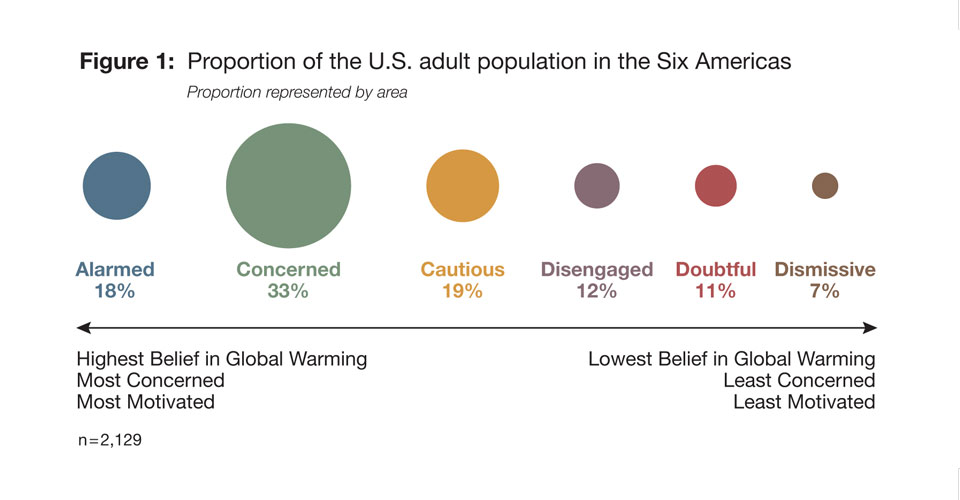
From the Yale Project on Climate Change, one of our favorite environmentalists, Bill McKibben, reports a seasonably heart-warming “Moral Math” graph showing the “six Americas” of national attitudes towards global warming. 33 percent of Americans feel “concerned” by the state of the environment, and would describe their attitude as such:

[They] are also convinced that global warming is a serious problem and support a vigorous national response. Members of this group have signaled their intention to at least engage in consumer action on global warming in the near term, but they are less personally involved in the issue and have taken fewer actions than the Alarmed.

Who are the “alarmed” you ask?” 18 percent of self-identified “alarmed” Americans have made big lifestyle changes in order to appease the “urgent,” “human-caused” threat of global warming. On the opposite end of the spectrum, the “dismissive” actively refute the evidence of climate change and refuse to participate in the shifting culture and consumerism of green living. …Luckily, they only represent 7 percent!

Whether your in the United States or beyond: where do you fall in the graph? Tell us by commenting below.

And don’t forget that FRIDAY, December 7th, is the last day to submit YOUR sustainability efforts to our Facebook page (or comment below) for a chance to win the Kindermusik Green Competition! 50 free songs, $100 to your charity of choice, and a chance to inspire our community by having your efforts posted on Minds on Music!

Where did I read that? A wrap up of bilingual stories online

Expats Since Birth: Bilingual Siblings and Their Language Preferences, Expats Since Birth

You can’t choose whether your child will like Mozart or Madonna – and you can’t choose which language your child will prefer to speak. Each child develops his or her own preference for language at his or her own pace. And in a family of multi-lingual siblings, children will make choices. Parents can choose to support that process.

For example, Uta is a multi-lingual parent of multi-lingual children living in the Netherlands. She recently wrote about an experience with her toddler who refused to speak Italian as a reaction to moving to the Netherlands.

"In my experience, you sometimes have to adapt your language situation within your family to the individual needs of your children," Uta wrote on her blog, Expats Since Birth.

Uta shared some support she’s received on the topic in a book, Bilingual Siblings: Language Use in Families by Suzanne Barron-Hauwaert.

In Defense of the Bilingual Child, On Raising Bilingual Children

If you’re in the process of raising a bilingual child, you might discover a range of reactions from loved ones, educators, even friends. Research continues to support the long-term benefits of a bilingual education for children, showing improved brain functions, problem-solving skills, and language acquisition. Regardless, it’s still a new concept for many people. This blog post helps parents be prepared for some of those surprised reactions.

The Psycholinguistics of Bilingualism, Psychology Today

As interest grows in bilingual research studies, new areas of interest are being discovered, such as the Psycholinguistics of Bilingualism. In Psychology Today, psychoanalytics professor Francois Grosjean, Ph.D. talks about a new book on the topic. Grosjean and co-author Professor Ping Li explore how many languages might be involved in the language process of listening or talking; how learning a second language might actually affect behavior; and what happens when a word is literally "lost in translation."

KI Green Competition: One Week Left!

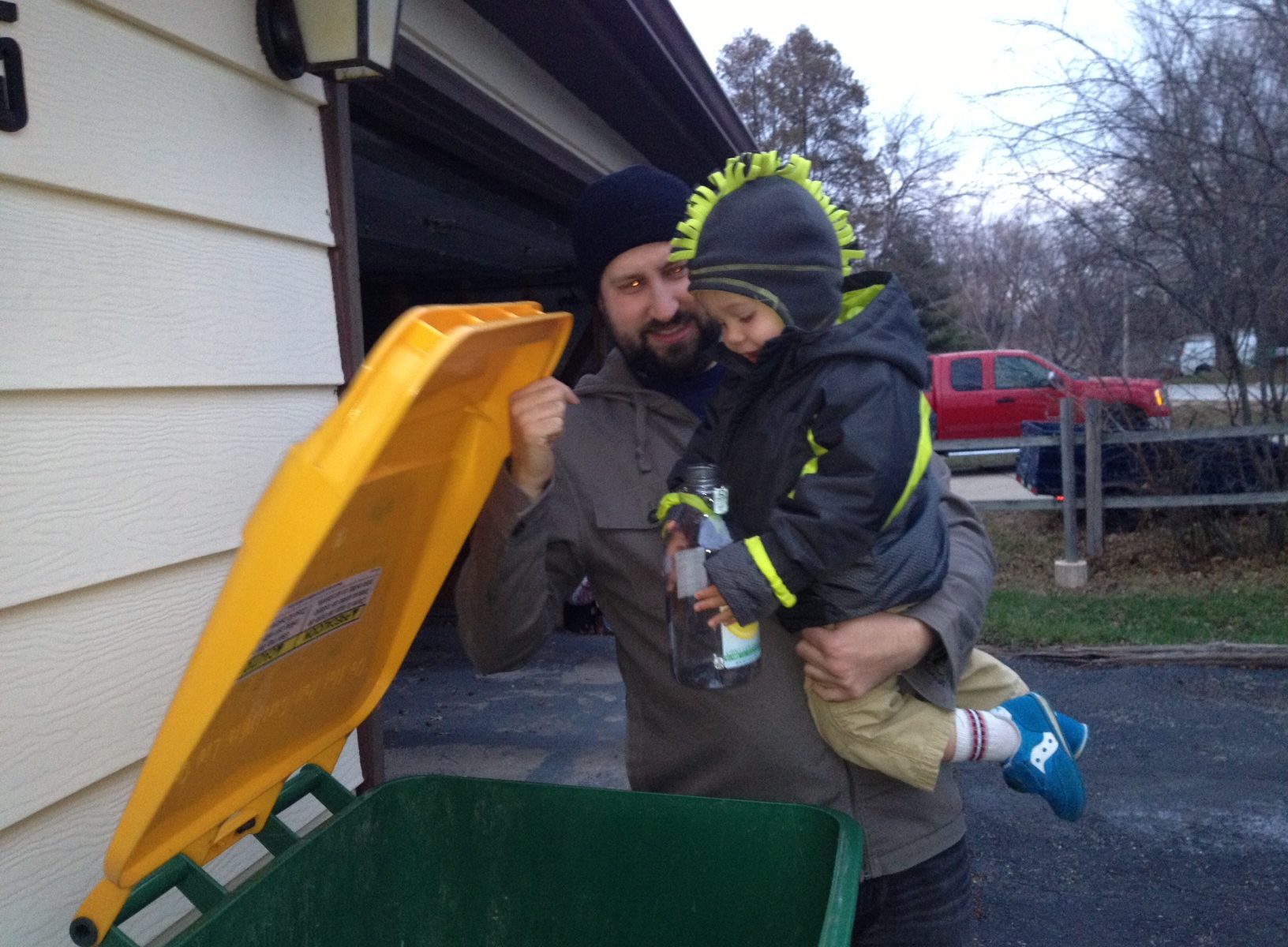
Americans recycled & composted 34% (84k tons) of trash in 2010. Shawn Currie, KI employee-owner and KI Green Competition contestant teaches his 18-month old son that most things belong in recycling, not the garbage. Shawn and his son are definitely in the running for winner of the KI Green Competition! Are you the 34% of world-saving recyclers? Post your story and/or picture to our Facebook wall by December 7th for a chance to win 50 free KI song credits, and a $100 donation to your favorite charity! And don’t forget to check out our America Recycles Day post for recycling pointers and myth-busting if you haven’t already.

E-books can put the “E” in early literacy development

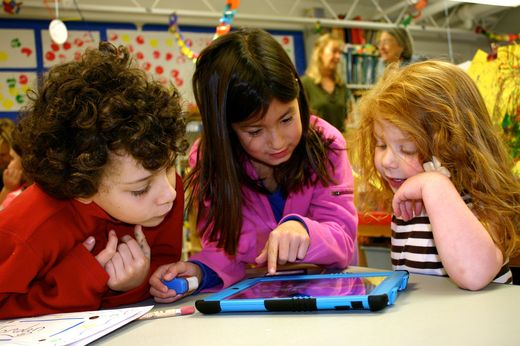
Supporting early literacy development in a classroom of preschoolers takes many different tools and tactics. Some children immediately walk into the classroom and head over to the book corner each morning. Those children seem to eat phonemes for breakfast. Children on the other end of the early literacy development spectrum may not engage in reading and literacy activities as eagerly. Recent literacy research from Kansas State University

implies that e-readers can be used to motivate less enthusiastic students.

E-readers can interest children in reading

In her research, Assistant Professor Lotta Larson used Kindle readers with second-graders. At the time, the version of the e-reader used allowed children to make the text audible, increase or decrease font size, and let them make notes while reading.

“It’s interesting to see the kinds of things these kids have been able to do,” Larson explained in a press release. “As a teacher, I know a student understands the book if she’s talking to the characters. If you take a look at those notes, it’s like having a glimpse into their brains as they’re reading.”

While research continues to emerge about the impact of e-readers and e-books on early literacy and language development, we compiled current best practices for early childhood teachers to use in the classroom.

Early literacy development through music and technology

At Kindermusik International, we share a commitment to follow, participate in, and integrate the latest research on how children learn best, including educationally appropriate ways to include digital formats of music and books. Our standards-based early language and literacy curriculum, ABC Music & Me, uses music as the vehicle for learning in preschools, daycares, and public schools while also appropriately implementing technology into the process. We’d love to schedule a demonstration to show you firsthand how to use music, technology, and the latest research to teach children early language and literacy, including at risk students who may also be reluctant readers.

For more information about using ABC Music & Me to boost early literacy and language development, email us at info@abcmusicandme.com.

Nutrition Infographic

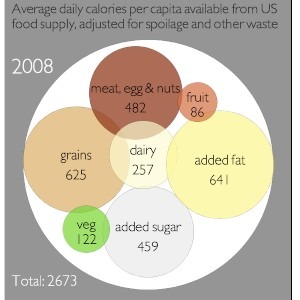
Happy Thanksgiving Gastronomic Aftermath, everyone! Given how closely linked nutrition and sustainability are, we thought we’d share this neat infographic from “Civil Eats,” a food justice blog partnered with the UC Berkley Graduate School of Journalism. In the animated infographic, you can see the “calories available per day per capita” for people living in the United States from 1970 to 2008. As a side note, we’re dying to see how this graph varies across the globe – hopefully UC Berkley students can continue on with that project! In any case, this graph shows the amount of calories an American individual has each day in each food group. As you run your mouse from left to right, the plate sizes (number of calories per food group) grow or shrink proportionate to time. Between 1970 and 1980, calorie intake only roseKindermusik Green - Sustainability1.2%; from 1990 to 2008, the average American caloric intake increased by more than 20% from the 1970 value, with 2,673 calories available per person per day. The amount of grains and added fat far outweighs the caloric intake from other food groups, indicating a heavily over-processed market. Though this graph recapitulates the obvious – eat more organic fruits and vegetables, and less in general – we know we need a gentle, visual reminder to keep our families in check at this time of year!

Music therapy and early childhood special education

Source: American Music Therapy Association

With more than 30 years experience of using music to reach children of all abilities, we experience every day the profound impact of music, including how music can be used in early childhood special education. Last year NPR’s Talk of the Nation featured a discussion with licensed music therapists who use music to treat stress and speech disorders. In addition to highlighting personal experiences in practicing music therapy, these music therapists discussed the latest research that showed music therapy can:

  • Decrease anxiety levels in cancer patients and people with heart disease
  • Improve quality of life in cancer patients and patients at the end of life
  • Reduce heart rate, respiratory rate, and blood pressure
  • Help people who have lost expressive language communicate through singing

Children with autism and music therapy

One of the callers, a parent with two children with autism shared her family’s experience with music therapy:

My son, my 6-six-year-old son, basically did not speak. He would string maybe two words together. That was his idea of a sentence. I walked into a pet store one day, and he sang from beginning to end the song “Slippery Fish.” It had seven stanzas. And I—my jaw hit the floor—and I went back to his access liaison with the state, and I said he doesn’t speak, yet he sang this song. She goes he needs music therapy….

We have had eight different music therapists now…my child, my nonverbal child, the one that spoke like two words together with his sentence, he speaks, he communicates, he can give us his wants.

I mean, he’s not talkative. He’s not—but the music therapist, she comes twice a week. This has made such a huge difference to our family, to our life, his ability to be educated, to provide self-care.”

To hear the show, Talk of the Nation: “Treating Stress, Speech Disorders with Music,” in its entirety or to read the transcripts, go here.

Early childhood special education curriculum uses music to teach children

Our special education curriculum, ABC Music & Me, uses music to teach children of all abilities early literacy and language, social and emotional skills, and to strengthen fine and gross motor skills, and more. ABC Music & Me is not a therapeutic program, however, many music therapists use or recommend ABC Music & Me or Kindermusik curricula to families whose children experience physical, emotional, cognitive, or social challenges. Students with special needs who use our early childhood special education curriculum show gains in literacy and language skills.

Special needs teachers appreciate the supplemental strategies guide, Meeting Special Needs, organized unit-by-unit and lesson-by-lesson, that suggests activity adaptations for children with particular needs or impairments. Plus, our exclusive customer website includes the tools teachers need for students’ IEPs, including IEP objective descriptors for easy cut-and-paste and IEP skills booster index.

For more information about using ABC Music & Me as an early childhood special education curriculum, email us at info@abcmusicandme.com.

Thankful Turkeys

Attention shoppers! Allow us to help you kill two birds with one post… here’s a certifiable tool to find a local, organic turkey near you. We are what we eat – and the short-term cost of feeding your loved ones a marginally more expensive, organically fed, hormone-free bird far outweighs the long-term risks of hormone toxicity.

Kindermusik Green - SustainabilityOkay, phew. Let’s eat thankful turkeys. And speaking of being thankful, Thanksgiving is

a great time to sit back and reflect on your family values– what you’re grateful for, and how expressing your gratitude instigates positive change. Countless studies have shown the powerful impact of gratitude on personal mental health—humans build deeper, more mutually beneficial relationships with people when they express gratitude towards one another. This effect is amplified when gratitude is expressed over time, and through written forms of communication (ah, those naggy thank-you notes ARE worth it!). We think the confidence and mindfulness stemming from gratitude might even make individuals more successful in the classroom, in careers, and as creative inventors and thinkers. And, not surprisingly, as environmental stewards.

What aspect of the environment are YOU and YOUR family thankful for? Holiday hikes? Backyard gardening time? Trips to the local compost center?

WIN 50 free Kindermusik songs & $100 donation to your favorite charity by sharing your family’s Green/Sustainability/Eco efforts by 12/07/12.

Submit your posts, pictures or videos to: Facebook.com/Kindermusik.