Partnership Combines the Power of Music with Digital Reading For Music in Our Schools Month and Read Across America Day
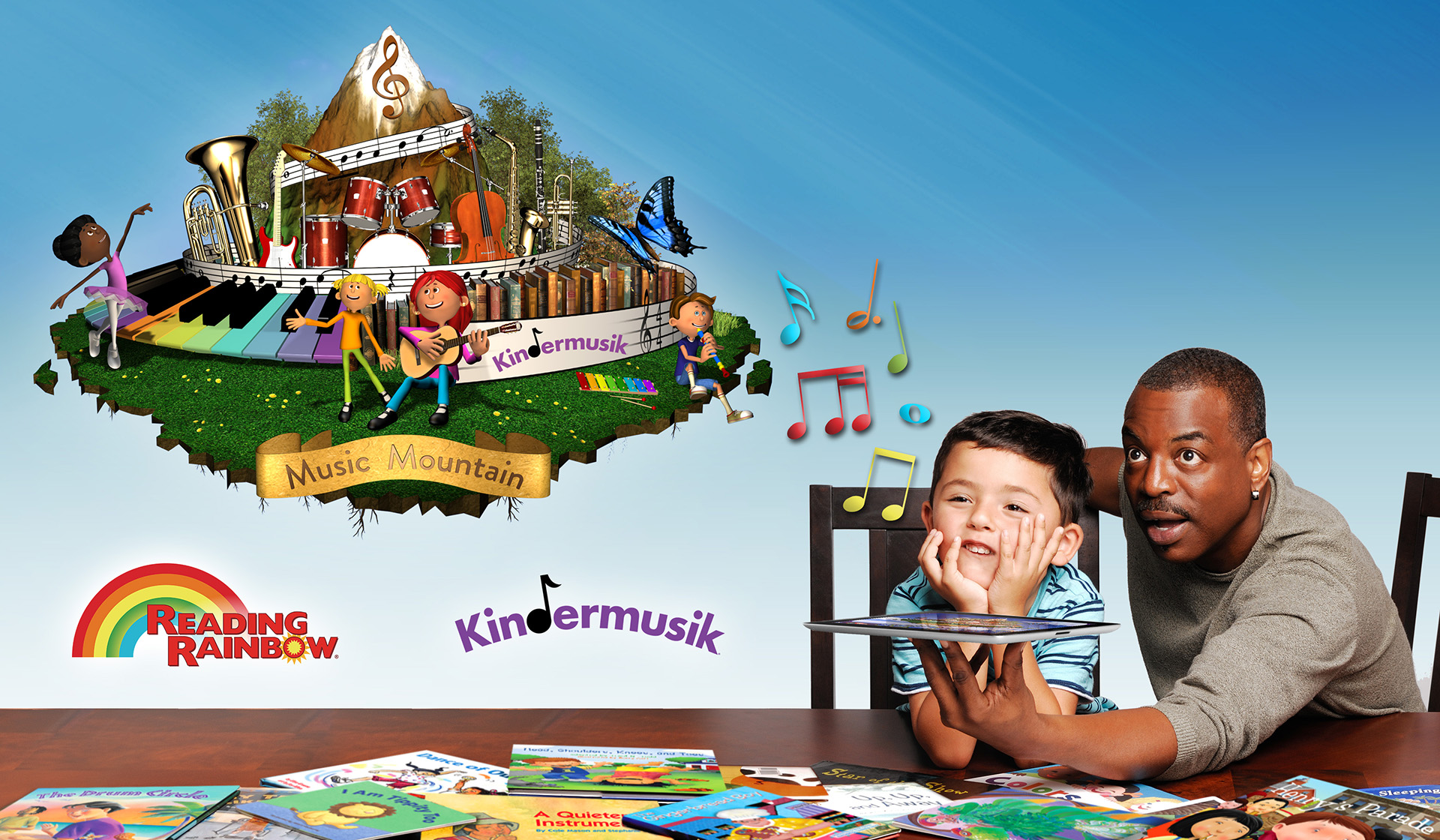
LOS ANGELES, CA & GREENSBORO, NC – February 18, 2014 – Reading Rainbow and Kindermusik International, two of the most trusted brands in childhood education, today announced a partnership that combines Kindermusik International’s research-based musical learning curriculum with Reading Rainbow’s award-winning mobile reading service in a digital library available on tablet devices. New digital content will launch March 2, 2014, in time for Music in our Schools Month (MIOSM), and National Read Across America Day (RAAD).
 “This partnership with Kindermusik emphasizes the important, proven connection between literacy and music,” said LeVar Burton, RRKidz/Reading Rainbow co-founder. “We know that when young children are engaged by music in age-appropriate ways, they can build skills that are the foundation for reading. By integrating the other arts and sciences, we aim to further inspire a lifelong love of learning.”
Reading Rainbow’s tablet-based reading service, hosted by Burton, guides children on a reading adventure to themed “islands,” each filled with hundreds of children’s books and video field trips. More than ten million books have been read and video field trips viewed since the mid-2012 launch. With the addition of Music Mountain Island, Kindermusik’s music-themed books and videos will be featured alongside other newly produced content from Reading Rainbow and their acclaimed partners.
“Our collaboration with Reading Rainbow reinforces what our own experience and the growing body of research clearly states, that there is a clear tie between music and literacy and language development,” explained Michael Dougherty, CEO at Kindermusik International. “We are thrilled to put our research-based content into some of the best development hands and are excited this new content area within Reading Rainbow will arrive in time to celebrate Music in Our Schools Month.”
While the partnership between these two brands is new, the links between music and reading are not. Research has shown music supports a child’s literacy development in many ways, including phonological awareness, vocabulary building, listening skills, reading accuracy, and prosody. Results from a 2012-2013 study of nearly 300 preschool children by independent research firm, SEG Measurement, indicated that students who utilized Kindermusik’s ABC Music & Me curriculum for just 30 minutes each week showed greater gains in literacy. The treatment group who utilized the music and movement curriculum showed a 32% higher gain in Phonological Awareness Literacy Screening (PALS) scores over the control group.
The Music Mountain Island featuring Kindermusik’s content will be available in the Reading Rainbow app and the Kindle Fire app by March 2, 2014. The app is free to try and for an unlimited reading experience, parents can subscribe for $9.99 per month or $29.99 for a six-month subscription. Additional information about the Reading Rainbow iPad app can be found by visiting the iTunes App Store here.
***
About LeVar Burton:
Best known for his Reading Rainbow stewardship as well as his other
distinguished TV roles (most notably Kunta Kinte on Roots and Geordi La Forge on Star Trek: The Next Generation), LeVar Burton comes from a family of educators and is widely recognized for his lifelong advocacy of children’s literacy. He speaks passionately on the topics of early learning and technology and has been a keynote speaker at Apple’s Worldwide Developers Conference, South by Southwest (SXSW) Edu and received the Eliot-Pearson Award for Excellence in Children’s Media from Tufts University as well as The 2013 Children’s Media Award from Common Sense Media.
About RRKidz, Inc.:
Respected by millions and one of the most watched children’s television series in PBS history, Reading Rainbow has been connecting families to the joy of reading for over 30 years. In 2011, famed actor/producer/educational advocate LeVar Burton and his business partner, Mark Wolfe, formed RRKidz. They hold the global rights to the Reading Rainbow brand through a partnership with series creator, WNED/Buffalo. RRKidz’s flagship product, the award-winning Reading Rainbow app, is a reading subscription service filled with a library of quality ebooks, kids videos, and educational games. New children’s books and reading activities are added every week encouraging children to “go anywhere, be anything.” Free to try, the educational app is available on the iPad (http://bit.ly/10sgjbs) and Kindle Fire (http://amzn.to/14tOPzY).
About Kindermusik International:
Kindermusik International is the world’s leading provider of music, movement and literacy programs for young children, enjoyed by more than two million families in over 70 countries. For more than 35 years, Kindermusik has helped children and their families discover how music can enrich their lives and lay the foundation for a lifetime love of learning. Kindermusik offers developmentally-specific educational programs for children ages newborn to seven. Kindermusik curriculum is taught by the best educators in the best schools and studios world-wide. Visit Kindermusik.com to learn more about Kindermusik early childhood programs and music classes for kids.
Connect with Reading Rainbow:
Facebook: Facebook.com/ReadingRainbow
Twitter: @readingrainbow
YouTube: Youtube.com/readingrainbow
Blog: readingrainbow.com/blog
Connect with Kindermusik:
Facebook: Facebook.com/Kindermusik
Google+: Plus.Google.com/+Kindermusik
Pinterest: Pinterest.com/Kindermusik
Twitter: @Kindermusik
YouTube: Youtube.com/KindermusikRocks
Contacts for Reading Rainbow:
Julie Nathanson Teri Weigel
310.854.8191 310.854.8290
jnathanson@rogersandcowan.com tweigel@rogersandcowan.com
Contacts for Kindermusik
Jamie Sterling Lauren Burke
336.543.6218 410.975.9638
jsterling@kindermusik.com Lauren@kehcomm.com


 According to the authors of the book Ladders to Literacy, “…playing with the sounds of words encourages children to practice perception, production, word recognition, and memory for words, phonemes, all important foundations for phonological awareness.” Phonological awareness, the ability to recognize that words are made up of sounds, is an important first step towards success in reading later on.

 We are embarking on a beautiful time of year, dedicated to love, love love!
 “…it brings families together and is FUN!” ~ Debby Pool, Vice President, Product Development/Owner
 “… of what we do for children all over the world. Music is something REALLY special — and it’s hard to imagine that music isn’t part of the lives of some children. I truly hope that one day we will, indeed, bring the gift of music (Kindermusik) into the life of every child — amazing things would happen — of that I am certain. I also <3 Kindermusik because of my fellow employee-owners and our educators. Working with and getting to know such talented and strong individuals is awe-inspiring — and — so many friendships have been made over the years — friendships that remain constant for the rest of my life — of that I am certain, as well.” ~ Connie Schor, Manager, Educator Communication/Owner


 “…Every day is an exciting journey, touching the lives of children and helping them discover the creativity that is inside of them. The best part of my job is sharing with parents how intelligent and artistic their children are, and that these children communicate their talents in many different ways. The glow on their faces is incomparable, as they realize the many unique ways that their children are special!”—Crisel Consunji, Hong Kong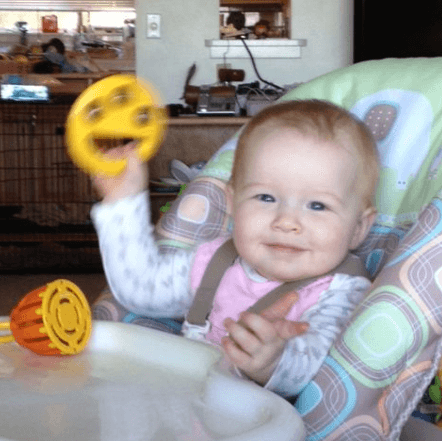
 “Music class is the best part of being a kid.” ~ Marcus
 ” ~ Alicia
 “When I went to a trial of Kindermusik I thought I was going to a singing class. It is so much more. Children learn to share, listen, express themselves and they don’t even know they are learning. They have so much fun and for my daughter, it increased her confidence 10 fold. Thank you Kindermusik.” – Louise T.
 “I love that I can share the joy of music with my sons of different ages, in a relaxed and warm environment. The first time my youngest son sang the ‘Goodbye’ song to me at home made me realize just how much they really do absorb in class!” –Lindsay J.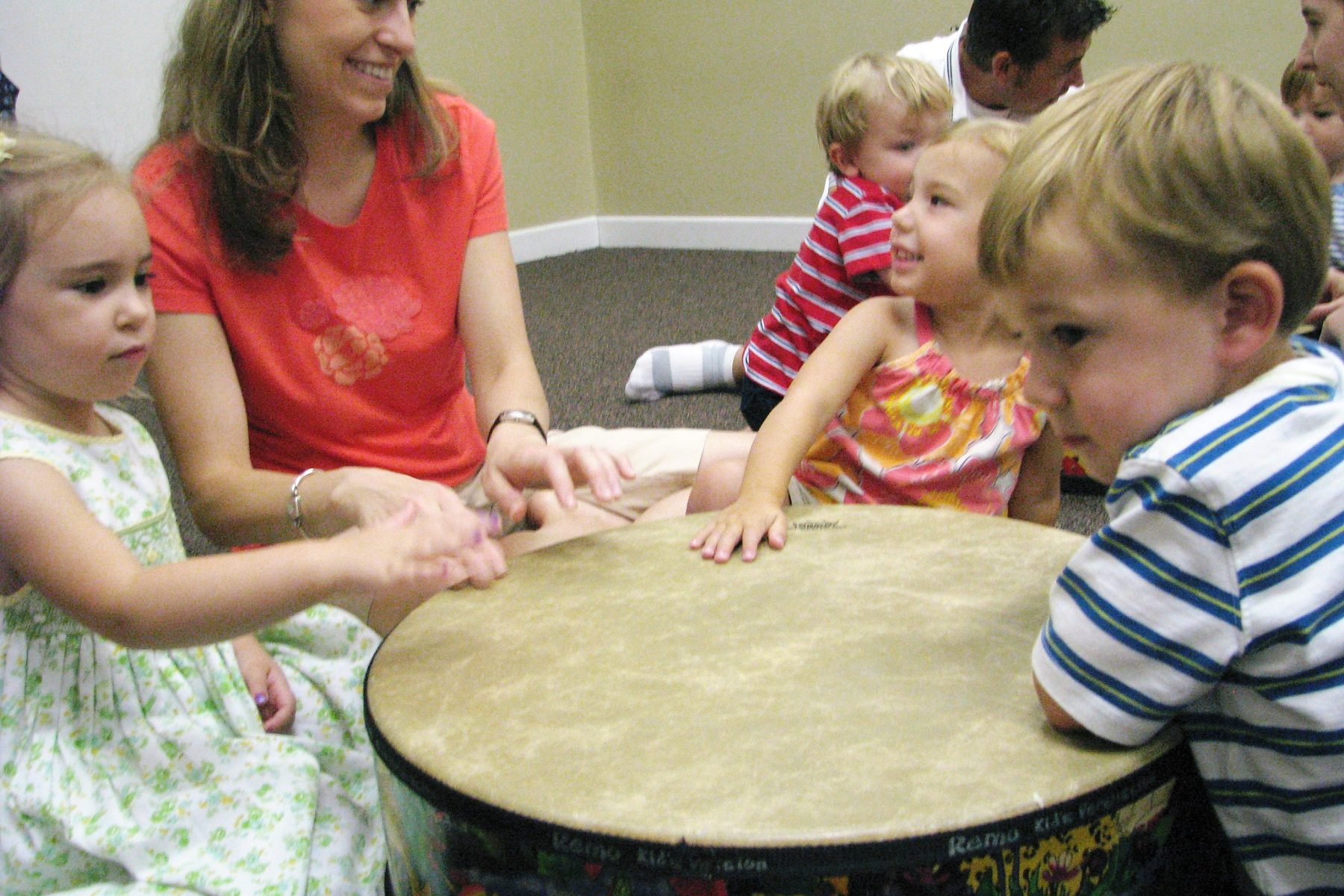
 The term scaffolding evokes the image of a temporary support structure in a construction site. The process of scaffolding in an educational sense is much like the traditional definition of scaffolding as a temporary support system used until a task is complete and a building stands without support. That sounds a lot like our job as parents, doesn’t it? We provide a temporary support system for our children until they can stand on their own in the world.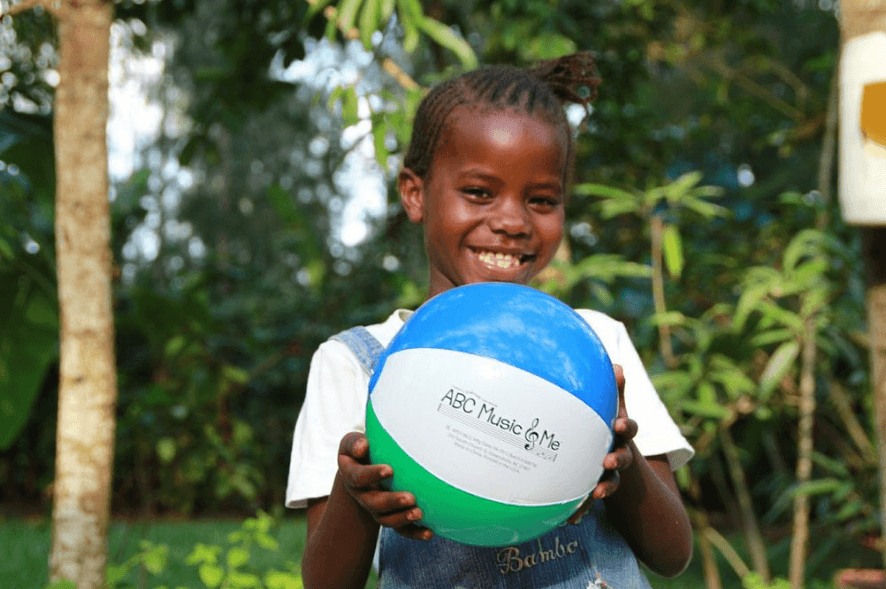



 In Kindermusik, we give you lots of opportunities to babble, bond, and build connections that prompt early communication and enhance language development through songs, rhymes, vocal play, bounces, and more. We help you mix up your language-building parentese with singing, talking, and rhyming, to expose your baby to a variety of sounds that will aid her singing and language development. Language AND music AND learning – just one of the many benefits of early music learning you’ll enjoy in Kindermusik.