4 ways to use early childhood music to help children sleep

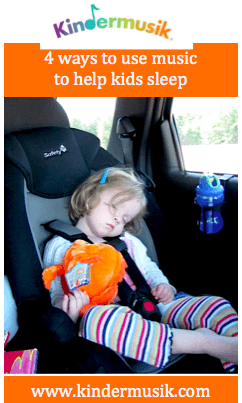
sleeping toddler finalSleep. It’s such a simple word. And, yet, for parents with young children—or early childhood educators with a classroom full of wiggling and giggling little ones at naptime—sleep can seem like a mirage that teases and tricks and lingers just out of reach. Or, it can leave us driving around willing all the lights to stay green so our little ones will stay asleep just a little bit longer.
While this lack of sleep bonds us together, it also isolates us in our individual struggles to lull our little ones to sleep. No need to call a Sleep Nanny just yet. Try these musical solutions to help solve childhood sleep woes.

4 musical ideas that puts children to sleep (literally)

  1. Listen to lullabies. Lullabies can lower the heart rate of children and help grown-ups to relax as well.
  2. Use soft, quiet music the same time each evening to signal that sleep time is near. Routines and rituals help young children make sense of their world and predict what comes next. Listening to the same music at the end of the day tells children that it is time to get ready for bed. This can mean bath time, cozy pajamas, a story, and then a final snuggle before lights out.
  3. Be consistent with musical selections. Familiar tunes work best to signal to a child that bedtime is near.
  4. Teach children their own soothing lullaby. Children learn through repetition. So, by singing a favorite song night after night, children will not only learn the song by heart, but they will learn a musical self-soothing technique. Bonus: That same tune can help calm children under stressful situations, like a skinned knee or a visit to the doctor’s office.

We know there is power in early childhood music. Whether used as part of a toddler curriculum to teach early literacy and language skills, played in the background at toddler play groups, or even used in the middle of the night to lull an infant to sleep, music puts a soundtrack to childhood. And, music and learning go hand in hand!

Looking for musical solutions to other parenting challenges? Visit a Kindermusik class to connect with other families where you can discover more about the benefits of early childhood music. Find a local Kindermusik educator today!


10 Reasons Why Toddlers Thrive in Early Childhood Music Classes

Since Kindermusik International is the world’s leader in early music and movement learning, we could probably probably give you 10,000 reasons why toddlers thrive in our early childhood music classes with Kindermusik educators all around the world using our toddler music curriculum.
But we’ll keep this short, sweet, and to the point and just share 10 of our favorite reasons why early childhood music, and specifically Kindermusik classes, are so important for young children.
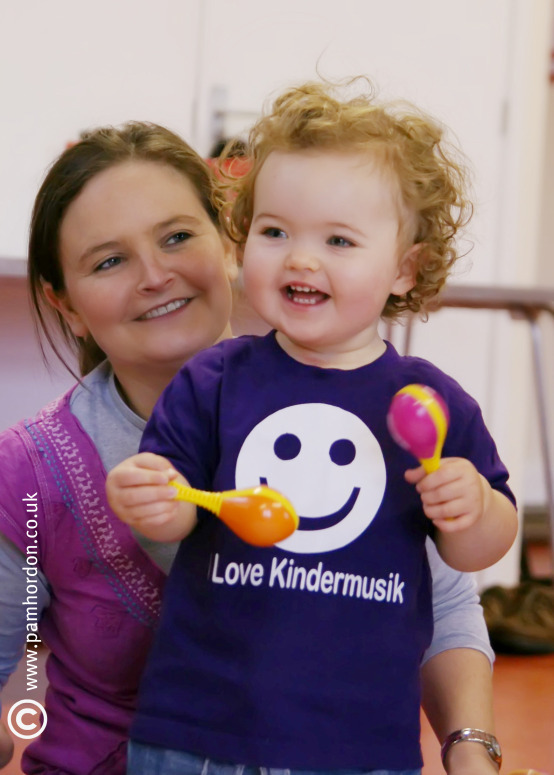
Music - happy familiesReason #1: Parents are engaged and involved with their toddler for the entire class and toddlers blossom with this kind of focused attention and quality time together.
Reason #2: Toddlers benefit from the social facet of the class, watching their peers, making friends, and practicing sharing.
Reason #3: Creativity and imagination are ignited through Kindermusik’s rich, multi-sensory learning environment.  Music and learning go hand-in-hand.  Watch this video for more!
Reason #4: In a Kindermusik program, most children will have the opportunity to have the same caring, nurturing Kindermusik teacher for several years, providing a security and familiarity that enriches the learning process.
Reason #5: The Kindermusik curricula deliberately expose toddlers to a wide variety of musical genres and styles, expanding their musical taste and appreciation.
Reason #6: Toddlers absolutely thrive on happy rituals and predictable routines, both of which are an intrinsic part of each and every Kindermusik class.
Reason #7: At a time when vocabularies are exploding, Kindermusik classes inspire toddlers to practice silly sounds and learn new words through songs, chants, and vocal play.
Reason #8: Toddlers love to go, and Kindermusik classes give children a safe place to actively explore all of the different ways little bodies can move.
Reason #9: Kindermusik classrooms are a place of discovery and delight, and nothing is more satisfying to a toddler than to be able to do and explore all by himself – with mom or dad close by, of course!
Reason #10: The Kindermusik curricula are carefully designed to give these active learners exactly what they need when they need it, inspiring a love of music and an appetite for learning that will last a lifetime.
cute girl making a funny faceCome see for yourself how your toddler will thrive in a Kindermusik class!  Try a free Preview Class today.  We promise… Kindermusik is one of the best things you can do for your child.  We’d love to show you why.

Shared by Theresa Case who owns an award-winning Kindermusik program at Piano Central Studios in Greenville, SC.

Let the fun and games (and English Language Learning!) begin

(Source: http://www.inspiredbysavannah.com/)

Ever wonder why toddler play groups are more commonly called, “play dates”? Sure, there is the obvious play involved on a certain date, but to be more accurate, why not call them “work dates”? After all, play is work to a child. Albert Einstein claimed that “play is the highest form of research.”
Even babies use play to research their world. In fact, through play, infants learn about every new sound, sight, taste, movement, and touch. Older children also use play to learn how the world works, better understand their place in it, and to practice important life skills: such as language skills, social-emotional skills, and creativity. Children make work look like fun!

Using fun and games to help English Language Learners

Now, new research from The University of Nottingham shows that playing simple games using words and pictures can help people more easily learn a second language. The study used spoken and written foreign language words along with pictures showing their meaning.
Initially, English speakers with no knowledge of Welsh, looked at English and Welsh words on a computer. They were asked to determine if the two words both contained the same letter. They also heard the word being spoken and saw a picture of what the word meant. They were not asked to learn the words themselves.
Some time later, the same English speakers were asked to specifically learn the correct translation of the Welsh words. Half of the Welsh words were presented previously. The researchers found that the participants did better on the Welsh words that had appeared in the first part of the study.
PhD student Marie-Josée Bisson, who led the study along with Drs Walter van Heuven, Kathy Conklin and Richard Tunney, explained in a press release: “Anyone attempting to learn another language would benefit from activities such as simple games using foreign language words and pictures, or foreign language films with subtitles where they can enjoy the activity without focusing on trying to learn the words. The results of this study suggest that these kinds of informal activities can facilitate language learning, even days afterwards.”

Using fun, games, and music with young English Language Learners

ABC English & Me - Teaching English to Children through MusicWhile the study above focused on adult learners, the results impact English language learners in the early childhood classroom, too.  ABC English & Me, our English Language Learners curriculum, uses ESL activities for kids, words with picture cards, puppets, and English songs for kids to teach young children English. From the first song at the start of each class to the last shake or tap of an instrument, children quickly become engaged in actively learning English through fun, games, and, of course, music!
Plus, we provide materials for families to use together at home. These monthly interactive materials support the classroom learning, while giving parents the tools they need to continue the English language learning at home.

Learn more about bringing ABC English & Me and the power of music to your school!


Help Your Child "Tune" In to Pitch and Melody

Note: This blog post was contributed by Kathy’s Music in Pittsburgh, PA (Top 1% Kindermusik Maestro program worldwide).

ÕË

"…[A]ll human beings are born musical and will respond to music. Because classical music, with its complex repetitive patterns, has far-reaching effects on the child and his brain development, it is the perfect experience."*
Our Kindermusik classes are designed to develop the whole child in general (language, fine & gross motor skills, social & emotional development) and to develop musical aptitude specifically.
Often classes will focus on melodic direction, listening for high sounds and low sounds and moving our bodies high and low for a true multi-sensory learning experience.
However, in our Kindermusik Young Child program, we teach kids to read and write music starting with melodic direction. To get things started we use the familiar "Star Light, Star Bright" song. The children are "tuning" in to sounds and pitches, learning to differentiate and identify. It’s really just the first step, but starting with something familiar puts them on the path to reading music.
Help your child to "tune" in to sounds and pitches by extending your child’s listening opportunities at home. Consider adding to your music collection with a CD or mp3 files. Some possible selections include:

  • Mozart: The Complete Piano Sonatas and Variations, recorded by Daniel Barenboim, (On this recording you might especially enjoy the variations on the familiar "Twinkle, Twinkle Little Star" or "Ah, vous dirai-je, Maman.")
  • Copland: Appalachian Spring, Rodeo, and Fanfare for the Common Man, recorded by Leonard Bernstein and the New York Philharmonic Orchestra and
  • Holst: The Planets, recorded by Andre Previn and the Royal Philharmonic
    Orchestra.

As you and your child listen to various pieces of music, talk about them. Discuss distinctions and preferences. Early exposure to a wide variety of music will ensure your child’s acceptance and appreciation of music for a lifetime!

Investing in children through parental involvement in early childhood education

Kindermusik quote editedWe talk a lot about early childhood education around here. We know—as Ed Markey said: “Education is not only a ladder of opportunity, but it is also an investment in our future.” Children, especially those most at-risk students, receive even more benefits from participating in an early childhood curriculum that prepares them for a lifetime of learning!
In a perfect world, early childhood education involves three key ingredients: the child, the teacher, and family involvement in education. Without all three, our investment in early childhood education—and the child—does not yield the biggest returns—measurable and immeasurable.
Of course, a parent is a child’s first and most important teacher. We say that time and time again. When a child attends a preschool, daycare, or other learning environment outside the home, family involvement in education remains a pivotal part of the process. While teachers, administrators, and parents share the common bond of the child, some programs more successfully manage to engage this learning community by promoting respectful and reciprocal caring relationships. What can we learn from those who do it really well?

Getting high marks in family involvement in education

Anne Douglass, PhD., at the University of Massachusetts in Boston wanted to find the

(Source: AParentinSilverspring.com/)

answer. She recently researched ways to increase parental involvement in early childhood education in a daycare or preschool setting. She wanted to answer:

  1. What accounts for the gap between the desire of the early childhood education programs to partner with families and actual practices with families?
  2. What do teachers of early childhood curriculum need to effectively partner with families?
  3. What factors promote or impede the implementation of family support and engagement strategies?

In this small study, Douglass compared the teachers and parents, structures, and processes within four early childhood education programs: two with “high quality” family involvement and two with “low quality.”  She found two distinctive characteristics of successful preschools, Head Start programs, and daycares with parent involvement in early childhood education:

  1. Administrators modeled caring professional relationships and shared power within the school, which included leadership opportunities for classroom teachers, training, and staff appreciation.
  2. The preschool utilized specific structures to promote caring and shared power, including teacher supervision that intentionally involved discussing multiple perspectives in solving a problem.

An early childhood curriculum that increases parental involvement in early childhood education

ABCMMEINTL_LOGO_LiteracyLanguage_OneLineABC Music & Me uses music and movement to teach young children early literacy and language, social and emotional skills, and other vital skills proven to help set a child up for success. We intentionally created ABC Music & Me to include resources for teachers and parents that increase family involvement in education. As Douglass’s study indicates, teacher training impacts not only a teacher’s ability in the classroom but also the engagement of children’s parents. Our early childhood curriculum includes teacher training choices from half-day trainings to demonstration DVDs. We also include access to materials for families to use together at home that supports both the classroom learning and a parent’s role as a child’s first and best teacher.

For more information about bringing this early childhood curriculum to your preschool, Head Start program, or daycare, email us at info@abcmusicandme.com.

Music & Movement Benefits: Naturally Speaking, Of Course!

Kindermusik prepares your child for schoolThe more you expose your child to language, the stronger his verbal skills will be.  Language acquisition is a gradual process that involves many facets of development including listening, imitating facial expressions, playing peek-a-boo, and babbling.  Your child will learn language naturally by hearing it used in context when you sing, read, talk, and listen to him.
Kindermusik tips for…
Your Baby: At two months, he coos and babbles.  In his first year, he’ll begin making vowel sounds (oohs and aahs) and then move to new sounds and vowel-consonant combinations.  Your baby is also learning the art of conversation.  Bring your face close to his, and talk to him.  Ask him a question and let him respond.  He is learning that conversation is a two-way street.
Your Toddler: In a verbal growth spurt, your toddler’s vocabulary expands from about 50 to 200 words.  When your toddler displays emotion, give him the language to identify it:  “You’re happy!” or “I can see you’re sad.”  You’ll enhance his emotional intelligence as well as his vocabulary.
Your Preschooler: Playing rhyming games is a fun way for a preschooler who is developing phonemic awareness – the recognition that sounds make up words.  Encourage him by making up rhymes and laughing together.
Enrolling in early childhood music and movement classes is one of the very best ways you can enhance early literacy development in your child.  We happen to believe that Kindermusik is the best choice!  But don’t just take our word for it… come try a free preview class on us.

5 Ways to Boost Early Literacy for Toddlers and Pre-Schoolers

When you hear “early literacy” and your little one is nowhere near reading-ready, don’t panic. They’re probably further along than you think. Early literacy consists of the building blocks needed to become a reader, including phonemic awareness, comprehension, vocabulary, and more.

Helping them build up early literacy skills has more to do with your interactions with them during storytime. With a few easy guidelines, these reading moments will become more enjoyable and rewarding than you can imagine, and they don’t cost a thing.

Continue reading “5 Ways to Boost Early Literacy for Toddlers and Pre-Schoolers”

14 ways to celebrate 2014 with early childhood music and early literacy

(Source: She Knows Canada)

At Kindermusik, we celebrate new beginnings throughout the year—from new babies being born to new families discovering our early childhood music classes to even launching new curriculum for babies and toddlers. However, whenever a new calendar year rolls around, we look for even more ways to celebrate! We invite all of our Kindermusik families to help ring in—or shake or sing or dance in—the new year with one of these ideas.

Welcome the New Year through early childhood music and early literacy

  1. Make a musical time capsule of your family’s current favorite music with a 2014 playlist. Include your child’s favorite lullabies, get-up-and-go songs, or theme songs from beloved television shows or movies. Expand the playlist beyond early childhood music, too. Be sure to include your own favorite songs that you share together.
  2. Read musical storybooks together. Try some of these Kindermusik favorites to support early childhood music and early literacy development.
  3. Go on a letter sound treasure hunt. Show your child a letter. Make the sound of the letter together and then go on a treasure hunt around your house to find an object that starts with that same sound.
  4. Make a personalized alphabet eBook. During your letter sound treasure hunt, take a photo of each object: M for Mommy; S for stuffed animal; K for Kindermusik. Then support your child’s early literacy development by creating a personalized alphabet eBook with the photos.
  5. Try one of these websites or mobile apps for kids that support early literacy development. The Reading Rainbow app will soon include a music-themed “Kindermusik” island. Stay tuned to hear more!
  6. Read (and memorize!) a favorite nursery rhyme. Nursery rhymes build phonemic awareness as your child begins to hear the differences between rhyming words like “Humpty” and “Dumpty” or “wall” and “fall.”
  7. Play alphabet musical chairs. Here’s one way to combine early childhood music and early literacy skills with a familiar childhood game.
  8. Sing together. One study says talking (or singing) to your young child is the most critical aspect of parenting a baby or toddler. Learn more about the child development benefits, including vocabulary development and early literacy development.
  9. Dance together. The ability to move to a steady beat is linked to language skills. Plus, it’s fun and great exercise for the whole family and gives your child the opportunity to practice all those growing gross motor skills!
  10. Make music and reading part of your daily routine. Routines and rituals help young children make sense of their world and predict what comes next. Each day signal to your child the end of the day by listening to (or singing!) lullabies and reading books together after bath.
  11. Hold a Freeze Dance party. Children love freeze dance. However, as creators of early childhood music classes and early literacy curriculum, we know there is more behind a game of Freeze Dance than giggles and silly moves. Children practice inhibitory control by learning how to tell their bodies when to dance and when to stop. Inhibitory control prepares a child to sit still and pay attention during the school years.
  12. Get out some instruments (or pots and pans) and hold a family jam session. Your child will practice steady beat and rhythmic abilities. Rhythmical abilities show a strong positive correlation with decoding skills, both in reading accuracy and reading prosody. Plus, being able to keep a steady beat helps a child feel the cadence (rhythm) of language.
  13. Play “Name that Sound.” Gather different instruments or objects that make sounds. Take turns closing your eyes and naming the instrument or object. That same sound discrimination helps your child hear the minute differences between letter sounds or phonemes, which supports early literacy and language development.
  14. Enroll in Kindermusik classes! Our classes for babies, toddlers, big kids, and families are loved by more than 2 million families in over 70 countries.

    Contact a local Kindermusik educator today! Ask to visit a class and see for yourself why parents and children around the world love our early childhood music classes.


ELL students learn through movement

Children are the real movers and shakers of this world. Watch a toddler practice walking, supervise group activities for kids, or even catch your young children in your arms as they run to welcome you home, and you will see there is a whole lot of moving happening! From birth, children learn to move and move to learn.
Head Shoulders Knees & ToesIn the world of ESL curriculum development, we understand that English language learning is best acquired when closely linked to a gross- or fine-motor skill activity. Learning through actions or through Total Physical Response (TPR) reinforces new and old language. Research shows that TPR positively impacts memory and recall in language learning. Plus, physical activities for kids makes the learning all the more fun—whether learning how to roll a ball or how to say “ball” in English while learning how to dribble it!

Music and movement and ELL students

ABC English & Me - Teaching English to Children through MusicIn our ESL curriculum, ABC English & Me, we use English songs for kids, Total Physical Response, puppets, and story time to teach ELL students. English songs for kids that include miming of the songs provide children with the opportunity to sing and do—or Total Physical Response. For example, moving and hearing the vocabulary in “Head, Shoulders, Knees, and Toes” encourages ELL students to then use the new vocabulary as they move. Familiar English nursery rhymes and finger plays, pair English Language Learning with a fine motor activity.
ABC English & Me, our ELL/ESL curriculum for ages 2 to 6, aligns with international standards, including the Common European Framework of References for Languages (CEFR). Plus, we incorporate the latest research on how music and Total Physical Response boosts language learning and increases phonological awareness.

Learn more about bringing ABC English & Me to your school!


Kindermusik in the News! Announcing Cuddle & Bounce and Sing & Play

MusicAndMovement_ClassesForBabies_KindermusikWithUtaThis week, Kindermusik International announced our newest curricula for babies and young toddlers through a press release, which continues to be shared through parenting and education websites, newsletters, and social media channels.

Consider sharing with your local community and press!


New Music and Movement Classes from Kindermusik Engage Babies and Toddlers

Cuddle & Bounce and Sing & Play offer opportunities for young children to bond with parents while learning musical concepts and furthering brain development

GREENSBORO, NC – December 3, 2013Music and movement classes can spark learning in young children, and when done in conjunction with a parent, can help build bonds between parent and child. Parents seeking early development opportunities for children as young as newborns should check out two new classes offered by Kindermusik International. The classes Cuddle & Bounce, for children from birth to one year of age, and Sing & Play, for children from one to two years of age, use music and movement to nurture and guide learning. Parents can sign-up to try a free class by visiting Kindermusik.com.


During weekly classes, parents and children engage in a mix of activities such as instrument exploration, dancing, singing, the learning of musical concepts like steady beat, tempo, and more. A licensed Kindermusik educator shares the developmental benefits behind the activities, and provides access to Kindermusik@Home online parenting resources including music and stories from class, tips for parents on how to communicate with their babies, and specific ideas on how to incorporate music and movement activities into the families’ daily routines and rituals. These classes for babies and toddlers are just the beginning of the Kindermusik journey, as their program extends through age seven.


Cuddle & Bounce celebrates the thrilling journey of a baby’s first year of life, focusing on:


  • Language and Vocal Development – Babies’ early language skills are nurtured as they imitate sounds, engage in lots of give-and-take conversations, and add to communicative abilities through sign language.
  • Brain Development – Through every movement, a baby’s brain synapses and the connections between neurons are created and strengthened.
  • Large and Small Motor Skills – Movement through music activities support stretching, kicking, rolling, crawling, sitting and standing independently will enhance large motor skills; playful activities such as reaching for or grasping objects will aid small motor skills.
  • Social-Emotional Development – Through lots of cuddling, playing, humming, and dancing, Kindermusik activities help build and strengthen parents’ relationship with children. Side-by-side play and group dance activities with other parents and children provide the important benefits of safe and early interactions with the wider social world.
  • Musical Development – Together, parents and babies will explore simple, baby-safe percussion instruments. Throughout hundreds of different Kindermusik music and movement activities, babies receive an early introduction to the songs, sounds, rhythms, and tempos of music from around the world.


The Sing & Play curriculum includes:


  • Movement & Physical Development Walking, jumping, marching, dancing, bouncing, and wiggling is fun, and strengthens young muscles and bones, improves balance, and helps new walkers be aware of what their bodies can do.
  • Exploration Time – A child’s natural curiosity is stimulated in an inviting environment full of specially designed instruments, textures, sounds, movements, interesting objects, and baby-safe props.
  • Language Development – By exploring new words and imitating sounds, young toddlers gain vocabulary and communication skills.
  • Instrument play and Musical concepts – Age-appropriate experiences with child-safe instruments enhance a sense of rhythm and steady beat, develop a keen awareness of the distinguishing qualities of sound, and encourage spontaneity and creativity. Even the littlest musicians and their parents benefit from early exposure to basic music fundamentals like loud and quiet, musical form, tempo, timbre, steady beat, and more.


"Cuddle & Bounce and Sing & Play classes give parents new opportunities to engage in safe, fun, and developmentally appropriate music-and-movement experiences with their very young babies and toddlers," said Debby Pool, vice president of product development for Kindermusik International. “We are excited to add these two new curricula to our offerings, and we are confident that these classes will give babies and new walkers a great early start in many critical domains of development and learning.”


To take advantage of these early childhood music programs, which later feed into Kindermusik International’s curricula for children through age seven, visit Kindermusik.com to find a class near you and try a class for free.


About Kindermusik International

Kindermusik International is the world’s leading provider of music, movement and literacy programs for young children, enjoyed by 2 million plus families in more than 70 countries. For more than 30 years, Kindermusik has helped children and their families discover how music can enrich their lives and lay the foundation for a lifetime love of learning. Kindermusik offers developmentally-specific educational programs for children ages newborn to seven. Kindermusik curriculum is taught by the best educators in the best schools and studios world-wide. Visit Kindermusik.com to find out more about Kindermusik’s music classes for kids and early childhood curriculum.


Connect with Kindermusik:

Facebook: Facebook.com/Kindermusik

Google+: Plus.Google.com/+Kindermusik

Pinterest: Pinterest.com/Kindermusik

Twitter: @Kindermusik

YouTube: Youtube.com/KindermusikRocks


Contacts:

Shellie Foriska

Kindermusik International

720-206-6293

sforiska@kindermusik.com


Lauren Burke

KEH Communications

410-975-9638

Lauren@kehcomm.com


###