4 Ways to Use Music to Stop the “Are We There Yet?” traveling dilemma

the musical family car Whatever happened to spur-of-the-moment weekend getaways where you grabbed your overnight bag, a couple of outfits, and a great beach read before hitting the highway? Well, kids happened that’s what. Now, spur-of-the-moment getaways are more like “plan-months-ahead-to-locate-clean-diaper-changing-rest-stops-and-book-a-UHaul-to-lug-around-all-that-baby-stuff getaways.” Anyone else feel exhausted just thinking about it? And, let’s not even talk about planning a trip to Disney World with kids. Parents write entire dissertations about that family vacation—and then Pin it on Pinterest for us all to identify where we fail as parents.

Traveling with kids can be an adventure—and I don’t just mean an adventure in patience. Of course, we all know that every good adventure deserves an even better soundtrack! It appears as if the majority of parents agree! In fact, a recent study by Alamo Rent A Car found that more parents (80 percent) use music to keep children happy than iPads (19 percent).

In our years of travel, we learned how to maximize the music in our car in order to minimize the “Are We There Yet?” traveling dilemma. Let’s be honest. Children communicate that question long before they can even speak: by crying, kicking seats, and general get-me-out-of-my-car-seat grumpiness.

Here are four ways to use music in the car that worked for our family and we think they will work for you, too!

1. Make a traveling playlist. Take requests from everyone and include songs your child loves and songs that you do, too. For our family of four, I am responsible for putting the song requests in order on the playlist. I make sure to equally rotate the order. I learned really quickly that our oldest daughter would count to make sure life the song rotation was fair. During the car ride, our kids love trying to guess which song is next and when their favorite ones will play.

Sing-along songs can create memories as your family bursts out in “Let it Go” (again!) or even the theme song from a favorite TV show, such as Jake and the Never Land Pirates! The car can be an ideal place to connect together as a family through music, just like this mom and daughter:

[youtube]https://www.youtube.com/watch?v=aTpmzpKrsz8[/youtube]

2. Listen to books or nursery rhymes on CD. Under the age of 5, our girls loved listening to the rhymes of Dr. Seuss, especially. Now, listening to books on CDs is a traveling tradition. Favorites for 5 to 7 years old include the Ramona, Junie B. Jones, and The Magic Treehouse series. (Yes, technically this is not music, but music builds early literacy skills!)

3. Engage children’s imagination through the soundtrack from a favorite movie. We found—by accident—that our children enjoy listening to the musical arrangements from their favorite movies. They love envisioning what is happening based on what they hear. For example, they can identify the part in the composition when Lightening McQueen and Sally are racing on the back roads or when Cinderella meets the prince in the woods and tells him to stop chasing the deer. This was a fun way to listen to a movie and not watch the movie.

Brantley-AfterKindermusikClass-0326154. Create a “Quiet Time” playlist. For longer road trips, we select this music to encourage our reluctant car sleepers to rest. Occasionally, the music will lull one or both of our children to sleep, however it nearly always relaxes them enough to stop fidgeting. We most often play this list after lunch when many children naturally benefit from a little quiet time. Tip: Make sure you fill your car with gas BEFORE you tap into the power of music. After all, you DO NOT want to stop when your little one finally falls under the spell of music and falls asleep like this sweet little nugget!

Enjoy your next family road trip with this free gift of five free song downloads and more tips on using music in the family car!

Contributed by Lisa Camino Rowell, a freelance writer in the Atlanta area who loves using music to make traveling a whole lot easier!

Every Child Learns Music (If We Lived in a Perfect World)

Graphic_Facebook-Creative_Kindermusik-Teacher-Quote_472x394-472x394Making music, enjoying music, and learning through music all have a profound impact on a child, even before he or she is born.  Mothers have known this instinctively. Teachers have always drawn on the benefits of music.  Research and new technology continues to confirm it over and over again.

That’s why for over 30 years, Kindermusik International has not only been recognized as being the world’s leader in music and movement curricula, but also for the way they support and facilitate the professional development of their educators.

With a mission to “change the world through music, one child and one family at a time,” Kindermusik International is understandably very passionate about doing everything possible to ensure that every child experiences the joy of music.

And if we lived in that perfect world, every child would learn music:

  • From an early age when the window of opportunity and benefit is open widest
  • From parents who are a child’s first and best teacher
  • From teachers who are well-paid, well-trained, and highly respected for their expertise and caring
  • In schools where music is considered as equally as important as math and reading
  • In classrooms where there are plenty of interactive, hands-on learning opportunities
  • In a learning environment that supports the unique learning styles and abilities of each individual child
  • With teachers and parents working closely together, in class and at home, to facilitate the richest and most impactful music learning experience possible

At Kindermusik, we want to continue to help create this perfect world.  Learn more about how we support the professional development of our Kindermusik educators.

Why Should I Spend Money on a Toddler Music Class When We Can Just Listen to Music at Home?

Kindermusik for Schools

“I just don’t see the point of going to music class with my young child. I can sing and dance and listen to music with my little one at home so why should I enroll in a class?”

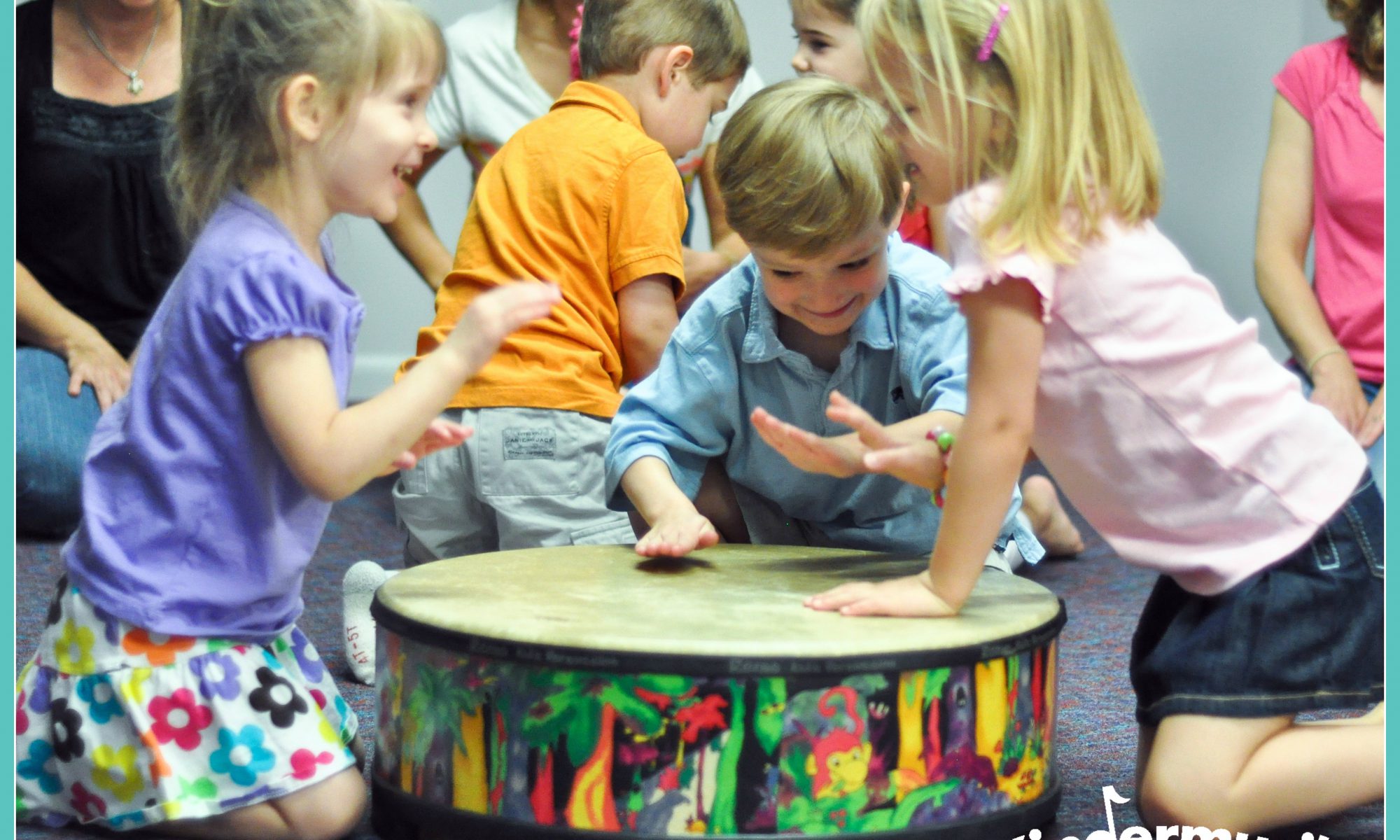
We get that comment a lot and we GET it. Yes. Parents SHOULD “play music class” at synchrony on the drums in Kindermusik classhome. We believe so strongly in the importance of creating a musical home that we provide the music, instruments, or other resources—like our Pinterest Boards!— needed to make it easy for parents to integrate musical learning throughout the day. Those everyday musical moments make memories, imbed a love for learning in young children, and make life fun for the whole family! (Plus, we know how music can help make parenting just a little bit easier, too!)

However, for young children to receive the maximum benefits of participating in learning (and playing!) through music, they need music at home and in a class group environment. Children thrive on both. In fact, research even shows that engagement, consistency, and longevity of participating in music classes directly correlate with the language, literacy, and other cognitive benefits of music.

Learning in a Group Matters

Learning in a group of peers, regardless of age, is different than learning by yourself—or with your child at home. Also, each group is unique from the next because each group is comprised of different individuals contributing to the group.

In music classes for young children, like Kindermusik, we intentionally create a learning environment where every participant contributes and takes away something unique based on their own experiences, both inside and outside the classroom. Parents notice this right away when each child can choose to sing, wave, jump, or even blink hello to their friends during the very first song.

Kindermusik 17This experiential environment where the learning process is shared by everyone in the group—including children, parents, and the teacher—is called “social constructivism.” For example, in each class a Kindermusik educator guides the class towards a learning objective, such as steady beat, timbre, or vocal play, with children as active participants in the learning process. Providing children with ample time to reflect, compare, make choices, express opinions and preferences, and engage in problem-solving activities together teaches children not only the lesson focus but it teaches them how to learn.

Children participate, collaborate, and contribute to the process in a group learning environment. So, while the lesson plan is repeated in classrooms around the world, the experience is slightly different based on each individual group. So, yes, “playing music” at home matters, but so does “playing music” in a group. Children need both to fully experience the life-altering benefits of music education.

Oh and by the way: Participating in a music class benefits parents, too. After all, parents make connections with other families in the same season of life. As parents, we can all use a group of friends who understand the unique challenges of potty training, sleeping through the night, healthy snack choices, best parks for a 2-year-old AND a five-year-old, and even which consignment or second-hand sales are worth attending.

YC boy with new logoWant to “play music” in a classroom with other families? Find a local Kindermusik educator! 

Contributed by Lisa Camino Rowell, a freelance writer in the Atlanta, Georgia, area.
Vestibular System: Finding the Right Balance

Destin HarborFor parents with young children, Life Balance is a mythical beast! A hammock gently swaying in a warm ocean breeze as you watch ships leave the harbor or the quiet creaking of a porch swing in the dappled afternoon sunlight can bring thoughts of a little Life Balance in an increasingly complex world. For parents of children under 2, however, the nursery glider moving back and forth at 10:16pm, 2:01am, and 5:34am might be the closest you can get to that beach or front porch. It can work in a pinch though!

All that nursery rocking reinforces balance of a different kind in young children. The rocking, swaying, and movement stimulate children’s vestibular system, the part of the brain that controls balance. In Kindermusik class, we rock to lullabies, bounce on knees, and even make hammocks out of blankets to help young children begin to develop their sense of balance and to reinforce balance and stability in young walkers.

Try this with the swaying activity with the children in your life for a little balance!


This activity supports more than vestibular development. Children also develop vocabulary, language skills, and make emotional connections with a loving caregiver!

Looking for more ideas on how to support the development of your child? Visit a Kindermusik class and get connected with an early childhood expert!

Contributed by Lisa Camino Rowell a freelance writer in the Atlanta area.

A Song A Day May Keep the Doctor Away

There are all kinds of articles and research out there touting the academic and cognitive benefits of music, but did you know that singing and making music can have significant health benefits as well?

Singing - just what the doctor ordered

Our Top 7 Benefits of Singing and Making Music

1.  When we sing, we take in more oxygen and improve aerobic capacity.

2.  Singing in a group increases the heart rate and reduces blood pressure.

3.  When we participate in musical activities, such as singing, dancing, or playing an instrument, our brains release endorphins, which makes us feel good!

4.  Singing improves blood circulation.

5.  Music can relieve chronic pain.

6.  Singing releases oxytocin, a natural stress reliever.

7.  Singing boosts the immune system.

By the way, if you need a song to sing, we can teach you hundreds of Kindermusik songs to sing and enjoy, whether or not your child is in the car with you.  Now that you know some of the health benefits of singing, you can hold your head high and belt all of the verses to “Wheels on the Bus.”  Just keep your hands on the wheel when you’re singing in the car.  Your child can take care of the motions from the back seat.

And if the singing thing is still a bit daunting to you, no worries.  We’ve got some great tips on how and why to sing to your child HERE.  Or you can join in singing the “Toe-Tappin’ Blues” with these adorable Kindermusik kids.

Kindermusik at Home - Singing with Mom
Want to experience the health benefits of music?  Contact your local Kindermusik educator and schedule a free class visit.

Want to Teach Kids Empathy? Try Music.

Kindermusik for Schools

A new study recently found that children who simultaneously participate in a physically engaging, time-based activity feel more positively towards each and can experience greater empathy for one another.

According to the lead author of the study, “[s]ynchrony is like a glue that brings people together — it’s a magical connector for people.”

synchrony on the drums in Kindermusik class

The word “synchrony” is key.  When people interact together in rhythm (or time), that’s synchrony.  And that’s what happens in every Kindermusik class – we tap sticks together, shake bells together, dance together, clap together, and so much more. Synchrony and the joint-collaboration involved explains why the Kindermusik experience is such a powerful one.

This study specifically references music and dance as two of the types of synchronous activities that bring children closer together – the kind of closeness that results in more cooperation and greater empathy for one another. Music and movement in a classroom are a powerful combination, but it’s not just about the academic and cognitive benefits anymore. It’s about all of those benefits and so many more, including the social and emotional benefits.

Simply put, this study emphasizes that allowing children to make music and dance together promotes the kind of pro-social behavior we need in our classrooms and in our society.

“‘The findings might be applied to formulate new strategies for education in our effort to build a more collaborative and empathic future society,’ she said.

“And studying this phenomenon in children is especially important, Rabinowitch added, since the connection between music and social and emotional attitudes manifests itself so early in life.”

Graphic-Learning-Domain-Icons-single-social-emotional-144x144-144x144
Looking for more ideas on how to use music to support the social-emotional development of children? Try our free e-books.


Contributed by Theresa Case who loves watching the beauty of synchrony unfold in every Kindermusik class she and her teachers teach at Piano Central Studios in beautiful upstate South Carolina.

Making the Connection: Movement & Second Language Learning

ABC English & Me - Teaching English to Children through Music

ABC English & Me - Teaching English to Children through MusicWant a child to speak more than one language fluently? Start early! Research shows that when children learn another language at a young age the more likely they are to understand it and speak like a native speaker. It’s never too early to begin learning another language. In fact, evidence indicates that babies have the ability to learn all the languages of the world but self-select to their native language as early as 9 months.

Our EFL Program, ABC English & Me, adopts the “Natural Approach” to support English language learning for very young learners. We emphasize language “acquisition” as opposed to language “processing.” In other words, children learn to speak and think in the second or foreign language.

Learning Another Language through Movement

Movement or Total Physical Control (TPR) coordinates meaning to physical movement. Language acquisition indicates that TPR allows children to internalize meaning and greatly influences fluency.

TPR can be closely related to drama and pretend play. Using drama techniques enhance the quality of TPR activities and prepare children for gross motor movement activities. Here are a three ways we use TPR in our EFL program.

3 Ideas for Using TPR with English Language Learners

  1. Freeze games can be done with children as young as 2. In addition to developing inhibitory control, freeze games promote improvisation skills and children’s ability to act spontaneously especially as they get older.

preschoolerFreeze Game Activity for the Classroom: Have the children spread around the room. Tell them that they can run around the room freely once you clap your hands, but when you shout, “Freeze,” they must stop in their current position. To begin, let the children run around for 30 seconds and then shout “Freeze!” Make sure children hold the position for at least 10-15 seconds before you let them run around again. When focusing on language learning, use simple linguistic phrases to describe what you see: “Andrea is standing up like a tree”or “Olivia is a stone.” Repeat several times.
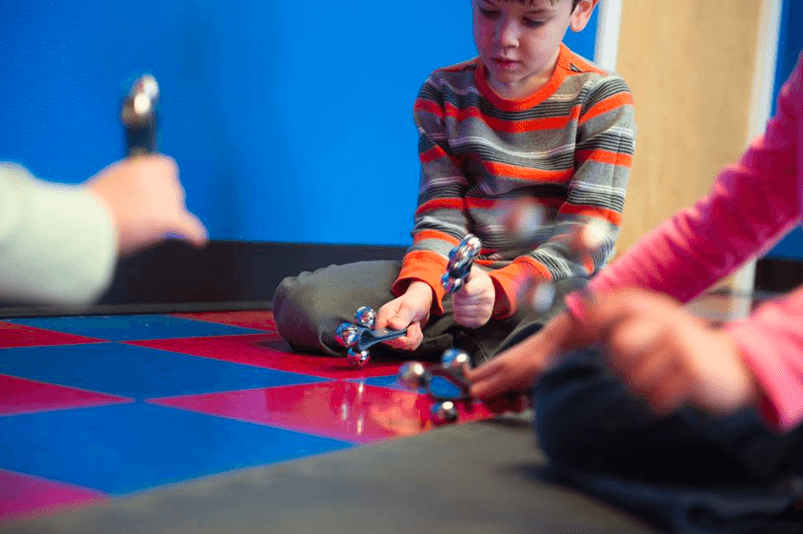
  1. Miming is great to explore and develop physical skills (movement, actions, posture, gesture, facial expression, and body language). Create and perform mime sequences to develop imaginative skills and the TPR exploration of nouns.

Mime Activity for the Classroom: Use a theme like animals or Christmas presents. Ask children to draw a picture of a noun. Then, take turns miming their words while the rest of the children try to guess the answer.

  1. Fingerplays are ideal for younger children to develop body awareness through identification and labelling of the body parts as well as developing fine motor movement through muscular coordination. As children get older, fingerplays sharpen memory and linguistic skills and is the perfect TPR activity to perform with a lack of space for those big gross motor movements.

We like this fun twist on a classic fingerplay:

The games identified above develop physical movement but also the 4-Cs: confidence, communication, co-ordination and concentration, which are necessary for any child acquiring a new language!

Learn more about using movement and TPR with English Language Learners.

Photo Series: Snapshots that completely capture what’s going on in music class

Music makes memories—and conjures them up, too. Think about it. How many of us instantly transform back into a 16 year old when we hear our favorite song from that time period? Or maybe your musical memories include family road trips, your first concert, or the lullaby playlist you put together when your first child entered the world. Regardless of the soundtrack to your memories, we can all agree that music connects us to our past…and imbeds current experiences firmly in our hearts.

Here are a few snapshots of memories in the making through music.

Kindermusik 4 Kindermusik 5 Kindermusik 6 Kindermusik 7 Kindermusik 8 Kindermusik 9 Kindermusik 10 Kindermusik 11 Kindermusik 12 Kindermusik 13 Kindermusik 14 Kindermusik 15 Kindermusik 16 Kindermusik 17 Kindermusik 18 Kindermusik 19 Kindermusik 20 Kindermusik 21 Kindermusik 22 Kindermusik 23 Kindermusik 24 Kindermusik 26 Kindermusik Class 1 Kindermusik Class 2 Kindermusik Class 3 Kindermusik Class 25

Share your favorite musical memory on our Facebook page. Tag your image: #MusicalMemories

Dancing Today Leads to Bike Riding Tomorrow

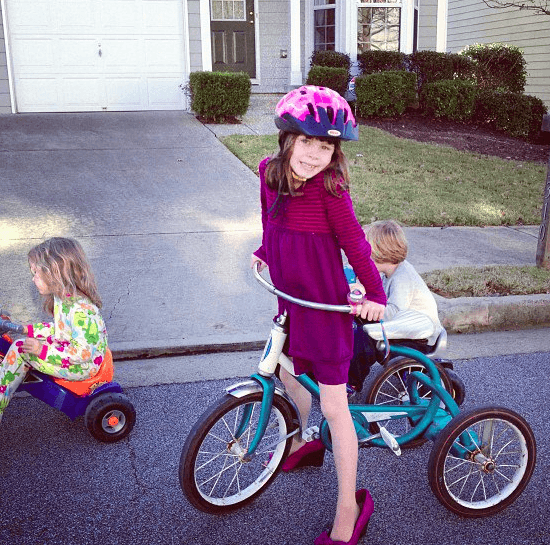
Riding a bikeIt’s coming, one day soon (if it hasn’t already). Your child will want to learn how to ride a bike—the big kid kind. There will be spills and thrills for both of you as your helmeted child learns how to balance and maintain the right rhythm and tempo for pedaling and braking. Shouts of “Don’t let go!” “I need a push!” and “Arggg!” will be commonplace until that moment when it all comes together and your child successfully rides down the street.
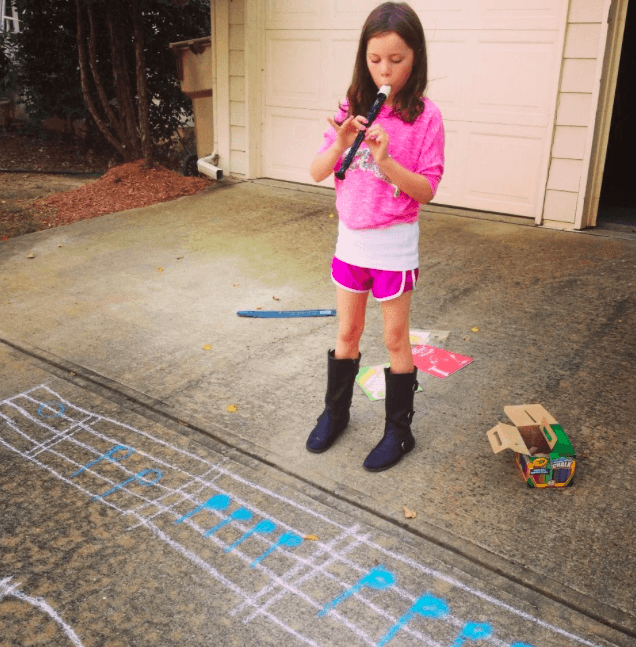
You might not realize it but Kindermusik helps prepare you and your child for this moment (and not just by supplying you with calming music to hum during the process!). When we dance the waltz and the jig or clap and tap a three-beat pattern while listening to a waltz, your child not only builds important musicianship skills but also develops and refines motor coordination skills. This awareness of meter and individual beats in two-beat and three-beat musical patterns builds a sense of rhythm that will help your child play an instrument, dribble a ball, swim with consistent strokes, and yes, even pedal a bike.

Kindermusik Tip: Dance with your child to all kinds of music. Go ahead: Waltz together. Do the Hand Jive. Try the Electric Slide. There is no right or wrong way to dance together. Plus, it’s good for you both!

Take a look at how this sweet Kindermusik child dances with her doll:

[youtube] https://www.youtube.com/watch?v=3Fhs8xqkn6Q  [/youtube]

Download this free mini-playlist of some of our favorite Kindermusik dance songs.

Contributed by Lisa Camino Rowell a freelance writer in the Atlanta area.

An Open Letter to All Music Teachers

RecorderIt was bound to happen.

Taylor Swift and New Direction (or is it One Direction?!) play more at our house these days than Dan Zanes, Justin Roberts, Laurie Berkner, and Elizabeth Mitchell. And I’m okay with it…most days. At nearly 10, our oldest daughter, Emerson, has reached a new musical milestone—asserting her own personal taste in music. Yep. It was certainly bound to happen. After all, didn’t we, too, eventually make that leap?

Of course, it didn’t seem that long ago that I held her tiny hands in mine as we danced around in Kindermusik class or went bumping up and down in a little red wagon with those pesky wheels that fall off. (Seriously. Can we get that fixed?) When I think back to those early years, I recall the person I dreamed that my daughter would become. I didn’t think about her future career or house or even where she would attend college, but instead I thought about the attributes my husband and I wanted to cultivate in her: confidence, kindness, empathy, cooperation, creativity, imagination, joy, contentment, and most importantly—a love for herself, a love for others, and a love for our world.

Music—more specifically music classes—presented an early gateway to providing OpenLettertoMusicTeachersEmerson with experiences that would equip her to grow into that person. Through those classes, we encountered music teachers devoted to their calling and to the power of music to unlock a child’s potential. Yes. Those are lofty goals reached far off into the future and so seldom seen by those early childhood music teachers in their own students. After all in early childhood, we can only catch glimpses of the long-term impact of our choices and experiences. It’s all about trusting the process.

However, I am here to say that it DOES happen. Our daughter is growing into the person we knew she was created to be. I want to say Thank You not just to our early childhood music teachers—Stephanie Bartis, Melanie Kennedy, Carol Penney, and Jane Hendrix—but to ALL music teachers. Every. Single. One. You ARE making and HAVE MADE a difference in the lives of children—whether you can see it in the moment or not.

Every “Hello” song you sing teaches that each child matters. Every time you lead families to hold hands and participate in a circle dance you teach cooperation. Every time you sing EmersonCollagea song from a country different from your own you teach children more about our world. Every time you encourage children to move their bodies in new ways you give them confidence in their abilities. Every time you bring out that basket of instruments you teach children the importance of sharing with others. Every time you lead children to sing, dance, or play instruments you give them an outlet for creativity, imagination, self-expression, and joy!
Thank you for creating a space for music. Thank you for believing in music and for using your gifts to bring music to children wherever you are. You are making a difference. So, while our children’s taste in music may shift through the years, the love of music and music’s life-long impact remain steadfast.

I know this is true because I see it in my own child. As we near the end of third grade, I recognize how music classes helped guide her into a dancer, a reader, a scientist, a helper, a creator, a musician, and a person who loves herself, loves others, loves our world, and yes, even loves Taylor Swift and One Direction. And I am more than okay with that.

music noteLearn more about the reasons why so many parents give credit to music and music teachers for helping to prepare their child for school and so much more!

Lisa Camino Rowell writes from the Atlanta area. She remains forever grateful to her music teachers: Mr. Dodd and Mr. Hebson.