
Carol Penney: A Tribute

So often as parents, we want others to see our children as we see them:

Beautiful.

Amazing.

Overflowing with possibilities.

That’s what we see. Right? It’s why we can spend hours watching our babies sleep, talk incessantly about how our little ones perfected their own versions of crawling and probably why our social media feeds contain hundreds of images and videos of our most cherished everyday moments.

Yes! Our children are beautiful, amazing, and overflowing with possibilities. You know it. But, you may not know the name of a person who spent the past 30 years—and her life’s best work—devoted to creating the Kindermusik community where we invite—and celebrate—every beautiful and amazing child into the Kindermusik circle (or running around outside of it or sitting quietly in a parent’s lap).

Carol Penney.

That’s her name. While you may not know her name, you know the community that she was instrumental in creating. You know the songs and the lessons that she helped craft. You know the Kindermusik educator that she trained, encouraged, and inspired. Yes, you may not know her name—Carol Penney—but you do know her.

She is beautiful.

She is amazing.

She is overflowing with possibilities—
both during her 30 years at Kindermusik and now as she enters semi-retirement.


So, while we may sing the “Good-bye” song to Carol, it isn’t really good-bye. After all, we know that just as a Kindermusik class doesn’t really end after that final song, Carol’s contributions to Kindermusik will continue throughout the rest of the week, months, and years to come. And we are better people for knowing her.

Thank you, Carol, for giving us all a Good Beginning that Never Ends. Here are just a few reasons why you are loved the world over.


Carol Penney Tribute Video


Contributed by Lisa Camino Rowell, who counts Carol as a friend, mentor, and colleague. Carol, you are loved more than these words can express. Thank you for sharing your gifts and your heart with us all.

Scientists Call Music “The Social Glue that Bonds People”

Kindermusik for Schools

It seems as if we all march to the same beat even if we play different drums. According to new research, music from around the world tend to share common features, including a synchrony on the drums in Kindermusik classstrong rhythm that enable coordination in social settings and encourage group bonding.

The research team from the University of Exeter analyzed the recordings of 304 stylistically diverse musical compositions from around the world. Their research found dozens of common characteristics across various world regions, including features related to pitch and rhythm and social context and interrelationships between musical features. For example, the team found rhythms based on two or three beats present in music from all regions: North America, Central and South America, Europe, Africa, the Middle East, and South Asia, East Asia, Southeast Asia and Oceania.

Why We Make Music

Thomas Currie from the University of Exeter gave insight into the team’s research: “Our findings help explain why humans make music. The results show that the most common features seen in music around the world relate to things that allow people to coordinate their actions, and suggest that the main function of music is to bring people together and bond social groups — it can be a kind of social glue.”

Music as social glue works for parents and young children, too, as one of the researchers discovered (and as those of us involved in Kindermusik already know): “My daughter and I were singing and drumming and dancing together for months before she even said her first words. Music is not a universal language… music lets us connect without language,” explained Pat Savage, a PhD student from the Tokyo University of the Arts.

Village baby with new logoWant to connect your family with others who share a love of music? Find a local Kindermusik class.

Guest Post: Seven Years of Kindermusik

This post originally appeared on the blog: mymommyology.com 

It took me a while to write this post — partly because June was quite the busy month, and also because I get emotional just thinking about it.  We’ve reached another milestone in Sam’s childhood — the end of Kindermusik.  sniff!

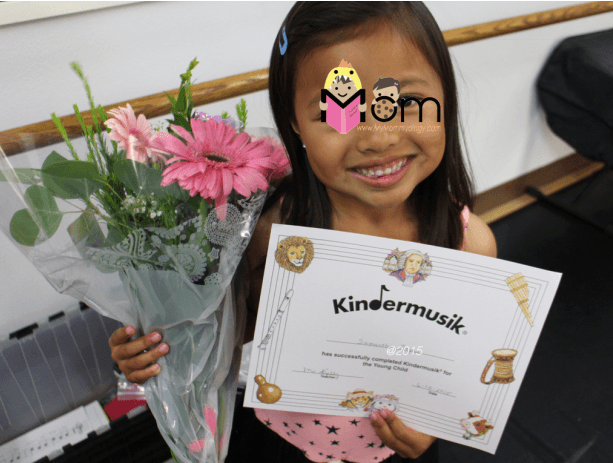
Kindermusik Graduation

It has been seven years after all (give or take a few months!).  Seven years, three wonderful teachers in three different parts of the globe.  I’d definitely recommend it to anyone with kids seven and below, no matter where in the world you are.

We spent a majority of those years in our first Kindermusik home with Rebecca in Chapel Hill.

Rebecca Dyck

Prior to that I’d never heard of Kindermusik — I was a Gymboree / Little Gym kind of parent (which I see now is very different from what Kindermusik offers).  To this day though, I am so so SO glad I came across it in my endless search for mom-child programs for my infant.  And I’m even more thankful we landed in Rebecca’s little home.  It’s where we made our first set of friends, who are still friends to this very day.

We owe a lot to Rebecca, as she set the bar high for the wonderful and highly educational experience we had over the years.  I’ve said it time and again, Rebecca is a wonderful maestro of music, and she absolutely loves the kids and their families.  I learned a lot about music, parenting, child development and even a little bit about teaching from Rebecca!  I remember asking her every sort of question, from the purpose of each type of song or stage, to the perfect age for piano lessons (If you want to know what she said, ask me!  I’ll never forget that piece of advice she gave).

When we moved to Manila, I sought out Teacher Jeannie (upon Rebecca’s recommendation).  

She and her staff of teachers (Teacher Maya in particular!) were also another set of wonderful teachers for the girls.  Little did we know that Kindermusik with Teacher Jeannie was in the top 1% of the total Kindermusik programs in the world.  But the wonderful experience continued for both myself and Sam, and she continued to look forward to Kindermusik every week.

Because of the volume of Teacher Jeannie’s enrollment in the country, at the end of every Kindermusik year, she’d hold a Kindermusik Festival, the highlight of which would be the Young Child students’ performance and graduation.

It’s one event Sam misses and talks about with so much gusto, until this day.  Sam joined last year’s performance and was looking forward to graduating on Teacher Jeannie’s stage, except we’d moved to California.

And so, Sam finished her last year in Young Child 3 and 4 in Kelly Meyers’ studio.

Ms. Kelly, as we fondly call her, held a little graduation ceremony for all the parents and friends in her Young Child class and the kids performed several numbers together.  Each one did a solo too on the instrument of their choice.

At the onset, Kindermusik may seem like any other music program, with song and dance,  instruments and games, but across our transcontinental encounters of it, I was very impressed with the consistency of its program and curriculum.  We picked up exactly where we had left off.  And at the end of it all, Sam had so much fun learning the different musical concepts, composers and terms, and remember them all to this day.  She and Jamie, who has been in Kindermusik since she was in my tummy) can tell you the difference between piano and forte, crescendo and decrescendo, staccato and legato among other things. They both already know the different instrument families, as well as facts about Bach, Mozart and Beethoven, and their respective work.  All of these things, I learned when I was in high school, and most of it was because I took the time to learn it myself as well!

In my opinion, what sets Kindermusik apart from all other music programs is its Young Child curriculum.  Young Child is a 4-semester course for 5-7 year olds that is run over a period of two years.  At the end of it all, the child learns how to read through the entire C scale, and play simple tunes on three different instruments.  Sam knows about flats, and sharps, and she can read the notes and their respective rhythms.  She can write her own beat and tune, and find where it is (on her own) on a keyboard, on a dulcimer, a glockenspiel and a recorder!

Young Child

Each week’s session has a different song, story or theme, but it is readily applied to what they’re learning, and it progressively builds on each other.  Everything has a purpose, and it becomes much clearer as the lessons go by.

I am a true believer in the Kindermusik program.  I grew up knowing that music has many benefits to a child’s development, and I can see how Kindermusik has shaped that into the fun and interesting curriculum it has today.  I can’t imagine the childhood of my girls without it!

My girls love music because of Kindermusik.  The teachers, the program and all of our experiences have shaped Sam’s musicality into what it is today and I will forever be grateful.  I’m so glad Jamie has 2 more years left!

Contributed by Jenny Reyes. Jenny Reyes is a mother to two beautiful girls. They teach her about parenting and motherhood everyday. Apart from the blog, Jenny is a marketing consultant and part-owner to a locally manufactured Children’s Furniture and Accessories line. She currently resides with her family in California.
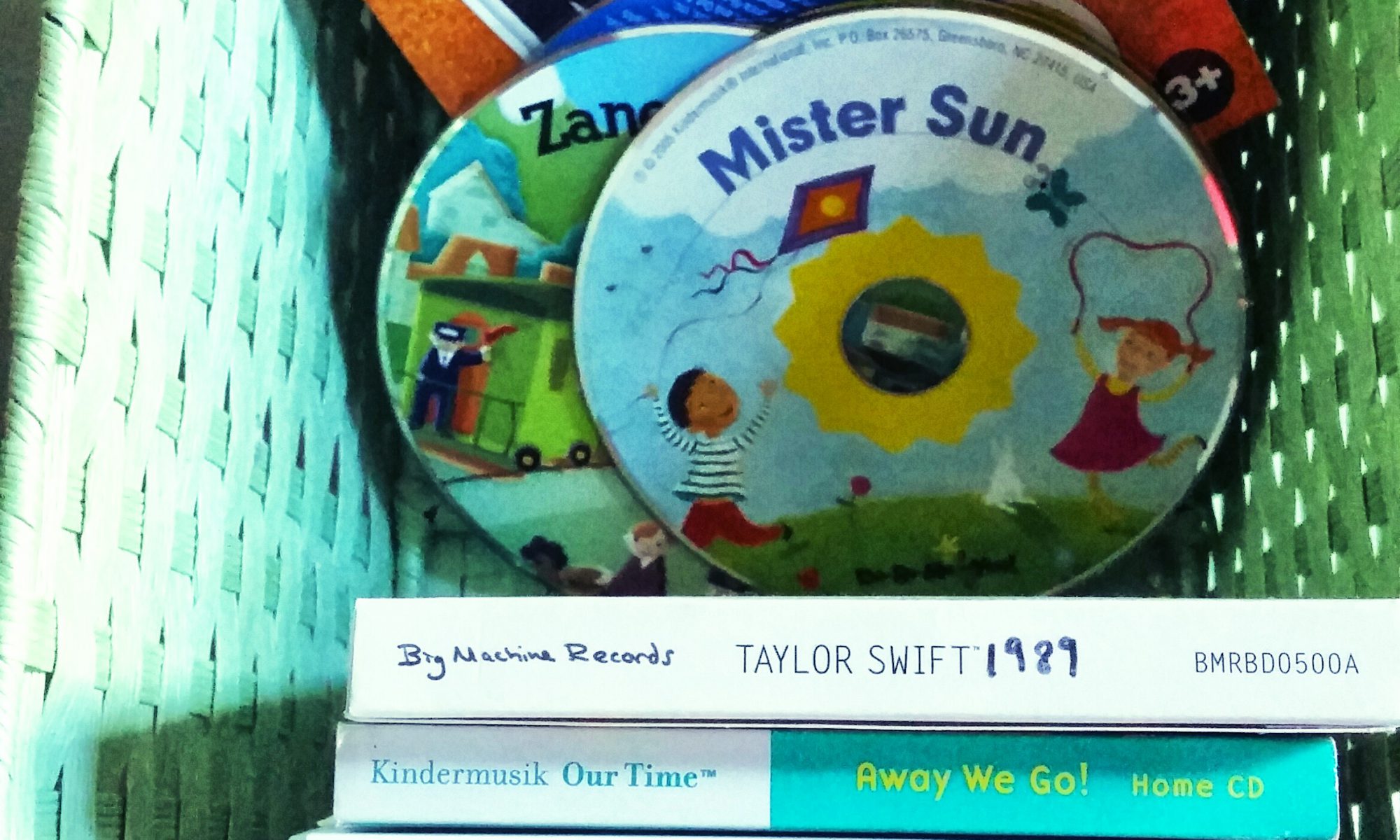
Create your own family musical memories. Find your local Kindermusik class!

What Your Musical Tastes Might Say About Your Personality

I must confess. Back in the days of CDs, I would always ask to browse the collections of CDcollectionnew friends. Okay…I wouldn’t always ask. Sometimes, I would stealthily investigate their musical offerings. The insights gained by glimpsing the soundtracks to their daily lives and memories offered a pathway to understanding them akin to reading their diaries. Of course, it would be socially awkward to ask to read a copy of a person’s diary, unless “of a Wimpy Kid” followed “Diary.” Right?

I am fairly certain I am not alone in my confession. You probably did (and do!) the same thing! I know I often busted my friends digging through my music with their eyes on more than one occasion. Well, it turns out we were all on to something. A new research study indicates that the “field research” we conduct by looking at a person’s musical collections really does offer insight into their personality.

Are You a “Systemizer” or an “Empathizer”?

A new research study conducted by a team of psychologists categorized people’s thinking styles into two categories:

Empathizer: A person who likes to focus on and respond to the emotions of others.

Systemizer: A person who likes to analyze rules and patterns in the world.

Depending on which category of ‘cognitive style’ a person scored highest in during the testing accurately predicted musical choices. The research team conducted multiple personality studies with over 4,000 participants and used musical selections from 26 genres and subgenres.

“Although people’s music choices fluctuates over time, we’ve discovered a person’s empathy levels and thinking style predicts what kind of music they like,” said David Greenberg, one of the researchers. “In fact, their cognitive style – whether they’re strong on empathy or strong on systems – can be a better predictor of what music they like than their personality.”

The Results Are In

The Empathizers: Participants who scored high on empathy tended to prefer mellow music (from R&B, soft rock, and adult contemporary genres), unpretentious music (from country, folk, and singer/songwriter genres) and contemporary music (from electronica, Latin, acid jazz, and Euro pop). This group tended not to like intense music, like punk and heavy metal but instead likes music with “low energy,” sad emotions, or emotional depth.

The Systemizers: Participants who scored high on systemizing preferred intense music, but disliked mellow and unpretentious musical styles. Systemizers prefer music with “high energy” (strong, tense), positive emotions, and music that features a high degree of cerebral depth and complexity.

(Source: Milesdavis.com)

The results proved consistent even within specified genres: empathizers preferred mellow, unpretentious jazz, while systemizers preferred intense, sophisticated (complex and avant-garde) jazz.

“This line of research highlights how music is a mirror of the self,” said Dr. Jason Rentfrow, the senior author on the study. “Music is an expression of who we are emotionally, socially, and cognitively.”

What do you think musical tastes reveal about personality? Join the conversation on the Kindermusik Facebook page.

Contributed by Lisa Camino Rowell, a freelance writer in Atlanta, Georgia, who no longer looks at people’s CD collections. Instead, she follows people on Spotify.

One Small Change for Preschool Teachers, One Giant Leap for Preschoolers’ Math Abilities

Why Early Childhood Music

preschoolers and mathWhen a researcher sets out to understand how children learn, or better yet, don’t learn math, some interesting information comes to light, especially when the research focuses in on the early years when preschoolers are just beginning to be introduced to fundamental mathematical concepts.  Such was the case in a recent study conducted by Dr. Nicole McNeil and her team at the University of Notre Dame.
What the researchers found was interesting.  How the concepts were presented and labeled had a significant impact on how well the children understood and applied the concepts. 

Something minor, which in this study was giving the mathematical patterns an abstract label (i.e., A, B, A, B) instead of a concrete label (i.e., naming the colors in the pattern), was actually very major.  The children in the study who worked with the abstract levels solved more problems correctly than the children who worked with the concrete labels.

More than abstract or concrete labeling, the key finding in this study was this:

…[E]ven differences in relatively specific, microlevel factors can affect how children understand certain concepts. I think this means that we need to be very purposeful about structuring lessons and our instructional input to ensure that we are setting children up to construct an understanding of the most important concepts.

A small change in planning and presentation, but a giant leap indeed for children’s understanding and success in learning.

Want to learn more about learning and teaching math through music?  Take a look at our free e-books.

It’s 6 o’clock. Cue the meltdown.

Talk to any parent of a young child, and they’ll tell you. Young children often save their biggest meltdown moments for the early evening time (around dinner). Reasons: They are tired. They’ve spent most of the day trying their best to “behave” at daycare, preschool, or at home. So, by the time the clock strikes 6pm, they are exhausted (although, of course, they would NEVER admit it!)

music helps toddler meltdowns

We have a solution to offer… Use music to head off, smooth over, or maybe even eliminate, those late day meltdowns. 

Here are a few ways you can use music to ease the evening angst and transition more smoothly into the nighttime routine.

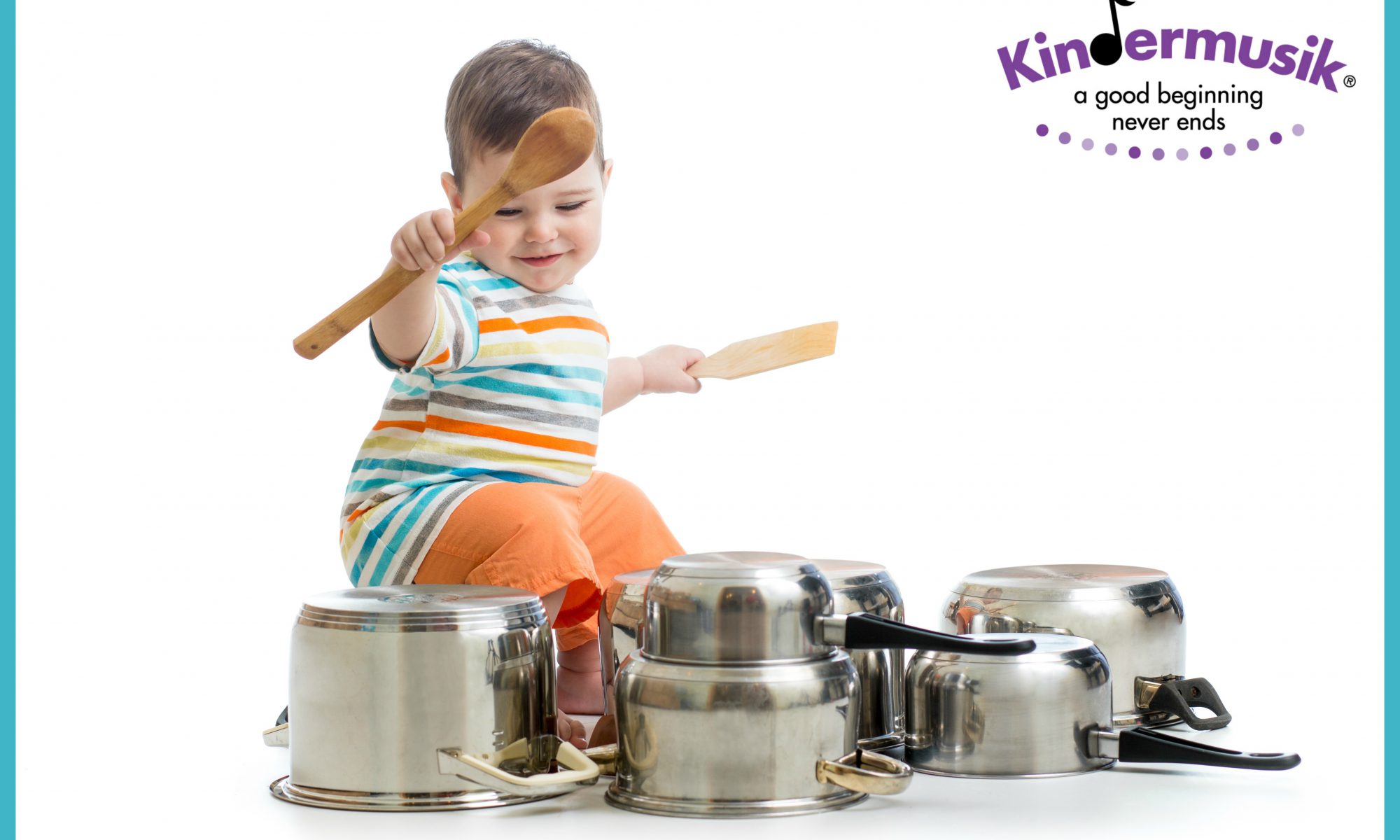
  • Keep them busy (and near you!) while you’re busy. Pots, pans, and wooden spoons can turn into musical exploration and play time. Some lively, happy music can invite lots of musical play and keep a smile on everyone’s faces.
  • While the pasta is boiling, dance around the kitchen with your child. When your child is tired and cranky, what they often crave most is a little extra attention from you. Hold them tight or make intentional eye contact as you dance together.
  • Listen to relaxing music routinely every evening. Consider setting up a playlist of you and your child’s favorite music for calming and unwinding.
  • Use music as a timer. For example, “It will be time to eat after four more songs.”
  • Use the timer on your smart phone to cue your child. Pick a specific song that is only played when your timer goes off. Your child will become accustomed to knowing that when the timer goes off, it’s time to transition to something else such as dinner, bath, reading time, snuggles, or lights out.
  • Make a special habit out of singing (or listening to) a lullaby or two after tucking your child into bed.  The quiet, loving ritual will calm them – and you – and also have them quietly settling down before you know it.

And when a meltdown does happen, take a deep breath and stay calm.  Focus on what you want your child TO DO (take deep breaths, go to a quiet place to “get themselves together”) instead of focusing on what you DON’T want them to do (cry, scream, kick, hit).  And afterwards, take a little time to cuddle up together, rock quietly, and hum a little lullaby.

What’s your favorite Parenting Tip to control the evening chaos at home? Share on our Facebook page.

18 Signs You Are A Musical Family

7 Musical Ways

Are you raising a musical family? If you find yourself relating to this list, then chances are the answer is Yes!

  1. Your toddler thinks you’ve been hiding white egg shakers in the refrigerator and can’t understand why he can’t play with them, too.
  2. Your kids yell at YOU to turn the music down.
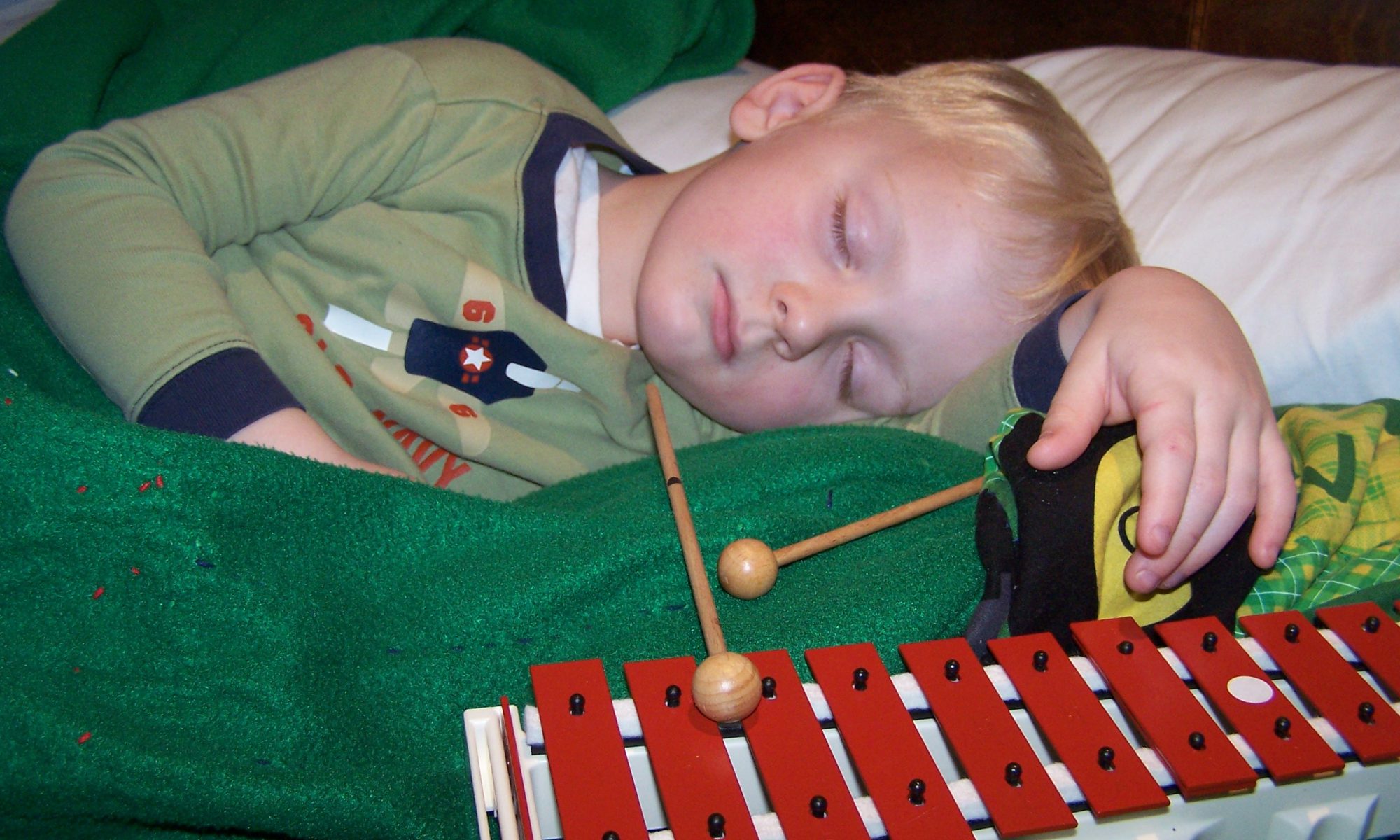
  3. Your child insists on sleeping with his favorite instrument.Brady asleep with glock
  4. Your child sang her first words.
  5. Your child insists you sing “Wishy-washy-wishy-washy-wishy-washy-WEEEE” during every bath.
  6. Pinecone + stick = guiro. Your child can turn anything into an instrument.
  7. Your child knows what an album is.
  8. You find yourself saying things like: “Put down the ukulele and brush your teeth.” And “How many times do I have to tell you to pick up your glockenspiel?”
  9. You’ve recorded at least one video of your family lip-synching a song from Frozen.
  10. You overhear your child talking with a friend about the musical merits of the original Annie movie. (Okay. That’s really just wishful thinking on your part. Today’s kids seem to prefer the revamped Annie and that’s okay, right? Right?!)
  11. You re-enact the dance moves from Dancing with the Stars or So You Think You Can Dance. Yes, even the lifts.
  12. dad 16You thought about how many kids you wanted based on the size of your dream band.
  13. Your family’s musical tastes range from Taylor Swift to the Beatles to Tchaikovsky to Miles Davis to KidzBop.
  14. Your child insists on answering your questions through song.
  15. You have at one point either tried out for American Idol (or your country’s equivalentor the Voice OR secretly imagined your child auditioning one day.
  16. As soon as you found out you were pregnant, you created a list of “Albums Our Child Should Listen to Before They Turn 18.”
  17. You dressed (or dress) your child in any of the following: vintage concert T-Shirts, “I’m With the Band” onesies, “Treble Maker” bibs, or Future (insert instrument of choice) Player pullovers.
  18. You love making music together as a family, like this one:

[youtube]https://www.youtube.com/watch?v=y6pKdY9O-hA[/youtube]

Do you like to hang out with other musical families? Find a local Kindermusik class and meet other parents who place a high value on raising musical kids!

Contributed by Lisa Camino Rowell, a freelance writer in the Atlanta area. She wakes up every morning to the sounds of her husband singing, dresses her kids in vintage concert shirts, and tripped over more than one glockenspiel.

Music Can Navigate Kids’ Emotion Headquarters

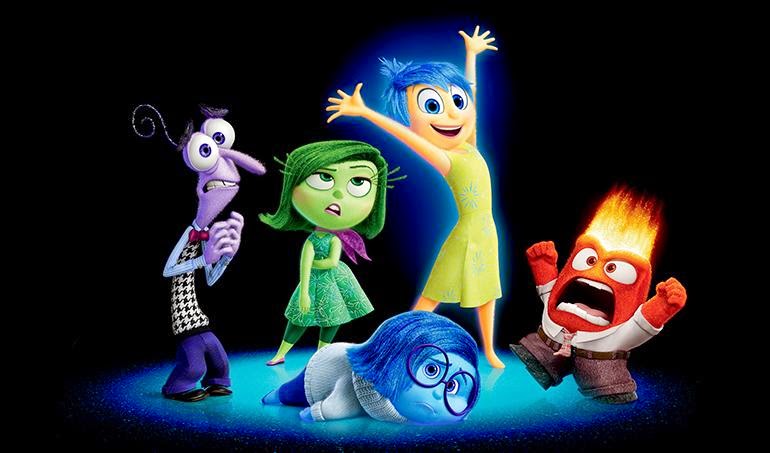
On Friday afternoon, our family watched the new Pixar movie, Inside Out. I must ask: Did any other parent cry over Bing Bong or shed a tear when witnessing Riley’s first memory? I did.

DISNEY

Well, I don’t know about you, but I would love to gain access to my kids’ Emotions’ Headquarters. It would make this parenting thing a whole lot easier if we could more readily identify the emotion our children are trying to express and then in turn help them label that feeling and respond appropriately. Plus, it is always helpful to pick up on the visual clues our children give off right before a meltdown. Unfortunately, their heads don’t actually start steaming, like the character Anger. We do know that Joy often sounds like laughter!

Young Children and Emotional Intelligence

While Inside Out is obviously fictional, emotional intelligence DOES begin developing in infancy, just like the character Riley, and includes recognizing and managing feelings, self-awareness, and responding appropriately towards others. In the movie, we saw this whenever a specific emotion (Joy, Sadness, Fear, Anger, and Disgust) took over the controls in Riley’s Emotions’ Headquarters.

As parents or early childhood teachers (or both!), young children often mirror our actions and reactions and the words we say in our best moments—and sometimes our not-so-best moments. They can even mimic our likes and dislikes. Eventually, as they become more self aware, children begin to express their own preferences for things, like wearing pajamas everywhere (Not a bad idea!) or eating ice cream for breakfast (Not a good idea!).

Mom and son


Music classes can support children’s growing self-awareness, which includes identifying feelings, and a parent’s unique role in it. For example, each week in a Kindermusik class, we include activities that not only encourage children’s personal choices but we actually incorporate them into the lesson. By including each child’s favorite way to say “Hello” at the beginning of class or movement idea during the “Monkey Dance,” we place value on each child’s ideas and preferences. In doing so, children learn to not only recognize and share ideas in a meaningful way but also to celebrate the differences of others. Activities like Kindermusik that incorporate children’s ideas help them learn that their thoughts, feelings, and ideas are valued.

Girl with orange shirt


Quick Tip for Using Music to Help Kids Navigate Their Emotional Headquarters

Listen to music that expresses different emotions, like joy, sadness, anger, or fear. Dance with children based on the emotion and help children label the emotion. Not only does this activity develop children’s vocabulary; it also helps them to identify—and even to manage—their own emotions.

Find a local Kindermusik class.

Contributed by Lisa Camino Rowell, a freelance writer in the Atlanta area. She freely admits that she cried while watching Inside Out. Her 9-year-old Kindermusik graduate responded with equal emotion: embarrassment. 


New Research: Multilingual Environments Linked to Better Communication Skills

It turns out that young children who are exposed to more than one language from an early age not only gain significant advantages cognitively, but also in their ability to communicate.

The most novel finding is that the children do not even have to be bilingual themselves; it is the exposure to more than one language that is the key for building effective social communication skills.

friends around the world - cartoon illustrationAccording to a recent study by researchers at the University of Chicago, it’s the “early socio-linguistic experiences” that have the greatest potential to “… hone children’s skills at taking other people’s perspectives and provide them tools for effective communication.”

The key here is the word “exposure.” Not immersion. Not acquisition. Simply exposure. 

This is particularly exciting to us here at Kindermusik because we’re all about exposure to other languages through music sung in other languages and from other cultures all around the globe. A child who begins Kindermusik classes as an infant will not only have a rich musical foundation by the time he or she finishes the Kindermusik program at around age 7, he or she will also have been repeatedly exposed to a vast variety of music from around the world.

Language is social…  Being exposed to multiple languages gives you a very different social experience, which could help children develop more effective communication skills.

Music, in any language, is truly a beautiful thing to experience. 

Bilingual Early Childhood Music Education Program
Did you know that music supports other areas of a child’s development?  Visit a Kindermusik class to learn more.

Dads of Kindermusik

We love Kindermusik Dads for so many reasons. Sure, we could say we love Kindermusik dads because we know what the research says about the importance of fathers in the development of young children, such as:

  • Preschoolers with actively involved fathers have stronger verbal skills.
  • Even very young children who have experienced high father involvement show an increase in curiosity and problem-solving capacity.

But, instead, we’d rather SHOW you why we love our Kindermusik Dads. Happy Father’s Day to all our Kindermusik Dads and Granddads. Thank you for all that you do to put a smile on your children’s faces and a song in their hearts.

Dad with son 2 FATHER 2 Grandfather IMG_9239 IMG_9303 Kindermusik_87 Kindermusik_137


dad 1 dad 2 dad 3 dad 4 dad 5 dad 6 dad 7 dad 8 dad 9 dad 10 dad 11 dad 12 dad 13 dad 14 dad 15 dad 16

Tell us why you love the Kindermusik Dad in your family! Post on our Facebook page with the tag #WeLoveOurKindermusikDad