New Thoughts for a New Year: Music for Music’s Sake

Music for Music's Sake

Happy New Year! It is my great honor to join the Kindermusik team as the editor of Minds on Music Blog. Music has and continues to be my life’s passion, and I am excited to curate a useful resource on behalf of this wonderful organization. Learn more about me here.

We often read that music has tremendous collateral benefit in other subject areas, such as math and English. This is quite true, with plenty of research to back this up. But music possesses intrinsic worth, providing a host of benefits to our human condition. In fact, last year the US Senate voted to list music as a core subject in the Every Child Achieves Act. This recognition was a huge win for music educators and students alike. We’ll explore some of these intrinsic benefits in depth this year, but before we do, here’s a brief list exploring involvement in music for music’s sake.

Continue reading “New Thoughts for a New Year: Music for Music’s Sake”

Music, Autism, and One Little Girl’s Story

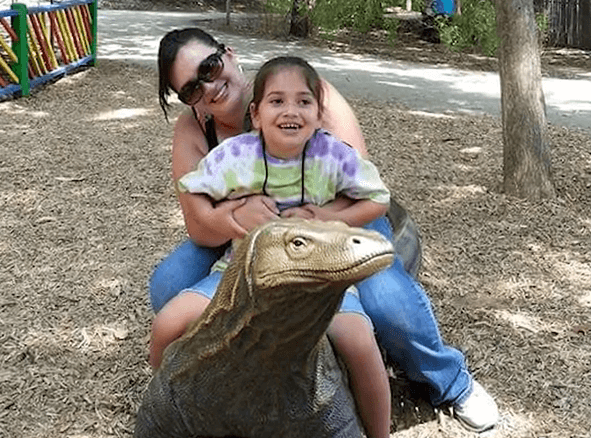
During certain times of the year, our lives seem to operate on warp speed. December often flies by the fastest. So, today, we ask that you press pause on your life for a moment and catch a glimpse of one little girl’s story, the loving adults invested in her life, and their shared experience with and through music. This little girl’s story, like music, will challenge you to listen with your heart as well as your ears. As her mom explains: “Life is busy. She has taught us to slow down. I love to look at the world through her eyes….to hear your child sing when they have been nonverbal for so long is amazing.”

So, take a moment and see the world through her eyes.

Music & Autism Video


Learn more about music as a curriculum solution in your school and working with children with special needs.

Contributed by Lisa Camino Rowell, a freelance writer in the Atlanta area.

Research: Involving Parents Increases Positive Outcome for Kids Enrolled in Head Start

New research once again shows that an intentional partnership between parents and teachers positively supports children’s educational outcomes. Without a doubt, parents are a child’s first and best teacher. We know that intuitively and we hear that from early childhood experts and teachers. But, let’s face it. Parents need help. They need partners in their children’s education to best equip them in their role as teachers. They need information and they need practical ideas and tools that they can easily use in their everyday routines with their children.


Involving Parents Helps Young Children Maintain Literacy Skills

Recently, a research team recruited 200 children and parents from families enrolled in 24 Head Start programs in rural and urban Pennsylvania. The families were split into two groups. The control group received math games to play on their own. The other group received materials, such as books and learning games, and visits from “educational counselors” who provided coaching on how to use the games with their children. Those materials specifically supported the lessons from the Head Start classroom.

The children who participated in the second group showed significantly higher retention of literacy skills (vocabulary and fluency) and social skills (self-directed learning and social competence) acquired in the classroom when compared to the control group.

A Listening Game to Support Early Literacy Skills

While not a part of the Head Start study above, Kindermusik programs provide materials (games, music, books) and child development information and resources parents can use OUTSIDE the classroom to support what happens INSIDE the classroom. For example, this fun game—“Reading” the Violin”—supports children’s early literacy skills.

 Violin game

Matching sounds to a visual image is an extremely important early literacy skill. It is, in fact, the precursor skill to the alphabetic principle, or the understanding that there is a relationship between letters and sounds. Before children can explore letter-sound relationships and learn to decode words, they must first understand the connection between a sound they hear and an image they see.

This game provides kids lots of practice with associating a specific bit of audio with a specific bit of visual, and they’ll have no idea that this game is actually preparing them to read. It also supports other important early childhood cognitive competences, including:

  • Selective Attention: the ability to selectively concentrate on one aspect of the environment while ignoring distractions.
  • Auditory Working Memory: the ability to retain information that has been presented orally (e.g., listening to a target sound and then matching the sound to its image)
  • Auditory Discrimination: the ability to discriminate between similar sounds.

Did you know Kindermusik offers a program for Head Start and Early Head Start Programs that include materials and resources, like the game above, for families to use? Learn more.

7 Reasons to Give the Gift of Experiences—Like Early Childhood Music Classes!

We love music around here. Surprised? We didn’t think so. During the holiday season, you can often find us listening to favorite songs we first heard as children. (Muppets Christmas, anyone?)

Just listening to certain songs revives memories of twinkling lights, candlelight, laughter, the smell of yummy goodness baking in the oven, and the comfort of family. Each year we look forward to creating more musical memories with our friends and families. It’s no wonder that Oscar Wilde penned: “Memory is the diary we all carry about with us.”

Our childhood memories and experiences help shape who we become as adults. This holiday season why not give the gift of experiences to your child. Every child on your shopping list will love the gift of time and an individualized gift of doing something you love WITH someone you love!

Graphic_GiveTheGiftOfMusic_gift-certificate_holiday_Instagram_510x510-510x510

7 Reasons to Give the Gift Experiences to Children

  1. The memories will last a lifetime—long after a child loses interest in the latest toy or gadget.
  2. An “experience” gift can be custom-tailored to a child. Does your little one love new books? Take a trip to the library and read 20 books in one afternoon or all the picture books by the same author. Does your child sing throughout the day? Host a family karoke night and spend the evening singing and dancing together. Is your little guy or girl fascinated with the great outdoors? Camp out in the living room!
  3. You don’t need to find a spot for one more toy. (You know what we are talking about!)
  4. Your child learns the value of spending time together.
  5. No batteries or assembly required (i.e. no late nights spent putting together toys or lamenting proper sticker placement on tiny plastic cars.) Woo-hoo!
  6. It’s fun for you, too.
  7. Investing time with our kids pays off by creating heart-to-heart connections with them. As your children grow, they will begin to shift focus to peer-to-peer relationships but by teaching them the value of spending time as a family, children will RETURN the gift to you during the teen and adult years….and pass the gift on to their own children.

Of course, we would LOVE for you to give the gift of music. It’s what we do after all. However, here are 18 other ideas for “experience” gifts.

Graphic_GiveTheGiftOfMusic_holiday-icon_Pinterest_600x600Find a local Kindermusik educator to give the gift of music AND support a local small business owner.

The Power of “I Love You” Rituals

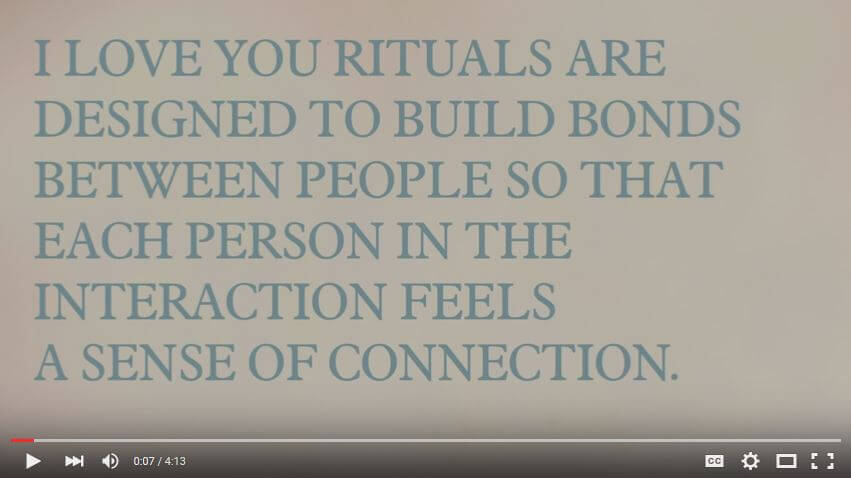
Created by Dr. Becky Bailey, founder of Conscious Discipline and author of “I Love You Rituals,” the concept of the “I Love You” rituals is simple and yet astoundingly powerful.  Caring touch, kind words, and intentional routine will form the kind of bond and connection that opens not just the heart, but also the mind and the will.  Because of the dopamine that’s released and the emotional connections that are made, “I Love You” rituals actually wire the brain for greater impulse control, spur a desire for positive behavior, and increase attention span and impulse control – all things that are crucial for children to succeed in relationships, in school, and in life.

Just as important as the “I love you” part is the ritual part.  Rituals are those special ways you do things – the way you greet one another, the way you reconnect after time apart, or what you do every night before bed.  Rituals are not only meaningful; they are also deliberate and predictable.  Dr. Bailey’s “I Love You” rituals are used to strengthen relationships, build trust, and during daily routines or transitions from one activity to the next.

Two of Dr. Bailey’s more well-known “I Love You” rituals are a beautiful revision of two well-known nursery rhymes.

Twinkle, Twinkle, Little Star
Twinkle, twinkle, little star,
What a wonderful child you are!
With bright eyes and nice round cheeks,
Talented person from head to feet.
Twinkle, twinkle, little star,
What a wonderful child you are!

A Wonderful Woman
A wonderful woman lived in a shoe.
She had so many children
She knew exactly what to do.
She held them,
She rocked them,
And tucked them in bed.
“I love you, I love you,”
Is what she said.

In Kindermusik, we use music and often a few special rituals borrowed from Dr. Bailey to strengthen bonds and emotional connection.  The power of “I love you” and the ritual of “I love you” is truly in the emotional connection, an emotional connection the ultimately comes full circle.  Grab a tissue and watch this video, and you’ll be convinced.  “I Love You” rituals should have a place in every home, in every classroom, and in every heart.

I Love You Rituals

Are you at the Zero to Three Conference in Seattle, Washington, December 2-4, 2015? Stop by the Kindermusik International booth!

Getting the Rhythm of Language Development

Our speech is made up of sounds, patterns, and rhythms, so it makes sense that being in a environment of sounds and developing a strong sense of rhythm and steady beat in the earliest years of childhood can positively impact language development.  Some researchers even go so far as to make the bold claim that “[w]ithout the ability to hear musically, it would be impossible to learn to speak.”

Enter Kindermusik, where we too would agree that “…music is a special type of language” and where rhythms, songs, rhymes, and steady beat become almost as natural as breathing.  All throughout the Kindermusik experience, from birth to 7 years, children are immersed in a world of communication through sound, through musically being sung to and spoken to as infants and then invited to be participants in the sound-making by singing and speaking back.  In addition to singing, rhymes and steady beat activities also form some of the earliest experiences with music in this immersive environment.

Because of the process-based emphasis in Kindermusik, the learning is natural, easy, and fun.  Kids and parents love it, and it doesn’t take long to realize the depth and long-lasting impact of such a rich musical environment on the development of language.

Kindermusik and Language Development

Want to support your child’s early language and literacy development? Then find a local Kindermusik class!

Why Parents Repeating Themselves is Good for Babies

Parents use early repetition by pointing to image and repeating its name with baby.

Every parent looks forward to hearing that first word, first sentence, first conversation…and early repetition is key. 

Research gives insight into the kind of parent-baby verbal interaction that can best spur on early language development, so that by the time the baby becomes a toddler, they actually have a larger vocabulary. 

Your pediatric provider probably reminds you to “talk, talk, talk” at every check-up. Yes, talking is a great way to pump up language skills, but the secret is to “repeat, repeat, repeat.” And music can help.  

Continue reading “Why Parents Repeating Themselves is Good for Babies”

November 12 ~ Free Webinar for Early Childhood Educators

Using Music to Boost Infant and Toddler Development

Kindermusik International partners with Hatch Early Learning to offer this Free Webinar, “Using Music to Boost Infant and Toddler Development.” Music is the one constant in an infant’s everyday life. All over the world, parents are bonding with their babies through musical sounds and rhythmic movement. Parents know instinctively what scientists have now proven: infants thrive on music.

Join us on November 12th as we team up with Hatch Early Learning to bring you a free webinar that will detail how and why music and movement provide the best learning vehicles for early childhood development (newborn to age 3). Kindermusik International’s Director of Professional Development, Betsy Flanagan, will lead the webinar.

  • What You’ll Learn
    • How immersive musical experiences create and strengthen an infant’s neural pathways
    • Ways to create special bonding moments with newborn to age 3 learners
    • Specific techniques that have worked in Early Head Start programs
    • Active music making ideas that “light up” a baby’s entire brain

Register for this FREE Webinar on November 12 at 2pm EST.

If you’re unable to attend this webinar live, that’s no problem! Be sure to register and we will send you a link to our on-demand portal to view a recording of the live event.

What Parents See Vs. What Teachers See

White lab coats. Sterile rooms with fluorescent lights. Charts and spreadsheets. And people named Doctor So-and-So or You-Know-Who, PhD.

Yes. That image often materializes when we think about the word RESEARCH. We rarely think about the game Peek-a-Boo or filling a tissue box with balls (and dumping them out) or mimicking someone’s face. But, that is RESEARCH, too. In fact, young children are the youngest scientists. Research and good ol’ trial-and-error: It’s how children learn about the world around them.

Of course, babies and toddlers don’t don white lab coats and create spreadsheets when they conduct research. Instead, they play. That’s right. Children conduct research through play. Parents may not always recognize when a child is learning because it almost always looks like playtime. However, early childhood educators see beyond the laughing, dancing, and singing to see the hard work of learning through play. Take a peek at all of the learning happening through play.

What Parents See Vs What Teachers See

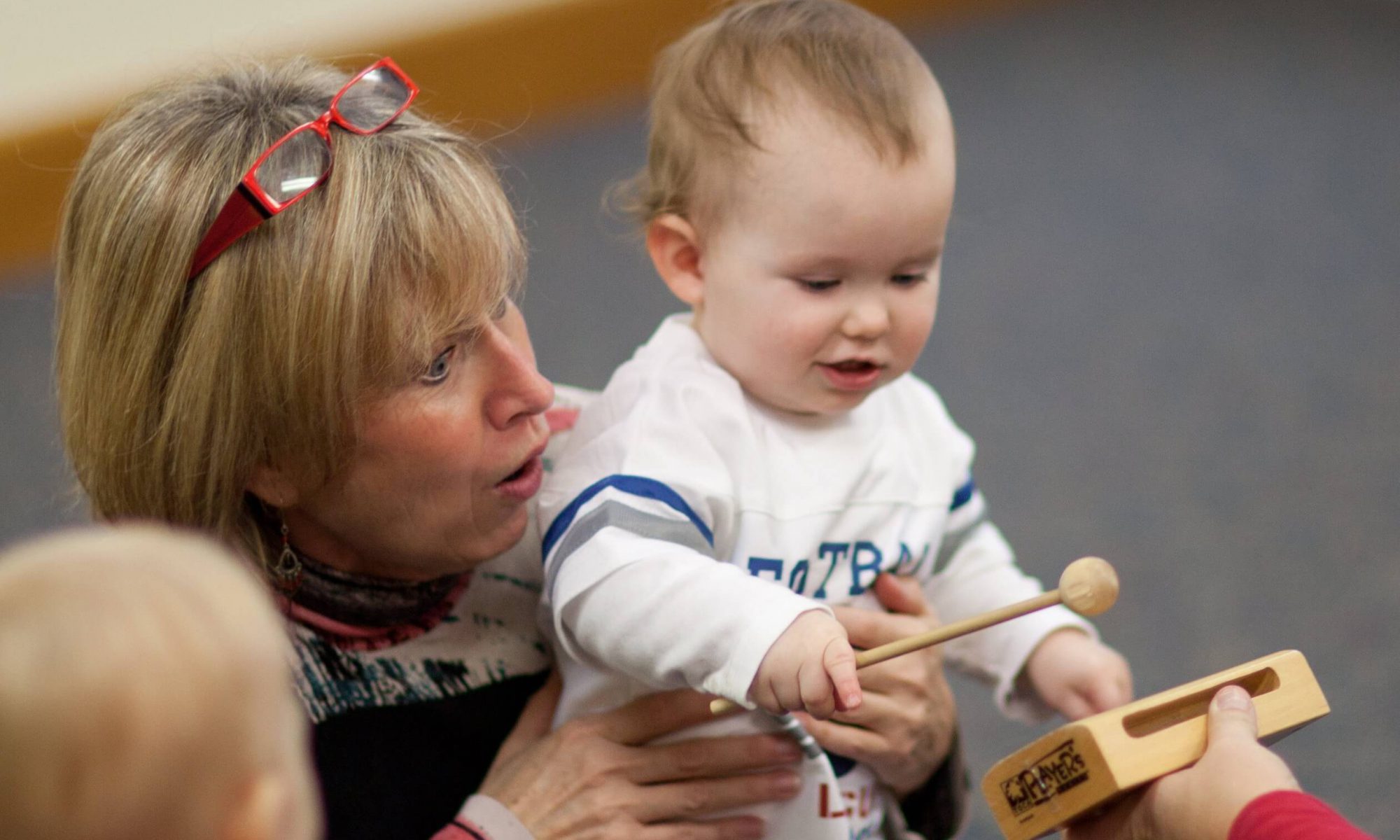
  • Parents see a baby shaking an instrument. Teachers see a baby practicing fine motor skills and learning cause-and-effect.
  • Parents see a baby being rocked back and forth to a lullaby. Teachers see baby’s developing vestibular system at work and parent-child bonding. Strong bonds with a parent leads to increased confidence to learn about the world.
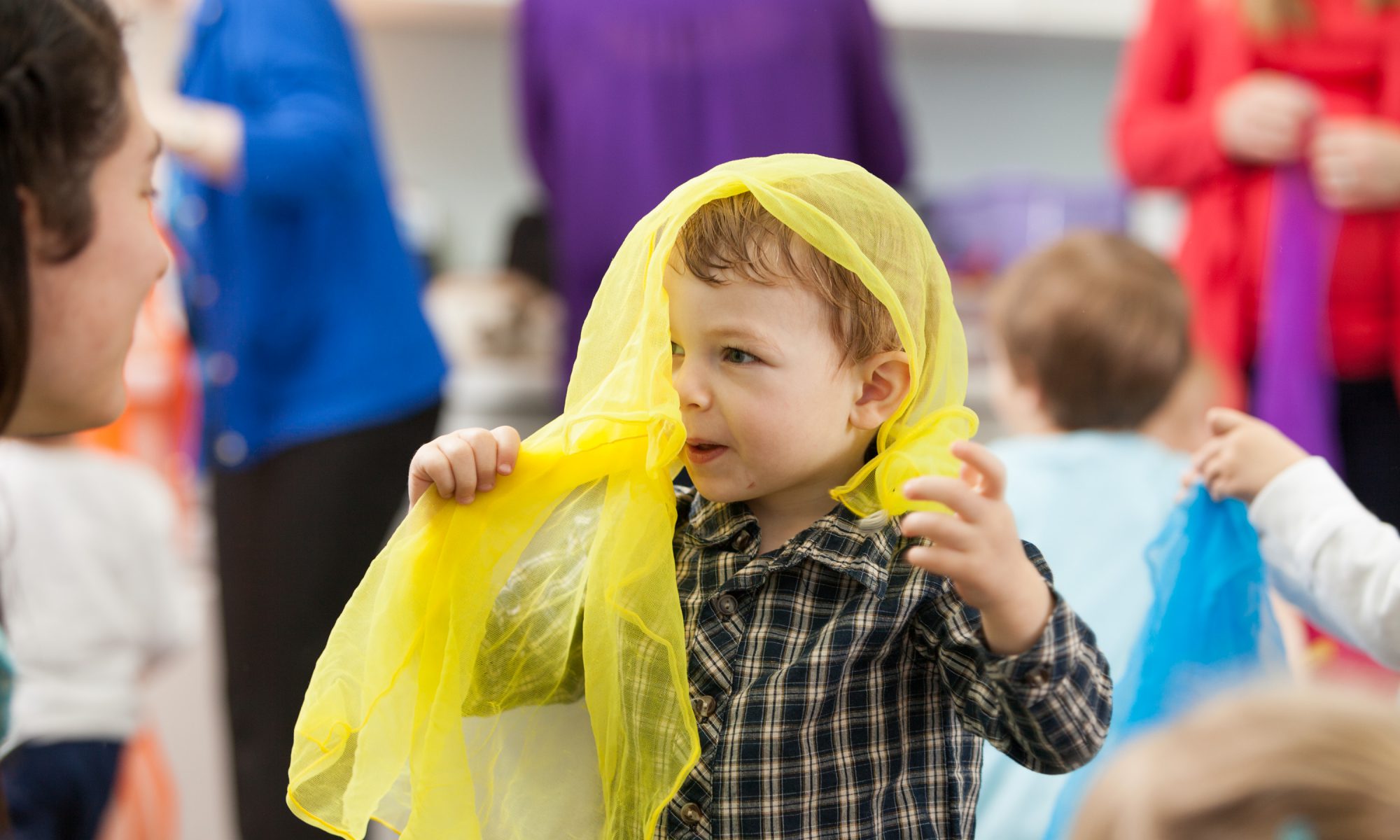
  • Parents see a mom dancing with her baby while waving a scarf. Teachers see a sight-strengthening activity that encourages eye-tracking and strengthens both depth perception and eye-hand coordination.
  • Parents see a toddler jumping up and down, stomping to the beat, or mimicking a farm animal’s movement. Teachers see young children actively practicing all of those gross motor skills.
  • Parents see a toddler reciting the fingerplay “The Itsy-Bitsy Spider.” Teachers see children exercising finger, hand, thumb, hand, and wrist muscles, all of which are needed for holding and writing with a pencil.
  • Parents hear a toddler singing a song over and over again. Teachers hear a child singing a song with a verse then a chorus then a verse then a chorus…or in other words using music to experience the early math skill of patterns.
  • Parents hear a preschooler singing a silly song and laughing at the unfamiliar words. Teachers see children developing a sense of humor as they learn what is and isn’t funny—and when it is appropriate (or not) to laugh.
  • Parents see a preschooler tapping out a steady beat on the drum or by clapping hands. Teachers see a child learning the same skill that helps them walk effortlessly, speak expressively, and even regulate repeated motions such as riding a bicycle, brushing teeth, or dribbling a ball.

What Do YOU see in a music class? (Hint: It’s not just singing, dancing, and playing instruments!) Take a peek!

WhatHappensInMusicClass

Do you want to see what Kindermusik educators see? Contact your local educator and visit a class!

Contributed by Lisa Camino Rowell, a freelance writer in the Atlanta, Georgia, area.

Finding Your Voice: Lessons Learned from Isabella

This guest post originally appeared on the blog: One Random Angel. 

I’ve been working with children since I was old enough to babysit. Been teaching children in some capacity for the last 23 years. So I don’t want to say I’ve seen it all, but I will say not much surprises me. And I generally think I’m pretty good at reading kids and meeting them where they are and bonding with them from there. Or at least I thought that until this past year when a creative, loud, happy child named Isabella surprised me and taught me a new lesson that will help me now to be a better teacher and maybe even a better person.

Let me back up. When I first began teaching Isabella, then 2 years old, in one of my parent/child gymnastic classes, I did not see her at all as creative, loud, or happy. In fact, I saw her as timid, introverted, and nervous. She hid most of the class behind her dad’s legs. And her kind, supportive parents, along with her kind, well-meaning teacher would encourage her to try skills and push her to participate. But if I’m honest, she didn’t really ever seem to enjoy the class in those days. I thought she needed time: time to get to know me, time to be comfortable in the environment, and time to just watch and observe before doing.

Then we started a new Kindermusik program at my gym.

Isabella and her mom joined my very first class. I could see the first day that Isabella was more comfortable. From day one, she participated fully in the class. As the weeks went on, Isabella became louder and louder in her participation. She modeled for the other kids all the imaginative play involved in Kindermusik. She was the first to vocalize and sing along. She really transformed into a leader before my eyes. One week early on we were dancing with scarves to classical music. Isabella stood off to the side and sang “Let It Go” as loudly as she could over the music. It was glorious.

As amazing as watching her come out of her shell in music class was, here is the part that really blew me away. When she found her voice in Kindermusik, the way she participated in the gym class also changed! She stepped out from behind her dad’s legs and into the center of the circle. She met me in the gym class with the same imaginative spirit that we used in music class. In our opening circle for example, instead of burying her head in her dad’s chest when I’d ask her for her name, she began to give me a different name each week for what I should call her. Then she’d pretend to be that person (usually a princess). One day during our exploration time, she said to me, “I’m Miss Angel and you are Isabella. You follow me.” She led me around equipment that a few months earlier I couldn’t even get her to go near.

Lessons Learned from a Child

Isabella didn’t need more time or understanding from me. She needed a change in environment. She needed to find her voice where she felt confident and where the activities spoke to her and her strengths. She found those things in Kindermusik. Then she owned her new voice and used it to overcome whatever fears she had in the gym. Now she tries skills. Now she participates fully. She is sometimes still nervous when trying new physical skills, but instead of hiding and refusing to try, she just tells you that she feels nervous. Then she tries it anyway.

Isabella is a joy to teach in both programs. Take a look at Isabella and her family singing with me and the Wiggle and Grow Family class. You’ll recognize her from her confidence and joyful, loud singing!

Finding Your Voice Video Clip

So my hope for all of us is that we can find a change in environment when we need it. Find a place where we feel confident. A place that speaks to our strengths and draws out the very best in us. A place where we can sing “Let It Go” loudly even when entirely different music is playing.

What lessons have you learned from a child? Join in the conversation on our Facebook page and tag your response #lessonslearnedfromkids.

Angel Hundley has owned and operated a The Little Gym Franchise in Huntsville, Alabama, since 2007. She has taught hundreds and hundreds of children. She hopes they’ve learned from her. Angel is certain that she’s learned from them!