Angela England, a mommy of five from Oklahoma, shares her thoughts on how music can help build your child’s creativity and emotional health. She writes for Mom Blog Society.
[vc_row][vc_column][vc_column_text]Fidget Wisely: 10 Ways to Teach Mindfulness Skills to Kids Who Can’t Sit Still by Kirsten May Keach MA, MFT is available at your favorite local bookstore or online in both digital and paperback editions.
Does your child fidget? Perhaps he has a hard time sitting in one place. Let’s face it…we’ve all been there to one degree or another. Kirsten May Keach, a licensed family therapist has written the perfect book to help us help our kids develop mindfulness skills into their day to day lives. In the book’s introduction, Keach tells us the genesis of Fidget Wisely:
I had the privilege of working as a therapist in an elementary school. I very quickly had a full caseload of kids. Children were coming to my office frustrated and anxious… The conversations with teachers and administrators went something like this: “He/she is a smart kid with lots of potential but…he just doesn’t listen” or “She won’t sit still”… The conversations with parents began in a similar way… I call this the “He/she is a great kid, but…story.”
The story began to permeate my days. I was my job to identify and dissolve the “but” standing in the way of these kids and their success. What I found was that for the most part, these kids had poor emotional regulation skills. This means that they had difficulty managing their feelings and emotions.
I began to teach kids emotional regulation skills through mindfulness and yoga activities. I integrated the skills I learned living in a Thai Buddhist Monastery into my work as a therapist. I made all these skills kid-friendly.
The kids loved learning mindfulness skills. To my surprise, they caught on like wildfire.
Before diving into the meat of the book, Keach provides the reader with a very clear definition of what mindfulness is. How can we help our kids attain this skill and state of being if we don’t know what it is? Put simply, mindfulness is “the awareness that emerges through paying attention on purpose, in the present moment, and non-judgmentally to the unfolding experience.”
She elaborates in plain terms, of course. You’ll have to buy the book to learn more![/vc_column_text][/vc_column][/vc_row][vc_row][vc_column][vc_column_text]
Simple Flow, Easily Digested
Keach has organized her book into very easily followed instructions so that even the mindfulness newbie can take valuable information. She provides several craft activities, with detailed instructions, followed by information on how that craft can be used to help a child center themselves and find that elusive mindfulness. The first craft is a glitter jar, Keach’s version of a snow globe. Here, we create an object with the sole purpose to be touched, shaken, fidgeted with – but with the end game of providing a point of focus for the child.
Each section is formatted in a way that makes executing the craft or activity simple. For crafts, she provides a supply list and clear steps. There is also always a set of rules, that are both practical and humorous.[/vc_column_text][vc_column_text]
Keach’s instructions for a rice box. Remember, don’t eat the rice!
Keach provides many wonderful activities throughout the book, from breathing exercises to basic yoga poses for kids. Tips for teachers, information on set-up, and specific instructions are provided. This compact, affordable book provides several poses that are useful for children.[/vc_column_text][/vc_column][/vc_row][vc_row][vc_column][vc_column_text]
We’re all busy people. This resource – a pragmatic and activity driven approach to helping kids develop mindfulness skills is quickly read and packs a great deal in a small package. Take a look, you won’t be disappointed. Oh! And if you are a kindleunlimited™ member, it’s free![/vc_column_text][/vc_column][/vc_row]
[vc_row][vc_column][vc_column_text]One afternoon, I walked into the living room and my very active 3-year-old daughter was just laying on the couch with a blanket. “What are you doing? Are you OK?” I asked her. “Yes mama, I’m just listening to the music,” she replied. And she stayed there for a good 20 minutes. Mind you, this is the child who barely sat down for more than 30 seconds at a time.[/vc_column_text][/vc_column][/vc_row][vc_row][vc_column][vc_column_text]Listening to music is something of a lost art. Taking the time to just LISTEN with your child can help you to reconnect after a long day and teaches them that listening to music can be the main activity and not just background noise. Babies and young children especially benefit from mindfully listening to music. We forget that they are also exposed to stressors during their day and that relaxation is a LEARNED skill that we need to teach. It doesn’t have to be very long, try listening to 1 or 2 songs, especially if your child is very young and on the move! The idea isn’t to get them to “sit down and listen,” but to create an environment where they are able to enjoy the music.[/vc_column_text][/vc_column][/vc_row][vc_row][vc_column][vc_column_text][/vc_column_text][/vc_column][/vc_row][vc_row][vc_column][vc_column_text]
A Few Tips for Mindful Music Listening
Start the music and then put your phone and all other technology away and out of sight.
Make eye contact with your child and smile.
If your child needs movement, try rocking with them on your legs.
Add some intentional touch such as rubbing their back or ears, or massaging their feet.
[/vc_column_text][/vc_column][/vc_row][vc_row][vc_column][vc_column_text]Quietly talk about the music. What instruments are being used? Is it a man or a woman singing? Is the music fast or slow? Does it sound happy or sad? If there are words, what language are they speaking? Even babies and toddlers benefit from you labeling these sounds for them, and children in preschool and beyond will enjoy having a conversation about the music they are hearing.[/vc_column_text][/vc_column][/vc_row][vc_row][vc_column][vc_column_text]Make music listening a special part of your daily rituals, whether it’s when you come home from work, or before bedtime. Your entire family will benefit from a few minutes of mindful music listening![/vc_column_text][vc_separator][/vc_column][/vc_row][vc_row][vc_column][vc_column_text]
The Solares family at their Chicago studio, Bucktown Music
[/vc_column_text][vc_column_text]Jessica Solares and her husband Luis own Bucktown Music in Chicago, IL, which is recognized by Kindermusik International as one of the top studios in the world. Jessica holds a Bachelor of Music degree from Elmhurst Collegeand has been a licensed Kindermusik educator since 2008. She joined the Kindermusik University teacher training team in 2016 and is proudly sharing her expertise with the newest generation of Kindermusik educators![/vc_column_text][/vc_column][/vc_row]
Recently, psychologists from Harvard’s Making Caring Common Project (MCC) produced a list of seven concepts successful parents tend to consider when raising caring, compassionate, ethical children. The MCC exists to:
..help educators, parents, and communities raise children who are caring, responsible to their communities, and committed to justice.
It’s a pretty wonderful group of folks who truly want to see our kids be the best versions of themselves they can be. Both scientists and parents partner together to foster kindness and a commitment to the greater good. Let’s take a look at their seven research supported “guideposts” for positive parenting.
1. Work to develop caring, loving relationships with your kids
Sounds obvious, but it’s important. If we want to pass on important concepts to our kids, they need to trust us. The more you express love and demonstrate that you care tremendously about them, they will feel closer to us. In turn, they will be more receptive to learning what we have to teach them.
How can we do this? The folks at MCC suggest planned, regular time together that includes meaningful conversation. Ask questions! The can be basic and simple, but in the end, these questions signal to our kids that we are interested in them and care about them. Try these on for size:
What was your favorite part of the day?
What was the hardest part? Why?
What did you learn today?
What is something nice someone did for you today?
Modeling love and care is so important.
2. Be a strong moral role model and mentor
We will be our kid’s first super hero. Before they learn about Wonder Woman and Superman, we will fill those roles. They will look to us, especially as we live into the first guidepost, to discern what is right and wrong, what is moral and amoral. We will be their moral hero. They will copy what we say and what we do. We’ll see them try out the faces we make, our body language, and our manner of speaking. Their eyes will always be on us. We must try to give them something positive to emulate.
How can we do this? Reflect on how we speak, how we treat others, and the model we are building for our kids. MCC advocates the following:
Pay close attention to whether you are practicing honesty, fairness, and caring yourself and modeling skills like solving conflicts peacefully and managing anger and other difficult emotions effectively.
Obviously we aren’t angels 24 hours a day. We make mistakes, but these can occasionally be used as teaching moments, too (depending on the subject at hand). Here are some suggestions from MCC:
Engage in community service and include your little ones when appropriate.
Be honest – Talk with your child when you make a mistake that affects them
about why you think you made it, apologize for the mistake, and explain how you plan to
avoid making the mistake next time.
Talk things through with friends – do you have someone with whom you can talk with when things may prove challenging? It’s great to be able to have a dialogue with a fellow parent who might be able to provide a different perspective.
3. Make caring for others a priority and set high ethical expectations
We live in communities. Life on our planet is really about interacting with others. We are, by and large, social creatures. Learning at an early age how to practice empathy and compassion is very important when trying to raise kids that will care about others. With our first two guideposts in place, we are in a good place to help these little ones develop and understanding of these concepts and and put them into practice in their world.
How can we do this? Help our children live into the commitments they make – even the most simple commitments. Making their bed…practicing kindness with a sibling…sharing toys with others…these are all basic commitments we can help them realize.
We can help them stand up for important principles like fairness and justice, and always encourage them to be respectful. Here’s MCC’s list to help with this guidepost:
Consider the daily messages you send to children about the importance of caring. For example, instead of saying to children “The most important
thing is that you’re happy,” you might say “The most important thing is that you’re kind and that you’re happy.”
Prioritize caring when you talk with other key adults in your children’s lives. For example, ask teachers and coaches whether your children are good community members in addition to asking about their academic skills, grades, or performance.
Encourage kids to “work it out.” Before letting your child quit a sports team, band, or a friendship, ask them to consider their obligations to the group or the friend, and encourage them to work out problems.
Opportunities to interact with others and practice kindness are great – like a Kindermusik class!
4. Provide opportunities for children to practice caring and gratitude
Have you ever gotten proficient at a skill without opportunity to practice? Most likely…no. And friends, putting these concepts into practice is a skill. Ensuring that our kids have ample opportunity to exercise these skills in the real world and not just as ideas in their head is key. When you are at the store, have your child thank the cashier and the bagger. At a restaurant? Let your little one order, complete with please and thank you. Take every chance to express gratitude, to demonstrate compassion. MCC’s list of suggestions includes:
Help with chores around the house. This should become routine. Praise uncommon acts of kindness. Expect routine – these actions will more likely become ingrained.
Make caring and justice a focus. Start conversations with children about the caring and uncaring acts they see in their daily lives or on television and about acts of justice and injustice they might witness or hear about in the news, such as a person who stood up for an important cause or an instance of sexism or racism. Ask children how they see these actions and explain why you think these actions are caring or uncaring, just or unjust.
Expressing thanks. Consider making expressing gratitude a daily ritual at dinnertime, bedtime, in the car, or on the subway. Encourage children to express appreciation for family members, teachers, or others who contribute to their lives.
5. Expand your child’s circle of concern
It’s a simple concept, really. If we’ve been successful with guideposts one through four, our children will already have a great foundation in compassion, caring, and empathy. Normally though, this readily extends to the close circle of trusted adults – immediate family and close friends. The idea here is to help our kids care about those outside the circle, thereby expanding it. We want our kids to be compassionate and empathetic with the new kid in class or someone that might look different than they do, whether that be, for example, race or ability.
How can we do this? MCC states:
It is important that children learn to zoom in, listening closely and attending to those in their immediate circle, and to zoom out, taking in the big picture and considering the range of people they interact with every day. Children also need to consider how their decisions impact a community. Breaking a school rule, for example, can make it easier for others to break rules. Especially in our more global world, it’s important, too, for children to develop concern for people who live in other cultures and communities.
Here are some specifics from MCC:
Encourage children to consider the perspectives and feelings of those who may be vulnerable, such as a new child at school or a child experiencing some family trouble. Give children some simple ideas for taking action, like comforting a classmate who was teased or reaching out to a new student.
Use newspaper or TV stories to start conversations with children about other people’s hardships and challenges, or simply the different experiences of children in another country or community.
Emphasize with your child the importance of really listening to others, especially those people who may seem unfamiliar and who may be harder to immediately understand.
6. Promote children’s ability to be ethical thinkers and positive change-makers in their
communities
Kids care about ethics. They might not know the term, but ethics enters into their lives pretty early one. How often have you heard a young child talk about what is fair and not fair? Have you had a discussion with your own child about how they might have been mistreated by another child? What about telling the truth, even when it’s hard? They know. They want to learn. They have a desire to understand how human interactions work. They quickly understand that their choices have an impact on others. So how can we promote ethical thought in young kids?
We can help them work through the ethical puzzles that occur in their lives. MCC uses this example – talking through a situation in which a child is deciding whether or not to invite a new friend to a party when their best friend might not like the new friend. We can help our kids understand how to handle bullying when it rears its ugly head.
The key here is to use the open channels of communication and moral center we have created by employing the previous guideposts.
7. Help children develop self-control and manage feelings effectively
We’ve talked about this one here at Minds on Music before. Helping our kids develop self-regulation and self-control are key to navigating the journey from toddlerhood all the way to puberty and beyond. If our own challenges can’t be managed successfully, it will be next to impossible to view the world through compassionate eyes. We’ll be overcome by our own ego. If we help our children develop a skill set to manage their own emotions and moderate their interactions with the world, they will more readily understand their place in it. We can aid them as the move through Piaget’s Preoperational Stage, characterized by the struggle to see things from perspectives other than their own.
How can we help them? By teaching our kids to label their feelings, to talk about them. It’s so important that kids learn that feelings, even feelings like anger and sadness are okay. The challenge is in how we express those feelings, how we process them. Some ways are much better than others. From the MCC:
A simple way to help children to manage their feelings is to practice three easy steps together: stop, take a deep breath through the nose and exhale through the mouth, and count to five. Try it when your child is calm. Then, when you see her getting upset, remind her about the steps and do them together.
Practice with your child how to resolve conflicts. Consider a conflict you or your child witnessed or experienced that turned out badly, and role play different ways of responding. Try to achieve mutual understanding—listening to and paraphrasing each other’s feelings until both people feel understood. If your child observes you experiencing a difficult feeling and is concerned, talk to your child about how you are handling it.
Positive Parenting at its Best
This is proactive, positive parenting. It takes time to employ, but the benefits are long-lasting. I have often told our kids that my main goal is to make sure they make it to adulthood alive. My 14 year-old likes to jokingly quip back when i ask him to do simple things (like turning out a light), “Don’t tell me how to live my life!” I return with, “That’s literally have my job.”
“What’s the other half?” he’ll ask.
“Telling your brother how to live his.”
We laugh. We’re lucky to have a positive relationship. But really, whether our sons realize it or not (and I’m pretty sure they do), what we do as parents goes far beyond making sure they make it to adulthood alive or simply telling them how to live. We try our best to be positive models. We have tried to help them develop a sense of right and wrong, of compassion and empathy. We have had and continue to have discussions over dinner about ethical issues and how to treat others. Hypothetical situations are great conversation starters. Sure, the content of the discussions has increased in complexity as they have gotten older, but we did our best to have age appropriate talks at every point in their lives. When we take the time to practice these guideposts, our kids have the potential to develop as caring, compassionate individuals. And that’s the MCC’s goal, to make caring common. It’s a pretty good goal for all of us.
[vc_row][vc_column][vc_column_text]Here in the States, summer is almost here, and with it often comes changes to our normal routines. As adults, we adapt to the break and look forward to a change of pace – a different kind of busy. But a change in routine can be very unsettling to young children who not only need the security and predictability of routines, but actually thrive physically, emotionally, and cognitively on those routines.
Whereas we as adults are driven by our clocks and calendars, the day is defined by routines for young children. Deviate too much from those routines and you can potentially end up dealing with fussiness, whining, or tantrums. The reality is that life is unpredictable at times, so teaching our kids how to adapt and be flexible is a valuable life skill. So how can we keep some consistency in those routines that are so necessary to small children?
Start and end your day the same way
Keeping your morning and evening routines makes what happens in between a little easier for your young child. Even the smallest things like the order in which you get ready in the morning or the way you always read together before bed will be very comforting.
Keep that favorite toy or book handy
Children find security in what’s familiar. It’s why some kids really latch on to a certain stuffed animal or blankie. So tuck that favorite toy or book in your bag when you’re on the go, and offer it to your child when you sense he’s needing a little distraction.
Lean into the changes
If you know that your summer is going to be different for the next several months, create some new routines – and then stick to them. What’s hardest for children is not knowing what’s happening next because the next day is always different.[/vc_column_text][/vc_column][/vc_row][vc_row][vc_column][vc_column_text][/vc_column_text][vc_column_text]
Talk through what’s coming up
This is especially helpful for older toddlers, preschoolers, and big kids who are beginning to be old enough to understand and flex better with change. Surprises can be unsettling, so simply taking a few minutes to let them know what to expect will go a long way towards making day go much more smoothly for everyone.
Infuse your day with music
Sing your child’s favorite song as you load up in the car, turn on that beloved Kindermusik CD as you travel, or play that favorite lullaby playlist before bed. It’s all about finding ways to include the familiar even when there has to be a change in the normal routine. A simple thing like playing or singing some favorite songs can make all the difference in how the day goes.
Stay enrolled in some of your regular activities – like Kindermusik class!
Anchoring your week with a beloved and familiar outing goes a long way in your child being able to adjust better to other changes. Children mark time by their predictable activities – precisely the reason why Kindermusik educators regularly have parents share that their child wakes up asking, “Is today my Kindermusik day?”[/vc_column_text][/vc_column][/vc_row][vc_row][vc_column][vc_column_text]Life is full of surprises, yes, and often the day’s activities are somewhat out of our control. But the goal with young children is to control what we can, keep whatever routines we can, and add in the touches of the favorite and familiar to give a sense of comfort and predictability wherever possible. And our best tip?? Music makes everything better – all day, any day, every day.
Shared by Theresa Case, whose favorite part of the week is when she’s enjoying her Kindermusik teaching routine in her award-winning Kindermusik program at Piano Central Studios in Greenville, South Carolina. [/vc_column_text][/vc_column][/vc_row]
[vc_row][vc_column][vc_column_text]How many pictures of newborns have you seen in the moments after the little one arrived in the world? I’m talking about a specific category of photos – the beautiful shots of mothers holding their babies for the first time – that all important skin-to-skin contact. Medscape tells us this:
…newborns who are placed skin to skin with their mothers immediately after birth make the transition from fetal to newborn life with greater respiratory, temperature, and glucose stability and significantly less crying indicating decreased stress. Mothers who hold their newborns skin to skin after birth have increased maternal behaviors, show more confidence in caring for their babies and breastfeed for longer durations.
Makes good sense. But what about once your home? Can you spoil your baby by holding her too much? Wendy Wisner over at Scary Mommy brings us the results of some long term studies that indicate there really isn’t a downside to holding your baby too much. Let’s look at the science.
It’s clear from scientific studies that lots of skin to skin contact with the mother is very beneficial for preterm infants. This includes increased grey matter, decreased hyperactivity, and in the long term, fewer absences from school. The study published last December by the American Academy of Pediatrics followed a group of premature infants for twenty years. That’s long term. These subjects even made more money at their jobs than the control group!
But what about full term infants? Can we hold them too much? Is that spoiling them?
Holding that baby will help the little one in many ways – but it also has benefits for you! Check out this info from Baby Science:
So holding a baby close against your body doesn’t just feel good; it’s critical to a baby’s development. And this critical baby-cuddling isn’t just something a parent decides to do; it’s actually biologically triggered by the baby. One international research team showed that an infants’ smell is enough to trigger the brain’s reward system in potential cuddlers. Researchers exposed a group of fifteen mothers and fifteen women who had not given birth, to odor extracted from the pajamas of two-day old infants. All the women underwent MRI brain scans done while being exposed to the odor. In all the women, but more so in the mothers, the reward center in the brain showed enhanced activity.
At the doctor’s office? Did your baby just get a shot? Obviously our instinct is to hold that infant close to help sooth her. And it works – skin to skin contact is a painkiller! In a 2000 study also published in the AAP, 30 infants were pricked in their heels. The results were remarkable:
“Crying and grimacing were reduced by 82% and 65%, respectively, from control infant levels during the heel lance procedure. Heart rate also was reduced substantially by contact.”
The research is clear. The physical and emotional health benefits of holding your baby are tremendous. Study after study tell us that holding your baby when he is fussy or experiencing pain is a good thing. Period. Wendy Wisner says it better than I can:
…it turns out there is basically a treasure trove of scientifically backed-up data out there to prove that there is absolutely no way you can spoil a baby. Zero. Zilch.
In fact, almost all of the research points to the fact that not holding your baby enough could have negative ramifications in terms of health and development.
I almost wish I could go back in time and present all this data to the people who criticized me for keeping my babies in my arms or strapped to me in a baby carrier 24/7. But in all honesty, I’m pretty sure I was like most new moms out there — too exhausted and brain-fried to do much arguing or researching.
It happens often – the Jewish observance of Passover and the Christian observance of Easter will coincide this week. Passover began today at sundown and continues until April 18th. Easter will be celebrated this coming Sunday, April 16th. The two holidays actually share an etymological root – Easter is still called Pascha in Greek, which in turn comes from the Hebrew Pesach, a word still used today for Passover.
As with many faiths, music plays an important role in observance and celebration of important holidays. Easter and Passover are no different. Let’s explore some of the music associated with these special festivals.
Chant – lots of Chant
Both faiths historically have used a great deal of chant, a form of elevated speech, to convey concepts, express aspects of faith, and offer praise. There are many chants associated with both Passover and Easter. At the Passover Seder, the ceremonial dinner that recalls the flight from Egypt, songs are song, and text is often chanted. One of the most important is the Ma Nishtana (Hebrew for “this Night”). The Ma Nishtana contains the “Four Questions” and is traditionally sung by the youngest child able to do so. Here’s the text in English:
Why is this night different from all the other nights;
That on all other nights we eat both chametz and matzah, on this night, we eat only matzah
That on all other nights we eat many vegetables, on this night, only maror
That in all other nights we do not dip vegetables even once, on this night, we dip twice
That in all other nights some eat sitting and others reclining, on this night, we are all reclining
Here’s Roni, practicing the Ma Nishtana for her family’s Passover Seder:
An Ancient Easter Chant – Victimae Paschali Laudes
This chant first appeared after the Council of Trent in 1570, thought it is certainly older. It praises Jesus as the Passover victim (you can see that etymological connection in the title – Paschali – Latin for Passover). The original chant tune is still used in Catholic churches and has been arranged in countless ways for solo voice and choral ensembles. Here is a portion of the text:
Let Christians offer sacrificial praises to the passover victim.
The lamb has redeemed the sheep: The Innocent Christ has reconciled the sinners to the Father.
Death and life contended in a spectacular battle: the Prince of life, who died, reigns alive.
Here is the simple chant version, complete with its early musical notation, called neumatic notation, which predates our modern way of writing music. Watch the notes go up and down as the voice goes up and down in pitch.
Handel – Israel in Egypt
Yes, it’s true. George Frideric Handel was not Jewish, but his oratorio, Israel in Egypt, tells the story of the Exodus in grand fashion. The work was premiered in England in April of 1739. This major work, written in three parts, is now commonly performed with just the final two parts – in 39 individual movements! It is primarily choral though there are some solo and duet movements. What is no performed as Part II is an English translation of the Shirat HaYam – The Song of the Sea. In this chorus, which sets the first sentence of the Shirat HaYam, Moses and his people sing together for the first time, celebrating the escape from Pharaoh.
Moses and the children of Israel sung this song unto the Lord, and spake, saying: I will sing unto the Lord, for He hath triumphed gloriously; the horse and his rider hath He thrown into the sea.
Here is the Choir of Christ Church Cathedral, Oxford and the English Chamber Orchestra under the direction of Simon Preston. Note the joyful music as the chorus sings “the horse and his rider hath He thrown into the sea.”
Miriam’s Song
Debbie Friedman, a Jewish American songwriter, composed the well known Miriam’s Song. It offers Moses’ sister’s point of view after the Exodus. Miriam leads the women in dance and song, celebrating their freedom. Friedman’s music is in the folk vein, filled with elation and joy. In the recording below, you can hear the shofar, an ancient musical instrument made of a ram’s horn and used in Jewish religious ceremony, blown at the very end.
As always, music pervades everything we do – holidays, both sacred and secular; our commutes are filled with music; every aspect of modern entertainment is saturated with music from television to movies. Imagine a world without music! It would be quite boring.
Friends, I’m a parent. It’s the position I’m most proud of. My wife feels the same way. We have two boys – a 14 year old and a 10 year old. They are the twin joys of our life together. In our quest to make the best parenting choices, I’d like to think we’ve done pretty well – most of the time. This story is about one of the times we messed up…pretty badly. But in the end, we turned our mistake into an opportunity to teach our oldest a valuable lesson. Buckle up…it’s going to be a bit bumpy at the outset.
Setting the Scene
It was July of 2014. We live in Western Pennsylvania and my wife’s parents live on the Eastern side of the state. Our boys were almost 300 miles away visiting their grandparents. This will be important later.
Now…my May American Express bill had been a bit high – it reflected about $300 in purchases from iTunes. My wife, who handles our finances, pointed this out and asked me to curtail my spending. I’m a conductor and music educator. I do tend to spend quite a bit on music through iTunes, particularly in the summer when I am planning my year – though $300 is pretty high for one month. I mistakenly just assumed I had somehow lost track and overspent. Not checking to see if I had actually splurged that much on music purchases was my FIRST MISTAKE.
I promised Jane I would avoid any further purchases for the rest of the summer.
We return to July and a child-free house. As much as we love our boys, we were enjoying a bit of quiet. I was working in the kitchen when I heard Jane yell for me in the family room.
“Sweetheart!”
Uh oh. “Yes?”
I could tell I probably did something.
“You spent over $850 on iTunes last month! You said you’d stop!”
At this point, I knew something was off. I knew I hadn’t spent any money on music in June. Refraining from any purchases through iTunes, I had spent a great deal of time listening to music on YouTube. What was going on?
We looked at the bill together – countless charges of $1.08…$5.44…then $10.89…then $21.79. Finally, toward the end of June, someone had charged several items costing $54.49. My bill with Apple totaled $878.
“In the interest of full disclosure, I was relieved that it wasn’t me who was in trouble.” – Dr. Boyle”
Fraud!
I immediately thought my card had been compromised, so I did what anyone would do – I called American Express. While on hold, I remembered – I had connected our oldest son’s iPod Touch to my American Express account.
We had a deal with him: if he wanted to download anything – anything at all – he had to ask permission. Whether an app was free or cost money, he had to ask. Nathan had been good about this deal. He always asked. He hadn’t abused this trust since we purchased the iPod Touch for him two years prior. I would occasionally check his device to see what he’d been doing. In two years I never found anything of concern and slowly reduced how often I checked in. MISTAKE NUMBER TWO.
Still on hold, I asked Jane to call Nathan, just to check if he had downloaded anything. The customer service agent returned and agreed that if I didn’t make the purchases, which due to their repetitive nature and increasing value, things did look suspicious. While discussing possibilities with my friendly Amex Rep, I heard Jane, in an extremely loud and uncharacteristic voice, say the following:
“YOU DID WHAT?!?!?”
I sighed into the receiver. We had apparently caught the culprit – the mastermind behind the charges: our then 10 year-old son.
“Um…Ma’am?” I said sheepishly. “Never mind. We figured out what happened. Thanks for your help, though.”
I hung up.
In our 20 year marriage, I don’t think I have ever seen Jane as angry as she was that day, talking to our son on the phone (who I’m sure was extremely grateful of his 300-mile-safety-buffer). He admitted that he had been playing a game on his iPod – Clash of Clans – that may have had some “in-app purchases.”
In the interest of full disclosure, I was relieved that it wasn’t me who was in trouble.
Freemium Games and In-App Purchases
This incident introduced us to the relatively new concept of Freemium Games, brilliantly satirized by South Park the following November in the episode, “Freemium Isn’t Free.” I’m sure most know what this is, but for the uninitiated, a Freemium Game is a game that is free to download. It’s also free to play. However, it’s been designed to take advantage of our desire to move quickly through a task to get that final reward. Yes, you can play for free, but for an in-app purchase of only 99¢, you can instantly buy resources instead of collecting them over the course of days or weeks. For for $1.99, you can buy quite a bit more. And for $9.99, you can buy even more! Why wait weeks to complete a task in-game when – for pennies – you can have instant gratification?
This bit of marketing magic works. It works really well, so well that Clash of Clan’s parent company, Supercell, normally takes in over $2 million each day. Let me type that again – the company brings in 7 figures a day for selling…nothing. In Clash of Clans you can purchase gems which simply speed up game play. There is no actual product delivered – digital or otherwise. Last year, Supercell generated $2.3 billion in revenue, selling the ability to increase the speed of gameplay.
The “Gems’ purchase screen of Clash of Clans – it’s only 99¢, right?
Parenting Fail into Parenting Win
So…I had failed to verify the purchases from May. As it turns out, all of that $300-plus iTunes bill was Nathan. He started small. As he played the game, he kept increasing the number of gems he was buying. A “Pocketful” of gems costs 99¢; a “Pile” – $4.99. With just a couple clicks, you can get your resources and speed up the play. Once he got going, absent parental supervision, human nature took over. There was no stopping him. He peaked at buying “Boxes” of gems for $49.99. We had caught on before he jumped to the next purchase level – $99.99…plus tax, of course.
Because we had failed to check in on Nathan’s iPod activity, we completely missed the install of the “Freemium” game and the initial purchases. We had to accept some responsibility. Of course, Nathan broke our deal and failed to ask permission to install the game and buy anything in the game. He had been so good in the past – asking if he could buy a $1.99 app or a 99¢ song. We never thought something like this would happen.
So what did we do?
At a friend’s suggestion, I immediately called Apple. I explained the situation to them, and without asking for a refund, they offered to refund the entire amount of $1189. Pretty amazing if you ask me.
But we still needed to deal with Nathan. Thankfully, his absence gave us time to think. We had some important and often complicated concepts we wanted to get across to our son. He had spent the equivalent of our rent on nothing of any real value. He had also abused our trust. What consequence (or set of consequences) would teach rather than simply punish? How could we use this opportunity to help him understand finances?
The Plan
Here’s what we came up with. Nathan immediately lost all his internet connected devices and internet privileges – iPod, Xbox, and computer access outside of school work. This falls into the “negative punishment” block of Operant Conditioning. What we did next required a long term commitment and would result in our son truly appreciating the value of money.
We told Nathan that we transferred the money in his savings account to our account to partially take care of his debt (we didn’t really). This lowered the total amount owed to about $800. We devised a complex life lesson for our son that, in the end, taught him more than just finances. We would teach him how to live on a budget and what that requires in everyday life.
Nathan would work five hours a week at minimum wage until the $800 was paid off.
Those five real hours would represent a virtual normal 40 hour work week – so each hour equated to an 8 hour day’s pay at minimum wage.
This gave him a virtual weekly salary of $290 a week.
Out of that weekly virtual salary, Nathan had to take care of the following weekly virtual expenses:
Roughly $40 in taxes and withholdings
$90 in rent – based on the low end of one bedroom apartment rent listings in our area
$15 in utilities
$30 in heath insurance
$10 in transportation costs (he’d take public transportation to his “virtual” job)
$40 in groceries
This left him with $65 a week. Out of this money, he had to pay down the entire debt of $1189. Each hour he worked beyond his five real hours represented a virtual hour’s work of overtime and he’d virtually be paid time and a half. To his credit, he did take advantage of this and did more than five hours of work almost every week – sometimes as much as 15 real hours total. What did we have him do?
Laundry
Cooking (taught him to make pasta sauce – a very important skill in my book)
Dishes
Vacuuming
Watching his little brother
Assisting both of us with various tasks
Each week, we sat down with him and entered his hours into a Google Sheets document I created, complete with formulas that figured everything out for us. He could see his income, taxes and other withholdings, expenses, and savings. We allowed him to decide how much to save each week, but encouraged him to save as much as he could. If we went out to see a movie as a family, he had to deduct the ticket cost from his savings (no, we didn’t actually make him pay for the ticket – we’re not monsters!). We set up a minimum payment on the debt, but he could elect to pay more. We also allowed him to buy back his electronics (at seriously reduced used prices), as if he had been required to pawn them.
One last monkey wrench – we laid him off one week and “outsourced” his “job” to his 7 year-old brother. He had to rely on his savings to meet his financial requirements that week. We explained that this happens sometimes and people still need to find a way to get by. That’s one of the reasons personal saving is so important – to deal with the unexpected.
In the End
When all was said and done, this learning experience took almost six months to play out. By the end of December, Nathan had paid off the $1189 dollar virtual debt from his virtual income, and finished with about $240 in his virtual savings account. He learned that living on a budget can be a challenging thing, especially at the outset. He learned that money is normally something one earns through hard work. He learned to value his time and the work he produced. We learned that we should never take anything for granted and be as present as we can be in the ever-growing list of digital parental tasks.
Trust me…we wanted to yell at him when he returned from Eastern Pennsylvania. He had spent almost $12oo! But the physical and temporal space afforded to us by the fact that Nathan was visiting his grandparents allowed us to cool down, realize our part in this fiasco, and come up with something that would deliver a serious consequence while attempting to teach him some very valuable life lessons.
Our 10 year-old handled all of this very well. As things got going, he would often be the one to initiate our time together filling out the Google Sheet. He’d point out how much he had saved and make pretty well informed financial decisions for a kid his age – like when it made sense to try and buy back his iPod or his Xbox privileges.
The Digital Parenting Landscape
In reality – we just have new and fascinating technological situations on which we must focus age-old parenting duties. Yes, Nathan was 10, a bit older than your average Kindermusik kid, but believe me, this can happen with any child that has access to an iPod, iPhone, or iPad. We quickly learned how to turn on parental controls for purchases, and as a second option, how to only allow gift cards for purchases on the App Store.
Huff Post recently reported on a 6 year-old girl in Dallas named Brooke who ordered a doll house and four pounds of cookies through the family’s Amazon Echo device. When no one was looking, she asked the internet connected device, “Alexa, can you play doll house with me and get me a doll house?” following the request with, “Alexa, I love you.” Because the girl’s mother had one-click ordering enabled, Amazon shipped a $170 doll house to the family home, much to Brooke’s delight.
As technology continues to deliver conveniences, as parents we need to be ever vigilant, both in monitoring and in educating our kids.
Our now 14 year-old son, Nathan, checks out the Kindermusik page…with typical teenage excitement (he had to get dressed for this photo – he was lounging in his PJs).
Nathan, now a high school freshman, smiles when we recall that summer and subsequent months. He’s gotten very good at saving money. And really, it seems like just a week ago he was four, playing with Thomas the Tank engines on the living room floor. For those of you with young kids, 14 will be here before bedtime. So friends, be ready!
Resources
Apple has continued to develop controls for parents knowing that kids will be interfacing with the App Store and iTunes. Their Family Sharing controls are extremely useful and can be found here.
Likewise, Google has parental controls that are pretty robust. Information on how to adjust them are located here.
For the record, we did eventually tell Nathan that Apple refunded the money. We’re not that cruel – even if once in a blue moon he (and even his younger brother, Patrick) might give us a pretty serious eye roll.
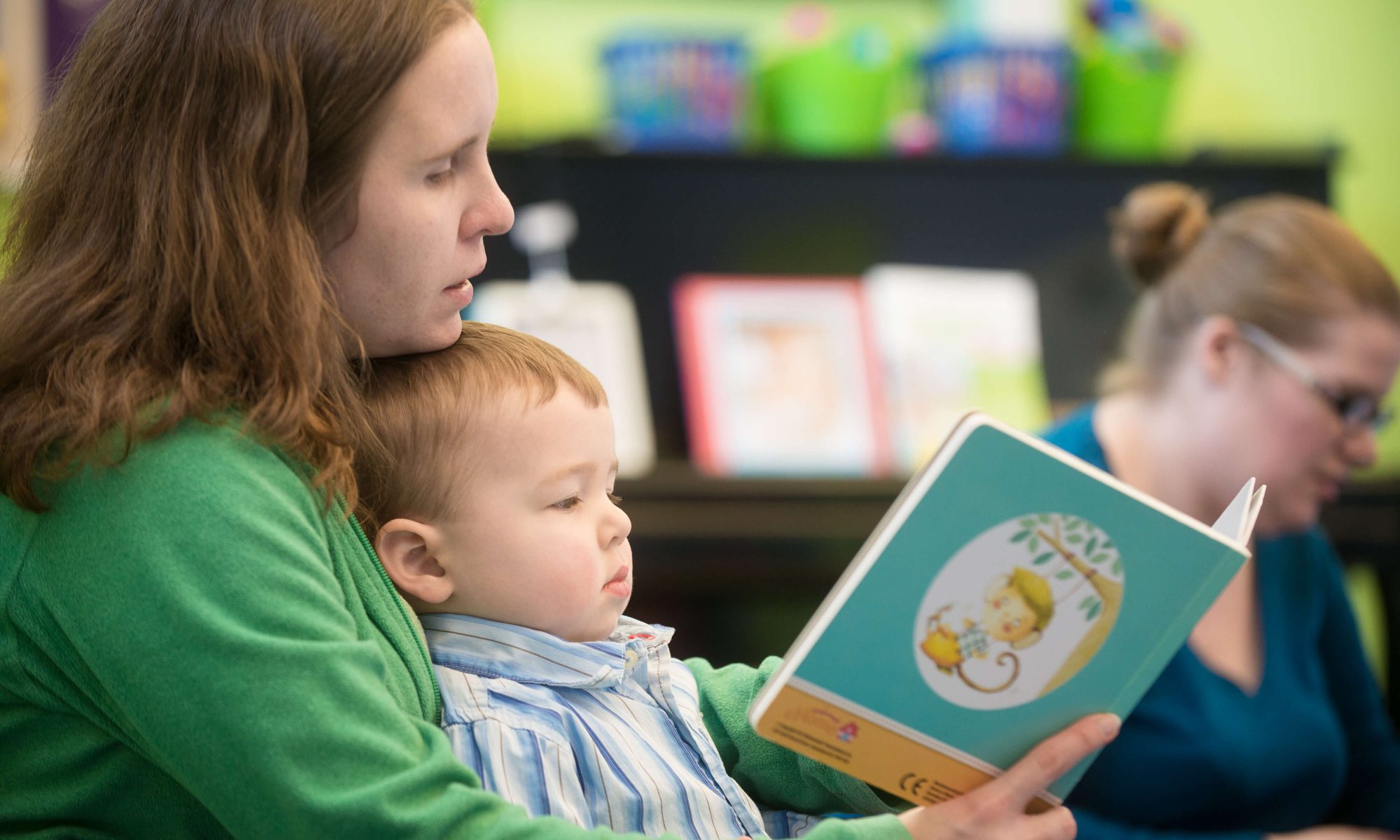
[vc_row][vc_column][vc_column_text]I’m willing to bet that if you read this blog, you take time to read to your kids. I’ll also guess that this time is special, enjoyed by both you and your kids. Perhaps before bedtime, you break out a favorite book, worn from multiple readings, and share a laugh or two. We can use this time a bit more constructively – to engage our children and increase the value of a regular activity.
[/vc_column_text][/vc_column][/vc_row][vc_row][vc_column][vc_column_text]In a recent article over at Psychology Today, neurobiologist Erin Clabough, Ph.D. (author of Neuroparent, a regular PT blog) shared some wonderful insights on how we might make reading time an opportunity to engage our kids. We can use just about any book, even a book that is not particularly well written, to get children thinking about the story, any conflicts that arise in the narrative, and how they might handle the given situation. Here’s how Dr. Clabough suggests expanding on a story about bullying:
So how do we use books differently? Let’s pull out the conflict. Read through the bullying story until the kids start to be mean to each other. And instead of inwardly wincing and reading faster, press pause and close the book. Ask your child what they would do if they were in the character’s position. Brainstorm, and then open the book back up and allow the author to lead you through to the end.
[/vc_column_text][/vc_column][/vc_row][vc_row][vc_column][vc_column_text]This is a wonderful way to engage a child through reading. Let’s use Pete the Cat – I Love my White Shoes as an example.As we mentioned in our last post, this book does a wonderful job relating executive function and self-regulation skills. How, as Dr. Clabough suggests, do we “press pause” and engage?
If you recall, Pete the Cat accidentally stepped in a huge mound of strawberries, effectively ruining his favorite footwear. This moment is depicted in beautiful double page rendering by illustrator, James Dean.
[/vc_column_text][vc_column_text]This is the moment to use Dr. Clabough’s pause technique. Close the book and ask the questions:
What do you think Pete will do?
What do you think you might do if this happened to you?
This is a golden opportunity to build executive function and self-regulation skills. When engaging a child in this way, particularly with preschool kids – keep the side discussion short and sweet. Most young kids possess a relatively abridged attention span. If you push it too far, the benefits might be lost. You know your kids best and will be able to judge how much time you can devote to this technique.[/vc_column_text][/vc_column][/vc_row][vc_row][vc_column][vc_column_text]Once your child answers, you might be able to ask further questions before the reveal. On the next page, Pete shifts gears and celebrates his newly colored red shoes. We see him thinking, “Everything is cool.” Now you can compare Pete’s reaction with your child’s prediction – and even their own predicted reaction.
Pete’s cool and so are you!
[/vc_column_text][/vc_column][/vc_row][vc_row][vc_column][vc_column_text]This technique can be applied to any book. We can find moments that allow us to ask questions, that get our kids thinking about choices facing the story’s characters. In those moments, we can all reflect on the choices and how they might apply to our lives. You don’t have to do this constantly. Pick your book and pick your moments. Those moments that go beyond the story will add value to the experience.[/vc_column_text][/vc_column][/vc_row]
From the American Academy of Pediatrics comes new recommendations for safe infant sleeping environments. Dr. Boyle shares the updated information from the leading professional pediatric organization. AAP was founded in 1930 and has the largest pediatric publishing program in the world.
Safe Sleeping Recommendations
For years, health professionals have recommended that healthy infants sleep on their backs until age one. The tag for this suggestion is “back to sleep for every sleep.” This position reduces instances of SIDS (Sudden Infant Death Syndrome). Doctors aren’t completely sure why this position is best, but current thought points to the possibility of rebreathing expelled air that has a higher concentration of carbon dioxide and less oxygen when sleeping face down. A firm sleeping surface is also recommended. From the AAP Policy Statement:
A firm surface maintains its shape and will not indent or conform to the shape of the infant’s head when the infant is placed on the surface. Soft mattresses, including those made from memory foam, could create a pocket (or indentation) and increase the chance of rebreathing or suffocation if the infant is placed in or rolls over to the prone position.
Pediatricians also recommend that the sleep area be free of soft objects that may impede breathing. This includes bumpers, stuffed toys, quilts, or even blankets. A onesie of the appropriate weight for the ambient temperature is best to keep an infant comfortable and safe. It’s best to wait until after year one to add a favorite stuffed animal or blanket in the sleeping area.
AAP also provides recommendations on pacifier use, which may lower chances of SIDS. Most important might be when to start using a pacifier, specifically if the child is breast feeding:
Pacifiers also may help reduce the risk of SIDS. However, if your baby doesn’t want the pacifier or if it falls out of her mouth, don’t force it. If you are breastfeeding, wait until breastfeeding is well established, usually around three or four weeks of age, before using a pacifier. While sleeping on the back is important, your baby also should spend some time on her stomach when she is awake and being observed. This will help to develop her shoulder muscles and her head control, and avoid the development of flat spots on the back of her head.
The U.S. Consumer Product Safety Commission agrees. Check out these recommendations from the USCPSC.
Sleeping in the Same Room, Not the Same Bed
Here’s a big one: room-sharing can reduce SIDS rates by up to 50%. The first year, but especially the first six months is a crucial window in your child’s development. That first six months is also the period during which SIDS is most common. Anything that can have a positive impact on reducing that possibility is worth considering. With baby nearby in the same room, it is also easier to monitor, comfort, and feed. The AAP tells us:
The infant’s crib, portable crib, play yard, or bassinet should be placed in the parents’ bedroom until the child’s first birthday. Although there is no specific evidence for moving an infant to his or her own room before 1 year of age, the first 6 months are particularly critical, because the rates of SIDS and other sleep-related deaths, particularly those occurring in bed-sharing situations, are highest in the first 6 months. Placing the crib close to the parents’ bed so that the infant is within view and reach can facilitate feeding, comforting, and monitoring of the infant. Room-sharing reduces SIDS risk and removes the possibility of suffocation, strangulation, and entrapment that may occur when the infant is sleeping in the adult bed.
Cons can be Pros
Sleeping in the same room certainly has its benefits. There are also some challenges when sharing a room. I’m going to suggest that these are positives in disguise. Here are a couple challenges that easily be seen as positives in light of the safety benefits of room-sharing.
You’ll hear EVERYTHING. Well…that’s the point, right? If your baby is in distress, you’ll know right away. My wife and I learned very quickly what sounds were important and what sounds were just normal baby sleeping sounds.
You may become a constant baby checker. See #1. With practice and experience, you’ll learn what requires attention and what doesn’t. And when the baby is in the same room, you can do this visually rather than getting up and heading down the hall. Your little one is right there!
The lead author on the AAP Policy Statement on Safe Infant Sleeping Environment is Dr. Rachel Moon. An expert in SIDS, Dr. Moon is a physician with the University of Virginia Heath System. Her research focuses on infant sleeping positions and variables that impact parental choice.
The AAP seeks to provide the best information they can based on quantitative and qualitative research, resulting in well supported recommendations. We share this info with our readers with a sincere desire to provide up-to-date info for consideration that may positively impact the safety of all those beautiful babies out there. For more info on room sharing, check out this NPR article or this Huffington Post article on the AAP recommendations.





 [/vc_column_text][/vc_column][/vc_row][vc_row][vc_column][vc_column_text]

 [/vc_column_text][vc_column_text]




 [/vc_column_text][vc_column_text]This is the moment to use Dr. Clabough’s pause technique. Close the book and ask the questions: