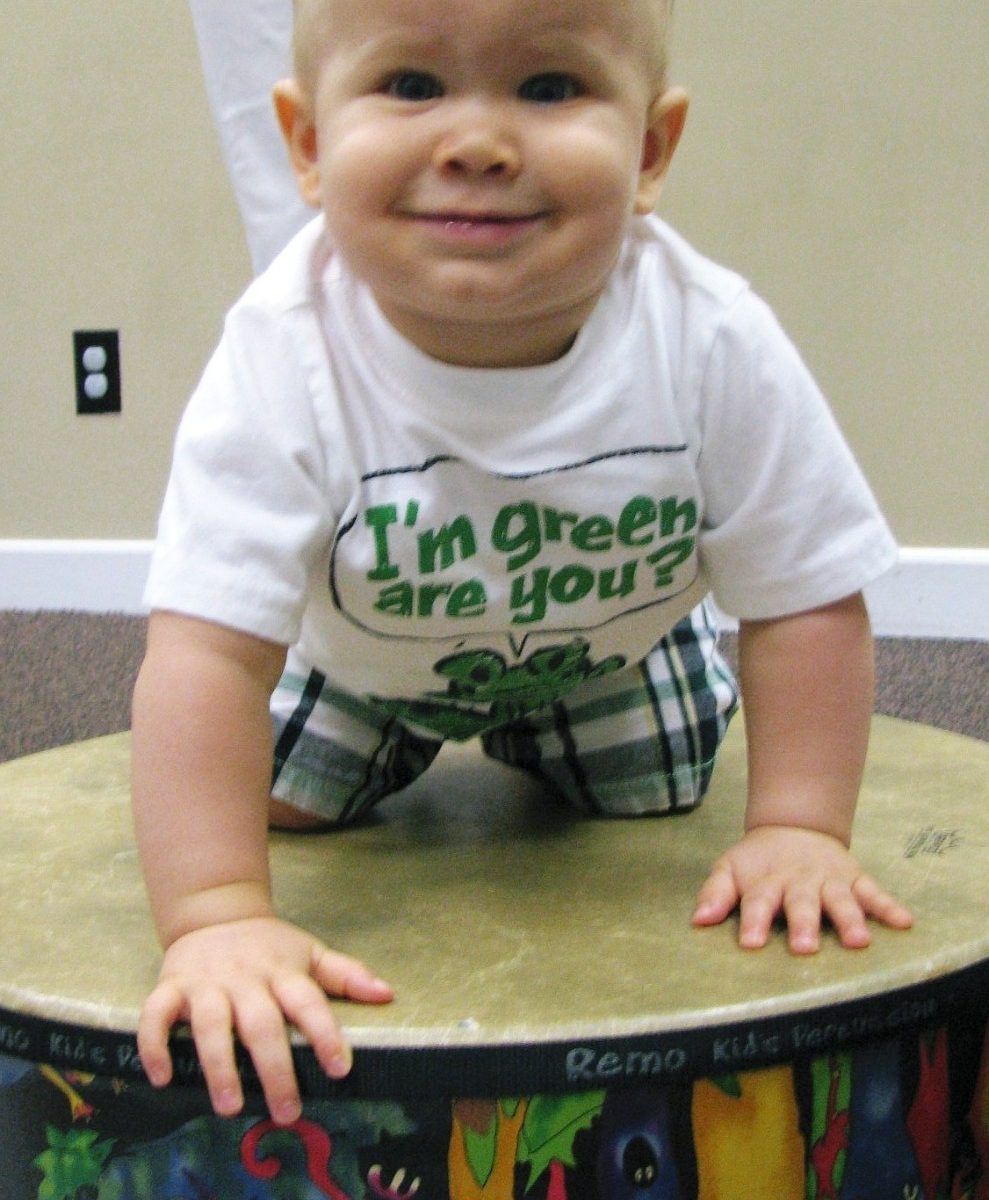
Parenting in the age of smart phones, Ipads, Ebooks, and mobile apps for kids

ipod_KindermusikNearly eight years ago, every employee-owner at Kindermusik International received an iPod with the engraving: “This changes everything. The potential is endless.” Over the years, we’ve experienced many changes in technology, music and early childhood education, parenting, and their connections to each other.

Smart phones, tablet devices, and eReaders—and iPods—did not permeate the everyday routines and rituals of the average family when we handed out those MP3 players. Now, they do in many cases. A new national study by the Center on Media and Human Development at Northwestern University set out to better understand how mobile devices, including mobile apps for kids, influence and change parenting and childhood in families with children newborn to eight years old. The study is based on an extensive survey of a nationally representative sample of more than 2,300 parents of children from birth to eight years old.

6 Key Takeaways from the “Parenting in the Age of Digital Technology” report:

  1. Parents use media and technology as a tool for managing daily life, but books, toys, and other activities are used more often.

  2. Parents still turn to family and friends for parenting advice far more often than to new media sources like websites, blogs, and social networks.

  3. Parents are less likely to turn to media or technology as an educational tool for their children than to other activities. About two-thirds (62 percent) say they are very likely to point their child toward a book when looking for an educational opportunity and 41 percent to a toy or activity, compared to 15 percent who say the same about using the computer, 12 percent for TV, and 10 percent for a mobile device such as a smartphone.

  4. Seventy-one percent of parents who say mobile devices help make parenting easier say it’s because there are lots of fun mobile apps for kids to keep them entertained, while a similar percent (68 percent) say it is because these tools have lots of educational activities for kids.

  5. The media and technology use of parents help shape the media environment for the household, which influences how much time children spend with media.

  6. Children’s use of media is not a top concern among parents with children eight and younger. However, parents do look ahead and worry about what the future holds when it comes to their children’s social skills. In addition, parents see a connection between media use and a lack of physical activity.

You can read the full report here: Parenting in the Age of Digital Technology by the Center on Media and Human Development at Northwestern University

Mobile apps for kids and Kindermusik@Home

“It turns out parents use a range of tools to help them as parents, and these include new mobile screen devices like smartphones and tablets,” explained Alexis Lauricella, one of the study’s co-authors in an interview with the Fred Rogers Center for Early Learning and Children’s Media. But even more regularly, parents are relying on more traditional tools like toys and activities to help them out.”

With Kindermusik@Home and our mobile apps for kids, parents receive the best of both worlds: hands-on educational activities for families to do together both on and away from digital devices. After all, we understand that in reality after the birth of a child, every family can say: “This changes everything. The potential is endless.” As a child’s first teacher, we want to help provide parents with the tools and activities–both inside and outside the classroom–to use music as the vehicle for learning and unlocking that potential.

Contact your local educator to learn more about enrolling in Kindermusik classes and receiving access to Kindermusik@Home.

4 family-friendly songs for English Language Learners

Henry Wadsworth Longfellow wrote, “Music is the universal language of mankind.” At Kindermusik, we like to say it this way: “Every child speaks music.” As a child’s first and best teacher, parents of young ELL students can use the universal language of music to help teach English to their children.

Why use music with ELL students?

Research shows that music can be an effective vehicle for teaching English to children. Finger plays, traditional nursery rhymes, and songs reinforce phonemic awareness, support vocabulary acquisition, and give English Language Learners practice in speaking or singing in a continuous flow.  So, turn up the music (and the English language learning!) with these four family-friendly favorites.
You can download a version (or two!) of these at play.kindermusik.com.

4 family-friendly songs for English Language Learners

  1. Old MacDonald Had a Farm

  2. Eensy Weensy Spider

  3. The Wheels on the Bus

  4. The Mulberry Bush

ABC English & Me - Teaching English to Children through MusicLooking for more ESL activities for kids or an English Language Learners curriculum? ABC English & Me uses music, movement, activities, and puppets to teach early learners English. Plus, Kindermusik@Home provides families with music, stories, and activities to do together at home to strengthen the learning.

Get more information on teaching English to children around the world with Kindermusik and ABC English & Me.


The Top 10 Benefits of Enrolling in Kindermusik

Kindermusik Classes - Enroll Now - For a Child's Brain, Body, Heart & Soul

With so many choices out there for young children, we thought we’d try to help make the decision a little easier by sharing our top 10 benefits of enrolling in Kindermusik.
Kindermusik Classes - Enroll Now - For a ChildBenefit #1: Kindermusik gives your child that unique head start you’ve been looking for – musically, cognitively, and academically.
Benefit#2: Kindermusik inspires a love of music from an early age with songs, instruments, and activities that are just right for each age and every stage.
Benefit #3: Kindermusik enhances every area of your child’s development – we are so much more than just music!
Benefit #4: Kindermusik gives you the time and the tools to enjoy quality time with your child – in class and at home.
Benefit #5: Kindermusik Home Materials let you take the music, fun, and learning with you all week long, wherever you go.
Benefit #6: Kindermusik classes provide a happy social outlet for your child and a valuable support network for you.
Benefit #7: All Kindermusik activities are research-proven and giggle-approved, and all are supported by a developmental and musical focus.
Benefit #8: Kindermusik lays a strong foundation for future success in school and in formal music lessons later on.
Benefit #9: Kindermusik is something you and your child will use every day – at home or on the go!
Benefit #10: Kindermusik offers a comprehensive program with the potential for positively impacting your child from newborn all the way to 7 years of age.

Kindermusik - Where Music and Learning PlayFrom music skills to life skills, it’s all there in Kindermusik. Best of all, your child will

love it, and so will you. Find a class near you and enroll today!
Contributed by Theresa Case, whose Kindermusik program at Piano Central Studios in Greenville, SC, is proudly among the top 1% of Kindermusik programs worldwide.

Musical Variety is the Spice of Life

Infants are born with the ability to process musical sounds and patterns, and there is an optimum window of time between birth and three years when the ear is ripe for aural language development. The musical stimulation we provide as parents is so important for this language development.
Because music is also important in developing a child’s sense of patterning and memory skills, it follows that providing exposure to a wide variety of music should be one of our educational goals as parents. Kindermusik effectively widens the musical world for your child by providing choice selections from many lands and cultures.

Exposure to cultures through music

Children need a balance between the familiar and the new… and Kindermusik provides just that. One of the ways we can help our children appreciate and begin to understand other cultures and people groups is by exposing them to their music. One of the great joys of music is the connection it provides emotionally across cultural lines.
As your child listens and engages in musical experiences provided by Kindermusik and at home, he acquires a musical repertoire that will last a lifetime. He is developing his musical “taste buds”, to “appreciate the finer things”, and to enjoy new musical “tastes and textures”. The wider the array of musical styles, the richer that repertoire will be. Listen to your Kindermusik recordings and you’ll find multi-cultural music in a variety of musical styles. And the best part? It’s just plain fun to listen to! Now if only Kindermusik could accomplish the same thing with your child’s diet, right?!

Are you looking for some musical variety?

Try a free Kindermusik class today!  It’s a musical experience with songs and activities the whole family will love – in class and at home.

Compiled by Theresa Case, whose Kindermusik program at Piano Central Studios in Greenville, SC, is proudly among the top 1% of Kindermusik programs worldwide.

FOL Fridays – Creativity: It's In All of Us

child playing dress up

child playing dress upCreativity isn’t a trait that some people have and others don’t.  It’s a way of using your mind and body as you engage in a task that has no prescribed approach.  In the creative process, your ideas, feelings, skills, and knowledge flow together in innovative ways, allowing you to make or learn something new.”
(“Creative Minds at Play” in Scholastic Parent & Child Dec./Jan. 1998 by Charlotte Doyle, Ph.D.)
Ideas for parents: There are many simple ways to effectively encourage your child’s creativity.  Here are just a few…

  • Ask open-ended questions or silly “What if…” kinds of questions.
  • Use the technique of scaffolding – Observe what your child is doing.  Copy it, then suggest or model a slight change to what they’re doing.  (This is a good technique with instrument play.)
  • Recycle paper towel tubes, plastic containers, and boxes and keep them available for open-ended play inspiration.
  • Keep a box of dress-up clothes in the playroom – from cowboy hats to princess shoes to tutus to a fireman’s vest to scarves.
  • Stock up on simple art supplies like large sheets of paper, washable markers, finger paints, and crayons.  Turn on some music and encourage your child to draw what he hears.
  • Turn off your cell phone, sit down, and play with your child.  Pretend play is a great way to relieve stress and bond with your child!

Try this Creative Activity with your Kids

Here’s a sample activity from Kindermusik@Home that allows your children to show their creative side. Watch these silly animals and let your kids imitate their movements – in their own creative way.
Shared by Theresa Case, whose Kindermusik program at Piano Central Studios in Greenville, SC, is proudly among the top 1% of Kindermusik programs worldwide.

Quiet Time – Good for Your Child's Brain Development

In our busy lives, it’s vital to find time to simply do nothing. This downtime is physically necessary for your child’s brain to process the learning that occurs during structured activities and interactions. Plus, helping your baby learn to relax will serve him well as he encounters the inevitable stresses of the world.

Inspiring relaxation and quiet times together

Your baby: Bring you baby into your lap and simply enjoy the time together. If he’s fussy, rub his belly in a heart-shaped motion, or gently squeeze his arms and legs in a “milking” motion.
Your toddler: Turn down the lights and play soft music. Allow your toddler to simply wander if he’s not ready to sit still. He’ll learn to relax by watching you.
Your preschooler: The urge to stay awake and learn is strong in preschoolers, and they often need help calming down. Play quiet games: Who can whisper the softest? Can you float like a feather? Or a cloud? Listen to soft, soothing music and then lie on the floor and do… blissfully, quietly, absolutely nothing.

Fun with Kindermusik@Home

Enjoy this special quiet-time activity from Kindermusik@Home called “Animals at Home,” compliments of Kindermusik International.  This is just one of many activities that are part of your online Home Materials included with your enrollment in a Kindermusik class.  We think you’ll really love how Kindermusik@Home inspires fun times, together time, happy times, and yes, quiet times through learning games, recipes, crafts, music, activities, downloads, and more.
Shared by Theresa Case, whose Kindermusik program at Piano Central Studios in Greenville, SC, is proudly among the top 1% of Kindermusik programs worldwide.

ESL Activities for Kids Inspired by Kindermusik@Home

Can farm animals and a bear aid oral language skills development, fluency, and vocabulary development in English Language Learners? Yes—especially when featured in Kindermusik@Home!

ESL activities for kids that support:

Oral language skills and fluency

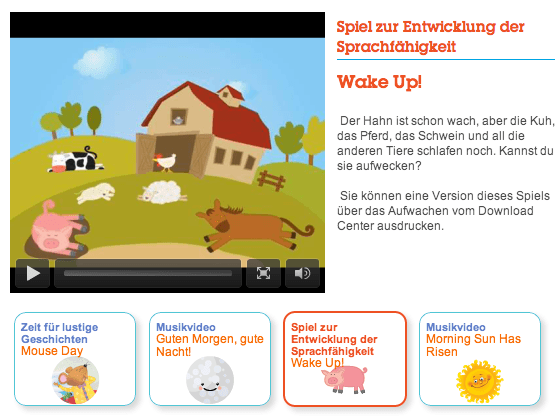
The “Wake Up!” Game featured in the Good Morning, Good Night! unit of ABC English & Me is a fun ESL activity for kids and parents to do together. In the game, children help wake up all of the farm animals by saying, “Wake Up!”

to each animal. Teaching and practicing a short, simple, and useful phrase supports oral language fluency. Children can try this at home by helping to “wake up” favorite stuffed animals, dolls, or even pets.

Vocabulary development and fluency

The “Bear Gets Dressed” Word Game featured in the Sunny Day, Rainy Day unit of ABC English & Me focuses on the "clothes" vocabulary theme. Theme-based games provide structure and repetition to help English Language Learners deepen their understanding of new words. Parents can encourage children to use the English word for each piece of clothing they put on in the morning.

Looking for more ESL activities for kids or an English Language Learners curriculum? ABC English & Me uses music, movement, activities, and puppets to teach early learners English. Plus, Kindermusik@Home connects the classroom learning to the everyday routines and rituals of the whole family.

Get more information on teaching English to children around the world with Kindermusik and ABC English & Me.

Child's Play

Benefits of Play for Children

We call it play, the work children do all the day long. From rolling a ball to tasting it, from building with blocks to knocking them down, a child’s job is to play.

Activities for Kids at Home

Children learn and grow through play. Toys that mimic everyday objects, like kitchen appliances and gardening tools help a child to act out what he sees the grown-ups doing. Toys that specifically encourage creativity, like blocks, scarves, and Legos equip children as they use their ever-amazing minds to construct and pretend. Other simple things that inspire open-ended play include cardboard boxes, dress-up clothes, and Lincoln logs. Read here for more open-ended play ideas.

The most important play-thing

As parents, we want our children to have the best toys to help with their development. After

all, creating a stimulating home environment is the least we can do. But the most important play-thing that your child can have does not come in a box or from a store. Children need loving parents and caregivers to not only provide them with quality tools for their work, but they need adults to stop, sit, and become co-workers at play. This is one of the best educational activities for 2 year olds, 3 year olds, and beyond. It’s easy to delight a child with a new toy and walk away. But a child needs personal interaction with the adults in her life as she learns and grows.

It’s hard to take a break from what we view as important: work-related issues, financial problems, the upkeep of a home. But investing daily in the lives of our children by sitting down with them, allowing them the freedom to choose what to play, following them and labeling their actions, resisting the urge to organize and perfect their play, is the most important work that you can do as a parent.

Inspiring play through music and movement

In our Kindermusik classes you’ll find lots of inspiration for play, both musical and non-musical. Though our classes are music-based, we’ll give you lots of tips and ideas for playing with your child in class and at home – tips and ideas that come from an understanding of the concept of scaffolding, from learning more about your child’s developmental stage, and from the child-centered way that we approach our classes. There’s nothing like a Kindermusik class to give you a reason for playing with your child – once a week in class and throughout the week at home.

The simple act of investing time in play with your child is one of the very best investments you can make. Take a few minutes to play today!

Edited and revised by Theresa Case, whose Kindermusik program at Piano Central Studios in Greenville, SC, is proudly among the top 1% of Kindermusik programs worldwide.

11 summer-friendly literacy activities for parent involvement in education


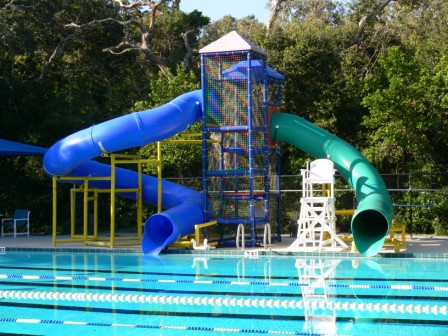
Ask a child to define “summer slide” and responses may include descriptions of the tunnel slides at the local park, the indoor slide at the restaurant down the street, or maybe the water slide at the pool. Ask an early childhood educator, however, and the response would probably include an explanation of what can happen to the early literacy skills of a child who doesn’t read or engage in early literacy activities over the summer.
As a child’s first and best teacher, parent involvement in early childhood education can stop the “summer slide.” We put together 11 tried-and-true early literacy activities for families to do together over the summer (or anytime!) that supports early literacy development.

11 summer-friendly early literacy activities

1. Read with your child 20 minutes each day. Include a mixture of books that you both choose.
2. Practice letter writing in the sandbox, chalk on the sidewalk, or even a cookie sheet with flour (for those rainy days).
3. Act out your child’s favorite story together.
4. Go on a “Letter Sound” scavenger hunt. Help your child find objects around the house or in your neighborhood that start with every letter of the alphabet.
5. Listen to books on CD or download stories from play.kindermusik.com.
11 Summer-friendly early literacy activities6. Add eBooks to your reading list. eBooks can be especially engaging for reluctant readers.
7. Go fishing. Put magnetic letters in a bowl. Tie a string to a paper clip and let your child “fish” for a letter. After catching a letter, your child identifies the letter and the sound it makes.
8. Connect stories to your child’s life. Reading a book with characters that live in the woods? Go on a hike. Is the setting at a lake? Visit a lake, pond, or even a stream.
9. Look at the clouds and make up stories about what you see.
10. Play “I Spy” with letter sounds. “I spy something that starts with the letter B.” (Then make the sound of the letter.)
11. Download the Reading Rainbow app, the number 1 app in Education. Plus, with hundreds of books and videos, new content added every week, and music-themed content by Kindermusik, we know you can find something for every young reader!

Early childhood curriculum increases family involvement in early childhood education

ABC Music & Me is an early childhood curriculum that uses music and movement to teach young children. We also increase parent involvement in early childhood education by providing families each month with the music from class as well as a Family Activity Guide (available in English and Spanish). The guide includes the story from class and related literacy activities that families can do together at home.
For more information on how ABC Music & Me uses music to teach early language and literacy and increase parent involvement, email us at abcinfo@kindermusik.com.

4 Significant Benefits of Music Education

baby playing drum
(article originally published at realmusicproduction.com)

baby playing drumMusic is a very powerful subject – It has been used since the Greek times for healing, communication, relaxation and for enjoyment. Even before birth we are aware of our mother’s heartbeat and during infancy are relaxed by the song of a lullaby. Every day everybody hears some form of musical pitch or rhythm and it can even be found in nature such as how birds communicate through a song-like speech.
Music is such a powerful force, it creates deep emotions in humans – it is played at weddings for happiness, in horror films and during war for fear and at home for happiness and because of this lends itself to relaxation, stress relief and health therapy – and the connection between music, body, and soul has even been shown to improve physical and mental health.
Skills such as working in teams, communication, self-esteem, creative thinking, calmer attitudes, imagination, discipline, study skills and invention are learned and improved through the study of music and by focusing on the fact that young children are mostly highly receptive to pitch and rhythm – one of the main ways a child learns its language – that we can drive education in music to children to help them with benefits ranging success in society and in life.

Benefit One: Success in Society

“We believe the skills the arts teach -creative thinking, problem-solving, risk-taking, teamwork and communications – are precisely the tools the workforce of tomorrow will need. If we don’t encourage students to master these skills through quality arts instruction today, how can we ever expect them to succeed in their highly competitive business careers tomorrow?” -Richard Gurin Chief Executive Officer, Binney and Smith, maker of Crayola crayons
Music is a part of our society and a part of all communities – every human culture uses music to carry forward its ideas and ideals. A study of the arts provides children with an internal glimpse of other cultures and teaches them to be empathetic towards the people of these cultures. This development of compassion and empathy, as opposed to developing greed and a selfish attitude, provides bridges across different cultures that lead to a respect of other races at an early age.
Music has a great value to our economy – it creates jobs, increase’s tax base, boosts tourism and spurs growth in related businesses. Music study develops skills that are necessary in the workplace such as teamwork skills and discipline – during musical performances all members must work together to create the sounds they wish to achieve and for this regular practice is also required. Music favors working and ‘doing’ as opposed to observing, and these are the ethics employers are looking for.
Because of music’s ability to relax, calm and heal, and its optimal platform for emotions, the involvement with music helps to carve brighter attitudes – more optimism towards the future, less TV and non-productive activities, low use of alcohol, tobacco and illicit drugs and desire to develop individual abilities.

Benefit Two: Success in School

Music requires study skills, communication skills, and cognitive skills and as these are learnt and developed they expand the student’s abilities in other academic areas and help them become better students. – Students with coursework/experience in music performance and music appreciation scored higher on the SAT: students in music performance scored 57 points higher on the verbal and 41 points higher on the math, and students in music appreciation scored 63 points higher on verbal and 44 points higher on the math, than did students with no arts participation. – College-Bound Seniors National Report: Profile of SAT Program Test Takers. Princeton, NJ: The College Entrance Examination Board, 2001.
The discipline of music, particularly through participation in ensembles, helps students learn to work effectively in the school environment without resorting to violent or inappropriate behavior – According to statistics compiled by the National Data Resource Center, students who can be classified as “disruptive” (based on factors such as frequent skipping of classes, times in trouble, in-school suspensions, disciplinary reasons given, arrests, and drop-outs) total 12.14 percent of the total school population. In contrast, only 8.08 percent of students involved in music classes meet the same criteria as “disruptive.” – Based on data from the NELS:88 (National Education Longitudinal Study), second follow-up, 1992.

Benefit three: Success in Developing Intelligence

Many studies have been conducted on the effects of music in the brain. Scientists say that children who are exposed to music or those who play an instrument do better in school than those who don’t. Recent research suggests exposure to music may benefit a child’s reading age, IQ and the development of certain parts of the brain.
It can be shown that some measures of a child’s intelligence are increased with music instruction – a connection between music and spatial intelligence (the ability to perceive the world accurately and to form mental pictures of things) helps people to visualize and imagine solutions. This helps people to solve problems creatively and is critical to the sort of thinking necessary for solving mathematical problems and even general daily tasks.
“The musician is constantly adjusting decisions on tempo, tone, style, rhythm, phrasing, and feeling–training the brain to become incredibly good at organizing and conducting numerous activities at once. Dedicated practice of this orchestration can have a great payoff for lifelong attention skills, intelligence, and an ability for self-knowledge and expression.” – Ratey John J., MD. A User’s Guide to the Brain. New York: Pantheon Books, 2001.
Along with mental development music study can support the brains physical development – it has been indicated that musical training physically develops the parts of the brain known to be involved with processing language and reasoning, and can actually wire the brain’s circuits in specific ways. Memory can be improved through the linking of familiar songs with objects just as linking images can – past memories and emotions can be triggered by audio.

Benefit four: Success in Life

“Why arts in education? Why education at all? The purpose of education is not simply to inform but to enrich and enlighten, to provide insights into life as it has been led and as it may be led. No element of the curriculum is better suited to that task than arts education.” -David Kearns Now retired Chairman and Chief Executive Officer of Xerox Corporation
Ideally we want our children to experience “success” throughout life itself. The benefits may be psychological, spiritual and physical and with the challenge of making life meaningful and fulfilled and to reach a higher state of development by participating in music we develop self-expression which in turn leads to self-esteem – ultimately helping us to succeed at these challenges.
“Casals says music fills him with the wonder of life and the ‘incredible marvel’ of being a human. Ives says it expands his mind and challenges him to be a true individual. Bernstein says it is enriching and ennobling. To me, that sounds like a good cause for making music an integral part of every child’s education. Studying music and the arts elevates children’s education, expands students’ horizons, and teaches them to appreciate the wonder of life.” – U.S. Secretary of Education Richard W. Riley, July 1999.
Conclusion
Music is a powerful tool and as seen can dramatically improve and enrich everybody. It makes sense to push music education and to allow young generations to gain these wonderful benefits – higher intelligence through increased creative thinking, problem solving and physically stronger brains, a higher perception of life including better attitudes, strong desires to achieve and fulfill and higher self-esteem, better developed discipline, study skills, concentration, communication and team skills which transfer from education through to career and a better understanding of communities and society.
Edward Droscher is the founder of Real Music Production and works to develop music education systems privately and in schools.