
18 Signs You Are A Musical Family

7 Musical Ways

Are you raising a musical family? If you find yourself relating to this list, then chances are the answer is Yes!

  1. Your toddler thinks you’ve been hiding white egg shakers in the refrigerator and can’t understand why he can’t play with them, too.
  2. Your kids yell at YOU to turn the music down.
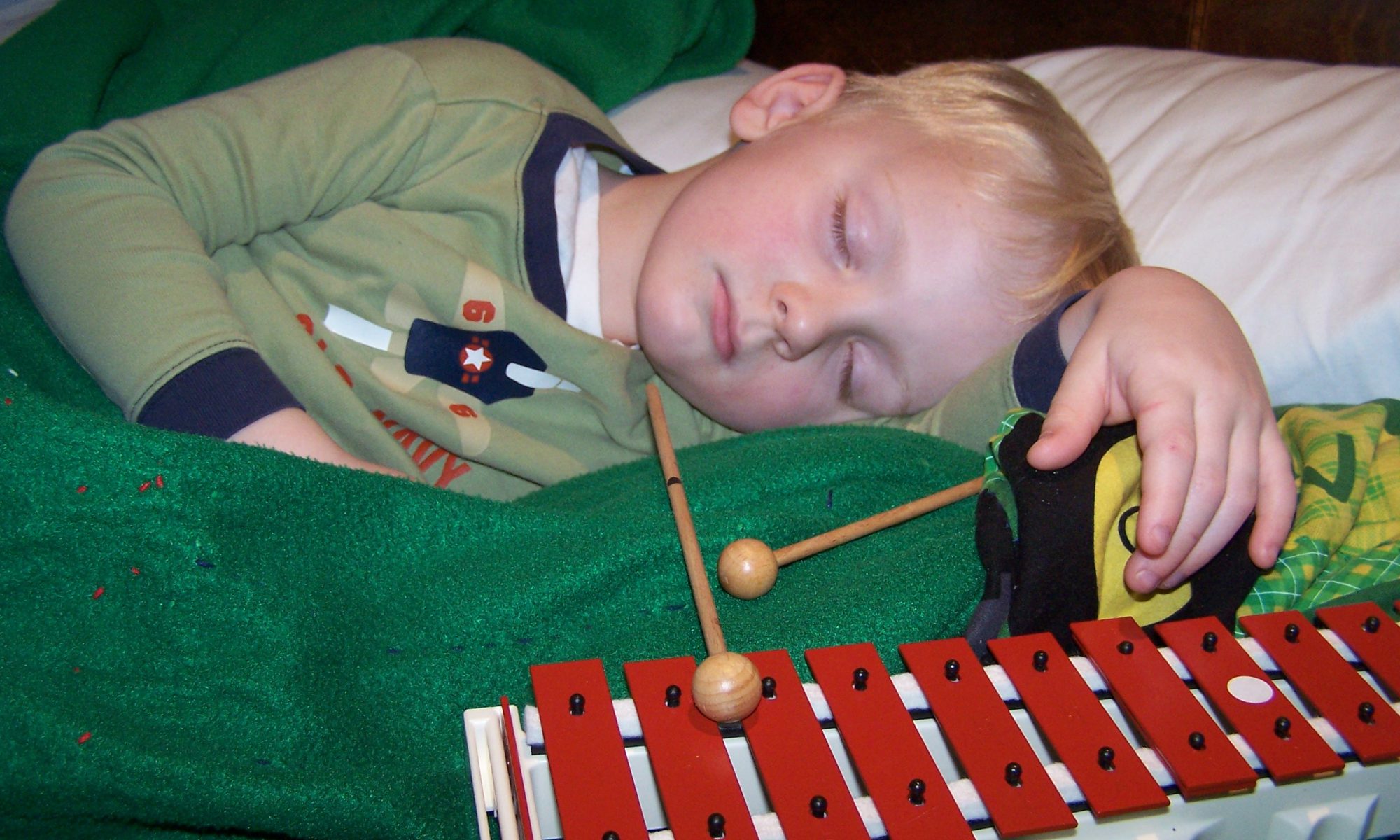
  3. Your child insists on sleeping with his favorite instrument.Brady asleep with glock
  4. Your child sang her first words.
  5. Your child insists you sing “Wishy-washy-wishy-washy-wishy-washy-WEEEE” during every bath.
  6. Pinecone + stick = guiro. Your child can turn anything into an instrument.
  7. Your child knows what an album is.
  8. You find yourself saying things like: “Put down the ukulele and brush your teeth.” And “How many times do I have to tell you to pick up your glockenspiel?”
  9. You’ve recorded at least one video of your family lip-synching a song from Frozen.
  10. You overhear your child talking with a friend about the musical merits of the original Annie movie. (Okay. That’s really just wishful thinking on your part. Today’s kids seem to prefer the revamped Annie and that’s okay, right? Right?!)
  11. You re-enact the dance moves from Dancing with the Stars or So You Think You Can Dance. Yes, even the lifts.
  12. dad 16You thought about how many kids you wanted based on the size of your dream band.
  13. Your family’s musical tastes range from Taylor Swift to the Beatles to Tchaikovsky to Miles Davis to KidzBop.
  14. Your child insists on answering your questions through song.
  15. You have at one point either tried out for American Idol (or your country’s equivalentor the Voice OR secretly imagined your child auditioning one day.
  16. As soon as you found out you were pregnant, you created a list of “Albums Our Child Should Listen to Before They Turn 18.”
  17. You dressed (or dress) your child in any of the following: vintage concert T-Shirts, “I’m With the Band” onesies, “Treble Maker” bibs, or Future (insert instrument of choice) Player pullovers.
  18. You love making music together as a family, like this one:

[youtube]https://www.youtube.com/watch?v=y6pKdY9O-hA[/youtube]

Do you like to hang out with other musical families? Find a local Kindermusik class and meet other parents who place a high value on raising musical kids!

Contributed by Lisa Camino Rowell, a freelance writer in the Atlanta area. She wakes up every morning to the sounds of her husband singing, dresses her kids in vintage concert shirts, and tripped over more than one glockenspiel.
Music Paves the Way to Literacy

Improve Listening Skills with Kindermusik

Improve Listening Skills with KindermusikListening to and identifying sounds is the earliest phonological awareness skill and one of the most important pre-literacy competencies. Without this skill, there will be no progress toward phonics, spelling, or text comprehension.
How Children Become Phonologically Aware

Children become phonologically aware in a specific developmental sequence, beginning with the larger sound units (e.g., tapping each word in a sentence), then focusing on parts of individual words (e.g., blending two words to make a compound word, such as cup-cake), and finally focusing on smaller sound units (/b/-/ig/) within words.

This developmental sequence is universal…meaning that children who are English language learners are able to transfer phonological awareness skills from their first language, even when the two languages are very different! And children who speak other alphabetic languages also progress through the same sound-awareness sequence, from larger to smaller units.

Kindermusik@Home Activity that Supports Phonological Awareness

There is such a thing as training an ear. Parents can extend the application of a listening activity like this one from Kindermusik@Home to pre-literacy by gathering a variety of sound-making materials and playing with different pitches, paces, and lengths of sound. The more experience children gain in learning to identify the subtle nuances between musical timbres and pitches, the more prepared they will be to recognize and identify the distinct sounds within words.

Kindermusik@Home activity: “Which Woodwind?” Give young children’s listening skills a workout with this fun, musical game. Kids will learn to identify a piccolo, flute, oboe, bassoon, and bagpipe.

Kindermusik@Home Listening Game


Learn more about how music supports early literacy development. 

Music Can Navigate Kids’ Emotion Headquarters

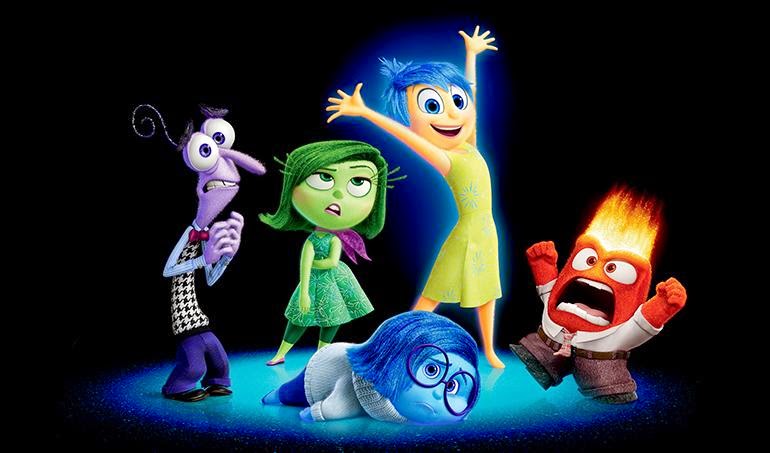
On Friday afternoon, our family watched the new Pixar movie, Inside Out. I must ask: Did any other parent cry over Bing Bong or shed a tear when witnessing Riley’s first memory? I did.

DISNEY

Well, I don’t know about you, but I would love to gain access to my kids’ Emotions’ Headquarters. It would make this parenting thing a whole lot easier if we could more readily identify the emotion our children are trying to express and then in turn help them label that feeling and respond appropriately. Plus, it is always helpful to pick up on the visual clues our children give off right before a meltdown. Unfortunately, their heads don’t actually start steaming, like the character Anger. We do know that Joy often sounds like laughter!

Young Children and Emotional Intelligence

While Inside Out is obviously fictional, emotional intelligence DOES begin developing in infancy, just like the character Riley, and includes recognizing and managing feelings, self-awareness, and responding appropriately towards others. In the movie, we saw this whenever a specific emotion (Joy, Sadness, Fear, Anger, and Disgust) took over the controls in Riley’s Emotions’ Headquarters.

As parents or early childhood teachers (or both!), young children often mirror our actions and reactions and the words we say in our best moments—and sometimes our not-so-best moments. They can even mimic our likes and dislikes. Eventually, as they become more self aware, children begin to express their own preferences for things, like wearing pajamas everywhere (Not a bad idea!) or eating ice cream for breakfast (Not a good idea!).

Mom and son


Music classes can support children’s growing self-awareness, which includes identifying feelings, and a parent’s unique role in it. For example, each week in a Kindermusik class, we include activities that not only encourage children’s personal choices but we actually incorporate them into the lesson. By including each child’s favorite way to say “Hello” at the beginning of class or movement idea during the “Monkey Dance,” we place value on each child’s ideas and preferences. In doing so, children learn to not only recognize and share ideas in a meaningful way but also to celebrate the differences of others. Activities like Kindermusik that incorporate children’s ideas help them learn that their thoughts, feelings, and ideas are valued.

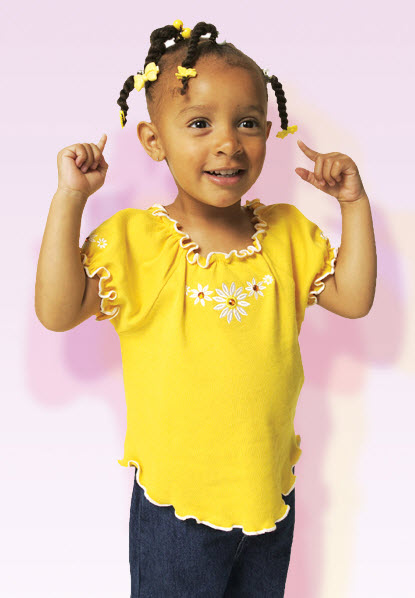
Girl with orange shirt


Quick Tip for Using Music to Help Kids Navigate Their Emotional Headquarters

Listen to music that expresses different emotions, like joy, sadness, anger, or fear. Dance with children based on the emotion and help children label the emotion. Not only does this activity develop children’s vocabulary; it also helps them to identify—and even to manage—their own emotions.

Find a local Kindermusik class.

Contributed by Lisa Camino Rowell, a freelance writer in the Atlanta area. She freely admits that she cried while watching Inside Out. Her 9-year-old Kindermusik graduate responded with equal emotion: embarrassment. 


New Research: Multilingual Environments Linked to Better Communication Skills

It turns out that young children who are exposed to more than one language from an early age not only gain significant advantages cognitively, but also in their ability to communicate.

The most novel finding is that the children do not even have to be bilingual themselves; it is the exposure to more than one language that is the key for building effective social communication skills.

friends around the world - cartoon illustrationAccording to a recent study by researchers at the University of Chicago, it’s the “early socio-linguistic experiences” that have the greatest potential to “… hone children’s skills at taking other people’s perspectives and provide them tools for effective communication.”

The key here is the word “exposure.” Not immersion. Not acquisition. Simply exposure. 

This is particularly exciting to us here at Kindermusik because we’re all about exposure to other languages through music sung in other languages and from other cultures all around the globe. A child who begins Kindermusik classes as an infant will not only have a rich musical foundation by the time he or she finishes the Kindermusik program at around age 7, he or she will also have been repeatedly exposed to a vast variety of music from around the world.

Language is social…  Being exposed to multiple languages gives you a very different social experience, which could help children develop more effective communication skills.

Music, in any language, is truly a beautiful thing to experience. 

Bilingual Early Childhood Music Education Program
Did you know that music supports other areas of a child’s development?  Visit a Kindermusik class to learn more.

Dads of Kindermusik

We love Kindermusik Dads for so many reasons. Sure, we could say we love Kindermusik dads because we know what the research says about the importance of fathers in the development of young children, such as:

  • Preschoolers with actively involved fathers have stronger verbal skills.
  • Even very young children who have experienced high father involvement show an increase in curiosity and problem-solving capacity.

But, instead, we’d rather SHOW you why we love our Kindermusik Dads. Happy Father’s Day to all our Kindermusik Dads and Granddads. Thank you for all that you do to put a smile on your children’s faces and a song in their hearts.

Dad with son 2 FATHER 2 Grandfather IMG_9239 IMG_9303 Kindermusik_87 Kindermusik_137


dad 1 dad 2 dad 3 dad 4 dad 5 dad 6 dad 7 dad 8 dad 9 dad 10 dad 11 dad 12 dad 13 dad 14 dad 15 dad 16

Tell us why you love the Kindermusik Dad in your family! Post on our Facebook page with the tag #WeLoveOurKindermusikDad

4 Ways to Use Music to Stop the “Are We There Yet?” traveling dilemma

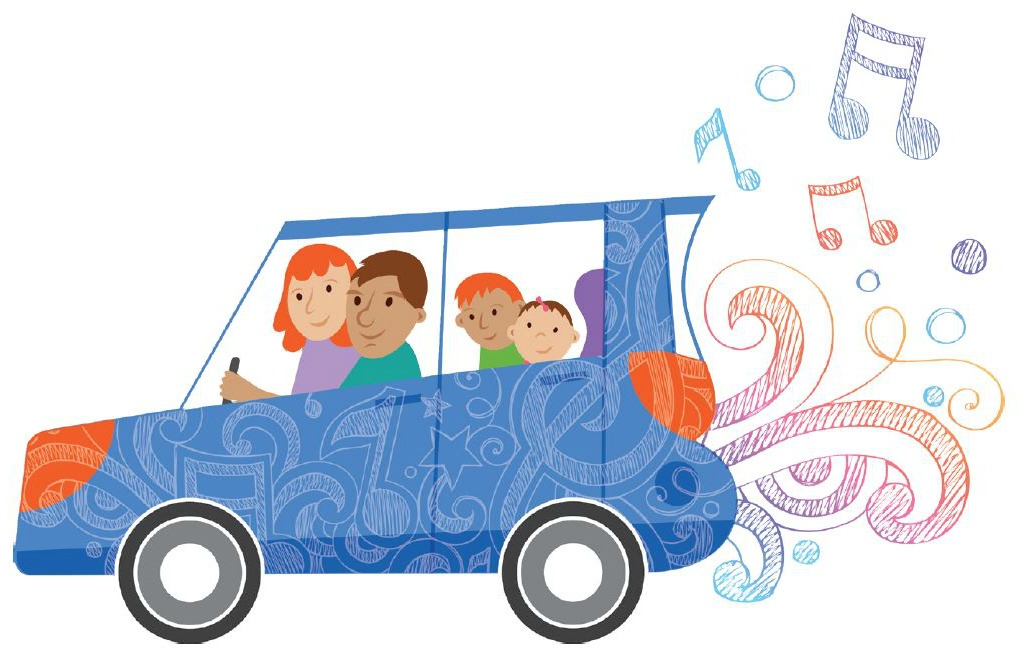
the musical family car Whatever happened to spur-of-the-moment weekend getaways where you grabbed your overnight bag, a couple of outfits, and a great beach read before hitting the highway? Well, kids happened that’s what. Now, spur-of-the-moment getaways are more like “plan-months-ahead-to-locate-clean-diaper-changing-rest-stops-and-book-a-UHaul-to-lug-around-all-that-baby-stuff getaways.” Anyone else feel exhausted just thinking about it? And, let’s not even talk about planning a trip to Disney World with kids. Parents write entire dissertations about that family vacation—and then Pin it on Pinterest for us all to identify where we fail as parents.

Traveling with kids can be an adventure—and I don’t just mean an adventure in patience. Of course, we all know that every good adventure deserves an even better soundtrack! It appears as if the majority of parents agree! In fact, a recent study by Alamo Rent A Car found that more parents (80 percent) use music to keep children happy than iPads (19 percent).

In our years of travel, we learned how to maximize the music in our car in order to minimize the “Are We There Yet?” traveling dilemma. Let’s be honest. Children communicate that question long before they can even speak: by crying, kicking seats, and general get-me-out-of-my-car-seat grumpiness.

Here are four ways to use music in the car that worked for our family and we think they will work for you, too!

1. Make a traveling playlist. Take requests from everyone and include songs your child loves and songs that you do, too. For our family of four, I am responsible for putting the song requests in order on the playlist. I make sure to equally rotate the order. I learned really quickly that our oldest daughter would count to make sure life the song rotation was fair. During the car ride, our kids love trying to guess which song is next and when their favorite ones will play.

Sing-along songs can create memories as your family bursts out in “Let it Go” (again!) or even the theme song from a favorite TV show, such as Jake and the Never Land Pirates! The car can be an ideal place to connect together as a family through music, just like this mom and daughter:

[youtube]https://www.youtube.com/watch?v=aTpmzpKrsz8[/youtube]

2. Listen to books or nursery rhymes on CD. Under the age of 5, our girls loved listening to the rhymes of Dr. Seuss, especially. Now, listening to books on CDs is a traveling tradition. Favorites for 5 to 7 years old include the Ramona, Junie B. Jones, and The Magic Treehouse series. (Yes, technically this is not music, but music builds early literacy skills!)

3. Engage children’s imagination through the soundtrack from a favorite movie. We found—by accident—that our children enjoy listening to the musical arrangements from their favorite movies. They love envisioning what is happening based on what they hear. For example, they can identify the part in the composition when Lightening McQueen and Sally are racing on the back roads or when Cinderella meets the prince in the woods and tells him to stop chasing the deer. This was a fun way to listen to a movie and not watch the movie.

Brantley-AfterKindermusikClass-0326154. Create a “Quiet Time” playlist. For longer road trips, we select this music to encourage our reluctant car sleepers to rest. Occasionally, the music will lull one or both of our children to sleep, however it nearly always relaxes them enough to stop fidgeting. We most often play this list after lunch when many children naturally benefit from a little quiet time. Tip: Make sure you fill your car with gas BEFORE you tap into the power of music. After all, you DO NOT want to stop when your little one finally falls under the spell of music and falls asleep like this sweet little nugget!
Enjoy your next family road trip with this free gift of five free song downloads and more tips on using music in the family car!

Contributed by Lisa Camino Rowell, a freelance writer in the Atlanta area who loves using music to make traveling a whole lot easier!

Every Child Learns Music (If We Lived in a Perfect World)

Graphic_Facebook-Creative_Kindermusik-Teacher-Quote_472x394-472x394Making music, enjoying music, and learning through music all have a profound impact on a child, even before he or she is born.  Mothers have known this instinctively. Teachers have always drawn on the benefits of music.  Research and new technology continues to confirm it over and over again.
That’s why for over 30 years, Kindermusik International has not only been recognized as being the world’s leader in music and movement curricula, but also for the way they support and facilitate the professional development of their educators.

With a mission to “change the world through music, one child and one family at a time,” Kindermusik International is understandably very passionate about doing everything possible to ensure that every child experiences the joy of music.

And if we lived in that perfect world, every child would learn music:

  • From an early age when the window of opportunity and benefit is open widest
  • From parents who are a child’s first and best teacher
  • From teachers who are well-paid, well-trained, and highly respected for their expertise and caring
  • In schools where music is considered as equally as important as math and reading
  • In classrooms where there are plenty of interactive, hands-on learning opportunities
  • In a learning environment that supports the unique learning styles and abilities of each individual child
  • With teachers and parents working closely together, in class and at home, to facilitate the richest and most impactful music learning experience possible

At Kindermusik, we want to continue to help create this perfect world.  Learn more about how we support the professional development of our Kindermusik educators.

Why I Teach Music

Theresa Case

At certain times of the year, I find myself reflecting back on what it is that I love so much about teaching music, and specifically, teaching Kindermusik.  Little did I know the beautiful journey that would unfold for me professionally or the countless precious memories that I would come to treasure when I taught my first class way back in 1994.

Photo by Hal Cook, 2014, taken at Piano Central, Greenville, SC.

So why do I teach Kindermusik?  There are literally thousands of reasons – most of whom are under 3 feet tall, have adorable smiles, and have quite stolen my heart.  But if I had to pick a few highlights, these would be the some of my favorites.

I teach Kindermusik because I…

  • Get to be a part of helping parents linger in the moments of experiencing a music class with their children and making musical memories that knit their hearts together.
  • Get to share in the happy celebration with all the other parents when a little one takes his first wobbly steps or says his first word in class.
  • Get to swallow the lump in my throat when I hear a little voice singing parts of our Hello song with me for the first time.
  • Get to be a proud onlooker as a parent and child discover at least 10 different ways to play the rhythm sticks – together.
  • Get to smile right back with a preschooler who is just beaming with pride over raising his hand to share his best idea for singing a song.
  • Get to hold my breath in delight as a big kid confidently plays the notes of his first composition on the glockenspiel.
  • Get the best hugs from little children whose love for music and their music teacher sweetly overflows after each and every class.
  • Have had a front-row seat to see Kindermusik babies graduate from the Kindermusik program, continue on in music lessons, and grow up to have a life-long love and aptitude for music.
  • Have the deeply fulfilling satisfaction of knowing that the world will be a better place because of the song my Kindermusik kids will have in their hearts forever.

And so, if you don’t mind, I think I’ll keep teaching Kindermusik for another 20 years or so… probably until my knees give out and I no longer have a voice.

Village baby with new logoWhy do YOU teach Kindermusik?  Share your reasons on the Kindermusik International Facebook page and tag #WhyITeachKindermusik.
Contributed by Theresa Case who has loved every minute of teaching Kindermusik and running an award-winning Kindermusik program in Greenville, South Carolina for over 20 years now

Why Should I Spend Money on a Toddler Music Class When We Can Just Listen to Music at Home?

Kindermusik for Schools

“I just don’t see the point of going to music class with my young child. I can sing and dance and listen to music with my little one at home so why should I enroll in a class?”

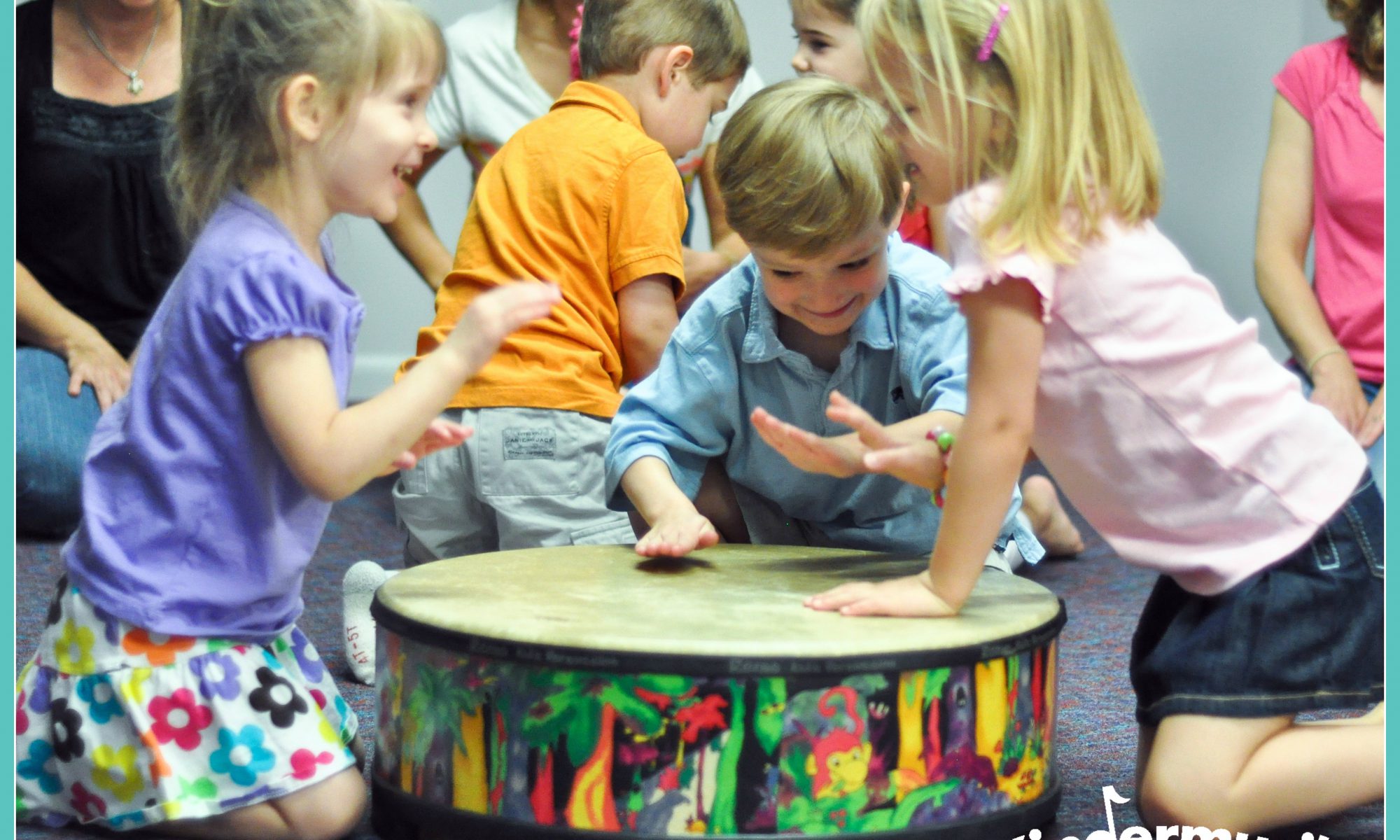
We get that comment a lot and we GET it. Yes. Parents SHOULD “play music class” at synchrony on the drums in Kindermusik classhome. We believe so strongly in the importance of creating a musical home that we provide the music, instruments, or other resources—like our Pinterest Boards!— needed to make it easy for parents to integrate musical learning throughout the day. Those everyday musical moments make memories, imbed a love for learning in young children, and make life fun for the whole family! (Plus, we know how music can help make parenting just a little bit easier, too!)

However, for young children to receive the maximum benefits of participating in learning (and playing!) through music, they need music at home and in a class group environment. Children thrive on both. In fact, research even shows that engagement, consistency, and longevity of participating in music classes directly correlate with the language, literacy, and other cognitive benefits of music.

Learning in a Group Matters

Learning in a group of peers, regardless of age, is different than learning by yourself—or with your child at home. Also, each group is unique from the next because each group is comprised of different individuals contributing to the group.

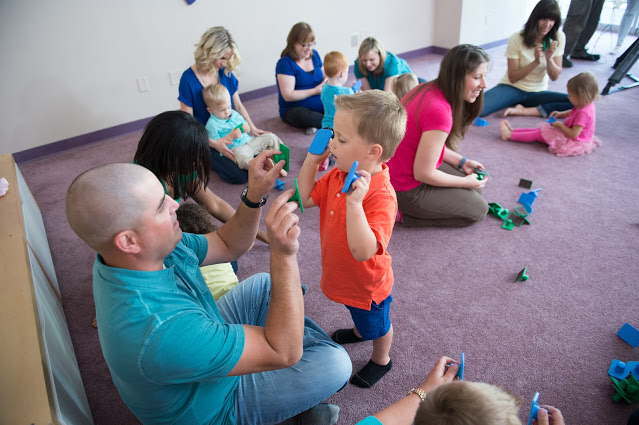
In music classes for young children, like Kindermusik, we intentionally create a learning environment where every participant contributes and takes away something unique based on their own experiences, both inside and outside the classroom. Parents notice this right away when each child can choose to sing, wave, jump, or even blink hello to their friends during the very first song.

Kindermusik 17This experiential environment where the learning process is shared by everyone in the group—including children, parents, and the teacher—is called “social constructivism.” For example, in each class a Kindermusik educator guides the class towards a learning objective, such as steady beat, timbre, or vocal play, with children as active participants in the learning process. Providing children with ample time to reflect, compare, make choices, express opinions and preferences, and engage in problem-solving activities together teaches children not only the lesson focus but it teaches them how to learn.

Children participate, collaborate, and contribute to the process in a group learning environment. So, while the lesson plan is repeated in classrooms around the world, the experience is slightly different based on each individual group. So, yes, “playing music” at home matters, but so does “playing music” in a group. Children need both to fully experience the life-altering benefits of music education.

Oh and by the way: Participating in a music class benefits parents, too. After all, parents make connections with other families in the same season of life. As parents, we can all use a group of friends who understand the unique challenges of potty training, sleeping through the night, healthy snack choices, best parks for a 2-year-old AND a five-year-old, and even which consignment or second-hand sales are worth attending.

YC boy with new logoWant to “play music” in a classroom with other families? Find a local Kindermusik educator! 

Contributed by Lisa Camino Rowell, a freelance writer in the Atlanta, Georgia, area.

Vestibular System: Finding the Right Balance

Destin HarborFor parents with young children, Life Balance is a mythical beast! A hammock gently swaying in a warm ocean breeze as you watch ships leave the harbor or the quiet creaking of a porch swing in the dappled afternoon sunlight can bring thoughts of a little Life Balance in an increasingly complex world. For parents of children under 2, however, the nursery glider moving back and forth at 10:16pm, 2:01am, and 5:34am might be the closest you can get to that beach or front porch. It can work in a pinch though!

All that nursery rocking reinforces balance of a different kind in young children. The rocking, swaying, and movement stimulate children’s vestibular system, the part of the brain that controls balance. In Kindermusik class, we rock to lullabies, bounce on knees, and even make hammocks out of blankets to help young children begin to develop their sense of balance and to reinforce balance and stability in young walkers.

Try this with the swaying activity with the children in your life for a little balance!


This activity supports more than vestibular development. Children also develop vocabulary, language skills, and make emotional connections with a loving caregiver!

Looking for more ideas on how to support the development of your child? Visit a Kindermusik class and get connected with an early childhood expert!

Contributed by Lisa Camino Rowell a freelance writer in the Atlanta area.