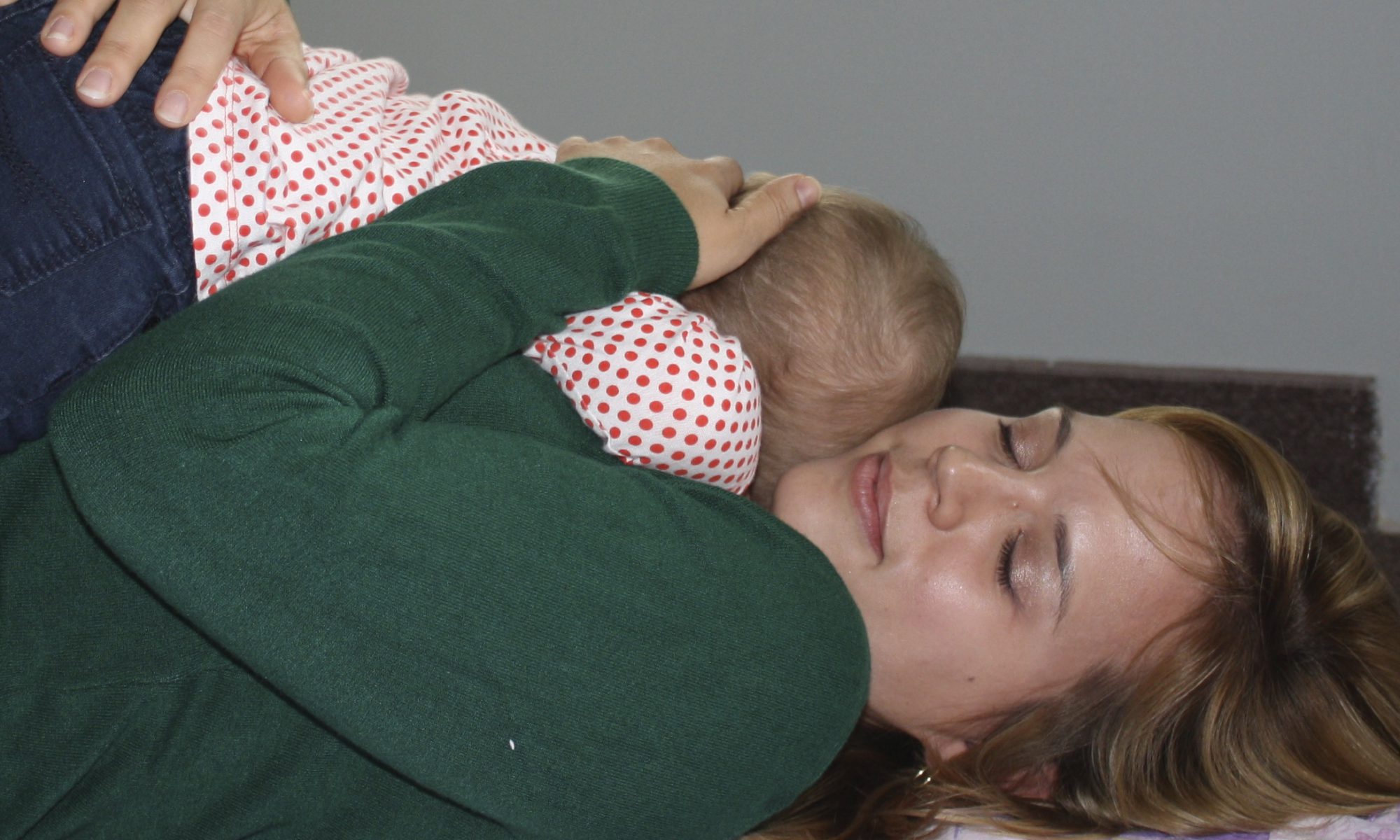
It’s 6 o’clock. Cue the meltdown.

Talk to any parent of a young child, and they’ll tell you. Young children often save their biggest meltdown moments for the early evening time (around dinner). Reasons: They are tired. They’ve spent most of the day trying their best to “behave” at daycare, preschool, or at home. So, by the time the clock strikes 6pm, they are exhausted (although, of course, they would NEVER admit it!)

music helps toddler meltdowns

We have a solution to offer… Use music to head off, smooth over, or maybe even eliminate, those late day meltdowns. 

Here are a few ways you can use music to ease the evening angst and transition more smoothly into the nighttime routine.

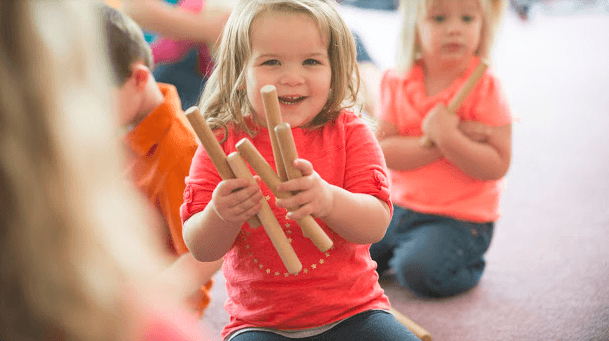
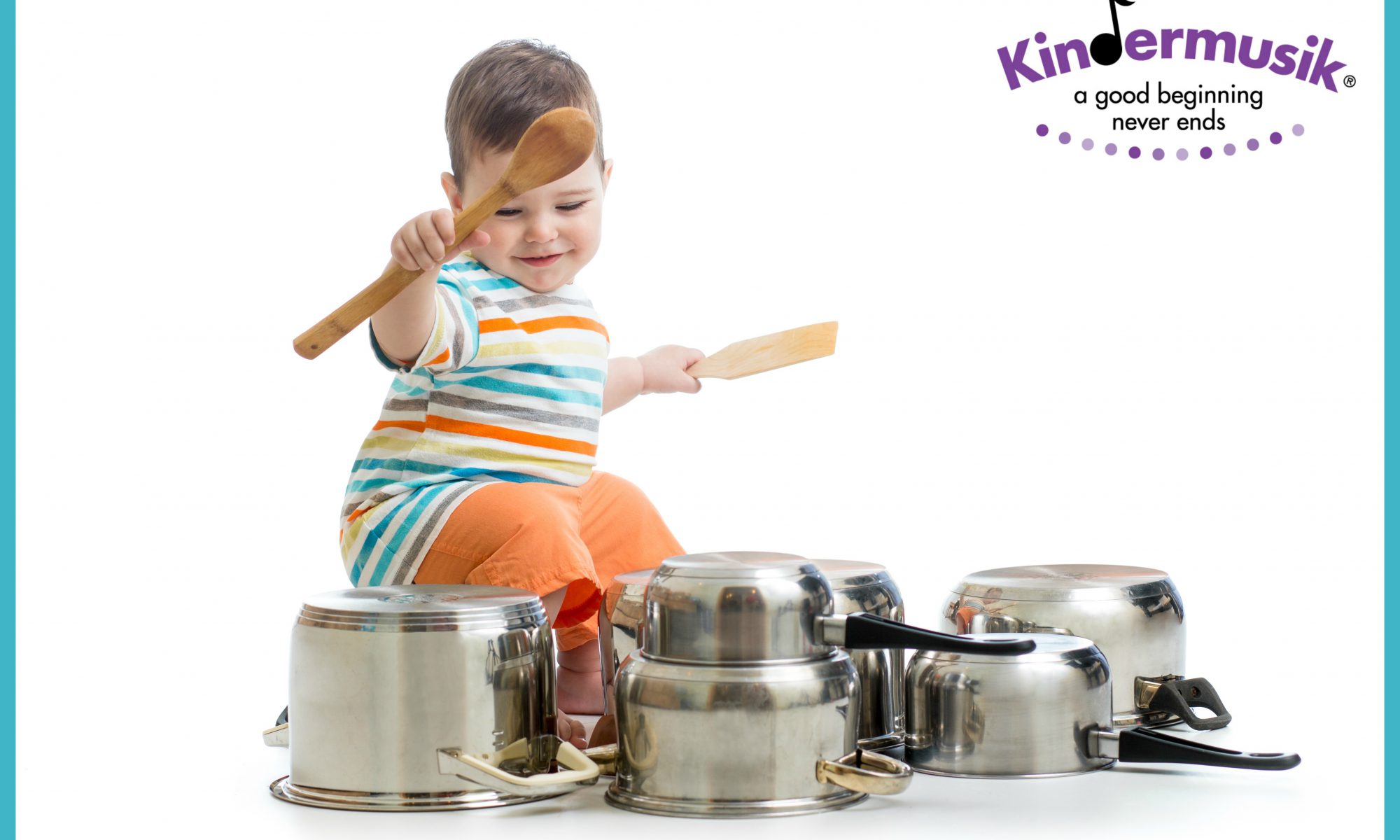
  • Keep them busy (and near you!) while you’re busy. Pots, pans, and wooden spoons can turn into musical exploration and play time. Some lively, happy music can invite lots of musical play and keep a smile on everyone’s faces.
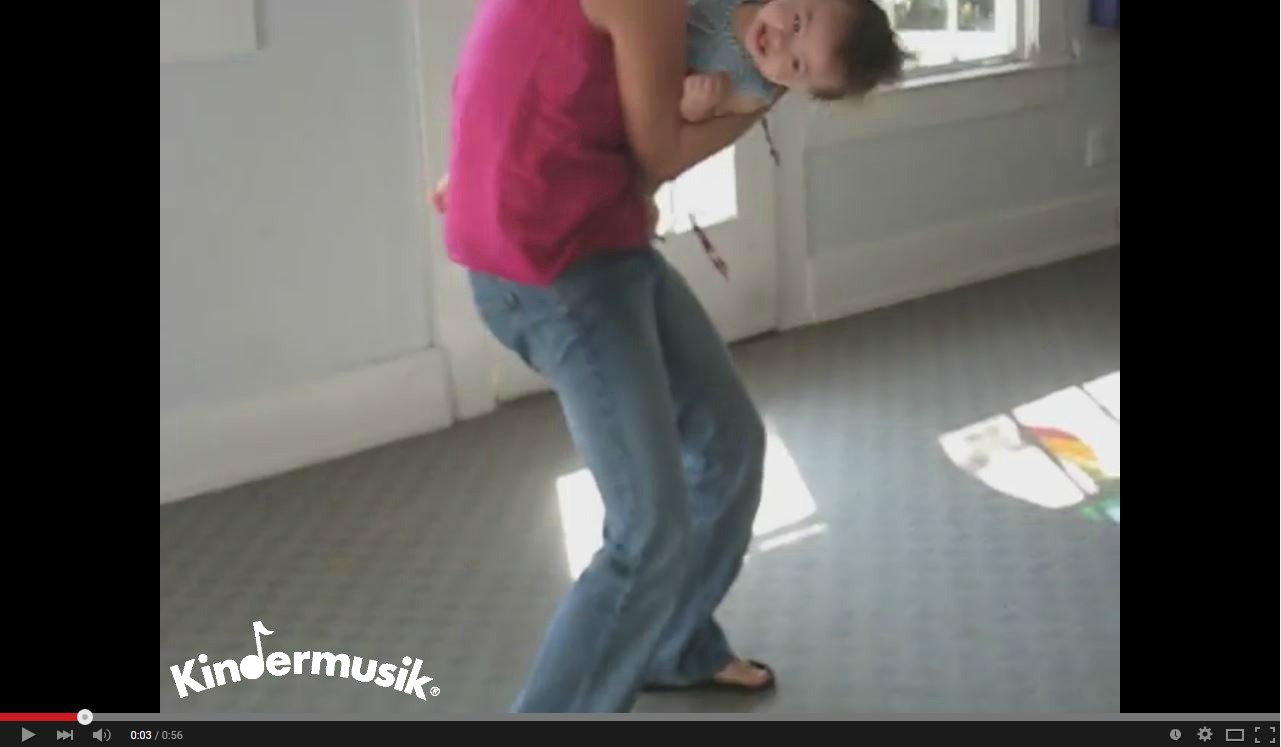
  • While the pasta is boiling, dance around the kitchen with your child. When your child is tired and cranky, what they often crave most is a little extra attention from you. Hold them tight or make intentional eye contact as you dance together.
  • Listen to relaxing music routinely every evening. Consider setting up a playlist of you and your child’s favorite music for calming and unwinding.
  • Use music as a timer. For example, “It will be time to eat after four more songs.”
  • Use the timer on your smart phone to cue your child. Pick a specific song that is only played when your timer goes off. Your child will become accustomed to knowing that when the timer goes off, it’s time to transition to something else such as dinner, bath, reading time, snuggles, or lights out.
  • Make a special habit out of singing (or listening to) a lullaby or two after tucking your child into bed.  The quiet, loving ritual will calm them – and you – and also have them quietly settling down before you know it.

And when a meltdown does happen, take a deep breath and stay calm.  Focus on what you want your child TO DO (take deep breaths, go to a quiet place to “get themselves together”) instead of focusing on what you DON’T want them to do (cry, scream, kick, hit).  And afterwards, take a little time to cuddle up together, rock quietly, and hum a little lullaby.

What’s your favorite Parenting Tip to control the evening chaos at home? Share on our Facebook page.

Two Simple Ideas for Supporting Children’s Vocabulary Development

Up, down, in, out, under… Those relational prepositions mean something very specific to us as adults.  But when toddlers hear a phrase like, “Put the block under the cup,” they’ll probably put the block in the cup, because it’s the obvious thing to do. Toddlers understand that they are supposed to do something with the block and the cup, but just what all those relationships are, and what they’re called, can take years to master. Typically, toddlers tune in to the words they know, like “block” and “cup”—and then make a good guess about what you’ve got in mind with the rest.

Language development, like all other developmental domains, is a process which can be nurtured in surprisingly simple, everyday interactions and activities.  Here are two ideas that will help support children’s vocabulary development:

#1 – Label and move.

There is a powerful connection between movement and learning that has an impact on language development too.  That’s because a child’s developing brain makes a connection based on what they experience.  The more you label the movements, the more your child will understand and be able to make the connection between the word and the movement or object.  Here’s a great example of moving and labeling:

Kindermusik bird song - using movment and labeling to improve vocabulary development
#2 – Practice and play.

Learning should be fun!  And here at Kindermusik, we like to make it hands-on, interactive, and engaging, particularly with our @Home Materials.  Here’s a playful way to help your child with their vocabulary development:

Way Up High - Toddler TalkLooking for more parenting ideas on how to support your child’s development? Visit a Kindermusik class.  Your first one is on us.

Why We Love Carl Orff

We love Carl Orff around here and we think you might too.  Even if you don’t know him by name, you and your child benefit from his legacy in every Kindermusik class. Today we wanted to pause and celebrate him. Carl Orff would have turned 120 this month, and his incredible impact on music and music education remains alive and well.

In the 1900s, Carl Orff helped to create an approach to teaching early childhood music that emphasizes the inclusion of singing, movement, instrument playing, and improvisation with a goal of developing lifelong musicianship. The Orff approach is “child-centered” with the fundamental philosophy that just as children can learn language without formal instruction so can they learn music by experiencing and participating in various musical lessons and activities. This was revolutionary!

Here at Kindermusik, we believe as Orff did that prior to understanding music, children must initially “feel” it through music and movement, improvisation, instrument play, and basic rhythmic speech or chant.

Carl Orff explained it this way: “Music begins inside human beings and so must any instruction, not at the instrument, not with the first finger, nor with the first position, not with this or that chord. The starting point is one’s own stillness. Listening to oneself. The ‘being ready for music.’ Listening to one’s own heartbeat and breathing.”


So, happy birthday, Mr. Orff! Thank you for being an important part of what Kindermusik is today and what Kindermusik means to hundreds of thousands of children around the world. As we honor your life and your legacy, we think you would have been especially proud of how these Kindermusik kids engage in instrument exploration as the music inside them bursts forth!


Find a local Kindermusik class and experience how we integrate Orff’s philosophy into our classes.

Popular Pinterest Pins for Summertime Fun

Looking for a few new ideas for summertime fun to add to your family’s list? Here are a few of the most popular Pinterest Pins from our Kindermusik boards.

Favorite Kindermusik Pinterest Pins for Summertime Fun

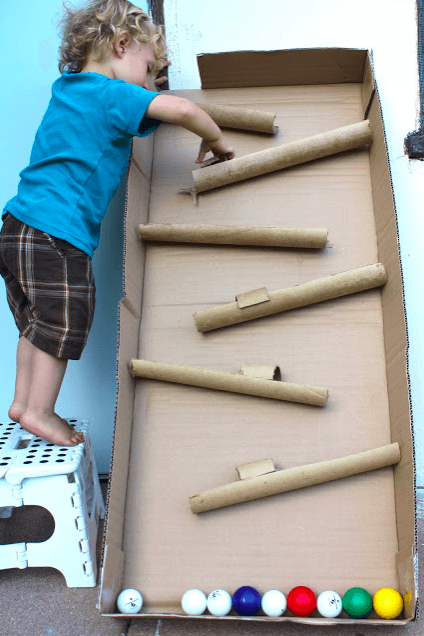
1. Create a Ball Maze. A great activity for shape identification, predictions, cause and effect, and fun!

Ball Maze

2. Hula Hoop sized bubbles. What is this beautiful concoction? Hula Hoops AND bubbles?! Yes, please!

Hula Hoop Bubbles

3. Books for young children to get them moving AND reading.

Books to Get Kids Moving

4. Five favorite Kindermusik ways to get up and move.

little girl dancing

5. Classic Hand-Clapping Games for Kids. No worries. Adults can play, too!

Hand Clapping Games

6. Teach Your Child the Letter P. Turn down the summer heat and learn about penguins and the letter P.

P is for Penguin

No matter how your family chooses to celebrate summer, fall, winter, or spring, we know that you will be creating memories together!

Kindermusik memory quote

Looking for more ideas for your family’s summer (or winter, fall, and spring) list? Be sure to follow us on Pinterest! 

Contributed by Lisa Camino Rowell, a freelance writer (and Pinterest pinner!) from the Atlanta, Georgia, area.

4 Musical Ways to Entertain Young Children While Lying Down

Kindermusik_25You need a break. I don’t even know you, but if you are a parent like me, well, you need a break. Of course, no law states that parents are entitled to one 15-minute break for every four hours on duty much less an hour-long lunch break.

A break from parenting is best taken in small increments throughout the day. It’s the real reason why parents of young children claim they need to go to the bathroom so often. It’s one of the few places where we can create the illusion of solitude (if you block out the sound of the child banging on the bathroom door asking for a snack or the little fingers reaching under the door, of course).

If you find yourself needing a break—outside of the potty—try one of these musical ways to entertain your kids while sitting (or lying down):

4 Musical Ways to Entertain Young Children While Lying Down

  1. Put on some music and invite your child(ren) to create a musical variety show. While they dance, play instruments, or participate in a parade, you head to the couch for the best seat in the house! Your kids will burn off some energy without YOU chasing them all around the house (or playground, cul-de-sac, or grocery store)! For older children, you can buy some extra “down time,” by suggesting they rehearse beforehand so you will be surprised! Here’s a Kindermusik child playing her dulcimer for her mom!
    [youtube]https://www.youtube.com/watch?v=M25eG7ZXqxs[/youtube]
  2. Engage in a Call-and-Response singing game. You hum a tune or clap a rhythm. Your child repeats it back. Increase the complexity of the patterns. Take turns being the leader. You can even invite your child to lightly tap out the beat on your back.
  3. Play freeze dance. Put on some music. While the music plays, your child dances. When the music stops, your child stops dancing. Young children love creating silly poses when the music stops. Plus, you can control the music from any relaxing position! As an extra bonus, children gain practice with inhibitory control or the ability to stop oneself and wait.
  4. Guess the song. Take turns humming a familiar tune while the other person tries to guess the song.

Looking for more ideas on how to use music to make parenting easier? Be sure to follow us on Pinterest!

Contributed by Lisa Camino Rowell a writer from the Atlanta area. She often used uses these musical tips with her own children!

18 Signs You Are A Musical Family

7 Musical Ways

Are you raising a musical family? If you find yourself relating to this list, then chances are the answer is Yes!

  1. Your toddler thinks you’ve been hiding white egg shakers in the refrigerator and can’t understand why he can’t play with them, too.
  2. Your kids yell at YOU to turn the music down.
  3. Your child insists on sleeping with his favorite instrument.Brady asleep with glock
  4. Your child sang her first words.
  5. Your child insists you sing “Wishy-washy-wishy-washy-wishy-washy-WEEEE” during every bath.
  6. Pinecone + stick = guiro. Your child can turn anything into an instrument.
  7. Your child knows what an album is.
  8. You find yourself saying things like: “Put down the ukulele and brush your teeth.” And “How many times do I have to tell you to pick up your glockenspiel?”
  9. You’ve recorded at least one video of your family lip-synching a song from Frozen.
  10. You overhear your child talking with a friend about the musical merits of the original Annie movie. (Okay. That’s really just wishful thinking on your part. Today’s kids seem to prefer the revamped Annie and that’s okay, right? Right?!)
  11. You re-enact the dance moves from Dancing with the Stars or So You Think You Can Dance. Yes, even the lifts.
  12. dad 16You thought about how many kids you wanted based on the size of your dream band.
  13. Your family’s musical tastes range from Taylor Swift to the Beatles to Tchaikovsky to Miles Davis to KidzBop.
  14. Your child insists on answering your questions through song.
  15. You have at one point either tried out for American Idol (or your country’s equivalentor the Voice OR secretly imagined your child auditioning one day.
  16. As soon as you found out you were pregnant, you created a list of “Albums Our Child Should Listen to Before They Turn 18.”
  17. You dressed (or dress) your child in any of the following: vintage concert T-Shirts, “I’m With the Band” onesies, “Treble Maker” bibs, or Future (insert instrument of choice) Player pullovers.
  18. You love making music together as a family, like this one:

[youtube]https://www.youtube.com/watch?v=y6pKdY9O-hA[/youtube]

Do you like to hang out with other musical families? Find a local Kindermusik class and meet other parents who place a high value on raising musical kids!

Contributed by Lisa Camino Rowell, a freelance writer in the Atlanta area. She wakes up every morning to the sounds of her husband singing, dresses her kids in vintage concert shirts, and tripped over more than one glockenspiel.

Music Paves the Way to Literacy

Improve Listening Skills with Kindermusik

Improve Listening Skills with KindermusikListening to and identifying sounds is the earliest phonological awareness skill and one of the most important pre-literacy competencies. Without this skill, there will be no progress toward phonics, spelling, or text comprehension.

How Children Become Phonologically Aware

Children become phonologically aware in a specific developmental sequence, beginning with the larger sound units (e.g., tapping each word in a sentence), then focusing on parts of individual words (e.g., blending two words to make a compound word, such as cup-cake), and finally focusing on smaller sound units (/b/-/ig/) within words.

This developmental sequence is universal…meaning that children who are English language learners are able to transfer phonological awareness skills from their first language, even when the two languages are very different! And children who speak other alphabetic languages also progress through the same sound-awareness sequence, from larger to smaller units.

Kindermusik@Home Activity that Supports Phonological Awareness

There is such a thing as training an ear. Parents can extend the application of a listening activity like this one from Kindermusik@Home to pre-literacy by gathering a variety of sound-making materials and playing with different pitches, paces, and lengths of sound. The more experience children gain in learning to identify the subtle nuances between musical timbres and pitches, the more prepared they will be to recognize and identify the distinct sounds within words.

Kindermusik@Home activity: “Which Woodwind?” Give young children’s listening skills a workout with this fun, musical game. Kids will learn to identify a piccolo, flute, oboe, bassoon, and bagpipe.

Kindermusik@Home Listening Game


Learn more about how music supports early literacy development. 

Music Can Navigate Kids’ Emotion Headquarters

On Friday afternoon, our family watched the new Pixar movie, Inside Out. I must ask: Did any other parent cry over Bing Bong or shed a tear when witnessing Riley’s first memory? I did.

DISNEY

Well, I don’t know about you, but I would love to gain access to my kids’ Emotions’ Headquarters. It would make this parenting thing a whole lot easier if we could more readily identify the emotion our children are trying to express and then in turn help them label that feeling and respond appropriately. Plus, it is always helpful to pick up on the visual clues our children give off right before a meltdown. Unfortunately, their heads don’t actually start steaming, like the character Anger. We do know that Joy often sounds like laughter!

Young Children and Emotional Intelligence

While Inside Out is obviously fictional, emotional intelligence DOES begin developing in infancy, just like the character Riley, and includes recognizing and managing feelings, self-awareness, and responding appropriately towards others. In the movie, we saw this whenever a specific emotion (Joy, Sadness, Fear, Anger, and Disgust) took over the controls in Riley’s Emotions’ Headquarters.

As parents or early childhood teachers (or both!), young children often mirror our actions and reactions and the words we say in our best moments—and sometimes our not-so-best moments. They can even mimic our likes and dislikes. Eventually, as they become more self aware, children begin to express their own preferences for things, like wearing pajamas everywhere (Not a bad idea!) or eating ice cream for breakfast (Not a good idea!).

Mom and son


Music classes can support children’s growing self-awareness, which includes identifying feelings, and a parent’s unique role in it. For example, each week in a Kindermusik class, we include activities that not only encourage children’s personal choices but we actually incorporate them into the lesson. By including each child’s favorite way to say “Hello” at the beginning of class or movement idea during the “Monkey Dance,” we place value on each child’s ideas and preferences. In doing so, children learn to not only recognize and share ideas in a meaningful way but also to celebrate the differences of others. Activities like Kindermusik that incorporate children’s ideas help them learn that their thoughts, feelings, and ideas are valued.

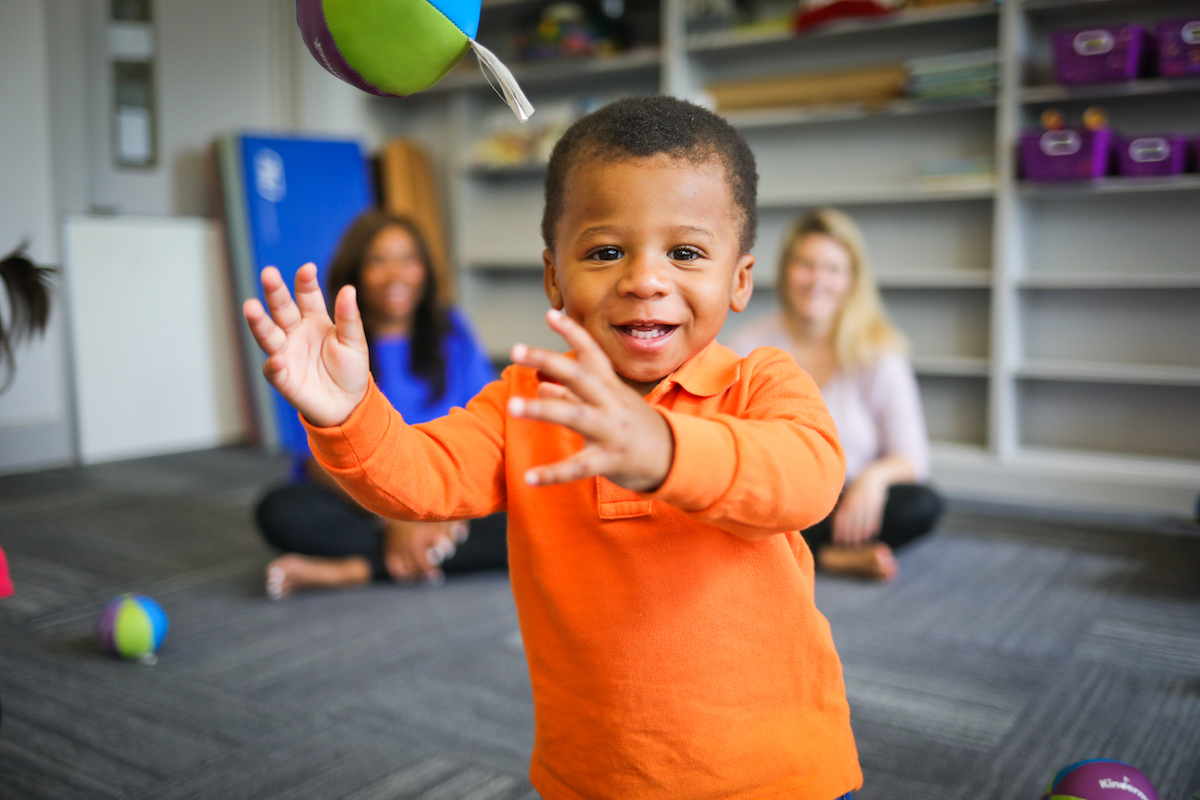
Girl with orange shirt


Quick Tip for Using Music to Help Kids Navigate Their Emotional Headquarters

Listen to music that expresses different emotions, like joy, sadness, anger, or fear. Dance with children based on the emotion and help children label the emotion. Not only does this activity develop children’s vocabulary; it also helps them to identify—and even to manage—their own emotions.

Find a local Kindermusik class.

Contributed by Lisa Camino Rowell, a freelance writer in the Atlanta area. She freely admits that she cried while watching Inside Out. Her 9-year-old Kindermusik graduate responded with equal emotion: embarrassment. 


New Research: Multilingual Environments Linked to Better Communication Skills

It turns out that young children who are exposed to more than one language from an early age not only gain significant advantages cognitively, but also in their ability to communicate.

The most novel finding is that the children do not even have to be bilingual themselves; it is the exposure to more than one language that is the key for building effective social communication skills.

friends around the world - cartoon illustrationAccording to a recent study by researchers at the University of Chicago, it’s the “early socio-linguistic experiences” that have the greatest potential to “… hone children’s skills at taking other people’s perspectives and provide them tools for effective communication.”

The key here is the word “exposure.” Not immersion. Not acquisition. Simply exposure. 

This is particularly exciting to us here at Kindermusik because we’re all about exposure to other languages through music sung in other languages and from other cultures all around the globe. A child who begins Kindermusik classes as an infant will not only have a rich musical foundation by the time he or she finishes the Kindermusik program at around age 7, he or she will also have been repeatedly exposed to a vast variety of music from around the world.

Language is social…  Being exposed to multiple languages gives you a very different social experience, which could help children develop more effective communication skills.

Music, in any language, is truly a beautiful thing to experience. 

Bilingual Early Childhood Music Education Program
Did you know that music supports other areas of a child’s development?  Visit a Kindermusik class to learn more.

Dads of Kindermusik

We love Kindermusik Dads for so many reasons. Sure, we could say we love Kindermusik dads because we know what the research says about the importance of fathers in the development of young children, such as:

  • Preschoolers with actively involved fathers have stronger verbal skills.
  • Even very young children who have experienced high father involvement show an increase in curiosity and problem-solving capacity.

But, instead, we’d rather SHOW you why we love our Kindermusik Dads. Happy Father’s Day to all our Kindermusik Dads and Granddads. Thank you for all that you do to put a smile on your children’s faces and a song in their hearts.

Dad with son 2 FATHER 2 Grandfather IMG_9239 IMG_9303 Kindermusik_87 Kindermusik_137


dad 1 dad 2 dad 3 dad 4 dad 5 dad 6 dad 7 dad 8 dad 9 dad 10 dad 11 dad 12 dad 13 dad 14 dad 15 dad 16

Tell us why you love the Kindermusik Dad in your family! Post on our Facebook page with the tag #WeLoveOurKindermusikDad