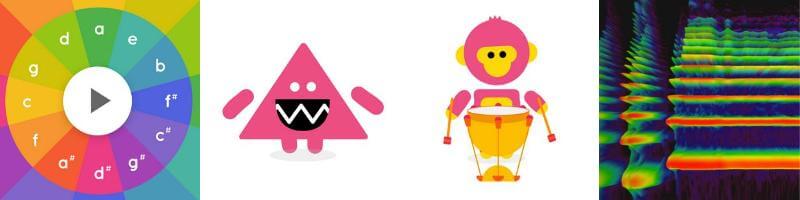

Online Toys for Music Joys: Google’s Chrome Music Lab

[vc_row][vc_column][vc_column_text]Greetings music fans! In celebration of the National Association for the Education of Young Children’s Week of the Young Child™, I thought we’d check out Google’s Chrome Music Lab. This is a collection of extremely fun, visually and aurally appealing applets that the geniuses over at Google created. These little apps are seriously entertaining and have the potential to bring some smiles to the faces of not just little ones, but adults as well. Let’s explore some of the musical experiments…[/vc_column_text][vc_custom_heading text=”The Chrome Music Lab” font_container=”tag:h2|text_align:left|color:%23dd3333″ link=”url:https%3A%2F%2Fmusiclab.chromeexperiments.com%2FExperiments||target:%20_blank”][/vc_column][/vc_row][vc_row][vc_column][vc_column_text]Chrome Music Banner[/vc_column_text][vc_column_text]What is it? For Music in Our Schools Month, the coders at Google got together with some musicians and created these interactive experiences using readily available features of the web. Accessible from any internet connected device, the current twelve musical experiments explore different aspects of music, from rhythm to melody and pitch to harmony. If accessing through a smart phone or tablet with a touch screen, you can physically interact with sound. It’s pretty addictive and loads of fun.[/vc_column_text][vc_separator color=”juicy_pink”][vc_custom_heading text=”The Rhythm Animals” font_container=”tag:h3|text_align:left|color:%23dd3333″][vc_column_text]

Chrome Music Lab - rhythm Chrome Music Lab - rhythm Chrome Music Lab - rhythm

[/vc_column_text][vc_column_text]The Rhythm Animals are a collection of beastly percussionists who play their instruments following your instructions. By selecting cells in the grid below the pair of adorable, furry musicians, you can create a loop of drumming delights.[/vc_column_text][vc_video link=”https://www.youtube.com/watch?v=FzLQCoZUlEQ” el_class=”560 x 315″][vc_custom_heading text=”Kandinsky” font_container=”tag:h2|text_align:left|color:%23dd3333″][vc_column_text]I think Kandinsky is my favorite. Named for artist Wassily Kandinsky, who often compared painting to making music, this little experiment does just that. As you draw, your squiggles and shapes come to life as sounds. Specific shapes make specific sounds – and where you place your drawing impacts the sound it makes. Doodles up high on the page produce higher pitches. Circles turn into cute little faces. Triangles become percussion instruments. You can also change your sound palette by clicking/tapping the bicolored circle next to the play button.

[/vc_column_text][vc_single_image image=”8681″ img_size=”full” alignment=”center” onclick=”custom_link” img_link_target=”_blank” link=”https://musiclab.chromeexperiments.com/kandinsky”][/vc_column][/vc_row][vc_row][vc_column][vc_custom_heading text=”Spectrogram” font_container=”tag:h2|text_align:left|color:%23dd3333″][vc_column_text]The Spectrogram is probably the coolest  and most science-y (a word I just made up. You’re welcome, Webster) toy. Remember my post on overtone singing? Well, the Spectrogram allows you to see the overtones! If you use the applet from an Android device or your computer, it can access your microphone and show you a visual representation of your voice – or any sound. It’s almost mystical. Here is a video of me paying a bit with the Spectrogram applet.[/vc_column_text][vc_video link=”https://youtu.be/4QRmLBEkARg”][vc_separator color=”juicy_pink”][vc_column_text]There are several other experiments you and your kids can play with. Try the Melody Maker or the applet that will play Chords for you. The Music Lab makes some complex aspects of music surprisingly accessible. Being able to see and hear and touch the music is incredibly powerful. The Chrome Music Lab can be found here and will work across devices (computers, smart phones, tablets) but the most fun and functionality to be had certainly is with Android touch-enabled devices. But don’t let that stop you if you are an i-device user. When you aren’t making live music with your child at a Kindermusik class and need that interactive fix, check out the Music Lab. Happy music making![/vc_column_text][/vc_column][/vc_row]

Using Music to Address Challenging Behaviors

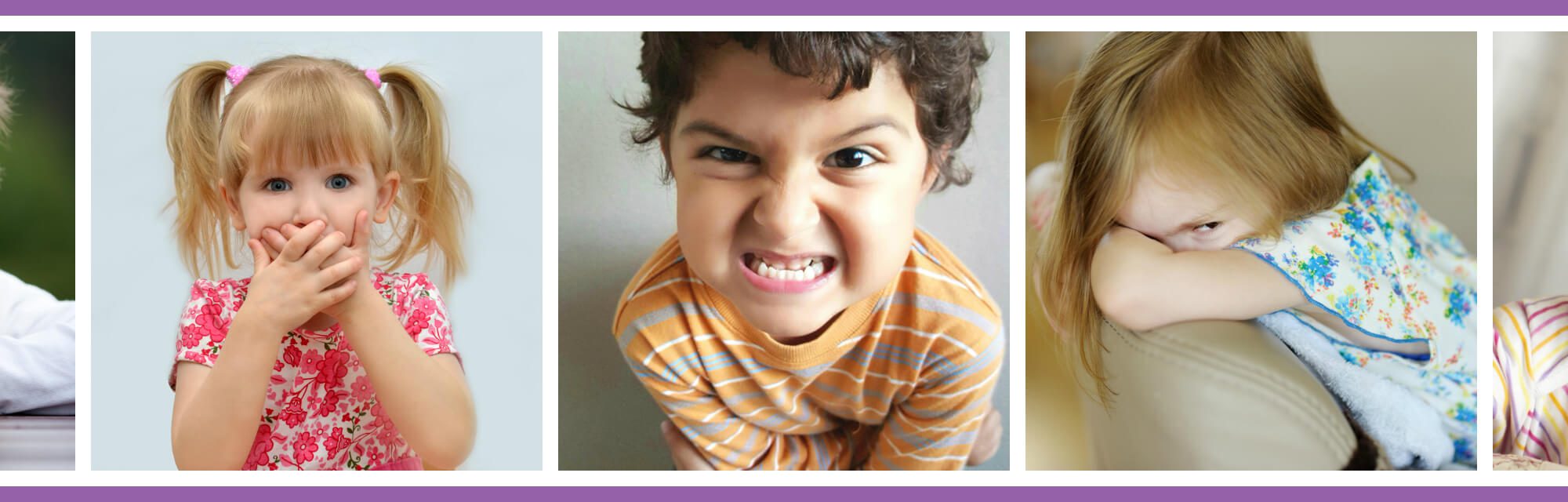
Whether in the classroom or at home, if there are children, there are likely to be challenging behaviors.  That’s because kids will be kids, and we all have our moments.  While there are many appropriate ways to address challenging behaviors depending the child, the situation, and the need of the moment, we’d like to suggest a few creative ways to use music to respond to challenging behaviors.

  • A simple little children’s song, even one adapted for the moment, can ease the transition times in a child’s day.
  • Songs, rhymes, and rhythmic activities can become a part of a reassuring and predictable daily routine that will nearly eliminate feelings of frustration or uncertainty.
  • A song or rhyme like Dr. Becky Bailey’s “I Love You Rituals” can give a child an appropriate way to express himself.
  • Playing recorded music can set the tone for the day in the classroom, bring down the energy level, or even help ease a child into nap time or bed time.
  • Quieter songs and recordings will do wonders to calm and quiet busy little minds and bodies.
  • If a child is singing, he/she can’t be talking!
  • Singing, moving, or listening to music can help re-direct a child’s attention.
  • Moving to music not only wakes up the brain and primes it for learning, but moving to music also eliminates the wiggles.

So try it out.  See for yourself how a song in your head and a song in their hearts will work wonders, especially when it comes to addressing challenging behaviors!


Shared by Theresa Case whose award-winning Kindermusik program is located at Piano Central Studios in the beautiful upstate of South Carolina.


Music and Memory – Helping Stroke and Dementia Patients

Brain

Sometimes I apologize in advance to my Kindermusik families for how many times we repeat a song in class.  But then I cheerily remind them that experts tell us that repetition strengthens the brain – especially musical repetition!

Kindermusik songs that stay in your head may be a little annoying to parents, even though the kids love it!  But it turns out that having songs in our heads – and hearts – may actually help us later on if we eventually suffer from a stroke or develop a degenerative disease such as Alzheimer’s or dementia.  Just do a search – the videos out there will bring tears as you watch how an almost unresponsive elderly person suddenly lights up when hearing music or being sung to.

Scientists still cannot tell us how the same brain that loses its ability to retain memory will still retain and respond to lyrics and music, but as the author of this article describes it, it’s as if the music “tickles the brain circuits,” the same neural circuits that “…may help restore speech and cognition circuits” lost by Alzheimer and dementia patients or stroke victims.  But best of all, listening and singing old songs makes these patients happy and for some, responsive on some level once again.  It’s as if music brings them to life again, and it’s only music that has had that effect in study after study.

This is the power of music – the same power that makes such a difference in the mind and heart of the very young.  And one of the reasons that I believe so strongly in the power of Kindermusik to change lives – for now and for life.

Contributed by Theresa Case whose award-winning Kindermusik program at Piano Central Studios in upstate South Carolina has been building musical memories with children and families for over 20 years now.

How Music Skyrockets Infant Social-Emotional Growth

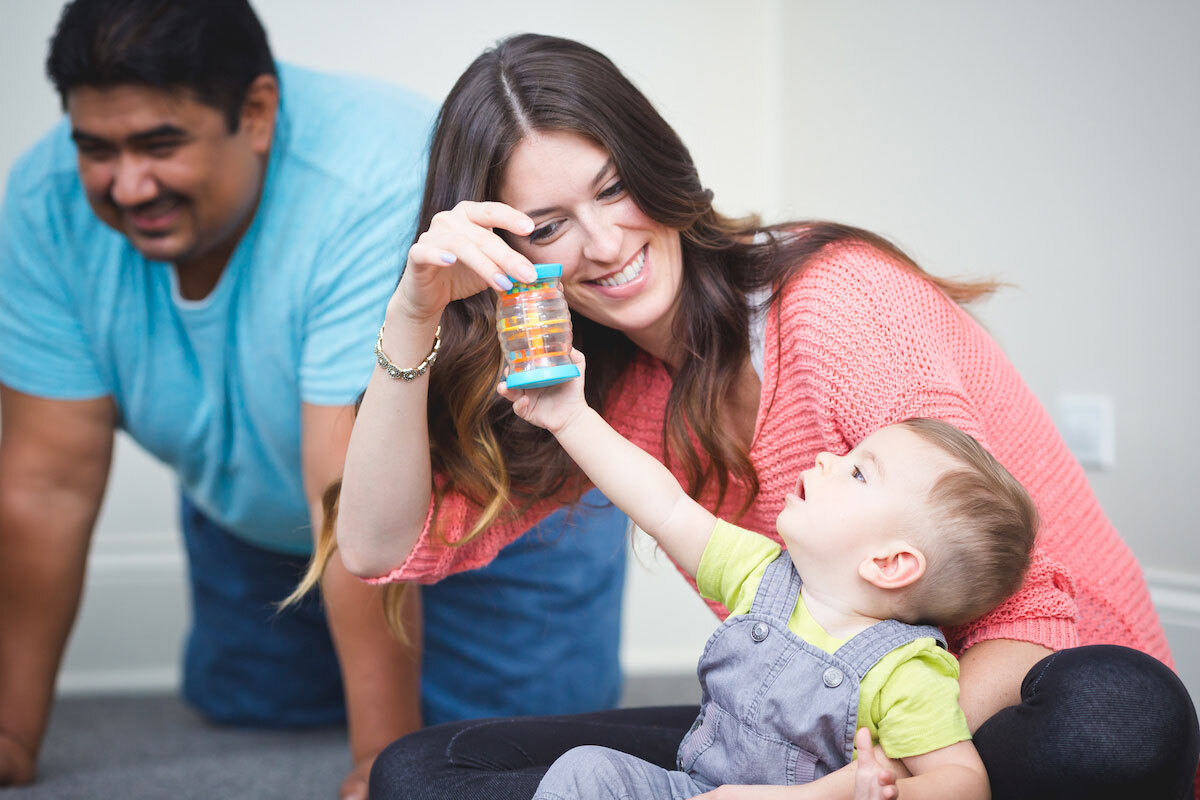
baby boy reaches for shaker during Kindermusik class—interactive musical play boosts infant social-emotional health.

Infant social-emotional health…is that a new thing? Though some medical providers, first-year educators, and early childhood researchers have always valued things like eye contact, skin-to-skin, etc., that holistic terminology that includes ALL of the things supporting a baby’s social-emotional needs is relatively new for families.

It may sound like it’s a no-brainer—snuggle your baby, sing to your baby, and so on. But what’s not common knowledge are the many key behavioral competencies social-emotional development feeds.

The ability for babies to (eventually) self-soothe, for toddlers to not bite their friends, for older children to play well with others, or listen when the teacher’s talking, or not run into traffic…it’s all connected to positive social-emotional growth.

And the first stop is baby’s connection with parents or primary caregivers.

That’s a lot of pressure for grownups, but infusing music into daily interactions can lighten the load. There’s a deep-seated and innate response to music, even in very young children, and when you share that joy with another human, it’s incredibly powerful.

Continue reading “How Music Skyrockets Infant Social-Emotional Growth”

Educator Spotlight: Amy Pennington at InJoy Music

Educator Spotlight

[vc_row][vc_column][vc_column_text]Educator Spotlight[/vc_column_text][vc_column_text]Amy (Ludwig) Pennington is the owner of InJoy Music, which offers Kindermusik® and piano classes in Kansas City, Kansas. InJoy Music has been an award-winning Kindermusik Maestro studio since 2004. Amy has taught Kindermusik for 15 years now, and has quite an impressive resume with Kindermusik International and a wonderful history of service in the Kindermusik community as well, serving as a PKE (Partnership for Kindermusik Educators representative and PKE Board member, training new educators as a Business Mentor & Coach for KI, and piloting the Sing & Play curriculum. To her Kindermusik families, she’s lovingly known as “Miss Amy.” When she’s not teaching Kindermusik or Simply Music® piano classes, you might find Amy knitting, cheering on the Kansas City Royals, or working on reaching her and her husband’s goal of visiting all thirty Major League Baseball parks![/vc_column_text][vc_separator][vc_column_text]TC: What’s your favorite part of teaching Kindermusik?
AP: Creating a community within each of my classes.

TC: If you had to name just one secret to success in the Kindermusik classroom, what would it be?
AP: Know everyone’s names – not only the children’s and their parents’, but also their siblings’, grandparents’, and even pets’ names! Everyone is important. When I welcome family members into my classroom by name, they instantly feel special.

TC: What are one or two of your favorite Kindermusik songs to sing?
AP: “May There Always Be Sunshine” and “The Duke of York

TC: How about favorite Kindermusik dances?
AP: I love “Mama Paquita” and “Tants, Tants, Yidelekh!”.

TC: Anyone who knows you knows that you have a great sense of humor. So I can’t resist asking… What’s one of the funniest things that’s ever happened to you as a Kindermusik teacher?
AP: My Wiggle & Grow kids LOVE to “swing hello.” One time, when a little boy’s mom was swinging him very high, his pants flew off across the room!

TC: Tell us about a teaching experience or favorite Kindermusik family that has significantly impacted you as a Kindermusik educator.
AP: One of my favorite experiences was piloting the Sing & Play curriculum. I felt a great sense of responsibility to educators everywhere and I felt so blessed to be chosen to help shape the curriculum into what goes into classrooms all over the world every week.

[/vc_column_text][vc_column_text]

Amy Ludwig
Miss Amy doing what she loves – changing lives!

[/vc_column_text][vc_column_text]

The Business of Kindermusik


TC
: You’re a studio business owner. What do you feel has made your studio business a success?
AP: I have a very strong team of educators that works with me. We are close-knit and have built a wonderful community, both inside and outside the classroom. Choosing carefully when hiring educators has made an immensely positive impact on the success of InJoy Music.

TC: What are some of the goals you have for your business?
AP: We want to constantly evolve to meet the needs of Today’s Mom, while always staying true to our studio’s core values: Connect, Explore, Love, Create, and Play.

TC: What’s something new and exciting that’s happening with your business?
AP: We are excited to host a spirit week this summer in conjunction with our summer service project – wear a pair of pajamas to class when you bring a pair of new pajamas for a family in need!

TC: If you could share one tip with a new Kindermusik educator, what would it be?
AP: Know your lesson plans inside and out, so when you start teaching class, you can work on connecting with families instead of being boxed into what you “should” be teaching. No one will know if you leave out the third verse of a song – but they will forever remember that you made their child feel special.[/vc_column_text][vc_video link=”https://animoto.com/play/Sl1BVP5M1FeB9QLm2ihbHg”][/vc_column][/vc_row]

Crazy Sounds: What the Voice Can Do

Overtone Singing Crazy Sounds

[vc_row][vc_column][vc_column_text]Okay folks…this is going to be a weird post, but stay with me. I’m a collegiate choral director, so singing is big part of my life. The human voice constantly amazes me. As of late, I have been doing a lot of guest conducting with middle school age kids. This age group is a hoot. They are hungry to express who they are becoming and are excited to make music together. Voices are changing at this age and, particularly young men, are figuring out how their new voices work and what they can do. Speaking of what voices can do…[/vc_column_text][/vc_column][/vc_row][vc_row][vc_column][vc_column_text]

Overtone Singing

We are capable of singing two pitches at once.

Let me say that again: the human voice is capable of producing two distinct pitches at once. This is called overtone singing. Now – before I blow your mind with some pretty mazing video, let me give you a basic explanation of what overtones are. Within any pitch produced, there is a series of overtones. When I sing a note, there are actually a host of notes that make up the composite sound you are hearing. By manipulating the space inside your mouth, you can cause specific overtones to be heightened and easily perceived.

I know…it sounds crazy. Check out this guy singing Amazing Grace with overtones:[/vc_column_text][vc_video link=”https://www.youtube.com/watch?v=kFWYSW4vfcA”][vc_column_text]I promise, that is actually him. He is clearly producing two pitches at once – a drone pitch that stays the same and the changing whistle pitches above.

Maybe only crazy choral conductors do this, but have you ever hit a note in a room or a stairwell and it “rings” more than any other note? You have hit the resonant pitch for that space. This singer, by changing the shape of the space inside his mouth, changes the resonant frequency causing different overtones to be highlighted. And that’s how he gets different pitches above his drone.[/vc_column_text][/vc_column][/vc_row][vc_row][vc_column][vc_column_text]

One Voice: Two Pitches

So this guy produces a static bottom pitch and is able to heighten any of the pitches in that static pitches’s overtone series. I won’t bore you with what those pitches are, but it is always a specific set relating to that bottom pitch produced.

What would happen if you changed the bottom pitch? Well, you’d have access to another set of overtones. Well guess what? There is a guy in Texas named Stuart Hinds who has training himself to change the bottom pitch while also being able to hit any note in the overtone set at will. This takes INCREDIBLE control. The result of this training? Mr. Hinds is able to sing in a round WITH HIMSELF! I promise, what you are about to see and hear is only one person singing. You will see a spectrogram, a visual representation of sound over time. The very bottom stream is the main, bottom pitch that Mr. Hinds sings. You’ll then see the overtones he wants to highlight as the very top stream of notes. Take a listen:[/vc_column_text][vc_video link=”https://www.youtube.com/watch?v=aU5rtkO6CX8″][vc_column_text]Once again, I know it seems impossible, but those whistle tones are actually being produced by Mr. Hinds’s voice and only Mr. Hinds’s voice. There is no manipulation here. Once voice, two pitches. Pretty amazing.

For me, the most amazing thing about this is the capacity of the human voice. The variety is staggering. We can listen to a rock singer, a folk singer, or an opera singer. We can enjoy R&B and Country. Rap, Pop, Ska, and Jazz – the list never ends – all from the human voice. And think about this as you listen to all of this singing: a child that experiences music on a regular basis will have a deeper appreciation for music throughout her or his life.

Listen to Mr. Hinds with your child. Ask questions. Can they hear the overtones – the whistle tones? Ask if they can believe that it’s only one person singing! See if you can produce overtones. Check out Anna-Maria Hefele’s (another great overtone singer) How-to video. Explore the possibilities![/vc_column_text][/vc_column][/vc_row][vc_row][vc_column][class_finder_form css=”.vc_custom_1458189350961{padding-top: 20px !important;padding-right: 20px !important;padding-bottom: 20px !important;padding-left: 20px !important;}”][/vc_column][/vc_row]

RESERVED SPACE: DEDICATED GREY MATTER FOR MUSIC!

Brain

[vc_row][vc_column][vc_column_text]Last month, The New York Times reported on new research conducted at the Massachusetts Institute of Technology involving the most musical of organs: the brain. Professors Nancy Kanwisher and Josh H. McDermott, and postdoc fellow Sam Norman-Haignere have proven that there are neural pathways dedicated to experiencing music – think a special HOV lane specifically reserved for musical transportation. And it doesn’t seem to matter what type of music it is. Regardless of the style – hip hop, show tunes, rock and roll – these pathways only light up in scans for music. Other sounds seem to have no effect.[/vc_column_text][vc_column_text]

The Auditory Cortex

The part of the brain in question is rather small, but important. The Auditory Cortex, as you might have guessed, is responsible for processing aural info – any sounds that come at you get dealt with here.

Music and the Brain
image source: Wikipedia

The area in question is that tiny pink part of the temporal lobe. Now, why does that matter? Well, I thought it might be worth mentioning that the temporal lobe, among other things, is responsible for long term memory, and we know that music and memory are closely related. I’ll admit it: sometimes I have to sing the alphabet song in my head when putting things in alphabetical order. And those of you of a certain age might remember this gem from Cheers:[/vc_column_text][vc_video link=”https://www.youtube.com/watch?v=-F_tT-q8EF0″][vc_column_text]Come on now, friends…the brain is a complex subject. I’m never above bringing in a 1980s sitcom to underscore a point. The fact that the Auditory Cortex is located in the lobe of the brain that deals with long term memory AND there are pathways nearby that only light up when we experience music is telling and perhaps more than coincidental.

So…beyond the fact that music is an incredibly enjoyable pastime, why does this matter to us? Well, there is a theory out there that music is actually older than speech. If music is “more fundamental” to the human brain than everyday verbal communication, than it can have tremendous impact on the human experience. Dr. Josef Rauschecker, the director of the Laboratory of Integrative Neuroscience and Cognition at Georgetown University puts it this way:[/vc_column_text][blockquote cite=”- NYT, 2/8/2016″]…music works as a group cohesive. Music-making with other people in your tribe is a very ancient, human thing to do.[/blockquote][vc_column_text]More proof that music is integral to our lives. So get out there! Light up those pathways that seem to have been put in place just to respond to music. Make some musical memories. And as we have learned over the past few posts, make those memories meaningful by creating them with someone special – your spouse, your kids. Hey, if you build a bookshelf, you put books on it. Your brain is built to respond to music: give it what it wants.[/vc_column_text][/vc_column][/vc_row][vc_row][vc_column][class_finder_form css=”.vc_custom_1457675287583{padding-top: 20px !important;padding-right: 20px !important;padding-bottom: 20px !important;padding-left: 20px !important;}”][/vc_column][/vc_row]

What Kids Need

what kids need

[vc_row][vc_column][vc_column_text]Last month, I wrote an article on what kids want that featured a commercial from an Australian food company. It beautifully demonstrated the importance of quality time vs. quantity of time between parents and kids. As it turns out, kids crave time that involves meaningful interaction, such as mealtime. During a meal you make eye contact, talk about your day…what you saw, what you learned. It’s time to learn a bit more about each other. Your kids are constantly changing.

Recently, early childhood expert Erika Christakis gave an interview over at NPR and focused on her new book, The Importance of Being Little: What Preschoolers Really Need from Grown-Ups.  What kids need is a logical next step in the discussion following what kids want.

What Kids Need[/vc_column_text][vc_column_text]

Less Paper, More Play

Christakis’s basic premise is straightforward and direct. We live in an educational era dominated by test preparation. I have mentioned before that my wife is a public school music teacher and she sees this on a regular basis. The amount of activities in which children take part that are experiential in nature seem to take a back seat to process or didactic learning (think lecture). We need more opportunities for experiential learning.

Play is a wonderful form of experiential learning. Dancing, movement, singing – these are all opportunities to do and learn through doing. And this is what Christakis suggests – kids need opportunities to learn and grow through play. Specifically, our kids need play activities involving adults with whom they have important, positive relationships – like parents and grandparents.

Here’s a brief video explaining experiential learning, and how it benefits growth. One of the most important parts of this is reflecting on the activity at hand. And this can be simply talking with your child – perhaps during a meal (See what I did there? Full circle!). They are initiating the process of learning when they play, developing an understanding of the world around them, how their minds and bodies work in that world, and how they interact with others.[/vc_column_text][vc_video link=”https://www.youtube.com/watch?v=aF63HHVbpQ8″][vc_column_text]Now, don’t get me wrong, there are multiple modes of learning that are effective, however, when you reduce the amount of active participation on the part of the learner, it can have a negative overall outcome.

So…what does Erika Christakis have to say about learning through play? From her February interview with NPR

Playful learning is embedded in relationships and in things that are meaningful to children. I use the example of the iconic Thanksgiving turkey [handprint] . When you really get into what’s behind those cutesy crafts, a lot of curriculum is organized around these traditions, things around the calendar, things that are done because they’ve always been done.

When you look at how kids learn, they learn when something is meaningful to them, when they have a chance to learn through relationships — and that, of course, happens through play. 

And there it is again – the idea that learning is heightened when there is active participation coupled with meaningful relationships. As easy as it is for us to say “go play in your room”; it’s much more meaningful if we play with them, if we move with them, if we sing with them. And the research I mentioned last month indicates that the quality of these moments is far more important than the quantity. Make them count.[/vc_column_text][vc_column_text]

Playful learning
Here’s kid that is having a meaningful experience – it radiates from his eyes!

[/vc_column_text][/vc_column][/vc_row][vc_row][vc_column][vc_column_text]

A Natural Flow

How often does what we need as humans progress so neatly from what we want? They are often two very different things. But with kids and their “blank slate” nature, these two things do tend to align, or at the very least, one feeds the other. If you take the time to have quality moments with your child, this can often result in Christakis’s “playful learning”. What they want becomes what they need when you find ways to make that time experiential and playful. Then, it cycles back on itself when you find opportunities to talk about what went down. And trust me…if it was fun, they will want to talk about it! They’ll want to call up their aunt or grandpa to tell them all about. So take advantage – ask questions. Get them to ask you questions. Connect, learn, grow…together.[/vc_column_text][/vc_column][/vc_row][vc_row][vc_column][class_finder_form css=”.vc_custom_1457327574869{padding-top: 20px !important;padding-right: 20px !important;padding-bottom: 20px !important;padding-left: 20px !important;}”][/vc_column][/vc_row]

Self Awareness and the Dragon: A Parenting Fairytale

Singing Self awareness

[vc_row][vc_column][vc_column_text]When our sons were young (age 4), they memorized a very simple, two-part definition of self-awareness. Here is it:

1. Always know what’s going on around you.

and…

2. Always know how my choices affect other people.

Our boys, considering their surroundings, about to make good choices...hopefully
Our boys, considering their surroundings, about to make good choices…hopefully


The idea was that they would hear my voice, their mother’s voice, or more importantly their own voice recite these words when faced with decisions without one of us present. These two little sentences cover just about any situation that might come up. I thought it might be fun to place “The Definition” (as we refer to it in our family) into a little parenting fairytale.[/vc_column_text][vc_separator][vc_column_text]

Once upon a time, in the faraway realm of Kindermusika, there lived a Brother and a Sister, two young singers of great renown. Now, this pair had loving parents that taught them some very important lessons. They knew the Golden Rule, and to not eat in bed because of the crumbs. But because their parents were sometimes gone running the business of the realm, the King and Queen also taught them The Definition of Self Awareness. These were magic words that helped the young singers learn to think before acting. Once, the Brother came upon a group of children throwing rocks over a wall. He thought, “Do I know what’s on the other side of that wall? What if there are animals or people over there!?”

[/vc_column_text][vc_column_text]While walking down the main village street, the sister saw a woman carrying food back from the market. She always made time to take in her surroundings. This time, she saw the woman trip and drop the basket of food. “I should help her,” the Sister thought. “I know the woman would be glad to have an extra set of hands.”[/vc_column_text][vc_column_text]And so it went. The Siblings did their best to know what was going on around them and to always think about how their choices would affect others.

And then…it happened. As often is the case with these stories, a Dragon appeared. But this wasn’t your ordinary, fire-breathing monster. No…this Dragon made all kinds of bad choices that wreaked havoc on the realm. He’d knock over barrels of rainwater and play in the mud. He’d let the sheep out of their pasture and chase them into the woods. On a particularly bad day, the Dragon ate all of the village baker’s laundry, including his best puffy white hat. He even left claw marks in the dough.[/vc_column_text][vc_column_text]Now, The Brother and Sister saw all this and once again remembered their parents’ words. The Sister said to the Brother, “I bet we could teach this Dragon some manners. Maybe sharing the Definition will help!”
And that’s just what they did. The Brother and Sister knew that with this type of Dragon – no fire and smoke to worry about, just some poor choices – they show him the way.

While the Dragon was busy using the candlestick maker’s curtains to blow his nose, the Brother walked up politely and sat on a tree stump.

“What do you want?” asked the Dragon, as he sneezed into the brand new curtains.

The Brother, knowing Dragons liked music, sang him a little song (that sounded strangely like Twinkle Twinkle).

Dragon with a stuffy snout
Those curtains need to be thrown out.
Use a tissue when you sneeze
Leave the curtains in the breeze.
Dragon, make a better choice
And your friends will all rejoice![/vc_column_text][vc_column_text]As the Brother sang, the Dragon smiled and slowly put down the Candlestick Maker’s curtains (a bit worse for wear). “I never thought of it that way!” said the Dragon, as he absentmindedly almost sat on the Blacksmith’s roof.

“No! No!” shouted the Sister. The Dragon froze and the Sister began to sing to the Dragon (a tune that oddly resembled Pop Goes the Weasel).

Before you go to sit yourself down
Please check if it is clear, sir!
You may destroy a house or a shop
Think of your career, sir!

“Well, I’m in between jobs at the moment, but I get your point,” chuckled the Dragon – and he stood up just before crushing the Blacksmith’s roof.

“Where did you learn to think about others and make good choices?” asked the Dragon. He was amazed at the music and message of these two young siblings.

“Our parents!” they answered. “They taught us to always know what’s going on around us and to know how our choices might affect others.”

“Incredible!” said the Dragon.[/vc_column_text][vc_column_text]With that, the Brother, the Sister, and the Dragon, went out to the jousting field for a picnic, to sing songs, and use tissues whenever they sneezed.

And they all lived musically ever after![/vc_column_text][vc_separator][vc_column_text]Our sons are now 9 and 13 and they still have “The Definition” memorized. I’d like to think it helps them make better choices during their day, and perhaps be a bit more compassionate toward others. And who knows…if they ever come across a poor decision-making dragon, maybe they can pass along some good advice.[/vc_column_text][/vc_column][/vc_row]

Leaping for Leap Day!

7 Musical Ways

[vc_row][vc_column][vc_column_text]

Happy Leap Day!

Considering the special nature of this day, we thought it might be fun to present a collection of activities involving leaping and a little Leap Day/Leap Year.

[/vc_column_text][/vc_column][/vc_row][vc_row][vc_column][vc_column_text]

National Wildlife Federation

Some fun outdoor activities for the day – or any day, actually! Be creative. Anything can be adapted and adjusted.

Modern Mom

The folks over at Modern Mom provide a great list of fun leaping activities, from the traditional to the creative. Check them out!

Livestrong

Okay, so these are “jumping” activities – but after all, isn’t a jump just a fancy leap? Or perhaps it’s the other way around. Regardless, these are some truly fun games you can try at home.

Kindermusik: Leap Frog!

We can’t ignore quality Kindermusik songs and games – lots of frog-based leaping activities. You can find out more about this froggy fun at a studio near you.[/vc_column_text][/vc_column][/vc_row][vc_row][vc_column][class_finder_form css=”.vc_custom_1456721908716{padding-top: 20px !important;padding-right: 20px !important;padding-bottom: 20px !important;padding-left: 20px !important;}”][/vc_column][/vc_row]