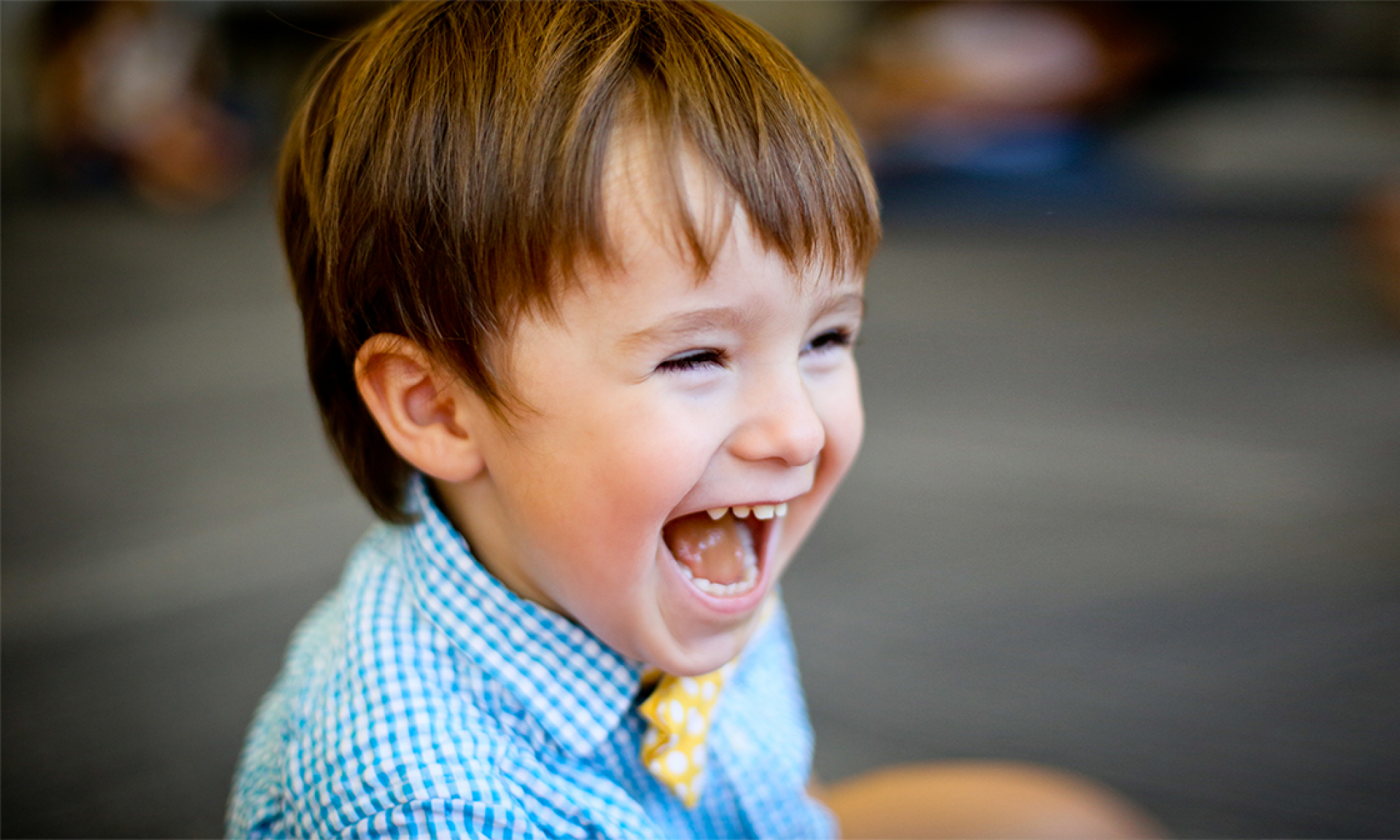

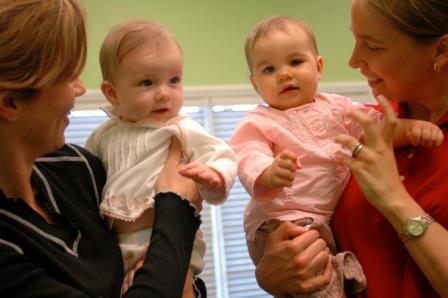
 What’s in a Kindermusik class… for parents??? Well, for starters, there’s music, singing, instruments, dancing, and together time with your child – the very kinds of music education activities your child will love too. The real secret is that you can enjoy letting out your inner child and everyone else will only be thinking what a wonderful and interactive parent you are!
But it really goes much deeper than that. Kindermusik educators are quite fond of explaining that Kindermusik classes are just as much for the parent as they are for the child during this critical window of early childhood development. While there are many benefits of Kindermusik enrollment for you and your child, one significant area is the social-emotional impact for the parents.
The social outlet
Kindermusik classes give you a vital social outlet, a place where you can make new friends and keep up with old friends too!
The support network
Kindermusik is a place where you can belong and be supported by other parents going through the same things with their children as you are with yours.
The emotional connections
Kindermusik classes are where emotional connections between you and your child are strengthened, and where what you learn and enjoy in class will spill over into even more bonding and memories together at home.
The window into your child
One of the unique features of Kindermusik is that you will glean tidbits and insights into that precious little
person that is your child. We use music as the vehicle to enhance every aspect of early childhood development, and to give you a peek into the wonders of the whys and hows of who your child is and what he is becoming.
The best choice
Knowing you have chosen one of the very best possible experiences for your child by enrolling her in Kindermusik makes you feel great – in class each week and at home all week long!
See for yourself why so many parents love Kindermusik – for their children and for themselves! Try a free class today.
– Written by Theresa Case who has an award-winning Kindermusik program at Piano Central Studios in beautiful Upstate South Carolina
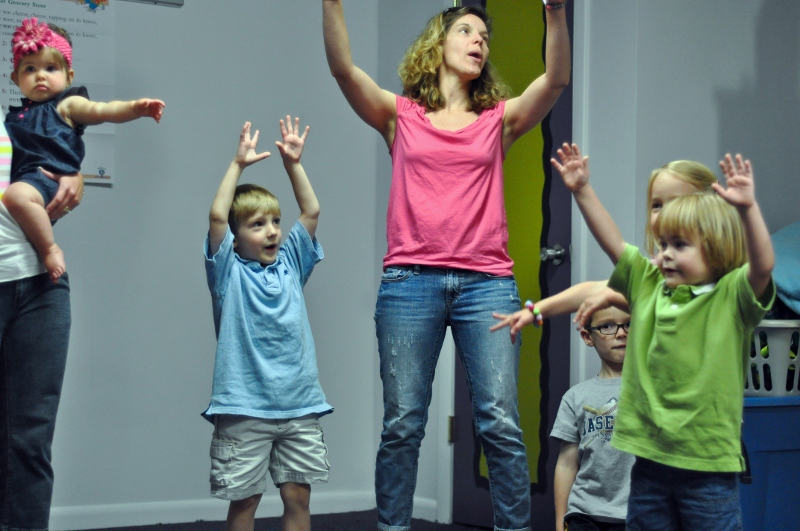


 Early language development begins long before children say recognizable words. Linguist Patricia Kuhl notes that a six-to-eight month old baby can discriminate any sound in any language. In early language development, children naturally learn phonetically by interacting with other people. In contrast, learning another language in later years, such as in high school or at university, often includes many hours of learning through grammar, syntax, and conjugating verbs. Je suis. Tu es. Il est.
 Read more about the
 Regular schedules provide a framework that orders a young child’s world. While predictability can be tedious for adults, children thrive on sameness and repetition. “Knowing what to expect from relationships and activities helps children become more confident,” says Dr. Peter Gorski, assistant professor of pediatrics at Harvard Medical School (Asher).
 Music classes in the early years that include parental involvement and focus on learning in a fun, developmentally appropriate way inspire a lifelong love for learning.
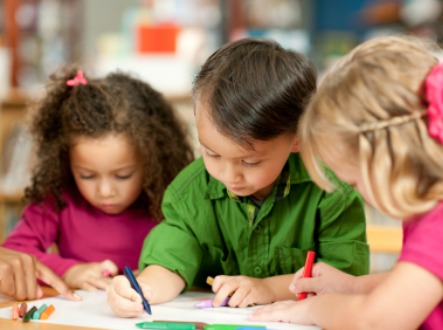


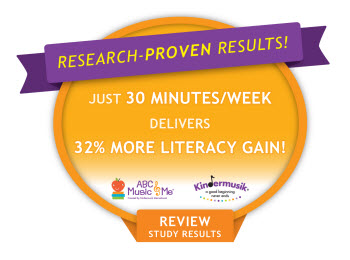

 Results from teacher surveys indicate that preschool teachers found the ABC Music & Me curriculum to be effective in teaching a variety of skills, and would strongly recommend it to other preschool teachers, and that parents would recommend the program to other parents.
 Why teach Kindermusik? There are many benefits of