
3 “play-filled” recycling activities for kids

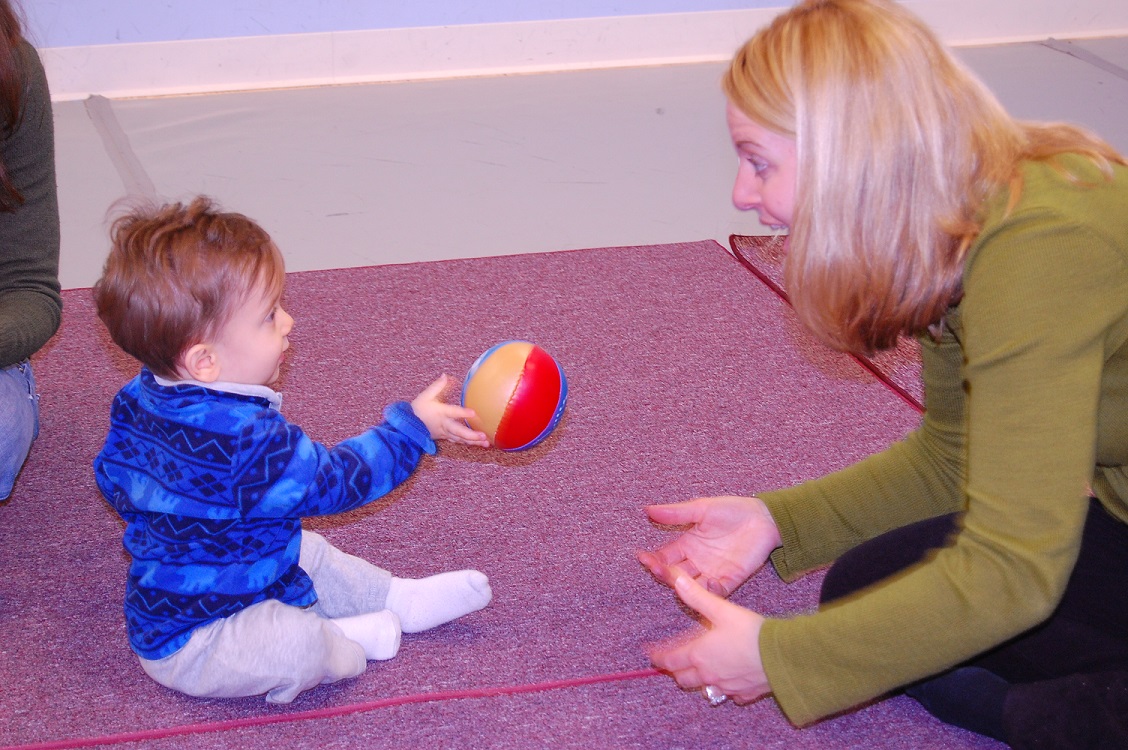
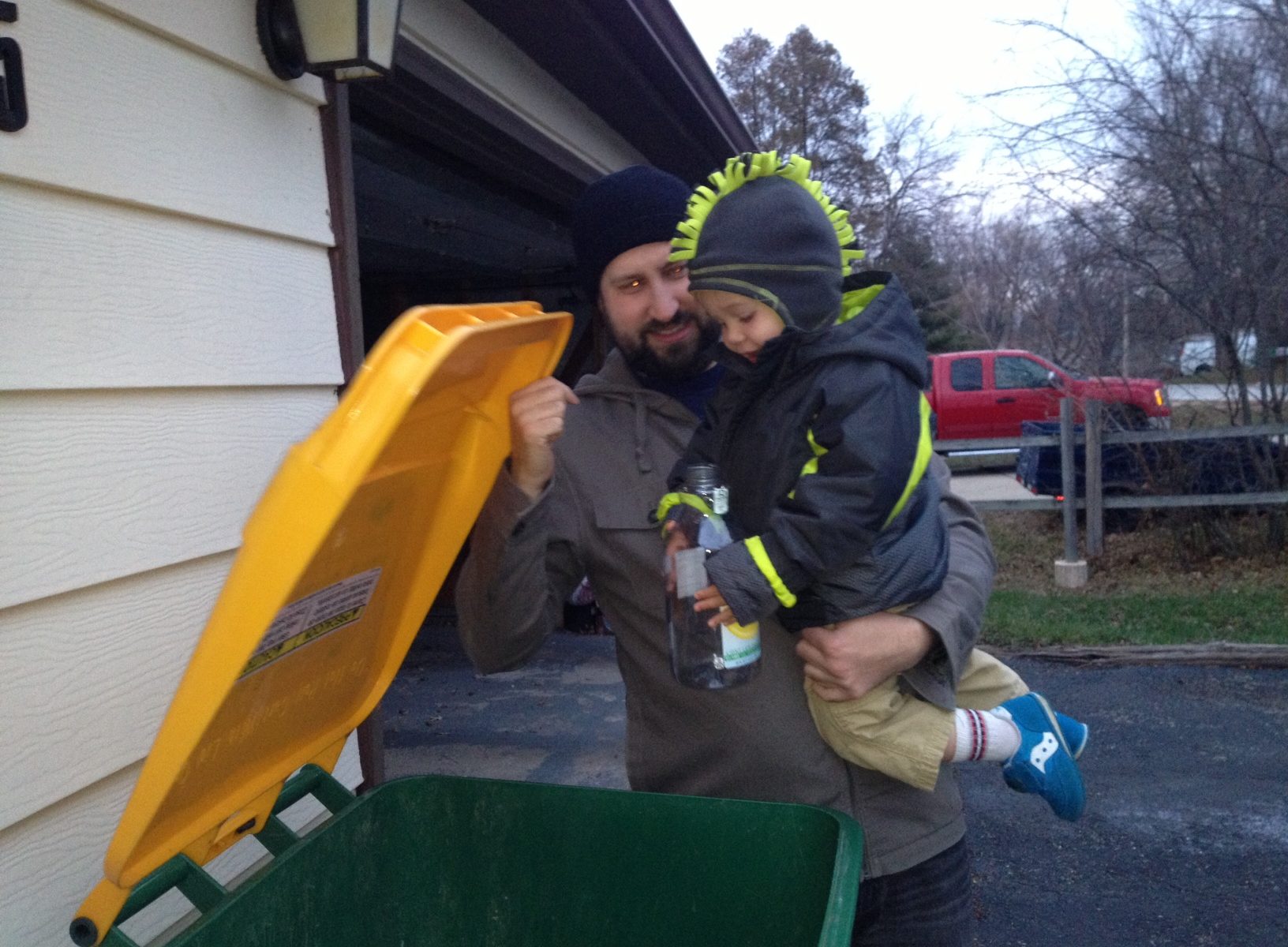
18 mo old Will recycling“It will be a wasteland if we don’t recycle,” stated a four-year-old child in a recent preschool study. Wow! Teaching children never stops but neither does learning from children.
Although we are nearing the end of the United Nations Decade for Sustainability (2005-2014), our commitment to sustainability remains intact. It’s why we strive to find ways to make and deliver our product that decreases our carbon footprint. It’s also why we continue to provide resources and ideas–such as recycling activities for kids–for educators and parents to use when teaching children about the environment and our impact on it. After all, investing in a greener world is also an investment in our world’s children.

Using play to teach sustainability for kids

Of course, in early childhood education, making a personal connection and involving the whole child in the process deepens the understanding.  One recent study looked at different ways to engage children in an early childhood education curriculum that taught sustainability. In the study, the preschool teacher created a recycling “center” for children. At the center, children could sort various items into a recycling bin, the trash, or a compost bucket. The teacher offered this center three times in three different ways:

  1. Modeled play: In the first recycling activity for kids, the teacher showed the children how to look for the triangle on plastic containers and bottles. Using a chart, she indicated whether or not the item could be recycled.
  2. Open-ended play: In the second recycling activity for kids offered on a different day, the teacher let the children problem solve on their own.
  3. Purposeful-play: In the final recycling activity for kids, the teacher and children engaged together in conversations about and interaction with the materials, including the purpose behind the activity. The teacher also made connections between the activity in the classroom and how this could look in their homes and communities.

Recycling activities for kids at home

This small study about sustainability for kids can be replicated at home and in classrooms. To a child, every moment is a teachable moment—even taking out the trash. Kindermusik Green - SustainabilityOne of the goals of the United Nations Decade for Sustainability is “to motivate and empower learners to change their behavior and take action for sustainable development.” At Kindermusik, we can think of no better way than to start by actively engaging our children in the process. Together, we can create a greener world.

Learn more about Kindermusik’s commitment to sustainability.


Help Your Child "Tune" In to Pitch and Melody

Note: This blog post was contributed by Kathy’s Music in Pittsburgh, PA (Top 1% Kindermusik Maestro program worldwide).

ÕË

"…[A]ll human beings are born musical and will respond to music. Because classical music, with its complex repetitive patterns, has far-reaching effects on the child and his brain development, it is the perfect experience."*
Our Kindermusik classes are designed to develop the whole child in general (language, fine & gross motor skills, social & emotional development) and to develop musical aptitude specifically.
Often classes will focus on melodic direction, listening for high sounds and low sounds and moving our bodies high and low for a true multi-sensory learning experience.
However, in our Kindermusik Young Child program, we teach kids to read and write music starting with melodic direction. To get things started we use the familiar "Star Light, Star Bright" song. The children are "tuning" in to sounds and pitches, learning to differentiate and identify. It’s really just the first step, but starting with something familiar puts them on the path to reading music.
Help your child to "tune" in to sounds and pitches by extending your child’s listening opportunities at home. Consider adding to your music collection with a CD or mp3 files. Some possible selections include:

  • Mozart: The Complete Piano Sonatas and Variations, recorded by Daniel Barenboim, (On this recording you might especially enjoy the variations on the familiar "Twinkle, Twinkle Little Star" or "Ah, vous dirai-je, Maman.")
  • Copland: Appalachian Spring, Rodeo, and Fanfare for the Common Man, recorded by Leonard Bernstein and the New York Philharmonic Orchestra and
  • Holst: The Planets, recorded by Andre Previn and the Royal Philharmonic
    Orchestra.

As you and your child listen to various pieces of music, talk about them. Discuss distinctions and preferences. Early exposure to a wide variety of music will ensure your child’s acceptance and appreciation of music for a lifetime!

Teacher Training is the Best Investment

That’s a bold claim, but it’s true.  The best investment all educators or teachers can make is to actively take advantage of ways to constantly improve themselves and to be open to new possibilities.  Teacher training matters – it enhances job satisfaction and quality of teaching.
Weston chime ball resizeAnd that’s why Kindermusik educators are some of the best teachers on the planet.  They love their job; they’re thrilled to be in the classroom; and they are required to complete regular professional development goals each and every year.  Their professional development helps them grow in areas like early childhood professional development, business and marketing skills, classroom management, and more masterful teaching of the world’s best early childhood curriculum – Kindermusik!
If you love teaching children, we’d love to encourage you to consider pursuing the opportunity to teach Kindermusik.  You can choose two different paths – teaching for yourself or teaching for an established Kindermusik program.  Learn more HERE.

Read more… Kindermusik Educators: Who They Are and How We Train Them

Kindermusik Classes - Enroll Now - For a Child's Brain, Body, Heart & SoulAnd if you’re a parent interested in enhancing your child’s musical development and inspiring a lifelong love of music, we invite you to try a free preview class and see just why we think our Kindermusik educators are head and shoulders above the rest!
 

Investing in children through parental involvement in early childhood education

Kindermusik quote editedWe talk a lot about early childhood education around here. We know—as Ed Markey said: “Education is not only a ladder of opportunity, but it is also an investment in our future.” Children, especially those most at-risk students, receive even more benefits from participating in an early childhood curriculum that prepares them for a lifetime of learning!
In a perfect world, early childhood education involves three key ingredients: the child, the teacher, and family involvement in education. Without all three, our investment in early childhood education—and the child—does not yield the biggest returns—measurable and immeasurable.
Of course, a parent is a child’s first and most important teacher. We say that time and time again. When a child attends a preschool, daycare, or other learning environment outside the home, family involvement in education remains a pivotal part of the process. While teachers, administrators, and parents share the common bond of the child, some programs more successfully manage to engage this learning community by promoting respectful and reciprocal caring relationships. What can we learn from those who do it really well?

Getting high marks in family involvement in education

Anne Douglass, PhD., at the University of Massachusetts in Boston wanted to find the

(Source: AParentinSilverspring.com/)

answer. She recently researched ways to increase parental involvement in early childhood education in a daycare or preschool setting. She wanted to answer:

  1. What accounts for the gap between the desire of the early childhood education programs to partner with families and actual practices with families?
  2. What do teachers of early childhood curriculum need to effectively partner with families?
  3. What factors promote or impede the implementation of family support and engagement strategies?

In this small study, Douglass compared the teachers and parents, structures, and processes within four early childhood education programs: two with “high quality” family involvement and two with “low quality.”  She found two distinctive characteristics of successful preschools, Head Start programs, and daycares with parent involvement in early childhood education:

  1. Administrators modeled caring professional relationships and shared power within the school, which included leadership opportunities for classroom teachers, training, and staff appreciation.
  2. The preschool utilized specific structures to promote caring and shared power, including teacher supervision that intentionally involved discussing multiple perspectives in solving a problem.

An early childhood curriculum that increases parental involvement in early childhood education

ABCMMEINTL_LOGO_LiteracyLanguage_OneLineABC Music & Me uses music and movement to teach young children early literacy and language, social and emotional skills, and other vital skills proven to help set a child up for success. We intentionally created ABC Music & Me to include resources for teachers and parents that increase family involvement in education. As Douglass’s study indicates, teacher training impacts not only a teacher’s ability in the classroom but also the engagement of children’s parents. Our early childhood curriculum includes teacher training choices from half-day trainings to demonstration DVDs. We also include access to materials for families to use together at home that supports both the classroom learning and a parent’s role as a child’s first and best teacher.

For more information about bringing this early childhood curriculum to your preschool, Head Start program, or daycare, email us at info@abcmusicandme.com.

Two fun (and free!) ways to use digital learning to learn English

ABC English & Me - Teaching English to Children through Music

ABC English & Me - Teaching English to Children through MusicKindermusik International’s English Language Learning (ELL) curriculum, ABC English & Me, is a fun, musically-based way for ELL children to learn English.  As with all of Kindermusik’s newest curricula, the class experience is supported and enhanced by @Home Materials which are accessed digitally and conveniently available to families at any time, anywhere.
The Kindermusik @Home Materials that come with every ABC English & Me enrollment provide fun activities for kids learning, including English songs for kids as well as other ELL activities.  We’ll spotlight two of those educational activities for kids here as a free sneak peek!

Just Me!

Just Me! is a delightful music video from the ABC English & Me unit also entitled Just Me!  Children can’t help but move, giggle, and learn as they learn the English words for head, shoulder, knees, and toes!  (And yes, parents can join the fun too.  After all, you’re helping your children learn, right?!)
ABC English - Just Me

Find & Count

In Find & Count, featured in the unit called Leap Frog, children learn to count as they find the frogs, ducks, and fish in the pond.  This activity is enhanced by the colorful, engaging graphics, lively instructions, and sweet music.
ABC English - Find and Count
So, go ahead.  Try one – or both! – of these activities for yourself.  It’s okay if the kids aren’t around!  We think you’ll be amazed at the way Kindermusik International is yet again proving itself to be the world’s leader in music and movement curricula, now supported by digital learning through their exceptional @Home Materials.
AtHomeHeader_EducatorVersion


2 educational benefits of digital learning and mobile apps for kids

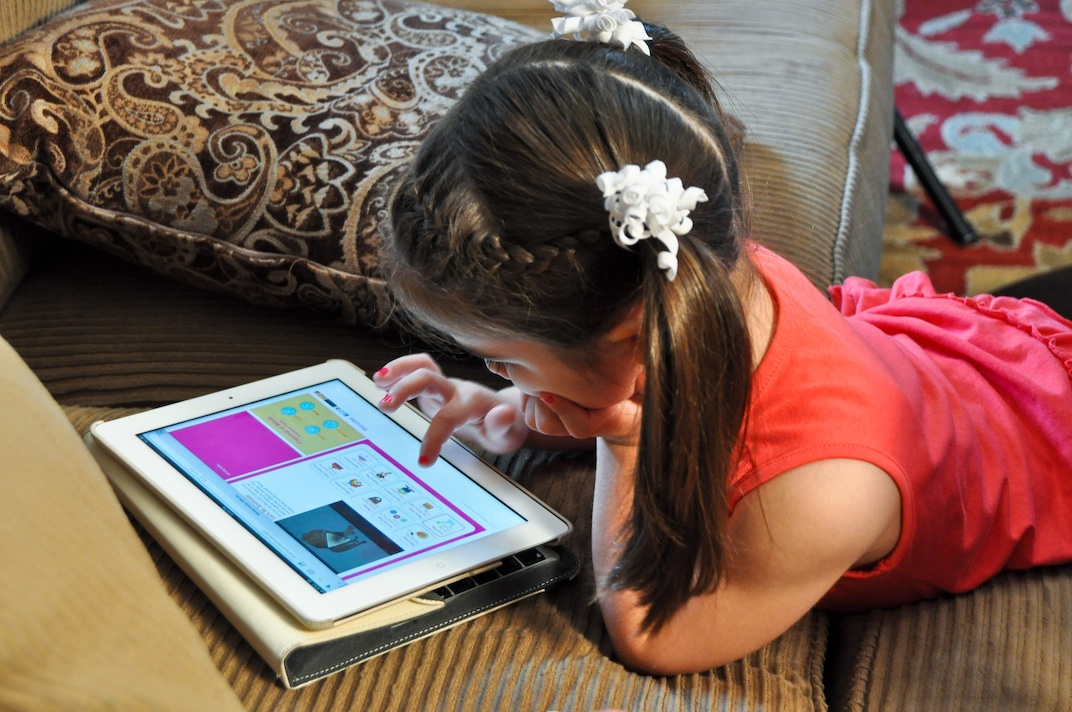
preschooler digital learning Back in October, Common Sense Media published a report that indicated the usage of mobile apps for kids more than doubled in two years. In fact, the report showed that 75 percent of children under the age of 8 had access to mobile devices at home. However, with the holidays recently behind us, we can make an educated guess that the number of children with access to mobile devices only increased in the few months since the publication of that report.
Of course, access to mobile devices and mobile apps for kids doesn’t necessarily equate to educational activities for kids. In fact, one of the great parenting challenges of raising digital natives involves finding the right balance of screen time for families, including young children. At Kindermusik, we align our stance with the NAEYC and the Fred Rogers Center for Early Learning, recognizing that children can benefit from a responsible and age-appropriate use of technology in combination with hands-on experiences and in partnership with an actively involved caregiver.
In early childhood, the most effective educational activities for kids involve multi-sensory learning, such as talking (or singing!), interacting, exploring, building, pretending, and manipulating. New research on mobile apps for kids (or those used by kids) sheds some positive insight on how technology can be used as a tool to support language development and teach social skills to young children.

2 educational benefits of mobile apps for kids that use video

Five or 10 years ago, video chat was used primarily for business purposes. Now, families Skype or FaceTime with loved ones all around the world as a means to stay connected.  When children—even older babies and toddlers—engage in communicating with loved ones via video chat, they learn social skills and support language development in much the same way as if the conversation happened within the same space.
“We’re finding pretty consistently — in fact, two recent studies with actual Skype [calls] — that children do seem to learn better when there is social interaction from a person on video. So it’s kind of encouraging with FaceTime or Skype for parents and grandparents to know that [with] that interaction, the children might actually be willing to learn from a person on a screen because of the social interaction showing them what’s on the screen is connected to their lives,” Georgene Troseth said in an NPR interview, “What You Need To Know About Babies, Toddlers And Screen Time.” 

(Source: The News Tribune DEAN J. KOEPFLER/Staff photographer)

Other classroom-based research shows that with preschoolers, video modeling can teach children positive social skills, such as sharing, taking turns, or using kind and polite words. One preschool in Minnetonka, Minnesota, uses Flip cameras to record students during their daily rituals and routines. Children can then watch the videos on an Ipad individually or on the SmartBoard as a class to see how to handle certain situations, talk to peers, and even where to go and how to act during circle time.
“Video modeling is just a really easy and effective way to teach children within and without special needs how to do something,” explained Brenna Noland, an early childhood special education teacher, in a news report. 

Kindermusik@Home: More than a music app for kids

Kindermusik@HomeEnrollment in Kindermusik includes access to Kindermusik@Home a robust, web-based site that supports active engagement and playtime between a parent and a child while also providing an age-appropriate introduction to digital learning. Each month families receive access to the songs and stories from class, virtual field trips and video modeling, and ideas for taking the learning away from the computer, smart phone, of other device.
For more information about Kindermusik@Home and enrolling in Kindermusik, contact your local educator.


Music & Movement Benefits: Naturally Speaking, Of Course!

Kindermusik prepares your child for schoolThe more you expose your child to language, the stronger his verbal skills will be.  Language acquisition is a gradual process that involves many facets of development including listening, imitating facial expressions, playing peek-a-boo, and babbling.  Your child will learn language naturally by hearing it used in context when you sing, read, talk, and listen to him.
Kindermusik tips for…
Your Baby: At two months, he coos and babbles.  In his first year, he’ll begin making vowel sounds (oohs and aahs) and then move to new sounds and vowel-consonant combinations.  Your baby is also learning the art of conversation.  Bring your face close to his, and talk to him.  Ask him a question and let him respond.  He is learning that conversation is a two-way street.
Your Toddler: In a verbal growth spurt, your toddler’s vocabulary expands from about 50 to 200 words.  When your toddler displays emotion, give him the language to identify it:  “You’re happy!” or “I can see you’re sad.”  You’ll enhance his emotional intelligence as well as his vocabulary.
Your Preschooler: Playing rhyming games is a fun way for a preschooler who is developing phonemic awareness – the recognition that sounds make up words.  Encourage him by making up rhymes and laughing together.
Enrolling in early childhood music and movement classes is one of the very best ways you can enhance early literacy development in your child.  We happen to believe that Kindermusik is the best choice!  But don’t just take our word for it… come try a free preview class on us.

5 Ways to Boost Early Literacy for Toddlers and Pre-Schoolers

When you hear “early literacy” and your little one is nowhere near reading-ready, don’t panic. They’re probably further along than you think. Early literacy consists of the building blocks needed to become a reader, including phonemic awareness, comprehension, vocabulary, and more.

Helping them build up early literacy skills has more to do with your interactions with them during storytime. With a few easy guidelines, these reading moments will become more enjoyable and rewarding than you can imagine, and they don’t cost a thing.

Continue reading “5 Ways to Boost Early Literacy for Toddlers and Pre-Schoolers”

14 ways to celebrate 2014 with early childhood music and early literacy

(Source: She Knows Canada)

At Kindermusik, we celebrate new beginnings throughout the year—from new babies being born to new families discovering our early childhood music classes to even launching new curriculum for babies and toddlers. However, whenever a new calendar year rolls around, we look for even more ways to celebrate! We invite all of our Kindermusik families to help ring in—or shake or sing or dance in—the new year with one of these ideas.

Welcome the New Year through early childhood music and early literacy

  1. Make a musical time capsule of your family’s current favorite music with a 2014 playlist. Include your child’s favorite lullabies, get-up-and-go songs, or theme songs from beloved television shows or movies. Expand the playlist beyond early childhood music, too. Be sure to include your own favorite songs that you share together.
  2. Read musical storybooks together. Try some of these Kindermusik favorites to support early childhood music and early literacy development.
  3. Go on a letter sound treasure hunt. Show your child a letter. Make the sound of the letter together and then go on a treasure hunt around your house to find an object that starts with that same sound.
  4. Make a personalized alphabet eBook. During your letter sound treasure hunt, take a photo of each object: M for Mommy; S for stuffed animal; K for Kindermusik. Then support your child’s early literacy development by creating a personalized alphabet eBook with the photos.
  5. Try one of these websites or mobile apps for kids that support early literacy development. The Reading Rainbow app will soon include a music-themed “Kindermusik” island. Stay tuned to hear more!
  6. Read (and memorize!) a favorite nursery rhyme. Nursery rhymes build phonemic awareness as your child begins to hear the differences between rhyming words like “Humpty” and “Dumpty” or “wall” and “fall.”
  7. Play alphabet musical chairs. Here’s one way to combine early childhood music and early literacy skills with a familiar childhood game.
  8. Sing together. One study says talking (or singing) to your young child is the most critical aspect of parenting a baby or toddler. Learn more about the child development benefits, including vocabulary development and early literacy development.
  9. Dance together. The ability to move to a steady beat is linked to language skills. Plus, it’s fun and great exercise for the whole family and gives your child the opportunity to practice all those growing gross motor skills!
  10. Make music and reading part of your daily routine. Routines and rituals help young children make sense of their world and predict what comes next. Each day signal to your child the end of the day by listening to (or singing!) lullabies and reading books together after bath.
  11. Hold a Freeze Dance party. Children love freeze dance. However, as creators of early childhood music classes and early literacy curriculum, we know there is more behind a game of Freeze Dance than giggles and silly moves. Children practice inhibitory control by learning how to tell their bodies when to dance and when to stop. Inhibitory control prepares a child to sit still and pay attention during the school years.
  12. Get out some instruments (or pots and pans) and hold a family jam session. Your child will practice steady beat and rhythmic abilities. Rhythmical abilities show a strong positive correlation with decoding skills, both in reading accuracy and reading prosody. Plus, being able to keep a steady beat helps a child feel the cadence (rhythm) of language.
  13. Play “Name that Sound.” Gather different instruments or objects that make sounds. Take turns closing your eyes and naming the instrument or object. That same sound discrimination helps your child hear the minute differences between letter sounds or phonemes, which supports early literacy and language development.
  14. Enroll in Kindermusik classes! Our classes for babies, toddlers, big kids, and families are loved by more than 2 million families in over 70 countries.

    Contact a local Kindermusik educator today! Ask to visit a class and see for yourself why parents and children around the world love our early childhood music classes.


4 Simple Ideas for Indoor Musical Fun

When the weather keeps you indoors or you just need something to relieve a certain little someone’s boredom, here are a few fun and easy suggestions for keeping your child occupied and making a few memories along the way too!  These are just a few simple, tried-and-true things to do with kids – at home and out and about.
Suggestion 1:  Try a Kindermusik class!
Of course we couldn’t resist a small plug here!  But we happen to think that Kindermusik classes are one of the very best things you can do with – and for! – your child newborn to 7 years.  Not only do you get to enjoy a weekly class together, but you also receive Home Materials (now available digitally!) that help you enjoy and extend your Kindermusik experience at home throughout the week.  With Kindermusik @Home, you can take your Kindermusik with you wherever you go!
Sign up for a free Preview Class here.
If you’re already enrolled in Kindermusik and need a little extra inspiration, take some time to explore the myriad of downloadable activities and music at play.Kindermusik.com – a great music app for kids AND their parents!
Suggestion 2:  Sing a song and play along.
For example, remember the song “Hickory, Dickory, Dock” from your childhood?  With a simple song like “Hickory, Dickory” as your inspiration, you can explore the sounds that different materials make when struck together.  Try familiar materials such as wooden blocks, pots and pans, and cardboard tubes.  Which sounds most closely mimic the ticking of a clock?  Kids of all ages will also enjoy accompanying themselves with simple rhythm instruments while they sing.
Suggestion 3:  Create some cool art.
Here’s a three-ingredient recipe for Pretty Puffy Snow.  You will need 1 cup flour, 1 cup salt, and 1 cup water.  Mix all ingredients and place the mixture in a squeeze bottle (try recycling an empty honey bottle or mustard container).  Draw a wintery scene on a piece of stiff paper, then squeeze on your puffy “snow” for some really cool 3-D highlights.
By the way, art projects are always more enriching and more inspired when you’re playing a little music in the background… or when you choose this for one of your family activities!
Suggestion 4:  Try these learning games for kids. (And get a sneak peek at one of the fabulous ideas available exclusively through Kindermusik @Home!)

Here’s a free music learning game that’s perfect for toddlers, but fun for all ages too:  Finding Family

This adorable “get up and move” activity from Kindermusik provides opportunities for toddlers to be active, to engage in looking-and-finding, to follow directional cues (e.g. ‘under’, ‘behind’, ‘up’), and to identify (and open conversation-opportunities about) family members.

Shared by Theresa Case, whose Kindermusik program at Piano Central Studios in Greenville, SC, is proudly among the top 1% of Kindermusik programs worldwide.