
Music: The Ultimate Playlist for School Readiness

Anyone around young children long enough soon realizes that a bulk of the time is spent getting them ready for something….ready for bed, ready for preschool, ready for a playdate/library/park, ready for bath, etc. But getting children ready for Kindergarten means more than just making sure they have everything on the school supply list. So what can early childhood educators and families do now to make sure kids are ready for one of the first major transitions in their lives?

You can find the solution in a music class!  Educators (and researchers!) agree that young children who start Kindergarten equipped with certain skills from day one tend to excel. When young children are actively engaged in music making with a group, they are also learning foundational school readiness skills. In fact, here at Kindermusik we call early childhood music and movement classes the ultimate playlist for school readiness.  Here are just a few of the reasons why we can make that claim.

Self-regulation – This vital skill has to do with the ability to control one’s own behavior, emotions, thoughts, and impulses.

Children who are given lots of practice with moving – and then stopping and re-starting their movement – are learning to control their bodies which in turn, leads to learning to control behavior and emotions.

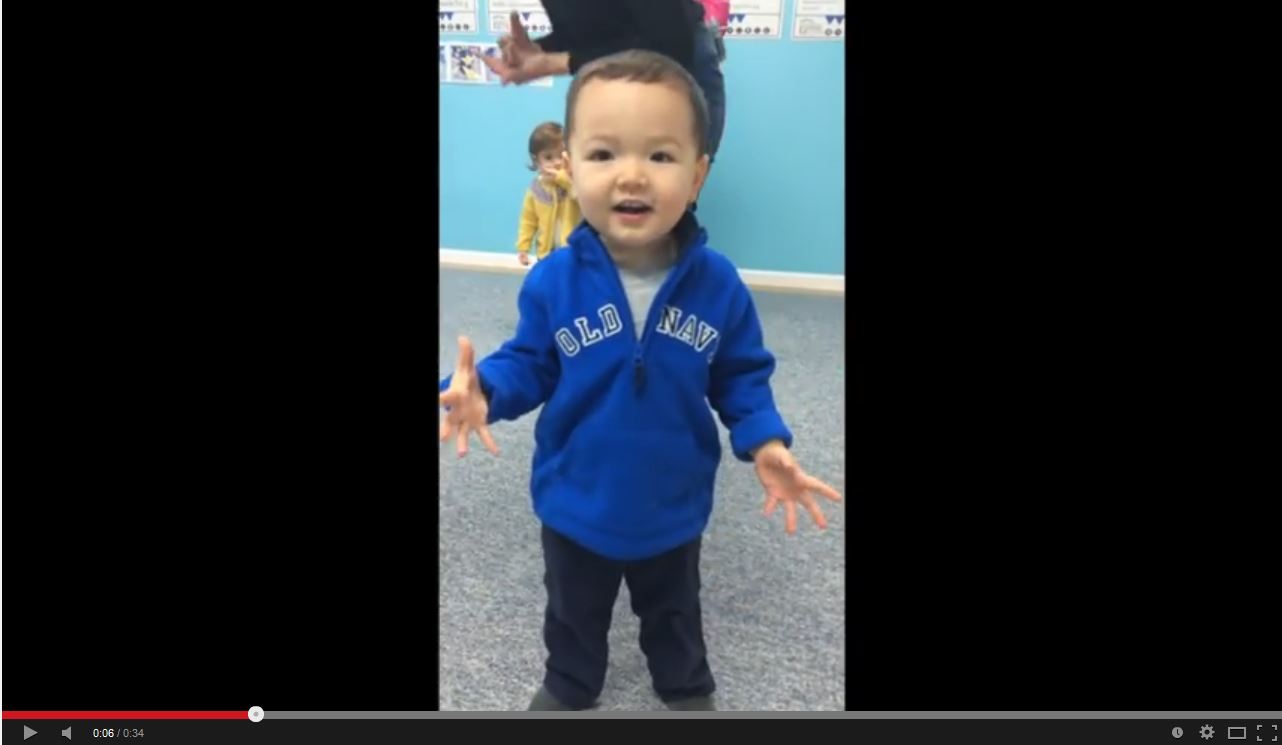
Watch this delightful stop-and-go dance from the Kindermusik classroom at Kindermusik of Cleveland.

Toddler Stop and Go DanceListening – Not just hearing, but listening is a skill that must be learned and includes the ability to focus, discern, and distinguish sounds and meaning.

Children learn to listen, an intentional act, over time with lots of practice. In Kindermusik, we include Focused Listening (or active listening) in nearly every class.

Enjoy a little listening practice with this free Kindermusik Listening Game.

Can you guess what songSocial-Emotional Skills – These include the ability to share, take turns, be a helper, make friends, and wait patiently, just to name a few.

This list could describe much of what goes on in a group music class where we share instruments, wait for our turn to share an idea, help clean up our instruments, or make room on the Story Blanket for our classmate.

Watch what happens as this Kindermusik educator conducts an instrument demonstration of the slide whistle.

slide whistle demonstrationEarly Literacy Skills – Early literacy depends greatly on phonological awareness, auditory discrimination, auditory sequencing, and vocabulary development.

A music class is a rich sound environment that develops the listening skills and vocabulary skills so critical to literacy success.

Listen for all of the descriptive vocabulary words that are used in this Kindermusik video from Kathy’s Music.

teaching early literacy skills through musicEarly Math Skills – Success with math begins with developing an understanding of concepts like spatial awareness, counting by rote, and pattern recognition.

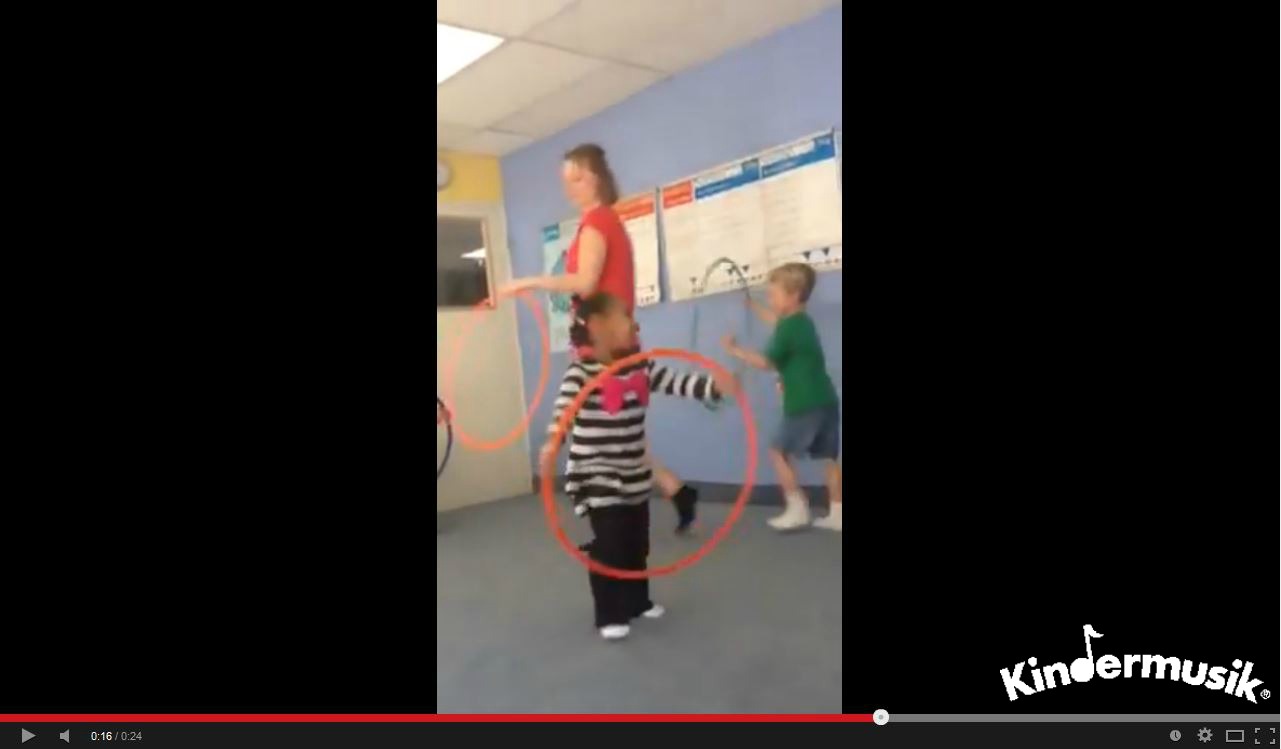
It might be surprising to discover all of the different ways that these concepts are explored and practiced in an early childhood music and movement class through hoop play, songs and finger plays, and all kinds of dances.

Watch how these children in Catherine Huang’s Kindermusik class are developing spatial awareness as they explore many different ways to play with the hoops.

hoop play teaches spatial awareness
Want to see for yourself how to use music to teach vital school readiness skills? Try these five musical learning activities with the children in your life. Or, learn more at www.kindermusik.com/schools and request a free demonstration at your school.


How to Throw a Music-themed Birthday Party

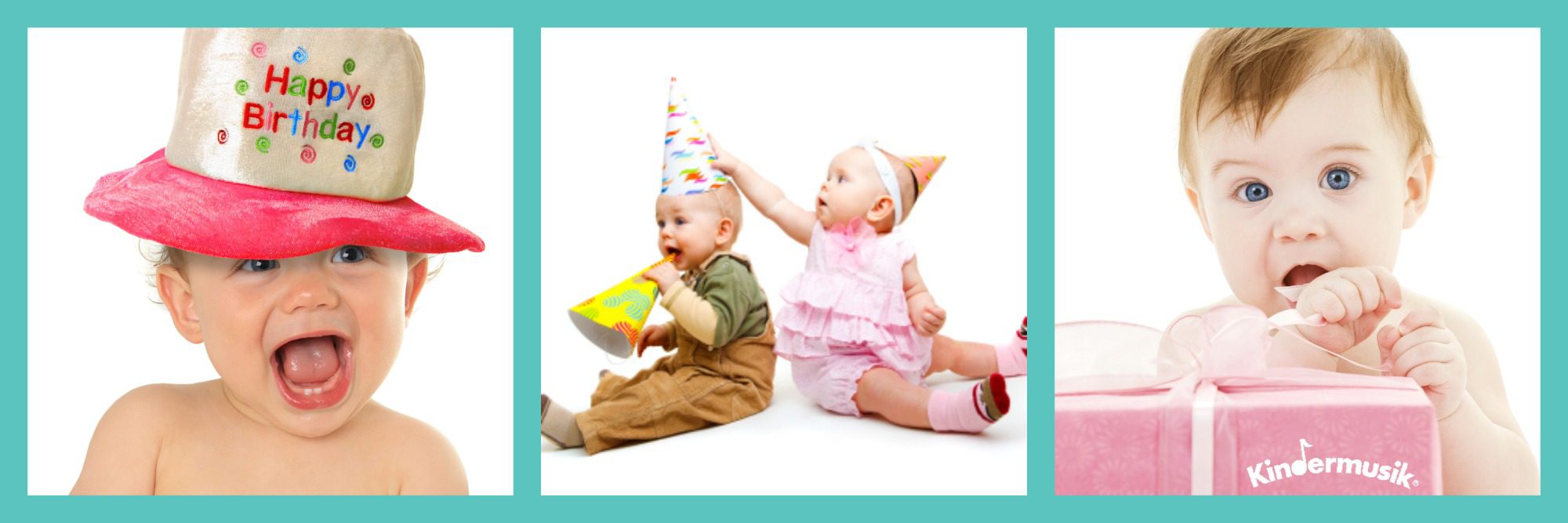
Looking for a unique way to celebrate your child’s birthday?  Whether your child is turning 1 or going on 7, we have the perfect solution – a customized musical birthday party!

Birthday Party with Kindermusik

Kids LOVE music, and there’s no better way to involve the whole crowd than to throw a musical birthday party.  And it’s EASIER than you might think!  Here’s how:

Step 1 – Contact your local Kindermusik educator.

Kindermusik educators are the experts when it comes to making music and making children smile, and they know how to put together the perfect blend of music, dancing, instruments, and singing to celebrate your child’s special day in the most memorable of ways.

Step 2 – Choose your theme.

Your Kindermusik educator is one of the most creative people on the planet!  She can plan a general music-themed party, or she can customize the music and activities to the theme of your choice – themes like 1st birthday, princess, teddy bear picnic, under the sea, bubbles and balloon, on the farm, monster trucks, and more!

Step 3 – Plan your guest list.

Consult with your Kindermusik teacher, but usually about 10 – 12 children is a good size for a Kindermusik birthday party.  If the children are 3 years or younger, you’ll want to be sure that the children’s parents know that they get to participate too!

Step 4 – Put together your party favors.

Carry the musical theme right on through to the favors.  Your Kindermusik teacher can help you plan some musical party favors, or you can put together your own with age-appropriate instruments available from the Kindermusik store.

Or you can do a “Make it, Take it” party favor and make your own homemade instruments at the party.

Kindermusik Birthday CheerStep 5 – Plan your decorations.

As with most things involving young children, the simpler, the better.  Colorful balloons make for a nice table decoration.  Make your own banner using these free printable banner letters or frame this Kindermusik Birthday Cheer printable to put on the table by the cake or gifts.

Step 6 – Relax and enjoy!

The smile on your child’s face will be worth it all.  You’ll love not having to do much more than show up.  And the memories?  Well, they’ll be priceless.  That’s the beauty of Kindermusik!

Contributed by Theresa Case whose award-winning Kindermusik program is located in beautiful upstate South Carolina at Piano Central Studios.


It’s Rhyme Time!

Jack and Jill, Humpty Dumpty, and the Itsy Bitsy Spider may not have the most compelling storylines (it’s mostly lots of falling down, right?), but these beloved nursery rhyme characters have entertained generations of children with their antics. Why? Well, nursery rhymes are silly, catchy, and memorable. They also happen to be a fantastic pre-reading tool. In fact, exposing young children to rhymes even before they can understand the principle behind rhyming is as important as introducing children to music before they can create it, or to books before they can read them.

Being able to hear and identify words that rhyme is the earliest phonemic awareness task. Phonemic awareness is the understanding that a word is made up of a sequence of discrete sounds, or phonemes, and it is an essential skill for learning to read. Plus, rhyming is the precursor skill to identifying syllables within words.

3 Tips for Playing Rhyming Games with Young Children:

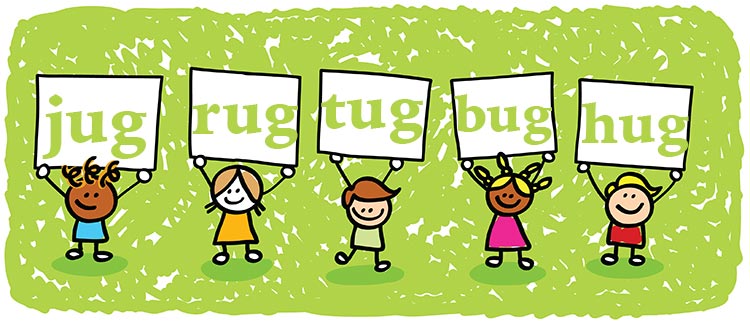
  1. Ask children to listen for the “words that sound alike.”
  2. Try to use rhyming words that have only one syllable, such as cat, sat, and mat.
  3. When first introducing the concept of rhyming, use words that can be associated with pictures, such as bat and hat. Later, progress to playing rhyming games without visual support.


Looking for more activities that support a young child’s development? Find a local Kindermusik educator at www.kindermusik.com and visit a class.

Help! My Child “Sleeps” in Kindermusik

Yes. It’s true. My daughter, Ellery, slept through Kindermusik class—for four months! Now, before you begin conjuring up images of a snuggled and swaddled baby girl being gently rocked to quiet lullabies, let me stop you.

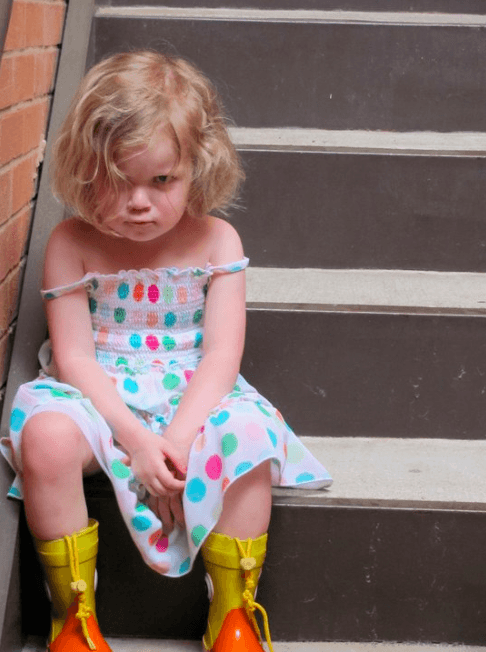
She was two and not really asleep. She just didn’t want anyone to see her. And, in fact, if I am perfectly honest, she didn’t always want to go to class. She wanted to play on the stairs outside of class or smell the tulips in front of the building or peek in the window during her older sister’s Kindermusik class. But, as soon as we stepped inside her class, the eyes would shut and she would slump in my lap—asleep.

Seriously, this is the face of my child when it was time to go into class:

Before Kindermusik class

Just when I thought I had this parenting thing figured out

At this point, I should confess that I thought I had this parenting—and Kindermusik—thing down. After all, I lived and breathed Kindermusik as the Senior Director of Marketing for seven years at Kindermusik International. I knew all the latest parenting—and music education research—and participated in Kindermusik classrooms around the world long before becoming a parent, which meant I learned from THE BEST in the business. Plus, we had Emerson, our oldest daughter (AKA “The Rule Follower” and “Safety Patrol”). But, along came Ellery, our spirited child.

Now, if you’ve never had to participate in an active Kindermusik class with, um, a sleeping child, it’s not easy. It’s kind of like taking the class by yourself, while swinging a 25 pound bag of sugar in the air and bouncing it on your knees! But, thankfully, I knew one thing. Ellery was absorbing it all in and participating in the way that best fit her at that developmental stage. How do I know? Well, on the car ride home, she would sing all of the songs, repeat the fingerplays, and even mention certain things her teacher, Jane Hendrix, said in class. Then later, Ellery and Emerson would play Kindermusik class in the living room  and (surprise, surprise!) Ellery would be fully awake for that class!

I knew that this sleepy behavior could last the first few classes as Ellery adjusted to this new group of friends. In fact, it can often take five weeks for a young child to feel confident enough to participate more actively in class. And, I was right…sorta.

Kindermusik celebrated my child—even when she was asleep

Kindermusik puppetI should mention that our Kindermusik Educator, Jane Hendrix, took my Ellery in stride. Every week Jane would try a new tactic to encourage participation while also fully accepting Ellery’s form of engagement. In fact, we would often “sleep hello to Ellery” at the start of each class or sing “Resting in the Green Grass.” Eventually, Jane uncovered the one thing that finally coaxed Ellery’s eyes open for longer and longer moments—a dog puppet. Little by little Ellery began to participate with her eyes open, as long as the dog puppet watched. She danced with the dog. Played instruments with the dog and even got to take the dog home one week to play Kindermusik at home. She took that dog everywhere, which meant we played Kindermusik everywhere! We even sang hello–well, barked hello–to the peonies at the grocery store.

I would love to say that from that day forward Ellery eagerly bounded into class each week, but no. She still wanted to play on the steps, smell the flowers, and basically do her own thing, but we kept going and learning and playing and singing. And, you know what? It paid off, because I have the gift of time to see how it did!

5 Years Later

Ellery 1st gradeAs parents, it takes years to see the fruits of our labor. Are we making the right choices for our kids? Is this worth the time, the money, the struggle? Well, today Ellery is halfway through first grade. And guess what? She participates with her eyes wide open! Kindermusik helped set the foundation for her love of learning—and her confidence to be herself. She loves to read, excels at math, and easily creates a network of close friends who accept her for her. Is she musical? Yes…but we plan to hold off on the drum lessons for now.

Last month, Miss Jane posted a picture on my Facebook page and said, “This girl reminds me of Ellery”:

Childhood Quote

You see. That’s the other thing. Kindermusik creates bonds that transcend the classroom experience long after a child “ages out.” I know that Jane will always celebrate Ellery for who she is. It’s why Jane—and Kindermusik—will remain firmly planted in my heart.

Kindermusik: A Place to Celebrate Your Child

Every child is welcomed in Kindermusik and celebrated for who they are and how they participate. There is no right or wrong way. Even when children don’t seem to be participating in class (i.e. sleeping or running or sitting in your lap), they are absorbing and participating in their own unique way. It’s one of the reasons why Kindermusik provides materials for families to use together outside the class. Children are most comfortable at home in their own environments. It is worth it…even when they sleep through class!

Kindermusik Classes - Enroll Now - For a Child's Brain, Body, Heart & SoulFind a local Kindermusik educator at www.kindermusik.com and experience firsthand how we celebrate every child!

Contributed by Lisa Camino Rowell, a freelance writer living the Atlanta area.

Music Class: Where Shoes Aren’t Required But Participation Is

When it comes to gaining the most benefit from a music class, there are three essentials of participation – engagement, consistency, and longevity.  This according to a recent study led by Dr. Nina Kraus, the Hugh Knowles professor of communication sciences in the School of Communication and of neurobiology and physiology in the Weinberg College of Arts and Sciences at Northwestern

“Our results support the importance of active experience and meaningful engagement with sound to stimulate changes in the brain,” said Kraus, director of Northwestern’s Auditory Neuroscience Laboratory.

What this study highlighted was that music training significantly impacts brain development, language development, literacy, academic achievement, and more, but only when the three essentials of participation are included.

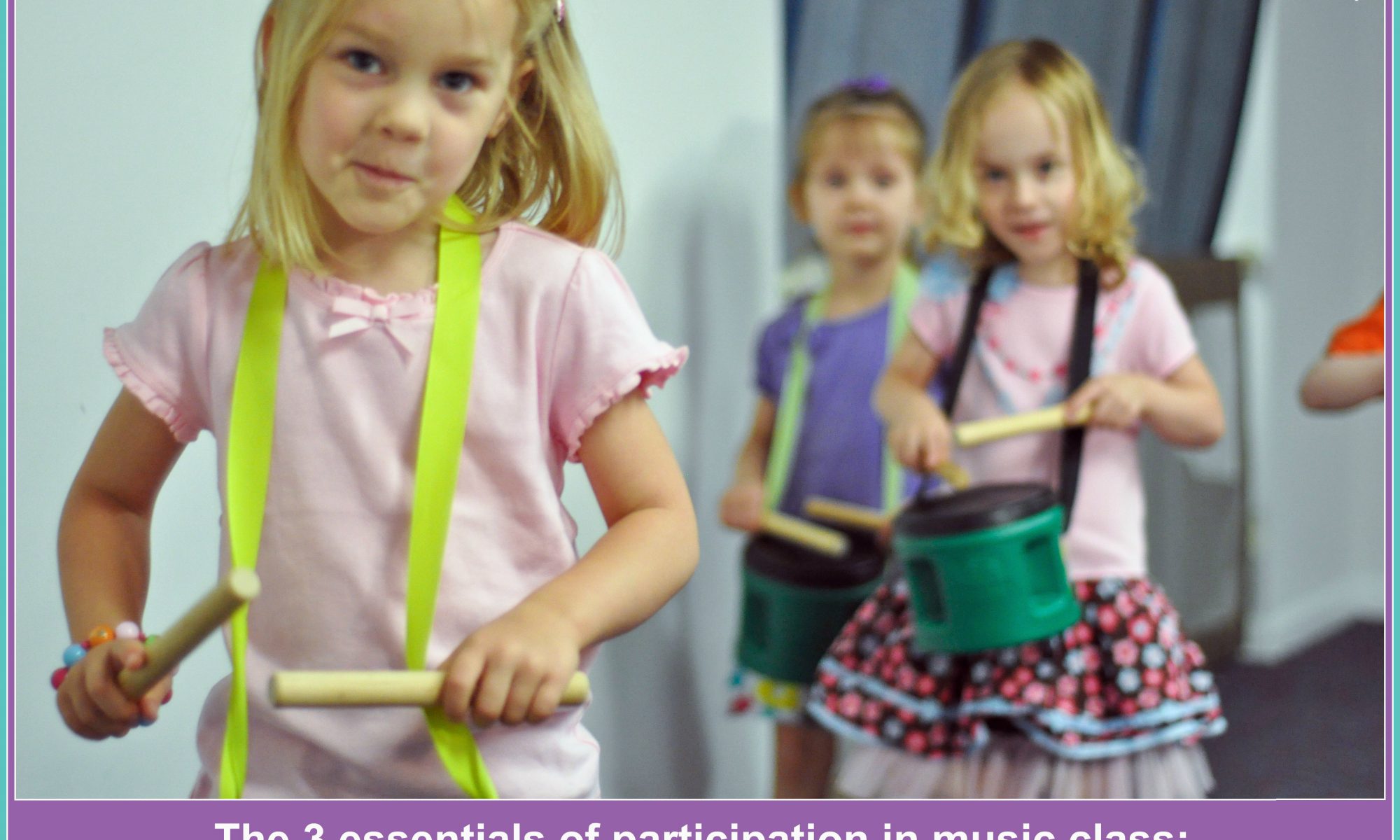
three essentials of participation in a music class

Essential #1 – Engagement
It’s not enough to passively sit in a music class.  Kraus’ study illustrated the significance of active engagement by playing instruments.  In Kindermusik classes, children are also involved in music-making and learning through movement, use of props, and active listening.

Essential #2 – Consistency
Music isn’t a quick fix, according to Kraus, nor is it a one-time wonder.  There must be regular and consistent participation.  Kindermusik educators have observed time and time again that it’s consistent attendance, week after week and year after year, that has the greatest impact on a child’s complete development.

Essential #3 – Longevity
Interestingly enough, Kraus’ research also highlighted that it’s longevity that really counts.  It was “…two years of music training – but not one – improved the brains’ ability to distinguish similar-sounding syllables, a skill linked to literacy.”  Kindermusik has always believed in the multi-year benefits of early childhood music education, and their multi-level curricula support that belief.

Kindermusik is where music and learning play
Learn more about the benefits of actively participating in a music class.  Visit http://www.kindermusik.com/about/benefits-of-music-for-children/.

Contributed by Kindermusik educator Theresa Case, whose award-winning Kindermusik program is located in beautiful upstate South Carolina at Piano Central Studios.

New Research: Teaching self-regulation increases school readiness

“To researchers’ awe, music and movement experiences help children better self-regulate behavior and enjoy a safe, creative outlet for self-expression. Studies point to a specific cluster of social-emotional skills—called self-regulation skills—as particularly important for a variety of school successes.”  (Dr. Debby Pool, Vice President at Kindermusik International)

According to a new study from Oregon State University co-authored by child development expert Megan McClelland, children with strong self-regulation skills – skills that “help children pay attention, follow directions, stay on task and persist through difficulty” – transition more successfully into Kindergarten.

At-risk children participated in an intervention program that utilized movement and music-based games to help children develop and learn self-regulation skills. These music games were designed to help children learn to stop, think, and then act, three steps that are part of the self-regulation process.

“Most children do just fine in the transition to kindergarten, but 20 to 25 percent of them experience difficulties – those difficulties have a lot to do with self-regulation,” McClelland said. “Any intervention you can develop to make that transition easier can be beneficial.”

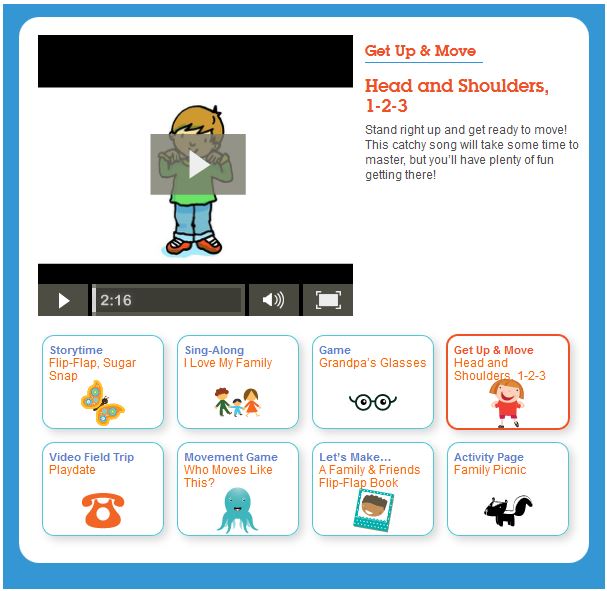
Here’s a music and movement game from Kindermusik@Home that gives kids fun practice with those all-important self-regulation skills:

Head and Shoulders 1-2-3Want to learn more about using music in your school to reach children from underserved populations? Visit www.Kindermusik.com/schools.

Contributed by Kindermusik educator Theresa Case, whose award-winning Kindermusik program at Piano Central Studios is located in beautiful upstate South Carolina.


6 Signs You Have a Kindermusik Kid

Does your child have the fever? Not the kind of fever that calls for a doctor visit, but the kind of fever where the only prescription is more cowbell Kindermusik. A Kindermusik Kid can be easy to spot. They tend to sing and dance throughout the day—in bed, in the car, at the grocery story, in the library. (Inside voices, please.)  And, yes, it can be highly contagious. Watch out for these symptoms to see if your child just might be turning into a Kindermusik Kid.

 6 Signs You Have a Kindermusik Kid

  1. Your child sings the “Hello” song to friends, family, stuffed animals, and even the cat. (And, no, the cat does not appreciate it.)

[youtube]https://www.youtube.com/watch?v=FEJnOfdkFjA[/youtube]

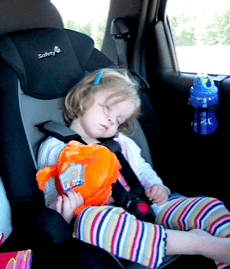
  1. After class, your child falls asleep before you even finish buckling the car seat. All that dancing, singing, playing (and learning to share) instruments, friend-making, and laughing can exhaust even the most spirited child out.

asleep carseat

  1. Your child uses a laundry basket as a toaster, wagon, washing machine, and a dance floor.

[youtube] https://www.youtube.com/watch?v=ZOUfLiFzU7E[/youtube]

  1. Everything becomes a musical instrument: pencils, water bottles, cereal boxes, and even coffee canisters.

make a homemade drum

  1. Your child throws impromptu concerts. All. The. Time.

[youtube]https://www.youtube.com/watch?v=WajoSonEwdE[/youtube]

  1. Your little one loves to listen to all types of music like classical, jazz, African drumming, Native American flutes, traditional Jewish folk songs….and with lyrics in different languages: English, French, Hebrew, Spanish etc.
(Source: Milesdavis.com)


Kindermusik Classes - Enroll Now - For a Child's Brain, Body, Heart & SoulDo you want to have a Kindermusik Kid, too? Find a local educator at www.kindermusik.com.

Contributed by Lisa Camino Rowell, a freelance writer in the Atlanta area, who lives with her own two Kindermusik kids.

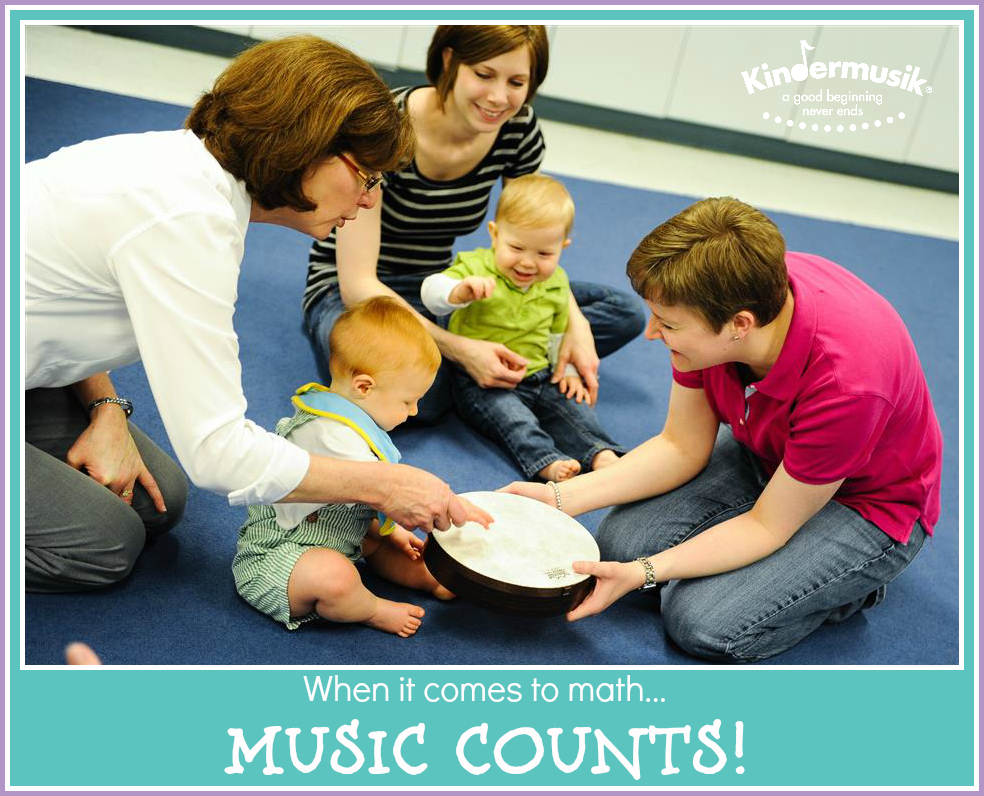
When it comes to math, music counts!

When you read an article title like “Why Math Might Be the Secret to School Success,” you stop and pay attention.

“We think math might be sort of a lever to improve outcomes for kids longer term,” lead researcher Pamela Morris said.

Now that’s a powerful statement.  But here’s a more sobering statement when one considers how closely connected math skills and academic performance are:

“[T]here’s a real lack of math learning in pre-K.”

We have the solution – music and movement classes.

when it comes to math music counts

In Kindermusik, children learn:

Geometry: Spaces and Shapes
Moving to music and playing instruments in creative ways causes children to become aware of the space around them, deepening their understanding of positional and spatial concepts.

music noteTry this at home – Rainy Day Playground
Encourage your child to climb over and under pillows, cardboard boxes and sheets turned into tunnels.  Talk about how his/her body fits in these new creative spaces!

Patterns
Movement games, circle dances, and instrument ensembles help children listen for and identify the patterns in music which also develops their ability to recognize patterns in math.

music noteTry this at home – Brown Bear, Brown Bear
Read a story with repetitive text.  Afterwards, playfully challenge your child to come up with new “pages” that match the repeating pattern.

Numbers and Measurement
Rhymes, songs, chants, and fingerplays give practice with one-to-correspondence, counting, ordering, sequencing, and comparing and deepen early math skills.

music noteTry this at home – Count It Out
Keep the numbers rolling with your child.  How many buttons on your shirt?  How many steps did we climb?  Did we use five blocks or four?

Kindermusik is where music and learning playTo learn more about how music lays the foundation for early math skills, download one of Kindermusik International’s “Music and Math” ebooks at www.Kindermusik.com.

Contributed by Kindermusik educator Theresa Case, whose award-winning Kindermusik program at Piano Central Studios is located in beautiful upstate South Carolina.


Want a better memory? Learn to play an instrument.

music brainWith increasingly more sophisticated technological advances, researchers are learning more and more about the powerful effects of music on the brain and the cognitive advantages of learning to play an instrument.

A recent study at the University of Texas at Arlington gave researchers a unique glimpse into the brains of professional musicians, skilled musicians who had been playing an instrument for a number of years.  The bottom line?  Musicians definitely have an advantage when it comes to processing, attention, and particularly, memory.

So why are these kind of findings important if you’re the parent of an infant, toddler, or preschooler?  It’s because the early years are the best years for instilling a love of music, building on the benefits of music making, and laying a foundation of musical understanding – all of which can grow into the successful and lifelong pursuit of learning to play an instrument, as a hobby or as a career.

With your Kindermusik enrollment, your child not only benefits from the richness of the weekly musical activities, but you are both able to take advantage of Home Materials that extend the learning and enjoyment from class to home all week long.

For a fun sneak peek into just the kind of unique music and memory benefits that Kindermusik provides, enjoy this free Memory Game with your child.

Fruit Memory Game
Want your child to experience the lifelong benefits of music?  Enroll in Kindermusik!  Find a local Kindermusik educator at www.Kindermusik.com.

Contributed by Kindermusik educator Theresa Case, whose award-winning Kindermusik program at Piano Central Studios is located in beautiful upstate South Carolina.

5 Ways to Get the Most from Kindermusik

Thinking about enrolling in Kindermusik class with your child? Well, if you’ve never experienced a class before, you probably have a few questions. It’s okay. You’ve come to the right place! In class, you may already know to expect lots of music, movement, instrument play, cuddles, and giggles that all support your child’s development and your key role in the process. So, we thought we’d share some tried-and-true tips to make the most of your Kindermusik experience and this precious time with your little one.

5 Ways to Get the Most from Kindermusik

  1. Arrive 5-10 minutes early. Most children need a few minutes to transition into something new. Those extra few minutes give your child the opportunity to take off shoes, find a spot to sit, interact with the other children, or even to explore the room. Plus, it gives you the opportunity to connect with other parents in class. You will both find the Kindermusik community a loving and encouraging group!
  2. Dress comfortably. We sit on the floor. We dance around the room with scarves. We lift scarf playchildren in the air, swing them in a blanket, or even roll around on the floor. Your child will love every minute of it—and so will you—but admittedly at times it might feel like a workout.
  3. Follow your child’s lead. We ask for children’s ideas throughout the class. In fact, we start each class singing or waving or running or even blinking hello. It all depends on the ideas each child shares. Go along with the ones your child provides or the way your child chooses to respond to the music or play the egg shakers, etc. Your child’s response to class can range from sitting in your lap pretending to be asleep to running around the room the whole time. We’ve seen it all—and welcome it all!
  4. Actively participate.Your child learns from your words and actions. When your little one sees you authentically engaging in class or at home, your child will, too. So go ahead, sing and dance and be silly. Rediscover the joys of childhood with your little one as a tour guide. Your voice is your child’s favorite one to hear.
  5. Play Kindermusik outside of the classroom. Kindermusik isn’t just a weekly class. We intentionally include the music from class and other materials for families to use together throughout the week. Connecting the classroom learning to those “everyday” moments supports your role as your child’s first and best teacher and makes the learning stick. Take a peek at how one mom and daughter “play” Kindermusik at home.

[youtube]https://www.youtube.com/watch?v=vsKuRTncmgQ&list=PLLSMo0LCnI5C1ORlIspEIYZ9GM7gkZ78Q[/youtube]


Kindermusik_GiveYourChildTheGiftOfMusic_EnrollTodayPut these tips into action. Find your local Educator at www.Kindermusik.com and visit a free class!

Contributed by Lisa Camino Rowell, a freelance writer living in the Atlanta area.